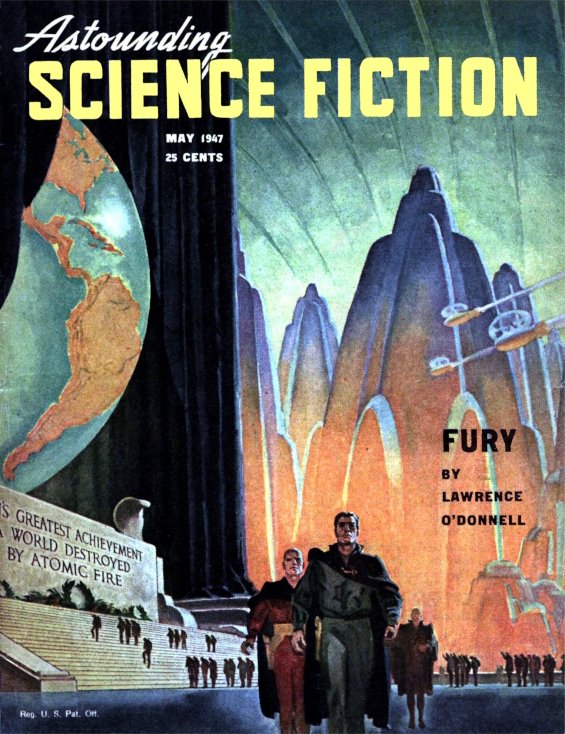
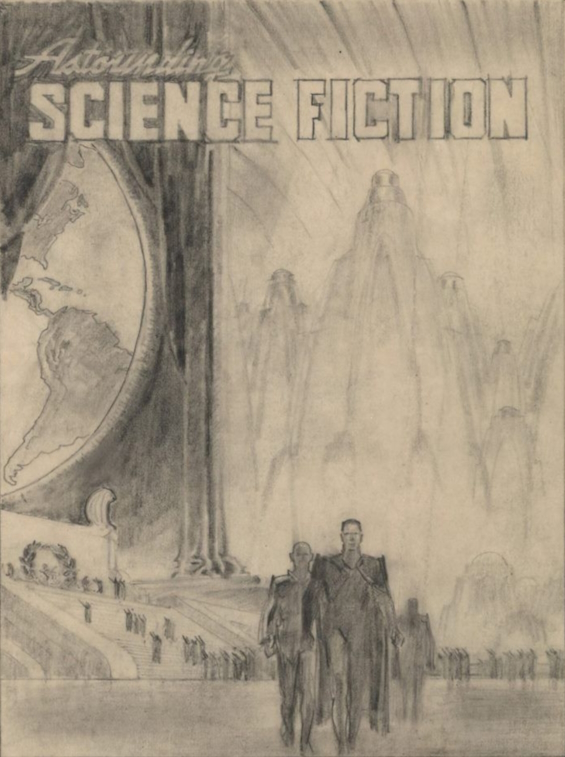
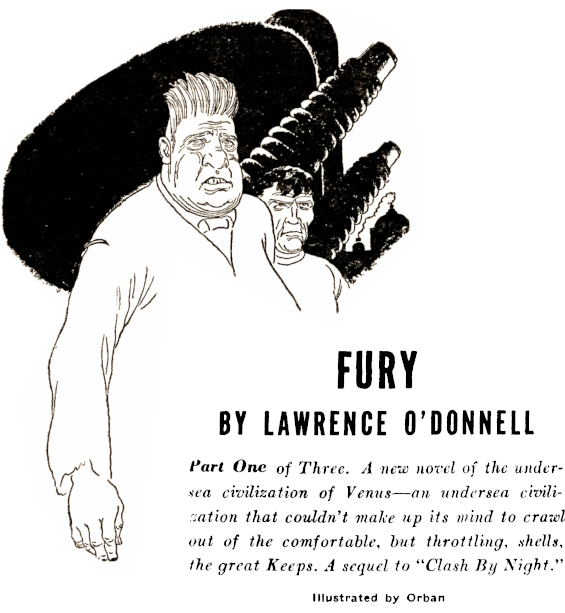
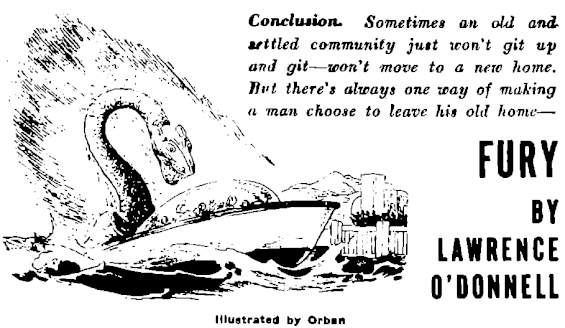
The SFFaudio Podcast #838 – Jesse, Will Emmons and Cora Buhlert talk about Fury by Henry Kuttner
Talked about on today’s show:
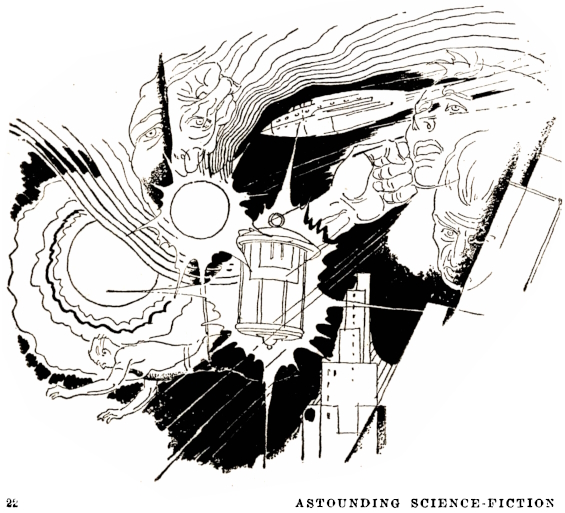
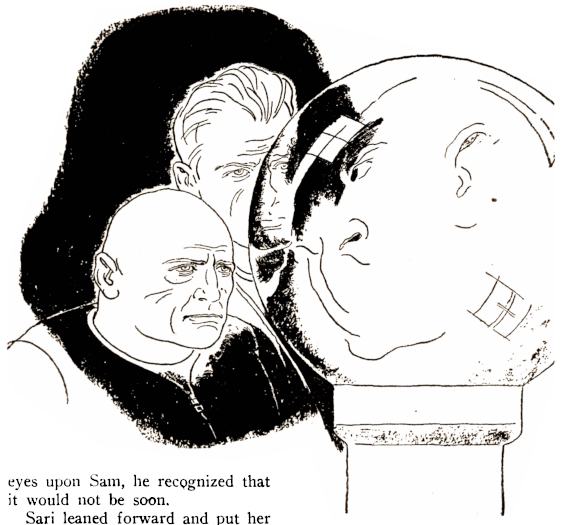
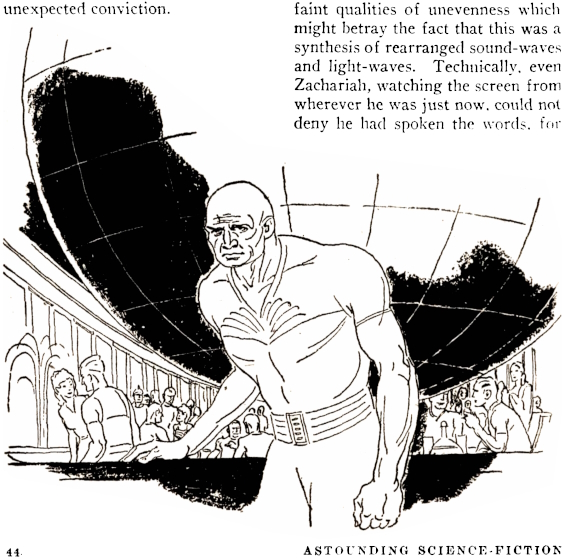
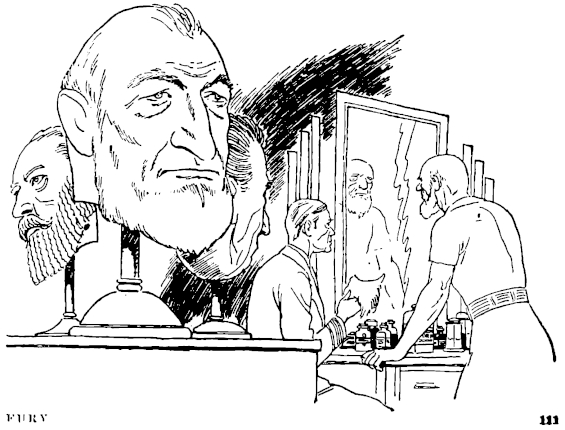
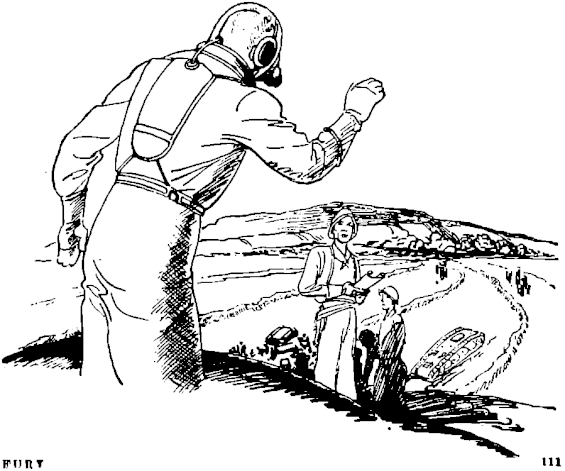
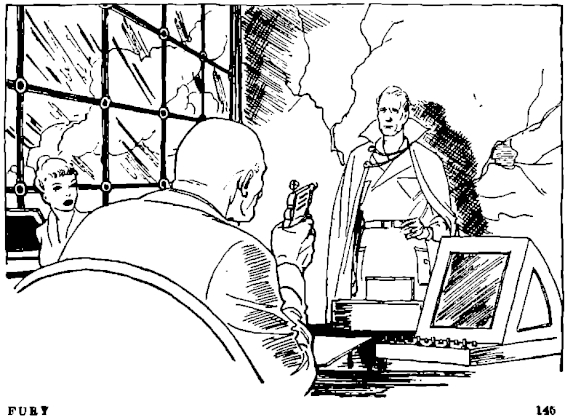
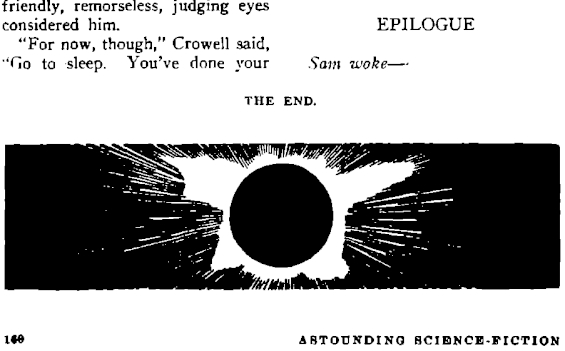
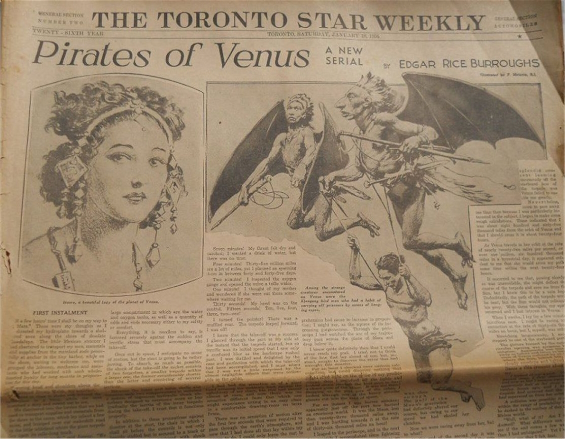
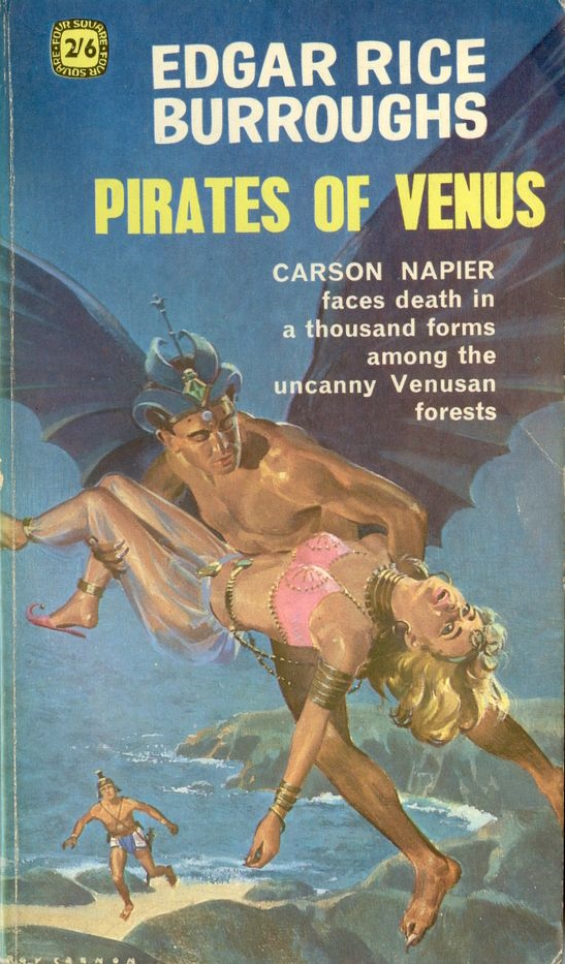
one eight of his wife, the Gabrielle DeCuir read intro, pretty crappy, good, a little evil, the book was evil, calling things evil, pathetic, pretty pathetic, a Slan style book, Henry Kutter do good work, quite pathetic, to the mind of Jesse, summarize what the book is about and why anyone would care about it, read aloud the final up to this point in the serialization, Jonathan wanted to do it, Jonathan blocked Jesse, okay, seems like the plot’s starting now, texting a friend about it, a sci-fi from the 40s, everyone is lazy, amoral swindler, wouldn’t seem immortal, the necessary shock to society, jungle surface of Venus, immortal, some facts about the book, that’s interesting, interesting is not the same as a book, most interesting section, the introduction by C.L. Moore, what she contributed to it, I added the colours, I’m interested in tragic love, the theme that Henry Kuttner was going for, not trusting authority, what’s this book about, 1947, a decade or less into the welfare state, people don’t take responsibility for themselves anymore, pull their pants up, muddled by this immortality thing, a hot topic in science fiction, very immature, immature thinkers, everybody groks it, maybe I won’t, first grey hair, no no I’m not going to die, Heinlein has done this, not new to Kuttner, these mutant elites, a villain or a hero, agreed, a Will Emmons obsession, The Stars My Destination, Alfred Bester, feels shorter, passion, experimental, wish Jonathan was here, not just blame him for this book, wasted a week, wrong philosophy, a modern book that’s similar, not modern at all, by a lady, Beggars In Spain by Nancy Kress, obsessed with not liking her, this book is evil, what makes it evil, take it in and say yes yes, the reason they’re better than you, genetic engineering, they can study all night while you’re lazy sleeping at home, all Elon Musk, inherited an emerald mine, all non-sleepless are contemptible, told from the pov of a persectued Slan, same libertarian vibe, why can’t your parents give that to you, plotting to murder everyone else on the planet, standard x-men, a sidestory in X-Men, look there’s a new mutant!, contemptible, a symapthetic view on both side, Golden Man cat, when Philip K. Dick did it, what if the ideal form of humanity has no brain?, a muddled version of that Nancy Kress book, more serialized, disgruntled guys, not strong enough to be evil, a toddler with a knife, dangerous, not evil…yet, both have fury, way more anger than this book, this book is not angry at all, a dispossessed slan, a rebel undermenchen, a good book, intellectual center of gravity, society under the keeps, no one is striving anymore, you don’t see any of that, a lot of tell and no show, a lot of churn, when he meets the prophet, also an immortal, not a robot, comes back later, exactly how C.L. Moore put it, we wrote this for money and there was no plan, the cloak that makes you feel nice and is a drug and kills you, what is this book about?, drugs?, not about video games?, a failed Heinlein book, the Methusela’s Children series, eugenics and a kilt, a secret society of immortals, flee for the skies, forget that Heinlein, not top five, he thinks its interesting, an immature idea, welfare state, immortal technocrats ruling everything, what is he really mad at?, his dad?, sad story?, temper tantrum, surgery, you don’t feel it, so upsetting, gut punch, skin is coming off, you don’t like the character but you’re with him, worse a nice blue dress one time, not boring, just bad, shoulda clued in, in Astounding, that magazine that’s not very good, another joint, Chan Davis, Pseudoscience In Naziland by Willy Ley, emigrated from Naziland, he’s the good german, pre-paperclip guy, paling around with the bad German, didn’t hang the three slowest Jews, upsetting, our modern rocket guy has a lot of problems, not literally a Nazi, fires some employees, capitalism bad, bad tweets, not literally an SS officer, John W. Campbell editorials, up his own smoke, high on his supply, telepathy or whatever, understand the impulse, dated this girl, no good reason to believe in it, running similar software, parallel possibilities, as to actual evidence, assessing, way too much based on that, of all the things that have happened to science fiction since the 1940s, what we’re doing now, Stefan Rudniki, a bad book, redeeming qualities, the devastating last line, weird authorial, the start of the immortal hero, a genre, the Amber book (Roger Zelazny), Phra The Phoenician, maybe Kuttner would have known, Gulliver Of Mars, His Vacation, a book that Cirsova (Alex) would like, portal fantasy, doesn’t take itself too seriously, the Mars books, crunchier, softer, sweeter, less filler, more killer, crashes on a planet, lands on a philosopher who’s a girl, go to a library, frozen dead people, magic carpet again, green muscle mommy, Soja?, Tars Tarkas’ daughter, a 40 foot lance, a big lance, lances were big in those days, pikes, the roundheads were overworked, a weird zone, the knife alluring, who’s the knife for?, for everyone?, there are no everyone, a guy who doesn’t know who he is, the priest who’s not the computer, blue dress, grandma, a lady who has a granddaughter, secretly, that reveal did nothing, why are we reading all this, the symbol of cash, the genealogy at the top of the story, the Bible’s a lot shorter, what things would happen in it?, deformed as an infant, see the lady, get got, colonization scheme, cheat everyone, wake up confused, get involved in the next colonization scheme, lost the thread, find the lady, 3 card monte, move their hands quickly, bet your money, a street level grifting scam, shills, they share the money, anytime the mark is gonna win the police show up, the guy who’s been gambling arrested, find the lady is a way to steal money from people, other than with my time, too scammed, after paying my 75 cents for 3 issues, not a good story, nothing is substantive in an idea way, the sea-creature that’s now a cloak, corrosive planets, just did a genocide of the entire ecosystem, for plot, for stuff to happen, telepathy, useless, pathetic, not even mad, wasted a week, sad, waste, Kutter is worse than Jesse thought he was, wrote so much, would write anything, Dragon Moon, a cover story on Weird Tales, just type in Dragon Moon, viking stabbin at a dragon, blonde in a green dress, the wild hunt, enthusiastically riding, cool looking, a novelette of drowned Atlantis, bad name, beyond good or evil, the Outside, a Chesterton quote, that Silverberg highlighted, Home Is The Hunter, Silverberg wrote a great essay about it, Kipling quotes, a secondary world almost, where’s the tech?, the closest we get is that cloak, a poisonous world, Clark Ashton Smith, sex and death, sexless, longs after a girl, breed generations of sex slaves, goes nowhere, people got tricked by the ending, immortality, is this something?, the meme with a butterfly, not furious or perverted enough, pretty cold blooded, deleting the entire ecosystem of Venus, plants that were dangerous, the drug addiction, no real life world experience, wasn’t a pioneer, didn’t kick a drug habit, hey I got a real theme going here, dreamdust, turns out he was in the backroom of the wizard’s cave the whole 40 years, okay, more Arthur stuff, Arthur Pendragon, put him underground, return and lead the people, a business startup, a free companionship, a startup designed to defraud investors, doesn’t doing any kind of running and grabbing, should be a lot madder, furiless and didn’t inspire fury, “Robin Hood’s barn”, the idiom, a robin hood’s barn sort of plan, at some point in a novel the novel reviews itself, a short story should have working components that are used and dissipated at the end of the story, spell components, three pinches of newt dust, Helen’s bones, blood from a surly teenager, disappears in a puff of smoke, shit lying all over the table, shocker, not impressed, people were smarter in the past, the reviews in the magazine itself, people should have been reading Thrilling Wonder and Planet Stories, if it was priority, Planet, Thrilling Wonder, five or six other magazines, Astounding, other magazines, the fifties explosion of science fiction, WWII, the wonder weapons, the rockets, people were not with rockets before WWII, almost nobody was into rockets, showing the v-2 rockets being tested in the states, the letters columns, talking about the v-2s, the censorship, circumspect, the V-1s hitting London, rockets are really taking off, Planet Stories, Fantastic Adventures, almost nothing good in it, Ray Palmer, somebody should have stopped him, too much power, exploit this mentally ill man, inner earth man, not just Shaver mysteries, worldview and approach to life, maybe people in the past were stupid too, UFOs, the truth is out there, UFO freak, if I believe in God, people get tripped up on words, barely a teenager, as if you know what you’re talking about, unidentified, what the hell is that thing, not a U, FO, trapped in the world salads, a spell, bring it back to the thing itself, talk to Meg about this story, okay to lie to people for the greater good, this story poses, immediately in the positive, try never to lie, communicating is complex, the outside thing about this thing, more specific about specific things, the way to think about this, just do this, what is an essay, here’s how we’re going to get a good mark, don’t write anything you don’t believe, play with the truth, telling the teacher that you know that, nobody knows what the word “essay” means, what is he trying to do?, what is the purpose of this?, how you do paragraphs, just filling the page, fulfilling the requirements, try to make good sentences, truth is very important, things are complex, words get in our way and trick us, that’s not how things work, this guy from 500 years ago still lives through, a cloud of understanding, trynna trick people, we’re gonna make you all immortal, working at this for 7 years, ha ha fuck you, a worker’s cooperative, that’s evil, for your own good, that’s a liar, what did Meg say?, undoubtedly evil, okay for the government to lie to us about UFOs, people can’t handle the truth, their gonna die, why we have religion, pretty sure, a mystery that can transcend, exactly like to was before I was born, isn’t it interesting I’m a brain in a vat already, includes skin and bone and digestive systems, sense data, that’s interesting, doesn’t make me think of a particular god, strange phenomena for the long time, a wish for immortality, a big part of it for a lot of people, lying definitely bad, we can’t handle it, lie to people to get them to do something good, back to The Stars My Destination, spoiler alert, superweapon, telepathically activated, gives it to the masses, now its your responsibility, hero, they don’t destroy the solar system, everybody needs nukes, if you don’t have hands, we want people to have hands, a real disadvantage for Sirius, Odd John, Olaf Stapledon, Kuttner can disappoint, a C.L. Moore stan, people love her, she likes hot kisses, scary kisses, atmospheric style, unfinished, that’s all she’s got, she doesn’t bring an idea to the table, Reading, Short And Deep recording, Probate, a legal term, about getting to the will, testament, estate, a science fiction story that deals with ideas in science fiction and dismisses them, mocking an idea by taking it seriously, it’s not what I wanted, it’s what I needed, an X-Men story, slightly telepathic, all the women find him sexy, no frontal lobes, just working on instinct, he’s beautiful, looking at it from a guy who is furious, on the wane, the homo superior are in the room, interested in pathetic things, full of all sorts of foibles, your beautiful child, assembling the components to destroy homo superior, better not the be a fuckin monster, not as fast or beautiful, slower to develop, very contrived and very silly, wham bam deals, A.E. Van Vogt, wipes it off the table and now we’re done, the Olaf Stapledon novel, Eric spoiled the ending, smart moral things to do, action and churn, Fury, boring slog, angry at Nancy Kress book, they’re fucking monster, they remind me of the shitlib bluecheck elite, fuck those Gazans, mad at The Washington Post for not endorsing a lady, let oligarchs fuck the world, seeing where the wind is blowing, the undecided voter, slant of various op/eds, not a big percentage, if Trump becomes president I’ll leave and move to Canada, trying to evoke a reaction, watch another youtube video and they react to it, this movie is too scary, twin brothers watching, a split screen, identical twin brothers, that memesis thing, still 3?, the thing being watched the you watching them, they’re watching each other, strange phenomenon, a girl in her bedroom, Damien Walter, words by himself are better, AI illustration of the Culture, retweeting them, that seems uncharitable, not giving a null prize, is this true?, the reason a lot of people are triggered by Trump is they’ve had no actual trauma, he’s not scary, hundreds of thousands of people being killed on the border, say things that are bad, the bad one, he’s pretty good, he did well that day, mobilize the army to deport people, the apparatus you have to build up, mobilized as a law enforcement agency, he was president already, he’s not very much like Hitler, he shouldn’t be that triggering, more like Heinlein than Hitler, only two people in the world, like the Little Prince, one is Heinlein and one is Hitler, pick your fighter, the future that liberals want, he’s not scary, internal enemies, the organized left, Palestine protestors, Arab Americans for Trump, pro-United States, Benjamin Netanyahu needs to finish the job, he talks a lot, what does he do, a different coalition, his staff, all the neocons, alienated John Bolton, learned his lesson, a confirmed Jill Stein voter, voted Green, when he says things he means them, a liar, he is a liar, I’m the best, I got the best people, the best country, the worst country, hyperbolic, is he lying when he says I want to use the military, on day one or maybe day two, someone who’s never been visited by the FBI, you live in a police state, he likes the FBI too, he’s a lot worse on Canada, the Free Trade Agreement, he’d be worse for Canada and better for the United States, doesn’t like communists, don’t understand what communists are, if Kamala is a communist, people you call communist, the dialogue is broken, we’ll see, laudable and good, more risk, the Black Uhuru movement, lazier under Democratic administrations, sleepier, drone stuff, domestic stuff, the MOAB, Soleimani, German government English propaganda channel, Venezuela, it wasn’t me who did the coup, fiddles with pen, in amongst that, persecute Russia more, secret talks, divide Venezuela and Russia, the State Department is running things, the Deep State hates him so much, a bad sign, tryna cozy-up, Bezo was vying for government contracts, less naked about it, Elon Musk picked a team, a lottery, he’s levering, For You, the ultimate test of self-government, returned your grocery cart, social contract, a fool’s framework, very simple, littering, mom didn’t tell you to don’t do that, why do people litter?, really strange lady, weird tiny house lady, keeps building things, trying things out, squeezing the juice out of her life, list of all the things that she’s tried, business startups, raise parrots, adopted from her or genetics, systems, don’t try to buy your way into hobbies, not lose money, you have to work harder outside, interested in parrots, very expensive, breed them, they’re in the house, there’s always more food, all that shit that spills on the ground, all the other animals do well, they eat and they drop food, we think of that as littering, not offensive at all, that’s what parrots do, dirtying their own environment, in a primitive society, sidewalks are a strange invention, do we need more sidewalks, not get run over, easier to get places, should we have roads?, they just tell you where to go, trails, humans in solidarity with other humans, just another animal, we train puppies not to pee in the house, they become upset, very similar to that, he’s not wrong, would you let this guy marry your daughter, he doesn’t return shopping carts, contemplating this, her being able to marry, implausibility, whether he litters or not, a stage everybody goes through, eventually your washing the dishes, community standard, Jesse’s weird, very childish, the grocery is like a government, somebody’s going to have to pick up after me, a boundary, get all your dirty laundry, your space, litter in your own room, don’t attract mice, this office, elected to the spare bedroom, the podcasting office, disenfranchised cats, peeing on the wall, exclusionary, the bourgeoisie, enclosed the commons, the crown, what a world, this election shit, provincial election came and went, Richard Lovelace, one of those cavalier poets, clergy in the house of Lords, wanting the king in charge, better than Oliver Cromwell, Lord Protector, sounds like Napoleon again for the first time, get Napoleon III in charge, starting a list of the bad guys, Franco is on there somewhere, 19th century Stalin, a reformer, he put his brother in charge of Spain, make sure Spain doesn’t flip, the pattern, people trying to reinstate the king, why invading Ireland?, they’ll getcha, these Levelers, manhood suffrage, religious toleration (not for Catholics), modern liberal democracy, in bed with Cromwell, in the New Model Army, didn’t split the movement, this weird phenomenon, this English Civil War, conjure radical forces, aren’t able to use, Cromwell is Mao?, Sun Yat-Sen, sorta got his wish, the king’s back, roundheads, a short story by Lawrence Block, good character writer, good plotter, a werewolf story, Original Science Fiction Stories, January 1959, Make A Prison, the first Althean, he won’t languish and die in such a state?, ample opportunity, study the creature, the mere thought of a prison, the whole notion, an abominable one, wouldn’t do, he actually murders, subdue him, physically ill, for goodness sake, now you’ve hit upon it, a party of ten, he struck out at them, unprovoked assault, the first case of murder on record in 30 generations, he eats whatever we feed him, he is dangerous, very dangerous, as possible, perhaps I’m squeamish, positive, 130 feet high, right?, right!, it’s slides slope inward, a pneumatic tube, leaping from the top, littering, it seems safe, it is safe, not cruel, in just a few minutes, such a smooth writer, Cora got her times mixed up, sends her apologies, motor car, motor truck, forced myself to finish a book, she’s right not to like it, limbs securely shackled, the key to his shackles in his quarters, all the angles, one more page to go, a red light at the base, throw down the shackles, not something you see every day, plummeted through the air, he’s found the key, the key followed soon thereafter, gazing down at them, soared off into the sky, what is this story?, a trick, what?!, is this a science fiction story?, mostly a trick, as a practical matter, that’s it?, came across a key, hence Lovelace, a poem from 1642, To Althea From Prison, tangled in her haire, liberty, Thames, careless heads, thirsty grief, fishes that tipple in the deep, when like committed linnets, with shriller throat shall sing, voyce, inlarged, stone walls doe not a prison make, nor iron bars a cage, from an hermitage, angels alone that sore above, Lawrence Block read a poem, recognize those last lines, thing he’s going to be remembered for, secondary world, spun up just to do the joke of the story, that is very science fictional, take the poetic and make it real, okay but not, he is a dragon, that’s now science fiction, take it seriously, this world is not our world, they have motor cars, no murders for 30 generations, who is this creature from outside, how come they didn’t notice he had wings, that’s weird, just a joke, that’s actually, Brave New World is a line from The Tempest, a science fiction movie, that’s a joke, the world’s fucked, the second time it’s serious, the story becomes much better for what its addressing, kings are better than non-kings, in prison for wanting the king back, did some nice poetry, it’s okay girl, we’re like committed linnets, the poetry frees him from prison, the worst Kuttner/Moore book, just a terrible book, needed money, finish the bloody thing, blame Jonathan, partially responsible, worst thing Moore was involved in, knew how bad this one was, the prequel, Clash By Night, 1943, early military science fiction, also with Moore, fertility issues, couldn’t have a baby, miscarriage, contract marriage, mercenaries, jungle planet, The Little Prince, Attitude by Hal Clement, a bad summary, Dream-Quest Of Unknown Kadath, We Print The Truth by Anthony Boucher, unbeatable, it’s okay, the idea of a Little Prince planet, a very Heinleinian book, probably kill Hitler, [Methuselah’s Children?], Lazarus Long, Time Enough For Love, different writers, more sanguine?, philosophically interesting but evil, a toddler with a knife, who’s the knife for, for everyone, constant extolling, hedonism is bad, work them off for nothing, if you’re european, free healthcare, how terrible, second sons, people picked out of the enclosures, we’re plebeians, malcontents, emigrated to the U.S., hung out with the sailors in the harbour bars, she has a good husband, no one would have had her, high-tailed it to the U.S., the failed Bremen Soviet Republic, propaganda, New York City or Boston, the prairies, living in filth, westward expansion, things driving these things, Young Pioneers, colonize moorlands, the Netherlands, moorland colonization, little America, stay here and colonize the moors, after 1848, politically undesired, crises in foreign countries, selling equipment to goldminers, more wary, the lesson Jesse learned, more critical of claims, get a bad one, if you made this into a short story the answer is nothing, this isn’t a science fiction story, science fiction wallpaper, either the wallpaper goes or I do, totally disjointed, not substantive throughout the book, the introduction, some of the world building details, the happy cloak, you could do a story with that, Shambleau, most reprinted Moore, didn’t bother renewing it, sometimes people are dead, sometimes they’re distracted, step-daughter, retro Hugos, 71 Kuttner stories, easy to forget, her second husband, see the documents, SFWA grandmaster, had dementia, half a dozen Kuttners, The Proud Robot [was copyright renewed: “R494633”], asshole, that’s a great story, A God Named Kroo, Killdozer, good at comedy, The Proud Robot, solo Kuttner, fadedpage, the high priest of a Tibetan deity, the body of a yak, a bumbling Indiana Jones, a great story, Science Fiction 101, Worlds Of Wonder, Home Is The Hunter, a science fiction story, soft science fiction, the best kind of science fiction, space opera, hard, wallpaper, the biggest, the most ability to imagine different scenarios, what technology, ideas are kind of technologies, a future that’s not like ours, a post scarcity, 11 pages in Galaxy, credited to both, There’s noboy who I can talk to except myself, all my wives, Honest Roger Bellamy, Hunter, waterfall of marble steps, in all their jewels, this whole story of the narrative of how he got to this situation, he’s a headhunter, the most famous and best people kill each other, legal, proper, encouraged, his life is a misery, one giant rug pull, he woke up, death is real, what do we value, don’t do what he did, throughline in this, immortality is a thing, everybody wants immortality, why does this book exist, to fill pages, paid the rent, good for them, essentially hack work, sticks with me, Philip K. Dick is extraordinary, more short stories, fewer novels, Kuttner wasn’t a novel guy, Earth’s Last Citadel, allies, German spies, humanity has all but died out, huge citadels, rambly, a serious problem during the WWII, everything is about WWII, Fantastic Adventures, a story about fairies set on a military base, offensive, not very good, we gotta be more careful, descentish, Heinlein was too busy to write much, Ross Rocklynne, alien intervention, Killdozer, seabees, haunted machinery story, The Murderous Steam Shovel, Allison V. Harding, elevated train in New York, major food or family holiday, Thanksgiving, fucked up calendar, clumping of Christian holidays, patriotic holiday, Oktoberfest, Halloween, Reformation Day, time off school, a lot of candy, dress up?, native trick or treating traditions, St. Nicholas Day, recite a poem or sing a song, regional, lower German, seasonal poems, santa hats, wassailing, ghosts or Skeletor, paper lantern, Rhineland, Three Wise Men, the black wise man, blackface, paint one guy up, pretend to be a boy?, charitable causes, bless your house, Catholic homes, blessings on the door, Fichte, super Catholic region, the 30 Years War, chalk, imported from the U.S., unknown until the early ’90s, U.S. movies, college student Halloween parties, big candy, Carnival in February or early March, when Iraq, Kuwait, everybody was protesting, standing there, a peace protest, to stop the U.S. from bombing, serious about it at the time, why did we even do this, vulgar pacifistic, the best Halloween costume, a vampire a bunch of times, very good, in college, Doctor Midnight, the Justice Society, the yellow helmet, Doctor Fate, living like Doctor Fate in a tower, much more mysterious and less gay than Doctor Strange, definitively married to a woman, entanglements with women, not a medical doctor?, too many reboots, a few guys, a female Doctor Fate, snippets, the Flash with WWI helmet, stuck some poor guy in this silly helmet, Cora’s best Halloween costume, Psylocke from X-Men, the swords, energy daggers, difficult recreate at the time, Mississippi, Pippi Longstocking, a witch, devils, completely unknown at the time, kindergarten, Star Wars costumes, sexy witch, sexy nurse, Robin with a long cape, goggles, blind but can see in the dark, Daredevil, crescent moons, Watchmen’s owl guy, Batman with no superpowers, owl vehicle, mental patients he needs to punch, pines after a girl, very bad Alan Moore, very good, this is nothing, toxic fans, clickbaity title, something about Trump, fandom is not responsible, used to be quite different, fandom has changed, guys in their 40s, middle aged white guy, furious, LGBTQ women in Star Wars, reboot of a children’s cartoon, I’m A Celebrity, a real show?, super-intellectual, salability, Boris Johnson, Have I Got News For You, the Trump Apprentice thing, a helluva long time ago, not a politician, approach, why does this essay exist, he’s got a new book, funny words, febrile disgruntlement, his prose pieces, he’s a very good comic writer, you can see what he’s doing and you hate, big long letter, League Of Extraordinary Gentlemen, his gandson playing Pokemon, asked to promote his book, random blocked, mocked it, random stranger, didn’t mock him, which hotel that is, a golf shop, what’s the difference, Tars Tarkas was queer, very queer indeed, quick on the block button, fragile, blocklist, win a null prize, H.G. Wells, super-eager to block, pruning what you see on twitter, a super-unfollow, can’t even see it in “For You” now, he’s funny, you don’t want to see him, Swiss weatherman, accused of raping his then girlfriend, consensual, rapist in my timeline, shitty excuse for a secretary of health, international journalist, get police out, really into the block button, never blocked a person, so many people who interact, other people would see it, I like Alan Moore, he’s cool, has problems, he’s gotta be 70, reminiscence of a guy, things have changed lately, “what we’re up against”, New York Times, the movie came out, can’t write about Neil Gaiman, rapist sexist, harassed women into sex, asking them, coercing, different from rape, didn’t rape anybody, otherwise consensual, seduction of minors, sexual abuse, the cutoff age, 17 and half years old, age of consent, lesbians, we forgot about them, still a shitty person, found guilty in the court of public opinion, The Graveyard Book, Coraline, Neverwhere, underground london, a show first, vintage Doctor Who, Sandman is pretty good after the first volume, shouldn’t have been in grace, you shouldn’t have a tattoo of Neil Gaiman, a tattoo of Death, are you into Sandman, girl?, must be into Sandman, he’s not the president, who cares, at a Hugo ceremony, accepting his Hugo for Good Omens, American Gods, special wheelchair van, as soon as the audiobook came out, George Guidall, 13 cassettes, Neil Gaiman in the United States, this overlay of the gods, blank main character, very similar to a Douglas Adams book, he is a good writer, he can write, Snow White Apples, he invented the whole genre of retelling for comics, after the Jim Lee debacle, Sandman, Walking Dead, all the Vertigo comics, Garth Ennis and independents, a little bit of French stuff, Belgian comics, Heavy Metal, 2000 A.D., a popular target, Ya Boi Zack, birthday party clowns, utubers who Cora really hate, Critical Drinker, closeted gays, wands, Captain Marvel movie, it’s stupid, way shittier things, delicious like Taco Bell is, she has no personality, Brie Larson, talk off camera, 2 brains cells to rub together, rewarded through the algorithm for hate, patterns pointing to, this stupid Guardian article is stupid, for retweeting, why are you linking, public health officer in Bavaria, how can you retweet this?, have their own ideas, the Gaza stuff, so horrible, pro-Ukrainian and anti-Russian stuff, what did stop the Iraq War, the 1990 one, treaty, that worked well, still not occupied even tho their occupied, the Taliban are the worst people, who made that happen?, Asian Muslim countries, headscarves, force men to wear beards, put this hat on, kids are roped into it, no kids anymore, kinda the plan, stupid actor, very upset by actors existing, people treat them like they are something, underperformed movies, German culture programs, what kind of show he’s on, political question, Bruce Willis can’t talk at all, a singer before he was an actor, if they write their own music, ring of fire guy, Johnny Cash, Leonard Cohen, quotes and the attribution, almost always a fake attribution, comes with authority, G.K. Chesterton, a Father Brown story, short stories, some people are Catholic, overly religious, doing a C.S. Lewis, asking them to not be religious in their fiction, Jordan Peterson, a stupid smart guy, Patrick Stewart is not Jean Luc Picard, he can perform Shakespeare, Shakespeare is hilarious, Charles Dickens, to be Scrooge, a fun role, a fun character, he performed Scrooge, Charles Dickens performed his books, unrecorded audiobooks, huge captive audience, no recordings of Charles Dickens, died 1870, audiences approved of it, Edgar Allan Poe went to one of them, anticipating the ending, Dickens fan, not enough science fiction, ghost stories, Oscar Wilde, the really gay writers, R. Murray Gilchrist, the yellow 90s, H.W. Hornung, Conan Doyle ripoffs, the Raffles story, the word fag, faggot, that’s not it!, in the British public schools there was a system called “fagging”, massive sexual abuse, that is is the sick part, a term of abuse, punks are on ships and fags are in school, an official and an unofficial system, commit suicide, who he used to fag for, burglary together, really fun and very well written, supergay, Oscar Wilde, great turns of phrase, fagging, that fucked up system, term for gay, being reclaimed, queer, we need the etymology, straight out of weird, the 1920s, gay balls, to dance around or prance, gay boyfriends, loves going to gay clubs, fun to hang out with, another German term, hot and sweaty, warm brothers, Toronto and San Fransisco, Turkish bath culture, totally gay, you carry, you gather wood, the evil part, you have to go to school, like regular prison, they had to go, forced to go, the parents forced them to go, mom I want to be home with you, governess system, the history right in front of us, gay writers, the Will digression, Will is a Jesseologist, his cowl is impossible, coveted the underoos, Conan Jesse with fur diaper, much taller, you’re too old for this, left out, a dog, how to make your Halloween costumes, the one made out of paperbags, paper bags for the ears, coloured pencils, a great costume, what if it rains, self-made, I’m poor, worst Halloween ever, bow was a coat-hanger, at a motel in northern British Columbia, no materials, Jesse had real trauma, a dinosaur, clowns, princess, costume jewelry, Hungarian girl costume, native American person, Romany fortune teller, Chinese woman, queen of hearts, a card-deck, very cheap, easy to due, carnival costumes, grading on a curve, none of your business, don’t vote for the Nazis, socialists, asked all the candidate questions, normal to endorse, Musk is endorsing, the party is dying, don’t say it, mainstream newspaper, we endorse candidate xyz, not doing it is the problem, the high tariffs is a good idea for the United States (terrible for Canada), customs fee, retaliated for tariffs, never took down the tariffs, it sucks to be a colony, next year’s Worldcon in Seattle, say hi to Paul, less littering, self employed, green card, might just stick around, sworn translators, no husband to go back to, not as terrible, crossing the border into the USA, refusing to come Kentucky, maybe under Trump, voted for Biden, pissed off, if they don’t denounce the Nordstream destruction, every American hated it, Ukraine and Russia were getting into squabbles, why do the Poles love the Americans, Polish politicians, owned by the United States, Polish students, a relationship, a girl from Finnland, very mysterious people, a bit reserved, Cora is not reserved at all, weird games, by a Finn, mini-scandal at the Helsinki Worldcon, My Summer Car, you bought a car, your going to fix it up, spray paint, the driving part of the game, something every person did in Finland, buy a second hand car, a Datsun, an alien planet, sauna culture, sweat lodge, demons I gotta exercise, Russian buildings there, don’t take down statues, Sámi people, Inuit is a very strange culture, look and act like Indians, teepees, dog culture, beards, from the same planet, reindeer, bilingual signs, northern cruises, had to go to Greenland, the Kola peninsula, Kamchatka, like Upper Michigan, across the top of the circle, central Asia, the horse people, Turkic peoples, Germans and Dutch, Austrians, what’s the American equivalent, affinity state, near Lexington, Richmond, easter half of the state, Appalachian, east Tennessee, normal Southern, gulf coast, anything South of Virginia, Kentucky accents, from the mountains, Hillbilly, oldest mountain range in the world, the golden triangle, Louisville, south of Cincinnati, totally devastated, stakes are low, technically true, Canada is very big, even in deepest China, Kentucky, horses, the derby, KFC, Kentucky Christ Fuck, ficken, sheiss, German actors, swear in a foreign language, need a girl, Black Widow, in WWII, fight Nazis together, Wolverine, shit friends, a letterer problem, Wolverine’s sense of smell, he sniffs things and he heals, if your bones are gone, his entire skeleton is showing, the new Deadpool movie, Blade, Wesley Snipes, I’m the only Blade, Blade Trinity, before Marvel movies were Marvel movies, a Punisher one, really obscure, Werewolf By Night, Iron Man, the 198[9] Batman, Superman (1979), a Spider-Man fan, he’s like a loser, having a good time, his life is just really bad, more relatable, the comeback, snappy, really smart, snarky, good hearted, he’s a teenager, Mary Jane, Gwen Stacey, in comics, Rogue, can’t be touched, Jean Grey keeps dying, hots for her, an Arthurian thing, she’s the Guenevere, Fantastic Four was entirely a boomer thing, when Beast starts to have Blue skin, master mold, makes other sentinels, Classic X-Men, John Byrne, Chris Claremont, 1975 to the early 1990s, the iconic cover, Days Of Future Past, reading it in Calgary, this is amazing, this is awesome, got some ideas, Jubilee, when X-Force came out, fuck these pouches, an early 90s teenager, Asian American, all good stuff, born in the U.S., mallrat type, sprinklers, Dazzler had a baby, she’s a mutant, does her own lightshow, comics used to be great, old people gene, really good things to read, the Claremont run, what the fuck’s with Morph, just a redshirt, Morph got fridged, Age of Apocalypse, better off with Richie Rich and Casper, he’s not just friendly, he’s not going to die, always the same, punished for being hungry, a grokkable psychology, Donald Duck, Uncle Scrooge, more like Tintin than anything else, undersold how popular Donald Duck, the writing, well written, Huey, Dewey, and Louie, menaces to Donald Duck, he’s not a great father, did they murder their parents?, the story of Inception before the movie, the exact same idea, such a great idea, working out the idea, a secret, straight out of A Scandal In Bohemia, everything’s in there, letters from the king of Bohemia, a rip off of the Purloined Letter by Poe, he did it perfectly, photocopying a plot, the New Twilight Zone, Jordan Peele, Not All Men, James Tiptree, Jr., meanwhile Harlan Ellison gets money and credits, Days Of Future Past, Doctor Who serial, I don’t like this Doctor guy, Christmas special, why are you so negative, watching Blade, half vampire, their age difference was negligible, 12 year between them, he looked like an adult, sad scary, not working out, Sir Patrick Stewart spends his time, Blunt Talk, a much better fit, he’s a no-nothing British guy, the Falkland Islands war, being a ditz, going to Starbucks, Star Trek feels, a reboot of one of the movies, actors having fun, alternate universe, no plan, making it up as they went along, not fun for the readers, how Kuttner wrote this book, actors having a ball, Star Wars sequels, have a plan, somehow Palpatine returns, gettin paid, J. Michael Straczynski, all non-union actors, him being the sole writer on it, as soon as he took control, one of the best science fiction shows, Babylon 5, Scarecrow And Mrs. King, skating, wreck the plot, that’s fine, pablum, the first three episodes, sparkles and no ideas, trust our sniffers, be like wolverine without the adamantium bones, didn’t fit into the bags anymore, deep Halloween trauma, the most special time of the year, go to people’s houses and threaten people, feel the power, American Halloween, witches and monsters, kids are talking about it, homemade costume, went to the mall, have to sing a Halloween song, Old MacDonald Had A Farm, custom jewelry, you have to say trick-or-treat, the Pledge of Allegiance, child logic, no song, Missy, store bought witch costume, definitely not Missy, every morning, Americans are weird, what the whole thing meant, got to hold the flag today, a good way to close our show, Wesley Snipes, artificial eye, stroke or something, wear sunglasses the whole time, pulled it off in Deadpool, guy wearing sunglasses, he’s cool, won Oscars, would’ve been fine, Demolition Man, the world than the action, a good science fiction scenario, the bad Judge Dredd movie, the sidekick was Rob Schneider in both, on a plane, Passenger 57, New Jack City, Gallowwalkers, using this technique, low or no critical reviews, Michael Crichton, Rising Sun, Westworld doesn’t have a book, Black Rain, Michael Douglas, Andy Garcia is fridged, yakuza and Toyotas, wet streets with lots of neon, little ones, Boiling Point, Mo’ Better Blues, the movies got smaller, in prison for a while, known as an action star, an episode of What We Do In The Shadows, tv miniseries, Netflix, Michael Jackson music video, good at dancing, Kevin Hart, could be good, something to download, writing about things that are stupid, working a lot harder than the writer who fucked it up, bad movies with high ratings, a short comedian, Eric Roberts, what happened was, small town low budget film, the star power, its actually pretty good, a small town seems to be a flame for the moths who are convicted criminals, murdered criminal, a Tales From The Crypt episode, a very specific formula, disposable character, based on the comic, super moralistic, people who are judging them, the violence in the comics, they want to have power, an easy get, 250+ ratings, 94%, 8.5 out of 10, Gone With The Wind, Lawrence Of Arabia, what the fuck is going on, local theater people, good muscle tone, half dressed packing a suitcase, I wrote this, my friends like the script, we can film here, who can we get, he’s in some good movies, famous as Julia Robert’s brother, mid-range movies, Runaway Train (1985), Akira Kurosawa, 700 credits, looking at his cue cards, Bruce Willis, tell him what his lines are, leave money to his family, they only have him fro three days, not the way Hollywood does it, an extraordinary, old people talk about old movies, 2005, time zone converter, another reason to hate daylight savings time, the regular time for Paycheck and The Weapon Shops of Isher.

Posted by Jesse Willis



 Reading, Short And Deep #357