The SFFaudio Podcast #187 – READALONG: Tarzan Of The Apes by Edgar Rice Burroughs

November 19, 2012 by · Leave a Comment
Filed under: Podcasts 

Podcast

The SFFaudio PodcastThe SFFaudio Podcast #187 – Jesse, Tamahome, Julie Hoverson, Luke Burrage, and David Stifel talk about the audiobook and podcast of Tarzan Of The Apes by Edgar Rice Burroughs.

Talked about on today’s show:
the classic Tarzan yodel, the dum-dum service, Tarzana, California, those beautiful Burroughsian run-on sentences:

“From this primitive function has arisen, unquestionably, all the forms and ceremonials of modern church and state, for through all the countless ages, back beyond the last uttermost ramparts of a dawning humanity our fierce, hairy forebears danced out the rites of the Dum-Dum to the sound of their earthen drums, beneath the bright light of a tropical moon in the depth of a mighty jungle which stands unchanged today as it stood on that long forgotten night in the dim, unthinkable vistas of the long dead past when our first shaggy ancestor swung from a swaying bough and dropped lightly upon the soft turf of the first meeting place.”

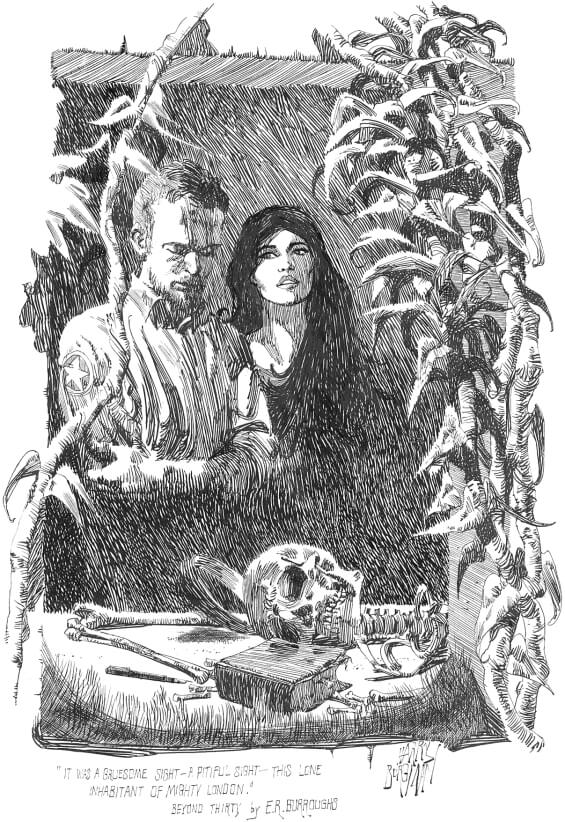
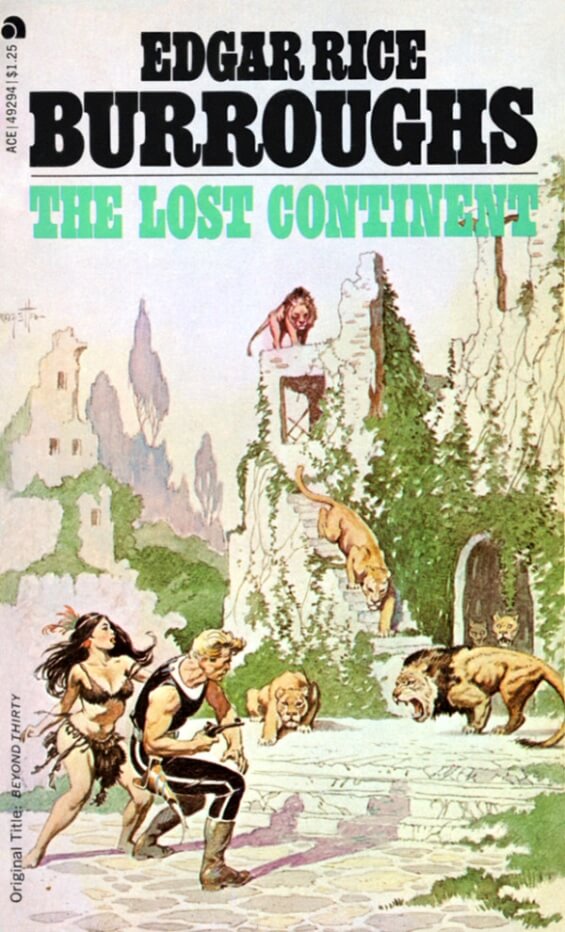
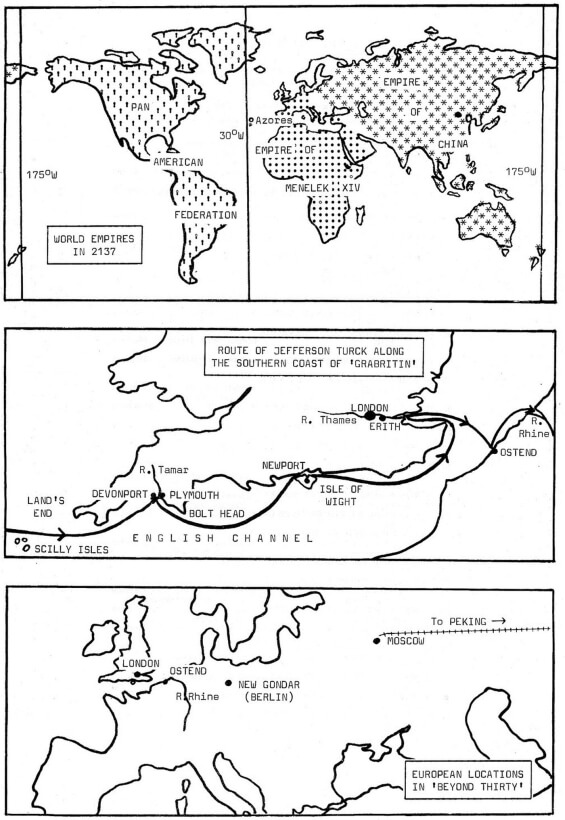
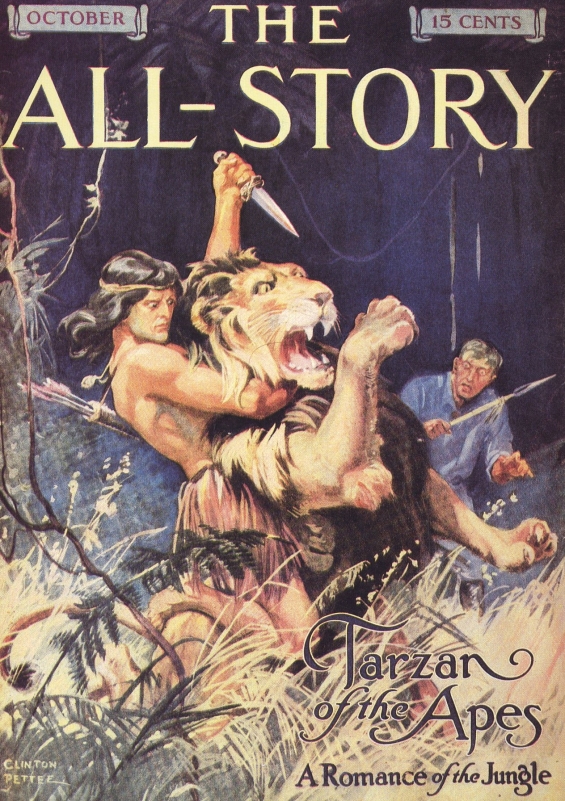
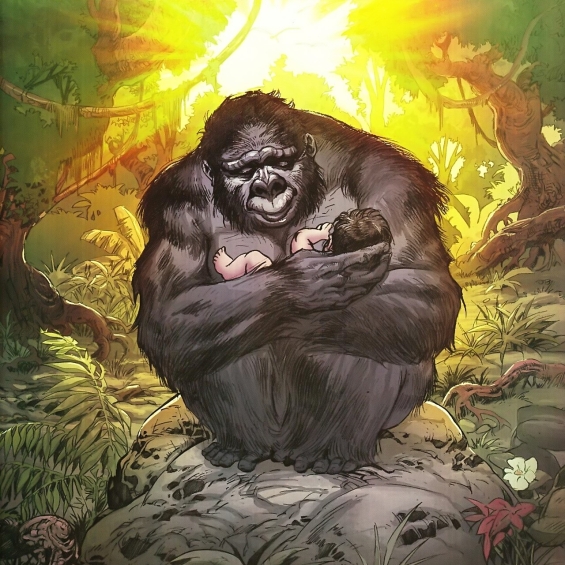
A Connecticut Yankee In King Arthur’s Court by Mark Twain (and SFBRP #151), Edgar Allan Poe should be read aloud, The Return Of Tarzan, racism, Esmeralda, Gone With The Wind, minstrel shows, Chicago, Arizona, the mammy archetype, radio drama racism, Jar Jar Binks, Star Wars: Episode III, October 1912, historical dialect, Jane (the white lady), “you just shot a woman in the head”, cannibalism, Conan Tarzan lynches his mother’s killer, rope tricks, out of context vs. in context, Tarzan as a god, Ballantine Books, the dum-dum scholars, Project Gutenberg edition, ERB Incorporated, Tarzan The Censored by Jerry L. Schneider, Tarzan Of The Apes censorship and “improvements” since the original publication, “an English grammar Nazi”, The Heathen by Jack London, taking out or changing a few words can hurt the story, Earnest Hemingway and William Shakespeare are “too wordy”, Tab Cola, Tarzan’s relationship with the cannibal villagers, “mankind and civilization aren’t”, colonialism, the Belgian Congo, King Leopold II, contemplating cannibalism, “the white god of the woods”, Greystoke: The Legend of Tarzan, Lord of the Apes (1984), Wisconsin, Tarzan’s ape father is driven away by Kerchak (and turned into a museum exhibit), “the Evil village of Scotland”, the sadness that comes with the deaths is powerful, Paul D’Arno, Obi Wan Kenobi, “Tarzan was the blockbuster hit of the twentieth century”, A Princess Of Mars, Ruritania, The Mad King, “complete in one issue”, All-Story, the scanty Science Fiction elements, feral children, Romulus and Remus, Mowgli, Tarzan is a wild child, “this line from a book”, all of Burroughs characters are excellent language learners, when Tarzan writes a note, Lord Of The Jungle (Dynamite Entertainment), the mistaken dual identity, “Jane has massive bosoms”, Green Mansions (starring Rima, The Jungle Girl), Johnny Weissmuller, “the Sheena of South America”, Audrey Hepburn and Anthony Perkins, Psycho, significantly more significant, the primary driver of fiction of this period is character, Nancy Drew, book serials, Rudyard Kipling dissed Burroughs’ writing and grammar, White Fang is kind of like Tarzan Of The Apes, first person vs. third person, you can’t admire the character from afar if the story is told first person, Sherlock Holmes, “that turn towards character is a turn towards the third person omniscient POV”, “that heroic distance” (1910-1950), Raymond Chandler, “I read Chandler”, Tarzan is the only Burroughs series that doesn’t turn to first person narration, John Carter’s character, why is Tarzan such a big character, Tarzan Alive: A Definitive Biography Of Lord Greystoke by Philip José Farmer, Tarzan as a quiet sophisticate, Doc Savage, The Green Odyssey by Philip José Farmer, Farmer is a fan of character, a stranger in a strange land, what ruined Julie for religion, The Mastermind Of Mars (is PUBLIC DOMAIN), “Tur is Tur.”, copyright, copyfight, jungle Tarzan vs. cafe absinthe drinking Tarzan, “the machine”, the Weissmuller Tarzan, where does he get his razor?, “that knife was his father”, “next book please”, Tarzan And His Mate , “lots of wet people”, “skin friendly”, melon-farmer vs. motherfucker, Boy and Cheeta are Hollywood, Scrappy-do, what did Tantor have to say?, Sabor the lioness, “there are no tigers in Africa, Ed”, Crocodile Dundee, Beyond Thirty, The Mucker, yellow peril looking dudes, The Girl From Hollywood, The Man Eater, early road trips, The Land That Time Forgot, The Lost World, the Caspak series, WWI, “sheer headlong adventure”, The Asylum, closing words, “it’s not what you think”, “really really good fun”, baby ape skeleton in the cradle, a classic of writing, a touching story, “and vengeance is his”, serialization in newspapers, cliffhangers, Charles Dickens, Wilkie Collins,

All-Story, October 1912

Maureen O'Sullivan as Jane in Tarzan And His Mate

Dynamite Entertainment - Lord Of The Jungle

Posted by Jesse Willis
The SFFaudio Podcast #181 – AUDIOBOOK/READALONG: The Beckoning Fair One by Oliver Onions

October 8, 2012 by · 1 Comment
Filed under: Podcasts 

Podcast

The SFFaudio PodcastThe SFFaudio Podcast #181 – The Beckoning Fair One by Oliver Onions, read by Julie Davis (of Forgotten Classics and A Good Story Is Hard To Find). This is a complete and unabridged reading of the novella (2 Hours 40 Minutes) followed by a discussion of it. Participants in the discussion include Scott, Jesse, and Julie Davis!

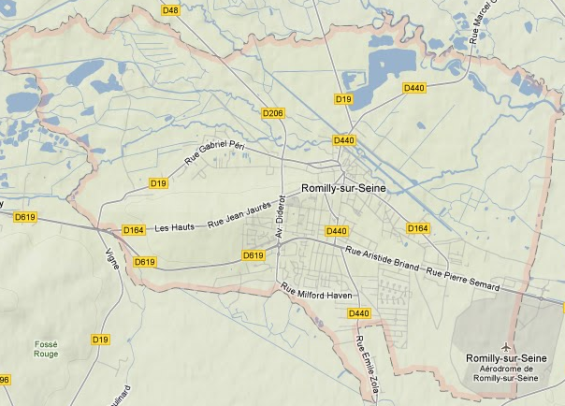
Talked about on today’s show: Yay!, Scott has another busy year, The Odyssey, Beowulf, length vs. content, is The Beckoning Fair One too long for it’s material?, modern colloquial terms (for 1910), Stephen King, The Forbidden Books Group Presents, Necronomipod: The Lair Of The Bookish Worm did a podcast discussion of The Beckoning Fair One, The Shining, writer protagonists, Bag Of Bones, The Haunting Of Hill House by Shirley Jackson, The Turn Of The Screw by Henry James, surprise endings, ambiguity, a writer’s point of view, Julie’s sister can see ghosts, now is the time in the podcast for a personal ghost story, the ghosts of Logan, Utah, troubled or troublesome nuns, are ghostly experiences possible during the daylight?, doppelgänger, an urban phenomena, a haunted hotel room, a vivid vision of a drowning, a disappearing maid, nightmares, a premonition, Christine, why are there no haunted beach?, haunted cars, gremlins, hiking, a haunted hiking trail, machete vs. axe, ‘there’s something wrong with that bedroom’, there’s something wrong with that, the ontological argument, House, M.D., between the ultraviolet and the infrared, a great title, the dripping of a faucet, The Sarah Bennett Quintet, suicide, Oleron is unconscious of the things that he’s conscious of, who’s sleeping in my bed?, a ghostly brushing, “he wakes up to himself”, a harp cover, Oléron is an island in France, and Romilly is a city in France, is the house playing him like a harp?, the final chapter, Jesse’s not super swift, a shut in, vegetable refuse, wig-stands, a large lumpy pudding, the recurring “triangle”, it has esoteric meaning to Freemasons, how did Elsie end up in the closet?, “you get to decide”, an alternative suspect, the tramp in the basement, the Hobo marks, “don’t push the religious angle”, firemarks (fire insurance marks), starving artists, why men have to get married, a Jonathan Swift shout-out, Elsie had a Brobdingnagian complexion, “I need you and I want you to marry me.”, sticking with the spooky, maybe Julie’s in an insane asylum?, Community, Red Dwarf is an excellent Science Fiction show, The Booth At The End, H.P. Lovecraft, Dagon, The Colour Out Of Space, The Statement Of Randolph Carter, The Dunwich Horror, amorphous horror, a gelatinous voice, Gregg Margarite, The Facts In The Case Of M. Valdemar by Edgar Allan Poe, this podcast is making me hurry for rosewater pudding, The Sixth Sense, Signs, Joaquin Phoenix, The Master, Baron Münchhausen, The Takeaway Movie Date, The Big Book Of Ghost Stories edited by Otto Penzler, Donald E. Westlake, the ghost of the paperback, Jesse has a guardian angel?, Parker, Jason Statham is a modern action movie star like they had in the 1980s, The Bank Job, Anarchaos by Curt Clark (aka Donald E. Westlake), Smoke, Humans, Firebird by Jack McDevitt, Will Duquette, Hans Christian Andersen, Oscar Wilde.

Romilly

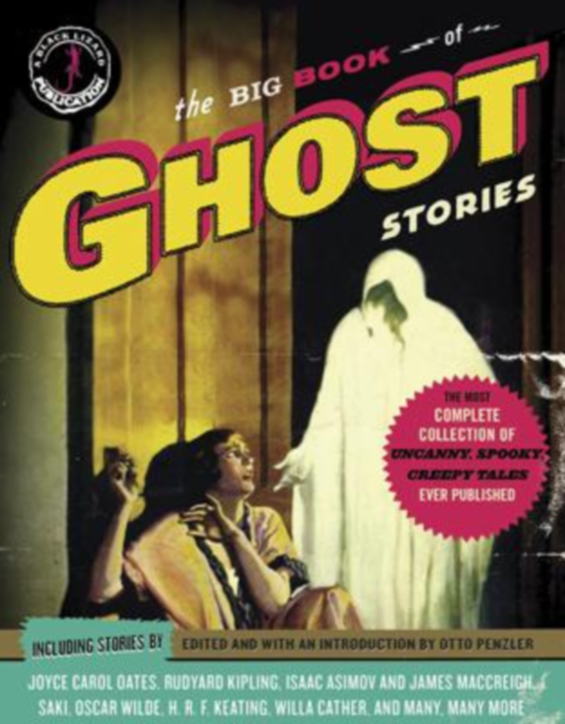
The Big Book Of Ghost Stories edited by Otto Penzler

Posted by Jesse Willis

LibriVox: The Metamorphosis by Franz Kafka

March 6, 2012 by · Leave a Comment
Filed under: Online Audio 

SFFaudio Online Audio

The Metamorphosis (in German, Die Verwandlung, “The Transformation”) is a novella by Franz Kafka, first published in 1915, and arguably the most famous of his works along with the longer works The Trial and The Castle. The story begins with a traveling salesman, Gregor Samsa, waking to find himself transformed into a giant “monstrous vermin”.

This narration by David Barnes is really terrific! One reviewer put it this way: “Slow, dignified, fitting for Kafka.” Another this way:

“A wonderful recording … Many thanks to Mr Barnes for his wonderful reading … [a] nightmarish and chilling tale of horror and abandonment. It is one of the most powerful texts written by Kafka and quite worth listening to.”

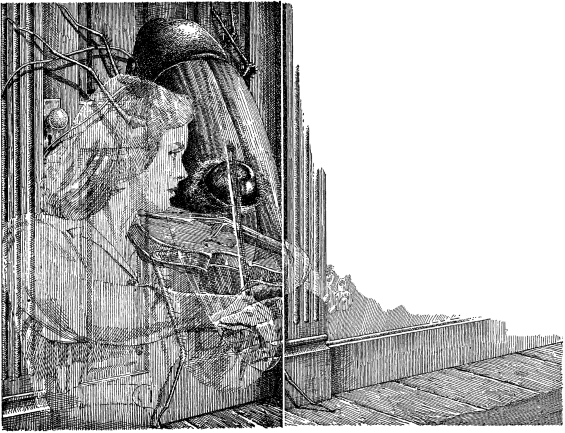
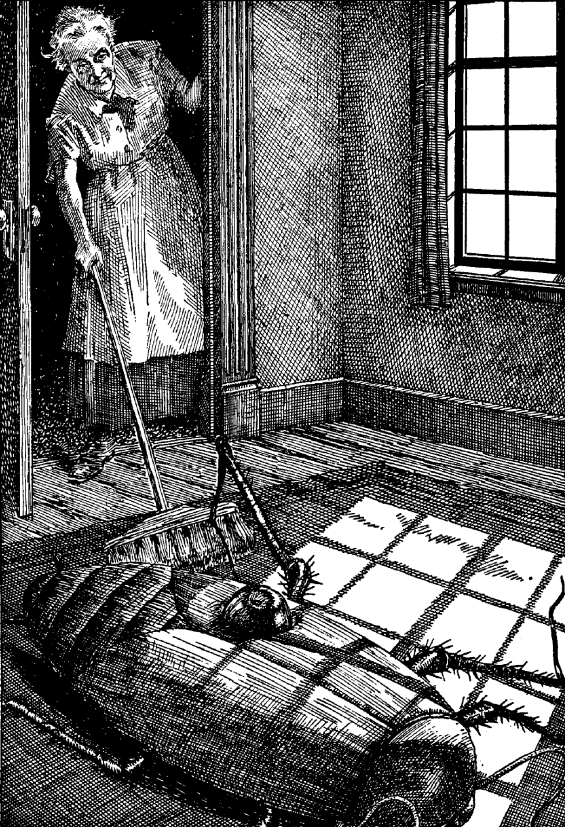
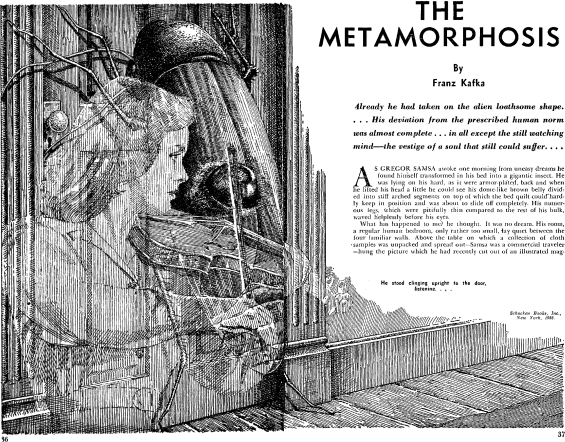
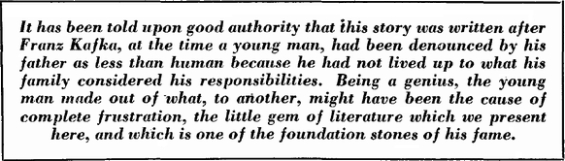
Here are the illustrations, and a brief editorial, from the June 1953 publication of Famous Fantastic Mysteries.

The Metamorphosis by Franz Kafka - illustrated by either Finlay or Lawrence

The Metamorphosis by Franz Kafka - illustrated by either Finlay or Lawrence

The Metamorphosis by Franz Kafka - editorial

LibriVoxThe Metamorphosis
By Franz Kafka; Translated by Ian Johnston; Read by David Barnes
3 Zipped MP3 Files or M4B – Approx. 2 Hours 34 Minutes [UNABRIDGED]
Publisher: LibriVox.org
Published: December 11, 2006
|ETEXT|
“Already he had taken the alien loathesome shape … In all except the still watching mind – the vestige of a soul that still could suffer…”

Part 1 |MP3| Part 2 |MP3| Part 3 |MP3|

Podcast feed:

http://librivox.org/bookfeeds/the-metamorphosis-by-franz-kafka.xml

iTunes 1-Click |SUBSCRIBE|

Posted by Jesse Willis

The SFFaudio Podcast #142 – AUDIOBOOK/READALONG – Accessory Before The Fact by Algernon Blackwood

January 9, 2012 by · 1 Comment
Filed under: Podcasts 

Podcast

The SFFaudio PodcastThe SFFaudio Podcast #142 – Accessory Before The Fact by Algernon Blackwood, read by Gregg Margarite. This is a complete and unabridged reading of the short story (16 Minutes) followed by a discussion of it (by Jesse, Tamahome, and Gregg Margarite).

Talked about on today’s show:
Accessory Before The Fact was published in 1911, Jesse doesn’t understand this story, Wilkie Collins, ethereal planes are the hook (rather than the detail), Gilligan and The Skipper vs. Laurel and Hardu vs. Harold and Kumar, “this is not a time-slip story”, “this is a precognative story”, paranoia, “spirtitualized”, Germanophobia, WWI, bigotry on display, L. Frank Baum’s racism, Teutonic invasion, how many characters are in this story (4 or 3)?, peeling away the layers, déjà vu, see/feel the future, quantum theory, is time a superimposition onto real reality?, slipstream, fantasy, should we dismiss this story?, Ten Minute Short Stories, adventure, Accessory Before The Fact is at the genesis of all this, an accountant on vacation, “what do you do when you have one of these events and you can’t prove it”?, The Moment Of Decision by Stanley Ellin, 13 More Stories They Wouldn’t Let Me Do On TV edited by Alfred Hitchcock, An Occurance At Owl Creek Bridge by Ambrose Bierce, time is an illusion, “time is a serious problem…”

Accessory Before The Fact by Algernon Blackwood - illustration by Bob Harvey

Alfred Hitchcock Presents: 13 More Stories They Wouldn't Let Me Do On TV

Posted by Jesse Willis

Review of Blood Groove by Alex Bledsoe

November 18, 2010 by · Leave a Comment
Filed under: Reviews 

SFFaudio Review

Blood Groove by Alex BledsoeBlood Groove
By Alex Bledsoe; Read by Stefan Rudnicki
7 CDs – Approx. 8.5 Hours [UNABRIDGED]
Publisher: Blackstone Audio
Published: 2009
ISBN: 9781433243880
Themes: / Fantasy / Urban Fantasy / Vampires / Revenge / Love / 1970s / 1910s / Memphis / Wales /

When centuries-old vampire Baron Rudolfo Zginski was staked in Wales in 1915, the last thing he expected was to reawaken in Memphis, Tennessee, sixty years later. Reborn into a new world of simmering racial tensions, he must adapt quickly if he is to survive. Hoping to learn how his kind copes with this bizarre new era, Zginski tracks down a nest of teenage vampires, who have little knowledge of their true nature, having learned most of what they know from movies like Blacula. Forming an uneasy alliance with the young vampires, Zginski begins to teach them the truth about their powers. They must learn quickly for there’s a new drug on the street created to specifically target and destroy vampires. As Zginski and his allies track the drug to its source, they may unwittingly be stepping into a trap that can destroy them all.

The vampire is the Mr. Potato Head of Fantasy fiction. It’s an old and worn out monster, fully mythologized with more than 100 interchangeable preternatural powers and weaknesses from which to assemble a fully customized vampire. For what might be a complete list of them check out the terrific website TVTropes.org. It cites a wonderfully cynical list of vampire tropes under the title: “Our Vampires Are Different.” So then the question is: If there is nothing really new under the sunless skies of vampire fiction why do we pick up them up? It’s a good question and one worth pondering. I picked up Blood Groove in large part because of the title. I liked the pun, figuring it referred to a blood groove (or fuller) on a sword and/or the idea of groovy 1970s vampires and/or the dado in a forensic pathologist’s slab. And before I picked up Blood Groove I noticed other Bledsoe books (probably a pun to be made there too) had cute titles like: The Sword-Edged Blonde and Burn Me Deadly.

Alex Bledsoe doesn’t give any new power to the vampire that he hasn’t had before, but he does add a new figurative kryptonite (like sunlight and garlic and crosses) to the mix. In fact, it’s creation and dissemination is central to the plot of Blood Groove. Along the way we also get an historical setting (1975), a virtual tour of parts of Memphis, Tennessee, some trivia about Elvis Presley and a relatively unpredictable story.

One of the elements that surprised me was not knowing who the protagonist of Blood Groove was. The vampires seemed the focus, and yet there was almost nothing that could make them sympathetic in a heroic or anti-heroic way. We’d meet one, he’d be killed, and then I thought “Okay…and?” but the story wouldn’t explain – which was a nice move actually. So for a good chunk of the novel the characters, all well fleshed out, appeared in scenes, died or were killed, only to be replaced by new characters with new agendas and new back-stories. The period shifted too. First we are in 1975 Memphis, then 1915 Wales. Eventually it settles down and we’re given fresh references, almost devotionals actually, to two early 1970s movies Blacula and Vanishing Point. As with many an urban fantasy novel these days there’s a mixing up of sex and love. Blood Groove doesn’t feel particularly paranormal romancy – but it’s probably not too far from the edges of curve.

Narrator Stefan Rudnicki gives voice to about a dozen characters of mixed gender, ethnicity and accent. Most obviously the East European vampire Baron Rudolfo Zginski has a suitably Bela Lugosi type accent. As with every Rudnicki read audiobook I’ve heard his rich voiced narration in Blood Groove is always in service to the text. One reviewer on Amazon.com put it well: “[Reading Blood Groove] was like eating a brownie with nuts when you don’t like the nuts.”

The trailer for Vanishing Point:

The trailer for Blacula:

Posted by Jesse Willis

Review of The Metamorphosis by Franz Kafka

February 29, 2008 by · Leave a Comment
Filed under: Reviews 

SFFaudio Review

Podcast Audio Book - The Metamorphosis by Franz KafkaThe Metamorphosis
By Franz Kafka; Read by Alex Wilson
3 Zipped MP3, OGG or AAC files – 2 Hours 15 Minutes [UNABRIDGED]
Publisher: The Spoken Alexandria Project
Published: 2006
Themes: / Fantasy / Surreal / 1910s / Insects /

At first read, The Metamorphosis by Franz Kafka is a bizarre, almost nonsensical story. Gregor Samsa, a traveling salesman, wakes up to find himself transformed into a giant bug of some sort. No explanation is given for how or why this metamorphosis occurred. Gregor himself seems more concerned with being late to a work assignment than the circumstances of his change.

As the novella progresses, The Metamorphosis becomes more about the unspoken negotiations inside a family as in who does what chores, who makes money for others, and who just gets in the way. When Gregor can no longer provide for the family’s needs, Gregor’s father changes from an invalid to a dedicated worker. Along the way, Greta converts from a loving sister to a young woman looking for suitors. The bizarre transformation of Gregor is not the most important transformation in the family, as evidenced by the final lines.

Alex Wilson, the founder of Spoken Alexandria, provides a understated, but compelling reading. The sound quality is top-notch, even when listening over headphones. The tone of voice is like someone waked in the middle of dream, lending an appropriate otherworldliness to the story of alienation.

Posted by Listener of the Free Listens blog

Next Page »