The SFFaudio Podcast #891 – The Lost Continent by C. J. Cutcliffe Hyne (9 hours 11 minutes) read by Alan Winterrowd and Mark Nelson for LibriVox, followed by a discussion of it. Participants in the discussion are Jesse, Alex (Pulpcovers), and David J. West
Talked about on today’s show:
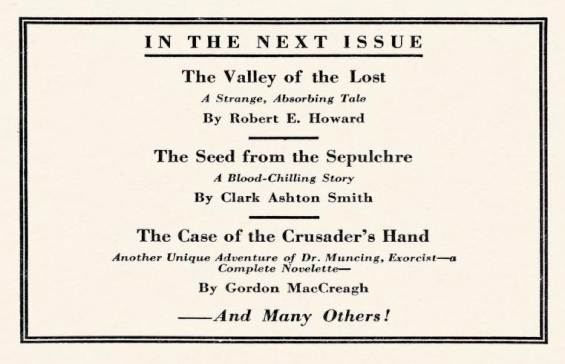
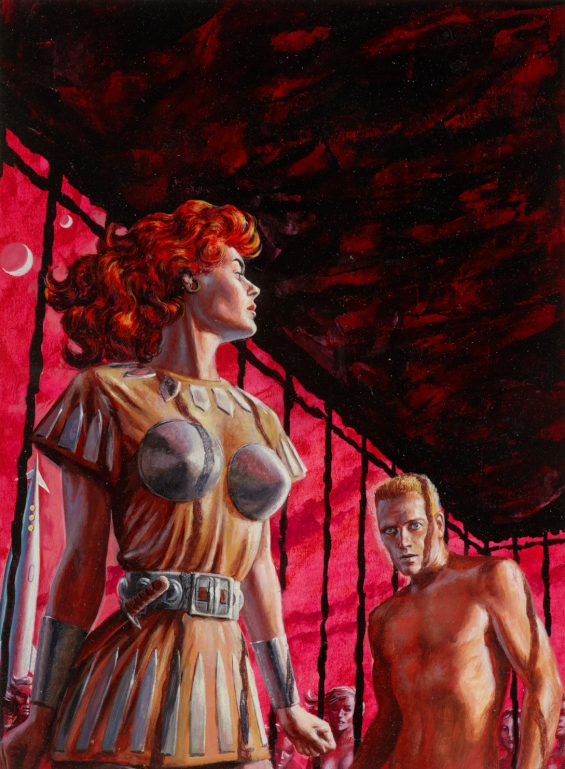
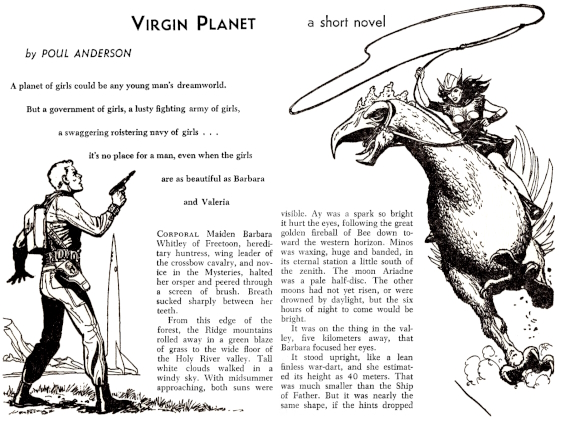
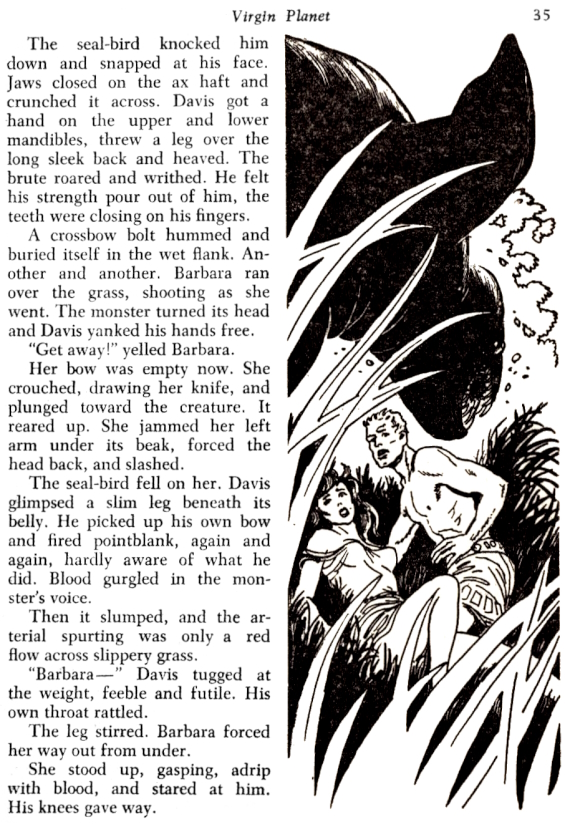
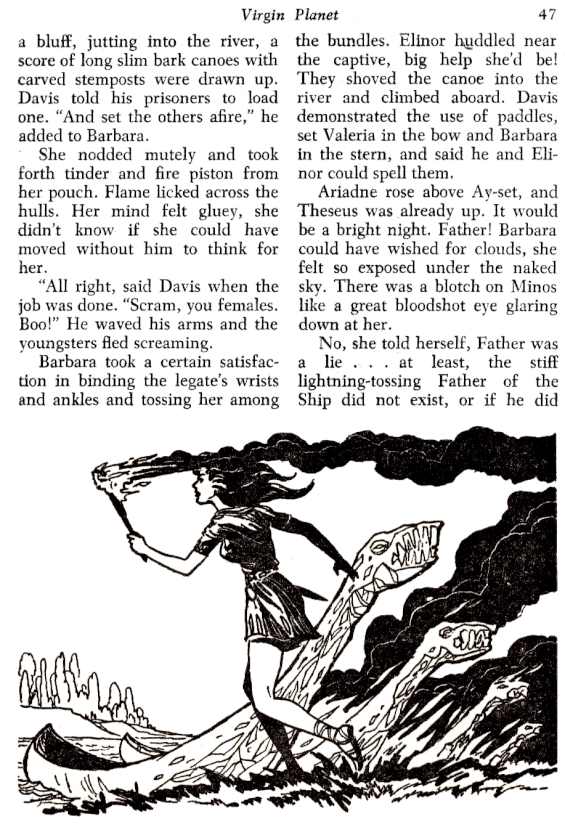
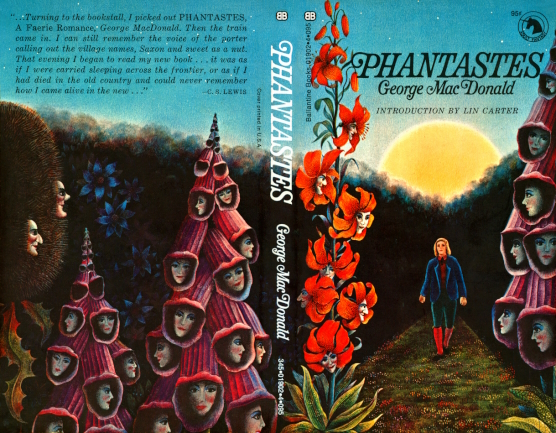
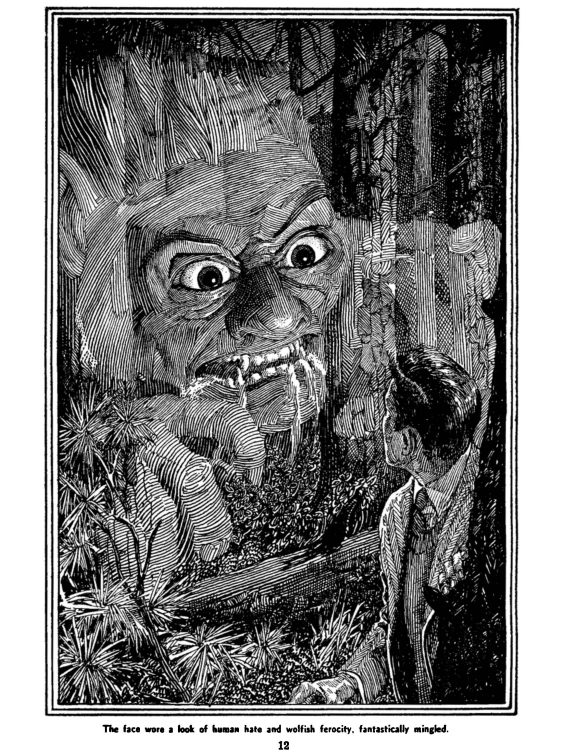
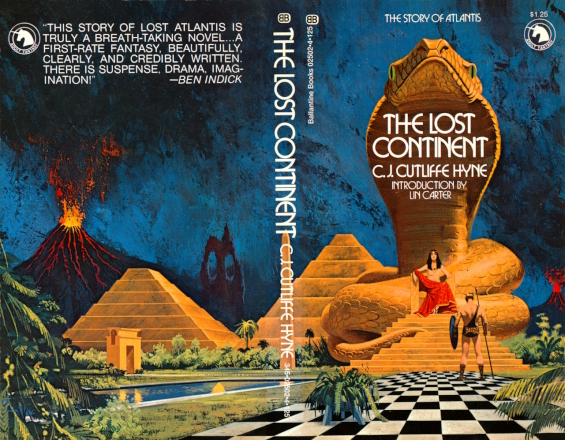
1900, the book public domain, one of the narrators abandoned it, it’s up on LibriVox, the last 5 chapters are by a different guy, Mark Nelson is a good narrator, an off day, suddenly became a different guy, the first narrator, in Virgin Planet, quay, not kway, it’s key, grandma was an english teacher, a big Q up there, interesting, people love this book, a great D&D campaign book, an amazing campaign setting, it wasn’t awful, describe this book to someone, not nearly as fun as it sounds, Goddess Of Atvatabar, way more fun, invade the inner earth, do colonialism, listings, here’s the art, more priests, castles in the air, imagination, you can just conjure, vr world, look there’s some cookies on a plate, fades away, all sorts of interesting stuff, the magic is more science, The Hunt For Red October catterpillar drive, atlantean technology, the victorian sensibilites, how many things he brought into it, it was serialized over six months, some revisions for the book publication, you can’t really smooth it out, another meeting with that priest, walking around the hallways, Lin Carter’s forward, something with a little more punch, the dinosaurs and the tech, the pulpy aspect, about that introduction, the Ballantine cover, the checkerboard at the base, a masonic book?, a really short foreward, other atlantean books, de Camp would have really enjoyed it, Clark Ashton Smith, not allowed to be, not involved, an excommunicable offense, recruited, not a joiner, part of a structure, in their recruitment, you have to believe in god, in the normal way, other gods as well, trying to expand?, aprons and such, is there any evidence in the book, at the base, if you go to London, the City Of London, checkerboard things, a youtuber who walks around London, hiding in plain sight, on the Metropolitan police, the tartan of the guy who brought it in, based on his career, that important in the UK, amazing skill, a long boat trip, a lot of power, buddy buddy, a conspiracy hidden in plain sight, the construction of atlanis, a giant pyramid, apparently not, Dean Ellis, got his remit by reading the book or being told what to paint, would have noticed, some amount of ancient lost knowledge, a Masonically influenced story, he destroys the evil at the end of the book, what’s in the ark, the secrets, the evil empress, immortality?, etc., this knowledge is lost, all the other cults, Rosicrucian, thoughts have wings, do you ever think you were an ancient god, maybe I was, Atlantis, cool man, the framing device, the occasional cave tiger fight, the very long and drawn out, some swineherd’s daughter raised above her station, sword and sandal lady, more like Zenobia in Hour Of The Dragon, pure of heart, the girls in this book, mess up the pronunciation, the twin sister, she feels like a chekov’s gun that never goes up, the chessboard pattern, the characters are very maneuvered, lots of pawns, an image from When Worlds Collide, the space ark, an ark in this book, the cover of one of the sons of Krypton, the story of Superman is basically that of Moses, put in the basket and sent down the river and becomes good, helps people, he’s a superguy, a big honking novel from the 1930s, Balmer and Wylie, as you would expect, coming from the bible, the earth is gonna get hit by a rogue planet, to save the people, a machine gun setup, trying to get on the ark, 2012 (2009), really good, great disaster movie bandwagon, the destruction of the world, earthquakes and lava, just barely manages to get through, this is a comedy, supposed to be laughing, took the remit, Star Trek, like every other show, Paradise, high ratings, the president’s been assassinated, underground bunker in Colorado, regular drama, Fallout, Silo, a spaceship, a generation ship, they’re in a bunker, an old Doctor Who episode, colonizing old Earth, a repeated theme and idea, a mechanistic book, priests being moved around, is this supposed to be that, we are above the fray, in a brotherhood, C.J. Cutliffe Hyne was aware of Masons, the first episode on Battlestar Galactica, is he a mason? 33, could be, numerology, the meanings of numbers, 42, 69, six seven, 69 Barrow Street by Lawrence Block, good for jokes, our hero, kinda stiff, sometimes he has a beard, they wrote him as this great hero uninterested in women, what is the point of writing this character, have you not learned to woo yet, if Conan was suddenly thrust into this book, you need to fulfill this role, Black Colossus, much more concise too, not the worst, Ben-Hur, a slow pace, 5 hour book maximum, to warrant all of the text, forbidden magic, the island sinks, the priests sink it, the negative culmination, she’s the key to unlocking why Atlantis sinks, what went wrong exactly?, upset with the priests, he’s a priest guy, they worship the sun?, Zeus?, not a random name, that stuff is not worked out, the high gods, references to a pantheon, 9 years in the jungle, stuff happens, why does the girl have a twin sister?, torn between the two, 2 identical women, a box to check, did nothing with it, more degeneracy, not a lot of showing it, the queen is psychotic and evil, the whole country became this degenerate, struck down for their arrogance, pushing in this degenerate direction, very casual slavery, enslaving all these Europeans, some kind of hubris, the sailors, an entourage, parading on her elephant, kill em all or whatever, out to see, such a hardscrabble life, take all his stuff, stab anybody, a viewpoint, these people are contemptible, way before the ark stuff, justifying the drastic action that happens, it didn’t feel new, our hero is very formal, when Hamlet comes back from school, investigate this and figure it out, I’m not gonna marry you just yet, mechanically placed, the game being played drags it out, and yet … cave tiger!, brontosauruses were recently discovered, a mixed audience, Pearson’s, interested in science, wireless telegraphy, astrophotography, ballooning, hero indian guys in Indian, a mixed general magazine, serialized novels in the 1890s, Sherlock Holmes novels, that thing holds up, tighter, basically forgotten, John Buchaneque thrillers, lots of interesting setups and no amazing gelling, a traditional gothic, kicks Sherlock Holmes out of the story, it can hold together, Agatha Christie was popular for a reason, Deucalion, son of Prometheus, he calls it out in the prologue, the introduction, the same trick used in William Hope Hodgson’s The House On The Borderlands, awesome setup, our two guys, lifting rocks to get his workout, Canary Islands, not a normal place to be, Canary Islands is connected with the Atlantis myth, boom we’re in the Yucatan, pyramids out there, colonies of Atlantis, weird hairy neanderthals, can I get some of that, every continent on the planet has pyramids, the one pyramid in Antarctica is probably just a mountain, Peru, St. Louis, a very stable structure, a very recognizable structure, really old, a tower is gonna disappear, many such great wonders, wandering around the pyramid, stabbing behind the curtain, a monkey in a cape, you never know, oh yeah it is a victorian novel, he’s not one of the famous names, cold sleep with our girl, her hair gets long, is she gonna come out of this okay?, a sleeping beauty, awesomely connected to anything, if it had been a surprise, 9 years go by, complaints, having read too many novels, enthusiastic, a good introduction, his own fiction writing, weird thread, some teacher of creative writing, I want to be a novelist, they can’t anybody, I don’t read novels, that never happened kind of events, that’s being ableist, I’m a novelist because I want to run a television show, comics being made to be Netflixes, not a good comics, a visual connection, a Robert E. Howard or a Westlake, Cowboys And Aliens, Harrison Ford and Daniel Craig, a storyboard, the audience is for the execs, Men In Black, more like the comics, how many sequels?, soft reboot, the images that stick, old Galaxy covers, a robot body, a showcase of tropes, fun things to see, playoff against the comedy, there’s something wrong with books today, a New York Times utube short, the edits, mass market paperbacks have died, very sad news, the substance of the piece, here’s Stephen King, sold the paperback for Carrie, $400k, that changed her mood, it was largely novels, the cheap paperback, that media, that medium, the physical size of that format, Tolkien wrote a book, 6 books, 3 volumes, 1 novel, James M. Cain paperback, the Ballantine ones, thinner than the thick of your thumb, that format is connected to the thickness of the paper, portability, games is the premiere medium, tiktok, mindless short form brain rot, movies position of primacy, short stories, little tiny markets for it, Clark Ashton Smith, A Vintage From Atlantis, maybe the book would be better if it had a map, random encounters, might be pterodactyls, rocs, corrupt empire, before the continent sinks, overthrow the empress, fail and try to escape, he didn’t set anything interesting there, this early in the game, bringing in the dinosaurs, the megafauna, touching on the witchqueen, older movies, not unvaluable, a good book not a great book, The Seed Bearers by Steve Valentine Timlett, murdering people left and right, occult matters, not that occult, how it touched on how the society as a whole, the ark is loaded with stuff, fan fiction, he’s British, very likely, more extreme on the violence and the sex, the cover descriptor, Atlantis, leg clinging a lady, exploded and split in half, new books in, grabbing this, tells you what’s going on, trilogy, the other two, take place much later, with Picts, Bran Mak Morn, the Taliesin series, weird elvish wizards, Stephen R. Lawhead, Minoan bull dancing, the pictish beast, the tin islands, water horse, hippopotamus, the unknown animal in all the carvings, pictish beast and regular horse together, very boneless, fossils, game name, PictishBeastTheories, the Loch Ness monster, longer neck, Kentucky cryptid, crypto-zoology, no online much, every animal, the mammoths, aggressive hunters, big herbivores, just put cave in front of it, do you find them in caves, a standin for dire, this island is kind of a death world, huge knowledge base, giant pyramids, superrich, rich farmland?, stable civilization, constantly being eaten by fish and flying birds, Deathworld by Harry Harrison, Jason dinAlt, erratic psionic abilities, everything is deadly, neurotoxic venom, planetary romance, drop the hero on the planet, cross the landscape and survive, not get eaten by the empress and what have you, Soylent Green (1973), Make Room, Make Room, a funny writer, find you something good, People Of The Black Coast, better to pair it with something, fun, light, thin, giant crabs, aviatrix, her personal aircraft, Miracle Science And Fantasy Stories, the brothers Dold, illustrations, the blind one, the author and editor of it died, Douglas, in Russia during the revolution, 1917 revolution, scroll threw the illustrations, very Dungeons & Dragons, anubis sort of god, in the temple, crocodile faced worshipers, page 59, the dead-alive face of Orne, they were turning him into a mummy, a guy with an ax choppin, holding a gun looking in, giant crocodile god, very much out a module, hidden group, the scans in the scans group, the PDFs are up, overhead map, page 29, The Valley Of Sin, grand canyon, mummy chamber, sealed door, sluice gates, this is the adventure you were waiting for, make you a mummy against your will, more weird menace, more shudder pulp, they’re all fun, but they’re pretty uneven, amazingly good, pretty good, the cat girl, the sins of the cat girl, not even a cat girl, the other animal she’s pretending to be, the concepts drag you in, an evil cult under the basement of this house, a followup tweet, novelists whop don’t read novels, write the screenplay you want to write, they only ever talk about novels, his short stories are much more coherent, they’re not meditative on a particular idea, more fun, the length is the reason stories suck, going to long, too many pieces to keep track up, make a girl go to sleep for nine years, suddenly we’re really rockin, Howard has an agenda, he has opinions about things, I’m angry about that subject, hated everything else done in that same vein, David and Edgar Rice Burroughs, the Gor book, the concept of Gor, bring samurais, bring mongols, make them all fight, I submit I’m just a woman, by book 3, liked the cover, suckers for covers, a sucker for interiors, the part they always show in the auction, beautiful Dold art, reading Weird Tales without having the art hurts your interest, The Uncharted Isle, a monkey man story, if only for the art, Famous Fantastic Mysteries, they’re not famous if they’re new, Fantastic Novels, great interior art, makes you want to read it, it has this, giant snake throne?, warrior with a spear and a shield, volcanoes, got the drama built right into it, if only it were that good, needed a Kull, are the gods real?, what is the purpose of a city, Kull introspecting a lot, it needed more, a placeholder for other things, the Malazan books, H. Rider Haggard and She, weird superqueen, degeneracy and evil, sort of abstract, she had the whole society backing that up, baboon buddy, even the servants, personalities, I am destined to be your lover, the Victorian aesthetic, feast your eyes, Brides For The Beast by Wayne Rogers, a mystery terror novel (28 pages) and it has a monkey, “A lust-mad scientist whispered secrets concerning her lover’s birth—to Minna Talbot while a mad thing, whose origin was unknown, brought terror to that mountain wilderness…”, a grisly experiment with a great ape, each chapter has a name, foul clutches, hate feeds, it’s gonna be rough, a guaranteed good story, an unguaranteed and probably not so good, see if it is worthy, the promise of the editorial introduction, he’s your brother, experiments with a great ape, maybe they mind swapped, we don’t have, historically they didn’t sell super well, more commonly known, how many Railroad Fiction magazine, G-8 and his squadron, all the love magazines, a Ranch Romance, we are narrowed by the Munsey Magazines, how a big a shadow, The Shadow and The Spider, a lot of fun, series, one and dones, maybe your a monkeyman and have to burn yourself, how much you love Brides For The Beast, eat breakfast, Wayne Rogers, author of Substitute Corpses.
Posted by Jesse Willis