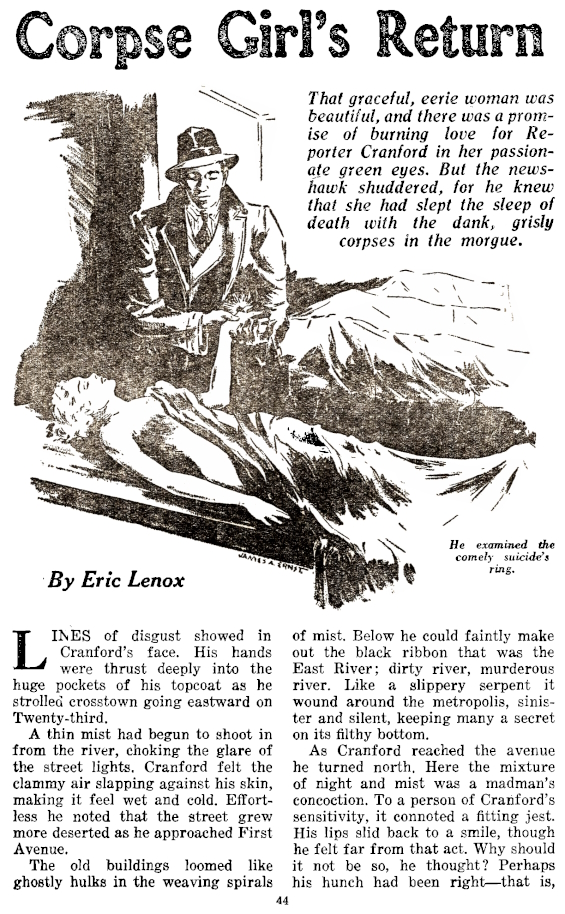
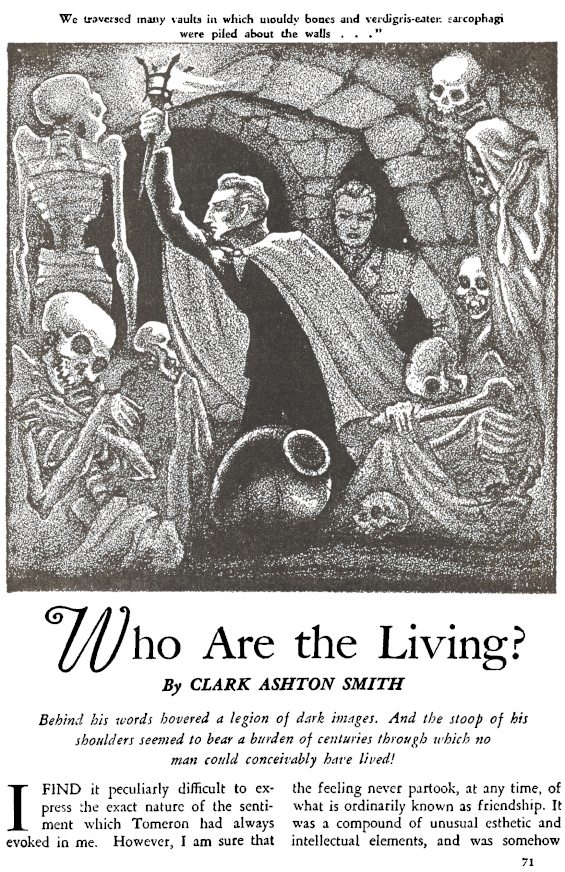
The SFFaudio Podcast #876 – The Tower Of The Elephant by Robert E. Howard (1 hour 23 minutes) read by Mike Vendetti and The Tale Of Satampra Zeiros by Clark Ashton Smith (31 minutes) read by Tommy Patrick Ryan, followed by a discussion. Participants in the discussion include Jesse, Scott Danielson, and Cora Buhlert.
talked about on today’s show:
Smith’s 1931, 1933, paired, Weird Tales authors, big 3, big 4, thieves stealing things from places, things not going according to plan, a tweet, art from both, who thiefed it better, Howard, had read the Smith before, 25 years now, maybe more, a few other things too, badgering about Conan, really good, over the last 4 years, sword and sorcery, really liked it, good introduction to Conan, a good story, with one caveat, no girls in it at all, more interesting character, Red Nails, People Of the Black Circle, Queen Of The Black Coast, old fashioned language, perfectly harmless Conan stories, stray racism, stray anti-shemitism, pro-cimmerianism, trying to cancel Astrid Lindgren, Pipi Longstocking, great children’s book, the audience for that Star Trek babies show, isn’t quite what you were expecting, of these two stories, which one is the science fiction story, literally an alien, stapled to a couch for 300 years, other planets, not surprised, if he was less Cimmerian he would question his sanity, the tones are very different, a pair of thieves into a forbidden building, one of them dies, with no great jewel, a horror story, a cosmic horror story, Tsathoggua, an inklings situation, an Inkling situation, Seabury Quinn is the big fourth, correspondence, Robert Barlow, Frank Belknap Long, H.G. Wells was in Weird Tales, Tennessee Williams, the people on the cover, Clarke would be one of the big 4 of something else, takes the cover, doesn’t have scantily clad women, Galactic Journey, Margaret Brundage covers, got quite grumpy, naked woman on the cover, strategically placed, less than 5%, scantily clad ladies, all academics, Owen Barfield, Charles Williams, Texas, California, Rhode Island and New York, except to go to Mexico, and New Orleans, re-qualification, San Fransisco, using the mail, reading each other’s stories, corresponding, not exactly an inklings situation, C.S. Lewis, writing for money, elderly and sick parents, stuff in the 1950s, a pulp story, chapters, the whole last chapter of the book is a nice delicious infodump, the fight in the bar, what kind of men are men, Gundermen, a city of thieves, Yara is a thief as well, a pot bellied Nemedian, Taurus, Poland maybe?, Zamora, Turkey?, Hyrkania, Russia, Ukraine, an analogous, the tower, our guy who’s bragging, to teach women stealing, a Kothian, hooked nosed shemite forger, he wants to sell a particular woman to a shemite, a slave of another race, he stalked her and got her, a big story about bragging and what being a man is, why has no one broken into the tower, the conflict, Howard doesn’t do this, semi-unconsciously, getting into a fight with Lovecraft about what’s going on, civilization vs. barbarism, Howard is massively affected by this, a completely corrupt city, carry swords openly, a beef, the only killing Conan does of a human, a Nemedian who’s already on the job, inaccessible towers, with winged people, pre-cataclysmic land, lions, tries to betray Conan, Conan figures it out using Sherlock Holmes style techniques, what eventually is not a pay-off, escape the city with a bag of gold, what do we come away with?, he doesn’t walk out with a gem, some insight into Conan, a mercy-killing, compassionate, Yag-Kosha, torturing him, blind, drugged stupor, he helps Yag-Kosha, a man of a certain thing, The Ten Commandments, very biblical, Solomon Kane, old testament characters, physically gets the Staff of Solomon, this proof of God’s power, A Song Out Of Midian, Mt. Sanai, Christianity, civilized long settled people, intricate and complex, formulas and rituals, simple and understanable, Crom was their chief, gloomy savage god, gave man courage at birth, kill his enemies, literally engaging, the perfect god for atheists, The Vale Of Lost Women, lovecraftian monsters, from the outer dark, essentially miracles, fights the god, that is victory, man can fight a god, he isn’t writing this because he’s trying to make a philosophical point, he can’t help but put his stuff in there, a minor debate in Conan The Barbarian (1982), a haze of bewilderment, all touched in the head, low tolerance, ideas about life, I live, I love, I slay, I am content, sits around and listens to philosophers a lot, how many angels could dance on the head of a pin, shaking your head, up their own navel, religion students, teachers of religious education, translated 500 different times, what’s going on, which is the better story and why, the Conan story, very enjoyable, a mythic depth to it, it’s cosmic, a Lovecraft feeling, came to earth in China, Ganesha, this is what I need you to do, take my heart out, squeeze the blood on this gem, ancient ancient stuff, in The Odyssey, Tim Powers’ On Stranger Tides, instructions, strums the guitar strings, biblical and beyond biblical, from the depth of the human consciousness, differing philosophies, read both before, deeper, more mythical, a great story, funny, what happened was, got on the internet, excited to meet other people, an early forum, Scott Lynch, The Lies Of Locke Lamora, KGB Bar, Asimov stories, rude, that’s true, way to stupid, a collection, appreciate it more, the executioner, dark but hilarious, some guy who was a jerk, ultimately you are on team Conan, an incredibly important story, rogue thieves story, definitely important, Boston Blackie, Dunsany, the first one in fantasy, the template for Fafhrd and The Grey Mouser, we like the Conan more, the different philosophies, engagement with the world as it is, having that idea, rug pulled, The Mirrors Of Tuzun Thune, a much gander aspect, race and borders and stuff, how to be in the world, except for the story and the experience, we come out of the story with a greater awe, comes out with a missing hand, meets a monster, a genuine monster, into a circle, the same temple, things in particular, 3rd person, the author giving his opinions, that’s a mistake, all sorts of clever, early in Conan’s career, The Frost Giant’s Daughter, the names of the characters, he treats his characters very disposably, usually keep the main character, background characters always change, Turuz Oomphalious, Tommy [Patrick Ryan], what kinda accident, sounds like a real name, both of these are jokes, less than zero, omphalos, navel, also a circle, they’re thieves, thieving to be luxurious, fur bikini, enjoying the thievery, that drunkenness, decadence, a repeated motif, loves describing the colours of the materials, the materials themselves, the sensual experience, literally lost his hand, writing with his sinister hand, the story as it is, the tale of everything, the shrine of the god, the jungle taken suburbs, hyperborean rulers, one giant sentence, what kind of guy, violet juice, rubric, on strong vellum, made of the skin of the mastodon, some lying legend, a warning letter, the colour of the ink, he is an aesthete, pleasure seeking, touched in the head, a response, a little more like Taurus, he enjoys the spoils of his takings, the king of thieves, too much rich food, drunken burglary, own everything nice, The Hound, they steal art, they make art, their art is horrible, hounded to death, go in to steal something, round and round, lives to tell the story, his lesson was not learned at all, why we love reading Clark Ashton Smith, Conan’s motive, a very good question, the whole point of Conan, the viewpoint character, we want to be him and we want to have this experience, they’re doomed, the characters don’t survive, the luxuriant growth, as you approach it, snakes, other animals, and bats, a doom, walking towards their doom, they’re fools, Conan is Robert E. Howard wrestling with the world, people would come at Jesse with religious stuff, figure out what’s going on, how do you defend against their arguments, comes in cynical but open, asks his questions, a famous line in this story, that’ Heinlein line, armed society is a polite society, from outside the city, the Karen mentality, grateful and thankful, the thing we hate in ourselves, we need to be a certain way, in the end he comes away with a broader experience of the world, that is the payment, a young Conan, newish to civilization, very curious, an atheist, he’s anti-religion, a religious region, books about theology, he’s doing his own research, he’s arguing with them, A Witch Shall Be Born, crucified and survives, a betrayal story, every movie, even the Solomon Kane movie, he’s a philosopher, he’s wrestling with something, it’s not always Conan but it is always Robert E. Howard, women shouldn’t trick you into wanting them and then take your money, his takeaway, what if everything’s fake?, literally wrestling with things, Xuthal Of The Dusk, The Slithering Shadow, responding to gothic fiction, rejecting it, how to avoid becoming weak, he came to earth, a rebellion on their planet, jungles of China, the names are not great, his apprentice, oversteps, builds the tower, a story of betrayal, I have to stand on my own two feet, own bootstraps, ultimately we know what happened to Howard, don’t do that, pay his bills, caregiver for his mother, a double funeral, his father, slow to pay, trapped in this house, his girlfriend had gone off to college, is she really dying this time, he wanted to kill himself, the excuse, untenable, let’s be careful, a long life, he drank a lot, got married late in life, stepchildren, he did his art, he cultivated his garden, this amazing vocabulary, very strange for thieves, the stand-in for these characters, trying to make art, the putative author of the story, it’s navel gazing, he knows what he’s doing here, sensual pleasure, the problem of existence, existential philosophers in the form of sword and sorcery stories, steals to survive, jewels he kept, find yourself a husband, crazy socialists, civilized lands, next to warehouses full of grain, cuthroat capitalism, super loyal to his friends, young thief, mercenary, pirate, he’s everything, the man in full, 16-mid40s, a mistake to think about how Conan is, what is this character come away with, a sense of awe, wow, how are we supposed to feel about this mercy killing, honourable and terrible, Robert E. Howard’s position, frontier guy, dogs and horse being shot, too injured to continue living, a hypocrisy there, one of the pacific island wars, head blown open, what do we do?, the cameras are here, of course you’re going to shoot him, everything that happens is horrible, you sorta need to have a reason external to you, what it has to be is anti-dogma, thou shalt not kill (thy self), he’s trying to do good in the world, harms all of us, his friends are all sad, not gonna make you happy, a choice between these two stories, we are told to reject the story by Satampa Zieros, that’s why it can’t be compared, much tighter and more complete story in terms of unity of effect, what Poe would be talking about, it nullifies itself, it tells us to reject it, there are immense possibilities, first fighting dinosaurs, a nested dug in on itself society, the sun’s bright, how different they are when they’re really quite similar, why do Sherlock Holmes stories work for us so well, crusaders stories?, why do we like his writing so much, of they’re not stupid ideas, so distinctive and iconic, even though he’s great, he’s always going to be third tier of these guys, his ambition, tend my garden, make things beautiful, the colour of the wine, all surface, all pleasure, older than Robert E. Howard’s, at least one word he made up, abroad already in the half light, the poisonous looking fruits, malign attention, he is a thesaurus, adamantine, pecuniary depletion, it means purple, his vocab is better than everybody’s, he literally didn’t forget his words, come away with vocab words, Hyperborea, a place of his, greek for far north, Averoine, Poseidonis, Zothique, Ziccarth, he get’s a second story, absolutely isn’t, a pretty weird one, The Sword Of Welleran, The Theft Of The Thirty-Nine Girldes, chastity belts, elephant revenge, 1,001 Nights, The Black Diamonds, two kids grow up in Baghdad, always meals, has them have lunch, he’s playing with himself, his own version to 1,001 Nights, his imagination is running wild, Spider-Man or RoboCop or Peacemaker, Abdul Al Hazred, towel on his head, cosplaying, pretending to be a pirate, spears, he had a lot to live for, he would have been wealthy, H. Beam Piper, lived into the 1980s, he’s funny too, the humour is in the boxing stories, Breckenridge Elkins, the only book is on LibriVox, a mountain man, he’s so strong, exaggerated fun stories, Sailor Steve Costigan, not a bright guy at all, an amateur boxer, there was a demand for boxing, railroad stories, Action Stories, Fight Stories, a better market, more Howard, space em out, $0.99, they’re all the same, they’re all good, when Lovecraft reviewed the Clark Ashton Smith story, very Dunsany-like, The House Of The Sphinx, we come into a middle of a scene, there’s something out in the woods, a 1 page story, the house is falling apart, what is he doing in this story, a bookstore, in the lobby was a sphinx, Egyptian sphinx, designed to prompt you to figure it out, being very playful, to be playful, the connection, comes away different, enjoys the names and enjoys the joke, the luxuriance, it’s soapstone, wealthy aristocrat, no electricity, not selling to the same magazines, the author and their art, Michael Crichton, a literary connection, Travels, The Andromeda Strain, dedicated to Arthur Conan Doyle, engagement with literature from before you, Atlantis, Lemuria, trying to engage with the ancient, out of the bible, out of other stuff, mediocre writing that comes and goes, engaging with tropes, the save the cat formula, enemies to lovers, really popular, modern writers, they’re not engaging, they liked Firefly, you don’t have to read this old stuff, they draw on everything they’ve read, Buffy The Vampire Slayer, Greek classics, took Latin, Caesar’s Gallic Wars, religious education classes, same five parts of the bible, quite annoyed, don’t ask questions, it should be, pulp authors, literature, mythology, religion, made teenage Cora go to religious education, Jezebel, transliteration issue, stole a bible, they’re designed to be stolen, here’s a question, walking around to hotels, leave a copy of the Robert E. Howard’s stories, an amenity, if you look at his manuscripts, backs of hotel paper, paper is expensive, designed to be stolen, hotel shampoo, the sheets on the bed, towels, pocketed stuff, everybody is a Clark Ashton Smith character, not going to happen, whoever the Gideons are, public book shelves, compare the translation, crime novels, little free libraries, in demand, other books were still there, crime novels, two crime stories, Midsommer Murders, NCIS, speaking of crime, reading Howard as a teen, how dare he kill that Brythunian, read a western, everybody is out to kill everybody, some piece of media, horribly immoral, they’re stealing as they go through the countryside, everybody in the city is a thief, when Conan steals, people who can afford it, poor farmer, from wealthy people, terrible people who have deserved it, human trafficker, deserves is not the way of Jesus, violent American trash, complete nonsense, a transgressive thing to do, Conan, Rambo, and Rocky, fifty years old at the time, sympathy, Nancy Kress’ Beggars In Space, reject it, what is being promulgated is evil, doesn’t happen very often, not connecting, a visceral this is evil, Slan is kinda evil for the same reasons, put sympathy in the wrong place, I am better than you, evil stories, on a podcast about it, refuse to watch shows, the death penalty, never watching this show again, 24, torture, a terrorist somewhere, children committing murder, Adolescents, radicalized, ahistorical, age control of the internet, see weird things online, atheist can’t have evil, how are you defining evil, god as the source of morality, dragging this out, important, as written in the move, not really a commandment, you have to, pre-the Israelites, virtuous pagans, a graven image, the KJV, some are uncontroversial, describes the Ark of the Covenant, of heavenly things, strange gods before me, take the name of the lord god in vain, remember the sabbath day, the same one, days of the week, the next one, honour they father and mother, respectful unless disrespectful, thou shalt not kill, armies kill, just war theory, you shalt not murder, when he gets married, thou shalt not steal, rob from the rich and give to yourself, Robin Hood, apparently not, the way they get out from under Pharaoh, fine get out of here, curse on the first born, lambs’ blood, we all know what steal is, when Blackrock does it, the number one, don’t lie about what people did, thy neighbour’s house, thy neighbour’s wife, set up these stones, the turn the other cheek stuff, old testament times, Jesus himself was asked, he didn’t say all of them, love god and love each other, a condensation, ordering your life where god is first, from that ordering of your life, this turmoil, this chaos, this idiocy, evil, makes the rest of it less important, in the proper ordering of things, willing the good of another person, jealousy fades away, good for you but also good, that’s a bad idea, causes strife, people living together well, in-groups, monotheistic and abrahamic religions, Hindu or Buddhist, pretty universal rules for living together well, Edward Page Mitchell, the best early science fiction writer, a fantasy, a Bangsian fantasy?, the rapture, a scene in it, pile up all the gold that they have, the heavens shakes, the roof comes off of the world, lit on fire, Moses is up on Mt. Sinai, down in the valley beneath, a golden calf to worship, revelry, Moses comes down and he’s really mad, throws the tablets at the golden calf, it zaps, elide it, got the tablets back, Raiders Of The Lost Ark, is that the same gold?, if it is, it is more interesting that way, a whole lot of different stuff to explain the story, 30 years of Moses’ life is absent, putting it all together we have to do a lot of inference, it’s immutable but very mutable, Edward G. Robinson, that’d be good right?, the Judas of the group, motivated by gold, we fell enriched, but we literally get nothing, we should raise money, nothing on tv, they pull open the drawer, a faith in the book, a faith in the word, the word remains, something fun about that, a notch deeper than that, Jesus is the word, bored in hotel rooms, single rooms, parents’ magazines, parents’ books, micromanaging commandments, when and how to have sex with what, giggle giggle, indulge Jesse, semi-interesting story, this one church has the Ark of the Covenant in there, exposed, maybe it is radioactive, we did our own raiders of the lost ark, [iodine] fight the radiation, how much does that effect us, translate it, we decode it, thous shalt not own a Tesla, surprising!, draw human blood, older fragments being found, the Gospels, the older fragments match, controversial content, what books included, what books aren’t, the Gospel of Thomas, the Gospel of Judas, the Christians have got something cool over there, an argument or a possibility that is always out there, the oldest existing, when a new translation comes out, Hebrew or Greek, as accurate as possible, interpretation, different readings of passage, better not to have the tablets, imagine we have no doubt that it’s the actual tablets, that’s impossible, what’s really true is the story, as a film, Moses is put in the river by his mom, the prophecy for Oedipus, very similar, the ending is the Israelites leave Egypt, not a destiny doom thing, by the power of God, why is that so central to the idea, the parting of the red sea, a series of coincidence, read this as mythological, the Greek response to reality, the innovation that makes it powerful, Lewis’ conversion to Christianity, Tolkien had a part of that, these stories are mythological, this is the myth that’s true, the more interesting reading of it, these are not supposed to be read as actual events, scrutinizing the videotape, scripture only, the genesis story as literal, these stories were orally told through time, the details are not long there, the important points are hit, wowed the audience, Bros. Grimm stories, relating actual events?, yes, anything older than Abraham, the story of Noah, a cool movie to see, this is what it says, Noah (2014), a spiritual aspect to them, god helping you through tribulation, the historical aspect, the story they told themselves, Egyptian records, historical characters are in there, black Americans in slavery, the story of the Israelites being freed is a big deal, a deep thrumming, a Jenny (Colvin) word, either or both, Augustine goes through Genesis, meanings, in the year 300, these days aren’t literal, the number 40, a poetic word, a lot, many, not the conventional way, to sophisticated for how stupid we are today, important to understand what was being written and to whom, lamb of god, meant something specifically to the people of the time, we don’t have the symbolism, if we understood the symbolism, the story would make more sense, a cat on a rooftop in the Hansel and Gretel, very specifically a bird, broken by modern interpretation, Cinderella, a corruption to turn it into princesses, the original Grimms, the original grizzly versions, obsession with stone babies, cautionary tales for young women, why doesn’t the wolf eat the girl in the forest, and her lunch, he get’s into the grandma’s bed, what was the woodman doing there?, retold for a modern audience, very artificial sounding, Bros. Grimm: Demon Hunters, young women, nurses and nannies, aimed at girls and young women, The Iliad, Yul Brenner, Moses, his accent, The Magnificent Seven, Westworld, while he’s sitting on the throne, Priam from ancient Greece comes in, the King of Troy, we can get a timeline, Hollywood edition, smart and educated, a strange film, Cecil B. DeMille, a narrator throughout, and then this happened, Charlton Heston’s hair, an easter egg for us, Trojan War, the Jews are doing this over there, Midian, how would he know about that, very cool, much more interesting and public domain version of the MCU, terrible language, The Fantastic Four movie, Mythopoeia by J.R.R. Tolkien, fun as heck, when next are we three meeting again?, the links are there, science fiction and science fiction, hiking, full on the weekends, if not then, then, spread em out, did we ever do anything by C.L. Moore, we did a big show on it, Stefan Rudnicki, Skyboat let us use one, bye.
Posted by Jesse Willis