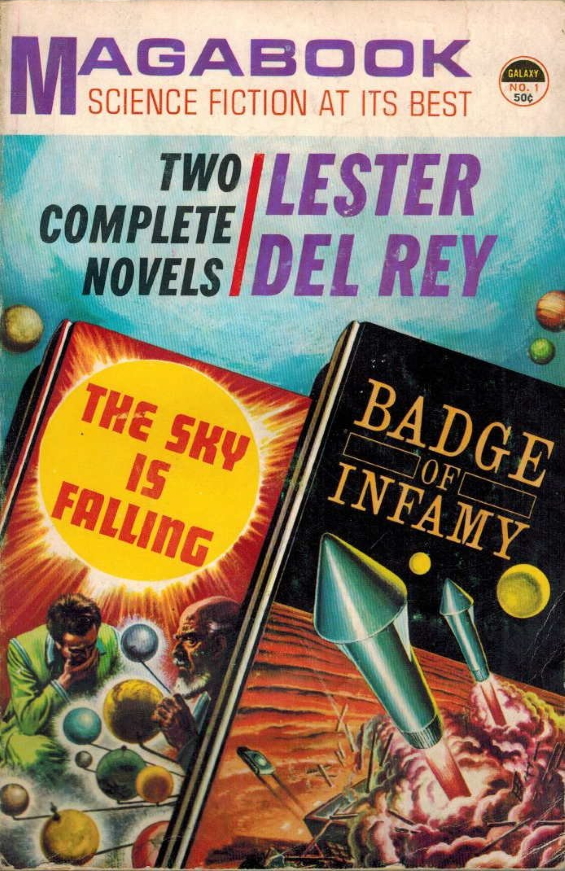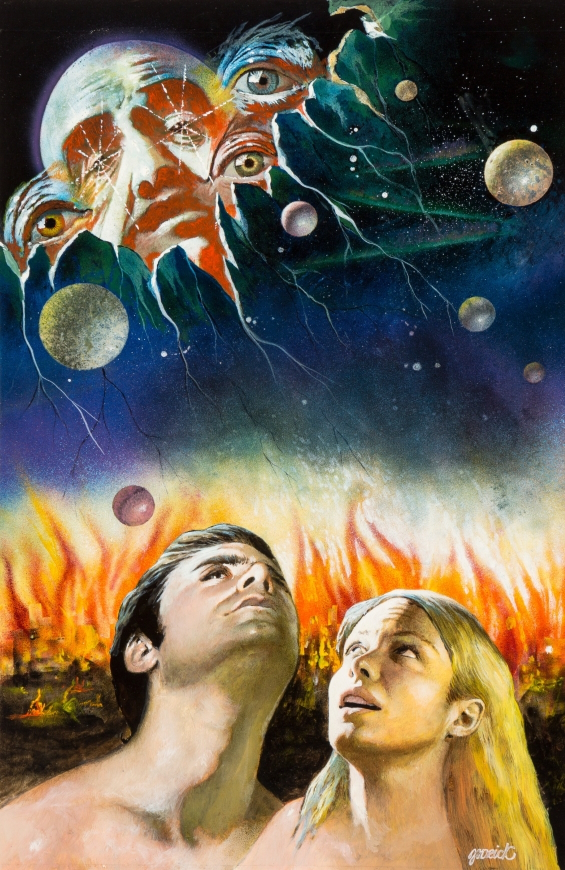
The SFFaudio Podcast #870 – Jesse and Scott Danielson discuss Lord Of Light by Roger Zelazny
Talked about on today’s show:
1967, a bunch of awards?, a Hugo, nominated for a Nebula, novelettes in Fantasy & Science Fiction, Jesse’s gonna have trouble with this one?, lotsa things, may have modeled Jesse’s mind properly, “like”, Nine Princes In Amber, pile of audio, digital pile, read by Zelazny, an author narrated book, Harlan Ellison, Lawrence Block, the Amber series, A Night In Lonesome October, good reason?, the new copyright when they reprint it, a performance copyright, he’s an excellent narrator of his own stuff at least, the guy for this was fine, one mispronunciation, Shiva, Mitra, Robert E. Howard lore, the politics, the suppression, the whole conceit of the novel, a colonization of a planet, pretend to be the Hindu gods, the whole caste system, the demons in the book, suppressing the people and running the show, accelerationism, do we tell all the people about this technology so their lives improve, if everyone is gods nobody will be, everybody on an equal footing, this way to be better than everyone else, getting reincarnated, moving their soul around to different bodies, flippin their genders, making up Nirvana, slowly working through Clark Ashton Smith and Lord Dunsany, Gene Wolfe’s The Book Of The New Sun, hard to read, looking at a super complex object, appreciate it on that level, that’s an interesting object, complex and cool to look at, obscured things, purposely not telling you things, revealing things, little infodump, really interesting, pretty well written, a style a lot of people aren’t gonna get along with, hard to model the people of the period, the least there: when he goes to a town and sees a bunch of people lined up to use a vending machine outside of a temple, a dig at religion?, is the book about religion?, in the Catholic Church, in the Church now, not with this Pope!, people in the past who have used the church for political power, what the church is, the Hindu deities, Hindu pantheon, sorta retelling things, fantasy or science fiction retelling, is the planet that these guys are playing Hindu pantheon Earth?, the answer is supposed to be no, our hero goes to a new town, how to do your prayers properly, played for humour, something smells like shit, that’d be all the shit I’m keeping in jars, new device called a toilet, backstory improving myself, playing a game with the reader, being a bit provocative, that attack Jesse is about to make, it isn’t just the Hindus, the Buddha, what analogy can I do, pick a religion that nobody cares about: the ancient Egyptian pantheon, worshiping Thoth, when did that end?, well documented, super-super-horrible, approx 1500 gods, very inconvenient, the Romans had about 700 gods, a god for every river, every day of the week, Janus, tons and tons of gods, used to control people vs. make your life better, valuable about it, it is helpful, true because helpful, the words of Jesus in this book, a Christian in the last story, a populist religion, topdownism, it wasn’t the king, eventually that does happen, stop viking, not how it started, a secret religion, contrary and opposite to the Roman empire and the Greek religion, they are controlled by their priests and scribes, you need to learn all of this magic, The Book Of The Dead, magic spells, the ancient Egyptian deep state, theocratic agencies, controlling the person at the top and everybody else, how lawyers run things, if you can’t navigate the laws, Augustus is chief pontiff, the head of the religion and the head of the state, the priests are running things, keeping the pharaohs in a dizzying state, subservient to this massive set of gods, we never get to see it from the little people’s point of view, the deep state fighting with itself, John Brennan, the guy with the mustache who wants to nuke everybody, John Bolton, thousands dying with their decisions, the worst example, I am science, Fauci, when they’re attacking science they’re attacking me, that is not how science is, that’s spellcraft, I am in touch with the gods and you have to go through to me, all mistakes, slight improvements and slight tweaks, peer review, Benjamin Franklin, jockeying between transhumanist elites, a topic of regular conversation, change your gender, become immortal, download yourself into an ai, handwavium, Fury by Henry Kuttner, elites controlling little people, interesting what he did here, looking at it the same way, an interesting object, same territory, admire a lot of the writing, mythic event stuff, Michael Moorcock with Elric, a zoomed out quality, Sam woke up at the beginning of the book, a moment remembered by history, paintings, this was momentous, we need to document this, The Sword Of Welleran, The King Of Elfland’s Daughter, a kid takes up the sword of Welleran, other statues, half an hour long, 8 hours, 350 pages, an interesting question to think about, should stories reveal character or show character growth?, the focus has swung, modern novel of science fiction, science fiction has become a setting, no character development at all, an H.G. Wells story, The Star by Arthur C. Clarke, describing the place that he’s in, not the stuff being produced today, the older stuff, you can’t be nostalgic for things 300 years before you were born, Yama, the Death God, multiple names, fighting the assassin, that entire fight was amazing, the aftermath of the fight was amazing, become Buddhist, against my new mindset or worldview, he knew he couldn’t win, profound, beautiful, good stuff, why people like this a lot, star quotes around you like, things to like a lot, oh yes, he’s doing the thing, page 239, borrow unavailable, the fresh bitten thigh of a maiden, one ought to read this subversively, if you don’t you’re a monster, I’m a Slan, no you’re not, Beggars In Spain, I’m one of the sleepless!, the enlightened one, the goddess of night, Tak the Ape, the coexistence of the animal and the divine, like Lovecraft, not the Sam part, snarkiness, smoking, in that direction, subversive, do they smoke Marlboroughs or Lucky Strikes?, treating it kinda lightly, Dick did the same, Dick is a lot like Zelazny, co-wrote a book together, a sequel to The Man In The High Castle, Dick doesn’t do series, not able to do it, super-interested in religions, writing to the Rosicrucians, instinct, too much garbage there, busy work, when you read the words of Jesus, not legends of angels, not genealogies, he never said he was a deity, perhaps some will not agree, monotheistic religions, more conducive to human value, you know who Odin is, and Thor and his brother Loki, the Marvel superheroes, the adventures they have together, they’re a lot like superheroes, The Avengers, tied up in this book in a footnote, the movie Argo, Jack Kirby, Fantastic Four, John Buscema, other artist, The New Gods, superheroes that are actually gods, instead of Vishnu and the elephant god, or the monkey god, they’re NEW gods, like aliens, when he switches to Marvel, The Eternals, too painful, why people love Roger Zelazny, the best things, massively, 24 Views Of Mt. Fuji, By Hokusai, the new five, much less complex, family oriented, very different, the prose, archaic, old fashioned, just talking to you, very familiar, the 70s, fairly direct, The Turning Wheel, eastern mysticism, eastern religion, traveling for religious purposes, controlling people, nothing good, sympathy for Jesus, he isn’t trying to sell you much, it isn’t about enriching the pockets, or putting you under thumb of someone else, harder to do today, the ability to read and read the words, the encyclical, local language, Vatican II, a good move, pro-Vatican II vs. anti-Vatican II, overall a reverence has been lost by moving it to vernacular, the posture of the priest, facing away, worshiping with us, an impersona Christi situation, South American country, the mass, people who can’t read, the magic has gone from it, a reverence for the language, Harry Potter, Our Father Who Art In Heaven, memorizing the latin, the pater noster, just sounds, a series of sounds, what the point of this is, thy will be done, they may be pretty, no intent, alluded to it, hatin on Poe, American literary critic talking to Lesley Stahl, shittin on Harry Potter, maybe it will lead to better books, go on to Hunger Games, literally better books, capable of enjoying them, take some students to go see Harry Potter movies, the spell scenes, just Latin, it sounds interesting and magical, we only partially understand, the priests in Rome doing their holy stuff, chant, music, sounds beautiful, a lot of randos, music knowledgeable, ska has no words, musical lyrics can be incredibly powerful, incredibly inane, Abba lyrics, why am I having this runaround in my head, makes you stupid, something intitally outside of you, advertizement jingles, brain colonized by Madison Avenue, The Space Merchants is a central work, Taylor Swift, numerous commentators, writes about breakups, she writes a song about it, men are horrible, Halfway to Texas, a crazy little girl, someplace new, trying to be strong, whole thing is wrong, you held me back home, this is inane, useless, if you get some benefit out it, that would be punishment, deeply grok them, too simple, lyrics do matter, Sting lyrics, stories that he tells, exceptions to be found, not everything is equal to everything else, monotheist as an improvement over polytheistic, less subject to loopholes, the definite word on this, chemistry, valances, the periodic table, its based on a reality, how they teach it in school, the supposed to be result was, you didn’t clean your test tube enough, the flame close enough, make you conform and get your marks, confidence in chemistry, metallurgy, charcoal nearby, based in a reality, actual science, macroeconomics, no progress in macroeconomics in the last 100 years, truths we won’t factor in, access to make the purse strings open or close, super-evil shit, what is my purpose here on earth, Jesus has an improvement over anybody in this book, sum up the plot of this book: this old system of the elites controlling things and pleasuring themselves – they’re evil fucks, exploiting and denying, a fantasy, an evil fantasy, it’s false, Robert J. Sawyer books, downloading yourself into a robot, make an ai sound a lot like you, chemical treatments, biofeedback, adrenochrome, it’s evil because its lies, religious trappings, people pretending, actual Hinduism, using this framework, the answer is no, the book would have hit a lot harder, a savage attack, science fantasy thing, Urth, not on Earth, uses a name for Earth, we came from this other place, what his purpose was, religions are this, nothing more than this, a really interesting take, Lord Neriti, an extremely violent dude, it’s not that Christian history doesn’t have armies in it, Sam is trying to subvert things, that Jesus speech at the end, taken into account, the words resonate, they’re powerful, back to the stupid Eternals movie, close to 3 hours or 2.5 hours, at least 10 actors, the guy with the gold arms, the guy from India, the guy from China, came to earth to stop some demons, a more positive version of this, a superhero has to fight a supervillian, fighting a bankrobber and you’re Superman, Batman has to fight an ever expanding assortment of insane people, all the horrible Marvel movies, human beings watching superheroes fighting in the sky, we become observers of these lords of immortality and bulletproofness, alien invaders, all silly and stupid, Daredevil is a little more sympathetic, maybe it’s Catholicism or lawyerness, Batman’s fairly broken, he doesn’t have, progressed to The X-Men, from an alien immortal who is invulnerable, to a guy who has no super-weapons, super-interesting, little little kid, never read comics, Green Arrow, never went to a comic shop, at the corner store spinner rack, buying paperbacks, 8 years old, when science fiction became a real thing, original Mr. Spock, Star Trek, tv guide, wake up to see that every single week, minor Star Trek novels, before that, Dolphin Island, a library in the school, an occlusion, at 8 years old, second grade, The Three Investigators, no comics, missed Robert A. Heinlein as a young person, isolated in love for science fiction, conversations in high school, a funny book, into fantasy, when Shannara started, that list of Ballantine Adult Fantasy books, craft, quality, Audio Realms, that audio version, it had music, a book on Genesis by St. Augustine, symbolism and things we lost as humanity, the Bible was our common story, a lot of them are Christians too, Marvel or Star Wars, Star Trek, see what tattoos put on themselves, money is the driving factor, should have stopped, Thunderbolts* (2025) is good, the story had an end, the end happened, Asmongold, who is that?, what is that?, skibidi toilet, these are not corporate, they might be corpratized at some point, Colbert is cancelled, The View is cancelled, on hiatus, not an audience enough for it, the advertizing revenue is drugs and health insurance?, the medium, listen to the radio, sport radio, country radio, a huge sports fans, all the stick games, all the ball games, the Cubs won, did the guy hit the ball?, The Last Inning by Nelson S. Bond, old baseball player, cut from the last team where he gets paid $5 bucks a game, wakes up in Baseball Valhalla, the games are always good, in full swing, Twilight Zone in 15 minute installments, it’s not a sport it’s a pastime, the best episode of Deep Space 9, football now has taken that over, a football game on Sunday nights, MMA, boxing, conversation at work, football is definitely king, dangerous and painful, fantasy football is huge, pickem games, bigger than any other sport, the up down thing, soccer is a bottom up thing, you can play soccer in your backyard, you don’t even need a ball, not as dangerous, basketball you need a basket, you need a rock, rocks are cheap, part of that is participatory, they played it, in the United States there’s a lot of people who really dislike it, comparative, fits American psyche, impatience, clocks, things like that, 45 minute halves, 1 to 0, why basketball is an American sport, Real Salt Lake, she is done, why do I ever want to watch this again, 3 hours of football in which no one scored, anathema, hockey with regards to soccer, a lot more dangerous than soccer, there’s fighting, NHL, a very Canadian thing, Canadian Football League, frozen lakes, see themselves represented in it, go out on the frozen lake, need a pair of skates a stick and rock, top down vs. bottom up, dressage, horse dancing, a horse, a stable, money, stableboy, saddles, riding lessons, you can’t just teach it yourself, polo, like soccer for knights, the stick is easier than the horse, a space bigger than an apartment building, common experience, could have been better had it been a short story, unless it is radically changed for this, Zelazny is a series guy, what like what we see in Amber, not 9 serfs in Amber, sword and sorcery, Brian Murphy’s favourite sword and sorcery stories, Flame And Crimson is the book, The Tale Of Satampra Zeiros, there’s a pudding, a bowl full of pudding that eats one of the guys, Robert E. Howard, Black God’s Kiss, Dragon Moon by Henry Kutter is public domain, The Tritonian Ring by L. Sprague de Camp, Fafhrd and The Grey Mouser, Ill Met In Lankhmar, David Drake, Charles Saunders, Conan in Africa basically, The Shadow Kingdom, Beyond The Black River, Red Nails, Karl Edward Wagner, at this stage of life, The Tower Of The Elephant, everything comes up except for LibriVox, so fucking broken, enshittification, well done Cory Doctorow, Mike Vendetti, just recorded The Hour Of The Dragon, 3 where he’s a king, I’m a do em all, Jesse, didn’t understand copyright, he can do it and he will do it, gets enthusiastic, Sinclair Lewis, The Broken Sword, that first novel in the Elric series, the Fritz Leiber ones are not mythic, way after, the development, Fritz Leiber reads Conan in Weird Tales, him and his friend as the main characters, taking that dungeon crawl you see in some Conan storties, a team, a team-up, D&D-splaining, the party is Tolkien, they get the fellowship, warrior, another warrior, elf, dwarf, thieves, tpk’d, total party killed, only one of them is killed, Lord Dunsany stories, really cool overlay, a sphinx, that’s awesome, he doesn’t say what he’s doing, who killed chronos, The Nightmare Tarn, The Tempter by Robert E. Howard, Howard at his most philosophical, at his most attack on the deep state, the progenitor of things like They Live (1988), really solid, weird that he’s doing kings, corruption from above, his letters with Lovecraft, civilizations become corrupt and evil, leans in and says yes, they’re evil and old and we gotta suppress this knowledge, a one way influence, his Solomon Kane stories, he’s a puritan, largely adventuring in Africa, voodoo men, this is pure evil, we must go fight it, occupy sounds somebody else’s body, here take the staff of Solomon, sort of part of my religion, a mode of that, a suspicion of magic, just fakery, People Of The Black Circle, a retelling of the Marco Polo story of the Hashashim,, reading things from 1000s of years ago, 1254-1324, a certain valley to be enclosed, every variety of fruit, most elegant, all covered with gilding, he kept at his court, 12-20 years of age, tales about paradise, just as Mohammed was wont to do, some four or six, the deep sleep, the state of stupor, delightful objects, lovely damsels, in Paradise, unwilling to relinquish, commands of their master, put death by these disciplined assassins, been exposed to the emnity of the old man of the mountain, fairly familiar, still in use today, it’s the guy who tried to assassinate Trump, evil company, super-evil, people still do this, government related, lonely needs a girlfriend, an operative paid by the government, let’s go blow up a bridge, 7 people in the van, the governor of Michigan, how do we end up doing this?, ply em with money and wine, this is how we’re told suicide bombings work, arrested, Robert E. Howard did a story on this, set in Vendhya (not India), sorcery circle, his magic is largely fake, all you have to do to survive the sorcery is not believe it is legit, a different way of doing it, fireball damage, Harry Potter wand, sumin exportorum, not getting wet, you have to play along, I’m damned, if you are not a believer, it’s an alien, kind of the same story as the book we read today, stapled to a couch for 1000 years, Howard’s a lot more grounded, The Vale Of Lost Women, a god from the outer dark, an alien, it can fly, it’s not human, not a Christian, what do these stories mean, what does it mean to wrestle with gods?, nice language he’s so good at in his poetry, less toleratnt for the stuff happens fantasy novels, a long way of getting to him being interested in this subject, playing a game with himself, readable as either science fiction or fantasy, his playing the game, starships and cigarettes, him breaking that, it depends, science fiction has rivets and fantasy has trees, science fiction that is not the same, hard Science Fiction, The Cold Equations, that’s not fantasy, a philosophical piece of fiction, we have to think about technology, most of them are completely fake, a vaccine for a disease that doesn’t exist, a spaceship that needs fuel, bootstrapped to get to John W. Campbell’s, power like it does, you can’t just magic everything away, the reason we love Star Trek II, the reason we love Star Trek III is Katras, planning, remember, double eyelids, all well and good, that’s series shit, that’s not the part we love, we set up a mechanical style problem and think about , a really awesome thread, the problem with screen addiction is we’ve always had this problem, a dialogue by Plato, The Symposium, people have always been addicted to screens, cave walls, shadow puppets, magic lanterns, illuminated manuscripts, movie screens, talkie movie screens, just like radio now with added screen, home video game screen, cellphones with screens, picture of the guy in the cave, always has been, your body comes with built in screens, when we look at a screen, early science fiction, visiscreens, they’re looking at a television, you can see the world, submarines do not have any windows, how can you navigate without windows, actually going to build the Starship Enterprise, there’s nothing in space to look at, when a romulan ship encounters a federation ship they’re both right side up, listing, it’s all metaphor, we’re told there’s tech, Day Million by Frederik Pohl, without all the religious baggage, deaging cream, get the botox, deluding themselves, technology is the reason it’s not magic, another axis to put this on, Star Trek: New Worlds, set in space, phasers, not magical phasers, dilithium crystal, the axis of bad science fiction, each individual episode needs to be judged on its own, the giant with the giant cigar, The Doomsday Machine, Kirk can do these infodumps, the writer knows, they built a weapon so terrible, they’re gone now, how do you know that bro?, in 45 minutes, an awesome idea, it works as a metaphor, nuclear weapons, it works in every direction, it is important that Decker try to blow it up, the shuttlecraft is not the important thing?, Star Trek is coming The Tempest, from Forbidden Planet, added a secondary hull and some tubes, things that look like a transporter, operates the same way visually, imagine The Tempest is a science fiction, the no Kill I episode, The Devil In The Dark, don’t kill all the Indians, very good, Spock has another girlfriend this season, some other girl, the cartoon, is it science fiction, some of it is definitely, pick an episode, everybody’s favourite, The City On The Edge Of Forever, The Time Machine by H.G. Wells, what time travel can do, the good of the many outweighs the good of the few, let that lady die, hugs Bones, it’s philosophical, how time machines work, he gives an analogy, how do warp drives, bend the paper, snake oil to get to the story, if evolution is real and things go on as they are, the workers and the effete elites, that’s him making an argument, farther into the future, nothing really matters, a crab on the beach, back to earth, love is real, our time on earth together, two different things that are going on in there, three places in time, he leaves again, is he going to go see Weena again?, she ain’t that smart, not about time travel to the past, god show out of this, Lord Of Light, The Einstein Intersection, Aye, and Gomorrah…, heard about Thorns from Jonathan Weichsel, Chester Anderson, The Butterfly Kid, exists on Amazon, hippies had a new kick from outerspace, Reality Pills, pot smoking poets and musicians, lobster shaped giants from outer space, Peter S. Beagle wrote the foreword, poet, author, and musician, underground journals, new wave movement, Ray Bradbury, his good stories are good, the pirate site, Ten Years To Doomsday, reprint in 1977, an alien invasion novel, republishment, co-authored, misclassified him, probably not a book we need, a ton of fun, standing out as not having read, A Night In The Lonesome October, super-interesting, a request, he is pretty consistent, it’s pretty short, going to wikipedia or whatever, websites memorized, 31 minutes, something to pair it with, comparing the style as well as the subject, the Brian Murphy list, Eric Brighteyes, the main character, novella length, similar length to the Howard, The Barrow Troll, a comic, The City Of The Singing Flame, capital AND, Linortis Reprise, The Ship Of Ishtar, a show from 2010, podcast 091 – Oath Of Fealty, not a good book, the number one problem, 40 or 50 people, hear the idea, at least it wasn’t a huge book, Lucifer’s Hammer, Footfall, The Great Brain, ya, middle grade books, he was really smart, your Encyclopedia Brown, exist outside of Utah?, the first house to get a toilet, charge tickets, he’s gonna invite everybody over to take a shit, making fun of his own book, Salt Lake City, a Mormon thing?, how widespread is The Great Brain, famous illustrator, The Return Of The Great Brain, real books for real children, not Edgar Allan Poe, probably worth finding a copy and looking at it, at the time it was pretty exciting, who stole my wagon?, this person has motive, the two first episodes of Bookish, the setup is pretty good, asks for backstory, we don’t know each other well enough yet, viewpoint character, spinup theories, don’t trick me bro, tried to solve the mystery, setting it up, Nero Wolfe and Sherlock Holmes, who did the murder, a little to character heavy, the UK is going strange, a rebranded itv?, bathroom, save it in a jar, getting better, how am I supposed to take this book seriously?
Posted by Jesse Willis