
Greetings fellow SFFaudio readers! I just thought I’d introduce myself as one of the new geeks slated to post reviews for the site. I’m legally blind, and have relied on SFFaudio for years to direct me to fantasy and SF audio, from new blockbuster releases to hidden diamonds in the rough scattered around the Interwebs. I’m therefore thrilled to be contributing to the site, and look forward to giving something back to this awesome community. Okay, that should suffice for an introduction–now on to the review!
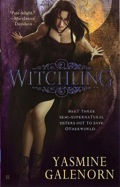 Witchling
By Yasmine Galenorn; Read by Cassandra Campbell
Audible Download – 10 Hours [UNABRIDGED]
Publisher: Tantor Media
Published: 2008
Themes: / Supernatural Romance / Urban Fantasy / Vampires / Dragons / Faeries / Seattle /
I was a little hesitant to delve into Yasmine Galenorn’s Sisters of the Moon series, since it’s generally categorized as “supernatural romance”. Yes, this shows contempt prior to investigation on my part. I’ve never read any “paranormal romance”, or much “romance” at all, for that matter. Yet from the first page, I found myself enjoying the world and characters of Witchling. The book reaffirms my belief that genre labels like “paranormal romance” have more to do with marketing convenience than actual substance.
“Urban fantasy” hits nearer the mark. The events of Witchling unfold in Seattle and the surrounding countryside, including the stunning Mount Rainier. The story follows the three D’Artigo sisters, half-human half-faerie beings from Otherworld who conduct work for the Otherworld Intelligence Agency (OIA) to keep their homeland safe. The murder of Jocko the gentle giant by a demon sets the detective-story plot in motion, told through the voice of witch Camille D’Artigo.
For the most part, the pages of Witchling are populated with fantasy staples. Delilah D’Artigo is a changeling able to transform into a tabby cat, and the third sister Menolly was changed into a vampire. Dragons, demons, and sprites also lumber, skulk, and flit about. Though these might seem trite and cliché, Galenorn lends them all enough life and originality that they seldom detract from the story. More inventive figures also make appearances, most notably the Japanese kitsune (fox) demon Morio.
Like other first-person urban fantasy books I’ve read, Witchling’s style is contemporary, witty, and laced with humor. Despite hailing from Otherworld, Camille has apparently spent enough time on Earth to learn its ways, its slang, and its pop culture references, which she uses to good effect in her speech and exposition. The sprightly writing more than makes up for the slow pacing in the book’s first half. In fact, I really enjoyed the dialogue-driven, character-based opening chapters.
While at its heart Witchling is a fun trans-dimensional detective story, it does touch, in a desultory way, on some more serious themes. Since the D’Artigo sisters are half-bloods, born of a human mother and faerie father, they face prejudice and discrimination from both sides of the race divide. Sadly, this dynamic seldom crops up in the plot, but Camille does occasionally reflect on its ramifications for her family.
And, yes, there is romance. Throughout the novel, Camille is preoccupied to some degree with her love life, and this subplot moves apace with the main narrative thread. I found Camille’s libidinous mental musings distracting from the story at times, but overall the romantic scenes and trajectory fit the book’s tone.
Likable characters, an engrossing plot, and smart, snazzy, sexy writing make Witchling an enticing read. Hints throughout the novel and especially during its conclusion reveal that the events depicted are but the tip of the iceberg in an impending battle between faeries and demons, a battle in which it’s likely that humanity will become embroiled. I look forward to exploring Galenorn’s universe further in the sequel Changeling, which it appears is told from the perspective of werecat Delilah D’Artigo.
Cassandra Campbell’s narration of Witchling is solid but uninspired. She imbues a real sense of emotion into the characters, especially the three D’Artigo sisters. The novel’s contemporary style and numerous pop culture references flow naturally into her narration. Campbell sometimes has a tendency to drift into melodrama, however, and the male villains seem particularly overdrawn. On the whole, though, Campbell handles the material well.
For more information on Sisters of the Moon and Yasmine Galenorn’s other projects you can follow her on Twitter.
Posted by Seth Wilson