New Releases: The Great Courses (The Teaching Company) Summer 2011 Catalogue

New Releases

The Teaching CompanyAs promised, I’ve got a complete scan of the latest Teaching Company catalogue – and I did it before the prices expire! Strangely this catalogue comes not from a random discard, but instead from my mom, who had it come in her mail. She’d never heard The Teaching Company, or this catalogue of “The Great Courses” and she has no idea how she got on their mailing list!

It isn’t fair. I want to be on that list!

Here’s the Summer 2011 catalogue of The Great Courses |PDF|

And as usual it’s just lousy with educational goodness. Among the many lecture series that struck me as cool sounding were:

How To Become A Superstar Student, 2nd Edition (Page 11)
The Art Of Teaching: Best Practices From A Master Educator (Page 21)
Games People Play: Game Theory In Life, Business and Beyond (Page 31)
The Wisdom Of History (Page 37)
Books That Made History: Books That Can Change Your Life (Page 39)
The World Was Never The Same: Events That Changed History (Page 41)
Classical Mythology (Page 51)

Posted by Jesse Willis

The Black Stone by Robert E. Howard

SFFaudio Online Audio

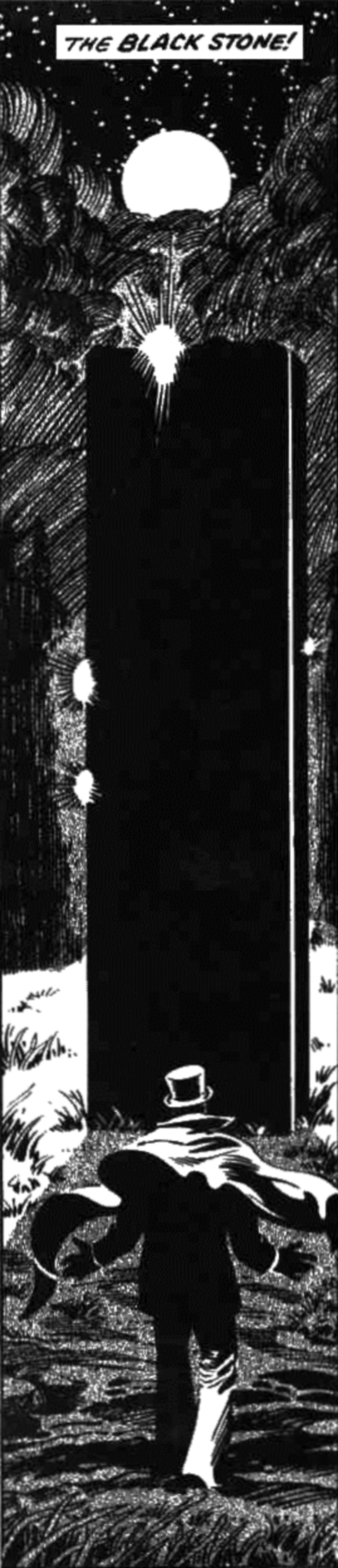
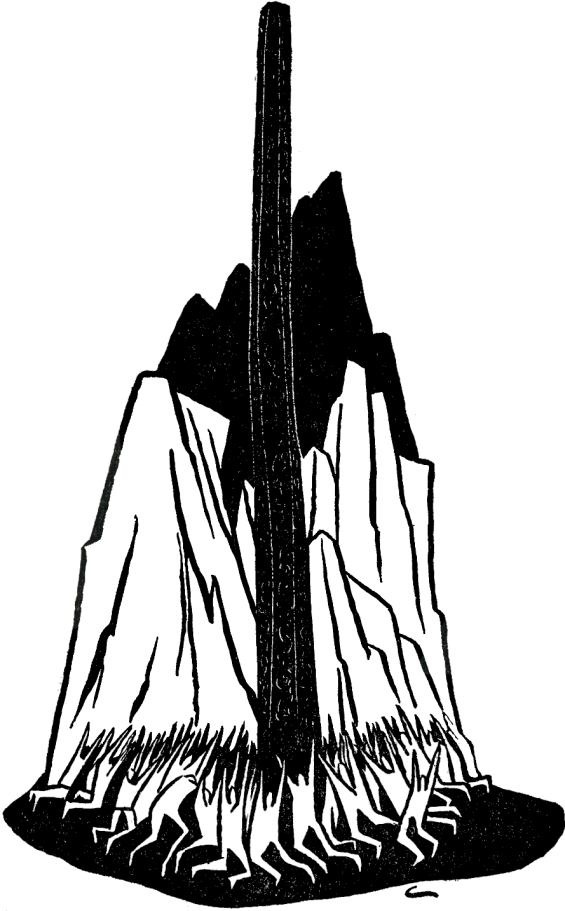
Robert E. Howard's The Black Stone - art by Gene Day

The Black Stone is one of Robert E. Howard’s Cthulhu Mythos stories. I happen to think it’s is one of his best – which is saying something because Robert E. Howard was an absolutely terrific Horror writer. I probably first encountered it as an adaption, it was a backup story written by Roy Thomas and illustrated by Gene Day in the March 1982 issue of Savage Sword Of Conan (#74). That was actually quite a spectacular issue of the magazine and the The Black Stone, which only took up ten pages, was wonderful. FNH has posted a two part reading of the story to his Cthulhu podcast and it’s well read too:

Cthulhu PodcastThe Black Stone
By Robert E. Howard; Read by FNH
2 MP3 Files – Approx. 41 Minutes [UNABRIDGED]
Podcaster: Cthulhu Podcast
Podcast: July 2011
|ETEXT|
A biliophile, with extensive knowledge of history, anthropology and ancient religion, reads of a forgotten geological feature in the mountains of Hungary. He decides to take his vacation there, mid-summer, and encounters legend, history and a terrible manifestation from an unspeakably distant epoch. First published in the November 1931 issue of Weird Tales.

Part 1 |MP3| Part 2 |MP3|

Podcast feed:

http://feeds2.feedburner.com/cthulhupodcast

Here’s another reading, from a cool podcast I’ve just discovered. I expect to be listening to a lot more episodes from it:

The Black Stone by Robert E. HowardThe Black Stone
By Robert E. Howard; Read by Jim Moon
1 |MP3| – Approx. 56 Minutes [UNABRIDGED]
Podcaster: Hypnobobs
Podcast: January 23, 2011
A biliophile, with extensive knowledge of history, anthropology and ancient religion, reads of a forgotten geological feature in the mountains of Hungary. He decides to take his vacation there, mid-summer, and encounters legend, history and a terrible manifestation from an unspeakably distant epoch. First published in the November 1931 issue of Weird Tales.

Podcast feed: http://hypnogoria.podomatic.com/rss2.xml

The Black Stone is also available in print. The Ballantine Del Rey collection titled The Horror Stories Of Robert E. Howard (ISBN: 0345490207) was released as an audiobook edition available from Tantor Media (read by Robertson Dean):

Horror Audiobook - The Horror Stories of Robert E. Howard by Robert E. HowardThe Horror Stories of Robert E. Howard
By Robert E. Howard; Read by Robertson Dean
2 MP3-CDs – Approx. 24 hours [UNABRIDGED]
Publisher: Tantor Audiobooks
Published: 2010
ISBN:
Sample |MP3|

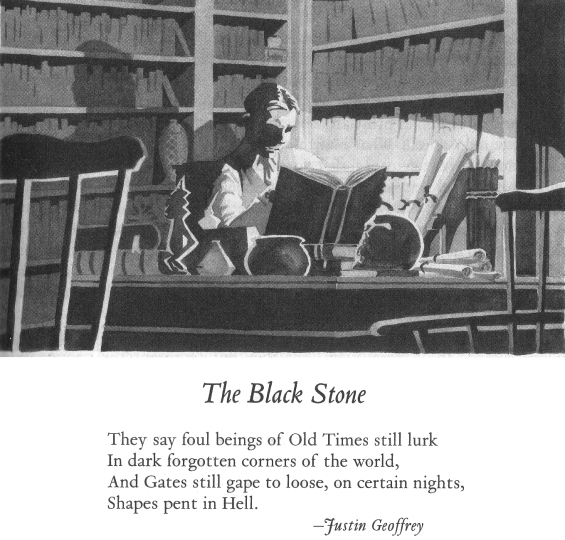
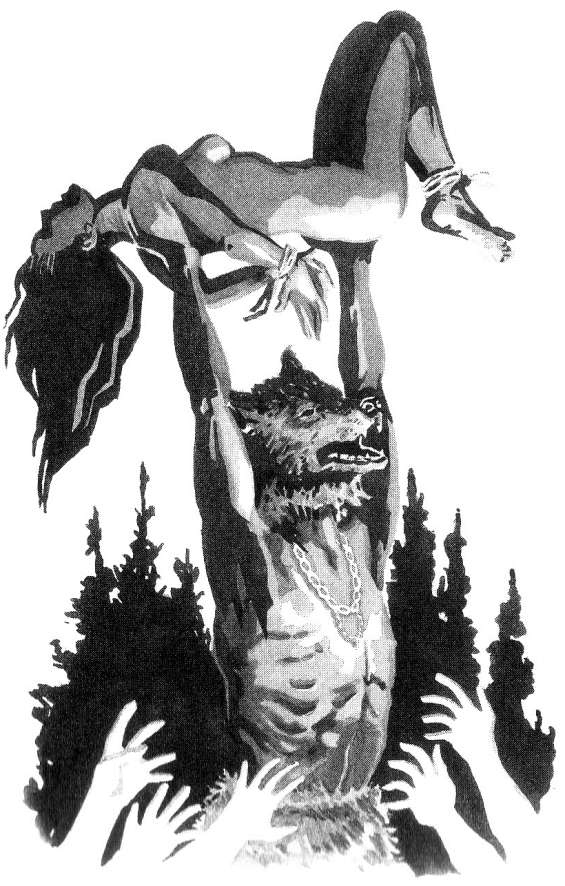
And of course there have been several other talented artistic interpretations of The Black Stone, here’s just a few:

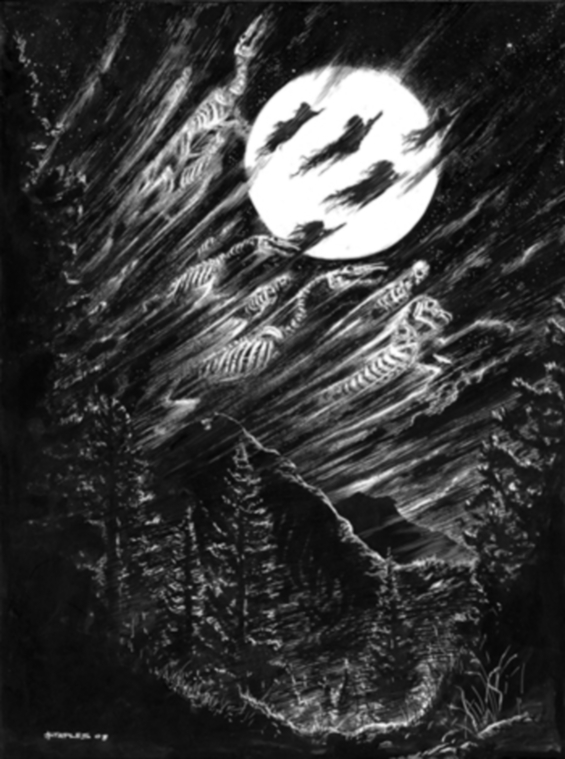
The Black Stone - illustrated by Greg Staples

The Black Stone - illustrated by Lee Brown Coye (from Sleep No More)

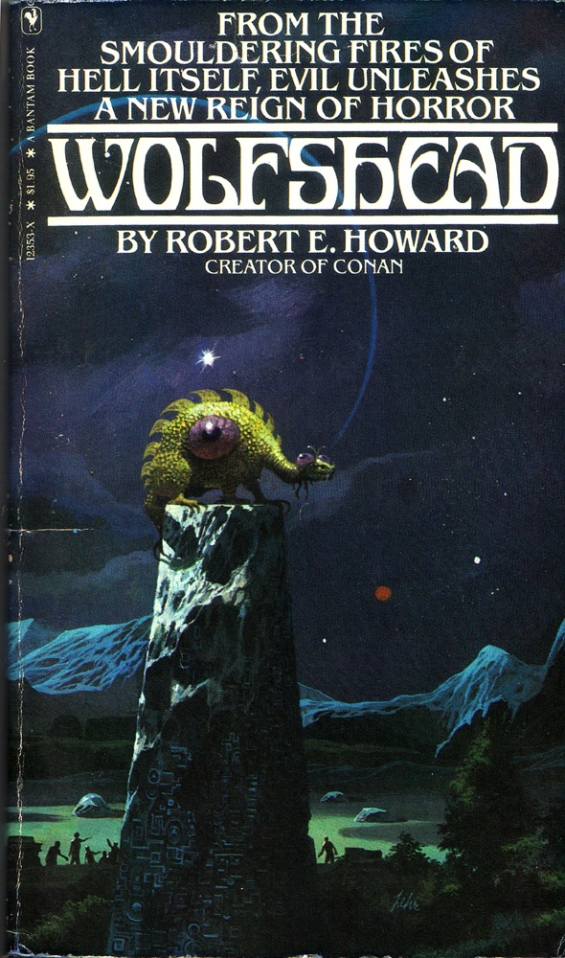
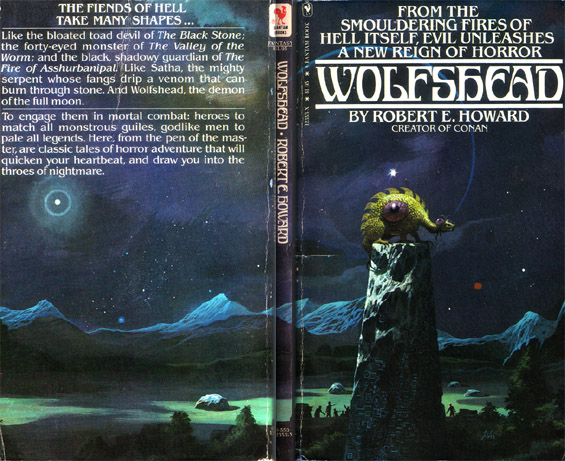
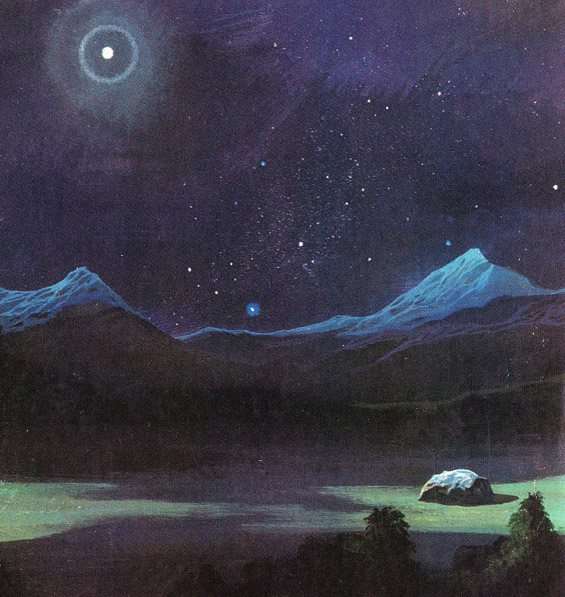
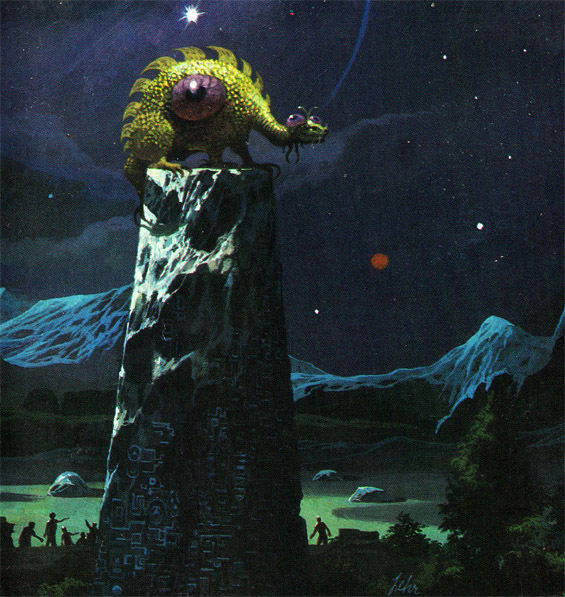
Wolfshead cover illustration by Paul Lehr

Wolfshead cover illustration by Paul Lehr

Wolfshead cover illustration by Paul Lehr

Wolfshead cover illustration by Paul Lehr


The Black Stone - art by Jim & Ruth Keegan

The Black Stone - art by Jim & Ruth Keegan


Posted by Jesse Willis

Recent Arrvials: William Browning Spencer, Harry Dolan, PLUS 10 MORE

SFFaudio Recent Arrivals

Mentioned on the last SFFaudio Podcast…

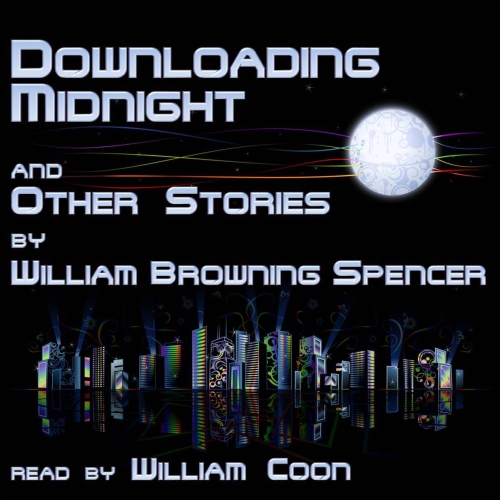
ELOQUENT VOICE - Downloading Midnight And Other Stories by William Browning SpencerDownloading Midnight And Other Stories
By William Browning Spencer; Read by William Coon
Download – Approx. 2 Hours 31 Minutes [UNABRIDGED]
Publisher: Eloquent Voice
Published: June 30, 2011
ISBN: 9780983089858
Fifteen years ago, when an interviewer for The Austin American-Statesman asked what it takes to be a writer, William Browning Spencer said, ‘You have to be willing to ruin the rest of your life.’ Mr. Spencer notes that the willingness is more important than the actual result, and that his life is not in ruins. But he does believe that risk-taking is part of the process, not only for the author but for his characters. This is certainly the case for the characters in this collection of stories. There are people in peril here (a therapist, a wife and daughter, a friend) and there are those who would save them by venturing into the unknown. In ‘The Halfway House At The Heart Of Darkness’ a virtual reality addictions counselor is on the run with his zoned-out client, pursued by the relentless architects of a seductive virtual game called Apes and Angels. In ‘The Oddskeeper’s Daughter’ a marriage made in a heaven of parallel worlds is tested by impossible luck, both good and bad. In ‘Downloading Midnight’ a computer technician must make a dangerous journey into virtual reality in an attempt to save his colleague and prevent the entire web from collapsing. Join us for a mind-bending tour through the imagination of William Browning Spencer.

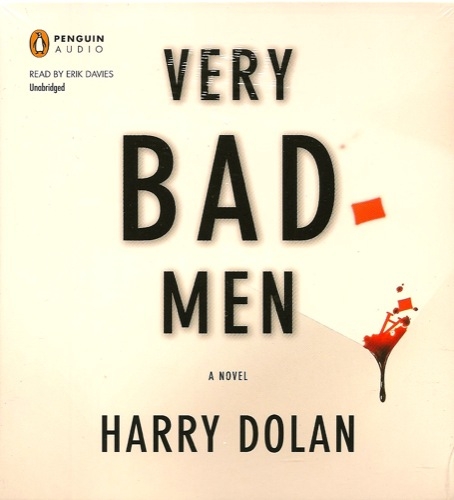
PENGUIN AUDIO - Very Bad Men by Harry DolanVery Bad Men
By Harry Dolan; Read Erik Davies
12 CDs – Approx. 15.5 Hours [UNABRIDGED]
Publisher: Penguin Audio
Published: July 7, 2011
ISBN: 9780142429372
David Loogan returns! Loogan is living in Ann Arbor with Detective Elizabeth Waishkey and her daughter, Sarah. He’s settled into a quiet routine as editor of the mystery magazine Gray Streets-until one day he finds a manuscript outside his door. It begins: “I killed Henry Kormoran.” Anthony Lark has a list of names-Terry Dawtrey, Sutton Bell, Henry Kormoran. To his eyes, the names glow red on the page. They move. They breathe. The people on the list have little in common except that seventeen years ago they were involved in a notorious robbery. And now Anthony Lark is hunting them down, and he won’t stop until every one of them is dead.

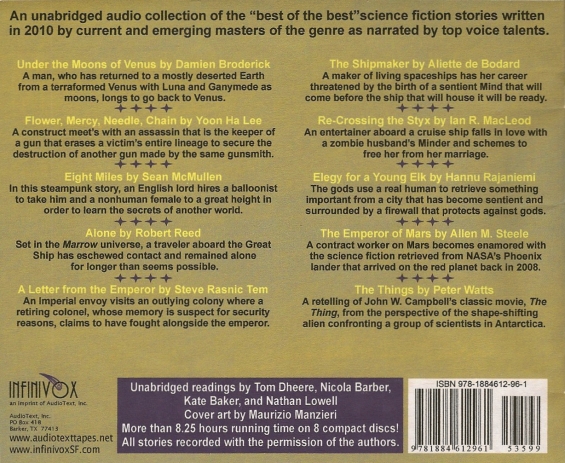
INFINIVOX - The Year's Top Ten Tales Of Science Fiction - Volume 3 edited by Allan Kaster The Year’s Top Ten Tales Of Science Fiction – Volume 3
Edited by Allan Kaster; Read by Tom Dheere, Nichola Barber, Kate Baker and Nathan Lowell
8 CDs – Approx. 8.25 Hours [UNABRIDGED]
Publisher: Infinivox
Published: July 29, 2011
ISBN: 97818846129

Table of Contents:
Under The Moon Of Venus by Damien Broderick
The Shipmaker by Alliette de Bodard
Flower, Mercy, Needle, Chain by Yoon Ha Lee
Re-Crossing The Styx by Ian R. MacLeod
Eight Miles by Sean McMullen
Elegy For A Young Elk by Hannu Rajaniemi
Alone by Robert Reed
The Emperor Of Mars by Allen M. Steele
A letter from the Emperor by Steve Rasnic Tem
The Things by Peter Watts

Here’s the back cover:

INFINIVOX - The Year's Top Ten Tales Of Science Fiction - Volume 3 - BACK COVER

Posted by Jesse Willis

The A-Men by John Trevillian

SFFaudio Online Audio

The A-Men by John TrevillianAuthor John Trevillian writes in to point out that his novel The A-Men is available as an unabridged podcast reading. Sez Trevillian:

“This is a full and unabridged audio podcast recording of the science fiction novel The A-Men by John Trevillian. Mixing dystopian future, cyberpunk and urban noir, join The Nowhereman, Sister Midnight, Pure, D’Alessandro and the 23rdxenturyboy as they fight for their lives in a dark and dangerous metropolis on the eve of its destruction.”

The sequel, The A-Men Return, is also available as both a paperbook and an ebook.

Podcast feed:

http://trevillian.libsyn.com/

Posted by Jesse Willis

Commentary: The Raven by Edgar Allan Poe

The Raven

The Raven by Edgar Allan Poe – |MP3| (read by Anne Cheng)

ONCE upon a midnight dreary, while I pondered, weak and weary,
Over many a quaint and curious volume of forgotten lore—
While I nodded, nearly napping, suddenly there came a tapping,
As of some one gently rapping, rapping at my chamber door.
“ ’Tis some visitor,” I muttered, “tapping at my chamber door—
Only this and nothing more.”

Ah, distinctly I remember it was in the bleak December,
And each separate dying ember wrought its ghost upon the floor.
Eagerly I wished the morrow;—vainly I had sought to borrow
From my books surcease of sorrow—sorrow for the lost Lenore—
For the rare and radiant maiden whom the angels name Lenore—
Nameless here for evermore.

And the silken sad uncertain rustling of each purple curtain
Thrilled me—filled me with fantastic terrors never felt before;
So that now, to still the beating of my heart, I stood repeating
“ ’Tis some visitor entreating entrance at my chamber door—
Some late visitor entreating entrance at my chamber door;
This it is and nothing more.”

Presently my soul grew stronger; hesitating then no longer,
“Sir,” said I, “or Madam, truly your forgiveness I implore;
But the fact is I was napping, and so gently you came rapping,
And so faintly you came tapping, tapping at my chamber door,
That I scarce was sure I heard you”—here I opened wide the door;—
Darkness there and nothing more.

Deep into that darkness peering, long I stood there wondering, fearing,
Doubting, dreaming dreams no mortals ever dared to dream before;
But the silence was unbroken, and the stillness gave no token,
And the only word there spoken was the whispered word, “Lenore!”
This I whispered, and an echo murmured back the word, “Lenore!”—
Merely this and nothing more.

Back into the chamber turning, all my soul within me burning,
Soon again I heard a tapping something louder than before.
“Surely,” said I, “surely that is something at my window lattice;
Let me see, then, what thereat is, and this mystery explore—
Let my heart be still a moment, and this mystery explore;—
’Tis the wind and nothing more.”

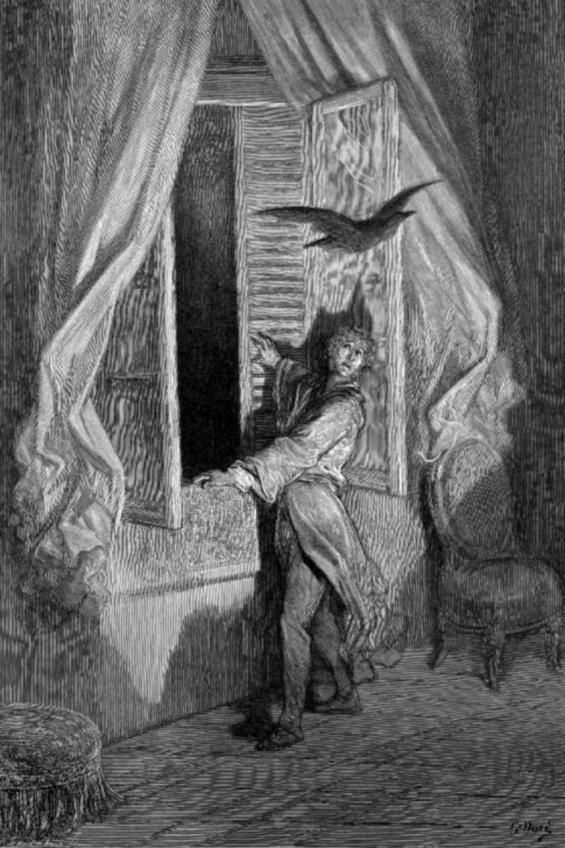
Open here I flung the shutter, when, with many a flirt and flutter,
In there stepped a stately Raven of the saintly days of yore.
Not the least obeisance made he; not a minute stopped or stayed he,
But, with mien of lord or lady, perched above my chamber door—
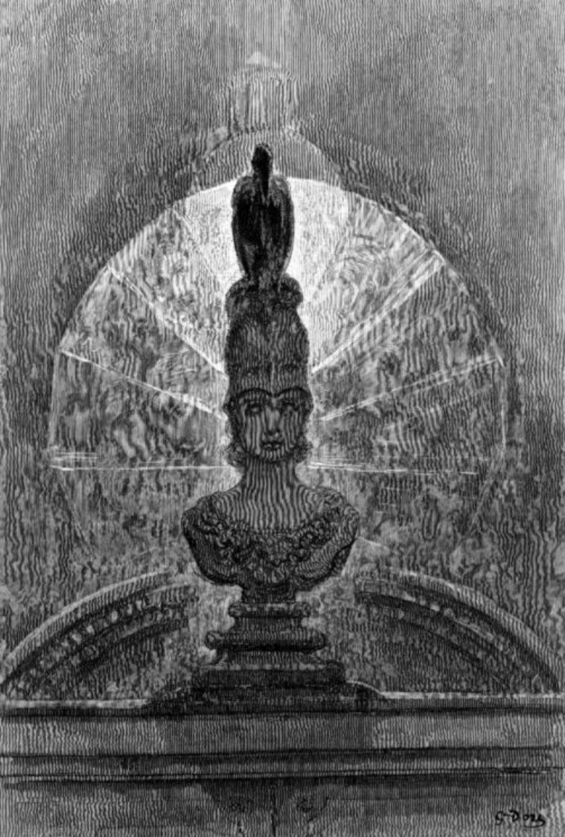
Perched upon a bust of Pallas just above my chamber door—
Perched, and sat, and nothing more.

Then this ebony bird beguiling my sad fancy into smiling,
By the grave and stern decorum of the countenance it wore,
“Though thy crest be shorn and shaven, thou,” I said, “art sure no craven,
Ghastly grim and ancient Raven wandering from the Nightly shore—
Tell me what thy lordly name is on the Night’s Plutonian shore!”
Quoth the Raven, “Nevermore.”

Much I marvelled this ungainly fowl to hear discourse so plainly,
Though its answer little meaning—little relevancy bore;
For we cannot help agreeing that no living human being
Ever yet was blessed with seeing bird above his chamber door—
Bird or beast upon the sculptured bust above his chamber door,
With such name as “Nevermore.”

But the Raven, sitting lonely on that placid bust, spoke only
That one word, as if his soul in that one word he did outpour.
Nothing further then he uttered; not a feather then he fluttered—
Till I scarcely more than muttered: “Other friends have flown before—
On the morrow he will leave me, as my Hopes have flown before.”
Then the bird said, “Nevermore.”

Startled at the stillness broken by reply so aptly spoken,
“Doubtless,” said I, “what it utters is its only stock and store,
Caught from some unhappy master whom unmerciful Disaster
Followed fast and followed faster till his songs one burden bore—
Till the dirges of his Hope that melancholy burden bore
Of ‘Never—nevermore.’ ”

But the Raven still beguiling all my sad soul into smiling,
Straight I wheeled a cushioned seat in front of bird and bust and door;
Then, upon the velvet sinking, I betook myself to linking
Fancy unto fancy, thinking what this ominous bird of yore—
What this grim, ungainly, ghastly, gaunt, and ominous bird of yore
Meant in croaking “Nevermore.”

This I sat engaged in guessing, but no syllable expressing
To the fowl whose fiery eyes now burned into my bosom’s core;
This and more I sat divining, with my head at ease reclining
On the cushion’s velvet lining that the lamp-light gloated o’er,
But whose velvet violet lining with the lamp-light gloating o’er
She shall press, ah, nevermore!

Then, methought, the air grew denser, perfumed from an unseen censer
Swung by Seraphim whose foot-falls tinkled on the tufted floor.
“Wretch,” I cried, “thy God hath lent thee—by these angels he hath sent thee
Respite—respite and nepenthe from thy memories of Lenore!
Quaff, oh quaff this kind nepenthe and forget this lost Lenore!”
Quoth the Raven, “Nevermore.”

“Prophet!” said I, “thing of evil!—prophet still, if bird or devil!—
Whether Tempter sent, or whether tempest tossed thee here ashore,
Desolate, yet all undaunted, on this desert land enchanted—
On this home by Horror haunted—tell me truly, I implore—
Is there—is there balm in Gilead?—tell me—tell me, I implore!”
Quoth the Raven, “Nevermore.”

“Prophet!” said I, “thing of evil!—prophet still, if bird or devil!
By that Heaven that bends above us—by that God we both adore—
Tell this soul with sorrow laden if, within the distant Aidenn,
It shall clasp a sainted maiden whom the angels name Lenore—
Clasp a rare and radiant maiden whom the angels name Lenore.”
Quoth the Raven, “Nevermore.”

“Be that word our sign of parting, bird or fiend!” I shrieked, upstarting—
“Get thee back into the tempest and the Night’s Plutonian shore!
Leave no black plume as a token of that lie thy soul hath spoken!
Leave my loneliness unbroken!—quit the bust above my door!
Take thy beak from out my heart, and take thy form from off my door!”
Quoth the Raven, “Nevermore.”

And the Raven, never flitting, still is sitting, still is sitting
On the pallid bust of Pallas just above my chamber door;
And his eyes have all the seeming of a demon’s that is dreaming,
And the lamp-light o’er him streaming throws his shadow on the floor;
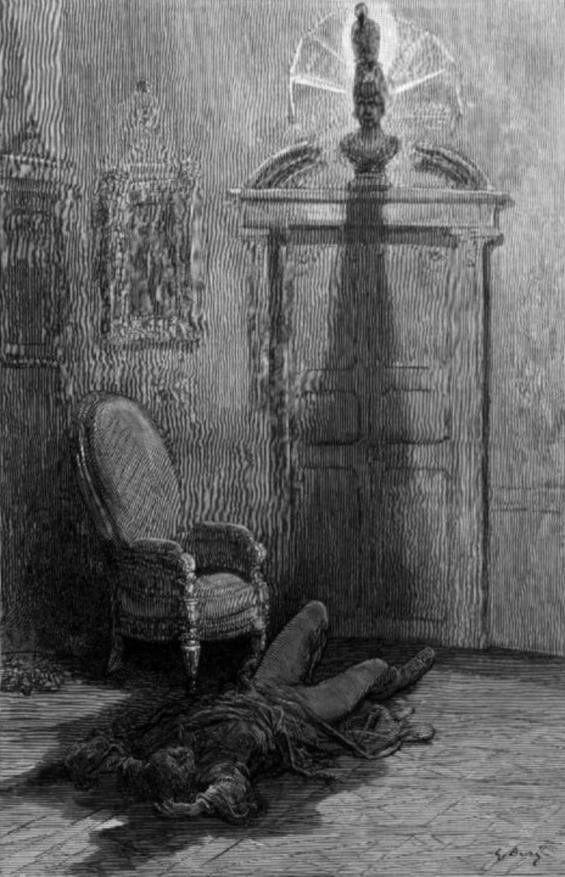
And my soul from out that shadow that lies floating on the floor
Shall be lifted—nevermore

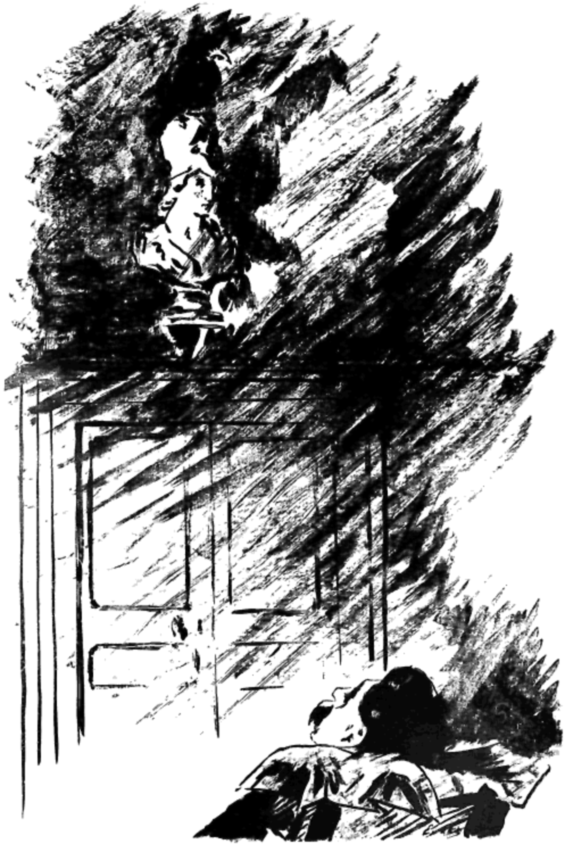
Upon The Bust Of Pallas - Edouard Manet

Edmund C. Steadman, in the introduction to Gustave Doré’s 1884 illustrated edition of The Raven, argues that while The Raven may not be Edgar Allan Poe’s best work that it is certainty “his representative poem” in part because it deals with his major theme: “the irretrievable loss of an idolized and beautiful woman.” And to my ears it certainly is a “treasure of mankind.” But, because of its length and accessibility, I think it is capable of being appreciated by even the roughest of barbarian hearts.

And why is that?

I’d suggest that the supernatural element, or the ambiguity of such, helps a lot. Ghosts, gods and demons are easy entry points.

Think of it as a more palatable forerunner to paranormal romance. Perhaps this kind of literature is best called “Dark Romanticism.”

From Wikipedia:

Dark Romanticism (often conflated with Gothicism or called American Romanticism) is a literary subgenre. It has been suggested that Dark Romantics present individuals as prone to sin and self-destruction, not as inherently possessing divinity and wisdom. G.R. Thompson describes this disagreement, stating “the Dark Romantics adapted images of anthropomorphized evil in the form of Satan, devils, ghosts, werewolves, vampires, and ghouls.” For these Dark Romantics, the natural world is dark, decaying, and mysterious; when it does reveal truth to man, its revelations are evil and hellish.

Now dark romanticism may just sound like a more literary description of paranormal romance, minus the mention of a myriad of tattoos, but its authors tackled tough subjects like the pointlessness of a loveless existence in a world without an afterlife. In a way that’s an inversion of paranormal romance.

So on that happy note, and bearing in mind the generally accepted saw that “Life is stranger than fiction”, my question for your barbarian heart is slightly different:

Is real life more horrific than fiction?

Poe’s answer in The Raven, I think, is that it is and by a wide margin.

I’m fairly confident that a wholly naturalistic interpretation of why The Raven quoth “nevermore” can be found in the lines (62-65):

“Doubtless,” said I, “what it utters is its only stock and store,
Caught from some unhappy master, whom unmerciful Disaster
Followed fast and followed faster till his songs one burden bore—
Till the dirges of his Hope the melancholy burden bore

And if it is true that the titular raven is not supernaturally prophetic, and its speech no more than mere mimicry, is the message it brings to the unnamed narrator at all lessened by a naturalistic interpretation?

I thought not.

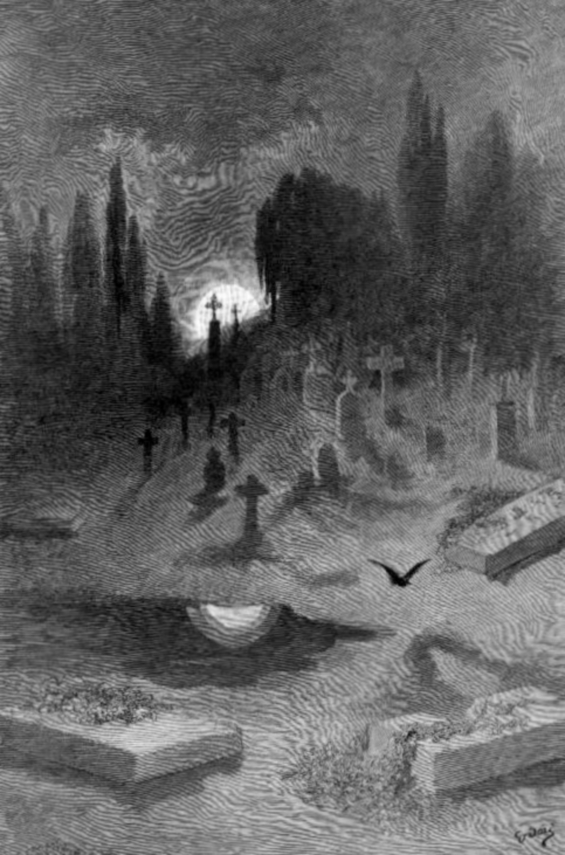
Plutonian Shore - GUSTAVE DORÉ

A Stately Raven Of The Saintly Days Of  Yore - GUSTAVE DORÉ

Upon The Bust Of Pallas  - GUSTAVE DORÉ

Shall Be Lifted Nevermore - GUSTAVE DORÉ

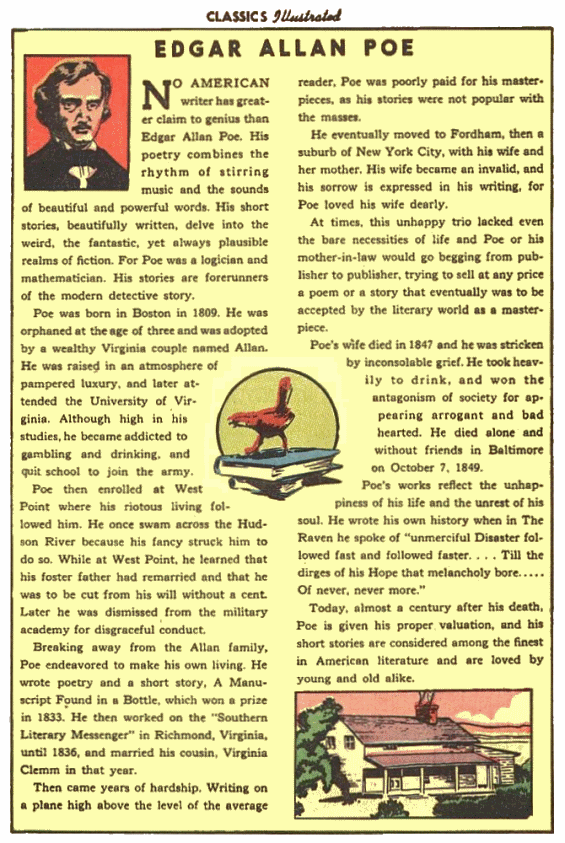
Classics Illustrated biography of Edgar Allan Poe

[via LibriVox and Gutenberg.org]

Posted by Jesse Willis