Review of The Invisible Hook: The Hidden Economics of Pirates by Peter T. Leeson

SFFaudio Review

AUDIBLE - The Invisible Hook by Peter T. LeesonThe Invisible Hook: The Hidden Economics of Pirates
By Peter T. Leeson; Read by Jeremy Gage
Audible Download – Approx. 7 Hours 41 Minutes [UNABRIDGED]
Publisher: Audible, Inc.
Published: September 4, 2009
Themes: / Economics / Piracy / History / Slavery / Democracy / Anarchy /

Pack your cutlass and blunderbuss–it’s time to go a-pirating! The Invisible Hook takes readers inside the wily world of late seventeenth- and early eighteenth-century pirates. With swashbuckling irreverence and devilish wit, Peter Leeson uncovers the hidden economics behind pirates’ notorious, entertaining, and sometimes downright shocking behavior. Why did pirates fly flags of Skull & Bones? Why did they create a “pirate code”? Were pirates really ferocious madmen? And what made them so successful? The Invisible Hook uses economics to examine these and other infamous aspects of piracy. Leeson argues that the pirate customs we know and love resulted from pirates responding rationally to prevailing economic conditions in the pursuit of profits.

I love non-fiction, and I love books that look at history, books that look at history through one lens or another are even better! And so there is much to love in The Invisible Hook. The title is a play on Adam Smith’s elegant metaphor for how markets work, the invisible hand. Most of the examples cited deal with the Atlantic and Caribbean pirates, rather than earlier Roman era or modern day pirates. But we get a sense of how it likely worked in other regions and times. Chapters on the paradoxical attitudes towards pirate slavery, the wildly contradictory stories about piratical impressment, and the chapter on the Jolly Roger, the pirate flag, are absolutely fascinating. And, as something of a piratical hobbyist myself, I’m pleased to report they deliver clear insights only hinted at in other non-fiction books about piracy. You know you’ve got a good book in hand when you find yourself relating the premises, arguments, and conclusions of whole chapters to friends.

How good is the analysis really? That’s kind of hard to tell. Democracy and equality as a function of economics? Wonderful! Seems logical, seems plausible. And that’s the sort of thing you don’t hear often enough. Indeed, economist Steven Levitt, of Freakonomics fame, gets a shout out early on in The Invisible Hook. This is a book in that vein, a kind of entertaining pop-economics, well written, and very thoughtful. But it also boasts the same kind of inarguable psychohistory-style post-analysis of such books. It reminds me of books like William Rosen’s The Most Powerful Idea in the World, and Jared Diamond’s Collapse. Well written history looked at through the lens of a soft science makes the seemingly inexplicable events of history seem almost inevitable. That is to say, this book should be just one of many such on such topics. In the end though how can you not wanto to read a book that makes piracy, as depicted in The Princess Bride, actually very plausible?

But this is not as merry a ship as it might be. As with many book published these days, there’s some bit of puffery. Concepts well illustrated in a paragraph or two are revisited, whole passages nearly reworded, and I’m betting that this for reasons of market driven economics. It might be that each chapter can be looked at on it’s own, textbook style, but listened to as I did, back to back the chapters have a tendency to revisit the same ports too often. This is one of my major complaints about books these days. Too many books are being published with too many words that don’t say different things. At under eight hours even this relatively slim volume, by today’s market standards, but it’s still puffier than any pirate’s shirt really ought be. It is like a pirate cutter on the stalk, slowed down by a sea-anchor of unneeded repetition. Saying the same thing over and over and over. Get my point? Okay, its the market, and to be fair Adam Smith’s own The Wealth Of Nations is a bloody long book, 36 hours! I’d be willing to bet my strong right arm that the original article, as published by Levitt (mentioned in the book), would be an even better audiobook than this very fine one, and no doubt it’d measure at least a peg leg shorter.

Narrator Jeremy Gage is from the old school of audiobook narration, the kind I like. He doesn’t so much as perform a book as read it. His conspiratorial tone typically him a great choice for first-person POV novels, like Lawrence Block’s Burglars Can’t Be Choosers. This is the first non-fiction book I’ve heard him narrate. So now I can say he’s great for non-fiction too.

Posted by Jesse Willis

BBC R4 + RA.cc: Markheim by Robert Louis Stevenson [RADIO DRAMA]

SFFaudio Online Audio

Gruselkabinett - Markheim by Robert Louis Stevenson

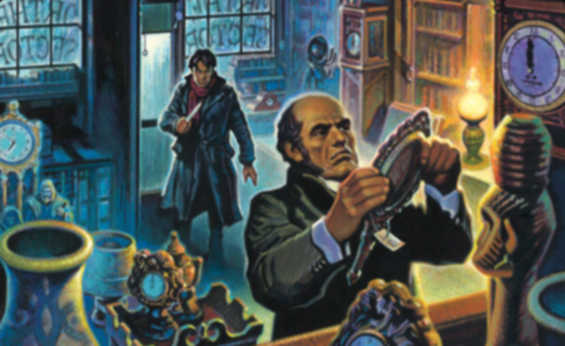
I’ve posted about Robert Louis Stevenson’s murderous classic, Markheim, before (the audiobook and another radio drama). But, I’ve just discovered a very good new adaptation (from 2006) available at RadioArchive.cc. The sound design is excellent, and its lengthy enough to bring out most of the nuance in the text.

BBC Radio 4RadioArchives.ccMarkheim
Adapted from the story by Robert Louis Stevenson; Adapted by John Taylor; Performed by a full cast
MP3 via TORRENT – Approx. 45 Minutes [RADIO DRAMA]
Broadcaster: BBC Radio 4
Broadcast: February 1, 2006
On Christmas Day 1886 with London shrouded in fog, a man shadows a girl across Blackfriars Bridge towards the back streets of Holborn. His name is Markheim and his intentions are unremittingly dark.

Directed by John Taylor

Cast:
Tommy – Mark Straker
Markheim – Jack Klaff
Girl – Abigail Hollick
Visitor – Anton Rodgers
Crispin – Anthony Jackson

And for German listeners there’s THIS sexy sounding version produced as a part of a cool series called Gruselkabinett (which translates to “Chamber of Horrors”).

As a bonus I offer this newly created |PDF| and a vintage anlaysisby C. Alphonso Smith from Short Stories Old And New (1916):

Setting:
There is no finer model for the study of setting than this story affords. It is three o’clock in the afternoon of a foggy Christmas Day in London. If Markheim’s manner and the dimly lighted interior of the antique shop suggest murder, the garrulous clocks, the nodding shadows, and the reflecting mirrors seem almost to compel confession and surrender. “And still as he continued to fill his pockets, his mind accused him, with a sickening iteration, of the thousand faults of his design. He should have chosen a more quiet hour.” So he should for the murder; but for the self-confession; which is Stevenson’s ultimate design, no time or place could have been better.

Plot:
There is little action in the plot. A man commits a dastardly murder and then, being alone and undetected, begins to think, think, think. It is the turning point in his life and he knows it. Instead of seizing the treasure and escaping, he submits his past career to a rigid scrutiny and review. This brooding over his past life and present outlook becomes so absorbing that what bade fair to be a soliloquy becomes a dialogue, a dialogue between the old self that committed the murder and the new self that begins to revolt at it. The old self bids him follow the line of least resistance and go on as he has begun; the newly awakened self bids him stop at once, check the momentum of other days, take this last chance, and be a man. His better nature wins. Markheim finds that though his deeds have been uniformly evil, he can still “conceive great deeds, renunciations, martyrdoms.” Though the active love of good seems too weak to be reckoned as an asset, he still has a “hatred of evil”; and on this twin foundation, ability to think great thoughts and to hate evil deeds, he builds at last his culminating resolve.

The story is powerfully and yet subtly told. It sweeps the whole gamut of the moral law. Many stories develop the same theme but none just like this. Stevenson himself is drawn again to the same problem a little later in “Dr. Jekyll and Mr. Hyde.” Hawthorne tried it in “Howe’s Masquerade,” in which the cloaked figure is the phantom or reduplication of Howe himself. In Poe’s “William Wilson,” to which Stevenson is plainly indebted, the evil nature triumphs over the good. But “Markheim,” by touching more chords and by sounding lower depths, makes the triumph at the end seem like a permanent victory for universal human nature.

Characters
If the story is the study of a given situation, Markheim, who is another type of the developing character, is the central factor in the situation. We see and interpret the situation only through the personality of Markheim himself. Another murderer might have acted differently, even with those clamorous clocks and accusing mirrors around him, but not this murderer. There is nothing abnormal about him, however, as a criminal. He is thirty-six years old and through sheer weakness has gone steadily downward, but he has never before done a deed approaching this in horror or in the power of sudden self revelation. He sees himself now as he never saw himself before and begins to take stock of his moral assets. They are pitifully meager, though his opportunities for character building have been good. He has even had emotional revivals, which did not, however, issue in good deeds. But with it all, Markheim illustrates the nobility of human nature rather than its essential depravity. I do not doubt his complete and permanent conversion. When the terrible last question is put to him – or when he puts it to himself – whether he is better now in anyone particular than he was, and when he is forced to say, “No, in none! I have gone down in all,” the moral resources of human nature itself seem to be exhausted. But they are not. “I see clearly what remains for me,” said Markheim, “by way of duty.” This word, not used before, sounds a new challenge and marks the crisis of the story. Duty can fight without calling in reserves from the past and without the vision of victory in the future. I don’t wonder that the features of the visitant “softened with a tender triumph.” The visitant was neither “the devil” as Markheim first thought him nor “the Saviour of men” as a recent editor pronounces him. He is only Markheim’s old self, the self that entered the antique shop, that with fear and trembling committed the deed, and that now, half-conscious all the time of inherent falseness, urges the old arguments and tries to energize the old purposes. It is this visitant that every man meets and overthrows when he comes to himself, when he breaks sharply with the old life and enters resolutely upon the new.

Posted by Jesse Willis

Hammer Chillers

SFFaudio News

Simon Barnard of Bafflegab (the folks behind the terrific Scarifyers series) writes to say they’re working on a new horror audio series in conjunction with Hammer Films!

It sounds great!

The series can be pre-ordered HERE.

The first show The Box, will be released on June 7th. Here’s the description:

The culmination of the Wainfleet Maritime College sea rescue and safety course is a session in The Box, an underwater helicopter escape simulator. The candidates are ex-navy or air force, and The Box should be an easy exercise for such experienced men.

So why are the drop-outs gradually increasing in number? Men are seeing things when they’re submerged, and won’t talk about them when they come out…

What is the secret of The Box?

Posted by Jesse Willis

The Willows by Algernon Blackwood FREE AUDIOBOOK (for a limited time)

SFFaudio Online Audio

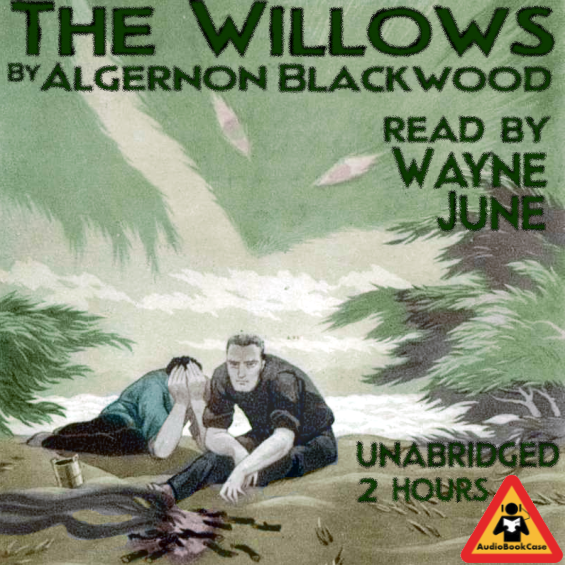
My favourite audiobook narrator, Wayne June, has recorded and released as a FREE MP3 AUDIOBOOK one of the greatest horror tales ever written.

The Willows by Algernon Blackwood - read by Wayne June

The Willows was H.P. Lovecraft’s favourite story. He wrote this about it:

“In delineating the extremes of stark fear, yet infinitely more closely wedded to the idea of an unreal world constantly pressing upon ours is the inspired and prolific Algernon Blackwood, amidst whose voluminous and uneven work may be found some of the finest spectral literature of this or any age. Of the quality of Mr. Blackwood’s genius there can be no dispute; for no one has even approached the skill, seriousness, and minute fidelity with which he records the overtones of strangeness in ordinary things and experiences, or the preternatural insight with which he builds up detail by detail the complete sensations and perceptions leading from reality into supernormal life or vision. Without notable command of the poetic witchery of mere words, he is the one absolute and unquestioned master of weird atmosphere; and can evoke what amounts almost to a story from a simple fragment of humourless psychological description. Above all others he understands how fully some sensitive minds dwell forever on the borderland of dream, and how relatively slight is the distinction betwixt those images formed from actual objects and those excited by the play of the imagination.

Foremost of all [his works] must be reckoned The Willows, in which the nameless presences on a desolate Danube island are horribly felt and recognised by a pair of idle voyagers. Here art and restraint in narrative reach their very highest development, and an impression of lasting poignancy is produced without a, single strained passage or a single false note.”

Get the complete audiobook of The Willows, it’s two hours in six chapters, HERE.

But hurry, the FREE version will soon become the pay version.

And if you like what you hear in The Willows be sure to check out one of the greatest novels you’ve never read, The House On The Borderland by William Hope Hodgson – Wayne June’s reading of it is unbelievably great.

Posted by Jesse Willis

P.S. An illustrated |PDF| of The Willows is available too!