Guardian Short Stories Podcast: My Dream Of Flying To Wake Island by J.G. Ballard

SFFaudio Online Audio

Willliam Boyd explains his love of J.G. Ballard’s short story My Dream Of Flying To Wake Island:

In the short history of the short story – not much longer than 150 years – very few writers have completely redefined the form. Chekhov, pre-eminently, but also Hemingway and Borges. JG Ballard has to be added to this exclusive list, in my opinion. Ballard’s models for his haunting stories are closer to art and music, it seems to me, than to literature. These are fictions inspired by the paintings of De Chirico and Max Ernst, which summon up the mesmerising ostinatos of Philip Glass and Steve Reich. Character and narrative are secondary – image and symbol dominate with a surreal and hypnotic intensity, and the language reflects this. Ballardian tropes – empty swimming pools, abandoned resorts, psychotic astronauts, damaged doctors, the alluring nihilism of consumer society and so forth – are unmistakably and uniquely his. “My Dream of Flying to Wake Island” is a true Ballardian classic.

This is a story you can listen to again and again.
Guardian Short Stories PodcastMy Dream Of Flying To Wake Island
By J.G. Ballard; Read by William Boyd
1 |MP3| – Approx. 30 Minutes [UNABRIDGED]
Podcaster: Guardian Short Stories Podcast
Podcast: December 11, 2010
First published in Ambit #60 (Autumn, 1974).

Posted by Jesse Willis

National Endowment for the Arts: Big Read: The Great Gatsby by F. Scott Fitzgerald

SFFaudio Online Audio

National Endowment for the Arts: Big ReadThe National Endowment for the Arts presents a complied interview piece on F. Scott Fitzgerald’s The Great Gatsby. It features Matthew J. Bruccoli, Maureen Corrigan, Dana Gioia, Andrew Sean Greer, Gish Jen, Robert Redford and Sam Waterston.

|MP3|

There’s a teacher’s guide HERE too.

Subscribe via the podcast feed:

http://feeds2.feedburner.com/neabigread

Posted by Jesse Willis

FREE COMIC BOOK DAY: Saturday May 5th, 2012

SFFaudio News

FREE COMIC BOOK DAYThe first Saturday in May is FREE COMIC BOOK DAY.

That’s THIS SATURDAY!

As usual I’ll be making a special trip to my comic book store, Hourglass Comics (in Port Moody, B.C.).

And I’ll be well prepped for what to pick up too. Here’s why:

PopCultureGeek.comFirst up, there’s this podcast, Pop Culture Geek #19. It features a half hour talk (at the beginning) on the special comics that’ll be available on Saturday.

|M4A|

Next there’s this video, from TheComicBug.com, which gives a sneak peak at most of those releases:

Posted by Jesse Willis

LibriVox: What Was It? by Fitz-James O’Brien

SFFaudio Online Audio

I’ve posted about this story before. It’s worth posting about again and again. What’s new now is this reading, which is PUBLIC DOMAIN, and therefore extremely handy. Included also, for the first time, is some really stunning art!

I’ve also added a PDF, for handy printing!

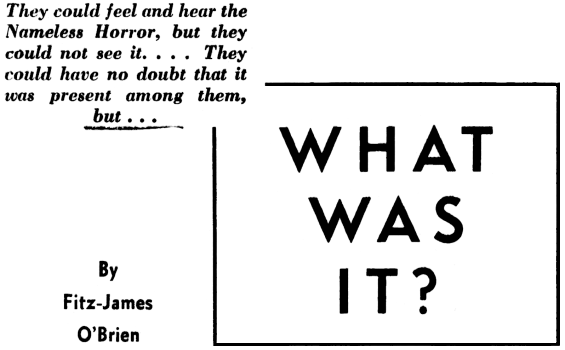
What Was It? by Fitz-James O'Brien

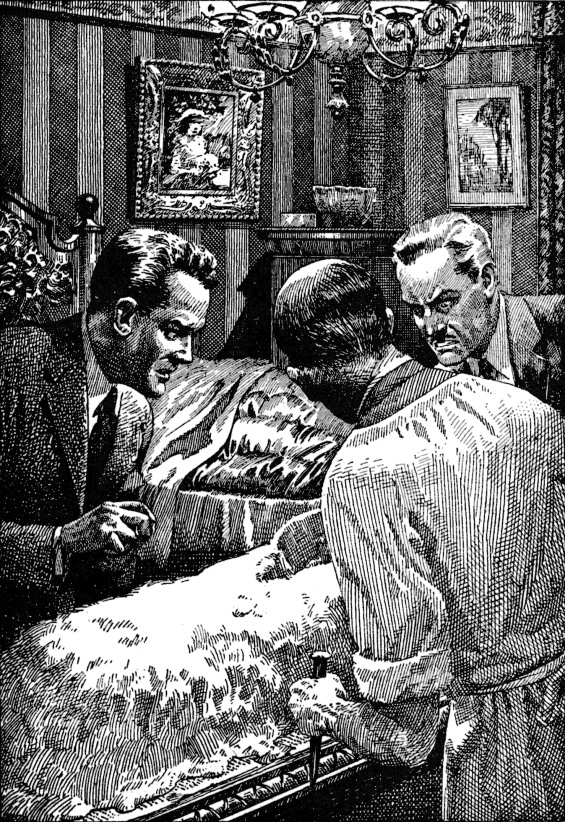
"In Five Minutes We Had A Plaster Mold Of The Creature"

What Was It? by Fitz-James O'Brien - illustration from Famous Fantastic Mysteries, December 1949

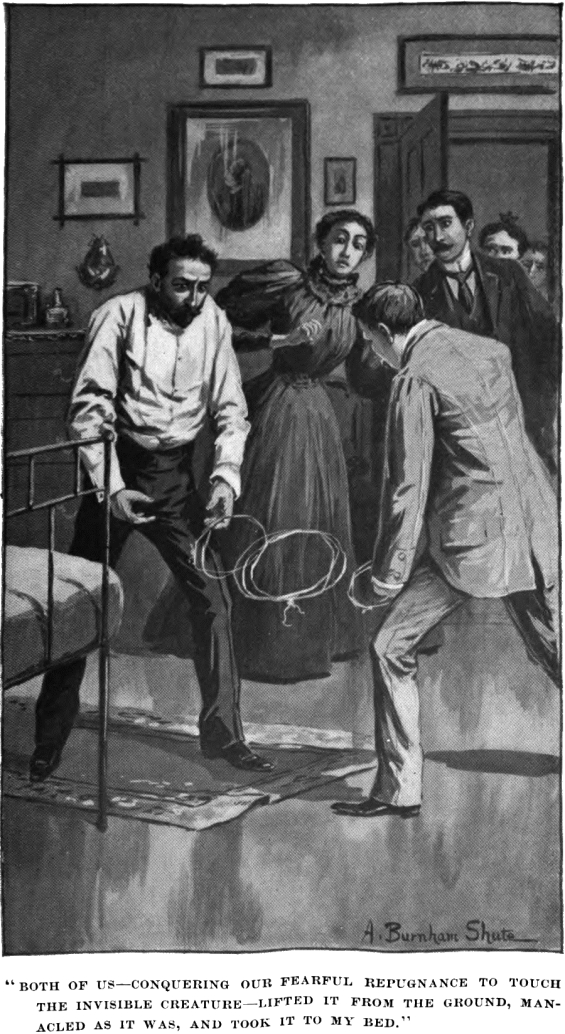
What Was It? by Fitz-James O'Brien - from A Stable For Nightmares, 1896

LibriVoxWhat Was It?
By Fitz-James O’Brien; Read by Peter Yearsley
1 |MP3| – Approx. 35 Minutes [UNABRIDGED]
Publisher: LibriVox.org
Published: May 2006
|ETEXT|
One of the earliest known examples of invisibility in fiction is What Was It? by Fitz-James O’Brien – He’s been called “the most important figure after Poe and before Lovecraft” and this story serves as a kind of a bridge between the supernatural and the scientific, between the likes of de Maupassant’s The Horla and Wells’ The Invisible Man.
First published in Harper’s Magazine, March 1859.

Here’s a |PDF| complied from the Famous Fantastic Mysteries, December 1949 publication.

Posted by Jesse Willis

Neil Gaiman on Edgar Allan Poe (his work should be read aloud)

SFFaudio News

I love introductions, afterwords, forewords. I buy collections of stories with stories I already have several copies of just for the new introductions, afterwords, and forewords. The only thing that’ll make me buy such a collection without a foreword, afterword, or introduction is if it has new illustrations.

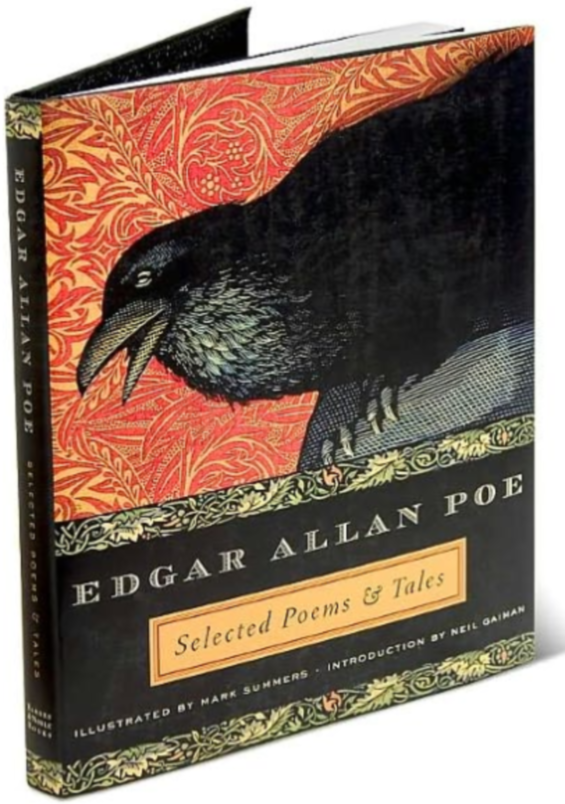
And so one collection I’d love to get my mitts on is Barnes & Noble’s Edgar Allan Poe – Selected Poems & Tales which has both an introduction and new illustrations by Mark Summers!

I first heard about it via Neil Gaiman’s website. Gaiman wrote the introduction, Some Strangeness In The Proportion: The Exquisite Beauties Of Edgar Allan Poe, to the wonderful looking collection.

Edgar Allan Poe: Selected Poems & Tales - with illustrations by Mark Summers and an introduction by Neil Gaiman

The entire inspiring essay is available over on Gaiman’s site.

Here are a few choice lines from it:

Poe isn’t for everyone. He’s too heady a draught for that. He may not be for you. But there are secrets to appreciating Poe, and I shall let you in on one of the most important ones: read him aloud.

Read the poems aloud. Read the stories aloud. Feel the way the words work in your mouth, the way the syllables bounce and roll and drive and repeat, or almost repeat. Poe’s poems would be beautiful if you spoke no English (indeed, a poem like “Ulalume” remains opaque even if you do understand English — it implies a host of meanings, but does not provide any solutions). Lines which, when read on paper, seem overwrought or needlessly repetitive or even mawkish, when spoken aloud reshape and reconfigure.

(You may feel peculiar, or embarrassed, reading aloud; if you would rather read aloud in solitude I suggest you find a secret place; or if you would like an audience, find someone who likes to be read to, and read to him or to her.)

And check out this illustration by Mark Summers (do you see the hidden skull?):

Illustration by Mark Summers from Edgar Allan Poe: Selected Poems & Tales

If you can’t see it, hit “Ctrl -” a few times.

And hey, my birthday is coming up people, and I don’t have this book!

Posted by Jesse Willis

Commentary: A beginning is a very delicate time.

SFFaudio Commentary

When ought you first introduce a kid to Dune? And what ought to be the first introduction? I’m thinking the paperbook, just after he or she has read The Hunger Games.

As evidence I submit, this 11 second video – recorded after hearing just the first few lines read aloud.

It delighted me more than any number of cute kitten videos viewed in the same month.

Posted by Jesse Willis