News, Reviews, and Commentary on all forms of science fiction, fantasy, and horror audio. Audiobooks, audio drama, podcasts; we discuss all of it here. Mystery, crime, and noir audio are also fair game.
Maureen O’Brien, of the Maria Lectrix podcast, has just wrapped up a short story by one of the truly under-appreciated SF authors. Here’s what Maureen said of him:
“Mack Reynolds was an extremely prolific author who was very popular back in the fifties, sixties and early seventies. (He apparently was a member of the Socialist Labor Party, which surprises me. I always thought he was an early libertarian or something. Well, I’m no pundit.) Anyway, he always struck me as a very Western-ornery sort of writer, and he wrote a lot of military and political sf. It was fairly obvious that he loved throwing what-ifs into the speculation blender. Today he’s almost totally forgotten by younger sf readers, except for his 1968 Star Trek kids’ novel, which was recently reprinted at John Ordover’s behest. (A very nice behest.) I don’t think any of his books were precisely great, but they were all pretty good reads.”
Mack Reynolds also wrote some very readable utopian and dystopian novels that engaged the philosophy of Karl Marx in social Science Fiction thought experiments. No other SF author has engaged communism, socialism and economics like Mack Reynolds did. And that’s not only really strange, it’s really pretty shameful. Economics is a fascinating subject in SF – perhaps the problem is it’s harder to write about?
Here’s Maureen’s latest…
Medal Of Honor
By Mack Reynolds; Read by Maureen O’Brien
4 MP3 Files – Approx. 87 Minutes [UNABRIDGED]
Podcaster: Maria Lectrix
Podcast: September – October 2009
Provider: Archive.org If you’d received the Galactic Medal of Honor, you could do no wrong, they said. But what if the wrong man received the award, and still found out that was true? Dallas McCord “Mack” Reynolds was a well-known and prolific writer of military SF and stories of political extrapolation during the nineteen-sixties and seventies. From Amazing Science Fiction Stories November 1960.
Part 1 |MP3| Part 2 |MP3| Part 3 |MP3| Part 4 |MP3|
My friend Luke Burrage, of the Science Fiction Book Review Podcast, has been talking with me about the Planetary Romance subgenre of Science Fiction. We’re both big fans of it. It’s an old genre, probably best sired by Edgar Rice Burroughs with his novel A Princess Of Mars.
Here is the definition of Planetary Romance from the introduction to The Ultimate Guide Of Science Fiction: The Definitive Illustrated Guide (edited by David Pringle):
PLANETARY ROMANCE: a romantic adventure story set on a colourful alien planet, often involving an element of swordplay (or science fiction equivalent).
I bring this all up because the most recent Planetary Romance to draw my attention is one that’s Texas-sized in scope, but short in length (running under 3.5 hours). And of course the necessary swordplay element has naturally been replaced by gunplay – it is a planet full of Texans after all!
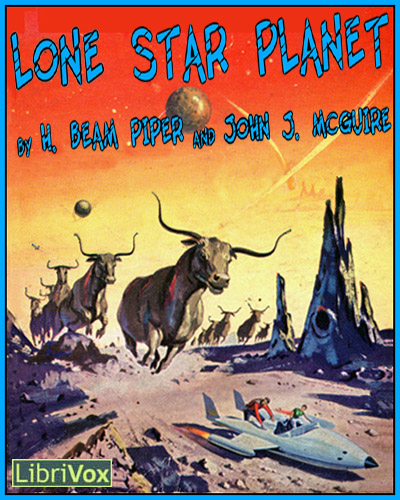
Lone Star Planet
By H. Beam Piper and John J. McGuire; Read by Mark Douglas Nelson 5 Zipped MP3 Files or Podcast – Approx. 3 Hours 22 Minutes [UNABRIDGED]
Publisher: LibriVox.org
Published: October 25, 2009 New Texas: its citizens figure that name about says it all. The Solar League ambassador to the Lone Star Planet has the unenviable task of convincing New Texans that a s’Srauff attack is imminent, and dangerous. Unfortunately it’s common knowledge that the s’Srauff are evolved from canine ancestors—and not a Texan alive is about to be scared of a talking dog! But unless he can get them to act, and fast, there won’t be a Texan alive, scared or otherwise!
And, if you’re looking for more terrifically narrated Planetary Romance audiobooks you couldn’t do better than to start with another one read by Mark Douglas Nelson … The Green Odyssey by Philip Jose Farmer.
[Thanks also to libraryanne and James Christopher]
Men of Iron is an 1891 book by the American author Ernie Howard Pyle. It is juvenile novel in which the author has the reader experience the medieval entry into knighthood through the eyes of a young squire, Myles Falworth. It was adapted into a film in 1954 using the title The Black Shield Of Falworth. The film featured the then real life married team of a very buxom Janet Leigh and a young beducktailed Tony Curtis (doing a fine Errol Flynn impression). The film also has some terrific fight scenes including maybe the best axe vs. shield brawling ever put on film. This LibriVox version of the novel, despite being a multi-narrator volume, is still highly listenable.
One curiosity though is how the language seems particularly homo-erotic. Take these passages from Chapter 5:
From this overlordship of the bachelors there had gradually risen a system of fagging, such as is or was practised in the great English public schools—enforced services exacted from the younger lads—which at the time Myles came to Devlen had, in the five or six years it had been in practice, grown to be an absolute though unwritten law of the body—a law supported by all the prestige of long-continued usage. At that time the bachelors numbered but thirteen, yet they exercised over the rest of the sixty-four squires and pages a rule of iron, and were taskmasters, hard, exacting, and oftentimes cruel.
and
Then a sudden thought came to Myles, and as it came his cheeks glowed as hot as fire “Master Gascoyne,” said he, with gruff awkwardness, “thou hast been a very good, true friend to me since I have come to this place, and hast befriended me in all ways thou mightest do, and I, as well I know, but a poor rustic clod. Now I have forty shillings by me which I may spend as I list, and so I do beseech thee that thou wilt take yon dagger of me as a love-gift, and have and hold it for thy very own.”
Gascoyne stared open-mouthed at Myles. “Dost mean it?” said he, at last.
“Aye,” said Myles, “I do mean it. Master Smith, give him the blade.”
At first the smith grinned, thinking it all a jest; but he soon saw that Myles was serious enough, and when the seventeen shillings were produced and counted down upon the anvil, he took off his cap and made Myles a low bow as he swept them into his pouch. “Now, by my faith and troth,” quoth he, “that I do call a true lordly gift. Is it not so, Master Gascoyne?”
“Aye,” said Gascoyne, with a gulp, “it is, in soothly earnest.” And thereupon, to Myles’s great wonderment, he suddenly flung his arms about his neck, and, giving him a great hug, kissed him upon the cheek. “Dear Myles,” said he, “I tell thee truly and of a verity I did feel warm towards thee from the very first time I saw thee sitting like a poor oaf upon the bench up yonder in the anteroom, and now of a sooth I give thee assurance that I do love thee as my own brother. Yea, I will take the dagger, and will stand by thee as a true friend from this time forth. Mayhap thou mayst need a true friend in this place ere thou livest long with us, for some of us esquires be soothly rough, and knocks are more plenty here than broad pennies, so that one new come is like to have a hard time gaining a footing.”
“I thank thee,” said Myles, “for thy offer of love and friendship, and do tell thee, upon my part, that I also of all the world would like best to have thee for my friend.”
Such was the manner In which Myles formed the first great friendship of his life, a friendship that was destined to last him through many years to come. As the two walked back across the great quadrangle, upon which fronted the main buildings of the castle, their arms were wound across one another’s shoulders, after the manner, as a certain great writer says, of boys and lovers.
The problem with assuming there is some homo-erotic subtext, seems to me a problem of false positives. They’re easy to spot, and once spotted harder to shake than a case of the yawns. A nudge is as good as a wink to a blind bat. Not that this book is in any way boring, it’s actually quite rollicking and definitely worth checking out!
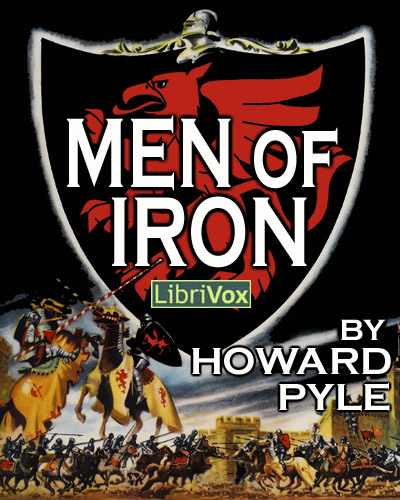
Men Of Iron
By Howard Pyle; Read by various 35 Zipped MP3 Files or Podcast – Approx. 6 Hours 55 Minutes [UNABRIDGED]
Publisher: LibiVox.org
Published: March 14, 2008 Men of Iron by Howard Pyle is historical fiction that transports us back to the 1400’s, a time of knighthood and chivalry. Myles Falworth is eight years old when news comes they must flee their home. His blind father is accused of treason. We see Myles grow up, train as a knight, and with perseverance, clear his father of any wrong-doing and restore their family name.
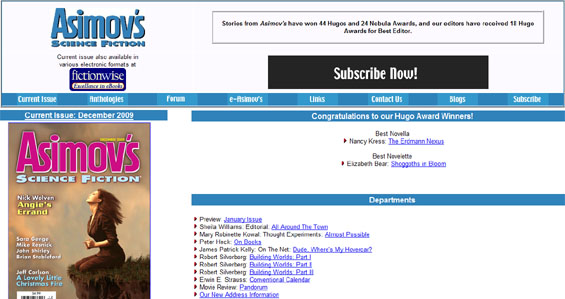
Tony Smith’s latest Sofanauts podcast features a discussion about Asimov’s Science Fiction Magazine with it’s editor Sheila Williams (and a bunch of other folks). This follows another recent Sofanauts show in which F&SF, Analog and Asimov’s all got bashed for not being more web-savvy, not having modern websites (blogs), and in general not being very 21st century about the internet (let alone futuristic). This is all despite having some relatively good news to spread (the Kindle versions are selling)!
Having heard the explanations provided by Williams, for the various Asimovian deficiencies, I quite understand and sympathize with her situation. Being a small division in a big corporation is bound to produce the kind of corporate blindness that prevents reasonable responses and sensible efforts towards modernization. In the Popper–Kuhn philosophy of science they have an explanation for this sort of thing. It goes something like this:
‘for the new science to flourish the old scientists must die’
Dell, Asimov’s publisher, has been in the magazine business since 1921 so it ain’t that surprising they are so backward. It sounds like Williams has done her politely-half-damnedest to modernize the magazine: bringing in a website in the late 1990s, getting credit card subscriptions, adding blogs to the site – even being on the Sofanauts is pretty 21st century. What I hope is she can leverage some of the coverage (BoingBoing) to convince Dell to modernize a bit.
But on the other hand Sheila Williams’ has some more fire headed her way. See she got me all excited saying, in the discussion, that her website had podcasts!
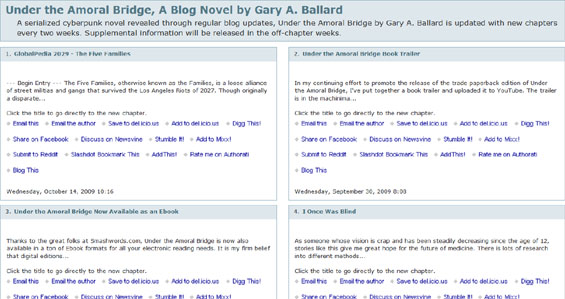
So now, since I discovered her mis-statement I’ve got to get up on my hobby horse and call her “podcast” most definitely not a podcast. What Asimovs.com has is an MP3 file |MP3| (a sshort story by the podcasting pioneer James Patrick Kelly). Perhaps there had been more MP3 files on the website in the past? If so that certainly would be another step towards a podcast (a podcast of one file isn’t much of a podcast), but it still wouldn’t be enough. See, there’s no podcast feed on the Asimov’s website at all. There are two blogs, neither of which is discoverable through my SAGE reader even though they exist. I’m betting this is because of the ancient web technology being employed by the Asimov’s website (circa 1998). So, soldiering on, I added the two blog feeds in manually (as they were virtually unreadable on the website itself) only to discover that the two blogs were nothing I’d want anyway. One is a serialization of a novel (requiring a click-through of each post to read – which is absolutely and utterly pointless kind of blog) and the other seemed to be mostly about twitter and movies – neither seemed to speak “Asimov’s” to me.
Looking ahead, even if Asimov’s future isn’t all doom and gloom (Dell probably has a decade or two left to publish their mainstay puzzle books) I’m still not so optimistic. Maybe Asimov’s can continue on without Dell. All I can tell you is that while I’m always interested in getting a copy, it’s pretty damned hard from month to month. They rarely show up at the local magazine racks and they’ve pretty much had to continue on without me, subscription wise, since the 20th century. I don’t have a credit card so I don’t have a subscription and their website has no way to notify me of any changes that would make that change (like adding a PayPal option). And the thing is I do read the mag when I can get a copy! So I think there’s still something wrong there.
So Canada’s public radio book reading program Between The Covers is podcast. One whole channel (BBC Radio 4) for the U.K. is available through Radio Downloader subscription. So what about our friends in Australia? Are they making their shows available?
Yes, they sure aren’t!
ABC Radio National is still in bad shape podcasting wise. They’ve got their terrific non-fiction programs like The Philosopher’s Zone and All In The Mind pleasing everyone all over the world but their book reading program, called Book Reading, isn’t available except via 20th century tech called “streaming audio” (RealAudio or Windows Media). This is really bad.
I’ve said it before, and before and before and before, and most assuredly before – when oh when will ABC Radio National join the 21st century?
I bring this up because they’ve got a terrific sounding novel being broadcast right now:
Wake In Fright is an open-eyed nightmare played out under a scorching outback sun. On one level it’s a great, mad, hallucinatory yarn about landing yourself in the ultimate geographical cul-de-sac – a place without exit. But underneath its compulsively readable surface lurks another, even darker story; a sort of ‘bush existentialist’ tale about the nature of self-entrapment, and the way in which we are often the architects of our own worst dreams.
Wake In Fright
By Kenneth Cook; Read by Gabriel Andrews
15 Broadcasts – Approx. 3 Hours 45 Minutes [ABRIDGED]
Broadcaster: ABC Radio National / The Book Reading
Broadcast: 2006 / 2009 An open-eyed nightmare played out under a scorching outback sun, Wake in Fright is on one level a great, mad hallucinatory yarn about landing yourself in the ultimate geographical cul-de-sac, a place without exit. But underneath its compulsively readable surface lurks another, even darker story; a sort of ‘bush existentialist’ tale about the nature of self-entrapment, and the way in which we are often the architects of our own worst dreams.
Sounds great don’t it? Too bad almost no-one will listen to 3.75 hours of story sitting in front of their monitors.
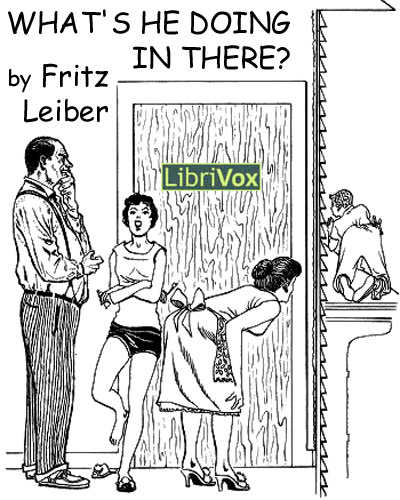
I haven’t had a chance to listen to half of these yet but I did get a chance to enjoy the final tale in this collection. It’s by Fritz Leiber and is super-funny. It’s the tale of an alien invasion — of privacy. See when a Martian visitor lands on Earth he has the good sense to make his first contact with a professor of anthropology. The only question is, will the formalities actually start after the naturally necessary bodily functions finish?
If you find another good one in this collection put in a comment. I’d be much obliged!
Short Science Fiction Collection 23
By various; Read by various 10 Zipped MP3 Files or Podcast – Approx. 4 Hours 22 Minutes [UNABRIDGED
Publisher: LibirVox.org
Published: August 4, 2009 Science Fiction is speculative literature that generally explores the consequences of ideas which are roughly consistent with nature and scientific method, but are not facts of the author’s contemporary world. The stories often represent philosophical thought experiments presented in entertaining ways. Protagonists typically “think” rather than “shoot” their way out of problems, but the definition is flexible because there are no limits on an author’s imagination. The reader-selected stories presented here were written prior to 1962 and became US public domain texts when their copyrights expired.
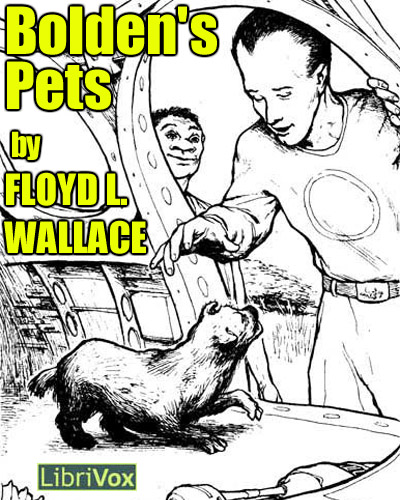
Bolden’s Pets
By Floyd L. Wallace; Read by Bev J. Stevens
1 |MP3| – Approx. 45 Minutes [UNABRIDGED]
Publisher: LibirVox.org
Published: August 4, 2009 The price of life was a life for a life—which was all the reward the victim looked for! From Galaxy Science Fiction, October, 1955.
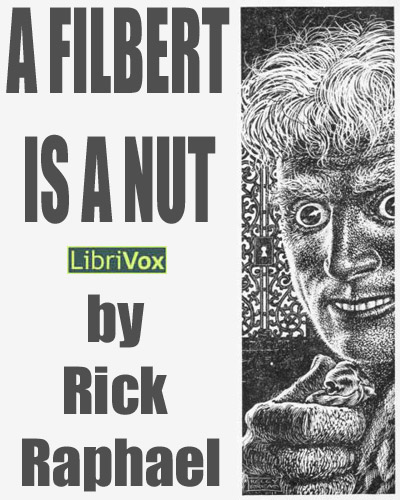
A Filbert Is A Nut
By Rick Raphael; Read by Linda Dodge
1 |MP3| – Approx. 20 Minutes [UNABRIDGED]
Publisher: LibirVox.org
Published: August 4, 2009 That the gentleman in question was a nut was beyond question. He was an institutionalized psychotic. He was nutty enough to think he could make an atom bomb out of modeling clay! From Astounding Science Fiction November 1959.
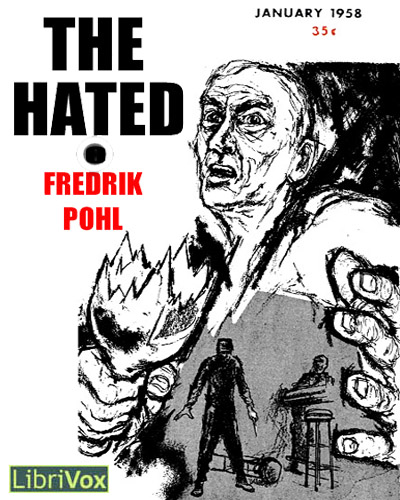
The Hated
By Frederik Pohl; Read by Gregg Margarite
1 |MP3| – Approx. 23 Minutes [UNABRIDGED]
Publisher: LibirVox.org
Published: August 4, 2009 After space, there was always one more river to cross … the far side of hatred and murder! From Galaxy Science Fiction January 1958.
Regeneration
By Charles Dye; Read by Wendel Topper
1 |MP3| – Approx. 24 Minutes [UNABRIDGED]
Publisher: LibirVox.org
Published: August 4, 2009 So long as there are men and women alive, in a livable environment, then a new beginning is possible. From Future combined with Science Fiction stories September 1951.
Rex Ex Machina
By Frederic Max; Read by Synergy
1 |MP3| – Approx. 6 Minutes [UNABRIDGED]
Publisher: LibirVox.org
Published: August 4, 2009 The domination of the minds of tractable Man is not new. Many men have dreamed of it. Certainly some of them have tried. This man succeeded. A science fictional letter from a father to a son. From Fantastic Universe May 1954.
Tales of Space and Time; The Star
By H.G. Wells; Read by Linda Dodge
1 |MP3| – Approx. 32 Minutes [UNABRIDGED]
Publisher: LibirVox.org
Published: August 4, 2009
The Success Machine
By Henry Slesar; Read by Troy Bond
1 |MP3| – Approx. 25 Minutes [UNABRIDGED]
Publisher: LibirVox.org
Published: August 4, 2009 Mechanical brains are all the rage these days, so General Products just had to have one. But the blamed thing almost put them out of business. Why? It had no tact. It insisted upon telling the truth! From Amazing Science Fiction Stories January 1960.
Unspecialist
By Murray F. Yaco; Read by Wendel Topper
1 |MP3| – Approx. 29 Minutes [UNABRIDGED]
Publisher: LibirVox.org
Published: August 4, 2009 A machine can be built to do any accurately described job better than any man. The superiority of a man is that he can do an unexpected, undescribed, and emergency job … provided he hasn’t been especially trained to be a machine. From Astounding Science Fiction, January, 1960.
What’s He Doing In There?
By Fritz Leiber; Read by Gregg Margarite
1 |MP3| – Approx. 12 Minutes [UNABRIDGED]
Publisher: LibirVox.org
Published: August 4, 2009 He went where no Martian ever went before—but would he come out—or had he gone for good? From Galaxy Science Fiction December 1957.


 Medal Of Honor
 My friend