
The Partially Examined Life: Candide by Voltaire and No Country For Old Men by Cormac McCarthy

SFFaudio Online Audio

The Partially Examined LifeThe Partially Examined Life is a philosophy podcast by “some guys who were at one point set on doing philosophy for a living but then thought better of it.” I started following it after SFFaudio Podcast #115 when Anne, from the Anne Is A Man blog, suggested I try it. Since then I’ve been listening to it pretty steadily. Their most recent two podcasts are a great jumping on point for those only casually interested in philosophy as they are both discussions of philosophical novels.

Episode 62 is a discussion of Candide by Voltaire and Episode 63 is a discussion of Cormac McCarthy’s No Country For Old Men. I’ve read the first book, and now I want to read the second. Indeed, there are very few podcasts that give me the same kind of pleasure, an intellectual pleasure, as recording our own READALONGs. These last two podcasts are such.

Here are the specifics:

Episode 62: Voltaire’s Novel “Candide |MP3|
On Candide: or, Optimism, the novel by Voltaire (1759). Is life good? Popular Enlightenment philosopher Leibniz argued that it’s good by definition. God is perfectly good and all-powerful, so whatever he created must have been as good as it can be; we live in the best of all possible worlds.

Episode 63: Existentialist Heroes in Cormac McCarthy’s “No Country For Old Men |MP3|
On philosophical issues in McCarthy’s 2005 novel about guys running around with drug money and shooting each other, and about fiction as a form for exploring philosophical ideas.

Podcast feed: http://feeds.feedburner.com/ThePartiallyExaminedLife

Posted by Jesse Willis

LibriVox: Fear by Achmed Abdullah

SFFaudio Online Audio

Wow! I’m loving this story, as narrated by John Feaster. Sez Feaster of his narration “it’s more a performance than a reading” and that’s absolutely true – Feaster seems to be taking the events of the plot very personally, and that lends power to what is the sort of twistily fantastic tale you’d see on something like Alfred Hitchcock Presents. And yet, Achmed Abdullah’s pulpy writing seems damned good too!

And, if even half the stories about the author, as detailed over on the Wikipedia entry for him, are true, he may be one of the most fascinating writers I’d never heard of.

Alexander Nicholayevitch Romanoff (aka Achmed Abdullah) was, apparently, a Russian born relative of the last Czar, the son of an Afghan princess, an Academy Award nominated scriptwriter, an officer in the British, Indian, and Turkish armies (serving in India, Afghanistan, Tibet, Africa, China, and Turkey), as well as being a Muslim, a Catholic, and a spy!

LibriVoxFear
By Achmed Abdullah; Read by John Feaster
1 |MP3| – Approx. 22 Minutes [UNABRIDGED]
Publisher: LibriVox.org
Published: June 19, 2010
First published in Detective Story Magazine, 1919.

[Thanks to Julie Hoverson for the recommendation!]

Posted by Jesse Willis

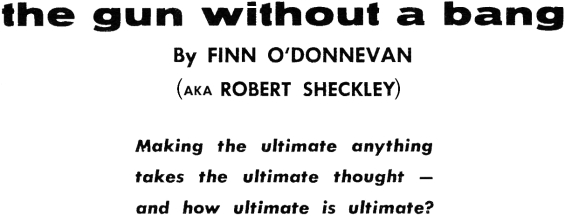
Mindwebs: The Gun Without A Bang by Robert Sheckley

SFFaudio Online Audio

“One must not put a loaded rifle on the stage if no one is thinking of firing it.”
-Anton Chekhov, November 1,1889.

The Gun Without A Bang by Robert Sheckley

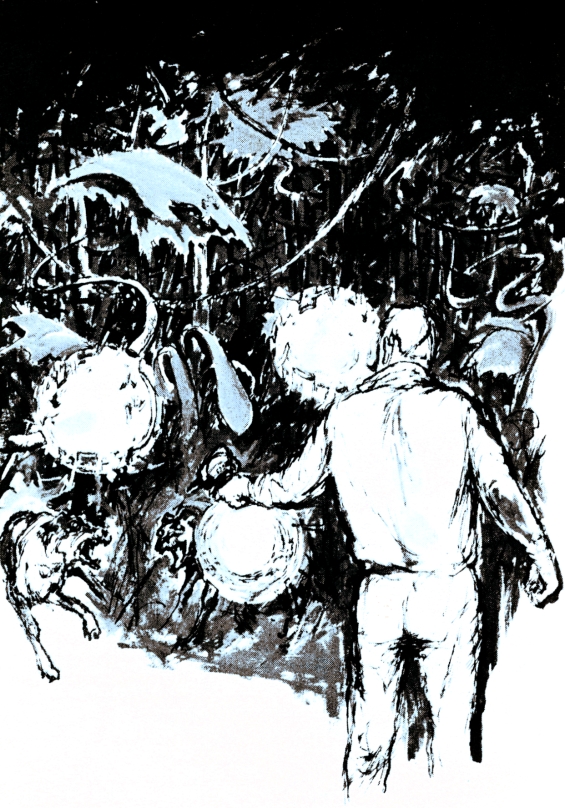
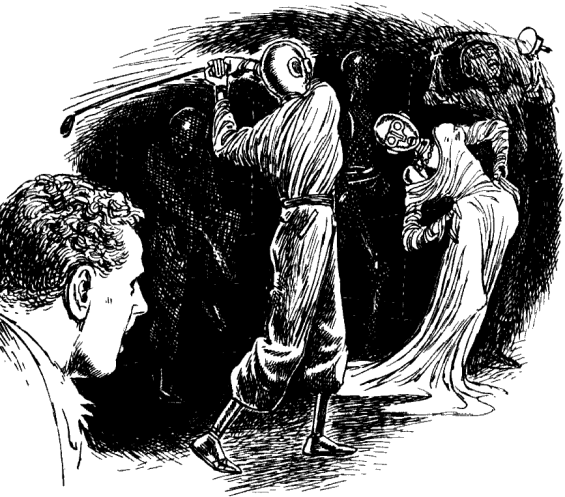
The Gun Without A Bang - illustrated by Dick Francis

MindwebsMindwebs – The Gun Without A Bang

By Robert Sheckley; Read by Michael Hanson
1 |MP3| – Approx. 19 Minutes [UNABRIDGED with a musical bed]
Broadcaster: WHA Radio (Madison, WI)
Broadcast: August 4, 1982
Provider: Archive.org
Alfred Dixon is a weapons expert assigned to test, in hostile alien jungle conditions, a new deadly disintegration pistol. The thing kills alright, but there’s one thing it doesn’t do. It won’t report. First published in Galaxy Science Fiction, June 1958.

Posted by Jesse Willis

The Midas Plague by Frederik Pohl

SFFaudio Online Audio

“the curse of want gives way to the curse of plenty”
-Frederik Pohl, in the anthology Nightmare Age

Broadcast on BBC Radio 4, as a part of “The Shape of Things to Come” season in 1991 (a series of plays looking at the future) The Midas Plague was adapted from the acclaimed novella by Frederik Pohl.

Now, thanks to the terrific service RadioArchive.cc you can experience this positively smirk inducing satire of a consumer society flipped on it’s head.

Here’s my description of the premise:

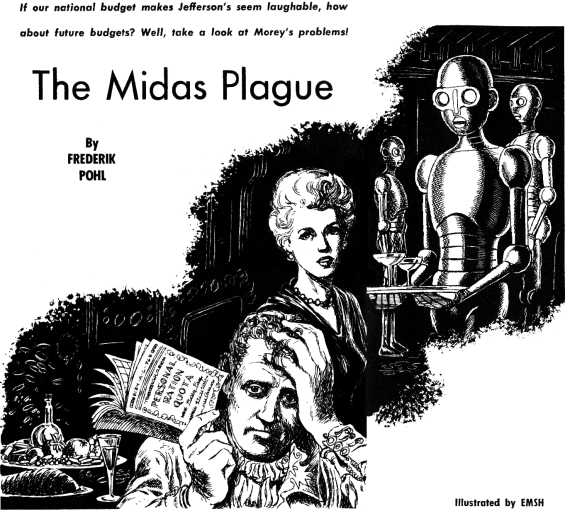
Morey Fry lives in a post-scarcity world where cheap production has made commodities, consumer goods, and food ubiquitous. The “poor” are forced to spend their lives in a constant state of frantic consumption, continually upgrading their devices, clothes, jewelry, and appliances. But “poor” Morey can only wear-out his shirts so fast, and taking double cream in his coffee is giving a sick feeling. Meanwhile a black market in counterfeit ration book stamps flourishes, yet Morey is an honest man. When poverty stricken Morey marries a “rich” girl from the right side of the tracks they move into his well appointed mansion. There, the efficient household staff of robot butlers, valets, maids, cooks, and footmen foist endless consumer goods upon them both at a furious rate, something that upsets Morey’s new “wealthy” spouse – after all she’s is accustomed to a certain luxurious lifestyle.

The Midas Plague, illustrated by Emsh - from Galaxy, April 1954

BBC Radio 4RadioArchives.ccThe Midas Plague
Adapted by Mark Power from the story by Frederik Pohl; Performed by a full cast
1 MP3 (via TORRENT) – Approx. 44 Minutes [RADIO DRAMA]
Broadcaster: BBC Radio 4
Broadcast: September 4, 1991

Directed by Alec Reid

Cast:
Morrey Fry – Michael Drew
Cheri Fry – Diane White
Howland – Alan Covenay
Judge Elon – Eric Allen
Grace Elon – Caroline Hunt
Semmelweiss – Nick Chivers
Newman – Nick Chivers
Fairless – Clarence Smith
Sam – Clarence Smith
Wally – Richard Pearce
Blaine – Richard Pearce
Tanaquil – Catherine Neal
Wainwright – Fraser Kerr
Henry, the Robot – Geoffrey Collins
Profirio – Geoffrey Collins

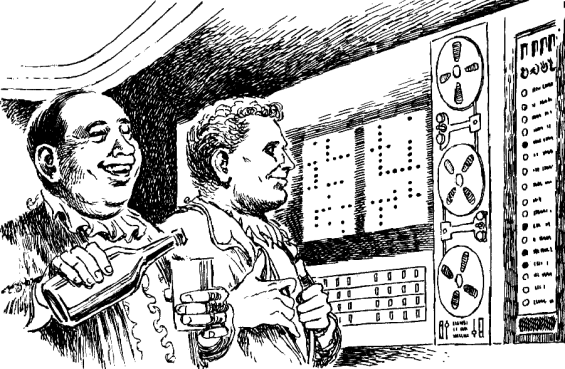
More illustrations from the publication in Galaxy, April 1954:
The Midas Plague, illustrated by Emsh - from Galaxy, April 1954

The Midas Plague can also be found in…
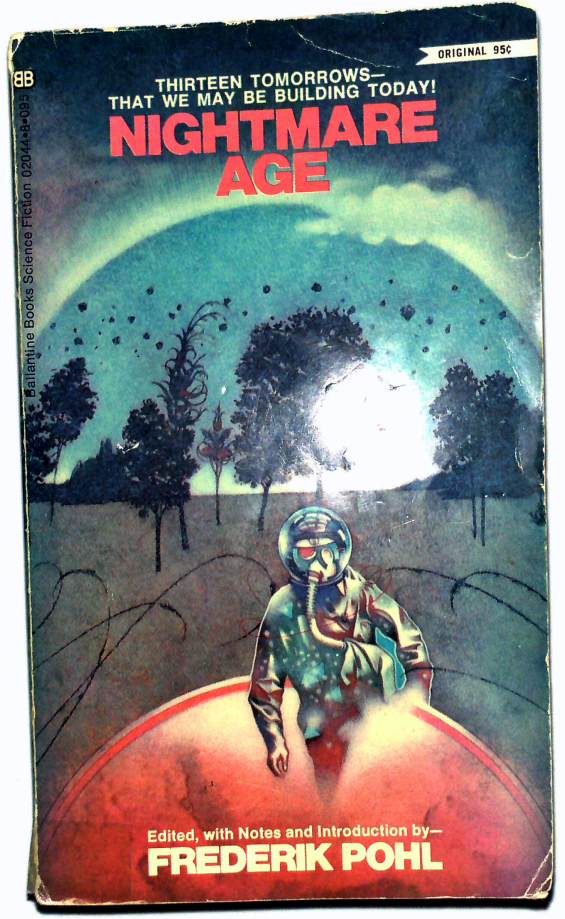
Ballantine Books - Nightmare Age edited by Frederik Pohl

and…
The Science Fiction Hall Of Fame, Volume II, B

Posted by Jesse Willis

The Yellow Wallpaper by Charlotte Perkins Gilman (narrated by Xe Sands)

SFFaudio Online Audio

Professional narrator Xe Sands (Xe is pronounced “exy”) recorded a terrific sounding audiobook of Charlotte Perkins Gilman’s The Yellow Wallpaper back in June.

Sez Xe:

Originally, I wanted to record “The Lottery,” by Shirley Jackson. Sadly, it is not in the public domain. But then, for some reason, this wonderful, dark, gothic story of a woman’s descent into madness came to mind. Not sure whether to thrilled to have the perfect piece, or somewhat disturbed that a tale of neuroses run wild popped into my mind so easily, but I digress…

I think I’ve grown a bit angry.

Let me start with this – how the story is generally encapsulated:

“…a woman whose mental illness makes her a prisoner in her own home.”

“…a young wife and mother succumbing to madness ”

So why is this a problem? It’s true, right? She is unbalanced. She does descend into madness. But it’s all a question of why, WHY does she “succumb” to madness?

And this is where I grow a bit angry. Most of the dismissive language used in these summaries miss the point: that this story is a treatise on the attitudes toward women’s mental health during this period (written in 1899). The narrator, who we are supposed to believe is unreliable, is actually perfectly coherent and early on in the story, likely a far better judge about what would actually help her. It is the ignorance and arrogance of her husband that is the unreliable narrator, for his filter regarding her condition and what would help it, cannot be trusted to give the reader an accurate picture of what ails his wife.

Take a look at this bit from the author, “Why I Wrote the Yellow Wallpaper.” And tell me if attitudes are really all that different today? All I can say is that it is wonderful that she was able to save herself…and I think she put a hint of that in this story:
“He says no one but myself can help me out of it, that I must use my will and self-control and not let any silly fancies run away with me.”

Luckily for Gilman, she was able to do what her narrator could not.

Posted by Jesse Willis

CBC: Ideas: Iceberg Ship Habbakuk

SFFaudio Online Audio

CBC Radio One - IdeasThe 47 year old radio show, Ideas, is consistently the best evening education program on the radio. Prior to the web its ephemeral broadcasts could only be recaptured by sending away for expensive audio cassette copies. That made it appointment listening. Actually, Ideas, at least in part, is how I came to love evening classes.

After an evening seminar, I’d drive along Highway 101 with the sun’s last crepuscular rays shining rosily into the darkening sky, listening to Lister Sinclair introduce a new lecture series, a two part documentary, or some other aural exploration of condensed wisdom.

Since the dawning of the Ideas podcast I’ve not listened to the radio broadcast very often. And there’s a mawkish loss in that, perhaps. But ideas and Ideas should be accessible, and they have become so.

Here’s the latest.

Iceberg Ship Habbakuk:

1942: Hitler’s U-Boats are ravaging merchant ships that Britain depends on for its survival. Enter a plan, for a gigantic warship, to help the Allies win the Battle of the Atlantic. It will be built in Canada and made from … ice! Richard Longley tells the story of iceberg ship Habbakuk, in all its icy eccentricity.

|MP3|

Podcast feed: http://www.cbc.ca/podcasting/includes/ideas.xml

Incidentally a few years ago BBC radio broadcast a play, penned by Steve Walker, on the same subject.

Posted by Jesse Willis