News, Reviews, and Commentary on all forms of science fiction, fantasy, and horror audio. Audiobooks, audio drama, podcasts; we discuss all of it here. Mystery, crime, and noir audio are also fair game.
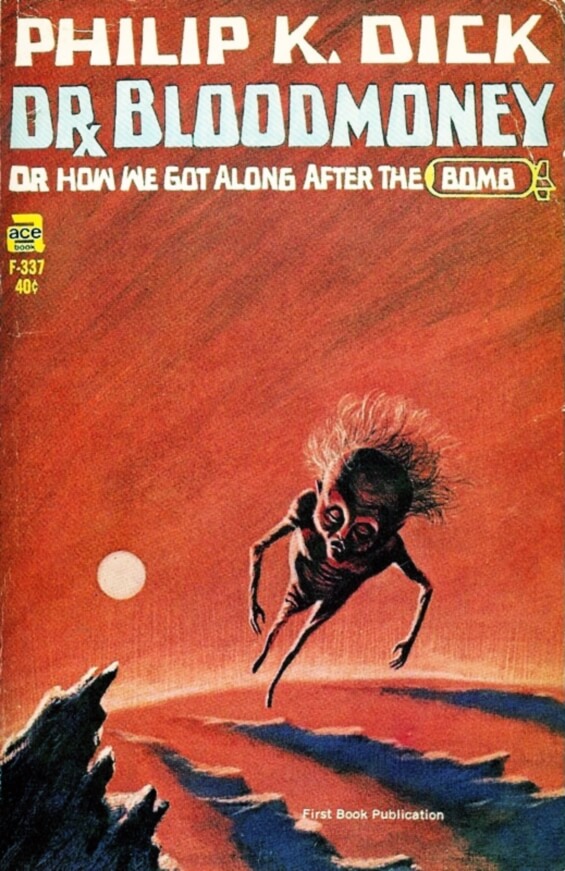
The SFFaudio Podcast #353 – Jesse, Paul, and Marissa talk about Dr. Bloodmoney by Philip K. Dick.
Talked about on today’s show: Or How We Got Along After The Bomb, a Nebula Award Nominee?, why this novel?, Now Wait For Last Year, The Man In The High Castle, the ideas are awesome, confusingly written, before the bomb, the earlier atomic blast, jumping back and forth without warning, a subtle change, quasi-flashbacks, a straightforward timeline, jumping between the characters, head hopping, Hoppy Harrington, the Dick themes, Bill’s ability, getting confused, body-switching, consciousness projection, who is Bill?, the parasitic twin brother, Beyond Lies The Wub, the captain is gone, a theme in this story (other than with Bill), telekinetic ability, taking Walt Dangerfield’s place, a weird comedy bit, impressions, is anybody in that satellite at all?, it sounds like him, is Hoppy dead?, he went to Heaven (the satellite), the audiobook narrator’s (Tom Weiner’s) interpretation, bad writing?, dear god!, psychoanalysis, creepy, a mad god resentful of his treatment, the killing of Bluthgeld, something very cool going on, the reason we read Philip K. Dick novels, the Philip K. Dick radio (and other audio interviews), Dick was easily manipulated, you’re an alcoholic, getting into jewelry, a super-impressionable guy, a Zelig, a very human thing (multiplied), Jesse has reviewed himself out, Jesse’s review of Dr. Bloodmoney: a radio repairman with no limbs…, a big fish in a small pond, what Dick knows, an avid mushroom picker, interacting with themselves, a talking sheepdog, Stuart McConchie’s horse, cheating wives, the dog, the rat that plays a nose-flute, he stole the story … but it became part of him (and thus his story), he is a part of her, he is literally inside of her, when someone tells you a story…, classic Dick touches, Cheyenne, a pastoral existence, like Kim Stanley Robinson’s Pacific Edge, they’re crunching their granola, playing video games while listening to audiobooks, Fallout 3, full of mutants, a bit of racism, the second novel with a phocomelus protagonist, Deus Irae by Philip K. Dick and Roger Zelazny, supernatural powers, some life crisis, lifts from stories, The Great C, Of Withered Apples, “In Earth’s Diurnal Course”, a title for marketing, Dr. Strangelove, Bluthgeld as Henry Kissinger, Operation Paperclip, Robert McNamara, bone viruses, gooks, the half-baked, Marissa’s Fallout game, post-nuclear war, E-Day (Emergency Day), starts and ends on a morning, one of PKD’s tricks, Vulcan’s Hammer, Now Wait For Last Year, re-resonance, mutants going about their business, thing about the freaks, being that had been fused together, kind of beautiful, the rat pulling a little cart, one of the rat traps is also scurrying, the pizza rat meme, food and other essentials, radiation tablets, the mutants will be fine, the cats, cats start planning and scheming, Paul’s pic of the Roman cat, Mike Cole, ancient history, dancing pigeons, it sang for it’s supper, ruins inhabited by cats, Villa Appia, a rabbit, rabbits in the ruins, Hoppy’s plan, Looper, telekinetic powers, Hoppy is kind of like the Rainmaker, he heals a watch-spring, Galactic Pot-Healer, a technopath, recycling ideas, School For Sidekicks by Kelly McCullough, Brian K. Vaughn’s Ex Machina, the power to command mechanical objections, superhero comics, consistency, Mr. Pistorius (gets murdered), Bluthgeld is insane right?, does he have abilities?, if there is a viewpoint character… Mary Sueing?, Dick is Bluthgeld, we get deep inside his mind, the switch between dialogue and inner monologue, responsibility, his mistaken calculation, you can take it ambiguously, a catalyst for changing the world, his name, Dick likes German names, Mister Jack Tree, Mister Tree, jackfruit, the story of Odin (hung on a tree for nine days), myster tree?, there’s something central about him, undercooked, Hoppy’s desires and plans drive the plot, goals and ambitions, did Hoppy cause the war?, why am I eating this rat?, money is useless, a hoarder, cigarettes, coffee, Philip K. Dick predicted video games, the bottlecaps (are money), a haorder style game, Stuart McConchie is a modern game player, crafting, the boss, a real life boss, very autobiographical, did Dick know an armless and legless person?, Dick’s obsession with his dead twin sister, the whole “I can see into the land of the dead” thing, monstrous children, rock paper scissors, an angry little child, a snail, real senses, the owl, into Hoppy, where did Hoppy go?, into Dangerfield, Dangerfield had something growing inside him, California, so sad, his wife’s still up there with him, another drug overdose, marriage, Lucifer’s Hammer by Larry Niven and Jerry Pournelle, The Little Movement by Philip K. Dick, Toy Story, Jesse explains the plot of The Little Movement, kinda freaky, an alien invasion fleet, the other toys, the kid is freaked out, everything is going wrong, a very dark Toy Story, by breaking the fourth wall he’s broken a rule, “that’s this book, kinda”, …because I like Germans, so many cool ideas, confusing, so many people, the central axis of what’s happening, Bonnie’s sleeping around, typical PKD wife stuff, petty office politics after the end of the world, post-apocalyptic travel is hard, Russians and Japanese on Catalina, on the other hand…, it’s not all bad, he’s going to automate his cigarette stuffing, hippies hanging out and doing hippy stuff, more about the alcohol, this podcast is petering out, sorry Mr. PKD, it’s not a great book, not the greatest bull-session ever, that sheep dog with no money, catch the stick, good comedy, kind of tragic, he is a monster (but you feel for him), a really good set-up, he got mistreated, surviving and not becoming bitter about it, Dangerfield isn’t bitter, what do they do in Russia, maybe there’s a bunch of other satellites up there, why did this get a Nebula nomination?, we are happy to have read it, whatever’s next on out list…
The SFFaudio Podcast #352 – Jesse, Mr Jim Moon, and Prof. Eric S. Rabkin talk about doors, gates, and portals (and rubicons)
Talked about on today’s show:
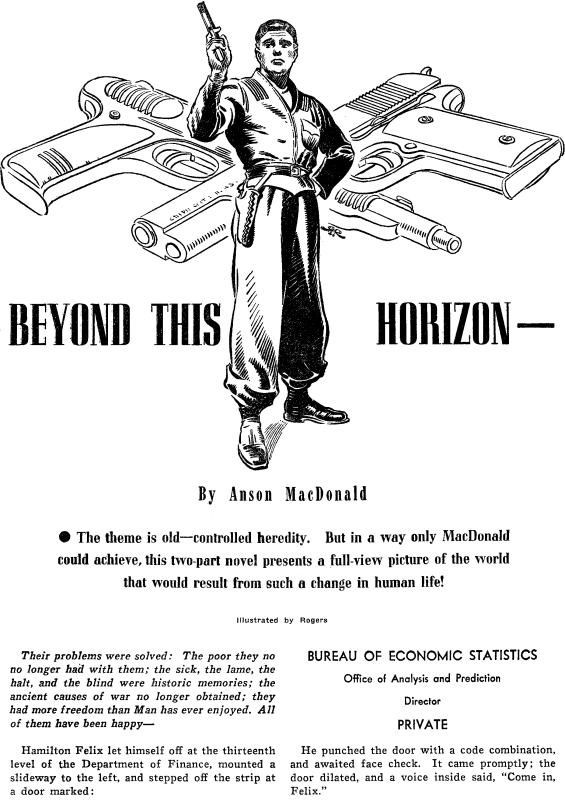
thinking about doors, individual phenomena, a phenomenological way, white and purity, water, Edmund Husserl, an intensional act of consciousness, the conquistadors, when did WWII happen?, what kind of a phenomenon is a door?, doors are artificial, Narcissus and the lake, a boundary, passages for the whole body, windows, two-way passages, quicksand, horizontal movement, four qualities, the story of Oedipus, the riddle of the Sphinx, man -> mankind, the founding myth of Western culture, Aristotle, from one world to another, Eric in his professorial mode, the word world, were = man, the age of Man, in the world of…, the social domain that human beings create for themselves, prisons, doors as phenomena are artificial boundaries between two different worlds, social changes from one side of a door to another, doors as a phenomenon represent changes from consciously defined worlds, outdoors vs. indoors, inside and outside the gingerbread house, the morning thesis, the idea for this show, windows as opposed to doors, The Wonderful Window by Lord Dunsany, wanting to turn windows into doors, a rich example, sliding doors vs. sliding windows, in Science Fiction…, Robert A. Heinlein, defining the writing style of Science Fiction, the ideal Science Fiction sentence, Beyond This Horizon, “The door dilated and a voice from within said ‘Come in Felix.'”, wasting energy, one little change makes it a Science Fiction world, Heinlein invented the word “slideway”, Friday, from the reader’s armchair world it the fantastic world, folklore, liminality, crossing rivers, wandering into the forest, a wild world with gods and monsters, agrarian rural society -> industrial living, the wardrobe, The Door In The Wall, The Gable Window by H.P. Lovecraft and August Derleth, Dreams In The Witch-house, a locked-room mystery, The Secret Garden, a Wellsian door in the wall, what’s behind the door could be anything, mythical monsters, vampires need your permission to cross your threshold, Dracula comes in through the window, defying gravity and the phenomenology of windows, an instant subliminal marker, ho ho ho, Murders In The Rue Morgue by Edgar Allan Poe, the lore of changelings, leaving the house by the chimney, Little Red Riding Hood, “dispatched by typical female means” (cooking), Alice In Wonderland and Through The Looking Glass, Alice is fantasizing before she leaves the bank of the river, the river side is a liminal domain, dazing, daisies, crossings, protective imagination, opening the door for a sequel, Neverwhere by Neil Gaiman, a girl named Door, London’s underclass, being homeless is living outdoors, a hunter named Hunter, Door’s father is Lord Portico, a door back into Heaven, another rich text, worlds within worlds, the word hinge, ideas hinge upon something, stiles aren’t like doors, stiles don’t have hinges, lichgates and side doors to churches, the dead enter the church through a different door than the living, The Superstitious Man’s Tale by Thomas Hardy, shades of everybody, fourteen saints, a holiday in Germany, the blood of a sacrificial lamb, Exodus, keeping death from the door, all saints day, Jack-O-Lanterns scare off the returning dead, nature, walking through a gate, spirits pass through, how do gates function in keeping out the spirits of the dead, gates as territorial boundaries, “you come in through here”, the laws of territoriality, a keeper of the gate, the gate is the cover of the book, the door is what we cross “Once upon a time…”, “the second page of the first paragraph of a famous book”, why round?, why the exact center?, why green?, Eric’s eyes are green, The Door In The Wall has a green door, magic doors are often green, The Magic DoorThe Green Door (aka The Little Green Door) by Mary E. Wilkins-Freeman, horrible and messy and smelly, fundamental jokes in the Shrek series, Shrek is green too, kids love farts, About Time (2013), Domhnall Gleeson going through doors, “doors are amazing”, The Phantom Tollbooth by Norton Juster, the Chinese Scholar’s garden at Snug Harbour cultural center, moon gates, gates post signs, gates offer viewpoints, from The Haunted Palace by Edgar Allan Poe:
And all with pearl and ruby glowing
Was the fair palace door,
Through which came flowing, flowing, flowing
And sparkling evermore,
A troop of Echoes, whose sweet duty
Was but to sing,
In voices of surpassing beauty,
The wit and wisdom of their king.
But evil things, in robes of sorrow,
Assailed the monarch’s high estate;
(Ah, let us mourn!—for never morrow
Shall dawn upon him, desolate!)
And round about his home the glory
That blushed and bloomed
Is but a dim-remembered story
Of the old time entombed.
And travellers, now, within that valley,
Through the red-litten windows see
Vast forms that move fantastically
To a discordant melody;
While, like a ghastly rapid river,
Through the pale door
A hideous throng rush out forever,
And laugh—but smile no more.
the mouth as a door for voice and wisdom (and later a gate for flies and maggots), orifices, doors are artificial, eyes as windows, windows as natural, calm water as a window, the night sky as a window into the universe, window = wind and eye, a metaphor switching meaning, a heart is like a pump and a pump is like a heart, Babylon 5, star-gates, the Twilight Zone show inside Futurama: The Scary Door, Fredric Brown: “The last man on Earth sat alone in a room. there was a knock on the door.”, William F. Nolan’s the door problem, a seventy-foot bug, the imagination trumps revelation, film, Shiley Jackson’s The Haunting Of Hill House (in the book and the film), banging vs. knocking, the unopened door, the end of The Monkey’s Paw by W.W. Jacobs, The Psychoanalysis Of Fire by Gaston Bachelard, “fire: fine servant, horrible master”, poor little rich boys, the ultimate irony: Arbeit Macht Frei, an open gate, the phenomena interpenetrate, Rubicon (lost and found), The Cold Equations by Tom Godwin, “h amount of fuel will not power an EDS with a mass of m plus x”, uni-directional time travel as a kind of rubicon, Julius Caesar’s crossing, Alea iacta est (“The die is cast”), suicide, Jean Paul Sartre, Rip van Winkle, rubicons are natural, driving in Los Angeles county, counties and shires divided by rivers, the mouth as a (mostly) one way door into the body, Protector by Larry Niven, the tree of life root is a one way door (a rubicon), The King In Yellow by Robert W. Chambers, The Ring, the River Styx, ancient heroes and gods crossing back and forth across the river Styx, biological machines, Jesus Christ’s tomb door, a locked room mystery, doubting Thomas, The Cold Equations as a demarcation between materialist SF and all other kinds, rejecting the premise of the story, two kinds of laws, “Marilyn willingly walks into the airlock and is ejected into space.”, myth vs. hard Science Fiction vs. soft Science Fiction, The Hitch-Hiker’s Guide To The Galaxy by Douglas Adams, a few examples in literature, The Pied Piper of Hamelin, seven gates to Hell in Pennsylvania, Hell, Michigan, Audie Murphy’s To Hell And Back, a rubicon as an irrevocable choice, The Subtle Knife by Philip Pullman, Will cutting portals to other realms, “the ability to create portal given to someone on the cusp of puberty”, age 21 (given the key to the door), Key to the city, garter -> gate, barbicans, walled homes in the northern Mediterranean, doors within doors, protected by the laws of the city, the freedom of the city given to military units, Janus -> January, a two faced god and the god of doors, the doors to the temple of Janus are closed, open cities, Brussels, the locking of doors, growing up in New York you’re never fully at peace, living in Strawberry Point, Iowa, wifi open vs. wifi encrypted, wardriving, keeping the door open, the subspecies, dutch-doors, squeaky hinges, a door that opens up, China Mountain Zhang by Maureen F. McHugh, “falling backwards into a world in which a consciousness extends infinitely in all directions”, “the phenomenology changes the epistemology”, ontological differences, The Star Rover by Jack London, a portal to other places and times via astral projection, even in confinement one can find ways out, The Demolished ManThe Stars My Destination, Hypnos by H.P. Lovecraft, the restriction of the coffin of the body, jaunting, The Count Of Monte Cristo by Alexandre Dumas, The Twilight Zone episode The Hunt, a country bumpkin -> a rural American, all dogs go to heaven, gatekeepers and doorkeepers, porter, the Battle of the Teutoburg Forest, wine drinkers and beer drinkers, the Sapir-Whorf hypothesis, was anything down that hatch on Lost?
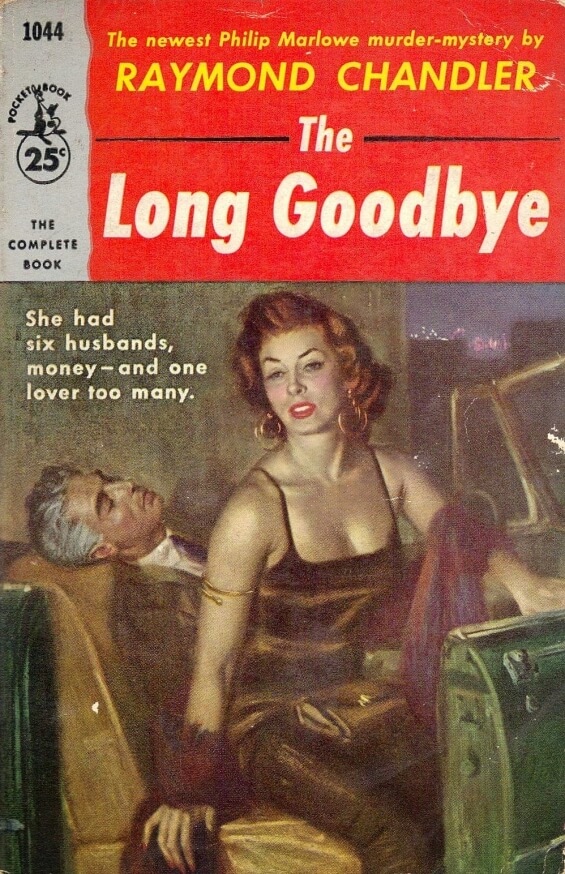
The SFFaudio Podcast #351 – Jesse, Julie Davis, Seth, and Maissa talk about The Long Goodbye by Raymond Chandler.
Talked about on today’s show:
1953, Philip Marlowe, the long answer is no, The Big Sleep, “noir”, A Good Story Is Hard To Find, Double Indemnity, Billy Wilder, Elliot Gould, abridgements, long or too long, spending time with the detective, forgetting about plot, Ray Porter, The Maltese Falcon, Dashiell Hammett, The Big Sleep, the book, the 1978 audio drama (90 minute), the Japanese 5-part miniseries, the recent BBC audio drama, the 1973 movie, overdosed on goodbyes, this is not a noir book, typically hardboiled is with detectives, noir is typically not with detectives, hardboiled vs. noir, Greek tragedy, a basic distinction, poisonville, a certain lack of hope, the detective with a heart of gold, Mickey Spillane, the anti-Philip Marlowe, being more cynical, more punchy, twisted, he’s hitty, Chandler’s best lines, how many times “goodbye” comes up, see you in a line-up, you never say goodbye to the cops, this is just quiet enough, cynicism, he cares too much, do you ever get paid?, $1,200 in the bank, he’s got a portrait of Madison, “I’m a romantic Bernie”, “the smear”, coffee, the little wake, a mystery, remember that pigskin suitcase?, pigskin gloves, the central mystery, who murdered Terry Lennox’s wife, Wade’s wife, his test, I wish I could have killed them both at once, Sylvia, he couldn’t perform?, a more successful version of herself, femme fatale, muddled by drugs, a Linda Loring, throwing the suitcase, that’s the suitcase, Sylvia’s face, is that something Eileen could do?, she’s like the worst thing in her life, when you go crazy mad, caught in a lie, what about the blood?, we infer she beat Sylvia to a bloody pulp, why would she lie?, she wants to make it seem more real, my husband shot her then beat her, emotion and drugs, the 1973 movie, the Elliot Gould movie, the Q&A with Elliot Gould, diverged, plot and tone, weird and good, lighthearted and noir, script by Leigh Brackett (of Empire Strikes Back), a return to Los Angeles, Eileen is still alive in the movie, a conspiracy, Mrs. Wade is in love with Terry Lennox (and married to him as well), she despises him (or is she lying?), Eileen blames Sylvia for everything, the cool thing about this book is that it is very open, experiencing the mystery (rather than solving), just supposition, the mailbox, its almost as if the Mexican Terry Lennox doesn’t know what’s going on, a rotter from the beginning, what we read a lot of these books for, the mystery as the vehicle, Derek Jacobi reading The Adventures Of Sherlock Holmes, there’s a humanity to this, making different choices when in custody, Marlowe saw something in Lennox worth redeeming, if Bryan Alexander were here…, because it is a war book, huuuuhhhn, 1920s book by authors who survived WWI, which regiment was Lennox in?, the SAS in 1942 in Norway, taxi drivers and cops are vets, Chandler’s Marlowe is a vet, using the terminology, the one thing that is left unsaid, why is Terry Lennox acting this way?, his wife, he’s a wastrel, how the other characters react to Terry Lennox, the criminal in Los Vegas, Randy Starr, Manny Menendez, there’s no need, why didn’t you call sooner?, the reason he’s got those scars on his face, against my better judgement, picking up a wounded warrior, he does that for all kinds of people, Double Indemnity wasn’t fueled by war, where does that go into Some Like It Hot?, Terry Lennox is a bookend, pointing fingers and taking names, drugs and partying and corrupt police, why the analogy doesn’t work, the guy who’s not fighting during the war, James M. Cain, about rich selfish people who are wasting their lives, the plot, throwing them into relief, the contrast, seeing Terry Lennox lying on the road, what Terry Lennox has those scars for, the Japanese version, everything is inverted, he can’t be an American soldier, the enemy is the Russians, a different spin on it, dealing in the results of war, post-traumatic stress syndrome, over-the-top, over-saturated lighting, a lot of coffee, a comic book adaptation, answering unanswered questions, sympathetic, Candy is Julie’s favorite character, the war is central to the Japanese adaptation, reading it now, the first four or five Robert B. Parker Spencer books, The Godwulf Manuscript, a war novel, The Guns Of Navarone, The Lord Of The Rings as a way of dealing with WWI, talking about other things, A Voyage To Arcturus by David Lindsay, Mary Shelley’s Frankenstein, what it was like to be in the Ardennes in the winter of 1944, it was like being homeless, hoping the supply train is going to come through, why is he getting drunk all the time, hidden secrets and identities, there’s something about Marlowe, a survivor of the war of life, the drunk tank, the POW camp, Chandler thinks this is his best book, taxi drivers reading escapist science fiction magazines, if I was in that kind of condition…, we’re all in the same army, just want to make things right, to try and set some sort of reset, fix things, once in a long while you get dead, a load of grief and a bit of money, stopping the entropy, why can he not have a normal life any more, it’d be reductionist to say it was about war, post-war USA had a hell of a lot of drinking, half gin and half Rose’s lime juice will still get you soused (a gimlet), autobiographical (Chandler’s wife was dying while he was writing The Long Goodbye), author talks, Chandler is showing us a complete look at detective work and all that it takes, they’ve all got a scam going, sold his soul to the company store, his journalist friend, working the problem, Idle Valley (where the rich people live), Marlowe as an ex-drunk, what the drunk-tank is like, the life of an alcoholic, Chandler had drinking issues, a recovering alcoholic, more coffee than gin, the 1973 movie scene, “let’s get drunk”, trying to find the truth, the F. Scott Fitzgerald connection, The Last Tycoon, more idle rich, Wade writes historical romance (instead of detective fiction), translating to Japanese culture, hentai, taking off the layers of dresses (a woman who has never taking a bath), hanging out with Wade, self-destructive not wife-destructive, he didn’t kill that woman, an incompetent femme fatale, might-have been sort of a hooker, Wade brought her out of the gutter, their Mexico is Taiwan, a period piece, he was driving an American car (left hand drive), they must have had fedoras and gimlets, a jazz version of, “it’s okay with me”, hash-brownies, Arnold Schwarzenegger with a mustache, it WASN’T okay with him, justice, Eileen Wade got to sit with it, dispensing justice, somehow it is the same story, in cahoots with the gangsters, political gain, why did Marlowe abandon Terry at the very end, re-question, red-herrings (or not red-herrings), re-framing everything, that’s how we actually live (unlike a Scooby Doo ending), I would never have come out had you not smoked me out, he puts stuff out there, I was in the commandos, you’re not hear anymore, as elegant as a fifty-dollar whore, prove to me you’re not that way, “that was the last I saw of him”, he had a chance to become better, wanting to see the truth done and the innocent people taken care of, detectives poke at things, there’s nothing inside, two empty people, one filling with alcohol one filling with drugs, both ruined by the war (or whatever), the perpetual human problem, what’s the hole that’s left inside, ya ya ya ya ya ya, full of really good quotes, Chapters (Canadian book store), this book is so much fun, [we quote from the book], one for Julie, one for Seth, a briefcase one, at the bar it was always five in the afternoon, Terry Lennox became a Mexican, a Mexican syncopation to his speech, how refreshingly unconcerned about political correctness, when a Mexican…, sooo racist, sooo genderist, it’s of the the time, the fact that he’s got a knife, a little more granular sense that he’s a little person, there’s no fake characters, heart of gold vs. cynicism, how far am I gonna go with this?, the way they dealt with each other (in the Japanese adaption), you would clean the war off me, a relationship of debt, subtitles with footnotes, the second time through, little bits of description, a bird chirping, the car was gone, a red oleander bush, a baby mockingbird, a single harsh warning chirp, birds have to learn too, priming you for all sorts of things, it’s rich, it works on more than one level, so much of their time, how much is a sandwich, drinking their night away, they didn’t think about it the way they do now, the movie Airplane!, he has a drinking problem, flashbacks to the war (WWII), out of context it’s hilarious, it still sort of true, we’re always going to have the cultural baggage, none of Jesse’s students know who the Flintstones are, Flitstone vitamins is an echo of The Honeymooners, The Simpsons, reading a book like this is kind of like time travel, tiny houses with orange trees in Los Angeles, L.A. Noire (PC game), the game reconstructs a huge part of Los Angeles, the Grand Theft Auto games, Chinatown, The Black Dahlia, L.A. Confidential, playing the game is kind of like revisiting that period, oh hey I’m in the middle of an investigation here, games vs. books, Robert B. Parker co-wrote the final Marlowe book Poodle Springs, Ray Porter’s narration, female voices, the Joe Ledger series by Jonathan Maberry, the Mexican characters, Elliot Gould’s narrations, nicely abridged, he’s a weird speaker, a Robert Altman movie, what is lost was all those Chandlerisms, a collapse of characters, well what have you got now, the movie starts with a cat, Michael Connelly, there’s something cool happening in that 3 o’clock in the morning, the cat abandons him, the cat is Sylvia Lennox, you can’t lie to a cat, they demand truth, the sunrises and the sunsets in the Japanese version, the colour of a sunset and a Japanese print, the things that they take, two BBC radio adaptations, a LIVE TV movie in 1954 (now lost).
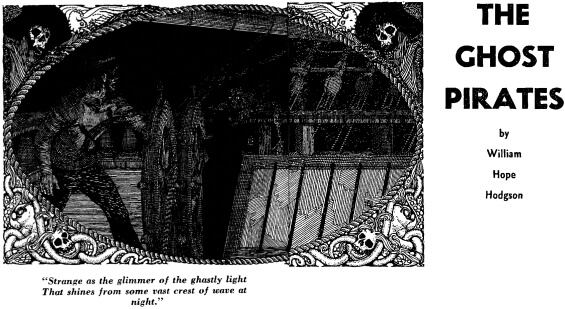
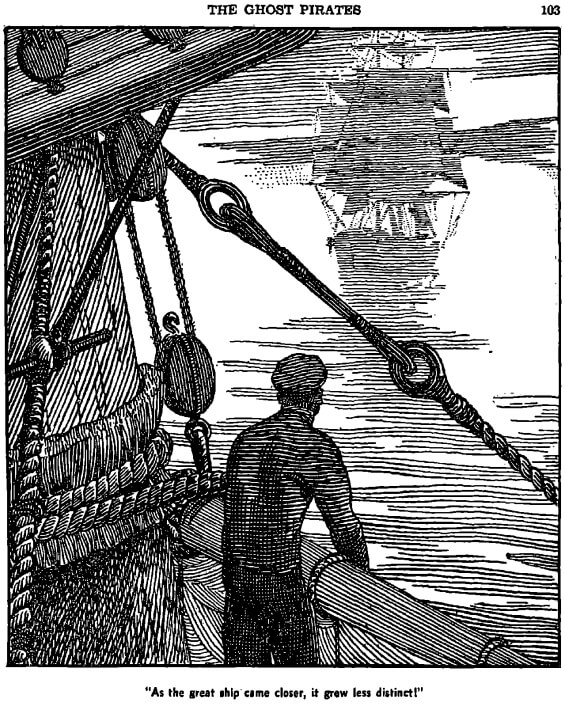
The SFFaudio Podcast #349 – Jesse and Mr Jim Moon talk about The Ghost Pirates by William Hope Hodgson
Talked about on today’s show:
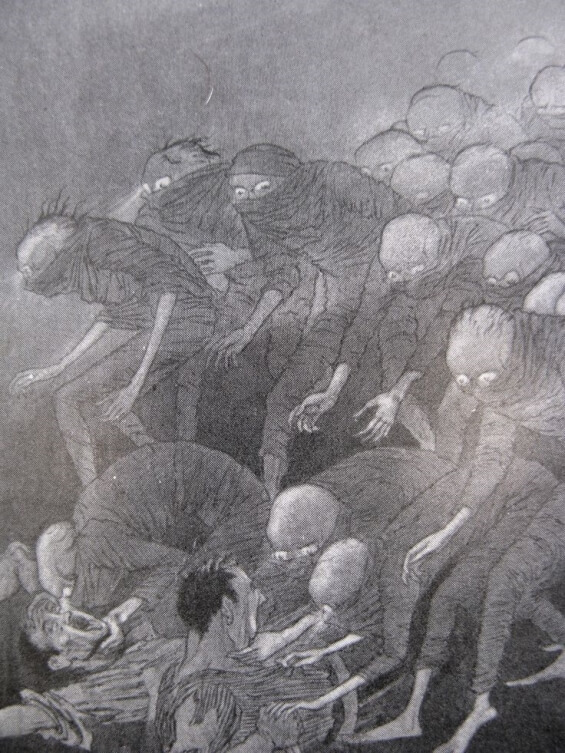
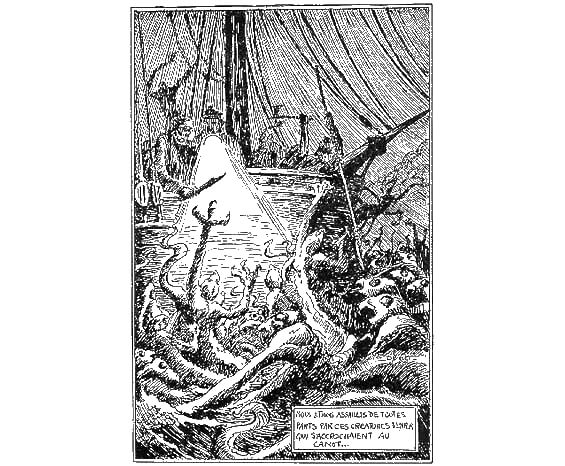
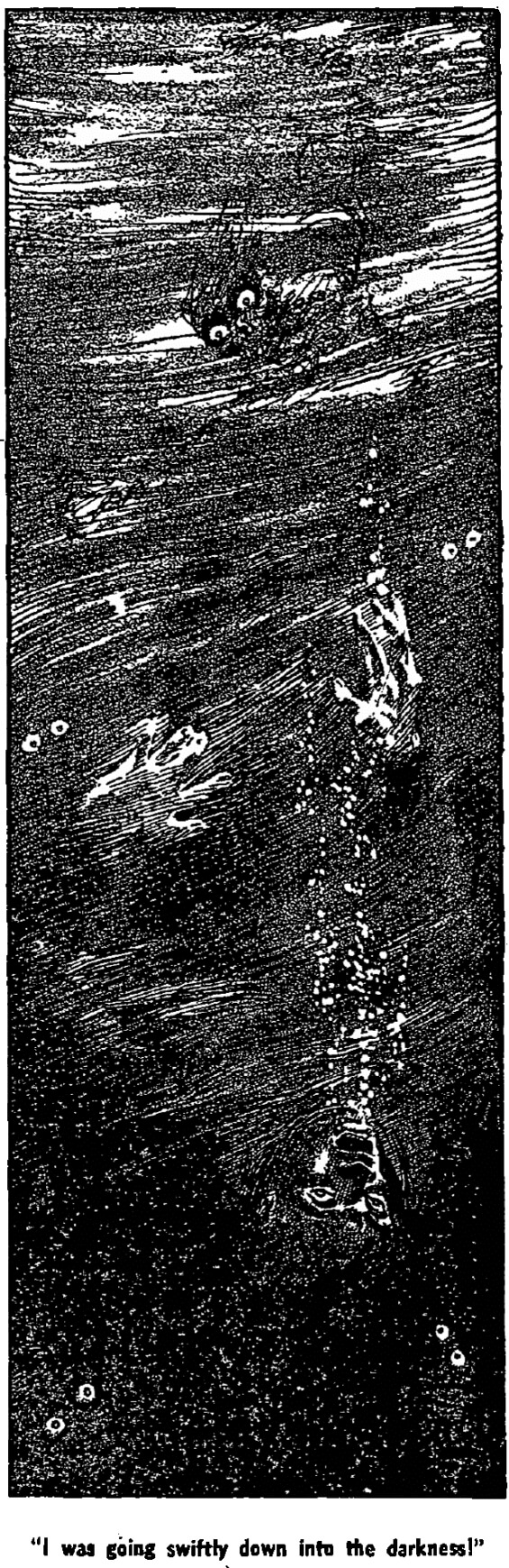
1909, from the later middle, more sophisticated than The Night Land, more tightly plotted than The Boats Of The Glen Carrig, all the letters of H.P. Lovecraft that talk about William Hope Hodgson, revisions to Supernatural Horror In Literature, a doomed an haunted ship, terrible sea-devils of quasi-human aspect, latent horrors in nature, “reaches enviable peaks of power”, the LibriVox audiobook, not as jam-packed with incident, the Carnacki stories, cosmic vistas, accessibility, a straightforward story, what it was like to being a working sailor, cliques and alliances, tremendous fun, time travel that good literature can give you, the poopiest book of all of Hodgson’s work, the taffrail, mood, a ghostly haunted ship, From Beyond by H.P. Lovecraft, Algernon Blackwood’s The Willows, an intrusion by other forces, shadows, strange figures, disappearances, underwater ships, not just a ghost, predation, dimensional drift, pirate skeletons ghosts don’t fit, its the ship that’s haunted, but not only the ship, the ship’s name is “Mortzestus”, “Sangier” (the bloodier), “I’m going to get my money out of this ship”, the pay scene in Aliens (1979), a thing from outside, bubbling below the surface is the corporatism problem, a commercial venture, mutiny, the officers want it hushed up, writing it up in the log, it is regrettable that Bryan isn’t here, why Marx wrote his works in England, the relationship between the means of production (the ship) and its sailors, taking care vs. making money, commercial considerations, historical piracy, in the lulls between sea-devils, “mate” reminds us of “comrade”, we’re all in this together mate (or comrade), why were there so many pirates?, why piracy happened, a Freudian (or Marxist) reading, the Sindey Sime illustration of The Ghost Pirates, “pale eyes”, mummified figures, are the ghost pirates a projection of the crew’s submerged collective unconscious?, the pirate articles, communism and democracy, parallels the Russian Revolution style, the captain, the quartermaster, the hatred that Hodgson had for commercial sailing, spooky, a sub-layer to the tale, the frustrations of the crew, “that old bully”, we are in trouble now, the devils take them all, the slang for the ship is “this packet”, the crew as a wrapping on the parcel, the language of spiritualism, Jessup’s theory as to what’s going on:
“Well, I’ve formed a bit of a theory, that seems wise one minute, and cracked the next. Of course, it’s as likely to be all wrong; but it’s the only thing that seems to me to fit in with all the beastly things we’ve had lately.”
“My idea is, that this ship is open to be boarded by those things,” I explained. “What they are, of course I don’t know. They look like men— in lots of ways. But—well, the Lord knows what’s in the sea. Though we don’t want to go imagining silly things, of course. And then, again, you know, it seems fat-headed, calling anything silly. That’s how I keep going, in a sort of blessed circle. I don’t know a bit whether they’re flesh and blood, or whether they’re what we should call ghosts or spirits.”
this ship is “open”, what happened on this ship that “opened it up”, The Haunted Jarvee (a Carnacki story), there’s something about the ship, there’s a crack in it, a tear in the fabric of reality, a sitting duck for otherworldly buccaneers, what is the goal of the sea-devils, what are they doing up in the rigging, four ghost ships, aliens?, aliens from the ocean?, are they Doctor Who sea-devils?, are they deep ones?, a parallel reality, From Beyond, Crawford Tillinghast is turning up ghosts, vestigial organs, ultra-violet,
“What do we know,” he had said, “of the world and the universe about us? Our means of receiving impressions are absurdly few, and our notions of surrounding objects infinitely narrow. We see things only as we are constructed to see them, and can gain no idea of their absolute nature. With five feeble senses we pretend to comprehend the boundlessly complex cosmos, yet other beings with wider, stronger, or different range of senses might not only see very differently the things we see, but might see and study whole worlds of matter, energy, and life which lie close at hand yet can never be detected with the senses we have. I have always believed that such strange, inaccessible worlds exist at our very elbows, and now I believe I have found a way to break dawn the barriers.
if this was adapted today it would be explained by the cargo, an intra-dimensional material from atomic tests, 1920, The Dreams In The Witch House, 1934, The Banshee Chapter (2013), From Beyond (1986), a Freudian reading, Bill Clinton, in the language of apology, venereal disease, drugs, a found footage film, the framing story, believe it or not, The Ghost Pirates would make a great audio drama, showing the figures, crystallizing, Carnacki’s explanation in The Haunted Jarvee:
‘Well,’ replied Carnacki, ‘in my opinion she was a focus. That is a technical term which I can best explain by saying that she possessed the “attractive vibration” that is the power to draw to her any psychic waves in the vicinity, much in the way of a medium. The way in which the “vibration” is acquired – to use a technical term again – is, of course, purely a matter for supposition. She may have developed it during the years, owing to a suitability of conditions or it may have been in her (“of her” is a better term) from the very day her keel was laid. I mean the direction in which she lay the condition of the atmosphere, the state of the “electric tensions,” the very blows of the hammers and the accidental combining of materials suited to such an end – all might tend to such a thing.
making a magnet by hammering a nail, it’s not a person, it’s not something on the ship, it is the ship, electrical technology, a blend of science and the supernatural, BPRD: Plague Of Frogs, Mark Turetsky, slaves in chains at the bottom of the sea, a ship on its last voyage, the detritus of previous voyages, a Marxist resentment of the treatment of every crewman brought to the ship, end the of The Willows by Algernon Blackwood, working the same mine of feeling, the preface to the original edition, The House On The Borderland, certain conceptions of elemental kinship, flinging open the door wide, a kaleidoscope, scene upon scene, the door is open only a crack, speculation, what was the purpose, four shadowy galleons, the four ships below, are they mirrored (upside-down in the water), visualizing it is shocking, the Red Scare, they’re going to come here and take what we have, the Spartacus rebellions, an inter-dimensional idea, overwhelmed and pulled down, the other side of the veil, working a different passage in a nether dimension, if Neil Gaiman were to take this book as inspiration…, the surface of the sea, scraping along the surface of another world, the power of nautical ghost stories is in that liminal space between an ocean of air and an ocean of water, water as a liminal place in folklore, “where two elements meet strange things may intrude”, an inverted frog-men version of our world, are the sails like fins?, trade routes, how you portray the shadow ships, invisible would be fun, mirror world beneath the waves, the covers of various editions, skull and crossbones with a cutlass, whatever you see when you see through the eyes of Jessup, a fishy version of the pirate captain, mood effect, what the hell’s going on with those pig men?, a short novel, extended novellas, “I AM A NOVEL”, the Wikipedia entry, the unfinished novel, had Hodgson lived longer…, Captain Dang, the Sargasso Sea, the dawn of the pulp era proper, embracing the 20th century, The Hog, a complete collection.


 The SFFaudio Podcast #354 – The Dream-Quest Of Unknown Kadath by H.P. Lovecraft, read by Martin Reyto.