Review of The Wrong Goodbye by Chris F. Holm

SFFaudio Review

Please welcome new reviewer Dan VK!
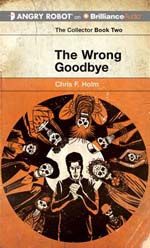
The Wrong Goodbye (The Collector Book Two)
By Chris F. Holm; Read by Brian Vander Ark
Publisher: Angry Robot on Brilliance Audio
Published: 2012
Length: 10 hours [UNABRIDGED]
ISBN: 978-1-4692-0892-3

Themes: / fantasy / reaper / souls / apocalypse /

Publisher Summary: Meet Sam Thornton, collecter of souls. The souls of the damned, to be precise. Because of his efforts to avert the Apocalypse, Sam Thornton has been given a second chance: provided he can stick to the straight-and-narrow.

Which sounds all well and good, but when the soul that Sam is sent to collect goes missing, he finds himself on a path leading straight to Hell.

What a wild ride Chris F. Holm’s The Collector series has been so far. The initial installment Dead Harvest introduced Collector Sam Thornton cursed in the afterlife to roam the earth via hopping from one body to the next collecting the souls of the damned. The Wrong Goodbye continues the story at a fast pace with minimal emphasis on backstory. Once again Sam finds himself walking a very thin line in the war between good and evil with characters new, old, and in some cases very ancient.

The body hopping aspect in this series often leads to some very intriguing plot twists as the story speeds ahead and will suddenly veer off in a surprising new direction. You literally do not know where Sam Thornton is going to end up next. Added to the mix in the latest installment is the development of other collector characters that share a history with Sam, an apparent no-no in the world of collectors creating for a complex web of interaction.

Chris F Holm expands on the rich universe of demon mythology of the first book, incorporating Biblical era stories and characters into his fiction in a very entertaining way. Each story presents a scenario with Sam Thornton thrust reluctantly into the role of averting an apocalypse due to a soul collection gone very wrong. The narration of Brian Vander Ark of the band Verve Pipe perfectly matches the first-person hardboiled tone of these stories. I especially like what he brings to each of the different characters giving each demon, angel, etc. their own distinctive voices. I am hoping Brian will stay on to wrap up the series with the next installment The Big Reap.

Review by Dan VK
Review of Energized by Edward M. Lerner

SFFaudio Review

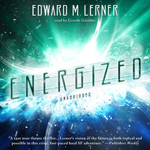
Energized by Edward M. LernerEnergized
By Edward M. Lerner; Read by Grover Gardner
Length: 10.5 hours [UNABRIDGED]
Publisher: Blackstone Audio, Inc.
Published: 2012
ISBN: 1470813033
Themes: / Science! / satellites / engineers / NASA / terrorists / oil / energy / space / thriller /

The SFFaudio crew pegged me to read this book because the description says that one of the main characters is a NASA engineer. I always think it’s funny when people specify “NASA” engineer. It’s like on TV shows when you see people working near the space shuttle, they’re all wearing NASA hats. Nobody does that. The description could just as easily said “aerospace engineer” and the meaning would be the same…but less sexy, somehow. I admit, I was weary of reading this one at first. My experience with people who write about “NASA engineers” is that they have no idea what they’re talking about excepting cursory research. I’m happy to report that Edward M. Lerner does know what he’s talking about with regards to the space and satellite stuff (looking at his bio, it’s no surprise). That said, I went into this thinking it was going to be a science fiction book. It’s much more a mystery/thriller with science fiction elements. It’s as much “science fiction” as Daemon is (which is to say, not much).

In the interest of full disclosure, it’s probably worth mentioning that I am currently employed by a company that (among other things) designs and builds satellites, both for the government and the commercial sector. I currently work on the commercial side of things and have never worked on a NASA contract. There are definite holes and inaccuracies with the science and engineering in this book. But most people won’t recognize them, and they don’t impact the overall enjoyment of the story.

That disclaimer done with, Energized was pretty entertaining. Set in the near-future United States, the world has gone through a “crude-tastrophe” and the price of oil has skyrocketed to the tune of $20+/gallon to fill up a car. There is a fixed market, controlled mostly by Russian interests, for oil, so naturally the US explores alternate energy sources. Unfortunately, Rome wasn’t built in a day and it’s virtually impossible to produce enough energy via alternate sources overnight. NASA has been working on a large-scale satellite that can beam solar energy to earth from space.

The first third of the book (maybe closer to the first half) deals with the public (and private sector) reactions to this kind of a satellite and introduces the reader (listener?) to the concept and its risks. Admittedly, this section could have been shorter without sacrificing much of the story; it did seem to drag on a bit.

The second section of the book introduces the “thriller” aspect. As anybody in the aerospace industry is aware, the stuff built “for the powers of good” in/for space can usually be used to do evil. Sure enough, terrorists find a way to take over the satellite and use its harnessed energy to destroy ground-based and air-based targets. As is typical for thrillers, there are some good guys in the area, capable of stopping the terrorists. In this case it’s Marcus Judson, NASA engineer, one of the lead consultants for the power satellite project, along with some of his colleagues. Yet again, this section seemed overly long and drawn out.

However, the length of the first two sections may only seem long in relation to the final section–the part where the final “battle” occurs and either good or evil triumphs. This part felt a bit rushed, comparatively. In retrospect, I think it was probably the right length and that the other two parts were just a bit too long. I won’t spoil it for you, but the final “battle” involves maneuvering (literally and metaphorically) on the ground and on the 2 mile-on-a-side power satellite. It stretches the belief but still left me interested and wanting to listen to see what happened next.

As I stated previously, the book was enjoyable. It was a bit far-fetched but not so far-fetched as to be completely unbelievable. The science fiction elements are there and create an atypical setting for most mystery/thriller type books, and I’d recommend this to anybody that enjoys the mystery/thriller genre.

Grover Gardner is one of my favorite narrators and he shines in this type of book. He also narrates the Andy Carpenter books, another mystery/thriller series, so it feels natural for him to read Energized. The only “weirdness” I had is that the Andy Carpenter books have a character named Marcus as well, so hearing of two very different “Marcus” characters read by the same narrator was a bit jarring at times.

All in all, this is a popcorn-type book, easily consumed and digested. It does have its flaws (with the technical side of things as well as story length), but they’re not so big as to ruin the fun. If you’re in the market for a hard science fiction book with far-reaching themes, this isn’t the book for you. But if you’re in the mood for a thriller with science fiction elements, you’ll probably enjoy Energized well enough.

Review by terpkristin.

Review of The Walking Dead: The Road to Woodbury by Kirkman and Bonansinga

SFFaudio Review

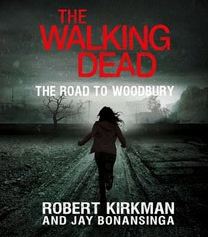
Horror Audiobook - The Walking Dead: The Road to Woodbury by Kirkman and BonansingaThe Walking Dead: The Road to Woodbury
By Robert Kirkman and Jay Bonansinga; Read by Fred Berman
10 Hours – [UNABRIDGED]
Publisher: Macmillan Audio
Publilshed: 2012
Themes: / Horror / Post-apocalyptic / Zombies /

“He seemed like a good man.”

She looks up, focusing on the doctor. “Is that even possible any more?”

“Is what possible?”

“Being a good person?”

Fred Berman narrates this Walking Dead audiobook, written by Robert Kirkman (the creator) and Jay Bonansinga. I enjoy his narration very much. Even though there is a bunch of zombie fighting in this book, it’s character driven, and Berman adds great touches to each character.

I watch the Walking Dead TV show, and The Governor was introduced just last week. I’m told he’s a big part of the graphic novel story, and that this, the second book in a three book series, is a novelization of a storyline from those. My interest comes as a fan of the TV show – I have only limited knowledge of the graphic novels. This book does not follow the same characters that the TV show follows, but the stories take place in the same world.

My interest in the TV show and the audiobooks has not waned because it turns out that a zombie-ridden Earth is a fine place to tell a story that explores how average people cope when civilization disappears. History is riddled with terrible leaders, and this novel explores how a horrible man can end up leading people, and how those people can end up falling in line.

The novel follows several people as they travel and live and die, making their way across the post-apocalyptic landscape. Eventually, the group ends up at Woodbury, the walled community where The Governor rules. The characters are forced then to make a decision. They can follow this man that the alert ones quickly realize is mad, enjoy the safety from the zombies he provides, or they can take off again on their own, the mere thought of which would make anyone weary. The characters have many different answers. In a world where the characters are constantly threatened by the monstrous, some decide they need a monster of their own for protection, some will have no such thing, and some, despite what they’ve seen, are offended enough to try to change things.

Posted by Scott D. Danielson

Review of The Sum of All Men by David Farland

SFFaudio Review

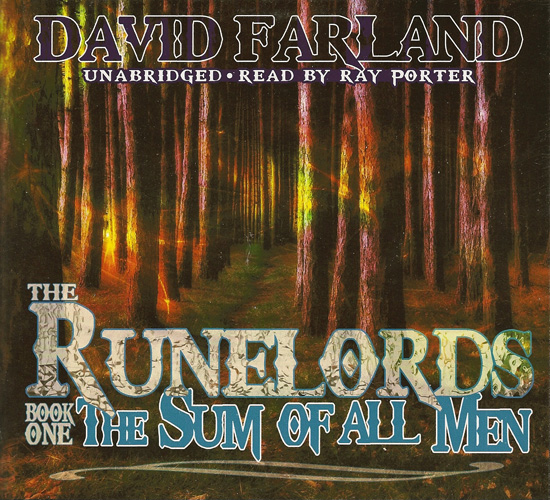
Fantasy Audiobook - The Sum of All Men by David FarlandThe Sum of All Men: Runelords, Book 1
By David Farland; Read by Ray Porter
17 CDs – 20.4 hours – [UNABRIDGED]
Publisher: Blackstone Audio
Published: 2008
Themes: / Fantasy / Epic Fantasy / Attributes / Magic / War /

I’ve read other works by this author, written under a different name, and I knew coming into this one that he was an excellent writer and storyteller. Indeed, I’ve heard him speak at conventions and workshops and have nothing but praise for him as a person and a writer.

That being said, I wasn’t sure what to expect from this book. Reading the dust cover is not always enough to know if you’ll end up satisfied at the end of the book or if you want to throw it across the room. (Okay, I’ve only thrown ONE book across the room. It was a paperback. I was so displeased with the denouement that I threw it away. I didn’t want to inflict that book upon anyone else.)

So, with a little trepidation I began to listen to the book. Could it live up to my high expectations? Would I be satisfied with the resolution? Would I want to read the next book? The answer was a resounding yes!

The book centers on Prince Gaborn Val Orden, son of Mendellas Draken Orden, king of Mystarria. He travels to Herredon to ask King Jas Laren Sylvarresta of Herredon for the hand of his daughter, Iome Sylvarresta. While en route he learns that Raj Ahten, king of Indhopal, who is also referred to as “The Wolf Lord” plans an attack on Castle Sylvarresta. Raj Ahten has taken over a number of minor kingdoms and is intent of conquering all of Rofehaven, taking endowments from as many people as he can so that he may become “The Sum of All Men,” a man who is invincible and immortal. As such, he wants to live forever and rule the world.

It is up to Gaborn, with the help and support of Iome, the Earth Warden Binnesman, Gaborn’s bodyguard Borenson and as many soldiers as he can gather, to stop Raj Ahten from achieving his goal.

Is the book good? Definitely. The characters are well developed. They have depth and personality. They are flawed. The world is rich in legends, heroes and chronicles of past events.

From time to time there will be an insert of a story from this history. It is a teaching moment, so the reader understands who the person is and why they are mentioned, or why an event is important, but it does so in a way that adds to the richness of the story. It builds on it, making the world live and breathe as much as the characters do.

The magic system is also impressive. Those who have the ability and training for magic can use the power of the elements to create magic. Runes are used to give endowments. A king or lord can take endowments from his subjects. Strength, stamina, wit, brawn, metabolism. In so doing they themselves have greater abilities, but the subject that gives an endowment must be cared for the rest of their life, or the life of their king. Such rulers are called “Runelords.” But the cost of such power is great and the reader gets a very real idea of what it costs the people who give such endowments.

There are few books that take the time to create a world that feels as real as this one does. Farland is so good at it that it feels effortless. He doesn’t beat you over the head with his world. Instead, it simply IS. You learn only what is necessary for the story, but you are left with the belief that there is so much more to the world if you had the time to explore it. He also uses herbs and herb lore to great effect. This is a world of magic, but it is also a world unique to itself.

I highly recommend this book. It’s a rich experience that will leave you both contented and wanting more. Which is a very good way to end the book. The book is not quite perfect, but on a scale of one to ten, I definitely give it a near-ten. Although I honestly don’t know if it could be improved upon.

Get the audiobook, get the book, and experience the magic of David Farland for yourself.

Posted by Charlene Harmon

Review of Unholy Night by Seth Grahame-Smith

SFFaudio Review

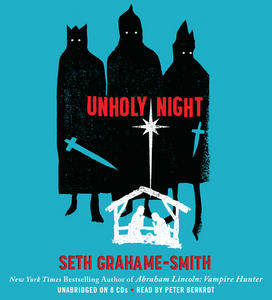
Fantasy Audiobook - Unholy Night by Seth Grahame-SmithUnholy Night
By Seth Grahame-Smith; Read by Peter Nerkot
10 Hours – [UNABRIDGED]
Publisher: Hachette Audio
Published: 2012
Themes: / Fantasy / Mythology / Occult / Christianity / Bible /

“Joseph? Mary? My name is Balthazar. This is Gaspar . . . this is Melchyor. We don’t want to hurt you . . . we’re just looking for a place to rest. But, Joseph? if you don’t put that pitchfork down, I’m going to take it from you and stab you to death in front of your wife and child. Do you understand?”

Wanted thieves Balthazar, Melchyor, and Gaspar, disguised as wise men, show up at a little manger in Bethlehem with a huge star blazing overhead, looking for a hideout from the law. But when Herod’s soldiers begin slaughtering the babies in Bethlehem, Balthazar takes the safety of the Holy Family into his own hands. As fugitives on the run to Egypt, they must escape not only Roman soldiers but creatures of mythology and the occult. Everyone’s either gunning for the Antioch Ghost with a price on his head or the innocent newborn who has such an unearthly effect on those around him.

Seth Grahame-Smith (Pride and Prejudice and Zombies, Abraham Lincoln: Vampire Hunter) finally stops inserting his words into other people’s writing and writes a book in his own words. And a fine job he does of it too. For a violent, gore-filled, action-thriller there are a surprising number of very human characters, many of whom we are meant to recognize.

Pontius Pilate appears as an ambitious young officer ambivalent about truth. Mary and Joseph struggle with how to reconcile the truth of Jesus as God with the reality of a baby who must be fed, loved, and parented. Above all, this is Balthazar’s story, who has a complex story-line driving his actions and attitudes. We learn how he became the cynical Antioch Ghost and we wonder if he will find a more worthy goal than vengeance.

Above all, I was surprised to find myself eventually thinking of Unholy Night as modern midrash. Midrash is a traditional Jewish way of trying to understand the underlying spirit of scripture, sometimes connecting it to modern life, by creating parables. This allows for some imaginative storytelling as rabbis look for interpretations with are not immediately obvious but are nevertheless held within the original text.

Grahame-Smith lives up to the midrash ideal by both being respectful to his source material and also using his vivid imagination on a Biblical event that is wide-open to interpretation, Mary and Joseph’s flight to Egypt with the Christ child. Among other things, the author is very good at opening new views on familiar subjects, such as just how horrible King Herod was. It brings to life the terrible things he did very much as I have read them in history books. One also gets a deeper understanding of the locals’ simmering, resentful hatred of the Roman empire.

Narrator Peter Berkrot is a reader I haven’t come across before but will be seeking out in the future. He conveys just the right amount of cynicism as Balthazar, menace and insanity as Herod, and innocence as Mary. I am not sure how this book comes across in print but I’d listen to it again in a heartbeat thanks to Berkrot’s narration.

Grahame-Smith has delivered a story of Biblical proportions in Unholy Night: zombies, swarms of locusts, epic sword fights, outlaws, obsessed rulers, vengeance, redemption, and more are in this entertaining action tale. That he did it all while staying true to original material that can be unpopular reading these days makes him a writer I am going to seek out in the future. Highly recommended.

Posted by Julie D.

Review of The Twelve by Justin Cronin

SFFaudio Review

The Twelve by Justin CroninThe Twelve
By Justin Cronin; Read by Scott Brick
CD or MP3 -[UNABRIDGED]
Publisher: Random House Audio
Published: October 16, 2012
ISBN: 9780307702043/9780739366523
Themes: / Vampires / Post-apocalypse / Virus /

Publisher summary:

The end of the world was only the beginning.
 
In his internationally bestselling and critically acclaimed novel The Passage, Justin Cronin constructed an unforgettable world transformed by a government experiment gone horribly wrong. Now the scope widens and the intensity deepens as the epic story surges forward with . . .
 
THE TWELVE
 
In the present day, as the man-made apocalypse unfolds, three strangers navigate the chaos. Lila, a doctor and an expectant mother, is so shattered by the spread of violence and infection that she continues to plan for her child’s arrival even as society dissolves around her. Kittridge, known to the world as “Last Stand in Denver,” has been forced to flee his stronghold and is now on the road, dodging the infected, armed but alone and well aware that a tank of gas will get him only so far. April is a teenager fighting to guide her little brother safely through a landscape of death and ruin. These three will learn that they have not been fully abandoned—and that in connection lies hope, even on the darkest of nights.
 
One hundred years in the future, Amy and the others fight on for humankind’s salvation . . . unaware that the rules have changed. The enemy has evolved, and a dark new order has arisen with a vision of the future infinitely more horrifying than man’s extinction. If the Twelve are to fall, one of those united to vanquish them will have to pay the ultimate price.

I wasn’t going to read this book. I wasn’t! I felt like The Passage was a well-contained story and I didn’t understand where else it could go. I will let the author explain what he focuses on in The Twelve, because I find it too difficult to summarize. (This is from an older post from 2010 on io9.com.)

The next two books each go back to Year Zero at the outset, to reset the story, and to deal with something you didn’t see and didn’t know was as important as it was. It’s not a linear quest story, which I would find dull and plodding. With each book, you need to have the narrative terms reestablished with fresh elements. Also, if you didn’t see [a character] die, they’re not necessarily dead. There’s a big cast in the first book, and plenty of unresolved stuff. I will resolve it by the end. [Early vampire character] Anthony Carter? No, not abandoning him.

In [The Twelve], you go back to what happened in Denver after the outbreak took place. The story will resume in that location a few days after breakout. So you can see another angle on what occurred and certain elements will affect our band of heroes 100 years in the future. It will be called The Twelve – and it’s not who you think.

This means that the story starts with where Amy is, and follows up with an assortment of other characters. Just like in The Passage, storylines are dropped completely as others are followed. Since I was listening to the audio, it was a bit more difficult to keep track of, just because it was harder to flip back and get a refresher on names, etc.

The author provides a lot more information about what happened to various people at the very beginning, explaining how some of the communities were formed, the horrific actions of the USA government (including events like “The Field”), and other parts of the novel jump around up to 97 years from when the virus originally took hold. This kind of information is usually my favorite part of post-apocalyptic stories – the rebuilding. What kind of societies form? How do they work? Who has control? I think Justin Cronin shows a lot of creativity and variety in these situations, since it isn’t just one story, but multiple. Many of the characters, locations, and situations overlap throughout the story, and I had this sense of the author as a puppeteer, drawing strings of stories around each other. Kudos to him that they never seem to tangle in disaster.

Scott Brick is the narrator for the audiobook of The Twelve, and does a fantastic job. He doesn’t bother doing a lot of voices, but his inflection is perfect. He has this ability to get out of the way of the story that I really appreciate when I’m listening. It just comes to life and I’m not constantly thinking of HIM, but of the story.

And The Twelve requires a lot of thinking and paying attention. The multiple story lines, the jumping around in time and history, and the sprinkling of quotations that Cronin throws in kept my attention. He started with a Mark Strand poem, almost as if I needed something to clinch whether or not I’d read this book.

I won’t have that dilemma for the final book. While this story has a satisfying climax, I was left with far more questions this time around. I’m not sure I know which side everyone is on. I’m not sure I even know what sides there are, anymore. What I am sure about is that this book is hard to put down.

Posted by Jenny Colvin