Review of Lamentation by Ken Scholes

SFFaudio Review

Lamentation by Ken ScholesSFFaudio EssentialLamentation
By Ken Scholes; Read by Scott Brick, William Dufris, Maggi-Meg Reed, and Stefan Rudnicki
12 CDs – 15 Hours [UNABRIDGED]
Publisher: Macmillan Audio
Published: 2009
ISBN: 9781427206251
Themes: / Fantasy / Epic Fantasy / Religion / Politics /

A pillar of black smoke rises from the plains where the ruins of a city lie. Four people watch it. Petros, an old fisherman; Nebios, a boy who is the only eyewitness; Rudolfo, the Gypsy King and Lord of the Ninefold Forest; and Jin Lee Tam, consort of a powerful madman. Each takes up the story in turn and we learn as they do what has happened and what changes it bodes for the Named Lands.

Through their eyes, Ken Scholes masterfully unfolds layer upon layer of complexity to reveal an epic tale of the struggle not only for power but to serve the Light. This struggle between vengeance, knowledge, mercy, and justice is what drives the main characters. Scholes takes us into a world where Machiavellian politics are constantly intertwined between characters’ motivations. However, because he uses interesting characters to tell his story, it always feels personal and we realize the “epic” quality only as we look back over storyline development. As well, he skillfully manipulates these believable people (and, let us admit it, his readers as well) so that I literally went from worrying about one character being killed to hating him to coming back into sympathy and understanding again by the end of the book. In the end, what we see is that despite epic qualities, the question the book is asking is a simple one. Who was the evil mastermind that destroyed Windwir and why?

Scholes’ world is a mesh of societies that come from disparate sources but which blend seamlessly into an intriguing whole. Reminiscent of medieval times are the city-states and trading factions wielding great power. The people of the Ninefold Forests put one in mind of Robin Hood with their wood-wise ways that shun large, established cities. The Church has a pope and an Androfrancine order that seeks ceaselessly to acquire knowledge and store it for the common good. This too hearkens back to our historical past, yet there are also distinct elements informing us that this is instead a distant future after mankind’s knowledge was used to wreak a terrible calamity resulting in The Time of Laughing Madness. There is a distinctive steam-punk flavor to be found in the inventions that are discovered and released by the monks into general society.

This is a world in which long distance communication is done by messenger bird but where robots exist (mecho-servitors). As well as spoken, coded conversation, there is a fascinating finger tapping code used by those in the know. We also meet one of the mecho-servitors, Isaak, whose suffers from extreme guilt over possibly being used for the destruction and who seems to be developing a soul.

Finally, although we breathlessly follow the characters on their journeys, knowing that there are several books to follow in the series, Scholes does us the courtesy of tying up the story lines for all but a very few situations. This was extremely refreshing and much appreciated. Simultaneously, he opened a few intriguing threads of possibility that lead us to eagerly await the next novel. True to the mastery that we saw in the rest of the book, he does so with a few well written scenarios that leave the reader realizing that these are situations that were hinted at but essentially “hidden in plain sight” until the author decided to pull them into use.

Narration was brilliantly voiced by Stefan Rudnicki, Scott Brick, William Dufris, and Maggi-Meg Reed. All were perfect for their parts, with Brick doing the heavy lifting on any sections told from a point of view that came from other than the main four characters. What I found most interesting was the opportunity for comparison between how the four readers interpreted different characters. The book changes point of view between characters by stating the person’s name and then using what might be called over-the-shoulder story telling in third person from that point of view. Therefore, each of the narrators is called upon to do dialogue for various characters as they engage in conversation with the protagonist of the moment. Hearing how each interpreted Isaak’s robotic voice or Petros’s aged tones provided fascinating contrasts.

Highest recommendations go to this audio book and author Ken Scholes.

Posted by Julie D.
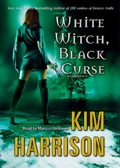
Review of White Witch, Black Curse by Kim Harrison

SFFaudio Review

White Witch, Black Curse by Kim HarrisonWhite Witch, Black Curse
By Kim Harrison; Read by
Marguerite Gavin
15 CDs – Approx. 18 hours [UNABRIDGED]
Publisher: Blackstone Audio
Published: 2009
ISBN: 1433270314
Themes: / Fantasy / Urban Fantasy / demons / vampires / banshees / pixies / memory / detective / romance /

White Witch, Black Curse is the seventh entry in Kim Harrison’s Hollows series, also called the Rachel Morgan series after its protagonist. For the sake of full disclosure, I should state that I haven’t read the previous books in the series. It’s a testament to Harrison’s storytlling that I was still able to jump into the tale with only a minimal perusing of Wikipedia for character background. That said, purists will probably want to start with the first book in the series,  Dead Witch Walking, as indeed I intend to do.

Rachel Morgan is a witch who, along with her vampire companion Ivy Tamwood, runs a supernatural investigative agency called Vampiric Charms. She’s the supernatural equivalent of Janet Evanovich’s Stephanie Plum. Modern Cincinatti, in Harrison’s alternate history world, knows of the existence of supernatural beings, collectively dubbed inderlanders. Two federal agencies, the human-staffed Federal Inderlander Bureau and the otherworldly Inderlander Services security agency, maintain relations between the human world and that of the “ever-after” whence all other races came. Vampires, pixies, witches, and other strange beings walk the streets of Cincinatti, and not once in White Witch, Black Curse does their presence pass for comment among the book’s human characters. This marks a refreshing departure from other urban fantasy I’ve read, in which supernatural beings live underground, beyond the awareness of most everyday people.

As the novel opens, Rachel is attempting to solve the murder of her vampire boyfriend Kisten. In theory, this shouldn’t pose a problem, since she was present when the crime took place. But someone, somehow, has wiped her memory of that night’s events, and as she examines the crime scene she experiences only brief flashes of recollection and insight. A recent string of attacks apparently connected to a banshee also calls for her attention. As in most mysteries, these seemingly separate plotlines inevitably intersect at certain points as the novel progresses. The narrative hits several satisfying crescendos and climaxes throughout the book, but on the whole the plot plods along without any clear impetus to drive it forward.

The depth and dynamism of protagonist Rachel Morgan, however, redeems the novel from its mediocre plot. Like many heroines of urban fantasy and paranormal romance, she’s a badass. Unlike many other heroines, her character is balanced by a believable measure of insecurity, self-doubt, and even a hint of self-loathing. As a witch, she’s mostly confident in her magical abilities, but even in this realm she sometimes expresses hesitance. In the sphere of romance, she questions her suitability as a partner, calling herself an “albatross” who brings ruin upon those upon whom she bestows her love. No doubt this has something to do with the death of her former lover Kisten, and events in earlier novels might well bear this belief out as well. She also exhibits the tendency to rush bullheadedly into situations without considering the implications for herself or her circle of friends.

And Rachel is blessed with fast friends, family,  and other acquaintances who don’t comfortably fit into a single category. The unlikely highlight among the cast of supporting characters is the pixie Jenx, who often accompanies Rachel on her adventures. The foul-mouthed, irreverent little guy at first appears to serve as nothing more than comic relief, flitting around on a trail of pixie dust and spouting clever obscenities. Yet he stands–flutters?–by her when the going gets tough and many others have abandoned her.

The emotional textures of White Witch, Black Curse further offset the deficit of the novel’s mediocre plot. Rachel’s relationships seldom develop in predictable ways. Her friendships with her partner Ivy, FIB agent Captain Edden, and even the pixie Jenks, all come under occasional strain. The Morgan family dynamics are alo fraught with tension. And then there’s the romance. Rachel seldom devolves into the weak-kneed, crooning damsel of other romance novels. For the most part, she’s remarkably intellectual and circumspect in approaching relationships.

The book’s emotional power even extends to its magic. While not particularly organized or systematic in any “scientific” sense, the magic of the Hollows also hinges on feelings. FIB psychologist Ford has the empathic gift of reading emotional states of those around him. Auras also figure heavily into the plot as an external representation of a character’s internal state. Even a character of sound physical health might be in danger if their aura has been weakened by a recent traumatic experience.

Marguerite Gavin’s performance of White Witch, Black Curse isn’t the best audio rendition of urban fantasy I’ve heard, but it certainly does Harrison’s writing justice. Again, Jenx the pixie is the standout; she lends a nasal, sing-song voice to the spry winged creature which sparkles nearly as much as he does. On the whole, though, the best I can really say about Gavin’s performance is that it’s unobtrusive.

Fans of Kim Harrison’s Hollows series will find White Witch, Black Curse a satisfying continuation to the series. Urban fantasy and paranormal romance enthusiasts will also likely find much to like in Harrison’s unique world. Hardcore fantasy readers, on the other hand, might find themselves put off by a hit-and-miss plot and a lack of any real intellectual depth. Still, the book’s strong characters and emotional power make it a good candidate for some fun summertime reading.

Posted by Seth Wilson

Review of Furies of Calderon by Jim Butcher

SFFaudio Review

Furies of Calderon by Jim ButcherFuries of Calderon
By Jim Butcher; Read by Kate Reading
Audible Download – 20 hours [UNABRIDGED]
Publisher:  Penguin Audiobooks
Published:  2008
Themes: / high fantasy / Roman / elementals / barbarians / farm boy

Best-known for his urban fantasy Dresden Files series, Jim Butcher has also penned a relatively unsung series of high fantasy novels called the Codex Alera, of which Furies of Calderon is the first. In several interviews, Jim Butcher has stated that his Codex Alera series grew out of a writing challenge–to take bad or cringeworthy themes and transform them into a good story. Brave soul that he is, Butcher chose to tackle the banal trope of the Lost Roman Legion and, of all things, Pokémon. Before you run for the hills screaming, let me assure you that he has succeeded in his task, crafting a rousing adventure that sets the tone for what promises to be an exciting series.

First, let’s deal with the elephant, er, Pokémon, in the room. Rather than the cute furry monsters that emerge from pocket-sized balls tossed into the air, as in the Japanese juggernaut, Butcher’s interpretation of Pokémon takes the form of elemental beings called furies, which humans can summon at need to perform various magical tasks, including combat, flight, scrying, and healing. Furies feel so natural to the world of the Codex Alera that if I hadn’t mentioned the Pokémon allusion you probably wouldn’t have noticed it.

The other defining feature of the Codex Alera is its Romanesque setting. The land of Alera, a rough equivalent to the Roman Empire, is populated by folks with Latinate names like Gaius, Fidelius, and Amara, and terms like princeps and cursor will be familiar to even a casual student of Classical history.

Despite these two gimmicks, however, Furies of Calderon is fairly standard high fantasy fare. Several characters and storylines play out, but the book’s real protagonist and character of interest is Tavi, a fifteen-year-old farm boy in the valley of Calderon which, because of its strategic geographical location, becomes the site for an impending battle between the lords of Alera and the neighboring barbarian Marat tribes. Tavi lives with his aunt and uncle on their steadholt, the basic administrative unit in the fertile valley, but dreams of joining the Academy in the empire’s capitol city. Say it with me, people, Star Wars. The fascinating thing about Tavi, though, is that, unlike all other Alerans we meet, he lacks even the slightest furycrafting abilities. His uncle Bernard and aunt Isana are no Owen and Beru, and when the threat of invasion looms they both take decisive action to defend their beloved valley of Calderon. Meanwhile the cursor Amara speeds to the valley to try to warn its citizens of their impending fate, pursued by her traitorous ex-tutor Fidelias, whose name ironically stems from the Latin root fides, meaning “faith”.

These adventures are fun and engaging, to be sure, but the real strength of Furies of Calderon rests with its character interaction and development. Tavi is an archetypical hero in the sense described by Joseph Campbell in The Hero with a Thousand Faces, but he’s also a fifteen-year-old boy with raging hormones and conflicting loyalties. Tavi’s lack of furycrafting remains a mystery throughout the novel, as does the question of his parentage, leaving plenty of room for further development in future novels. Bernard and Isana both possess a fierce integrity and loyalty to land and family. In some ways, the stand-out characters are the villains. Fidelius is crafty and treacherous, true, but like any good fictional villain he believes he’s fighting for the good of the land of Alera. The motives of the enigmatic Odiana, a water-crafter in the service of Fidelius, defy easy articulation. Al the characters in Furies of Calderon whether “good” or “bad”, act according to their own personal compass of principles. The one exception is the bloodthirsty and barbarous Kord, a farmer in the valley who dabbles in the slave trade. He alone seems to be one of those cardboard villains whose sole purpose is to be knocked down.

Because its events are mostly centered around the valley of Calderon, which feels more like an early medieval territory than a Roman province, Furies of Calderon will largely disappoint readers expecting the political intrigues and machinations of TV dramas about the Classical world like Robert Graves’s I, Claudius or HBO’s Rome. If anything, the setting most closely resembles the late Roman Empire, when Europe was in transition from Roman rule into the tumultuous Medieval period. Calderon is ruled by a count, and there’s even a province called Aquitaine, which is a clear allusion to Roman Gaul. Some pivotal scenes in the book’s opening and closing pages hint that the series will move in this direction, though, so Classicists should not lose heart.

Given that my only exposure to Butcher’s writing thus far had been his gritty, cynical depiction of modern-day Chicago through the eyes of wizard Harry Dresden, I harbored fears that he wouldn’t be able to write in the more elevated style required by High Fantasy. My fears were unfounded. Butcher’s writing is competent throughout, and easily matches the style of other authors in the genre, although it lacks the lyricism and resonance of the genre’s best.

For some reason, dramatic portrayals of the Roman world in English always employ British actors, with Emperors and Senators speaking the Queen’s English and slaves speaking a Cockney dialect. Because of this trend, the British accent Kate Reading adopts for her reading of Furies of Calderon feels right and natural. She conveys particularly well the emotional depth of the teenage Tavi as he battles with internal and external forces throughout the novel, and she also brings the complex Odiana to vivid life.

Furies of Calderon is an imperfect novel laden with fantasy clichés, but it holds enough originality and depth to warrant a thorough listen. Those who happen to enjoy those fantasy clichés, as I do, will find it a rewarding experience. Furthermore, the novel holds promise that the rest of the Codex Alera series will capitolize on the underplayed features that make Furies of Calderon so noteworthy.

Posted by Seth Wilson

Review of Small Favor by Jim Butcher

SFFaudio Review

small_favorSmall Favor
By: Jim Butcher Read by James Marsters
Book 10 of The Dresden Files
Audible Download – 13 Hours 50 Mins [UNABRIDGED]
Publisher: Audible / Buzzy Multimedia
ISBN-10: 0143143395
ISBN-13: 978-0143143390
Themes: / Fantasy / Mystery / Magic / Private Detective / Wizard / Noir /

No one’s tried to kill Harry Dresden for almost an entire year, and his life finally seems to be calming down. For once, the future looks fairly bright. But the past casts one hell of a long shadow. An old bargain has placed Harry in debt to Mab, monarch of the Winter Court of the Sidhe, the Queen of Air and Darkness-and she’s calling in her marker. It’s a small favor he can’t refuse…one that will trap Harry Dresden between a nightmarish foe and an equally deadly ally, and one that will strain his skills-and loyalties-to their very limits. It figures. Everything was going too well to last…

Before I start let me say that I am HUGE fan of the Dresden series having read all the paperbacks and watched the failed television series. That being said Buzzy Multimedia and James Marsters actually manage to improve the book each time they release their audibook version of a Dresden novel and in my opinion Small Favor is their best effort yet.

The 10th Book in the Series opens with Harry enjoying a peaceful moment with his friends that soon comes to an end when he is reminded in a very Dresden-esque way that he has a debt to repay and the favor is being cashed in. Harry is quickly thrust into a situation full of plot twists that has him squaring off against evil faries, demon possessed people, and in the middle of the largest supernatural power grab ever. Whats worse is he is tasked with saving a crime lord who he has grudgingly partnered with in the past.

The “Small Favor” referenced in the title is a debt owed to an evil fairy who in the opening of the book has Harry’s back pressed literally up against a wall. Faced with angering Mab, fighting off a fairy Hit Squad looking for blood, and an angry Detective Murphy; Dresden wisely shuts up and commits to the favor. What unfolds is an amazing ride with a decisive battle for the future of mankind being waged and Harry is in the middle of it and like most of the other books in the Dresden series Small Favor focuses on this conflict and the difference that one intuitive magic wielding detective can make.

One part Sam Spade two parts Merlin that is the recipe for Harry Dresden a detective able to put the pieces together and is not afraid to charge in staff blazing. As with Jim Butcher’s other novels in the series Harry is able to follow clues that others would miss and often times it leads him the right direction, if not a moment or too late. Intuition aside the thing I like best about Harry is his ability to face overwhelming odds with a well placed quip. Small Favor is also a bit of reunion of sorts with some of the most notable characters from the series making an appearance; Johnny Marcone, Hendrix, Kincaid, Ivy, The Denarians, Lucio, Michael and the other Knights, Thomas, Murphy, and even mouse.

With epic battle scenes and rich attention to detail; the world of Chicago comes alive and it is hard not wonder if there are indeed evil fey, demons, and holy sword wielding knights waging war in the streets. One of the best things about the book and the series in general is the perspective the story takes. Written as narrative it feels more like recounting of past events rather than a piece of fantasy. This perspective combined with the masterful reading of James Marsters makes this an incredibly enjoyable book and even better audiobook.

When Buzzy Multimedia selected James Marsters to read the book they must have held a casting call or something because he has the perfect voice. He absolutely embodies Harry Dresden furthermore James Marsters doesn’t just read the story he acts it out. For instance when it says in the book that Harry roared out FUEGO James Marsters actually does just bellowing it like he was hurling a fireball at an evil Fairy or Demon.

Attention to detail is apparant throughout the book and there do not seem be any errors in recording, mispronunciations, stumbling over words or anything to disturb the listening. In addition to the excellent production quality the audio levels were very clear and even throughout and when James Marster’s got loud there was no crackle in the speakers.

The worst thing about this book is that is comes to an end. As I said in the begining I am a huge fan of the Dresden series and while I believe that the first-time reader could start with Small Favor and enjoy it thoroughly. It is probably best if the first time reader begins with the first book as there are details about each of the major character’s explained throughout the series. That said if you are a fan of the Dresden Files series pick up Small Favor if you are not yet acquainted with the series do yourself a “small favor” and start at the begining with Storm Front.

Posted by Mark Flavin

Review of Od Magic by Patricia A. McKillip

SFFaudio Review

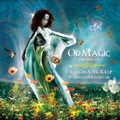
Od Magic by Patricia A. McKillipOd Magic
By Patricia A. McKillip; Read by  Gabrielle de Cuir
Audible Download – 11 hours 33 minutes [UNABRIDGED]
Publisher: Blackstone Audio
Published: 2009
Themes: / fantasy / wizard school / monarchy / herbalism

I know you can’t judge a book by its cover, but Od Magic is one of those books I was immediately drawn to solely based on its whimsical cover art of bright pastels and its equally playful blurb.

Brenden Vetch has a gift. With an innate sense he cannot explain to himself or describe to others, he is able to connect to the agricultural world, nurturing gardens to flourish and instinctively knowing the healing properties each plant and herb has to offer. But Brenden’s gift isolates him from people and from becoming part of a community – until the day he receives a personal invitation from the Wizard Od. She needs a gardener for her school in the great city of Kelior, where every potential wizard must be trained to serve the Kingdom of Numis. For decades the rulers of Numis have controlled the school, believing they can contain the power within it, and have punished any wizard who dares defy the law. But unknown to the reigning monarchy is the power possessed by the school’s new gardener, a power that even Brenden isn’t fully aware of, and which is the true reason Od recruited him.

Od Magic shines brightest when it delivers on the promises of that introduction. Unfortunately, it’s also bogged down by lukewarm political intrigue and half-baked supporting characters.

Brenden Vetch has learned much from his plants. He’s even found a cure for the plague that swept through his village. Unfortunately, his discovery came too late to save his parents from the epidemic, and he has lived a lonely life in his childhood home with their ghosts ever since, refusing to leave even when his brother departs to seek brighter fortune elsewhere. Only when the giantess wizard Od invites him to tend the magical plants of her school in the royal city of Kelior does he pull up roots. Brenden’s story is emotionally potent, but sadly McKillip fails to capitalize on the possibilities for character development which it presents. Vetch’s grieving process is barely mentioned, and he develops very few meaningful relationships in Od’s school.

The cover summary is misleading in that it suggests that Brenden serves as the focal point of the novel. While he is indeed a pivotal character, the book’s focus widens to introduce other magical inhabitants of the city of Kelior. Contrary to the rigid belief of King Galen, Od’s school does not hold a monopoly on magic in the kingdom of Numis. Travelers from neighboring kingdoms, from commoners to nobles, have brought their own strains of magic into the land. Much of Od Magic deals with the resistence on the part of the king and on the part of Od’s school towards embracing these diverse magical traditions. In this sense, McKillip’s work provides an interesting anthropological examination of the exchange of cultural ideas, patriotism, and xenophobia.

Though part of Od Magic is set in a wizard school, the novel should not be seen as a Harry Potter or A Wizard of Earthsea imitator. The students remain at the periphery of the tale. There’s only one teaching scene reminiscent of the “student wizard” genre. In fact, only one, a brilliantly talented boy named Elver, appears regularly, and he’s an atypical sampling of the student body.

The novel’s stand-out performances are both suggested by its title. The giantess Od appears infrequently, as she takes a hands-off approach to running her school, preferring instead to roam the world offering aid to wounded beasts. Her enigmatic appearance and demeanor–she’s depicted with birds nesting in her hair and animals burrowing into her clothing–and her lyrical, poetic mode of speech elevate the few scenes in which she appears into high art. The magic itself as it manifests in the novel is similarly strange and delightful. Though characters allude to the dark potential of magical power, the magic in the book is playful, whimsical, and, yes, odd. In this sense, Od Magic presents a nice respite from the dark, gritty, and violent magic that populates many postmodern fantasy novels.

Gabrielle de Cuir’s narration of Od Magic captures the playful essence of the novel’s best passages. Her performance of Od’s dialogue chimes in the ears like a tinkling stream, and she carries the emotions and idiosyncracies of the other female characters comfortably as well. A male narrator might have better embodied the persona of Brenden Vetch, but since the magical gardener appears all too seldomly in the novel this is not a serious shortcoming.

As I said, the inviting cover image and tantalizing publisher’s summary really made me want to like Od Magic. I certainly enjoyed elements of it very much, enough to make me want to seek out some of Patricia A. McKillip’s other works. Overall, though, the novel’s lack of focus and cohesion leads me to endorse it only half-heartedly.

Posted by Seth Wilson

Review of WWW: Wake by Robert J. Sawyer

SFFaudio Review

WWW: Wake by Robert J. SawyerWWW: Wake
By Robert J. Sawyer; Read by Jessica Almasy, Jennifer Van Dyck, A. C. Fellner, Marc Vietor, and Robert J. Sawyer
Audible Download – 12 hours 13 minutes [UNABRIDGED]
Publisher: Audible Frontiers
Published: 2009
Themes: / Science Fiction / Artificial Intelligence / Cyberpunk / Cybernetic Implants / Technothriller / Consciousness /

I don’t normally inject personal anecdotes or experiences into my reviews. It just isn’t my style. In the case of WWW: Wake, however, I simply can’t resist. I’m legally blind, and Robert J. Sawyer’s latest novel concerns itself with ways of seeing, in both the purely physical sense and in more metaphorical ways. It tells the story of 15-year-old blind math genius Caitlin Decter, whose family has just relocated from Austin, Texas to Waterloo, Ontario. She receives an email from a scientist in Tokyo who believes he can restore her sight by means of a behind-the-eye implant linked via Bluetooth to a pocket-sized transmitter and decoder which the ever-witty Decter dubs her “Eye-Pod”. Instead of seeing the real world, Caitlin initially sees only a kaleidoscope of criss-crossing lines and circles transposed on a flashing checkerboard of seemingly random lights. After some initial puzzlement, researchers determine that Decter is actually seeing the inner workings of the World Wide Web.

This premise is already intriguing enough, but add to it a nascent consciousness growing inside the raw data transmitted through cyberspace, and you have the makings of a great technothriller. Fortunately, Sawyer’s writing doesn’t fall victim to many of the clichéd tropes of that genre. There’s very little in the way of the sensationalism of films like Lawnmower Man or Ghost In The Machine. Instead, Sawyer explores the philosophical implications of a growing, learning artificial intelligence. Meanwhile, of course, Caitlin Decter must come to grips with her new “web sight”, as she calls it, in addition to facing the normal teenage challenges of adjusting to a new high school.

WWW: Wake strikes a good balance between the cerebral and the emotional. The novel stops just short of qualifying as “hard science fiction”, but it also, as I said, shies away from becoming a popcorn thriller. Decter is a complex and ultimately likable character. She’s a brilliant mathematician–in the online world she goes by the alias Calculass–and she’s confident in her mental prowess, but at the same time she faces the insecurities caused by her blindness in addition to the standard turbulence of adolescence. The supporting cast of characters in Caitlin’s life are just as three-dimensional. Her mother is loving and generous, while her father, a theoretical physicist, is well-meaning but emotionally distant. The interactions and conflicts between the characters are subtly portrayed, lending WWW: Wake a sense of realism despite the bizarre goings-on behind Caitlin’s eyes.

Is Caitlin’s blindness realistic? This is where my own personal experience comes into play. I’ve been legally blind since birth, although since I have some residual vision the comparison isn’t exact. Even so, it’s evident to me that Robert J. Sawyer has done his homework in this regard. Caitlin’s life is replete with all the trappings associated with blind life: white canes (which I just traded in for my first guide dog), text-to-speech screen-reading software, and braille displays. More importantly, Sawyer understands how the world is conceived and constructed for those of us with either no vision or limited vision. This becomes apparent as Caitlin’s sight changes throughout the novel in interesting ways, and as she struggles to pin names and concepts to the new visual stimuli that are firing down her optic nerves.

The Audible Frontiers production of Wake is stellar in its production value. As the voice of Caitlin Decter, Jessica Almasy does most of the heavy lifting, and her performance shines. Sound and voice is especially important in the world view of a character who, through much of the novel, lacks any kind of visual stimuli, and Almasy deftly handles these complex nuances. Of course, Decter is also a precocious and spunky teenage girl, and Almasy rises to the challenge of matching Decter’s dynamic character. The other narrators also do an excellent job, and Sawyer himself even lends his voice to occasional passages.

The book’s one weakness lies in its plotting. Along with Caitlin’s story and the development of the “web consciousness”, two other storylines weave in and out of the novel. While they’re interesting in their own right, they never come to a satisfying conclusion and never intersect in a meaningful way with the main story. I understand that Wake is merely the first in the WWW trilogy of novels, and that Sawyer will likely resolve them in upcoming volumes. Still, an author as talented as Sawyer should be able to bring these narrative threads to enough of a climax to maintain the novel’s cohesion.

Minor structural shortcomings aside, WWW: Wake is both an emotionally satisfying story of a blind girl coming to grips with ways of seeing, and an intellectually stimulating examination of technology and consciousness. Along with William Gibson’s Neuromancer and Neal Stephenson’s Snow Crash,Wake presents a unique perspective on information technology. I eagerly await its sequels Watch and Wonder.

Update: I didn’t realize this at the time, but apparently I wrote this review on the birthday of Annie Sullivan, who taught the deaf-blind Hellen Keller how to communicate with the world. Sullivan is a strong symbolic and thematic presence in Wake. Coincidence, or fate?

Posted by Seth Wilson