
Review of The Girl in the Road by Monica Byrne

SFFaudio Review

Girl in the RoadThe Girl in the Road
By Monica Byrne; Read by Dioni Collins and Nazneen Contractor
Publisher: Random House Audio
Publication Date: 20 May 2014
[UNABRIDGED] – 11 hours, 7 minutes

Themes: / fantasy / near-future / dystopia / road trip / Ethiopia / Djibouti / India / ocean / metallic hydrogen /

Publisher summary:

In a world where global power has shifted east and revolution is brewing, two women embark on vastly different journeys—each harrowing and urgent and wholly unexpected.When Meena finds snakebites on her chest, her worst fears are realized: someone is after her and she must flee India.  As she plots her exit, she learns of The Trail, an energy-harvesting bridge spanning the Arabian Sea that has become a refuge for itinerant vagabonds and loners on the run.  This is her salvation.  Slipping out in the cover of night, with a knapsack full of supplies including a pozit GPS system, a scroll reader, and a sealable waterproof pod, she sets off for Ethiopia, the place of her birth.

Meanwhile, Mariama, a young girl in Africa, is forced to flee her home.  She joins up with a caravan of misfits heading across the Sahara. She is taken in by Yemaya, a beautiful and enigmatic woman who becomes her protector and confidante. They are trying to reach Addis Abba [sic], Ethiopia, a metropolis swirling with radical politics and rich culture.  But Mariama will find a city far different than she ever expected—romantic, turbulent, and dangerous.

As one heads east and the other west, Meena and Mariama’s fates are linked in ways that are mysterious and shocking to the core.

This book defied my expectations at every turn. It is near-future but in two different times and locations. Mariama is in a caravan heading to Ethiopia across land, and Meena is heading to Ethiopia from India, across the Arabian Sea, on a floating road made of metallic hydrogen. Interesting concepts for the near-future, and nice to have African and Indian characters and settings. The writing is my type – emotional, internal dialogue, pondering greater meanings.Everyone keeps calling it sci-fi, I imagine because of the brief technology mentions, but I think it fits more in fantasy – people who may or may not be human/gods/ghosts, the quest/journey, the lesson, the good vs. evil, the superhuman moments – feels like fantasy to me!  The cover also claims the book is like a hybrid of Neil Gaiman, Erin Morgenstern, and Margaret Atwood.   I don’t see Gaiman or Morgenstern except for fantasy, but that is a pretty broad paintbrush, one that seems to grasp at the most popular authors in a genre that has better examples to draw from.  Atwood maybe in the sense of timeline and natural disaster themes.  Otherwise, I see this more like the fantastical imaginings of J.G. Ballard (such as The Unlimited Dream Company) with the setting and world building of Nnedi Okorafor (Who Fears Death?).  So if we have to compare it to something, let it be those two instead.

I want everyone to read this book so we can discuss the ending. I listened to the last disc three times because I’m not entirely sure what happened. I’m still not.  I have questions that will make no sense until you’ve read it.  Questions like, “Where is Djibouti?” and “Is everyone insane?”  I keep telling friends about the book and thinking about it, and it has one of the few five-star ratings I’ve given out in GoodReads so far this year.  A week after finishing, I got into a conversation about metallic hydrogen and man-made floating islands in Facebook because a person had posted about Kiribati, a nation that is destined to disappear into the ocean.  Their leader is seriously considering building a place to keep his people together, because what else can you do if your country slips beneath the sea?  Monica Byrne touches on this same question.

The two readers, Dioni Collins and Nazneen Contractor, do a brilliant job in the performance of this book, particularly in the slipping between India and Africa the way any immigrant would, and that is crucial to the character of Meena.

Posted by Jenny Colvin
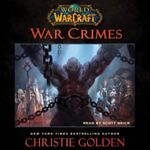
Review of War Crimes by Christie Golden

SFFaudio Review

wowWorld of Warcraft: War CrimesBy Christie Golden; Narrated by Scott Brick

Publisher: Simon & Schuster Audio
Publication Date: 6 May 2014
[UNABRIDGED] – 13 hours, 31 minutes

Themes: / fantasy / World of Warcraft /

Publisher summary:

The brutal siege of Orgrimmar is over.

Alliance and Horde forces have stripped Garrosh Hellscream, one of the most reviled figures on Azeroth, of his title as warchief. His thirst for conquest devastated cities, nearly tore the Horde apart, and destroyed countless lives throughout the World of Warcraft.

Now, on the legendary continent of Pandaria, he will stand trial for his transgressions.

Renowned leaders from across the world have gathered to witness this historic event. As the trial unfolds, agents of the bronze dragonflight present shocking visions of Garrosh’s atrocities. For many of those in attendance, these glimpses into history force them to relive painful memories and even question their own innocence or guilt. For others, the chilling details stoke the flames of their hatred.

Unbeknownst to anyone, shadowy forces are at work on Azeroth, threatening not only the court’s ability to mete out justice…but also the lives of everyone at the trial.

I’m a recovering World of Warcraft addict. I’ve been clean for about a year since my guild’s raids fell apart. I played a good portion of Mists of Pandaria, but didn’t finish the last tier or two of raiding. Warcraft has always been one of my favorites games because I loved the big name characters and the lore they’ve built up. It doesn’t always make sense, but it’s usually a whole lot of fun. I knew enough background to know all the major players and that Garrosh Hellscream was the expansion boss this go around. I didn’t really know any of the details of how it all played out however. I can’t speak to how much of this book is in the game.

This book is full of all the major players from both factions, and everyone is angry. I’ve probably played more Alliance than Horde over the years, but I still like Horde better.  Thrall is probably my favorite character of the series, and I was really annoyed when he stepped down as Warchief. However as an Alliance player, I enjoyed being able to work with him on quests in Cataclysm.

I found myself really not liking many of the Alliance characters in this book. In particular Tyrande Whisperwind. As my main character is a Night Elf, I was pretty disappointed with her. I found myself rooting for Baine Bloodhoof and missing my Tauren druid instead.

I liked the notion of a trial and the involvement of the Bronze Dragons to present key moments in Warcraft lore, not only for the current expansion but back events involving the history of the Orcs.

Overall, I found this book a lot more enjoyable than Vol’jin: Shadows of the Horde. I think this is one that Warcraft players will enjoy, but that probably won’t offer much to everyone else.  If the goal of this book was to get the reader to want to play the game, they succeeded. I was already planning on picking up the next expansion and playing again for awhile, but now I’m itching to maybe try to do the raid that serves as background for this, so Mission Accomplished Blizzard.

Scott Brick is a fine narrator, and does accents for the trolls and a few other races.

Review by Rob Zak.

Spoken Freely: Summer Shorts ’14 continues

SFFaudio News

Spoken Freely Presents Summer Shorts '14

The Book And A Latte blog continues the Spoken Freely: Summer Shorts ’14 free audiobook event with a reading of The Velveteen Rabbit by Margery Williams.

The entire schedule of free audiobooks is HERE, and the complete audiobook of the entire project is available through Tantor Media for just $9.99, HERE – all proceeds benefit ProLiteracy.

Posted by Jesse Willis

The SFFaudio Podcast #269 – AUDIOBOOK/READALONG: The Moth by H.G. Wells

Podcast

The SFFaudio PodcastSpoken Freely Presents: Summer Shorts '14The SFFaudio Podcast #269 – The Moth by H.G. Wells; read by Peter Bishop. This is a complete and unabridged reading of the short story (24 minutes) followed by a discussion of it. Participants in the discussion include Jesse, Seth and Mr Jim Moon!

Peter Bishops narration of The Moth is a part of Spoken Freely: Summer Shorts ’14 audiobook by Tantor Media – all proceeds benefit ProLiteracy.

Talked about on today’s show:
Subtitle “Genus Novo” means “new species”, or, well, new genus; not to be confused with Edgar Allan Poe’s The Sphinx; not tongue-in-cheek like Wells’s The New Accelerator or The Flowering of a Strange Orchid; morality tale; insanity; a “knife fight” of scientists; significance of names, especially when only heard in audio; genre: ghost story, scientific fiction, satire; bears relevance to scientific debates through the ages; Robert Hooke vs. Isaac Newton; Lawrence Krauss on Geek’s Guide podcast; “miracle of incompetence”; science “all works out in the end”; microlepidoptera are little moths; confirmation bias; death’s head moth in Silence of the Lambs; caterpillars, moths, and transformation; Pawkins misheard as “Porkins”; chess and diatoms; follows trends of horrible characters in Wells stories; erratic, gadfly behavior of the moth; giant maddening mosquitos in Canada; “unfortunately the doctor was a blockhead”, detached sadism; the monster inside you à la Alien; multiple readings of the story; The Door in the Wall; strait jackets; moths aren’t Lovecraftian; Lovecraft’s The Rats in the Walls.

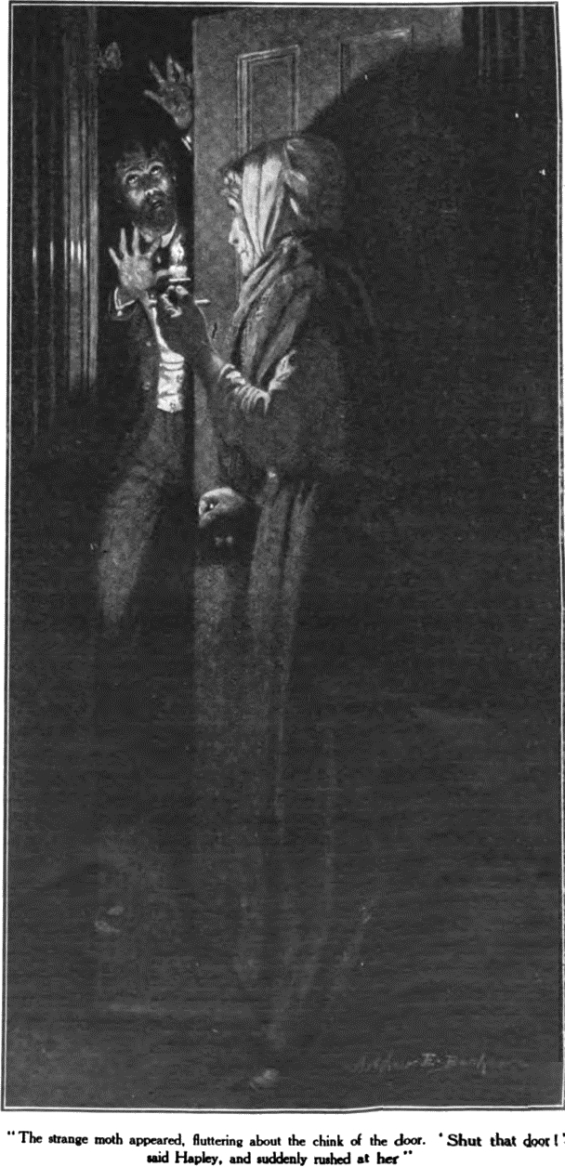
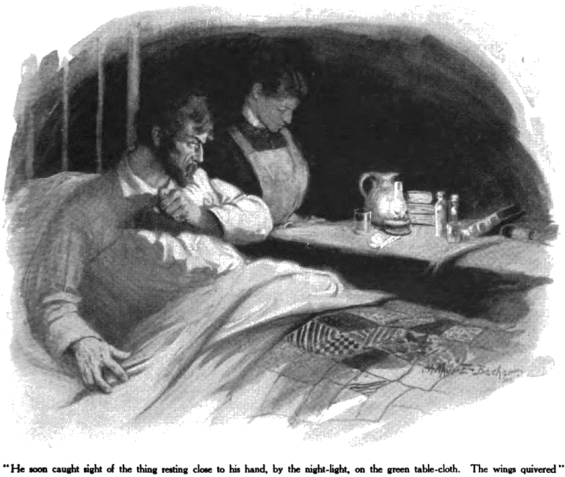
A Moth - Genus Novo by H.G. Wells - illustrated by Arthur C. Becher
The Moth by H.G. Wells - illustration by R. E. Lawlor
House Of Mystery, 222
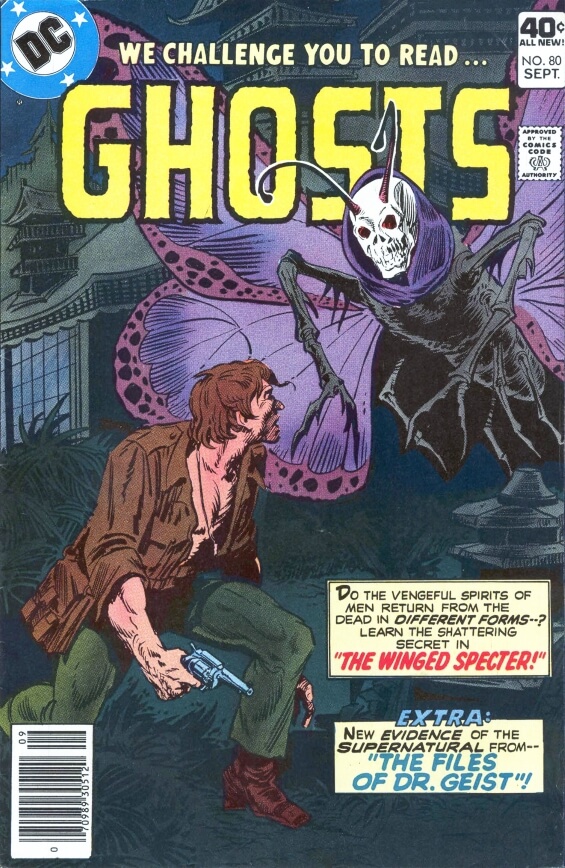
Ghosts 80

Posted by Jesse Willis

Spoken Freely Presents: Summer Shorts ’14

SFFaudio News

Spoken Freely Presents Summer Shorts '14

As a part of this “June Is Audiobook Month” project (in which SFFaudio is participating) check out today’s FREE audiobook over at the Literate Housewife blog, its a short story, Days Gone By by Eric Jerome Dickey (with terrific narration by Dion Graham).

The entire schedule of free audiobooks is HERE, and the complete audiobook of the entire project is available through Tantor Media for just $9.99, HERE – all proceeds benefit ProLiteracy.

Posted by Jesse Willis

The SFFaudio Podcast #268 – AUDIOBOOK/READALONG: The New Accelerator by H.G. Wells

Podcast

The New Accelerator by H. G. WellsTheSFFaudioPodcast600The SFFaudio Podcast #268 – The New Accelerator by H.G. Wells; read by Mr Jim Moon. This is a complete and unabridged reading of the short story (40 minutes) followed by a discussion of it. Participants in the discussion include Jesse and Mr Jim Moon!

Talked about on today’s show:
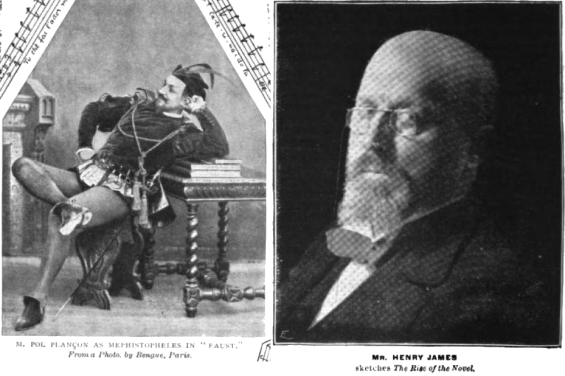
1901, Sir Arthur Conan Doyle, H.G. Wells, The Speckled Band, Swamp Adder, baboons, faulty sources, generous irregularities, Dracula by Bram Stoker, the science, the speed of sound, the effect of heat on fast moving objects, how do they communicate?, the sound of the band, Audacity, Edison cylinders, sloooowing doooowwn, “let it go a bit”, the effect of gravity, “let’s go out the window”, footprints in the flower bed, a giddiness?, a sketch of The Invisible Man, Gibberne, the dog, “you’ve dropped your hankie”, naughtiness -> alienated, Star Trek, Star Trek: Voyager, The Twilight Zone, The Ring Of Gyges, invisibility, The Lord Of The Rings, “a matter for the courts”, a story about methamphetamine, positive uses, what would a society with this drug widespread be like?, Victorian gentleman, dry whiskey (mescaline), opium, cannabis, Alice In Wonderland, pharmacy, a drug fearing society, writing under the influence, why a “new” accelerator, miracle cures, Coca-cola packed with cocaine, baby soothing tinctures packed full of heroin, radium condoms, a green potion, what’s the retarder for?, Ritalin, Focusyn, “become a glacier”, When The Sleeper Wakes, sleeping aids, amphetamines, WWII, chocolate bars laced with amphetamines, “go pills”, The Food Of The Gods by H.G. Wells, boomfood, Wells would have known the Invisible Man would be blind, how science effects people, a minister could dose his assistant, is Gibberne gibbering?, Gibberne looks like “Mephistopheles”, Griffin, sinful, Faust, burning in hell, Mephistophelean, the narrator as Wells, The Strand (late 1899), is the allusion to an actor dressed as Mephistopheles or Henry James?, Sartor Resartus by Thomas Carlyle, everything is just clothing, “language is the garment of thought”, the effect of the retarder, a glacier like absence of alacrity, an entire revolution of civilized existence, the time garment of which Carlyle speaks, very-meta and existential, Diogenes Teufelsdröckh (god-born devil-dung), “we put on a new garment and that changes us”, clothing as a metaphor, the purpose of uniforms, dress-codes, signifiers, bowler hats, the chef’s hat, Daniel Ellsberg, wearing a suit to get arrested, the philosophy of violence, without knowing the allusion…, “just another of those dudes”, The Clock At The End by W.F. Harvey, being bound by time, a little story about drugs is very impactful, drugs and perception, as you age your perception of the passing of time speeds up, younger people doing their thing, ahhh yes more of the same, wisdom/cyncism of age, “no matter who you vote for the government always gets in”, things were slower in the old days, the time investment vs. a couple of clicks, phone addiction, screen addiction, he’s got a book addiction, “Mr Jim Moon is like Wikipedia with a beard”, a diary as an external hard-drive for your mind, the clothing of it, hand-mirrors, selfies, dead situations, Flappy Bird, screens as retarders and accelerators, new etiquette and new protocols, the effect of gin on the U.K., the effect of a new clothing or technology needs to work itself through the culture, tobacco, coffee, designer drugs, the backlash against comics, TV, videogames, simultaneous negative reaction, an immune reaction, the Freakonomics podcast, the temperance movement, alcohol as the safe drink (before tea and coffee), small beer (weak ale), a merry afternoon, was history so bloody in Europe because people were so pissed (drunk)?, drugs as technology, “when the robots come”, the robot in your kitchen is your dishwasher, the anti-coffee movement, “the devil’s cup”, when opium was cheaper than gin, opium -> morphine -> heroin -> methadone, health panics, Mormonism, the reason people take drugs, 12% of rats and bees have a predisposition to addiction, bee hives have bouncers, fermented apples, “its a fun little story about a cute little idea”, the mad scientist story, Dr Jekyll’s potion, new relevance for The New Accelerator, smart drugs, steroids, “among the chattering classes”, it’s all happening almost unnoticed, a new frontier of pharmacy.

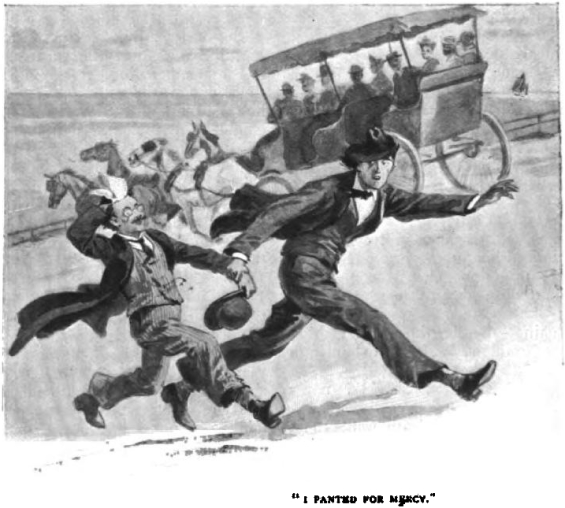
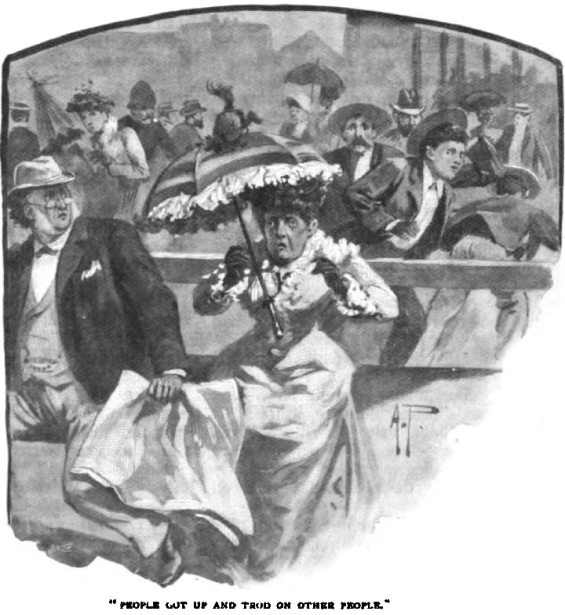
The Strand Magazine 1901 - THE NEW ACCELERATOR by H.G. Wells

The Strand Magazine 1899 had two candidates for Mephistopheles

Posted by Jesse Willis