
Review of Flesh Circus by Lilith Saintcrow

SFFaudio Review

Flesh Circus by Lilith SaintcrowFlesh Circus (Jill Kismet #4)
By Lilith Saintcrow; Performed by Joyce Bean
Publisher: Brilliance Audio
[UNABRIDGED] – 7 discs; 9 hours

Themes: / circus / urban fantasy / voodoo / zombies / magic /

Publisher summary:

When circus performers start dying grotesquely, Jill Kismet has to find out why, or the entire city will become a carnival of horror. She also has to play the resident hellbreed power against the Cirque to keep them in line, and find out why ordinary people are needing exorcisms. And then there’s the murdered voodoo practitioners, and the zombies. Jill Kismet is about to find out that some games are played for keeps.

The descriptions in Flesh Circus were memorable and fun, and touched on all the senses. Characterizations really told a lot about each individual and gave information about both them and the narrator. She was really snarky, selling toughness without overdoing it. There was some repetition in the action scenes, with guns and bones popping frequently. The author employs a liberal use of adverbs, and the plot relies heavily on elements that must have been established in earlier books. I could still follow along, though. The magical details were the best part.

Joyce Bean as narrator was great. She had a husky, slightly rough voice with an understated delivery that let the words really shine. Her characterization of side characters was great, making it easy to keep track of who was speaking.

Posted by Sarah R.

The Reading Envy Podcast

SFFaudio Online Audio

ReadingEnvyIntroducing The Reading Envy Podcast!

Jenny Colvin and I (Scott Danielson) were talking about books one day, and decided there was room for another podcast. We decided that the podcast would come out once a month, and that we’d talk about what whatever we read the month prior. To limit the length of the podcast, we decided that picking three books each would be reasonable.

We also decided that the podcast needed to include guests, and that we’d go for a light conversation like you’d have in a cafe or a pub with friends. All books are fair game.

The latest episode (#2) is posted, and our guest is Bryan Alexander. Give it a listen! We hope you enjoy it.

READING ENVY 002: RETURN OF THE EUTHANIZED BOOK

Bryan brought three books along for discussion:

Scott talked about:

And Jenny focused on:

Download or listen via this link: Reading Envy 002: Return of the Euthanized Book

Subscribe to the podcast via this link: Feedburner

Or subscribe via iTunes by clicking: Subscribe.

Posted by Scott

LibriVox: The House Of The Seven Gables by Nathaniel Hawthorne

SFFaudio Online Audio

The famous and exquisitely wrought novel, The House of the Seven Gables, in which the relentless working out of an ancestral curse is developed with astonishing power against the sinister background of a very ancient Salem house … from this setting came the immortal tale — New England’s greatest contribution to weird literature — and we can feel in an instant the authenticity of the atmosphere presented to us. Stealthy horror and disease lurk within the weather-blackened, moss-crusted, and elm-shadowed walls of the archaic dwelling so vividly displayed, and we grasp the brooding malignity of the place when we read that its builder — old Colonel Pyncheon — snatched the land with peculiar ruthlessness from its original settler, Matthew Maule, whom he condemned to the gallows as a wizard in the year of the panic. Maule died cursing old Pyncheon — “God will give him blood to drink” — and the waters of the old well on the seized land turned bitter. Maule’s carpenter son consented to build the great gabled house for his father’s triumphant enemy, but the old Colonel died strangely on the day of its dedication. Then followed generations of odd vicissitudes, with queer whispers about the dark powers of the Maules, and sometimes terrible ends befalling the Pyncheons.

-H.P. Lovecraft, Supernatural Horror In Literature

The House Of The Seven Gables

For an upcoming SFFaudio Podcast READALONG of Nathaniel Hawthorne’s The House Of The Seven Gables I point you towards this unabridged 12 hour 20 minute solo narration by Mark F. Smith:

With novels on LibriVox my preferred file type is M4B (DRM-FREE of course) because they’re natively bookmarkable – but a Zipped MP3 version, and a vanilla podcast feed are also available.

Part 1 |M4B|
Part 2 |M4B|
Part 3 |M4B|

Podcast feed:
https://librivox.org/rss/2961

The House Of The Seven Gables - an 1875 illustration of Clifford Pyncheon by John Dalziel

Posted by Jesse Willis

Review of Alien Honor by Vaughn Heppner

SFFaudio Review

Alien Honor by Vaughn HeppnerAlien Honor (A Fenris Novel #1)
By Vaughn Heppner, Read by Jeff Cummings
Publisher: Brilliance Audio
[UNABRIDGED] – 11 hours

Themes: / interspecies slavery / telepathic FTL spaceships / galactic colonizing / Philosoraptors / science fiction / space / aliens /

Publisher summary:

2457 AD. The longest space voyage in history has begun: 230 light years from a ravaged Earth to the pristine star system of New Eden — a beacon of hope following the Doom Star days. Aboard the ship are human colonizers, the Space Navy, fierce “Monitors” once bred to fight Cyborgs, and four “Specials” — humans with psionic abilities, capable of ripping holes in space to jump vast distances. But one Special has his own agenda and when an alien presence makes an offer he can’t refuse, the entire mission takes a deadly turn. Cyrus Gant, a former Dust-dealing gang member from Earth’s subterranean slums, is onto the renegade Special. And while his psi powers aren’t as strong as he might like, Cyrus’s street smarts more than make up for this seeming disadvantage. This will be crucial, because as the ship makes the final, frightening leap toward New Eden, Cyrus is everyone’s last hope for survival.

Alien Honor is Vaughn Heppner’s opening book in the Fenris series, which is set in 2457 AD. Humans are using telepaths to power FTL (faster-than-light) spaceships. The majority of the book focuses on Cyrus Gant, a gritty gang boss who was plucked out of the slums and trained in a special program for the development of telepathic humans. Earth sends a colonizing ship 230 light years to the New Eden star system with hope for a new beginning. Of course, things go horribly wrong and we encounter dinosaurs in space posing as philosopher-kings, as one does when venturing into space.

Vaughn Heppner is ambitious. SF is a genre known for tackling issues of social inequality set against an alien backdrop as a means of providing alternative perspective. We encounter interspecies slavery, telepath typecasting, and military stereotypes reinforcing the old misguided mantra of stronger=bigger=better. Unfortunately, Heppner’s near continual use of contemporary language/slang became an increasing source of irritation. The story is set over four hundred years in our future, yet Heppner has characters dropping insults like “prick” and “bastards.” Anytime I stumbled across characters using present-day language and contemporary idioms, it yanked me out of Heppner’s world.

Jeff Cummings narrates the audiobook and does a fair job. As a reader, he never becomes bigger than the story. There were times when I felt his delivery was overdramatic and slower in pace than I am accustomed to, but this is minor.

Personally, I felt things picked up nicely when the dinosaurs came on the scene. I mean come on, space Velociraptor cast as philosopher-king. You know what that means, right? Philosoraptor, YEAH-BABY!!!

And yes, I’m a proud owner of a Philosoraptor t-shirt.

Posted by Casey Hampton.

The WEIRD FICTION roots of TRUE DETECTIVE

Aural Noir: Online Audio

True Detective

A couple lines from episode 2 of HBO’s new show, True Detective, made made me gasp in shock and pleasure. The stylish debut episode, though beautifully filmed, didn’t quite explicitly state the weird undercurrent that may be behind the mystery of this novel for television.

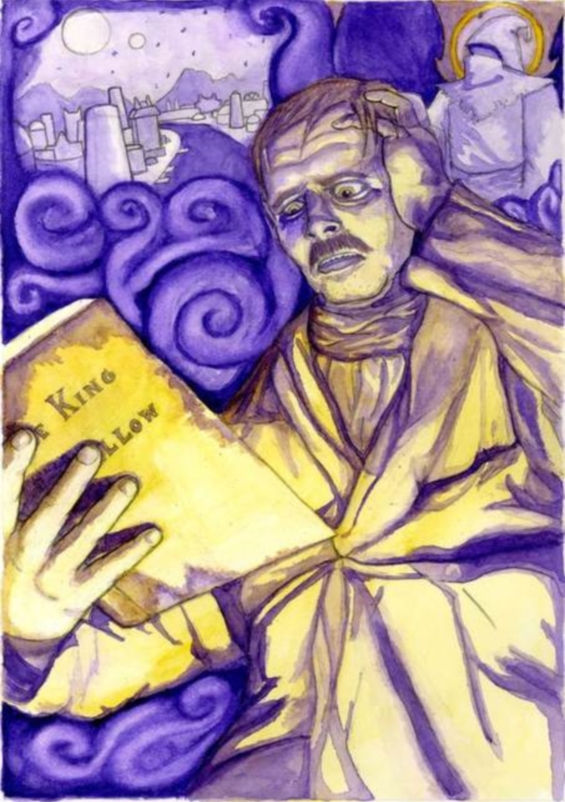
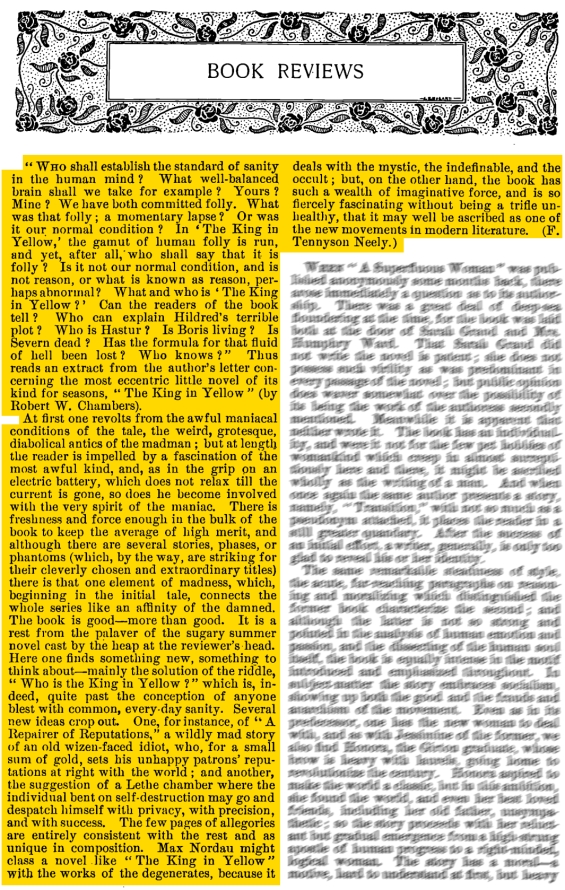
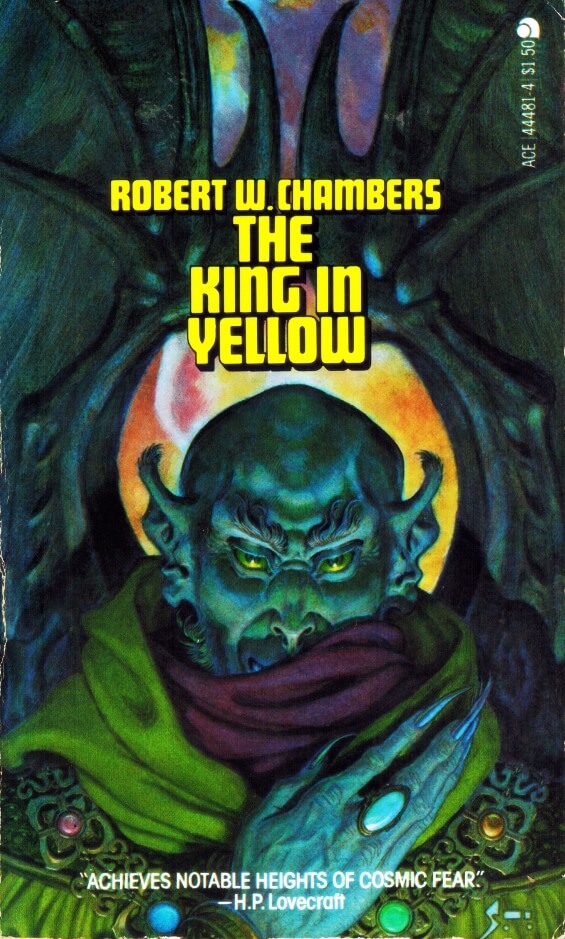
The King In Yellow

Det. Rustin Cohle (reading the diary) “I closed my eyes and saw the King in Yellow moving through the forest.”

And then “The Yellow King … Carcosa”

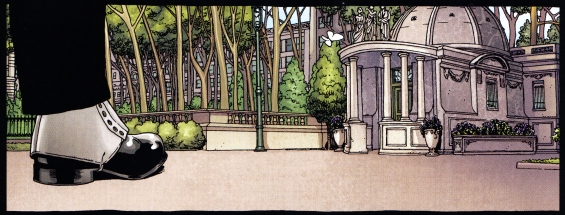
In Carcosa

I really began to get excited when, near the end of episode 2, birds flock into a recognizable shape, a tattoo found on the victim in episode 1.

The Yellow Sign?

a Yellow Sign?

Here are two short stories, listed chronologically, for those lines:

LibriVoxAn Inhabitant Of Carcosa
By Ambrose Bierce; Read by rasputin
1 |MP3| – Approx. [UNABRIDGED]
Publisher: LibriVox
Published: 2009
First published in the San Francisco News Letter and California Advertiser, Dec 25, 1886.

And here’s a |PDF| version.

LibriVoxThe Yellow Sign
By Robert W. Chambers; Read by CrowGirl
1 |MP3| – Approx. 39 Minutes [UNABRIDGED]
Publisher: LibriVox.org
Published: November 30, 2011
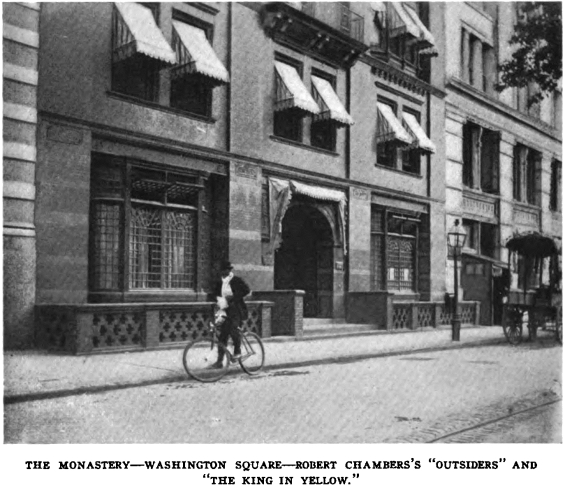
The King In Yellow is a monstrous and suppressed book whose perusal brings, fright, madness, and spectral tragedy. Have you seen the Yellow Sign? First published in 1895.

And here’s a |PDF| version.

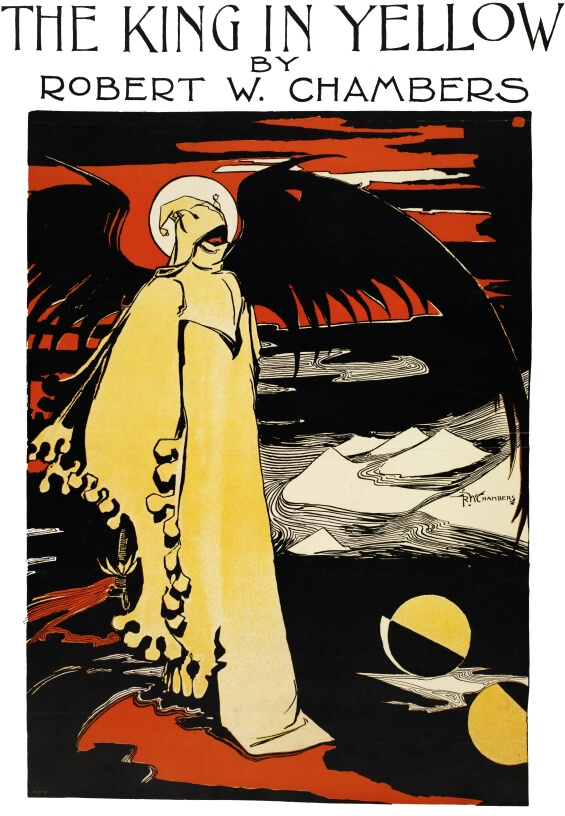
The Yellow Sign - unsigned illustration From Famous Fantastic Mysteries

Posted by Jesse Willis

Review of Ender’s Game Alive by Orson Scott Card

SFFaudio Review

Cover for Ender's Game Alive

Ender’s Game Alive
By Orson Scott Card; Performed by a full cast
Publisher: Skyboat Media
Published: 2013
7 hours 24 minutes [UNABRIDGED]
Themes: / science fiction / childhood / aliens

Sometimes you hear about something and can’t wait to get your hands on it because you want to experience it, to touch it, see it, whatever. You have expectations and hope like mad that in the end, you won’t be disappointed.

for me, the new audio drama adaptation of Orson Scott Card’s novel Ender’s Game fits the above description perfectly. The fact that Card wrote the script himself only made the anticipation worse because the bar went higher. It was raised further when I found out who was producing it: the folks at Skyboat Media. To find out whether or not they succeeded, the end result, (enemy’s gate), is down.

An important note for Ender’s Game fans, I am going to be limiting my scope to the book when reviewing this audio play. For the purposes of this review, the film does not exist. I want to tackle that challenge under its own merits. Any references to it will be made in passing if at all. With that said, our gate is open; on with the review.

The setup: a young boy at the age of six is taken from his home to attend a school for brilliant minds; to turn the “little dorklings” into soldiers and commanders because there is a war going on. This is the third such conflict with this alien race and our protagonist (unknown to him at the onset), is being groomed to be the commander that leads the entire fleet, hopefully, with good results. If not, the human race is doomed.

Our story follows Andrew Wiggin (nicknamed “Ender” by his sister) from the very beginning of his journey; even before that when the decision is made by his parents to have him with the full knowledge that this goes against the population policy in place.

“No more thirds.”

Of course, because this is the international fleet (I.F.) making the request; the rules are bent. All they have to do is sign on the dotted line and fill out the forms. If they don’t, genetic material will be seized and used until the right child is born and sent to battle school; a space station that prepares its students for lives spent as part of the fleet.

Ender’s parents are a special case because their first two children , Peter and Valentine, are geniuses. Why the first wasn’t chosen for the school, (as explained by the commander in charge), is because the kid is plum psycho. Why the sister isn’t picked is because she’d break under actual battle pressure when real losses come her way. And thus the fleet wants the parents to give it another go or else. This is the world Ender is born in. He’s at a disadvantage from the start. The running theme is, “Let’s see how ender handles it.”

The audio play does a great job of setting the appropriate pieces on the chessboard and letting the game play out. The story to tell is Ender’s story. Where it deviates from the book is the fleshing out of the interactions between the staff observing his progress. This is a necessary change since the book mostly takes place from Ender’s mind and point of view. This may seem like The Cabin in the Woods kind of gimmick but it is an important evolution in the way the story is being told. The play has to present things from a different angle and come to the same conclusions; adjusting things as needed to fit the plot’s progression.

the second major deviation is the focus on the other Wiggin children subplot. There are hints to it but it is treated almost as an afterthought. The reasoning for this change is sound; political debates and research would only drag down the story and make the listening experience tedious in places.

All in all, the major plot points of the novel are hit home like a well-aimed shot. There are subtle clues to other works that have been written since Ender’s Game came out in 1985. There are adjustments to some scenes to give the audio play a different feel than just a retreading of the original story step for step. This gives us something a little unexpected and fresh as we take the 7 hour, 24 minute journey.

If you have listened to the audio book of Ender’s Game, several of the casting choices will be no surprise. You hear a particular person’s voice and feel a sense of familiarity that makes the experience that much more enjoyable. Each character is brought to life. You know them, understand them, will not always agree with them or the decisions they make, but can listen to these portrayals and feel like you are the proverbial fly on the wall throughout the story. And when you listen to a scene as heart-felt as when Ender breaks down before his next assignment to command school, you really connect with the emotions in the room. This is how good storytelling becomes great by simply allowing the actors to raise the bar by their performances. The scenes before build up to a moment that is devastating in its impact.

The sound design and score never distract from the dialogue. And for the most part, the editing of the words spoken is top notch. Occasionally, you will hear the hum of the studio where lines were being recorded. If this issue were a constant refrain, I wouldn’t have enjoyed the play as much. As it stands, I only noticed such things myself when listening to the play a second time. That just shows you how engaging the whole packages when listening to it. Even though I noticed these issues, I wasn’t distracted.

At the end of the original audio book, Orson Scott Card said that it was the definitive way to experience his novel. With Ender’s Game Alive, that statement may (and should) be revised. It is a masterful work of audio fiction. Of course, this is in part to the source material. But the transformation from novel to audio play is not an easy undertaking. Orson Scott Card’s background in theatre shines through in this presentation; letting the dialogue drive the story forward. The many actors take on the roles and bring them to life. You won’t mind when adults are playing children. You just want to hear where the story goes. Aside for the minor audio issues, (studio hum in a couple scenes which I won’t spoil here and the inconsistent panning of characters when talking to each other), the production is definitely a recommended listen if you are a fan of Ender’s Game. I give it five out of five toon leaders; that’s one victory ritual.

Posted by Allen Sale