
Review of Brick By Brick: How LEGO Rewrote the Rules of Innovation and Conquered the Global Toy Industry by David Robertson and Bill Breen

SFFaudio Review

Brick By Brick - How Lego Rewrote The Rules Of Innovation And Conquered The Global Toy IndustryBrick By Brick: How LEGO Rewrote The Rules Of Innovation And Conquered The Global Toy Industry
By David Robertson and Bill Breen; Read by Thomas Vincent Kelly
Approx. 10 Hours 23 Minutes [UNABRIDGED]
Publisher: Random House Audio
Published: June 25, 2013
ISBN: 9780449806524
Themes: / Non-Fiction / Business / LEGO / STAR WARS / Denmark / Copyfight /

Sample |MP3|

I’m not one for business books, and this is explicitly a business book. The closest I’ve come to one, in the last decade, was Joseph Finder’s corporate espionage thriller Paranoia. On the other hand, I really am one for LEGO and Brick By Brick: How LEGO Rewrote The Rules Of Innovation And Conquered The Global Toy Industry is an audiobook about The LEGO Group.

Most of the book is about the recent history of LEGO, how it became unprofitable, and how it, through controlled innovation, recovered from that unprofitably. Along the way there is a fair amount about the company’s history – and even more importantly about the philosophy behind the “system” of The LEGO Group’s core product, the LEGO bricks themselves.

I started with LEGO in the mid-1970s, and barring a few pieces (lost, vacuumed, and stolen) along the way I still have much of it. But, similar to many other AFOLs (adult fans of LEGO) I experienced a decline in interest in LEGO as I entered my teens. As a kid I appreciated that LEGO allowed you to build your own toys, as a tween I programmed my own robotic LEGO creations (LEGO LOGO for Apple II) – but shortly thereafter the corporation seemed somehow go off track – creating products that were less LEGO sytem than LEGO branded toys. That is until around the mid-1990s. And that’s about when my re-invigoration of interest in LEGO started. No coincidence there, as this was also about the same time as the company’s financial revival. It seemed that the more I got more into LEGO the more the company became financially viable – but, of course, it was actually the reverse.

Indeed, Brick By Brick is essentially Robertson and Breen trying to figure out how the company works, where it went wrong, and how it recovered. In doing this they have looked at a number of failed projects, how they came to fail, how the company reorganized itself and how, with help from both adult LEGO fans and child LEGO fans they learned to operate without patent protection.

One of the more interesting comparisons between companies that Robertson and Breen make is that of LEGO to Apple. The parallels between the companies’ aesthetic philosophies (and cult like devotion by their customers) are many. I myself am a committed Apple iPhone user, not because I buy into the ecosystem, but rather because of the sculptured discipline of the technology. Likewise, though Megablocks and other LEGO competitors are making bricks that are 100% compatible with (and cheaper) than LEGO I am scrupulously careful to weed out MEGABLOCKS and other “fake lego” from my collection. The iPhone’s competitors aren’t really competitors, and the LEGO system’s competitors aren’t really competitors.

Back to the book, David Robertson and Bill Breen talk about a number of LEGO lines that I like, particularly the CITY, SPACE, and CASTLE lines but they also explain the thinking behind popular licensed IPs like STAR WARS, INDIANA JONES, and THE LORD OF THE RINGS. Several chapters cover the creation of the successful BIONCLE line (originally conceived as a line called “VOODOO HEADS”), the innovative board game division (that sneakily gets moms to buy more LEGO), and the massively expensive failure of the LEGO UNIVERSE project (an ambitious project aimed at disrupting LEGO’s own core market). And that last one is one of the most fascinating sections of Brick By Brick. By trying to make the experience perfect, by trying to produce a graphically rich massively multiplayer online game without bugs, then charging a whopping $40 to start playing it LEGO screwed up royally. The failure of the LEGO Universe project is all the more ironic in that a lone computer game programmer, Markus “Notch” Persson, came to create a sucessful kind of digital competitor to LEGO system, in the form of Minecraft. Peterson’s success, using almost no resources and no money, make the error of LEGO hierarchy all the clearer. But in an even more ironic move LEGO has since produced a Minecraft set!

In my view the only thing missing from Brick By Brick is talk about the very successful, collectible Minifigures line (now up to Series 10). To my ears Minifigs get very short shrift in Brick By Brick. I’d love to hear a two or three hour audiobook about that alone.

There’s very little to say about narrator. Thomas Vincent Kelly is a relatively new narrator, his reading is clear and precise, like the LEGO system. The occasional Danish place-name pronunciation, and the names of the LEGO products themselves are the only real narrative challenges. Kelly delivers.

David Robertson: The Story of LEGO from BrightSightGroup on Vimeo.

Posted by Jesse Willis

Wireless Theatre Company + Moonlight Audio Theatre: Burke And Hare

SFFaudio Online Audio

Up the close and doun the stair,
But and ben wi’ Burke and Hare.
Burke’s the butcher, Hare’s the thief,
Knox the boy that buys the beef.
—19th-century Edinburgh skipping rhyme

Burke And Hare

There may never have been a blacker comedy than this horrifying (and horrifyingly funny) audio drama about a pair of real life murderers. William Burke and William Hare apparently killed sixteen people in the early 19th century selling the corpses to an anatomist named Dr. Robert Knox.

This audio drama, which I found in the Moonlight Audio Theatre podcast feed, is well written, smartly acted, and full of ripe innuendo. Burke And Hare is clever and creepy. If you’ve seen the 1999 horror/comedy film Ravenous, also based on a true story, you know how disturbing this kind of mix can be.

Moonlight Audio TheatreBurke And Hare
By Terence Newman; Performed by a full cast
2 MP3 Files – Approx. 77 Minutes [AUDIO DRAMA]
Podcaster: Moonlight Audio Theatre
Podcast: June 2013
This is the story of the infamous 19th Century Scottish Grave-robbers who weren’t Scottish and didn’t rob graves. They were actually Irish and as robbing graves to supply the needs of Edinburgh’s anatomists proved to be rather hard work, they just took to murdering people – usually their neighbours – for profit. In collaboration with their common-law wives they set about supplying corpses for Dr John Knox an eminent Scottish surgeon with considerable enthusiasm and gusto. The play follows their business exploits from small beginnings, through their days of peak output to the final reckoning – set against a world that is becoming recognisably modern.

Part 1 |MP3|
Part 2 |MP3|

Podcast feed: http://moonlightaudio.libsyn.com/rss

Starring:
Rob Crouch
Jonathan Clarkson
Genevieve Swallow
Holly McLay
Clive Greenwood
Neil McCormack
Adam Hall

Edited by: Joe Siddons
Directed by: Robert Valentine
Music by: Adam Bernstein

Posted by Jesse Willis

David Bowie Narrates Prokofiev’s Peter And The Wolf

SFFaudio Online Audio

David Bowie Narrates Prokofiev's Peter And The Wolf

I must have had this as a kid, it is super-familiar. There’s a Wikipedia entry for it HERE.

Each character in the story has a particular instrument and a musical theme:

Bird: flute
Duck: oboe
Cat: clarinet
Grandfather: bassoon
Wolf: French horns
Hunters: woodwind theme, with gunshots on timpani and bass drum
Peter: string instruments

[via That’s Swell]

Posted by Jesse Willis

The SFFaudio Podcast #220 – AUDIOBOOK/READALONG: The Machine Stops by E.M. Forster

Podcast

The SFFaudio PodcastThe SFFaudio Podcast #220 – The Machine Stops by E.M. Forster; read by Elizabeth Klett (for LibriVox). This is a complete and unabridged reading of the story (1 hour 13 minutes) followed by a discussion of it. Participants in the discussion include Jesse, Professor Eric S. Rabkin, and Mr. Jim Moon.

Talked about on today’s show:
Novelette or novella, novellini?, E.M Forster wrote some Science Fiction?, genre boundaries, H.G. Wells, adventure, horror, The Time Machine, a critique of English society, dystopias, diegesis, a didactic approach, The War Of The Worlds, a bogus bifurcation of the body and the spirit (or the mind), ambiguous possibility, the “Machine” of the titles, Morlocks and Eloi, a reversal, a complement, prophetic vs. appropriate, looking through my blue plate, this book is the biggest existential critique of my lifestyle, it was lovely to meet Jim and Eric, a caricature and a critique, blackberry season, a swaddled lump of flesh, a curiously intrusive narrative technique, a fable, author backchat, in C.S. Lewis’ Narnia, J.R.R. Tolkien, lampshading, breaking the fourth wall, an aural phenomena, a fable, a parable, philosophical scenarios, Plato’s Myth Of The Cave, The Republic, Socrates, ontological imaginary equivalents, The Metamorphosis by Franz Kafka, the narrator isn’t exactly human, “back chat”, man is not necessarily the measure of all things, empiricism vs. rationalism, the unanswerable questions of the stars, everyone is a lecturer in the future, “second hand ideas”, the French Revolution not as it was but as it might be in our society, Alexander The Great’s monstrous rampage through Asia, “the juice of the individual human experience”, we have many books, books as experience generators, Ion, J.R.R. Tolkien, “there is a muse”, the rhetor, aiming out of the subterranean, why are we obsessed with essays?, SAT style essays, a quasi-Aristotelian view of happiness, what does a happy horse look like?, fleet fleets make happy shipwrights, happiness verb, man is not an animal like the others, the body doesn’t matter, man is a mind, big fat babies, the wealthy vs. the working, the bloom of Victorian society (men in sheds), a satire of academia, the Logical Positivists, natural deductive logic, Mr. Jim Moon does a lot of research, rehashing, Terry Jones, Christopher Columbus, Nathaniel Hawthorne, an unexpected continent, the North-West Passage, telling powerful and relevant, the use of the word “idea”, “forms”, Rene Descartes, interpenetration, Orion, the hunter giant,” when you give a bad podcast do you ask for euthanasia afterwards?”, you’re not there for the characters, a very erudite story, Vashti (from the Book of Esther), Purim, the worst possible kind of mother, “the book”, unmechanical, religion, what is the machine exactly?, is the machine Capitalism? Google? Wikipedia? The Internet? Communism?, the beds only come in one size, the six sided cell, a hive society, command societies, totalitarianism, “machines are in the saddle and ride mankind”, the trains make us run on time, a network of machines is the Machine, a perfected machine disallows individuality, “In the dawn of the world our weakly must be exposed on Mount Taygetus”, the worship of Helios, Ancient Greece, the homeless don’t die, despite being set in the future this is a danger in human existence, a perfect social system (utopia), an inversion of the ancient Spartan technique, not to go against the Greek, an inversion of the Garden of Eden story, in real life, a very disturbing story, a hopeful ending, a white snout, sexual competition as in Dracula, have we learned our lesson?, a passion for connection, Wall-E, infantilized adults, vomitorium, Logan’s Run, We by Yevgeny Zamyatin, an anti-romantic Eden, “they give me no ideas”, “metal blind”, Brave New World by Aldous Huxley, E.M. Forster invented Skype?, pneumatic tube, Paris, Looking Backward by Edward Bellamy, the business of Science Fiction isn’t technological prediction, a totalizing synergy, the blue slates, an Edwardian future, the machine religion, humans enslaved by their own social attitude, Cory Doctorow, the mending committee doesn’t know how to fix anything, personifying and deifying the machine, Voltaire’s “The better is the enemy of the good.”, Protagoras, the Sophists, a sophist editorial cartoon, give me money and pay attention to me, an incredibly weak story with spectacularly fruitful ideas, what does it mean to say “I read something and liked it?”, The City And The Stars by Sir Arthur C. Clarke, its left to us to ponder some very deep questions, we’re not at The City And The Stars tech yet, the 1970s and the 1990s was the time for Brave New World, complementary drugs, the work and the context we read them in, recycling of knowledge and group consensus, exciting and relevant for our time, where and when we are when we first read something is important, Against The Fall Of Night, The Catcher In The Rye, To Kill A Mockingbird, Have Space-Suit, Will Travel, Little Brother, the civilized society and the outer savage, Dr. Eric & Mr. Moon.

LEGOized - The Machine Stops by E.M. Forster

Which Killer Deserves To Have Been Read His Miranda Rights?

Posted by Jesse Willis

The Tower Of The Elephant by Robert E. Howard

SFFaudio Online Audio

The Tower Of The Elephant!
The Tower Of The Elephant - adaptation by Roy Thomas and Barry Windsor Smith

Athena Audio Theater CompanyThe Tower Of The Elephant
By Robert E. Howard; Read by Jason McMullan
2 MP3 Files – Approx. 91 Minutes [UNABRIDGED]
Podcaster: Athena Audio Theater
Podcast: April – May 2013
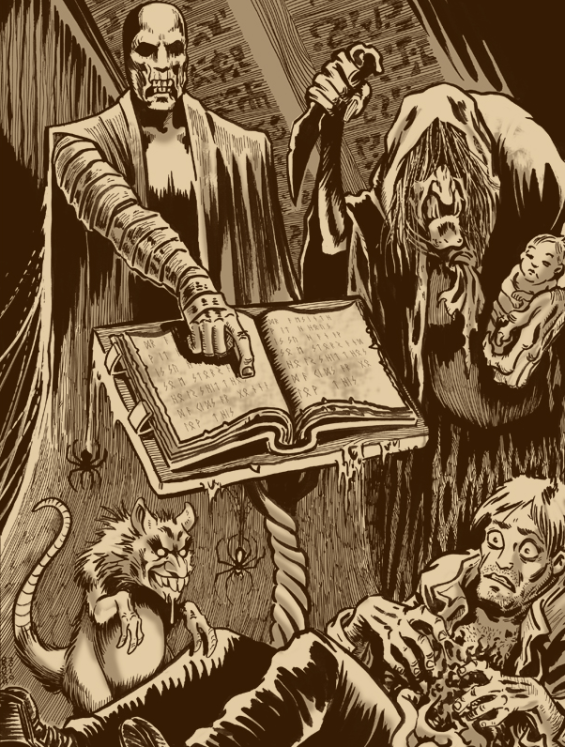
A strange, blood-freezing story of an idol that wept on its throne, and a valorius barbarian from the fringes of an elder civilization. First published in Weird Tales, March 1933.

Part 1 |MP3| Part 2 |MP3|

Podcast feed: http://www.athenatheater.org/book-show/rss.xml

The Tower Of The Elephant by Robert E. Howard

Posted by Jesse Willis

Review of Redshirts by John Scalzi

SFFaudio Review

Redshirts by John ScalziRedshirts
By John Scalzi; Performed by Wil Wheaton
Publisher: Brilliance Audio
Published: 11 June 2013
[UNABRIDGED] – 8 hours

Themes: / Star Trek / humor / space /

Publisher summary:

Ensign Andrew Dahl has just been assigned to the Universal Union Capital Ship Intrepid, flagship of the Universal Union since the year 2456. It’s a prestige posting, and Andrew is even more thrilled to be assigned to the ship’s xenobiology laboratory, with the chance to serve on “Away Missions” alongside the starship’s famous senior officers. Life couldn’t be better . . . until Andrew begins to realize that (1) every Away Mission involves some kind of lethal confrontation with alien forces, (2) the ship’s captain, its chief science officer, and the handsome Lieutenant Kerensky always survive these confrontations, and (3) sadly, at least one low-ranked crew member is invariably killed. Unsurprisingly, the savvier members belowdecks avoid Away Missions at all costs. Then Andrew stumbles on information that completely transforms his and his colleagues’ understanding of what the starship Intrepid really is . . . and offers them a crazy, high-risk chance to save their own lives.

A John Scalzi book making fun of Star Trek? Read by Wil Wheaton? YES PLEASE! I had heard some mixed things about this book (and the audio in particular coming in). That didn’t really deter me, I just hadn’t gotten around to it yet. Things sort of converged where I got the chance to review it for this site and it was the alternate July pick for the Sword & Laser book club.

This book really cracked me up. I found myself going between chuckling to myself and bursting out into embarrassing fits of laughter. Thank goodness no one was around to see it. And you won’t tell people about it, will you internet?

In the book, Ensign Andrew Dahl has just been assigned to the Universal Union Capital Ship Intrepid, flagship of the Universal Union. Oh so he’s an Ensign in Starfleet on the Enterprise? Got it. The book extrapolates on the ridiculousness of sending Kirk, Spock, Mccoy and Ensign Timmy, in his bright red shirt, down to the dangerous planet on an away mission. One of them dies. Guess which one?

The original series was before my time (I’m a Next Gen/DS9 Trekker), and I’ve only really watched the movies and very few episodes, but the meme of being the Redshirt on an away mission is well known to just about everyone at this point. The book gets pretty Meta, but I found it to be an enjoyable book, even if it loses a bit of steam as it goes along. The main story was very enjoyable and the three Codas were alright. I liked the first one the most. The second two were OK, but I don’t think either added too much to the story.

This is the second audio book I’ve listened to that is Narrated by Wil Wheaton (The other being Ready Player One by Ernest Cline.) I really enjoy him as a narrator, especially for a book like this. I couldn’t think of a more perfect reader for a Star Trek Parody book.

That said, this book does suffer what I like to call “Unabridgedness”. That’s where the author does something that in print would likely be ignored or read differently (like an image, or specially printed text) that is a bit painful to listen to.

I won’t say the particular issue with this book so as not to plant it in your head (like it had been in mine before listening). Maybe you won’t notice :)

Despite that, I think this is great to listen to in an audiobook, and I especially enjoy the way Mr. Wheaton reads sarcastic statements (of which this book has many). Oh, and he does a great drunk voice!

It’s a quick read (~8 hours for the normal speed audiobook), and the perfect summer/vacation book.

Review by Rob Zak.