
The SFFaudio Podcast #207 – READALONG: Galactic Pot-Healer by Philip K. Dick

Podcast

The SFFaudio PodcastThe SFFaudio Podcast #207 – Jesse, Julie Davis, and Rose Davis talk about Galactic Pot-Healer by Philip K. Dick.

Talked about on today’s show:
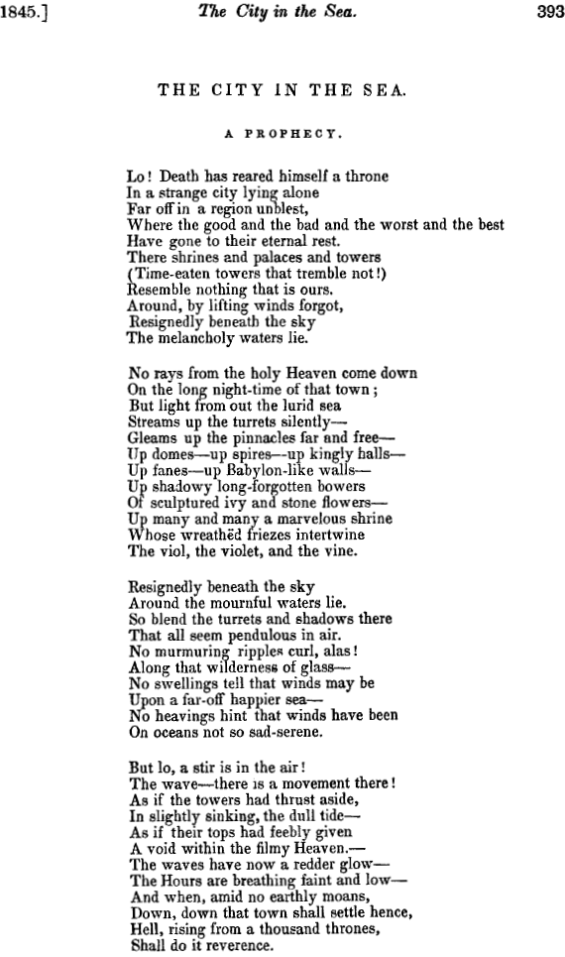
the premise, a Lovecraftian monster, malign desires upon the Earth, The Call Of The Cthulhu, H.P. Lovecraft and Philip K. Dick, dead and not dead, city vs. cathedral, what if Cthulhu was a nice god?, Robert Sheckley, Voltairian style of comedic adventure, even the ending is a joke, super-depressing dystopian earths, “a machine-like” state of being, everyone in the book is suicidally depressed, the Glimmung, everyone is afraid of failure, I want you to map all the themes and the rising action, an existential book, the value and importance of work, the best pot-healer on Earth, failed marriage, “the game is so depressing”, clever but not uplifting, this is about our society (Twitter and podcasts), totally relevant for the internet age, Molly Yoyez, Richard Matheson’s repeated theme of the disconnection between people, “he you should listen to my podcast”, at least you can laugh, the last line of the book, the best of them, instead of just fixing or healing what is broken he is becoming a creator, “the pot was awful”, Philip K. Dick’s personal relationship with religion, history, church history, Roman history, wordplay, the meaning of “Mare Nostrum”, medicine of secret composition a placebo or patent medicine, to give them hope, agape, keritas, Happy Catholic, a body of Christ analogy, the power of Jesus, Christ stands empty handed, pointless existence, existential ennui or a disaffection with a lack of meaning in the universe (going back to Lovecraft), a symbolic version of deep time, a Jungian interpretation, the collective unconscious, is Joe Fernwright trying to find his soul?, his dead self, come to terms with death, “it’s your corpse”, “I have a box I’ve made”, it’s a coffin, distraction, the book title game, there are more allusions per square inch than other novels, Faust, albatrosses, “what Christ really was”, Willis the robot, unlimited power and unlimited knowledge, why does this cathedral need to be raised?, you love things that are stronger than you, forbidden love, “he felt apathy and there was nothing to be apathetic about”, incest, Amalita and Borel, God the creator, what is a cathedral essentially?, it is a church or THE Church, the bivalve character, the Book of the Calends, people being saved through work, “the robots are more alive (and human) than the people”, “the whole thing about robots”, ignoring your programming, Costco robots, “you can’t take pictures in here”, she could disregard the policy but she chooses not to, buckle your seat-belt, “whether you have a fate or not”, Willis doesn’t just do this roboting thing (he has aspirations to be a writer), thinking of other people not as people, The Best Exotic Marigold Hotel, LEGOing, WiFi vs. wireless, “be a human being for a minute”, programmed dreams, is the book prescient?, colostomy bag installation, it is inhumane not to be full of agape and keritas and worry for other people, the scene at the spaceport, THX-1138, We by Yevgeny Zamyatin, “I gaze across the silence of the marshes”, the padre booth scene, Zen, “you have worked and not worked”, Puritan Ethic, Roman Catholic, Allah, Judaism, “a bowl of Martian fat-worm soup”, the dystopia of regulation and efficiency, friending and unfriending, if this is a book about religion…, pots are what he loves, why didn’t Joe break pots?, the spider in the cup, the little fisherman of the night, “the great fisherman of the night”, this is a book about doing not having done, aspiring and aspiration, busy work and the game, Snake by D.H. Lawrence, But even so, “from out the dark door of the secret earth”, The Rime Of The Ancient Mariner by Samuel Taylor Coleridge, the bottle in the toilet tank, was there a giant snake down there?, the bones of a Black Glimmung, the bones looked like the bones of an Ark, come and be saved (a new Testament ark), beings in distress, the Glimmung is forcing their hands, “he loved us because we were alive”, Amalita means hard work, Calends -> Calendar, taxes, the ides of March, the allusions to Faust, Faustian-man striving upwards never satisfied, overcoming our bad-selves, reconcile yourself to death, overcome a fear of failure, the pot at the end of the world, “why didn’t you try something”, God in Genesis was very Faustian, Johann Wolfgang von Goethe, co-creators with God, the swamp is the flooding of the perfect and the beautiful, Midnight In The Sunken Cathedral by Harlan Ellison, the fog-things of antiquity, infirm and senile, you can get a lot done on the telephone, Mr. Job and Mr. Lawyer, the robots are just as inhumane as the humans, the interplan corn and wheat bank, communism as absorbed into capitalism, crumbles as a unit of currency, Ploghman’s Planet, manifesting, the hovercraft, hello to you too, reading into it more, Julie wants to force Scott to read this book, poetry, Jesse reads The Raft Builders by Lord Dunsany, “hastily making rafts”, The Epic Of Gilgamesh, Robert Silverberg, other Philip K. Dick books, Philip K. Dick’s common book (The Exegesis), Galactic Pot-Healer is a piece of art, it was crafted, weaved, A Scanner Darkly, plots vs. ideas, having once thought to kill a senator, suicide, suicide by cop, upon re-reading, the use and abuse of drugs, ‘archaeologists will find him and know he was a misunderstood superman because he was holding a copy of Ayn Rand’s The Fountainhead‘, nihilism, Kurt Vonnegut, Harrison Bergeron, 2081, whack-job libertarian idea, the problem isn’t “the nanny state”, the inexplicably of Kurt Vonnegut’s popularity, the hopelessness of his books, triteness, Philip K. Dick’s deeper themes, Philip K. Dick’s simple short stories, “what is it that you find that’s better?”, the people are the pot = mind blown!, the cover art of Galactic Pot-Healer, how Glimmung manifests himself in the world is how Jesse imagines Julie, and Scott and Rose see God in the world, Glimmung has no concern for self-dignity, “Don’t lose faith. -G.”, this book is about depression, being out of work, suicide, “I have my own black dog I need to fight”, “I love this book”, “It is a great book.”

Galactic Pot Healer by Philip K. Dick
Blackstone Audio - Galactic Pot-Healer by Philip K. Dick

Posted by Jesse Willis

Review of The Colors of Space by Marion Zimmer Bradley

Please welcome another new reviewer, Tom Schreck. Tom heard about the call for reviews from another new reviewer that you will hear from shortly.

SFFaudio Review

The Colors of SpaceThe Colors of Space
By Marion Zimmer Bradley; Read by Jim Roberts
Publisher: Speculative! via Brilliance Audio
ISBN: 978-1-4692-5948-2
5 discs – 5 hours [UNABRIDGED]

Themes: / space / aliens / science fiction / interstellar travel /

Publisher summary:

Young Bart Steele, Space Academy graduate, is waiting in a spaceport for a ship to take him home when something happens that suddenly thrusts him into the center of a quest for the secret of interstellar travel. The method of faster than light travel, called “warp drive” in later Sci-Fi stories, is a tightly kept secret of an alien race known as the “Lhari.” Some humans feel that they should not have to depend on the Lhari to get to far away planets and enlist Bart to help them wrest the secret from the Lhari by undertaking a perilous mission. Bart’s survival and the freedom of the human race suddenly depend on his courage and wits.

The Colors of Space is one of Marion Zimmer Bradley’s earliest books and is a solid enjoyable book. It’s short, the pace keeps moving, and overall comes to a satisfying conclusion.

Mankind has expanded throughout the solar system and nearby star systems but it takes years to travel those distances with their current technology. Sometime in their exploration they met an alien race called the Llari who have the capability of faster-than-light travel. The Llari are happy to supply such transport to humans but won’t share the secrets of their technology with humans. The humans and Llari entered into a mutually beneficial relationship for interstellar travel, but some parts of humanity have become disgruntled of the monopoly the Llari hold. Our protagonist Bart Steele gets involved in a human plot to discover this secret in this story.

The book is fairly simple so don’t expect any deep/intricate character development, but it explores interesting social issues like relating to people different from yourself, friendship, and loyalty.

Jim Roberts has a great voice but his performance comes off kind of stiff and dry. As I got further into the book, I either got more used to his reading style or he relaxed a bit in his reading. If trying to decide between the print or audio version, the audio book version is pretty good but I don’t think it adds anything to the enjoyment of the book.

Posted by Tom Schreck

Review of The Secret of Ji: Six Heirs

Please welcome one of our new reviewers, Andrew Linke.  He listened and reviewed this audiobook in under a week.  Score!

SFFaudio Review

The Secret of Ji: Six HeirsThe Secret of Ji: Six Heirs
By Pierre Grimbert; Read by Michael Page
Publisher: Brilliance Audio
Published: 19 February 2013 (original French book from 1997)
ISBN: 978-1-4692-0986-9
8 compact discs – 9 hours [UNABRIDGED]

Themes: / assassins / fantasy / magic / barbarians /

Publisher summary:

 The Known World is a sprawling realm ruled by mortals, protected by gods, and plied by magicians and warriors, merchants and beggars, royals and scoundrels. In Kaul, the Council of Mothers upholds the great Ancestress; Odrel, the god of Sadness, unites the suffering of the Upper Kingdoms; and everywhere the lethal minions of Zuïa, the cold-blooded judiciary goddess, do her fearsome bidding. But for all the Known World’s wonders and terrors, what has endured most powerfully is the legacy of Ji. Emissaries from every nation — the grand Goranese Empire; desolate, frozen Arkary; cosmopolitan Lorelia; and beyond — followed an enigmatic summons. Some never returned; others were never the same. Blessed and burdened with a staggering secret, the survivors passed their newfound knowledge down through the generations. But now the last of their heirs — and the surpassing wisdom they possess — face a deadly threat. The time has come to fight for ultimate enlightenment…or fall to infinite darkness.

The setup for The Secret of Ji: Six Heirs sounds almost like an overly complex joke: “A barbarian, a mage, a bard, a warrior, and two confused teenagers walk into a tavern filled with assassins…” Some might say that this makes for a bad story, but in this case the fantasy tropes serve as helpful guides as the author introduces his readers to a broad cast of characters. This book isn’t the most original or captivating fantasy tale you will ever read, but it is more than sufficient to fill the gap while you await the next epic fantasy novel from your favorite author.

The novel gets off to a great start by introducing the history of the heirs to the secret of Ji. Many generations ago, representatives from across the world gathered on this small island to witness a mysterious event. Not all who attended this meeting survived, and of those who did, all resolved to never reveal the secret of what they witnessed to anyone except their heirs, who were sworn to secrecy. Now, somebody has hired the most deadly assassins in the known world to kill every person who is an heir to the secret of Ji.

That is where our prototypical characters come in. Six of the heirs to the secret of Ji survive the assassination attempts and, eventually, band together to try and find out who wants them dead, and why. Corenn is a leader the matriarchal government of her homeland who also happens to be a mage, though her skills as a politician and diplomat are more significant than her magical powers. Her niece, Léti, is a frustratingly unpredictable teenage girl, who is pursued by an equally flakey, but more determined fisherman named Yan. These three are all guarded by Grigan, a solid warrior who could have come from virtually any fantasy novel, but serves well in his roll as protector and sometimes mentor. Rounding out the group are Rey, a delightfully roguish actor, and Bowbaq, a gigantic, pacifist barbarian who can communicate with animals.

The author’s narrative style is very comfortable to listen to, with the close third-person perspective of the narrative slipping easily from one character’s mind to the next, depending on the dramatic needs of each scene. This fluidity of narration was a little surprising to me after the several first person, or strictly focused third person, stories I have read recently, but it serves the story well. Other than Léti, who I feel was underused except in the introduction and final pages of the book, each character has a distinct voice and perspective. The passages which follow Rey and Bowbaq are particularly delightful.

Now for the complaints, which are thankfully few. The story begins with a first person narration from Léti, which recounts the history of the secret of Ji in the form of a memoir or letter. This tale is interrupted at several points by scenes that set up the assassination attempts on the heirs to the secret which, while well written, feel completely out of place. Better to have put these scenes together in a second prologue, or in the first chapter, than to have them interrupt what should have been an unbroken narrative. As I mentioned before, most of the characters are well-written and distinct, but I do feel that Léti was underused for much of the story. This is clearly the first book in a series, which will likely follow her as she grows more mature, but that does not excuse her changeable, even vapid, attitudes throughout the middle of the story. Finally, the author describes the world as using a somewhat metric calendar in which weeks, days, and even hours are broken into units of ten. The depth of world building here is quite good, and as I turn to a text version of the book to check my spelling of names, I find that the words are not so distracting in print, but in the audio version the frequent use of phrases like dékades (weeks of nine or ten days), decidays (hours), centidays (minutes) is distracting.

The Secret of Ji: Six Heirs is a recent translation of a French fantasy novel from 1997, which might explain some of the dated feel of the story, as well as the few awkward phrases that pepper the book. While it is not perfect, and the ending is clearly setting up a sequel, it is certainly an enjoyable fantasy adventure centered around a truly mysterious event. I look forward to the remaining volumes in the series being translated into English and will certainly find time to read them while awaiting new entries in more recent series.

The audiobook which I listened to was produced by Brilliance Audio and, other than the aforementioned frustrations with hearing certain phrases spoken aloud, was excellent. The narrator used distinct voices for each character, but avoided overly gravel, faux-feminine, or accented tones. Each disc opened and closed with a brief piece of music, which lasted just long enough to cue the listener that the time had come to change discs. I also appreciated that the last ten seconds of each disc were repeated at the beginning of the next disc, to draw the listener comfortably back into the story.

Posted by Andrew Linke

LibriVox: The People Of The Black Circle by Robert E. Howard

SFFaudio Online Audio

The People Of The Black Circle by Robert E. Howard - illustration by Hugh Rankin

In this well-regarded CONAN novella our hero, now a chieftain in the Hyborian equivalent of Pakistan, tangles with a beautiful young queen bent on revenge. Her plot will have Conan fighting an evil sorcerer who, by will alone, can rip a man’s heart out of his chest!

And giant snakes.

Weird Tales, September 1934

LibriVoxThe People Of The Black Circle
By Robert E. Howard; Read by Mark Nelson
1 |M4B|, 10 Zipped MP3 Files, or podcast – Approx. 3 Hours 38 Minutes [UNABRIDGED]
Publisher: LibriVox
Published: April 1, 2013
“A stupendous story of Conan the barbarian soldier of fortune, and a tremendous adventure in the castle of the Black Seers.” First published in Weird Tales, September, October, and November 1934.

Podcast feed: http://librivox.org/rss/7692

iTunes 1-Click |SUBSCRIBE|

And here’s an illustrated |PDF| made from the republication in Fantastic, January 1967 (the illustrations, by Hugh Rankin, are from the original serialization in Weird Tales).

The People Of The Black Circle - illustration by John Buscema and Alfredo Alcala

[Thanks also to: DaveC, Ann Boulais, and Jack!]

Posted by Jesse Willis

BBC + RA.cc: Gaiman, Aldiss, Baczkiewicz, Byrnes

SFFaudio Online Audio

RadioArchive.ccHere are links to four recent BBC programs. Myself, I’ve heard most of Neverwhere, and it’s terrific so far, but the others look pretty promising too.

Which have you heard? And what do you think?

Neil Gaiman’s Neverwhere adapted by Dirk Maggs [AUDIO DRAMA]

Hothouse by Brian Aldiss; read by Gareth Thomas

Pilgrim by Sebastian Baczkiewicz – Series 4 [AUDIO DRAMA] (Comments contain links to Series 1 to 3)

White Snow by Frances Byrnes [AUDIO DRAMA]

[Thanks Bob!]

Posted by Jesse Willis

Review of Technomancer by B.V. Larson

SFFaudio Review

TechnomancerTechnomancer (Unspeakable Things, Book One)
By B.V. Larson; Read by Christopher Lane
Publisher: Brilliance Audio
[UNABRIDGED] – 9 discs – 11 hours

Themes: / mystery / thriller / magic /

Publisher summary:

When Quentin Draith wakes up in a private sanatorium, he has no memory of who he is or how he received the injuries riddling his body. All he knows is that he has to get out, away from the drugs being pumped into him and back to the real world to search for answers. His first question: How did his friend Tony’s internal organs fill with sand, killing him in a Las Vegas car crash? After a narrow escape, he tracks down the basic facts: he is an investigator and blogger specializing in the supernatural — which is a good thing, because Quentin’s life is getting stranger by the minute. It seems he is one of a special breed, a person with unusual powers. He’s also the prime suspect in a string of murders linked by a series of seemingly mundane objects. The deeper he digs and the harder he works to clear his name, the more Quentin realizes that some truths are better off staying buried….

This one had a lot of potential, but in the end didn’t live up to it.  Technomancer starts off strong with the main character, Quentin Draith, waking up in a hospital, not remembering any details about his life…not even his name. From there, the reader (listener, in my case) is taken on a bit of a “mystery-thriller” type book with science fiction/supernatural elements thrown in. The reader learns about Quentin as he learns about himself. That part of the story is actually kind of fun, the act of discovery. Unfortunately, the book breaks one of my cardinal rules for books in a series: it doesn’t stand very well on its own and didn’t wrap up the story line in any satisfying way. At the end of the book, I was left bored and annoyed that I’d read the entire thing, let down by what it was compared with what it could have been.

Quentin discovers that there have been a variety of bizarre deaths in Las Vegas, odd happenings. Through one of the people he meets, he finds that he’s a blogger who writes about these strange things. As the story goes on, he meets a somewhat shady police officer who is the lead investigator for these events and comes to piece more of the story together. There are some people in the community who have special objects. These objects give them powers, or can be used against others. For example, one of the objects Quentin learns about early-on is a ring that makes the person wearing it lucky in games of chance (such as blackjack). Another power is used for a sort of mind control. Some of these powers have a limited range over which they can work; others can work anywhere. Some objects even allow the owner to create “rips” to other worlds or other places in this world, portals that can be used to travel around the Vegas area. These “rips” can lead to worlds, though, where other beings live, beings who can come through similar rips to our world. Quentin suspects that these beings (called “grey men”) are responsible for all the odd events in Vegas. Through his travels, he also learns that there are two groups of users of these special objects: the “community,” and the “rogues” or the “cultists.” The “community” are people who, to some extent, have banded together to collect objects. The “cultists” have objects of their own, but seem generally more interested in using them for new study. They compare the objects to witchcraft in the 1600’s: if you don’t understand the science behind something, then it is seen as magical, no? Eventually, Quentin forms a plan to destroy the grey men, and the story ends more or less after his attempt to do so…

All of that sounds like it has the potential to be an interesting story. Sadly, the book, taken on its own, didn’t form much of a complete story. Over 9 CD’s (10.5 hours), the book spent the first 8 with Quentin wandering around, finding objects and meeting people. Only three of the people he met (out of many) ended up being truly relevant by the end of the book. The final “battle” as it were didn’t start until the end of the 8th CD and was wrapped up 2/3 through the final CD; that is, the climax was only about 30 minutes long in total, and came right at the end. Instead of describing more of the how’s and why’s, Larson spent most of this book world- and character-building. Even the “battle” was rushed. It wasn’t clear, at the end of the story, if the battle made any difference. Or why Quentin survived. Or what happened to the others who went to battle with him. Or why some of them mattered. A quick look on Amazon indicates that this is the first in the “Unspeakable Things” series. This book was unsatisfying enough to me that I won’t go on to read the others. I kept holding out hope that the climax would come and the story would be resolved, but in the end, it wasn’t. It just felt like a very long introduction to a short book.

As this was an audiobook, I should probably mention something about the narration. In short, it was a pretty average narration, nothing to write home about, but nothing particularly bad or unpleasant, either. Lane did a fine job with the voices; there was never a question of which character was speaking, and his female voices weren’t as over-the-top as some male narrators do. In the end, when a narrator doesn’t distract from the book, they’re doing an alright job in my book, and that was the case here. I think it was probably better to listen to this book instead of reading the print version, so that I could do other things while reading.

Review by terpkristin.