Review of Two for Texas by James Lee Burke

SFFaudio Review

Two for Texas by James Lee BurkeTwo for Texas
By James Lee Burke; Read by Will Patton
Publisher: Simon & Schuster Audio (link includes an audio sample)
ISBN: 144235478X
Published: January 2013
[UNABRIDGED] – 5 discs

Themes: / Western / Alamo / Prison Break /


Publisher Summary:

Son Holland arrived in the Louisiana penal camp determined not to spend the rest of his days suffering in a chain gang—but he didn’t imagine for one minute that in order to escape he would need to kill a man. Terrified for his life, he flees the state across the river to Texas, taking with him a beautiful Indian squaw and a fellow prisoner. And as they make their way towards General Houston’s infamous Texas Rangers they find themselves in the midst of the final tragic battle for the Alamo. 

Two for Texas is one of James Lee Burke’s earlier works prior to him hitting his stride with the Robicheaux series of novels in the late 80s, which have through carried him to present day. In addition to these novels, two other Burke characters, cousins Hackberry Holland and Billy Bob Holland, have both had multiple books focusing on them – most recently the Hackberry Holland novel Feast Day of Fools released in 2011.

Two for Texas, first published in 1989, tells the story of the Holland’s great-grandfather Son and his escape into Texas from a Louisiana penal camp along with another hardened convict and their participation in a series of events leading to the battle for the Alamo. Actor Will Patton does a superb job handling the narration on this audiobook, easily tackling the various dialects of the many characters of diverse backgrounds in this story. Will Patton is no stranger of the work of James Lee Burke having recorded a dozen or more previous audiobooks of the author’s works. The combination works great and I am looking forward to checking out some of the others in the near future.

Review by Dan VK.

The SFFaudio Podcast #198 – READALONG: The Martian Chronicles by Ray Bradbury

Podcast

The SFFaudio PodcastThe SFFaudio Podcast #198 – Jesse, Tamahome, Jenny, and Professor Eric S. Rabkin discuss The Martian Chronicles by Ray Bradbury.

Talked about on today’s show:
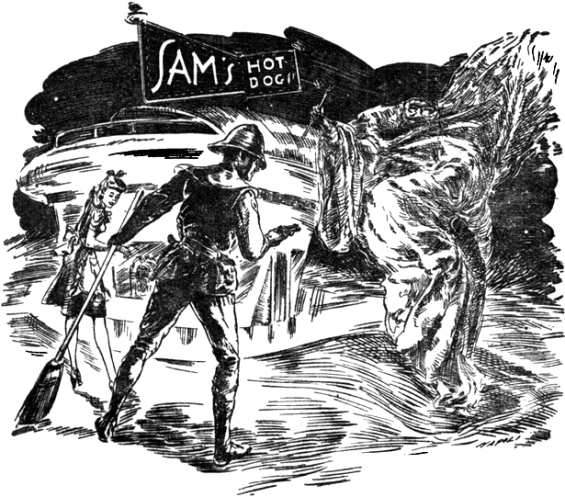
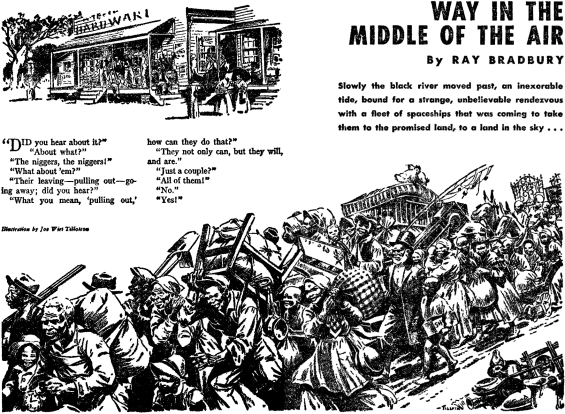
Rock Hudson, The Martian Chronicles (TV adaption), Eric’s Coursera course (Fantasy and Science Fiction: The Human Mind, Our Modern World), The Million Year Picnic, I, Mars, The Moon Be Still As Bright, Usher II, the hot dog stand on Mars, fix-up, The Long Years (a robot family), Night Call Collect, There Will Come Soft Rains, a book of poems, novels of recurring characters, “composite novels”, “the culminating image of the whole book”, Cortez burning his ships, “were definitely going to need the daughters” (if the daughters are willing), Joanna Russ, Picnic On Paradise, The Million Year Picnic, “tamed nature”, the publisher’s motivation, Walter Bradbury, the market change (with Ballantine Books), “Mammon rules again”, the table of contents, Way In The Middle Of The Air, a more Edenic ending, 1984, North Korea, Earth Abides, the Golden Gate Bridge, getting a sense of the author, H.P. Lovecraft, colour, repetition, word choice, Spender, The Moon Be Still As Bright, Captain Wilder, the instinct to be cruel, the instinct to minimize the horror, the instinct to shoot the tomb robbers, feeling the emotion he’s trying to give us, the physics, nostalgic, seeing it from all sides, Farewell Summer, Bradbury’s gut reactions, The Martian Chronicles as a fairy tale, Isaac Asimov’s reaction, Fantasies set in space, Usher II and censorship, “the Poe machines”, the colour of Mars’ sky (blue and pink), the Martian canals, The Green Morning, Johnny Appleseed, the epigraph, “…space travel has again made children of us all.”, Christopher Columbus, the Chicken Pox plague, Another America, telepathy, the noble savage, a symbolic America, The Pedestrian, Bradbury was a strange guy, Fahrenheit 451, Edgar Rice Burroughs, the Martian high culture, the second expedition, “look up in space, we could go to the Moon!”, dinosaurs!, Mars Is Heaven, Science Fiction is supposed to have knowledge in it, imagery (sight, light, and fire), the brass band, Columbia, The Gem Of The Ocean, music, Humans are technological, Martians are emotional, the window, Beautiful Ohio, music dominates (not intellectual knowledge), Genevieve Sweet Genevieve, “fully lyrical”, the fire lay in the bed and stood in the window, the dog symbolizes the entire loss of the human race, the long monologues, getting it without filtering it, The Musicians, Rocket Summer, “it made climates”, the silences, the music as a symbol for American culture, the killing spree, The Off Season parallels with the second expedition, an inversion, Bradbury has it every way, Emma Lazarus, The New Colossus, Sam Parkhill, an epitome of perverted American ideals, Bradbury loves hot dogs, Dark Carnival, Something Wicked This Way Comes, mournful Mars, America by Ray Bradbury, the Wikipedia entry for The Martian Chronicles, The Taxpayer, the urge to improve, alas, the silhouettes on the house, Chernobyl vs Hiroshima, a grim meme, what gives this book it’s staying power?, Nightfall by Isaac Asimov, L’Anse aux Meadows and Roanoke, maybe it’s circular, “we’re the Martians now and we will be again”, Night Meeting, Stephen Hoye narrated Blackstone Audio, Bradbury’s reading, Bradbury’s first flight, Harlan Ellison, wasting time on the internet, Ylla, The Ray Bradbury Theater, Mardi by Herman Melville, making this book cohere, what part doesn’t fit?, reading it as short stories, “it’s an American book”, robots, decommissioning is murder, Ray Bradbury and Philip K. Dick had a shared contempt for litterers, crassness, The Electric Ant, Do Androids Dream Of Electric Sheep?, I Sing The Body Electric, Walt Whitman, “it’s the music!”, there’s no switch, gingerbread and tea, Helen O’Loy by Lester Del Rey, are there stories not included in The Martian Chronicles that should have been?, Way In The Middle Of The Air, The Other Foot, different editions of The Martian Chronicles, The Illustrated Man, The Fire Balloons, Stranger In A Strange Land, Grouch Marx (Lydia the Tattooed Lady), The Penal Colony by Franz Kafka, The Veldt, The City, Rod Steiger, Dandelion Wine, The Canterbury Tales by Geoffrey Chaucer.


The Martian Chronicles illustration by Michael Whelan
The Martian ChroniclesThe Off Season by Ray Bradbury - illustration by Vincent Napoli
Way In The Middle Of The Air by Ray Bradbury - illustrated by Robert Fuqua
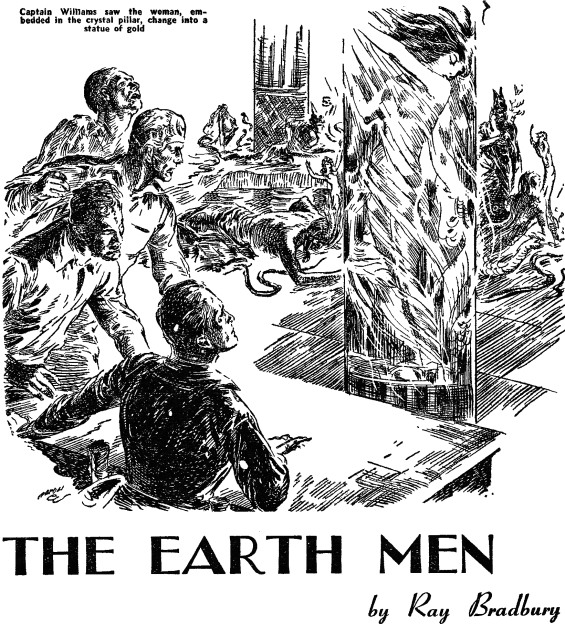
The Earth Men by Ray Bradbury - Thrilling Wonder,  August 1948
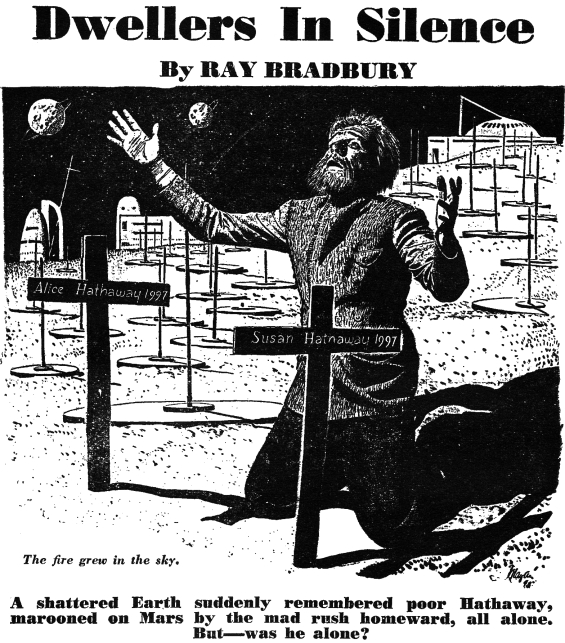
Dwellers In Silence by Ray Bradbury - Planet Stories
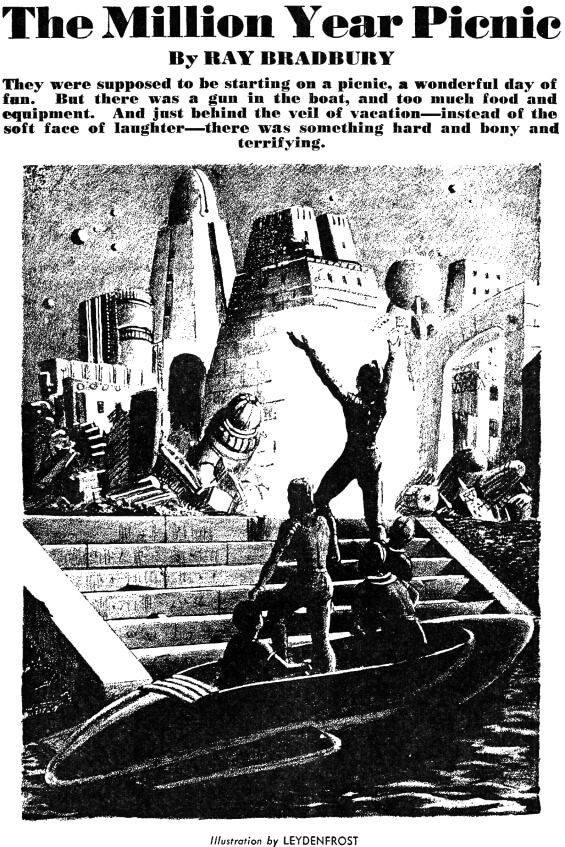
The Million Year Picnic by Ray Bradbury - illustrated by Leydenfrost

Posted by Jesse Willis

Review of World War Z by Max Brooks

SFFaudio Review

World War Z

World War Z
By Max Brooks; Read by Full Cast
Publisher: Random House Audio
Published: September 12, 2006
ISBN: 0739340131
[ABRIDGED] 5 discs – 6 hours

Themes: / post-apocalypse / zombies / military / oral history /

Publisher summary:

The Zombie War came unthinkably close to eradicating humanity. Max Brooks, driven by the urgency of preserving the acid-etched first-hand experiences of the survivors from those apocalyptic years, traveled across the United States of America and throughout the world, from decimated cities that once teemed with upwards of thirty million souls to the most remote and inhospitable areas of the planet. He recorded the testimony of men, women, and sometimes children who came face-to-face with the living, or at least the undead, hell of that dreadful time. World War Z is the result. Never before have we had access to a document that so powerfully conveys the depth of fear and horror, and also the ineradicable spirit of resistance, that gripped human society through the plague years.

Ranging from the now infamous village of New Dachang in the United Federation of China, where the epidemiological trail began with the twelve-year-old Patient Zero, to the unnamed northern forests where untold numbers sought a terrible and temporary refuge in the cold, to the United States of Southern Africa, where the Redeker Plan provided hope for humanity at an unspeakable price, to the west-of-the-Rockies redoubt where the North American tide finally started to turn, this invaluable chronicle reflects the full scope and duration of the Zombie War.

I’ve broken my cardinal rule for reading books just before the movie comes out. My rule is not to read the book directly before the movie (at least 1 year before or it must be read after or just wait on the movies). The reason for this is that I want to enjoy the story through both mediums and if you read the book just before the movie, you’ve set yourself up to be a critic – analyzing everything and complaining about every detail that’s inevitably left out, but which is more often than not necessary for the medium. If you read the book at least a year before, at least with my shoddy memory, the movie becomes a happy time of fond remembrances. Oh yeah, I remember that part, so cool! Yay! Happy! In this instance, I hear the movie doesn’t quite follow the book exactly and what else can that mean than that it’s a typical zombie movie. I don’t think I’ve ruined much here.

You know, it could have been partly because of all the hype, but I didn’t love this book. I didn’t hate it either, which makes these the hardest reviews to write, but I think I have a few ideas why World War Z just didn’t work all that well for me.

The Plot

Doesn’t really exist. Yeah, there’s a loose series of events that defines the book, or the Zombie War, but it’s told through interviews with different survivors from different countries. And they’re short too, I even checked this with the book (paper-form). Each interview amounts to a page or two, maybe 5 max. Each tends to discuss a certain important event, which ends up getting referred to by characters later in the book and often mentioned by the one directly following. It’s extremely clever and lets you see how well developed this whole idea is.

It’s extremely clever

Max Brooks has literally thought of everything when it comes to a war against zombies. I thought the same in my reading of The Zombie Survival Guide, and it goes just as well here. EVERYTHING! He goes into why tanks are all but useless against hordes of zombies – because you have to take out their heads! Anything else, and they’ll still shamble and probably even become more dangerous when you trip over them on the ground. The airforce is just as useless because it’s so much money and effort for such a little amount of good. Better spent on a bunch of soldiers with tons of ammo. He even goes into better strategies for fighting this war, why the zombies are such a good enemy – because they don’t need to be bred, fed, or led.

Very clever and not even pretentious about it. Just captivating. And this isn’t the only thing I liked although we’re getting into the middle ground because I didn’t love the audio either.

The Audio

One of the things that got me excited to listen to this on audio was that it’s read by a full cast. That means they’re trying REALLY hard and that tends to be a good thing, especially if you don’t like one or two of the voices, it’s okay, it’s only temporary. With just one narrator, that can really kill a book. I mentioned that this is told through many different people in different countries and they have actors like Rob Reiner, John Turturro, and Mark Hamill. Even Max Brooks himself plays the part of the interviewer. Very cool…just up until the point of distraction. There are so many different countries represented that the accents started to distract heavily from the story. I found myself pondering why the German guy had such a heavy accent on his “R’s” and yet could perfectly pronounce “TH” every time. And this was just the one guy. One of the benefits of a single narrator is that even when they do an accent, it’s easier to understand because English is their primary language.

The audio’s great for the most part, outside of that little niggle about the accents, but one thing I absolutely HATE about it is…it’s abridged!

Abridged

I would probably never forgive myself if I listened to this abridged audio version and never actually read the entire book if I actually thought that mattered. Maybe others are better sleuths than myself, but I can’t find a reading of World War Z that’s not abridged. At the same, after having read the book, the abridged version seems to do enough justice to the entirety of the novel, what with how it is organized, that it just cuts out a few of the interviews. Normally this is heresy, but I can live with it for this one time only.

What I didn’t like

I think the thing that just makes this an okay to good book for me is that while it’s style and organization is unique and highly clever, it also takes away from my ability to care. Without just following one person or a group of people, there’s no attachment to any specific person.

The Movie

After writing the above, I actually do think the movie will make it all better. It seems like it will be following one single person and that’s what this reader needs. The movie comes out in June of this year.

In the end

Let’s just say, if we ever do get into a Zombie War, you better have a copy of World War Z and The Zombie Survival Guide on you. Someone’s already gone through the effort of thinking up EVERY situation that can occur, what’s effective, what’s not and put it down in words. No sense reinventing the wheel. While an entertaining idea and clever execution, these were the exact things that made World War Z a book only a mother could love I could never love. It’s worth a read if only to see how in-depth you have not thought about zombies.

3 out of 5 Stars (Recommended with Reservations)

Review by Bryce L.

Review of We Can Build You by Philip K. Dick

SFFaudio Review

We Can Build You by Philip K. DickWe Can Build You
By Philip K. Dick; Read by Dan John Miller
Publisher: Brilliance Audio
ISBN: 978-1-4558-1461-9
Published: August 14, 2012
[UNABRIDGED] – 7 discs; 8 hours

Themes: / androids / healthcare / future / bureaucracy /

Publisher summary:

In this lyrical and moving novel, Philip K. Dick intertwines the story of a toxic love affair with one about sentient robots, and unflinchingly views it all through the prism of mental illness — which spares neither human nor robot. The end result is one of Dick’s most quietly powerful works.

When Louis Rosen’s electronic-organ company builds a pitch-perfect robotic replica of Abraham Lincoln, the firm is pulled into the orbit of a shady businessman, who is looking to use Lincoln for his own profit. Meanwhile, Rosen seeks Lincoln’s advice as he woos a woman incapable of understanding human emotions — someone who may be even more robotic than Lincoln’s replica.

Published in 1972, Dick uses the premise of a “future” (the book takes place in Dick’s imagined 1982) where programming is advanced enough to allow programming the appearance of sentience into androids to provide a treatise on mental health and mental healthcare.

In short, Louie Rosen and his partner Maury run a business making and selling electronic organs. One day, however, Maury decides to make an android of Edwin Stanton, Lincoln’s Secretary of War. When he reveals it to Louie, he also reveals that his schizophrenic daughter, Priss, played a large role in developing the personality for it. The Stanton simulacrum is quite successful, and they make another, this time of Abraham Lincoln. They get the idea to pitch it to an investor, Barrows, to capitulate on Americans’ love for the Civil War (which at the time it was written, was nearing its centennial). Unfortunately, as Barrows and the crew spend more time with the Lincoln, they find that it is moody and seems manic. While this may be historically accurate, it could also be a projection of Priss’s beliefs about Lincoln into the programming. Where the Stanton android is personable, logical, and “normal,” the Lincoln is anything but. Eventually, Barrows decides to pass on the investment and instead make his own (which he will use as first settlers for a moon colony–an idea I would have preferred to read about). Priss ends up infatuated with Barrows and follows him back to Seattle. Louie, while talking to the Lincoln, seems to have also developed mental instability and runs to Seattle to bring Priss back. She shoots him down and he ends up committed. The story ends when Louie “gets over” his issues and is discharged to go about his normal life.

This was a book about ideas. Dick obviously had feelings about the state (and stigma) of mental health issues in the 60’s, both with regards to diagnosis and treatment. He almost seems to imply that we’re all mentally unstable/have our moments of instability…but he takes it to another level as to suggest that the state-run facilities do nothing to help people. Rather, the state-run facilities can actually make people worse.

In the end, this was a book of a lot of thoughts, not a lot of actions. There was a lot more dialogue an “thinking” than there was stuff actually happening; it was quite cerebral. This isn’t the kind of book I’m normally into…and in fact, as the book wore on, I found it hard to want to listen and hard to keep focused. I liked the idea of sentient androids, of “souls” built from research into real people…but it’s not for me. And probably not for everybody. But if you like “ideas” books, then it may be for you.

The narration itself was…interesting. Miller’s voice is somewhat flat, which can be good in an audiobook like this; he certainly didn’t try to project too much character into most of the voices. However, he did use different tones for female voices as compared to male voices. In that respect, it was somewhat grating; his female voice was almost pandering and was somewhat creepy. It made some “sexual” scenes between Priss and Louie extra-creepy. That said, it also helped to make me really believe that Priss was mentally ill…

It’s hard to believe, but this is the first PKD I’ve ever read. I’ve also never watched Bladerunner in its entirety. I don’t know if the rest of his stories are like this, so cerebral. If they are, I may skip them. I was lured in by the robots…and kind of turned off by everything else.

Review by terpkristin.

The Interlopers by Saki (H.H. Monro)

SFFaudio Online Audio

A straightforward feud gets interrupted by intruders bent on spoiling the fight. Twice! God intervenes and then others.

LibriVoxThe Interlopers
By Saki; Read by C.T. Hart
1 |MP3| – Approx. 13 Minutes [UNABRIDGED]
Publisher: LibriVox.org
Published: January 21, 2008
Georg and Ulrich are bitter enemies who meet meet, with weapons, in a Carpathian forest. First published in The Bystander, January 17, 1912.

And here’s a |PDF|.

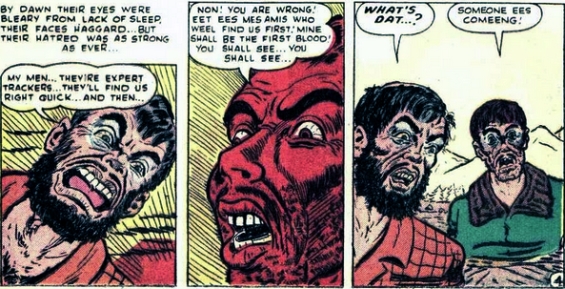
There was a 1952 comics adaptation, uncredited, entitled Help! – it appeared in Adventures Into Weird Worlds, issue 11, here’s a snippet:

Help! illustrated by Ed Winiarski

Posted by Jesse Willis

Moonlight Audio Theatre

SFFaudio Online Audio

Moonlight Audio TheatreMoonlight Audio Theatre and veteran audio producer David Farquhar, are showcasing a podcast audio drama anthology consisting more than 200 programs!

I’ve subscribed and I think you’ll want to to for among the many productions you’ll find in the feed are those by Julie Hoverson (19 Nocturne Boulevard), Roger Gregg (Crazy Dog Audio Theatre), and Jack J. Ward (Electric Vicuna). The genres seem to include mystery, horror, suspense, drama, comedy, Science Fiction, and Fantasy.

Here’s a list of producers supplying shows:

Atlanta Radio Theatre Company
Brokensea Audio Productions
Campfire Radio Theatre
Crazy Dog Audio Theatre
Electric Vicuna Productions
SueMedia Productions
Bargain Basement Productions
Chatterbox Audio Theatre
Gypsy Audio
Finalrune Productions
The Great Northern Audio Theatre
Midnight Radio Theatre
19 Nocturne Boulevard
Precarious Audio Theatre
Design Sound Productions
JAWDrop Productions
Radio Static
Icebox Radio Theater
RZM Creative
The Wireless Theatre Company
Voices In The Wind Audio Theatre
Washington Audio Theatre
ZBS Media
ZPPR Productions
Faith Muskoka Productions
Darker Projects

There’s also a Blackberry App.

Podcast feed:

http://moonlightaudio.libsyn.com/rss

Posted by Jesse Willis