What You Need by Lewis Padgett (aka Henry Kuttner and C.L. Moore)

SFFaudio Online Audio

Tom Elliot’s excellent The Twilight Zone Podcast features the original short story What You Need written by Henry Kuttner and C.L. Moore under their joint pseudonym of Lewis Padgett. If you’re a fan of words and the subtleties of their many meanings you’ll enjoy this tale of a store that will only sell you only what you need.

The Twilight Zone PodcastThe Twilight Zone Podcast – What You Need
By Lewis Padgett (Henry Kuttner and C.L. Moore); Read by Tom Elliot
1 |MP3| – Approx. 37 Minutes [UNABRIDGED]
Podcaster: The Twilight Zone Podcast
Podcast: February 27, 2011
First published in the October 1945 issue of Astounding Science Fiction.

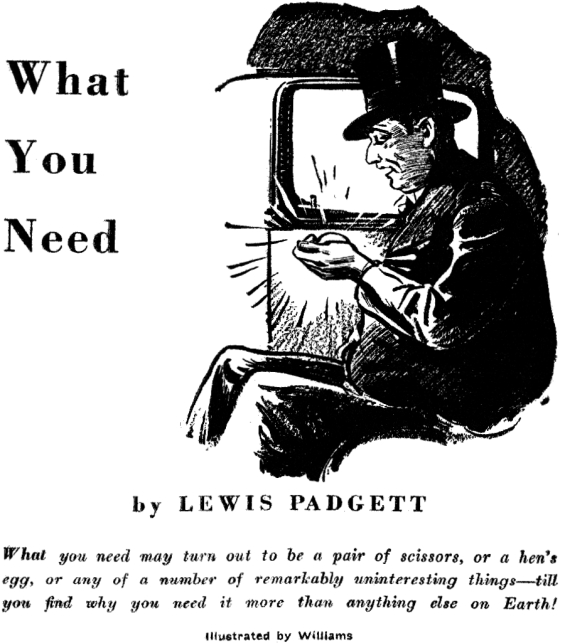
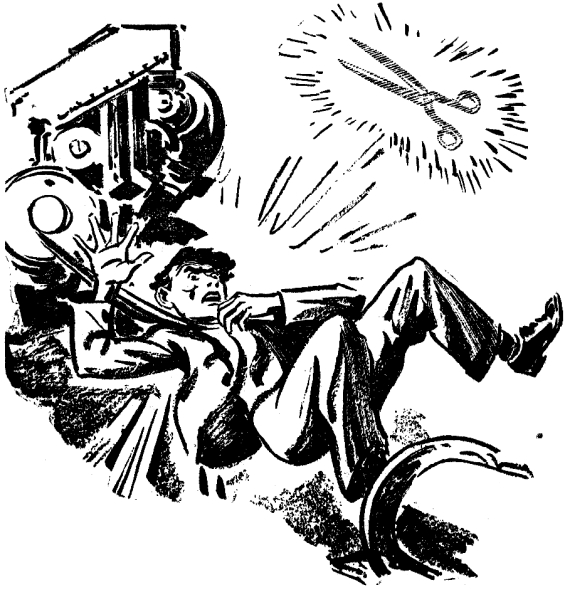
Illustrations by Williams from the original publication in Astounding:
What You Need by Lewis Padgett - illustration by Williams

What You Need has been adapted for television twice (first for Tales Of Tomorrow and later for The Twilight Zone).

While you’ll have to find The Twilight Zone episode yourself Tales From Tomorrow is PUBLIC DOMAIN and here’s the |MP4| video download. This episode originally aired live on February 8, 1952 (Season 1, Episode 19).

Cast:
Billy Redfield
Edgar Stehli

Directed by Charles S. Dubin

Posted by Jesse Willis

Arrivals from Brilliance Audio

SFFaudio Recent Arrivals

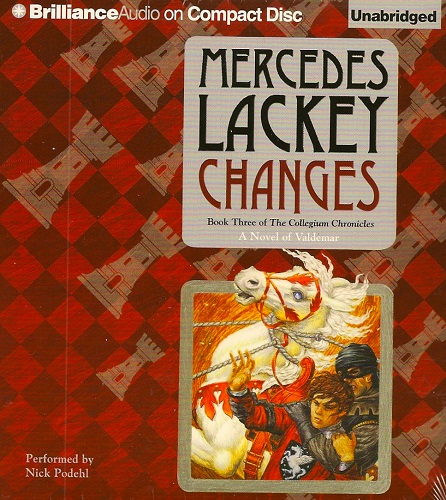
Fantasy Audiobook - Changes by Mercedes Lackey
Changes: Volume 3 of the Collegium Chronicles by Mercedes Lackey, read by Nick Podehl, 11 hours 
 
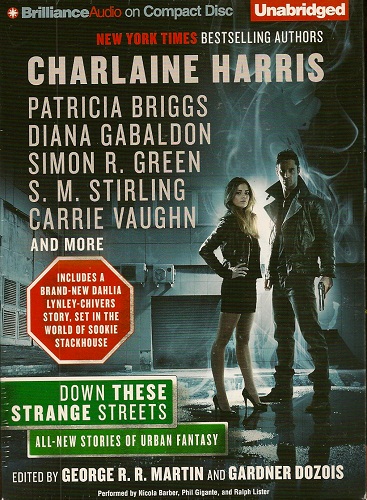
Fantasy Audiobook - Down These Strange Streets, edited by George R.R. Martin and Gardner Dozois
Down These Strange Streets, edited by George R.R. Martin and Gardner Dozois, read by Phil Gigante, Nicola Barber, and Ralph Lister, 22 hours 
 
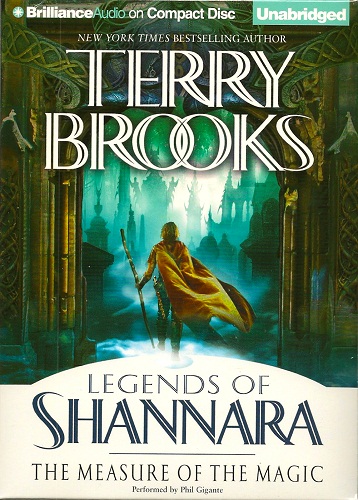
Fantasy Audiobook - Measure of the Magic by Terry Brooks
The Measure of the Magic (Legends of Shannara) by Terry Brooks, read by Phil Gigante, 14 hours 
 
Science Fiction Audiobook - Reamde by Neal Stephenson
Reamde by Neal Stephenson, read by Malcolm Hillgartner, 39 hours 
 
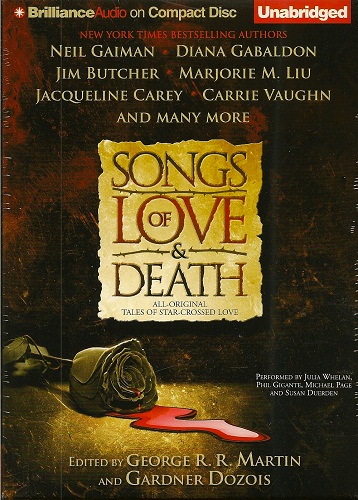
Fantasy and Science Fiction Audiobook - Songs of Love and Death edited by George R.R. Martin and Gardner Dozois
Songs of Love and Death: All-Original Tales of Star-Crossed Love, edited by George R.R. Martin and Gardner Dozois, read by Julia Whelan, Phil Gigante, Michael Page, and Susan Duerden, 20 hours 
 
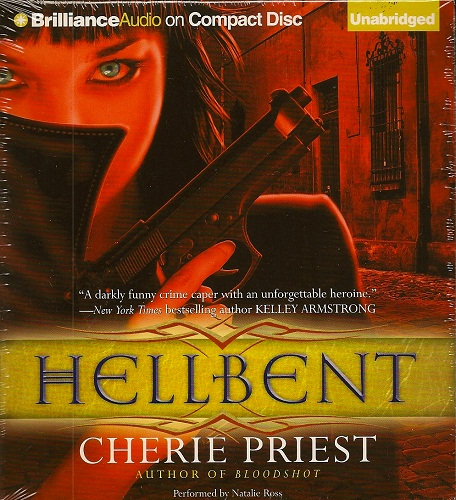
Fantasy Audiobook - Hellbent by Cherie Priest
Hellbent by Cherie Priest, read by Natalie Ross, 11 hours/a> 
 

For a live list of audiobooks received by SFFaudio, subscribe to our NewAudiobookIn Twitter feed.

Posted by Scott D. Danielson

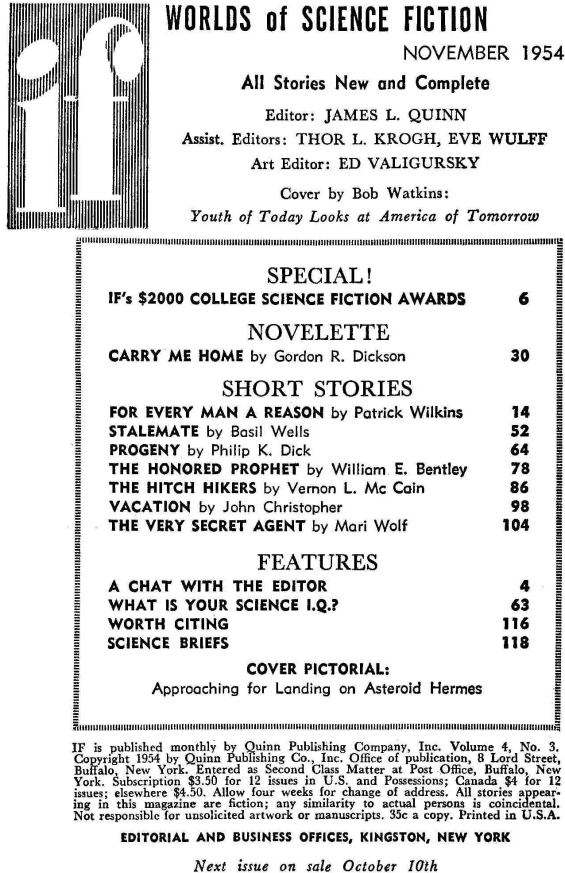
Progeny by Philip K. Dick is PUBLIC DOMAIN

SFFaudio News

I have discovered another PUBLIC DOMAIN Philip K. Dick story.

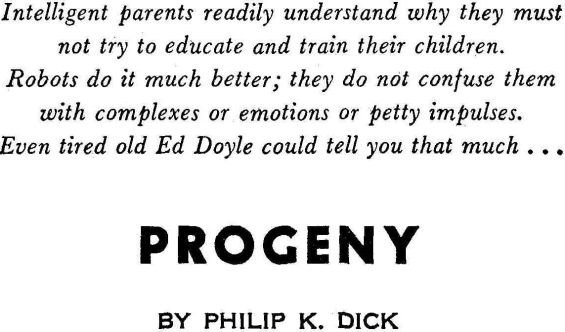
Progeny by Philip K. Dick
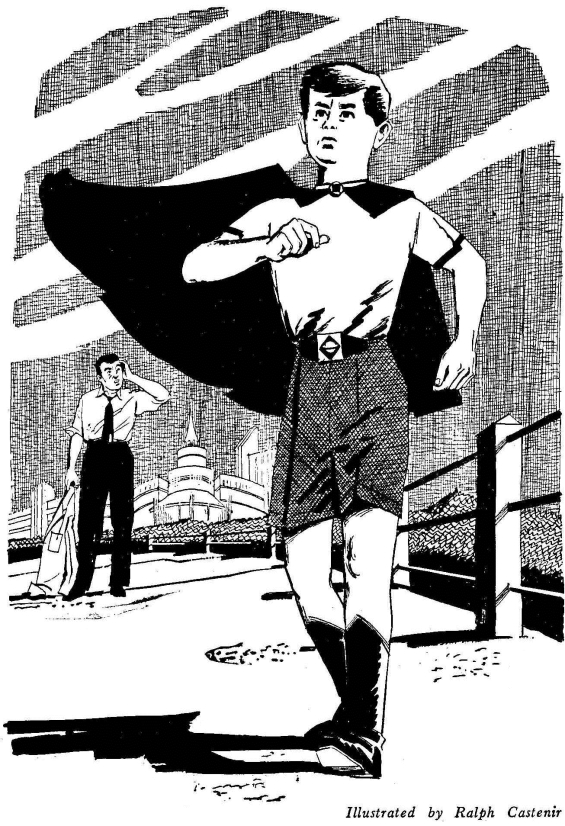
Progeny - Illustration by Ralph Castenir

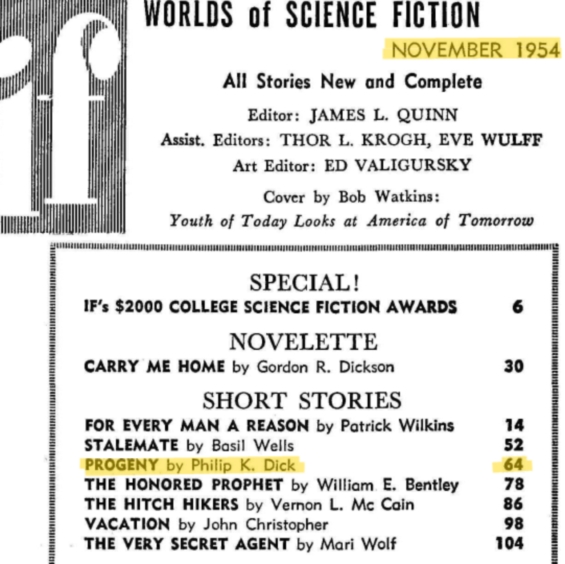
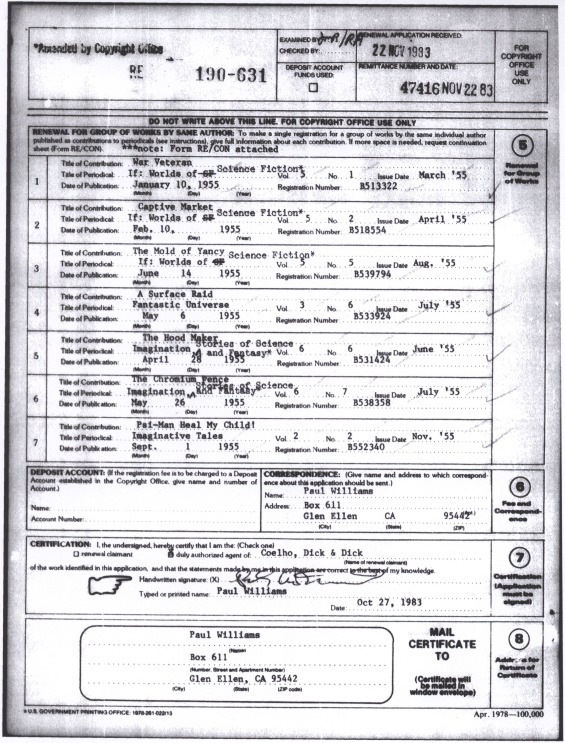
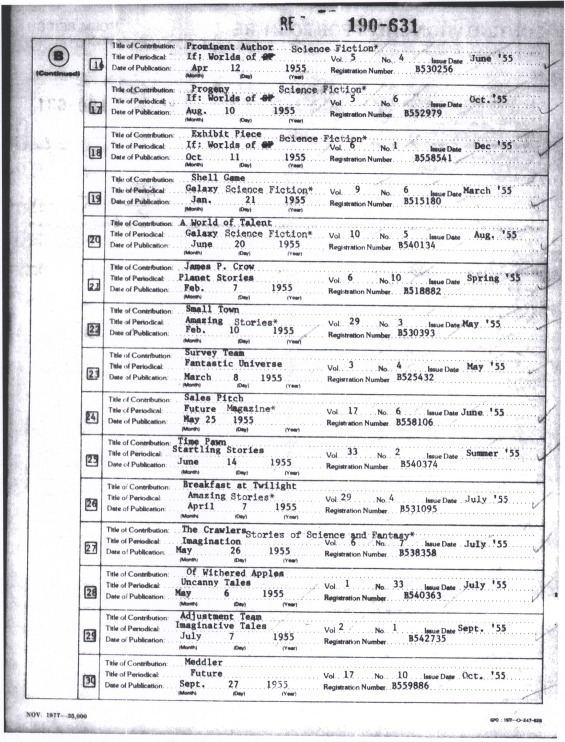
Progeny, which was originally published in the November 1954 issue of If: Worlds Of Science Fiction (volume 4, number 3), was falsely renewed. The false renewal was states that Progeny was published in the October 1955 issue of If: Worlds Of Science Fiction (volume 5, number 6). This is false. The story was not in that issue.

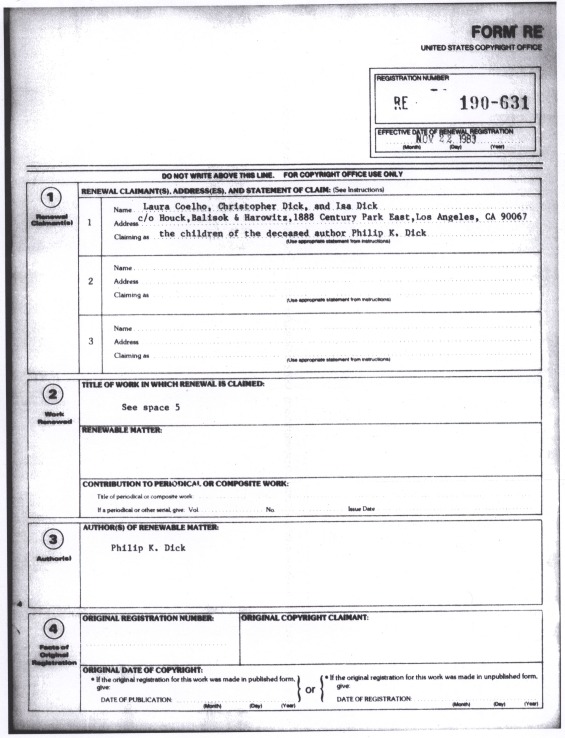
In order for a copyright to be renewed United States law at the time required that a copyrighted work be renewed within the 28th year following the original publication. This did not happen. The renewal form, RE190631, was dated November 22, 1983. This puts the true first publication of Progeny in If: Worlds Of Science Fiction 29 years prior to renewal’s application. Therefore the copyright protection on Progeny was not properly renewed and the story is PUBLIC DOMAIN.

Here’s the proof:

1. The copyright and table of contents page for Worlds Of If, November 1954 (volume 4, number 3) is HERE, and it clearly shows Progeny as beginning on page 64.
2. The copyright and table of contents page for Worlds Of If, October 1955 (volume 5, number 6) is HERE, notice the complete absence of any Philip K. Dick story in that issue.
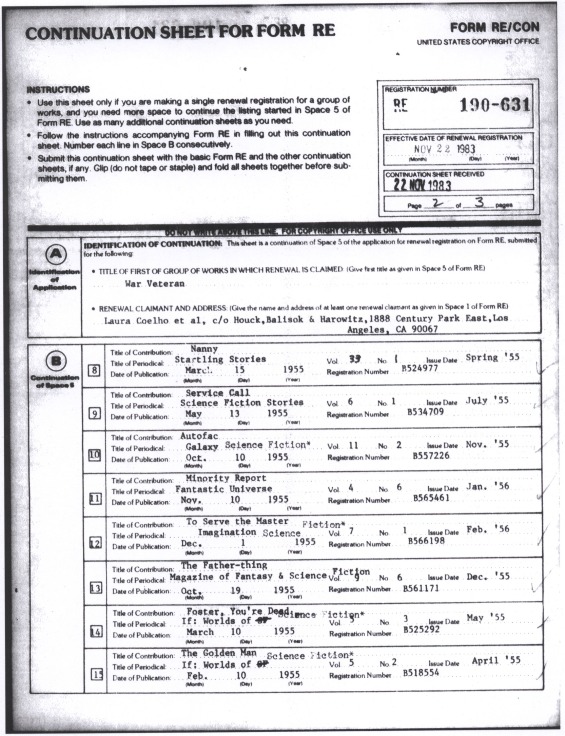
3. HERE is a scan of the copyright renewal form, with the falsified entry for Progeny.
4. Neither magazine title, If or If: Worlds Of Science Fiction for (volume 4, number 3), were ever renewed so any blanket copyright protection for that issue as a whole is also out.

False copyright renewal entry for Progeny by Philip K. Dick

True first publication of Progeny by Philip K. Dick

Here’s the evidence:

RE190631 Page 1 (front):
RE190631 Page 1 (front)

RE190631 Page 1 (back):
RE190631 Page 1 (back)

RE190631 Page 2 (front):
RE190631 Page 2 (front) - Nanny, Service Call, Autofac, Minority Report, To Serve The Master, The Father Thing, Foster, You're Dead, The Golden Man

RE190631 Page 2 (back) this is the page with Progeny:
RE190631 Page 2 (back) Prominent Author, Progeny, Exhibit Piece, Shell Game, A World Of Talent, James P. Crow, Small Town, Survey Team, Sales Pitch, Time Pawn, Breakfast At Twilight, The Crawlers, Of Withered Apples, Adjustment Team, Meddler

RE190631 Page 3 (front):
RE190631 Page 3 (front) Souvenir, The Last Of The Masters, Upon The Dull Earth, Strange Eden, Jon's World, The Turning Wheel, Human Is

RE190631 Page 3 (back):
RE190631 Page 3 (back)

Posted by Jesse Willis

The SFFaudio Podcast #135 – NEW RELEASES/RECENT ARRIVALS

Podcast

The SFFaudio PodcastThe SFFaudio Podcast #135 – Scott, Jesse, Tamahome, and Jenny talk about recently arrived audiobooks, new releases and more.

Talked about on today’s show:
The Year’s Top Short SF Novels edited by Allan Kaster, including “Return to Titan” by Stephen Baxter (set in the Xeelee Sequence), “Jackie’s-Boy” by Steven Popkes, “The Sultan of the Clouds” by Geoffrey A. Landis, “Seven Cities of Gold” by David Moles, “A History of Terraforming” by Robert Reed, “Several Items of Interest” by Rick Wilber, and “Troika” by Alastair Reynolds.  Two were finalists for the Hugo Award this year.  The Seven Cities of Gold is also a video game!

Immortality, Inc. by Robert Sheckley, narrated by the amazing Bronson Pinchot. Originally published serially as “Time Killer” in Galaxy Science Fiction (1960).  Jesse wants to do this as a readalong, but Jenny wants something newer than 1960.

Earth Strike: Star Carrier, Book One by Ian Douglas.  Tamahome is a sucker for space, and this is the first of two books that are available in Audible.  Scott doesn’t care much for military sci-fi, but didn’t mind Starship Troopers, Ender’s Game, and Forever Peace.  What matter is the focus – Scott is looking for a good story, which is hard to find.  “Too much science?” Deep Space Nine.  “Not all Muslims are fanatic, lieutenant…” Is it too politically correct?  Tamahome is a sucker for women who kick ass too, this is right up his alley!

1Q84 by Haruki Murakami, also Sputnik Sweetheart, The Wind-up Bird Chronicle, A Wild Sheep Chase, What I Talk About When I Talk About Running, After Dark.  46 hour commitment for the audio book, originally published as three separate volumes.  Jenny can’t stop reading it!  Aomame = “green peas.”  Publisher says it is a love story, a mystery, a fantasy, a novel of self-discovery, and a dystopia to rival George Orwell.  Tamahome heard that Q sounds like “nine” in Japanese.  Don’t read too much Murakami in a row! Look for cats and spaghetti.

Five books by Philip K. Dick from Brilliance Audio – The Divine InvasionNow Wait for Last Year, The Transmigration of Timothy Archer, The Simulacra, and Lies, Inc.  More details in Dick’s newly published journal, Exegesis. Reading about authors vs. just reading their work.  East of Eden on A Good Story is Hard to Find and Steinbeck’s novel journal.  Jesse relates more to life in the suburbs. Rewrite of “The Unteleported Man.”  Gregg Margarite discussed Exegesis on his podcast – “a lot of work to slog through.”

Lots of collections from Brilliance Audio – Wild Cards edited by George R. R. Martin, Wild Cards II: Aces High edited by George R. R. Martin, Songs of Love and Death edited by George R. R. Martin, and Down These Strange Streets edited by George R. R. Martin and Gardner Dozois. We complained about lack of contents and Brilliance has started including them – thank you!  Up next – contents printed on specific discs. George R. R. Martin is spending his time on anthologies because he is not your bitch!  Warriors anthology is cross-genre. Someone should make an audio book of Best of the Best edited by Gardner Dozois.  Tamahome likes “Trinity” by Nancy Kress, but the print in the book is too tiny for anyone over 40.

Manhattan in Reverse by Peter F. Hamilton. Only available outside of the United States, queue proprietary publisher rant by the SFF Audio crew, in fact Jenny posted a sassy one in her blog. Ed McBain’s 87th Precinct detective novels and a reimagined New York City.  Robert E. Howard does a similar thing with countries.  Perfectly genetically engineered female cops (Paula Myo from the Commonwealth Saga) end up with personal problems.

Two picks for post-apocalypse fans – Swan Song by Robert McCammon and A Canticle for Leibowitz by Walter M. Miller, Jr.  Swan Song is highly rated.  Boy’s Life by Robert McCammon has been recommended to Scott multiple times.  Swan Song reminds Jenny of The Stand with a promise of fantastical elements. Destiny’s Road also comes out December 1.  Death and destruction ends in rejoicing!

Angry Robot and Brilliance Audio have published seven novels that Scott previously posted aboutDarkness Falling by Peter Crowther, Debris by Jo Anderton, Moxyland by Lauren Beukes, Reality 36 by Guy Haley, Roll: The Nightbound Land by Troy Jamieson, Triumff: Her Majesty’s Hero by Dan Abnett, and Zoo City by Lauren Beukes. Jenny heard Lauren Beukes on Writing Excuses, and Tamahome heard she won the Arthur C. Clarke Award for Zoo City. Reality 36 has a pie fetish? Oh PI fetish. Tamahome likes cyberspace but not LARPing, John Anealio wrote an Angry Robot Theme song, What is wild magic? Maybe quail.  Angry Robot is doing interesting stuff, also won the World Fantasy Award for professionals in the field this year, and they are doing eBooks the right way.

The Cold Commands by Richard K. Morgan. Jesse will read books out of spite. “Dude! Your homophobia is calling.” “It’s fiction, not you!” From Tamahome’s second tier – Nothing to Lose: The Adventures of Captain Nothing by Steve Vernon.  Some confusion which should be cleared up when it is released.  Something may have been lost in the translation from the Nova Scotian. Might be like Dark Knight, except for actually being a bad guy.  Batman finding his voice, Batman vs. the Clown. The Folded World by Catherynne M. Valente (A Dirge for Prester John #2) – “she writes with the original unicorns.”  “That’s probably because she doesn’t actually have a head.” The Minotaur Takes a Cigarette Break by Steven Sherill.  One of the Neil Gaiman Presents titles.  “The Minotaur sits on an empty pickle bucket….” Anything like American Gods? Realistic restaurant world portrayal. All Clear by Connie Willis, half of this year’s Hugo Award.  Pavane by Keith Roberts is another Neil Gaiman Presents title.  Alternate history and steampunk?  Other novels of loosely related stories – Kirinyaga by Mike Resnick, Accelerando by Charles Stross, Voyage of the Space Beagle by A. E. van Gogt. Light by M. John Harrison – Tamahome finds it to be “unpleasant” between the masturbating and the killing.  Why is this one of Neil Gaiman’s top novels of the last 10 years?  Reinvention of space opera, but the end result is hard to take.  Stephen King’s newest – 11-22-63Ring by Stephen Baxter (from the Xeelee Sequence), Baxter even explains why aliens don’t visit in his Manifold Trilogy, which is based on the Fermi paradox. “That’s it!  Go to your rooms!”  “Everybody out of the pool!” Digital vs. disc, subscription vs. individual purchase, Audible.com sale, Black Friday and Cyber Monday – we are ready for holiday gift giving!  Evacuation Day instead of Thanksgiving. Fountains of Paradise by Arthur C. Clarke, Jo Walton’s Revisiting The Hugos, the SF Masterworks series (from the U.K.), Jenny’s Around The World bookshelf

From Stephen Baxter’s Ring:

Lieserl was suspended inside the body of the Sun.

She spread her arms wide and lifted up her face. She was deep within the Sun’s convective zone, the broad mantle of turbulent material beneath the growing photosphere. Convective cells larger than the Earth, tangled with ropes of magnetic flux, filled the world around her with a complex, dynamic, three-dimensional tapestry. She could hear the roar of the great gas founts, smell the stale photons diffusing out toward space from the remote core.

Posted by Jenny Colvin
The Adjustment Bureau’s cheaper better cousin (a 2002 Twilight Zone adaptation of Philip K. Dick’s Adjustment Team)

SFFaudio News

After listening to the recently re-released public domain audiobook of Adjustment Team (or the Brilliance Audio audiobook |READ OUR REVIEW|), you’re probably looking forward to watching the well advertized film adaptation entitled The Adjustment Bureau.

Here’s what I wrote about the trailer back in April:

The Adjustment Bureau movie trailer: Powerful, handsome bachelor boy meets cute girl -> handsome boy loses beautiful girl -> handsome boy is chased by powerfully fedoraed men -> handsome gets beautiful back again.

Now, after having seen the film I can say it is exactly like a longer version of the trailer.

The Adjustment Bureau is a competently written romance. But as such it is neither toned nor focused like any Dick story you’ve read.

In their recently filed lawsuit the lawyers for the Philip K. Dick Testamentary Trust got one thing right. They said this:

“[the filmmakers] took every opportunity to exploit the valuable imprimatur of … the Dick name … they did everything they could to capitalize on the fame, the cachet, the brand of being BASED UPON A STORY BY PHILIP K. DICK.

The estate seemed happy to have the Dick name on there, however diluted its “brand” should become, but only so long as they get to “hoard any and all monies” they think they’re owed. But this post isn’t about that, not directly. This post is about stories, and why ideas matter in stories.

Nearly every element of Adjustment Team‘s plot has been dispensed with in the film. Gone are the talking dog and the “friend with a car.” In are a MAGICAL NEGRO in the form of a dozing black man (replacing the dozing dog), a MEET CUTE ballerina girlfriend and an off the cuff why-can’t-they-do-that-in-real-life political speech that’s also an old trope (called THROWING OUT THE SCRIPT). Also gone are the questions such a world as Ed Fletcher has discovered he lives in would mean to you an me. I came away from Adjustment Team thinking metaphyscial, seeing the idea that Dick was working through, seeing how I’d thought similar ideas, and why my ideas were wrong. I came away from The Adjustment Bureau needing to pee and no wiser than I went in.

The Adjustment Bureau is a fine Hollywood date movie, and it bares almost no resemblance to any Philip K. Dick story you’ll ever read.

I’ll give it this, the film is very competently put together – it’s a by the numbers Hollywood romance with a snappy chase sequence sandwiched between some quasi-fantasy/religious elements. And several fine actors got paid to show up and Carthage must be destroyed.

But the story, Adjustment Team, while only a minor work (just 18 pages). is a paranoid think piece in a suburban setting.

So what are you to do if you’re looking for a more genuine adaptation?

I recommend you check out The Twilight Zone (2002), which has a better, cheaper adaptation of the same story. They’ve called it Gabe’s Story.

The script for Gabe’s Story is credited to Dusty Kay (not PKD) but many of the Dick story elements are in there. Plus the episode is just the right length (22 minutes) to get in with the idea, pose some interesting questions, and let you move on. and in case you’re curious, it’s also got the poor married shlub (with a wife who thinks he’s crazy) a black man in the back yard (not dozing this time) and a trip downtown to an unusual office building. By dispensing with all the romance it gives you the chance to think about what Dick was aiming at, namely what it would all mean if the world was really run from the top down and not the bottom up.

Posted by Jesse Willis

RadioArchive.cc: The Last Days Of Shandakor by Leigh Brackett

SFFaudio Online Audio

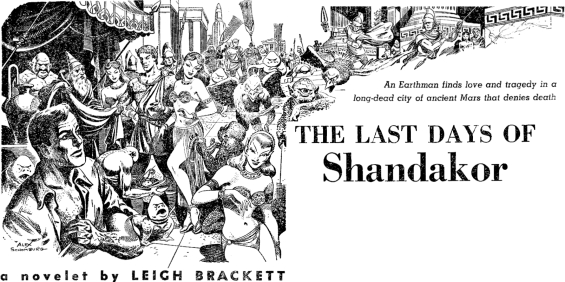
The Last Days Of Shandakor by Leigh Brackett (illustration by Alex Schomburg)

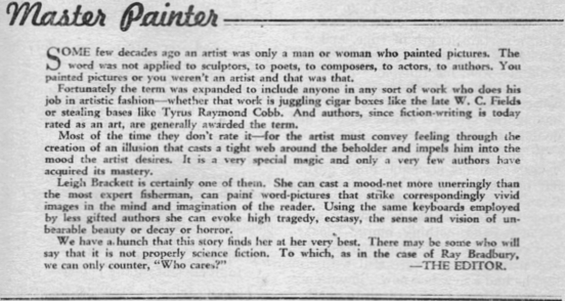
I’ve posted about this story before. But I was provoked to point to it again after discovering Alex Schomburg‘s wonderful interior art illustration, above, and the editorial about it, probably written by Samuel Mines, below.

Leigh Brackett - Master Painter

MASTER PAINTER:
SOME few decades ago an artist was only a man or woman who painted pictures. The word was not applied to sculptors, to poets, to composers, to actors or to authors. You painted pictures or you weren’t an artist and that was that.

Fortunately the term was expanded to include anyone in any sort of work who dies his job an artistic fashion – whether that work is juggling cigar boxes like the late W.C. Fields or stealing based like Tyrus Raymond Cobb. And authors, since fiction-writing is today rated as an art, are generally awarded the term.

Most of the time they don’t rate it – for the artist must convey feeling through the creation of an illusion that casts a tight web around the beholder and impels him into the mood the artist desires. It is a very special magic and only a very few authors have acquired its mastery.

Leigh Brackett is certainly one of them. She can cast a mood-net more unerringly than the most expert fisherman, can paint word-pictures that strike correspondingly vivid images in the mind and the imagination of the reader. Using the same keyboards employed by less gifted authors she can evoke high tragedy, ecstasy, the sense and vision of unbearable beauty or decay or horror.

We have a hunch that this story finds her at her very best. There may be some who will say that it is not properly science fiction. To which, as in the case of Ray Bradbury, we can only counter, “Who cares?” – THE EDITOR

The Last Days Of ShandakorThe Last Days Of Shandakor
By Leigh Brackett; Read by Nathan Osgood
2 MP3 Files via TORRENT* – Approx. 56 Minutes [ABRIDGED]
Broadcaster: BBC 7 / 7th Dimension
Broadcast: March 2007
An epic space adventure written in which Mars is portrayed as a dying planet where desperate Earthmen compete with the last Martians and other alien races for lost knowledge and hidden power. First published in April 1952 issue of Startling Stories.

*Available through the number one source for publicly funded radio drama on the internet, RadioArchive.cc.

Posted by Jesse Willis