The SFFaudio Podcast #118 – READALONG: Upon The Dull Earth by Philip K. Dick

Podcast

The SFFaudio PodcastThe SFFaudio Podcast #118 – Scott, Jesse and Tamahome talk about Philip K. Dick’s wonderful novelette Upon The Dull Earth (available in Blackstone Audio’s The Selected Stories Of Philip K. Dick Volume 2)

Talked about on today’s show:
Beyond Fantasy Fiction, the prolific Philip K. Dick, Galaxy Magazine, H.L. Gold, is Upon The Dull Earth Fantasy or Science Fiction, suburban romance?, rural romance, Jesse loves the setting, cedars, angels, The Odyssey, On Stranger Tides by Tim Powers, Jesse’s terrible Philip K. Dick impersonation, a wooden faucet?, a one way ladder to another plane, using your coffin as a cocoon, “Rick, I cut myself.”, Rick is responsible for her death, is Rick in hell?, Silvia is a sick chick, shortly after Silvia’s incineration, blood from a New Jersey abattoir, Upon The Dull Earth would be perfect for the A Good Story Is Hard To Find podcast, God has moved on up, HE is capitalized, she’s Fantasy, he’s Science Fiction, she’s elf-like, he’s machine-like, iron and spirits don’t mix, ridding one’s self of civilization, Inferno by Larry Niven and Jerry Pournelle |READ OUR REVIEW|, uisge beatha mean “the water of life” (or whisky), is Silvia depressed?, YA, valkyries, insects, The Hanging Man had insects too, witch vs. saint, remember Prometheus and the fire?, ripples from the event, kraals of white skinned young women, is this all going on in Rick’s head, Rick picks up a hitchhiker to use him as a guinea pig, “you’re crowding me man”, going into the underworld to get back your dead girlfriend, when someone dies you mourn your loss, Plato (and Aristophanes’) story about the mythological division of male from female (The Symposium), “we were meant to be together”, “you complete me” and similar cliches, what happens at the end?, Fair Game by Philip K. Dick, Philip K. Dick stories often have a roadside cafe scene and a gas station scene, “like the doves in a John Woo movie”, where does the title of Upon The Dull Earth come from?, she was merely playing at death, disturbed spirits thirsty for blood, the natural of order of things has been violated, William Shakespeare’s The Two Gentlemen of Verona (Act 4, Scene 2, the character name Sylvia comes from the play, but sylvan means “of the wood”, is she a fairy?, HBO’s True Blood, Icarus, the Wikipedia entry for Upon The Dull Earth, the many mentions of clay, Wonder Woman came from clay, Batman: False Faces by Brian K. Vaughn, J. Michael Straczynski, the Golem, Ted Chiang’s Seventy-Two Letters, The Adventures Of Cavalier And Clay by Michael Chabon, capricious (adj.) Given to sudden and unaccountable changes of mood or behavior, religion, Steven H Silver’s review of Seventy-Two Letters (and Stories Of Your Life And Other Stories), FREE TED CHIANG!, Saint Bernadette, Philip K. Dick really cares about the way the story is told, we never see inside a character’s mind, the authorial view, is Dick popular in for movies for this reason?, it’s grotesque!, she filled the Silex, “We’re all going to have wings!”, “We won’t be worms anymore”, Silvia’s looking for an abusive relationship, Blackstone Audio, the audiobook, Upon The Dull Earth is best read aloud, Tama didn’t know how fantastical Dick was, The Twilight Zone, The Outer Limits, its a Noir Horror Science Fiction Fantasy story, anime, Berserk, Project A-Ko, Princess Mononoke, I only understand Japanese movies made by Akira Kurosawa, Rashomon, The Seven Samurai, “I can barely understand the people wearing a Storm Trooper costumes”, Jesse needs some accessible anime, Spirited Away, what are the background assumptions in anime, Cowboy Beebop intro, Luke’s review of Solaris on SFBRP, Erik S. Rabkin, Just Imagine is a crazy musical with plenty of background assumptions (like prohibition), Hey Want To Watch A Movie? podcast, is there an MST3K podcast?, Tam was thinking of the non-podcast Rifftrax.com, readalong vs. watchalong, The Thing, The Thing From Another World, The Thing (2011), Captain America: The First Avenger, The Amazing Spider-Man, comic books vs. Hollywood, The Avengers will be written and directed by Joss Whedon, swastikas are banned in Germany, it’s a case of it’s time to end the podcast.
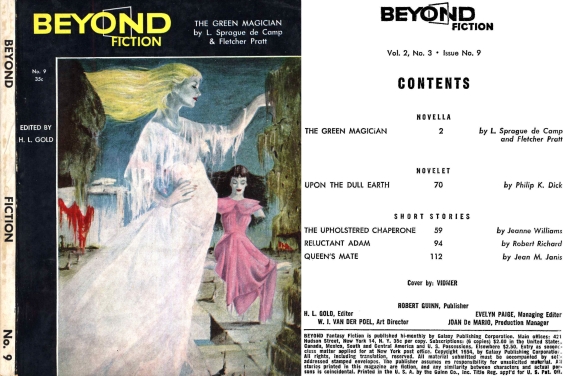
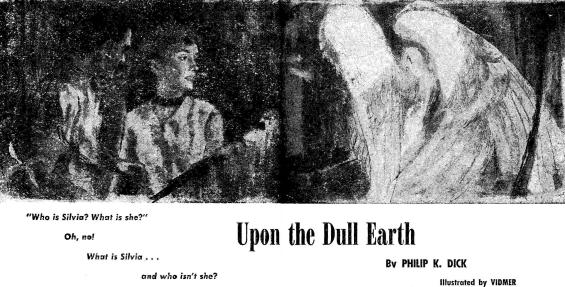
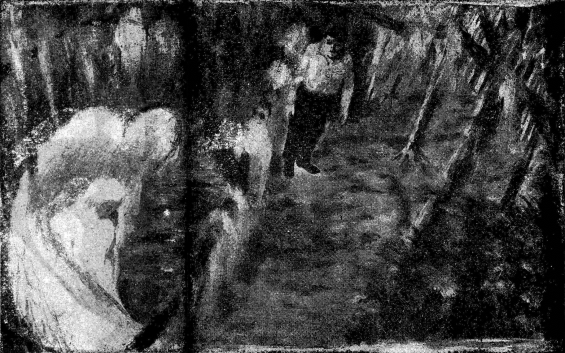
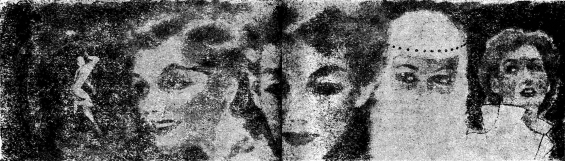
Upon The Dull Earth by Philip K. Dick - BEYOND FANTASY FICTION #9 (November 1954) illustrations by Rene Vidmer

Upon The Dull Earth by Philip K. Dick - BEYOND FANTASY FICTION #9 (November 1954) illustrations by Rene Vidmer

Upon The Dull Earth by Philip K. Dick - BEYOND FANTASY FICTION #9 (November 1954) illustrations by Rene Vidmer

Upon The Dull Earth by Philip K. Dick - BEYOND FANTASY FICTION #9 (November 1954) illustrations by Rene Vidmer

Posted by Jesse Willis
Review of Red Glove by Holly Black

SFFaudio Review

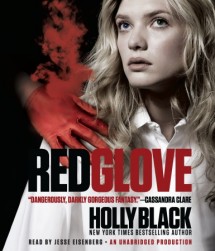
Fantasy Audiobook - Red Glove by Holly BlackRed Glove: The Curse Workers, Book 2
By Holly Black; Read by Jesse Eisenberg
7 Hours, 5 Minutes – [UNABRIDGED]
Publisher: Listening Library
Published: 2011
Themes: / Fantasy / Urban Fantasy / Con men / Curses / Magic / Boarding school /

A review by Julie D.

Red Glove is the second book in Holly Black’s Curse Workers series, the first of which was White Cat. |SFFaudio Review|

As the book begins, we get more of a feel for the insecure world in which Cassel grew up. It is the end of summer vacation and he’s living with his mother in Atlantic City, drifting from hotel to hotel, helping her con a series of wealthy gentleman friends for support. It is an anxiety-filled existence, with the potential for exploding violence at any moment.

When his senior year at boarding school begins, Cassel is glad to reenter the familiar environment. That is derailed when Lila, the girl he loves but must avoid, begins school there as well. Inevitably, it seems, she becomes one of his circle of friends and the angst of seeing the girl he cannot have is constantly on his mind.

Just a few days into the school year, Cassel’s oldest brother is murdered and the Feds try to recruit him to help solve that case and investigate a possibly related string of unsolved murders. The only clue is video footage of a woman wearing red gloves but whose face cannot be seen. They also want Cassel to become an informant on the Zacharov crime family, with which his own family has long been aligned. Complicating matters, the Zacharov’s also want to recruit Cassel to use his transformation powers on their behalf. As if that weren’t pressure enough, the state government is heightening efforts to test everyone to identify curse workers.

As Cassel attempts to untangle the web of lies in which he finds himself, he must resort to a big con to both discover the truth and solve his problems about who he will work with. Naturally this is great fun and there are many plot twists and cliff-hangers along the way in the story which make it somewhat addictive listening. Only the final twist of the book was fairly predictable. However, it is fairly unimportant to the book overall as it serves to act as the bridge to carry the reader forward into the next book of the series.

Red Glove conveys more of the feel of Cassel’s age since much of the action takes place around classes or with school pals. However, as in White Cat, the key issues are still those of trust, betrayal, friendship, identity, truth, and true love, all on a higher level than the ordinary book set among this age group.

As in the first book, Cassel walks a tightrope between right and wrong in his world of gray ethics. However, the fact that he now has some close friends allows us to see him opening up to others and extending himself in their time of need. He will use his con skills when needed but is taking increasing chances by telling the truth to those around him. This allows for personal growth that makes his choices harder much of the time, but which we can see slowly building to a way out of the crime-filled, worker world he has always inhabited.

Black does us the great favor of not worrying much about back story or lengthy flashbacks. She will add a sentence or two when the stories overlap to be sure the reader is oriented and then moves on. This kept the story moving at a fairly brisk pace, although it did bog down a bit in the middle when Cassel goes hunting for who set up a particular murder victim.

As before, Jesse Eisenberg narrated the book with great skill, conveying Cassel’s emotions as the awkward high school senior longing for normalcy. Usually he would simply alter his voice a bit to portray other characters but occasionally would use accents to great effect, as in his portrayal of the head of the Zacharov family.

Red Glove is not as fresh and sparkling as White Cat, but it is a worthy successor. I definitely enjoyed it and am considering getting the print version for rereading. Recommended.

Posted by Julie D.

Recent Arrvials: William Browning Spencer, Harry Dolan, PLUS 10 MORE

SFFaudio Recent Arrivals

Mentioned on the last SFFaudio Podcast…

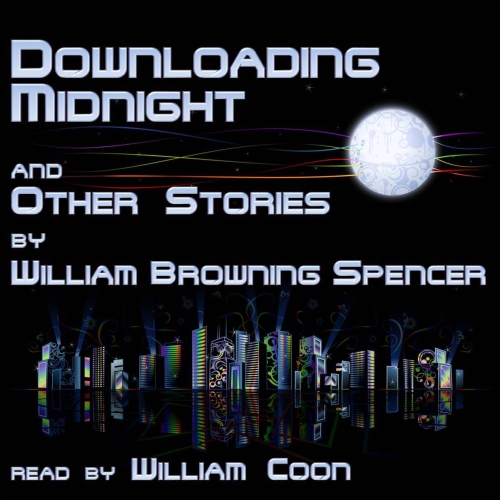
ELOQUENT VOICE - Downloading Midnight And Other Stories by William Browning SpencerDownloading Midnight And Other Stories
By William Browning Spencer; Read by William Coon
Download – Approx. 2 Hours 31 Minutes [UNABRIDGED]
Publisher: Eloquent Voice
Published: June 30, 2011
ISBN: 9780983089858
Fifteen years ago, when an interviewer for The Austin American-Statesman asked what it takes to be a writer, William Browning Spencer said, ‘You have to be willing to ruin the rest of your life.’ Mr. Spencer notes that the willingness is more important than the actual result, and that his life is not in ruins. But he does believe that risk-taking is part of the process, not only for the author but for his characters. This is certainly the case for the characters in this collection of stories. There are people in peril here (a therapist, a wife and daughter, a friend) and there are those who would save them by venturing into the unknown. In ‘The Halfway House At The Heart Of Darkness’ a virtual reality addictions counselor is on the run with his zoned-out client, pursued by the relentless architects of a seductive virtual game called Apes and Angels. In ‘The Oddskeeper’s Daughter’ a marriage made in a heaven of parallel worlds is tested by impossible luck, both good and bad. In ‘Downloading Midnight’ a computer technician must make a dangerous journey into virtual reality in an attempt to save his colleague and prevent the entire web from collapsing. Join us for a mind-bending tour through the imagination of William Browning Spencer.

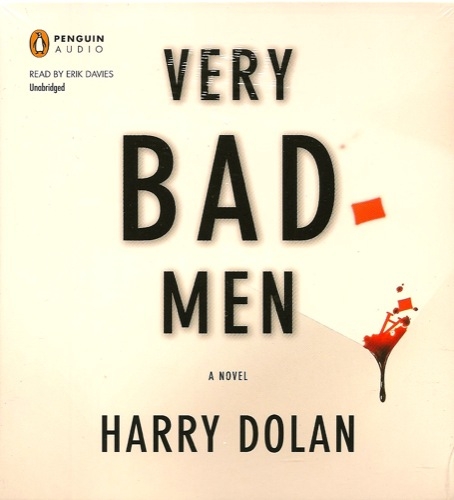
PENGUIN AUDIO - Very Bad Men by Harry DolanVery Bad Men
By Harry Dolan; Read Erik Davies
12 CDs – Approx. 15.5 Hours [UNABRIDGED]
Publisher: Penguin Audio
Published: July 7, 2011
ISBN: 9780142429372
David Loogan returns! Loogan is living in Ann Arbor with Detective Elizabeth Waishkey and her daughter, Sarah. He’s settled into a quiet routine as editor of the mystery magazine Gray Streets-until one day he finds a manuscript outside his door. It begins: “I killed Henry Kormoran.” Anthony Lark has a list of names-Terry Dawtrey, Sutton Bell, Henry Kormoran. To his eyes, the names glow red on the page. They move. They breathe. The people on the list have little in common except that seventeen years ago they were involved in a notorious robbery. And now Anthony Lark is hunting them down, and he won’t stop until every one of them is dead.

INFINIVOX - The Year's Top Ten Tales Of Science Fiction - Volume 3 edited by Allan Kaster The Year’s Top Ten Tales Of Science Fiction – Volume 3
Edited by Allan Kaster; Read by Tom Dheere, Nichola Barber, Kate Baker and Nathan Lowell
8 CDs – Approx. 8.25 Hours [UNABRIDGED]
Publisher: Infinivox
Published: July 29, 2011
ISBN: 97818846129

Table of Contents:
Under The Moon Of Venus by Damien Broderick
The Shipmaker by Alliette de Bodard
Flower, Mercy, Needle, Chain by Yoon Ha Lee
Re-Crossing The Styx by Ian R. MacLeod
Eight Miles by Sean McMullen
Elegy For A Young Elk by Hannu Rajaniemi
Alone by Robert Reed
The Emperor Of Mars by Allen M. Steele
A letter from the Emperor by Steve Rasnic Tem
The Things by Peter Watts

Here’s the back cover:

INFINIVOX - The Year's Top Ten Tales Of Science Fiction - Volume 3 - BACK COVER

Posted by Jesse Willis
The A-Men by John Trevillian

SFFaudio Online Audio

The A-Men by John TrevillianAuthor John Trevillian writes in to point out that his novel The A-Men is available as an unabridged podcast reading. Sez Trevillian:

“This is a full and unabridged audio podcast recording of the science fiction novel The A-Men by John Trevillian. Mixing dystopian future, cyberpunk and urban noir, join The Nowhereman, Sister Midnight, Pure, D’Alessandro and the 23rdxenturyboy as they fight for their lives in a dark and dangerous metropolis on the eve of its destruction.”

The sequel, The A-Men Return, is also available as both a paperbook and an ebook.

Podcast feed:

http://trevillian.libsyn.com/

Posted by Jesse Willis
Commentary: The Raven by Edgar Allan Poe

The Raven

The Raven by Edgar Allan Poe – |MP3| (read by Anne Cheng)

ONCE upon a midnight dreary, while I pondered, weak and weary,
Over many a quaint and curious volume of forgotten lore—
While I nodded, nearly napping, suddenly there came a tapping,
As of some one gently rapping, rapping at my chamber door.
“ ’Tis some visitor,” I muttered, “tapping at my chamber door—
Only this and nothing more.”

Ah, distinctly I remember it was in the bleak December,
And each separate dying ember wrought its ghost upon the floor.
Eagerly I wished the morrow;—vainly I had sought to borrow
From my books surcease of sorrow—sorrow for the lost Lenore—
For the rare and radiant maiden whom the angels name Lenore—
Nameless here for evermore.

And the silken sad uncertain rustling of each purple curtain
Thrilled me—filled me with fantastic terrors never felt before;
So that now, to still the beating of my heart, I stood repeating
“ ’Tis some visitor entreating entrance at my chamber door—
Some late visitor entreating entrance at my chamber door;
This it is and nothing more.”

Presently my soul grew stronger; hesitating then no longer,
“Sir,” said I, “or Madam, truly your forgiveness I implore;
But the fact is I was napping, and so gently you came rapping,
And so faintly you came tapping, tapping at my chamber door,
That I scarce was sure I heard you”—here I opened wide the door;—
Darkness there and nothing more.

Deep into that darkness peering, long I stood there wondering, fearing,
Doubting, dreaming dreams no mortals ever dared to dream before;
But the silence was unbroken, and the stillness gave no token,
And the only word there spoken was the whispered word, “Lenore!”
This I whispered, and an echo murmured back the word, “Lenore!”—
Merely this and nothing more.

Back into the chamber turning, all my soul within me burning,
Soon again I heard a tapping something louder than before.
“Surely,” said I, “surely that is something at my window lattice;
Let me see, then, what thereat is, and this mystery explore—
Let my heart be still a moment, and this mystery explore;—
’Tis the wind and nothing more.”

Open here I flung the shutter, when, with many a flirt and flutter,
In there stepped a stately Raven of the saintly days of yore.
Not the least obeisance made he; not a minute stopped or stayed he,
But, with mien of lord or lady, perched above my chamber door—
Perched upon a bust of Pallas just above my chamber door—
Perched, and sat, and nothing more.

Then this ebony bird beguiling my sad fancy into smiling,
By the grave and stern decorum of the countenance it wore,
“Though thy crest be shorn and shaven, thou,” I said, “art sure no craven,
Ghastly grim and ancient Raven wandering from the Nightly shore—
Tell me what thy lordly name is on the Night’s Plutonian shore!”
Quoth the Raven, “Nevermore.”

Much I marvelled this ungainly fowl to hear discourse so plainly,
Though its answer little meaning—little relevancy bore;
For we cannot help agreeing that no living human being
Ever yet was blessed with seeing bird above his chamber door—
Bird or beast upon the sculptured bust above his chamber door,
With such name as “Nevermore.”

But the Raven, sitting lonely on that placid bust, spoke only
That one word, as if his soul in that one word he did outpour.
Nothing further then he uttered; not a feather then he fluttered—
Till I scarcely more than muttered: “Other friends have flown before—
On the morrow he will leave me, as my Hopes have flown before.”
Then the bird said, “Nevermore.”

Startled at the stillness broken by reply so aptly spoken,
“Doubtless,” said I, “what it utters is its only stock and store,
Caught from some unhappy master whom unmerciful Disaster
Followed fast and followed faster till his songs one burden bore—
Till the dirges of his Hope that melancholy burden bore
Of ‘Never—nevermore.’ ”

But the Raven still beguiling all my sad soul into smiling,
Straight I wheeled a cushioned seat in front of bird and bust and door;
Then, upon the velvet sinking, I betook myself to linking
Fancy unto fancy, thinking what this ominous bird of yore—
What this grim, ungainly, ghastly, gaunt, and ominous bird of yore
Meant in croaking “Nevermore.”

This I sat engaged in guessing, but no syllable expressing
To the fowl whose fiery eyes now burned into my bosom’s core;
This and more I sat divining, with my head at ease reclining
On the cushion’s velvet lining that the lamp-light gloated o’er,
But whose velvet violet lining with the lamp-light gloating o’er
She shall press, ah, nevermore!

Then, methought, the air grew denser, perfumed from an unseen censer
Swung by Seraphim whose foot-falls tinkled on the tufted floor.
“Wretch,” I cried, “thy God hath lent thee—by these angels he hath sent thee
Respite—respite and nepenthe from thy memories of Lenore!
Quaff, oh quaff this kind nepenthe and forget this lost Lenore!”
Quoth the Raven, “Nevermore.”

“Prophet!” said I, “thing of evil!—prophet still, if bird or devil!—
Whether Tempter sent, or whether tempest tossed thee here ashore,
Desolate, yet all undaunted, on this desert land enchanted—
On this home by Horror haunted—tell me truly, I implore—
Is there—is there balm in Gilead?—tell me—tell me, I implore!”
Quoth the Raven, “Nevermore.”

“Prophet!” said I, “thing of evil!—prophet still, if bird or devil!
By that Heaven that bends above us—by that God we both adore—
Tell this soul with sorrow laden if, within the distant Aidenn,
It shall clasp a sainted maiden whom the angels name Lenore—
Clasp a rare and radiant maiden whom the angels name Lenore.”
Quoth the Raven, “Nevermore.”

“Be that word our sign of parting, bird or fiend!” I shrieked, upstarting—
“Get thee back into the tempest and the Night’s Plutonian shore!
Leave no black plume as a token of that lie thy soul hath spoken!
Leave my loneliness unbroken!—quit the bust above my door!
Take thy beak from out my heart, and take thy form from off my door!”
Quoth the Raven, “Nevermore.”

And the Raven, never flitting, still is sitting, still is sitting
On the pallid bust of Pallas just above my chamber door;
And his eyes have all the seeming of a demon’s that is dreaming,
And the lamp-light o’er him streaming throws his shadow on the floor;
And my soul from out that shadow that lies floating on the floor
Shall be lifted—nevermore

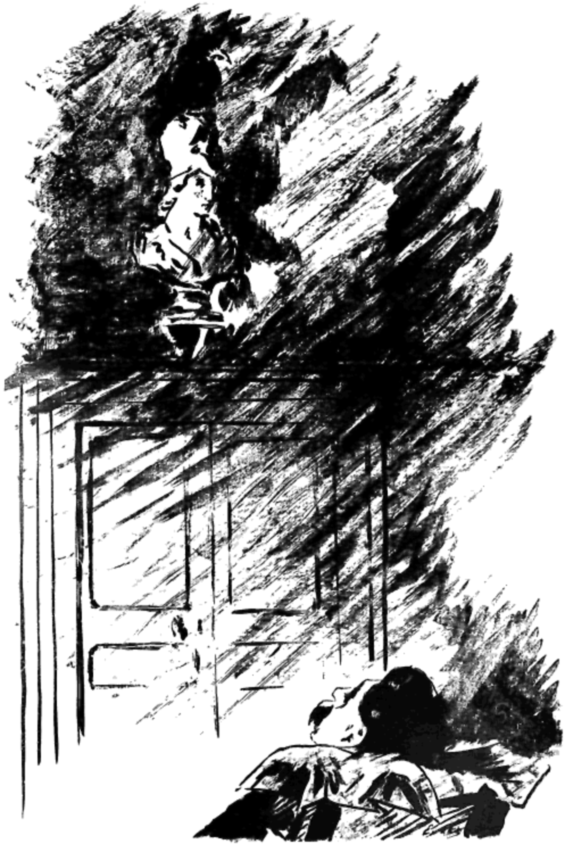
Upon The Bust Of Pallas - Edouard Manet

Edmund C. Steadman, in the introduction to Gustave Doré’s 1884 illustrated edition of The Raven, argues that while The Raven may not be Edgar Allan Poe’s best work that it is certainty “his representative poem” in part because it deals with his major theme: “the irretrievable loss of an idolized and beautiful woman.” And to my ears it certainly is a “treasure of mankind.” But, because of its length and accessibility, I think it is capable of being appreciated by even the roughest of barbarian hearts.

And why is that?

I’d suggest that the supernatural element, or the ambiguity of such, helps a lot. Ghosts, gods and demons are easy entry points.

Think of it as a more palatable forerunner to paranormal romance. Perhaps this kind of literature is best called “Dark Romanticism.”

From Wikipedia:

Dark Romanticism (often conflated with Gothicism or called American Romanticism) is a literary subgenre. It has been suggested that Dark Romantics present individuals as prone to sin and self-destruction, not as inherently possessing divinity and wisdom. G.R. Thompson describes this disagreement, stating “the Dark Romantics adapted images of anthropomorphized evil in the form of Satan, devils, ghosts, werewolves, vampires, and ghouls.” For these Dark Romantics, the natural world is dark, decaying, and mysterious; when it does reveal truth to man, its revelations are evil and hellish.

Now dark romanticism may just sound like a more literary description of paranormal romance, minus the mention of a myriad of tattoos, but its authors tackled tough subjects like the pointlessness of a loveless existence in a world without an afterlife. In a way that’s an inversion of paranormal romance.

So on that happy note, and bearing in mind the generally accepted saw that “Life is stranger than fiction”, my question for your barbarian heart is slightly different:

Is real life more horrific than fiction?

Poe’s answer in The Raven, I think, is that it is and by a wide margin.

I’m fairly confident that a wholly naturalistic interpretation of why The Raven quoth “nevermore” can be found in the lines (62-65):

“Doubtless,” said I, “what it utters is its only stock and store,
Caught from some unhappy master, whom unmerciful Disaster
Followed fast and followed faster till his songs one burden bore—
Till the dirges of his Hope the melancholy burden bore

And if it is true that the titular raven is not supernaturally prophetic, and its speech no more than mere mimicry, is the message it brings to the unnamed narrator at all lessened by a naturalistic interpretation?

I thought not.

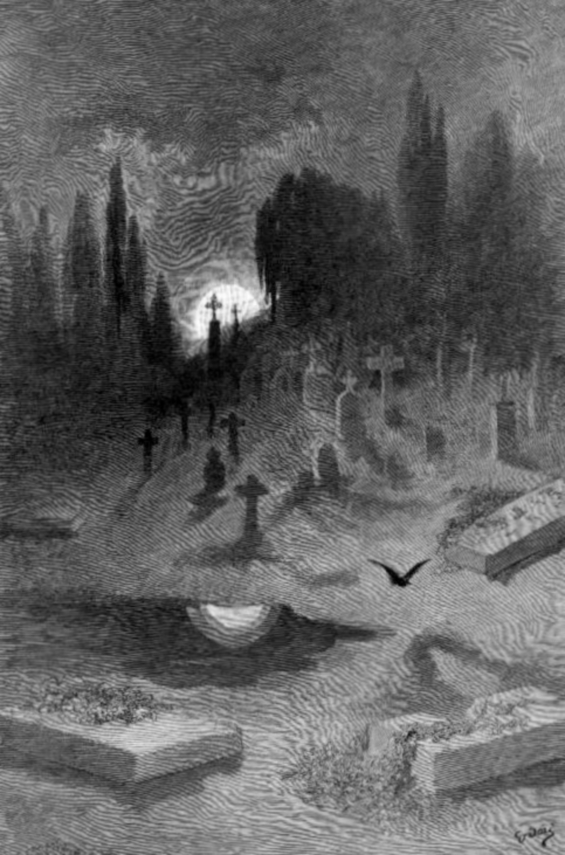
Plutonian Shore - GUSTAVE DORÉ

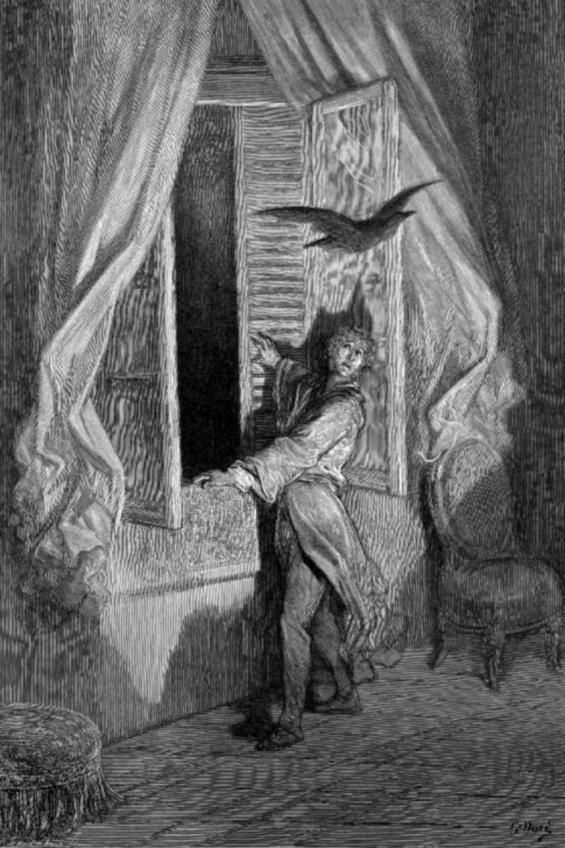
A Stately Raven Of The Saintly Days Of  Yore - GUSTAVE DORÉ

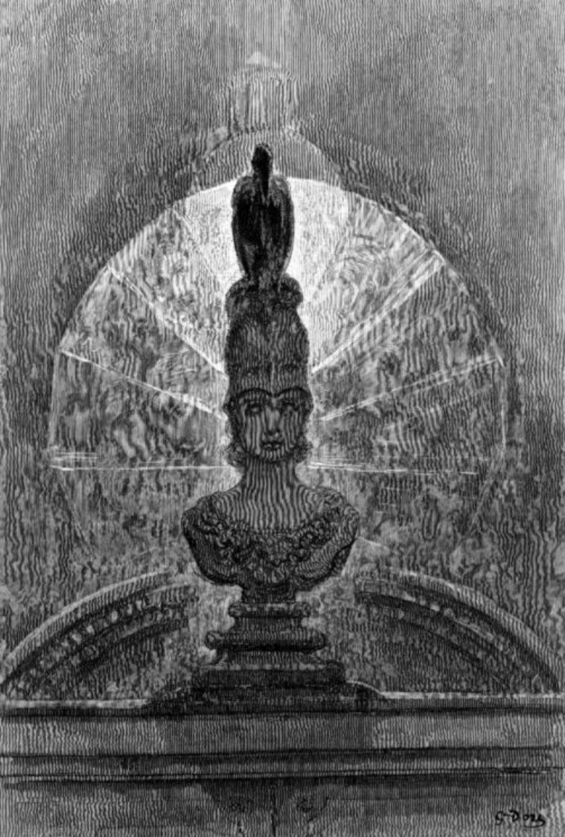
Upon The Bust Of Pallas  - GUSTAVE DORÉ

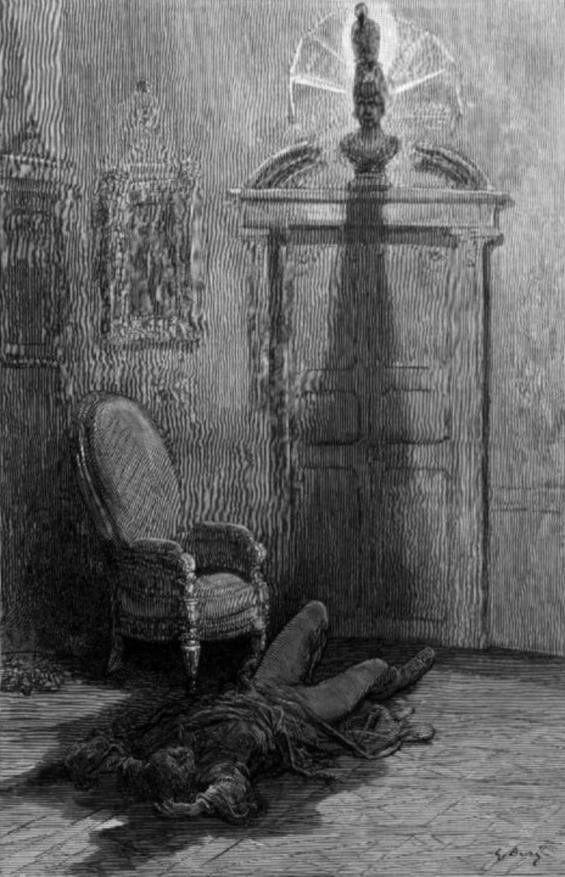
Shall Be Lifted Nevermore - GUSTAVE DORÉ

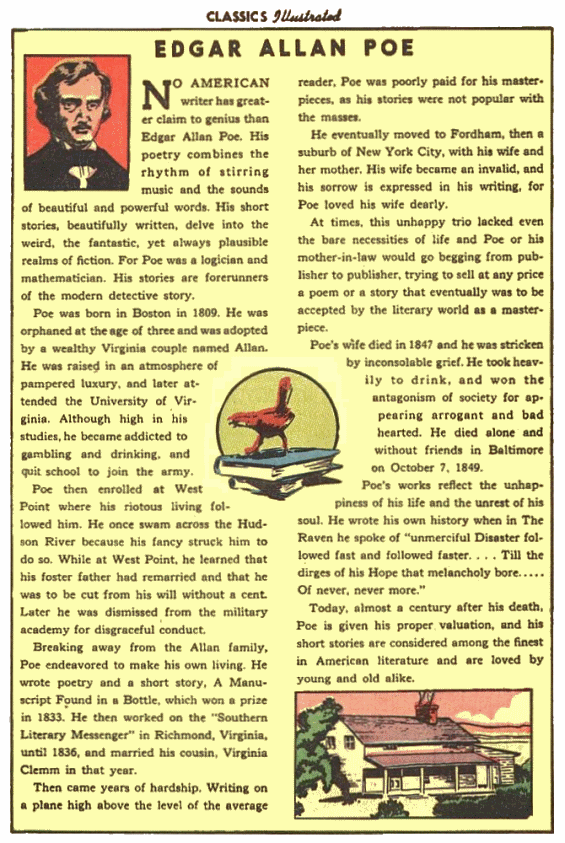
Classics Illustrated biography of Edgar Allan Poe

[via LibriVox and Gutenberg.org]

Posted by Jesse Willis