News, Reviews, and Commentary on all forms of science fiction, fantasy, and horror audio. Audiobooks, audio drama, podcasts; we discuss all of it here. Mystery, crime, and noir audio are also fair game.
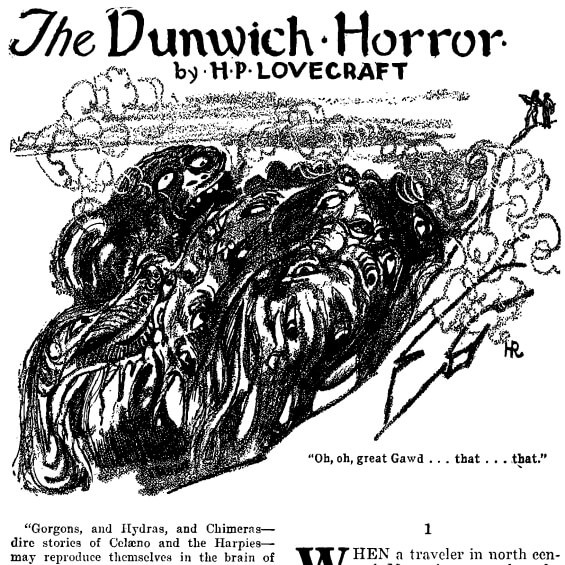
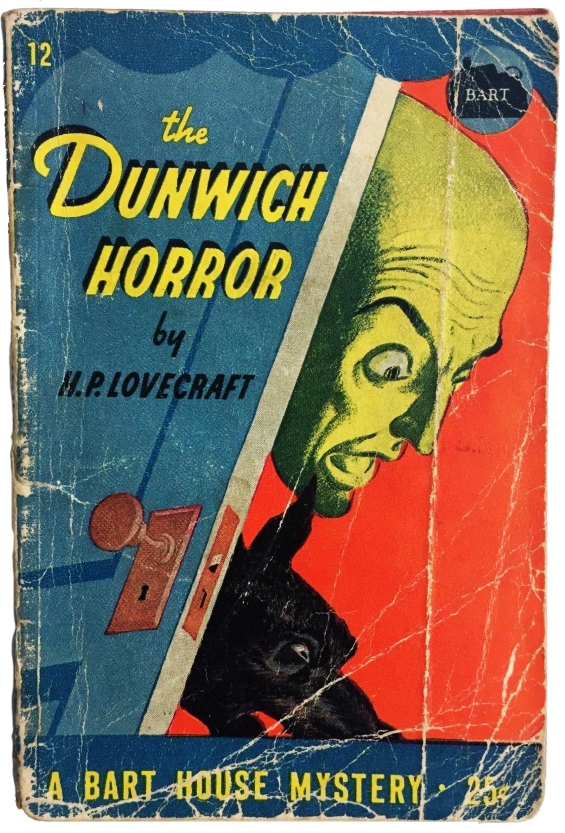
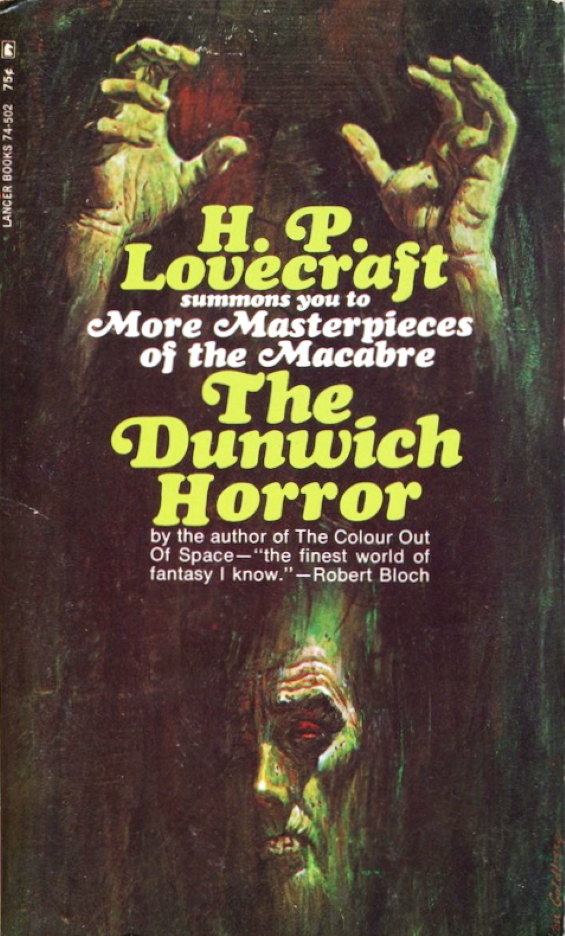
The SFFaudio Podcast #365 – Jesse, Bryan Alexander, and Mr Jim Moon talk about The Dunwich Horror by H.P. Lovecraft.
Talked about on today’s show:
Weird Tales, April 1929, set in 1928, the Wikipedia entry, “one of the few tales Lovecraft wrote wherein the heroes successfully defeat the antagonistic entity or monster of the story”, the heroes were a nice family who kept to themselves, hounding the downtrodden, the story structure, the lily white mom, a virgin birth to an extraordinary son, an invisible brother, the holy trinity, it’s Jerusalem all over again, another fallen world, Dostoevsky’s The Grand Inquisitor, she’s sooo virginal, towards racism, non-human entities, deeply inset, the whole of Dunwich is inbred, more sanctified, extreme exogamy, Wilbur Whateley’s literary model, Frankenstein’s monster, yellow skin, lustrous black hair, hounded by the community, nudism is not a sin on your own land, they’re non-Christians, persecution, one of the great problems of Frankenstein, the creation of new life in a socially horrible way, for lack of a better appendage, some of the things Wizard Whateley says are troubling, Wilbur’s strangeness, reserve books, deny all access to this kid, the Call Of Cthulhu RPG is modeled on this story, Yog-Sothoth’s appearances in other stories, Through The Gates Of The Silver Key by E. Hoffman Price and H.P. Lovecraft, the opener of the way, Randolph Carter, Wilbur’s diary, the clearing off of the Earth, a lonely teenager, contempt for his mom, her albinism, somewhat deformed, gestures and hints, her unnamed son, Wilbur is dark, another step down the albinism route, The Invisible Man by H.G. Wells, the Alan Moore and Jacen Burrows Providence adaptation (issue 4), Robert Black, the Wilbur stand-in is Willard, the audio drama, family photos, the madwoman in the attic (the mad brother in the attic), dad’s always feeding him, he’s just a big kid, wonderfully atmospheric, he’s a horror writer, the normal way to read this story, weird fiction, The Colour Out Of Space, science fiction, Providence, Rhode Island, Athol, dread and horror, straight-up horror, Lovecraft and race, Lovecraft and class, poor white people are monstrous and horrific, inbred and weak, a fun Malcolm Gladwell piece, To Kill A Mockingbird demonized poor white folk, Trump-bashing, Oswald Spengler’s The Decline Of The West, have we peaked?, patronizing the poor, this is shocking, Theodore Dreiser, Jacob Reese’s How The Other Half Lives, Dracula by Bram Stoker, Degeneration: Fear Of The White Race Declining, war, we’ll all be Teddy Roosevelt and Baden-Powell, WWI, prohibition, the first U.S. propaganda committee, the end of The Shadow Over Innsmouth, rural threat, The Terrible Old Man, a cultural flip-flop, the rural folk as the other, the tipping point, urban migration, canary women in munition factories, the yeoman past, the gold doubloons, where did that money come from?, practicing alchemy?, Keanu Reeves, a ghurka knife, Dracula’s money belt, poor Wilbur, dogs wanna eat him!, dogs are mean, barking at things we cannot see, the dog as index of character, good people feed you bad people eat you, unlike the whippoorwills?, The Great God Pan by Arthur Machen, Wilbur is a little goaty, concepts and styles, the gods having union with humans and birthing the monstrous, a neuroscientist, a gibbering wreck, a trail of destruction, literal devolution, absolute corruption in human form, Helen Vaughn, a mystery story, disturbing hints, an enturely different story with entirely different tropes, a classic bad seed story, a giant monster on the loose story, a New England kaiju story, the Moodus Noises, hollow earth stories, lost race stories, Edward Bulwer-Lytton’s The Coming Race, ravines of problematic depth, Lovecraft casts a spell upon the reader, entranced by the language, landscape description, Elmore Leonard, stage-setting, the river as a serpent, oddly suggestive, feeling uneasy, the weird tale aspect, a little too round and a little too even, pulling down all the stones on all the hilltops, At The Mountains Of Madness, Dreams Of Animals, other families, the etymology of panic, somebody’s panic face, red scares, yellow perils, bank panics, the god Pan,
The word derives from antiquity and is a tribute to the ancient God, Pan. One of the many gods in the mythology of ancient Greece: Pan was the god of shepherds and of woods and pastures. The Greeks believed that he often wandered peacefully through the woods, playing a pipe, but when accidentally awakened from his noontime nap he could give a great shout that would cause flocks to stampede. From this aspect of Pan’s nature Greek authors derived the word panikon, “sudden fear,” the ultimate source of the English word: “panic”.
multiples of Pan:
Pan could be multiplied into a swarm of Pans, and even be given individual names, as in Nonnus’ Dionysiaca, where the god Pan had twelve sons that helped Dionysus in his war against the Indians.
a scapegoat, panic is the sense that everything around you is alive, 1806, a beautiful valley, a few cows, not interested in the modern economy, industry “didn’t take”, party line telephones, gossip, no phone at the Whateley farm, are they all practice hidden religions, The Horror Of The Burying Ground, a humor piece, an experimental embalmer, Herbert West: Embalmer, they’re alive!, everyone goes to their graves alive, gothic horror, comedy, set in Vermont?, Will Murray, Lovecraft’s revisions, tongue in cheek, blackly comic self-parody (almost), The Horror Of The Museum, Hazel Heald, in the 19th century everyone was afraid of premature burial, Edgar Allan Poe, a New York City echo, the different adaptations, the 2009 SciFi channel version, Jeffrey Combs, Dean Stockwell (Dr Yueh), the 1970 movie adaptation, a satanist movie, a lot of the story is in it, an anti-hero, Professor Armitage, Dennis Wheatley, cosmic horror, a beholder from Dungeons & Dragons gone berserk, a staff with a thunderbird totem, don’t go near the hills on certain nights of the year, a resentment, the degenerate side of the family, the opening credits, the love interest, the natural order, the big interpolation, an abomination, like Philip K. Dick, a source for films (mostly bad), The Resurrected, Blade Runner, Total Recall: 2070, Minority Report TV series, The Man In The High Castle TV series, the problem is there’s no real hope…, exactly the opposite of Dick’s idea, what that means for us, the medium shift (from book to movie), The Stone Tape (the BBC radio drama adaptation), checking out a book as a plot point, the Suspense radio drama adaptation of The Dunwich Horror, OTR, The War Of The Worlds, a Lovecraftian flavour, a sense of weirdness, using the whippoorwills, the Dark Adventure Radio Theatre adaptation, Wayne June is Mr Creeps, The Great God Pan, Out Of The Earth, The Thing In The Woods by Margery Williams, Ooze, an episode of Lovejoy, Ian McShane, regular uncursed artifacts, Deadwood, Dunwich On Sea (or In Sea?), a Swinburne poem, Stone Angel, The Ancient Track, Lovecraft’s description of other books in poems, a restatement of the Whateley family, Jesse reads a poem, Mr Jim Moon quotes from Zaman’s Hill, Lovecraft Country, Massachusetts and Vermont, very rural, Wizard Alexander, so articulate, glib stereotype, it would be childish to say it was indescribable…, a master of horror with a deep seated love of humour.
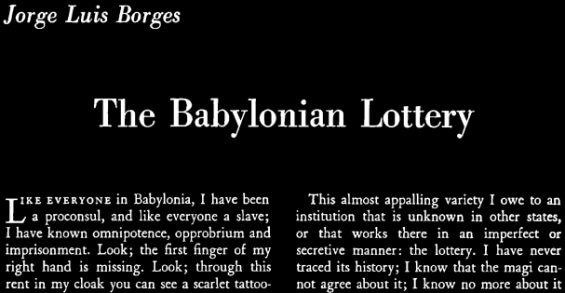
The SFFaudio Podcast #364 – Jesse, Bryan Alexander, Mr Jim Moon, and Paul Weimer talk about The Lottery In Babylon by Jorge Luis Borges
Talked about on today’s show:
aka The Babylonian Lottery, 1941, 1962, The Library Of Babel, baffling mystifying, blurring and seeping, The Garden Of Forking Paths, the framing story, the context, he’s leaving, in this “statement”, missing fingers, a rented cloak, a tattoo of the second letter of the Hebrew alphabet, fleeing the city, Samuel Taylor Coleridge’s Rime Of The Ancient Mariner meets Forrest Gump, abomination and criminal, the sacred disorder of our lives, an affection for the company, Solar Lottery is a similar Philip K. Dick novel, company vs. corporation, like everyone in Babylonia…, that’s a lot of proconsuls, metaphorical, metonymies for the high and the low, Dark City, those Borgesian moments, deliberate inaccuracies, the hand changed hands, Borgesian translations, The Pit And The Pendulum, a story without hop with Hope as the title, not having firm ground on any detail solidifies the Borgesian effect, Labyrinths, the company’s communications, a mask factory, trash and kipple, Thomas Ligotti, one of the heresies, lottery is a myth we tell ourselves to make sense of chance, The Red Tower, an authentic madman, sacrifices, priest or sorcerer, Kabbalist magic, the mysterious assassination, where’s A?, he’s B, he turned into a god!, deified, a god of Chance, Heliogabalus, Martian Time-Slip by Philip K. Dick, an autistic boy, they’re reading the same books, omnivorous readers, reincarnation, thinking through reincarnation, Jesse’s weird theory, I’m Napoleon, more than just wish-fulfillment, what if we are living in a universe in which there is only one soul, the Platonic references, no need to follow the laws of time, John Rawls’ the Veil Of Ignorance, it’s a lottery in essence, a rich European healthy body, what we would want for other people is what we would want for ourselves, justice, if we take it as literally true…, we can’t see all of his body, waiting for Charon to show up in his boat, a perfect story for the middle of the twentieth century, the least inequality, the most inappropriate story for the twenty-first century, a radical document, when is this taking place, after Elagabalus but before the fall of Babylon?, the barbers, the mythology, to omit -> to interpolate -> to change, making a curved line between points, this is the symbolic scheme, infinite draws, all that is necessary is that time is infinitely divisible, one of those Xeno stories…, an infinitely divisible strawberry pie?, something tricky going on here, the company’s origins as a religious explanation for fate, as noted on the Wikipedia entry, Qaphqa (Kafka), The Castle, a sacred latrine -> it’s a holy shit -> it’s a pisser, mask factories, the messages come from the kipple, the sacred lions, scribbles on the ruined walls of the mask factory, thicker layers, the tease of Plato, we’re still in the cave, the Allegory Of The Cave, if it’s not a cabal… (kabbal?), it must be the lottery, were all a part of the secret cabal, the Paranoia RPG, trust the computer, trust the company, Jim’s punishment and Jesse’s reward, a spy LARP, the intertwined nature, I have throttled the sacred bulls, declared invisible for a year, based on a Robert Silverberg story, no matter what happens he gets executed, a universal solvent, application to the modern day scientific view, random chains of cause and effect, science as a conspiracy theory, god playing dice, medium sized objects are subject to physical laws, the ghosts and shadows of quantum mechanics, an expert in Anglo Saxon, studying Norwegian history as one does, some hidden premise, reminiscent of Olaf Stapledon, was To See The Invisible Man by Robert Silverberg inspired by this story?, like Lovecraft family Borges’ family had a huge library, of these executors…, enriched torture, a Swiftian character, the last sentence as a thesis statement, what’s the worse horror, the lottery as a consolation religion, think about that in 1941.
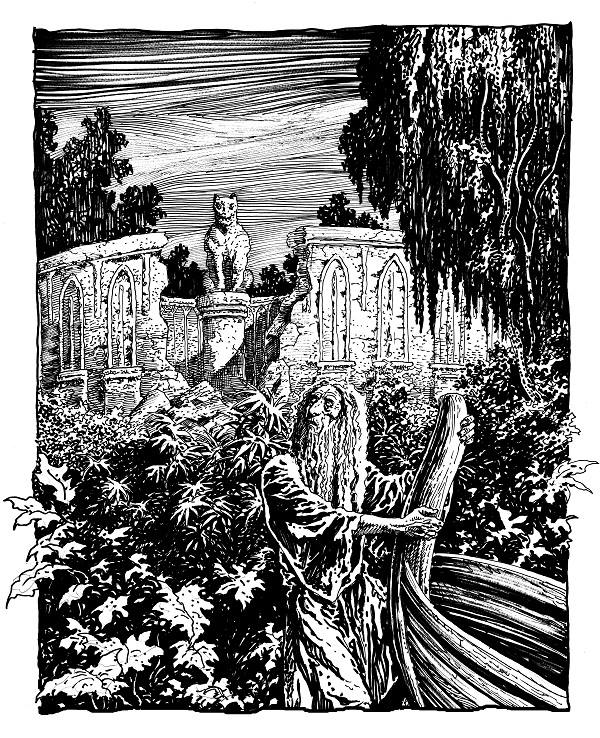
The SFFaudio Podcast #361 – Jesse, Bryan Alexander, Mr Jim Moon, and Paul Weimer talk about The Circular Ruins by Jorge Luis Borges
Talked about on today’s show:
the dream of Bryan Alexander, the nightmare that is Paul, 1940, 1962, almost a disaster, this story hit them like ton of bricks, Frankenstein, disturbing, a simple plot, leading you in circles, rising action, the horrible Freytag pyramid, creating a person out of dreams, a Joseph Campbell plot, learning Spanish, listen to the negatives, no one was unaware that the silent man, the unanimous night, it claustrophobic cloaks, the beginning of Moby Dick, in The Garden Of Forking Path, Jeff Vandermeer’s Ambergris, the circularity of the text, there is no “collected works” of Borges, Broges’ translations, the language of doppelgangers, the father and son angle, a mediation on parenthood, a god of fire, if Eric Rabkin were here, Prometheus, realizing you’re a dream, a trapped figure in endless circularity, parenting, once the colour of fire and now that of ashes, a grey man under unknown leaves, tributaries of sleep, weaving a rope of sand, coining the faceless wind, a folkloric reference, a Cornish legend, The Lottery Of Babylon, the company knows all, a ruin of a religion that somehow comes true, the most difficult task a man could undertake, an infinite amount of time for the hairs on the arm, not the god of the bible, food and figs, a dream god, a hilarious line from Celephais, I’m a prodigious dreamer, a dream man who dreams a dream man into existence, a dream written down, meta accusations in the post modern school, a hero to post-modern thinkers, The Babylonian Lottery, where the Zend language, characteristics of a society, too much leprosy, Tlön, Uqbar, Orbis Tertius, the moonness was going above the river, the beautiful language of a dream, Voltaire’s Zadig, a fake Babylon, the book of Zend, The Library Of Babel, real world Greek, this river, bamboo canoe, other burned temples, H. Rider Haggard, double negative, Xenophon’s Anabasis, 10,000 mercenaries, epic adventure, populated or unpopulated, in the aftermath of disaster, Detroit, Peter Jackson’s Lord Of The Rings, yet another abandoned village, The Warriors (1979), an optimistic version of New York, being a vegetarian, Frankenstein’s creature is a vegan, he’s got to dream some meat into being, this is Abel not Cain, where the story really gets cooking, his body is a temple, dialectic dreams, clouds of taciturn students, interpolate him into the real world, a man lecturing the clouds, The Boy Who Disappeared Clouds by Lawrence Block, seeing images in the clouds, people are like clouds in dreams, a two sided coin, the dialectics, dissection theater, in the Gnostic cosmogonies, a red Adam who cannot stand, the world was created by the demi-urge, Valis by Philip K. Dick, addendum to the creation story, Lilith, the red mercury story (a geopolitical urban legend), alchemical texts, a locked Wikipedia entry, the cold fusion of terrorism, a golem, a man made out of clay but without a soul, Adam of dust, Adam of dreams, the wizard is the dreamer, again Frankenstein, why would it have been better?, Edgar Allan Poe’s William Wilson, H.P. Lovecraft’s Hypnos, doppelganger fiction, mirrors, Borges’ philosophy of Poe’s Composition, the literary equivalent of Escher, more like Lovecraft than Dick, aristocratic families, grandparents who were big into books, loved suits, loved their hometowns, Buenos Aires, a love of reading, wrote about writing, letter writers, connected with their readers, strange visionary figures, gregarious men, authors confused (conflated) with his own characters, complex truth and curious parallels, beauty, meaning and the belief in the power of story, how we make sense of the universe and how we interpret knowledge, both seeking to blow minds, Borges read Lovecraft, There Are More Things by Jorge Luis Borges is dedicated to Lovecraft, arguing with Lovecraft, cosmic is the word (not eldritch) or dream, The Call of Cthulhu, interpolate connects us to Dick as well, a bit of sense data, we don’t see just by having the world come into our eyes, we also project, the story is not complete, filling in the steps between fire and grey, Dick, Borges, and Lovecraft are working the world in a different way showing us their dreams, what would a Borgesian city in Kadath (the Dreamlands) look like?, Inception is a Borgesian story, far more concreteized, a heist, the grey man kissed the mud, the blades which were lacerating his flesh, the brambles delacerated his flesh, where did the blades come from?, what is certain, there’s something on the bank injuring him (or the blades are in him already), the crown of thorns, the temple was crowned, from out of the south, almost biblical, interesting, the plaything of forces far greater than he can comprehend, mental terror, the incessant trees, obligation, inconsolable shriek, the birdless morning, the phoenix, the tiger is man, Tyger Tyger, horses as a symbol of force, power, dynamism, and nobility, horse or tiger, domesticated vs. wild, super enigmatic yet we know exactly what happened, the creation of the heart, the moon, fourteen lucid nights, from lucidity to obscurity?, meticulous love, to rectify it with a glance, invoking the name of a planet, Mars?, Venus?, Mercury?, it could be the penis, much more meticulous from, the innumerable hair was the most difficult task, full moon?, starting the cycle again, the circularity of the ruins, re circularity, a disc vs. an amphitheater, the geography of the Library of Babel, a torus, the bottom of an amphitheater, it’s a magic spell, Lovecraft fandom, Cthulhu prayer breakfast, Borges was the darling of the literary set when he was alive, the New American Library edition, Borges is still a god of modern literature, intertextuality, Borges’ made up quotes and citations, Ibid by H.P. Lovecraft, a parody of 19th century scholarship, the adventures of a man’s skull, groundhogs worshiping a skull as a deity, the sense of humour, S.T. Joshi, a classic schoolboy error, BBC Radio documentary, humour in Borges, loops and whorls, sophisticated humour, blades vs. brambles, Poe the prankster, Herman Melville, extraordinary sentences, puckish and wry, apotheosis.
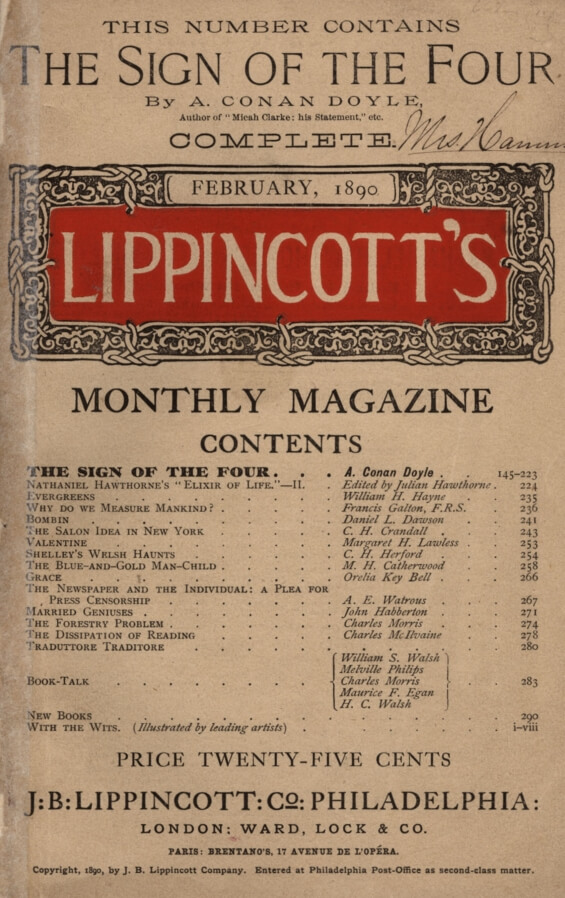
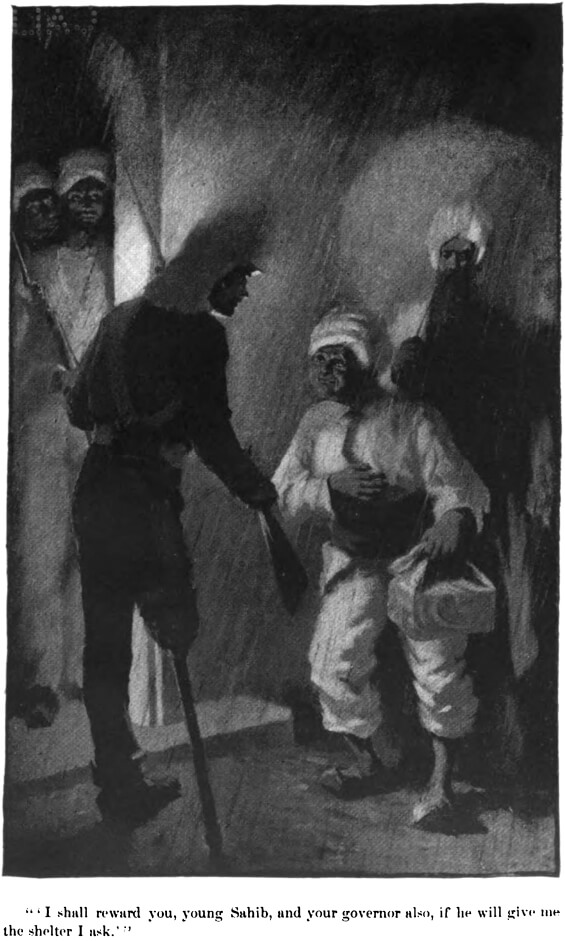
The SFFaudio Podcast #359 – The Sign Of The Four by Sir Arthur Conan Doyle, read by David Clarke.
This UNABRIDGED AUDIOBOOK (4 hours 24 minutes) comes to us courtesy of LibriVox.org. The Sign Of The Four was first published in Lippincott’s Monthly Magazine, February 1890.
The next SFFaudio Podcast will feature our discussion of it!


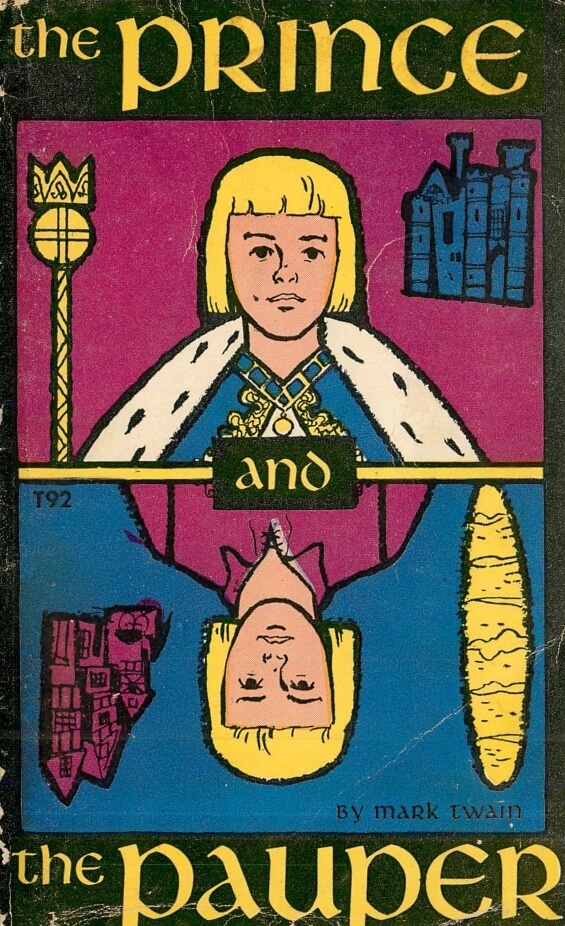
 The SFFaudio Podcast #366 – The Prince And The Pauper by Mark Twain, read by John Greenman.