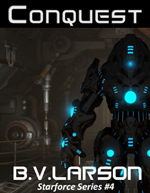
Review of Conquest by B.V. Larson

SFFaudio Review

ConquestConquest – (Star Force #4)
By B.V. Larson, Performed by Mark Boyett
Publisher: Brilliance Audio
[UNABRIDGED] – 12 hoursThemes: / aliens / military sci-fi / fighting bugs / machines / invasion /

Publisher summary:

Conquest is the next chapter in the great interstellar war between all living creatures and the machines. Star Force must stop the machine invaders once again – but how? In the fourth book of the Star Force series, Kyle Riggs has freed Earth from the chains of the Macros – but at what cost? The Macros no longer trust him. He is a mad dog that must be put down – and all Star Force must be stamped out with him. The war expands in this story, and mankind is once again faced with annihilation.

Conquest is the fourth book in the Star Force series by B. V. Larson and, while it continues the well-established tradition of this series for thrilling military action, it also brings several of the flaws of the series into sharp focus.

Over the course of the previous three novels in the Star Force series, Kyle Riggs has made some bad calls. He has sworn Earth to provide troops for a dangerous enemy, ordered thousands of his troops to their deaths, and cast aside strategic alliances with little thought to the long-term consequences of his actions. Throughout it all, I continued to root for Riggs and the rest of his band, even as I questioned his actions. Now, though, I can’t help but wonder if Star Force is the right team for the job.

Of course, they never were supposed to be the first best choice. Riggs and Crow, the co-leaders of Star Force, were plucked from their homes by brutal machines and only came to command the most technologically advanced army in human history because they managed to survive a brutal series of tests, so it should come as little surprise that these two often resort to brute force to solve their problems. Still, I couldn’t help feeling that these two men were woefully unfit for command when the first few chapters of this book consisted of little more than a super-powered grudge match between them. Riggs, as the narrator and protagonist, does his best to justify his actions to the reader, but many of his arguments can be boiled down to, “I did my best, but I’m not really a soldier.” Meanwhile, Crow is written as a chameleon who repeatedly vacillates between careless pirate and brilliant strategist, with little to no transition between.

One might expect that the return of the giant Macro robots would bring some unity to Star Force, or at least some sound strategic planning, but it doesn’t. Instead, Crow runs away (as usual) and Riggs comes up with some brilliant modifications to the Star Force battle equipment, then fails to use them to their potential (as usual). The one piece of brilliant strategizing that Riggs does manage to pull off, which results in the Macros focusing their attacks on Star Force’s home base rather than assaulting the entire planet, backfires spectacularly when he forgets the lessons learned in his previous fights against both the Macros and the Helios Worms. Riggs knows the Macros are underground, but makes no plans to defend against an attack from below. He gives his troops the ability to fly, but rarely uses that to his strategic advantage. Mistake compounds mistake until only nuclear weapons and convenient force-field failures can save Earth.

Apparently I am not the only one dissatisfied with the leadership of Kyle Riggs, as the author included a subplot of ongoing assassination attempts in Conquest. Obviously, I won’t say who or what was behind the attempts, but I like to imagine that there was some level of symbolism to B. V. Larson’s decision to introduce this plot element. I have to wonder if maybe there is some chance that, by the time he reached this book, Larson had realized that Riggs needs to develop further as a leader and a character.

Mark Boyett does an admirable job narrating this series, navigating the wide range of accents with ease. I did think, as I listened, that I caught a few errors, but I am more inclined to believe that these were missed during the editing of the book, rather than introduced in the recording of the audio. At a running time of just over eleven hours, spanning ten CDs, the book is just long enough to tell the story of the second invasion of Earth without overstaying its welcome. I plan to continue reading this series, but I truly hope to see some growth in strategic thinking from Riggs, or I could see myself beginning to feel sympathetic towards Conquest’s failed assassins.

Posted by Andrew Linke

It’s A Good Life by Jerome Bixby

SFFaudio Online Audio

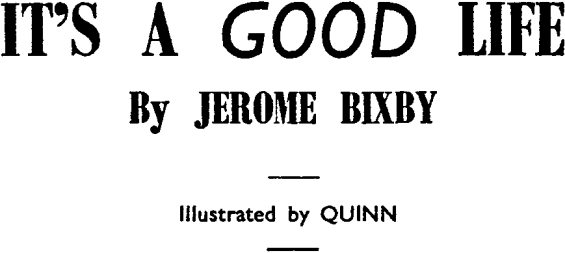
It's A Good Life by Jerome Bixby

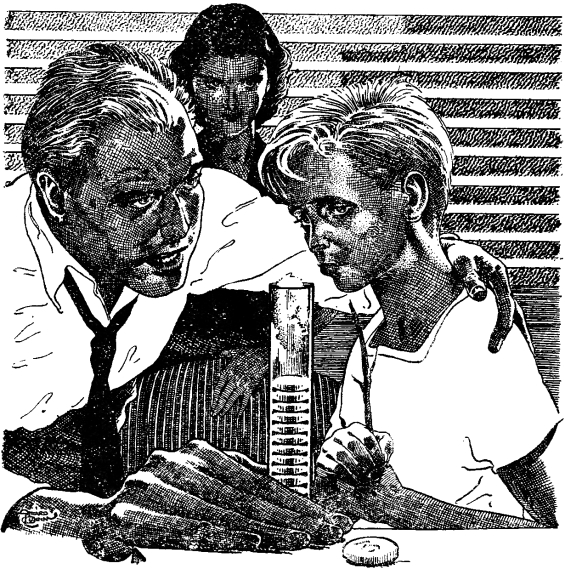
It's A Good Life by Jerome Bixby - illustration by Quinn

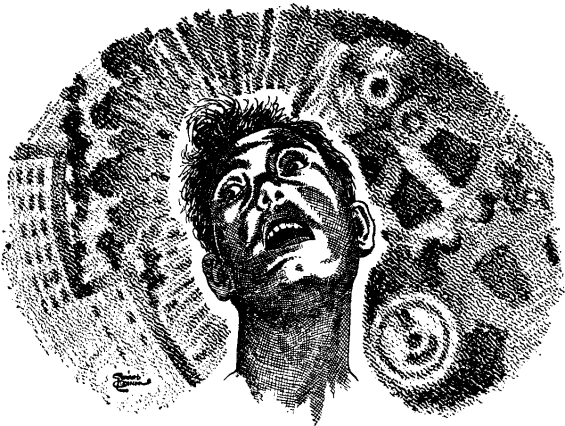
It's A Good Life by Jerome Bixby - illustration by Quinn

It’s A Good Life is a 1953 short story by Jerome Bixby. Set in the small town that used to be in Ohio. It’s entire population loves and fears three year old Anthony Fremont. Anthony is omnipotent.

This story has been adapted several times by The Twilight Zone. The original series did a very faithful adaptation, a sequel episode, “It’s Still A Good Life“, featured a grown-up Anthony and his daughter. There was also an adaptation within Twilight Zone: The Movie. Even The Twilight Zone radio drama series adapted it.

Here’s the audiobook, as podcast in two parts on Rick Jackson’s The Time Traveler Show (along with an interview with the narrator, William Dufris).

The Time Traveler Show PodcastIt’s A Good Life
By Jerome Bixby; Read by William Dufris
Part 1 |MP3| Part 2 |MP3| – Approx. 2 Hours 4 Minutes [UNABRIDGED]
Podcaster: The Time Traveler Show
Podcast: August 2006
Anthony Fremont can go anywhere he wants, he can read thoughts, he can project sensory information, he can create, he can destroy, he can mold reality, he can kill. Anthony Fremont is three years old. First published in Star Science Fiction Stories No.2.

Podcast feed:

http://www.timetravelershow.com/shows/feed.xml

Here’s a |PDF| made from the publication in Science Fantasy, #16, 1955.

Posted by Jesse Willis

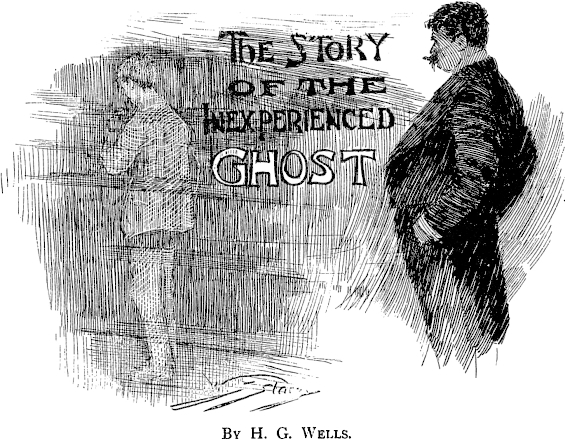
The Story Of The Inexperienced Ghost by H.G. Wells
SFFaudio Online Audio

The Story Of The Inexperienced Ghost by H.G. Wells
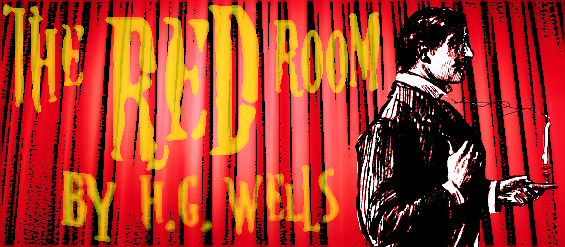
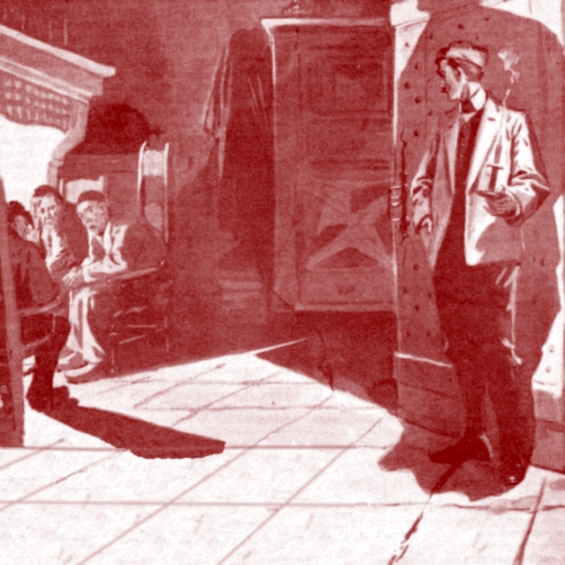
The Story Of The Inexperienced Ghost (aka The Inexperienced Ghost) is, on its face, merely a humourous ghost story. But I get the sense that there’s quite a bit of satire going on in it. It may be doing to the straight-up ghost story (in a far more lighthearted way) what The Red Room does to the Gothic Horror story.
LibriVoxThe Story Of The Inexperienced Ghost
By H.G. Wells; Read by Toby Paradis
1 |MP3| – Approx. 27 Minutes [UNABRIDGED]
Publisher: LibriVox.org
Published: 2008
First published in The Strand, March 1902.

Here’s a fully illustrated |PDF| made from the original printing.

Mrs. P. (aka Kathy Kinney) reads The Story Of The Inexperienced Ghost:

Posted by Jesse Willis

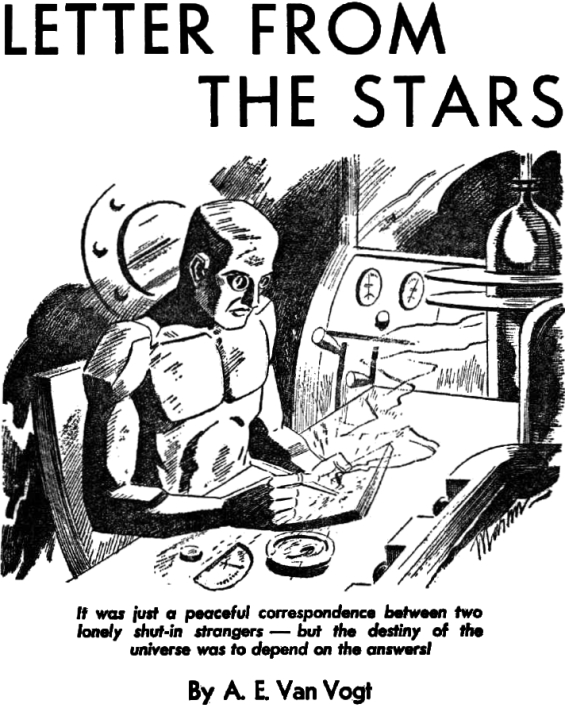
Protecting Project Pulp: Letter From The Stars by A.E. van Vogt

SFFaudio Online Audio

Letter From The Stars by A.E. van Vogt

This short epistolary Science Fiction story, Letter From The Stars (aka Dear Pen Pal), is about a foolish person who writes to an alien criminal. Like many episodes of PPP lately it is straight-up pulpy fun, but with a twist.

Protecting Project PulpProtecting Project Pulp No. 60 – Letter From The Stars
By A.E. van Vogt; Read by Josh Roseman
1 |MP3| – Approx. 18 Minutes [UNABRIDGED]
Podcaster: Protecting Project Pulp
Podcast: September 17, 2013
It was just a peaceful correspondence between two lonely shut-in strangers — but the destiny of the universe was to depend on the answers! First published in The Arkham Sampler, Winter 1949.

Posted by Jesse Willis

The SFFaudio Podcast #230 – AUDIOBOOK/READALONG: The Red Room by H.G. Wells

Podcast

The SFFaudio PodcastThe SFFaudio Podcast #230 – The Red Room by H.G. Wells, read by Simon Vance. This is a complete and unabridged reading of the story (24 minutes) followed by a discussion of it. Participants in the discussion include Jesse, Luke Burrage, Bryan Alexander, and Simon Vance.

The Red Room (aka The Ghost Of Fear) was first published in The Idler, March 1896.

Talked about on today’s show:
Are there any supernatural elements in The Red Room?, what is the genre of this story?, Gothic Fiction, a deconstruction of the gothic, the ultimate psychological horror story, the apparatus of gothic horror, a psychoanalysis of horror, what we do to ourselves, we scare ourselves, the scary clothes horse, “as long as this house of sin endures”, what happened to the candles, Luke’s theory, what is the sin?, the old people, bad candles?, trick candles?, a Scooby Doo interpretation of the story?, coincidence, how reliable is the narrator?, the origins of the horror are in a fake scare, the changing description of the men, distorted and crouching, the man with the shade, shadow?, ghost?, a blue phial, a green shade, a story of generational transfer, the rising generation of science, the significance of the narrator’s age (28 years), what’s up with the gun?, an impossible sturdiness, the unknowableness of your own mind, the final word – or is it?, The Turn Of The Screw by Henry James, Eric S. Rabkin, an evil relationship, Ganymede with an eagle (Zeus), cup-bearer is a euphemism, does the Chinaman statuary represent the Yellow Peril?, clothing fashioned in dead brains, the generational interpretation, the grotesque, why not three norns?, the three disabilities, a tremendous tremor, 150% spillage, a mocking shadow, a pro-science story, fire = knowledge, the light of science, the return of ignorance with the return of darkness, why is the narrator there?, is this a Hound Of The Baskervilles situation, the previous tenant, the glass before the fire, the three mirrors, Mise en abyme, “your own choosing”, Sir Arthur Conan Doyle, Harry Houdini, what side in the public debate of new spiritualism, it felt modern to Luke, The Pit And The Pendulum by Edgar Allan Poe, Dracula is a contemporary of The Red Room, the subterranean passage, Eric is a big Freudian, a meticulous forensic analytic description, this isn’t Mulder this is Scully, Simon Vance has voiced Dracula twice, Fangland (a modern 60 Minutes style retelling of Dracula), updates to Dracula, The Dracula Tapes, The Stone Tape (1972), byte by byte, Nigel Kneale, The Quatermass Experiment, Lorraine Castle, generic European castle, skeptics haunted by a ghost that isn’t a ghost, a modern Gothic horror story, is it the carbon monoxide coming off the fungus?, the stone as a medium, solid state recording, a scientific explanation, a Lovecraftian pre-human recording, it may not be need to be remade, Quentin Tarantino remakes bad movies as a good movies, haunted digital media, Alien, MOTHER is basically HAL, Demon Seed, the anti-Japaneses bias as a more modern Yellow Peril, the medium of the tale, the staircase, “it’s not there’s nothing there”, the good-time gal, the wrong interpretation, The Crawling Chaos by H.P. Lovecraft and Winifred V. Jackson, becoming lost in your own head, he brought the ghost into the room, spirits as ghosts, why is it a red room?, red in the flames, it’s like the grate is a prison, a slick tunnel to the red room, a womb like room, a beige room, Ash spurting sperm everywhere, a haunted castle in space, Alien as the opposite of Star Wars, the science hero angle, gothic explique, teasing out a Gothic reading, in medias res, Freudian spaces, on this night of all nights, its like their casting a spell, is he a journalist?, Simon thinks the narrator is the new owner, Christopher Priest, The Prestige, why Christopher Priest is not as popular as he should be, his head and his lips are bloody, a bashed face, The Door In The Wall by H.G. Wells, is the story open, Luke is skeptical about the openness and the double blooding, belying the begrudgement, the curious escape,”H.G. Wells is a genius writer”, The War Of The Worlds from the alien perspective, Little Wars, “a heavy blow at last upon my forehead”, an almost 2nd person POV shift, “global warming is a fake”, the haunted man not the haunted room, Gene Wolfe, gothic markers, Henry James, Boon, the judgements of history, Wells’ agenda, The Time Machine, The Chronic Argonauts, horrific jellyfish and rabbits, nameless characters, minimal information, the Wells-Wolfe connection, The Shadow Of The Torturer, the always unreliable narrator, Understanding Comics by Scott Mccloud, Hello Kitty, part of the appeal of the Twilight books is in how badly drawn Bella is, inviting blankness, Things To Come.

The Red Room by H.G. Wells

The Red Room by H.G. Wells

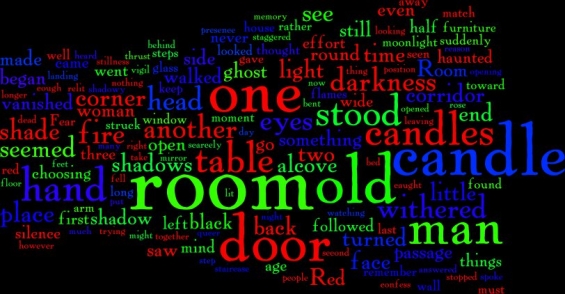
The Red Room Word Cloud

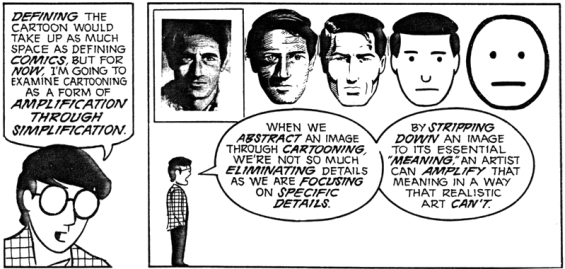
Understanding Comics - Amplification Through Simplification

The Red Room by H.G. Wells

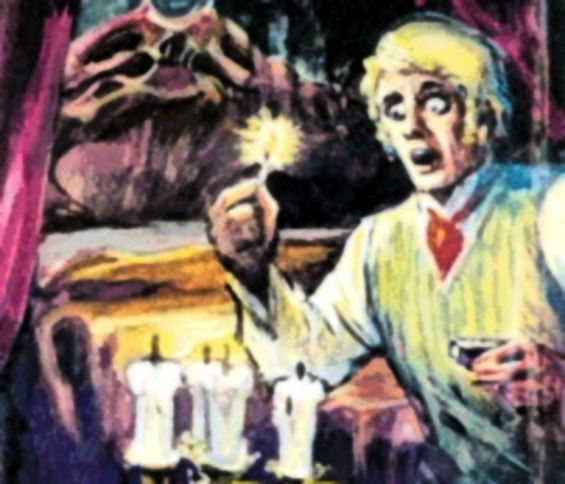
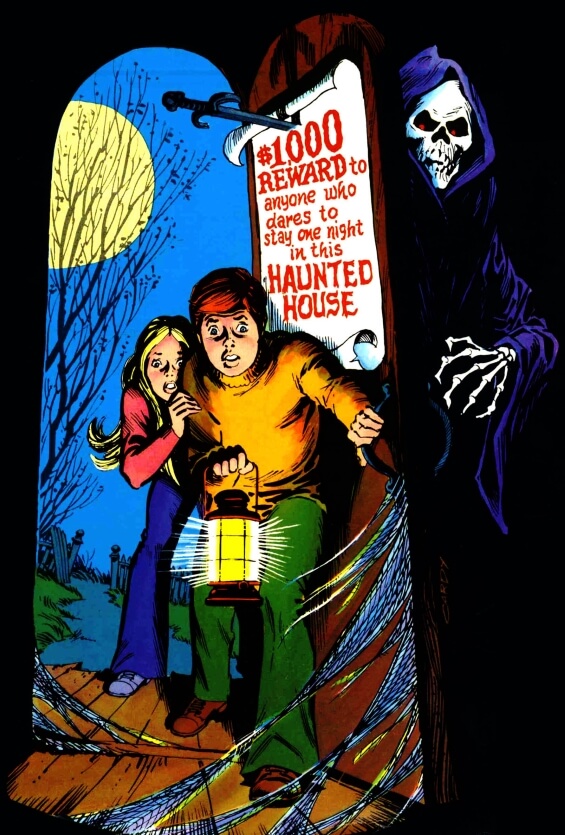
Art for the cover of DC Comics GHOSTS Limited Edition Collectors Edition

Posted by Jesse Willis

Hypnobobs: The Flowering Of The Strange Orchid by H.G. Wells

SFFaudio Online Audio

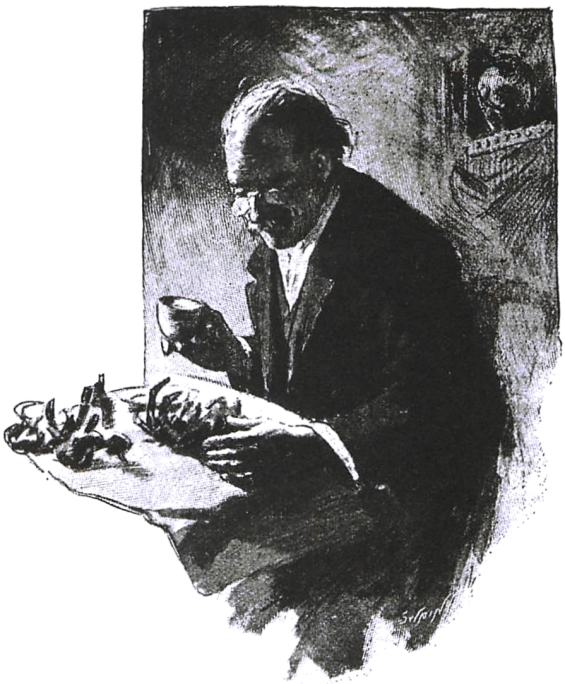
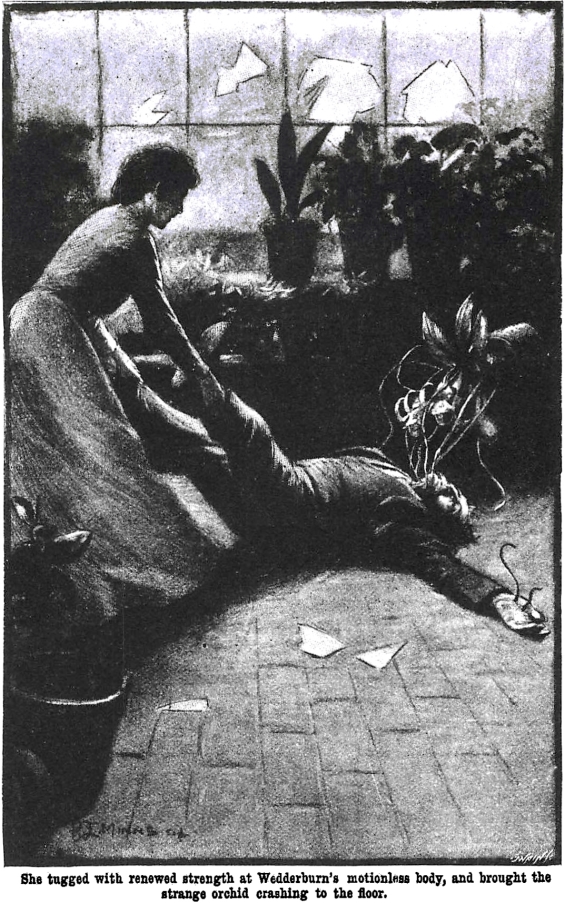
The Flowering Of The Strange Orchid by H.G. Wells

In less than 3,000 words H.G. Wells planted the seed, as it were, for a rare and delicate subspecies of Science Fiction we might call Botanical Horror SF. As Mr. Jim Moon, of the wondrous Hypnobobs podcast, points out in his introduction to his reading, this seed would later flower into a John Wyndham novel we all know and love.

So, grab some coffee, head into the greenhouse, and listen to this curious story of where it all started.

The Flowering Of The Strange Orchid by H.G. Wells

HypnobobsThe Flowering Of The Strange Orchid
By H.G. Wells; Read by Jim Moon
1 |MP3| – Approx. 1 Hour 21 Minutes [UNABRIDGED]
Podcaster: Hypnobobs
Podcast: April 6, 2012
First published in Pall Mall Budget, December 27, 1894.

Podcast feed: http://feeds.feedburner.com/Hypnobobs

And, here’s an illustrated |PDF|.

The Flowering Of The Strange Orchid by H.G. Wells

Posted by Jesse Willis