LibriVox: Mountain Man by Robert E. Howard

Aural Noir: Online Audio

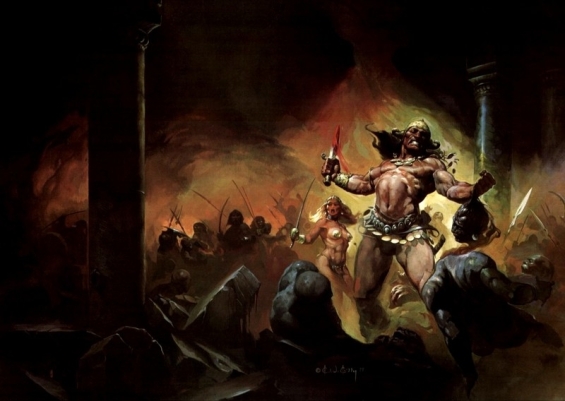
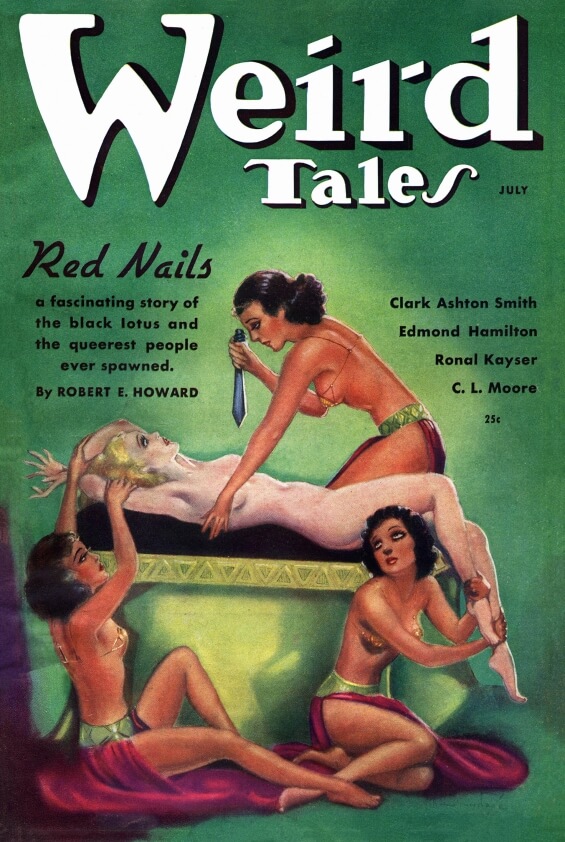
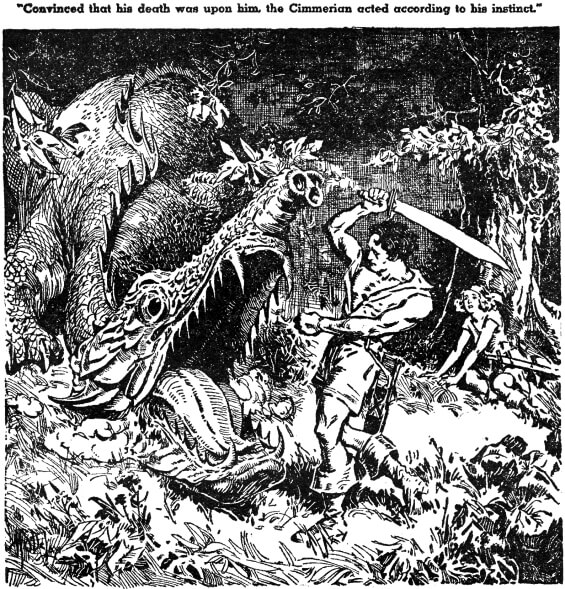
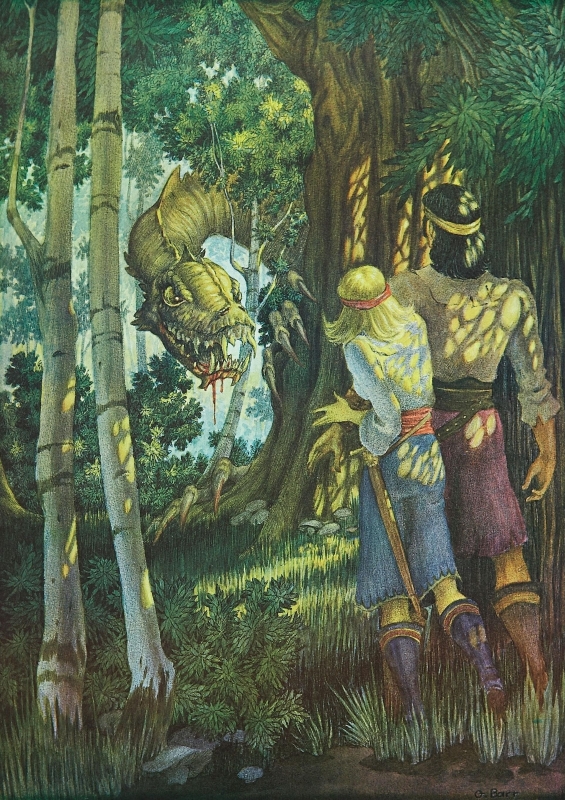
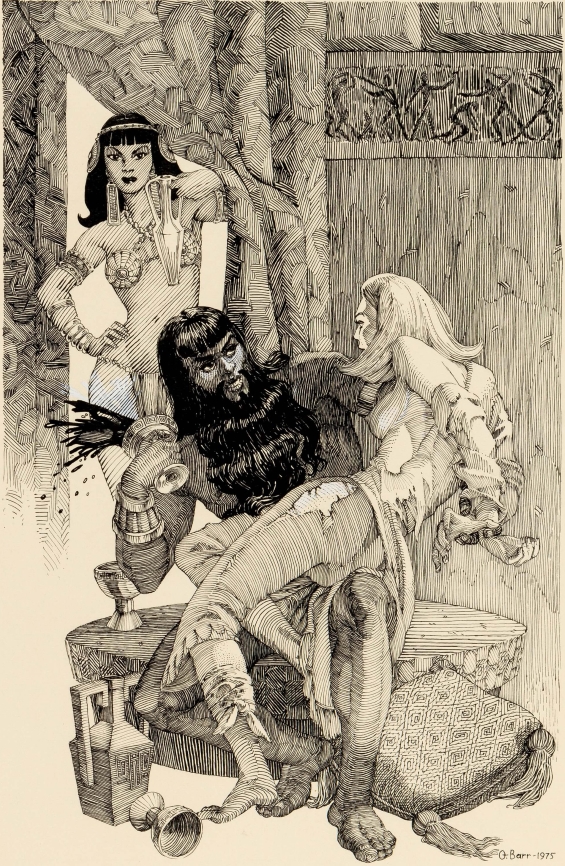
Robert E. Howard’s Breckinridge Elkins stories are humorous tall tales about a mighty naive but mighty muscled country boy. This one, the very first, starts off a little like Winnie The Pooh, but fear not, all Howard’s usual themes are in there. There’s a bit of a difference though, even though you’ve got a barbaric he-man battling civilized folk the story differs from a CONAN tale in that it’s set in the then contemporary world (1934) and also because it’s told in first person by an unreliable narrator.

The audiobook’s narrator, RK Wilcox, on the other hand, is a very reliable narrator, as you’ll hear in this solid reading of Mountain Man.

Mountain Man by Robert E. Howard

LibriVoxMountain Man
By Robert E. Howard; Read by RK Wilcox
1 |MP3| – Approx. 35 Minutes [UNABRIDGED]
Publisher: LibriVox.org
Published: May 25, 2008
|ETEXT|
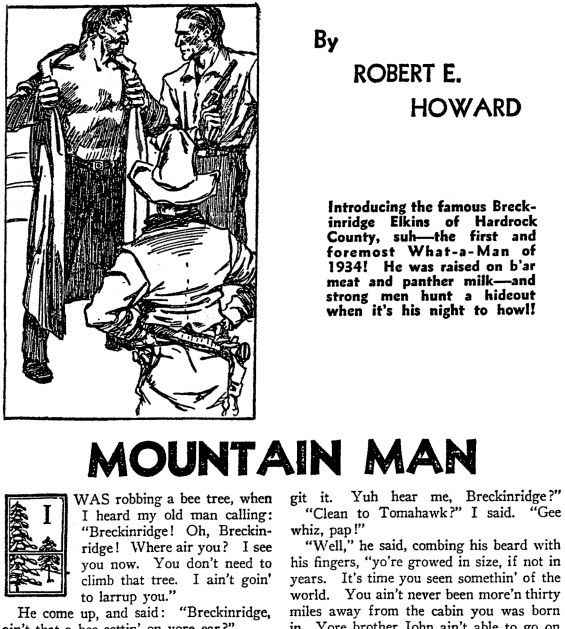
Introducing the famous Breckinridge Elkins of Hardrock County, suh-the first and foremost What-a-Man of 1934! He was raised on b’ar meat and panther milk – and strong men hunt a hideout when it’s his night to howl! First published in Action Stories, March-April 1934.

Here’s a |PDF| from the original publication in Action Stories.

Posted by Jesse Willis
LibriVox: What Was It? by Fitz-James O’Brien

SFFaudio Online Audio

I’ve posted about this story before. It’s worth posting about again and again. What’s new now is this reading, which is PUBLIC DOMAIN, and therefore extremely handy. Included also, for the first time, is some really stunning art!

I’ve also added a PDF, for handy printing!

What Was It? by Fitz-James O'Brien

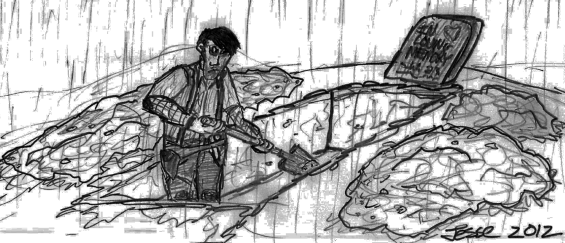
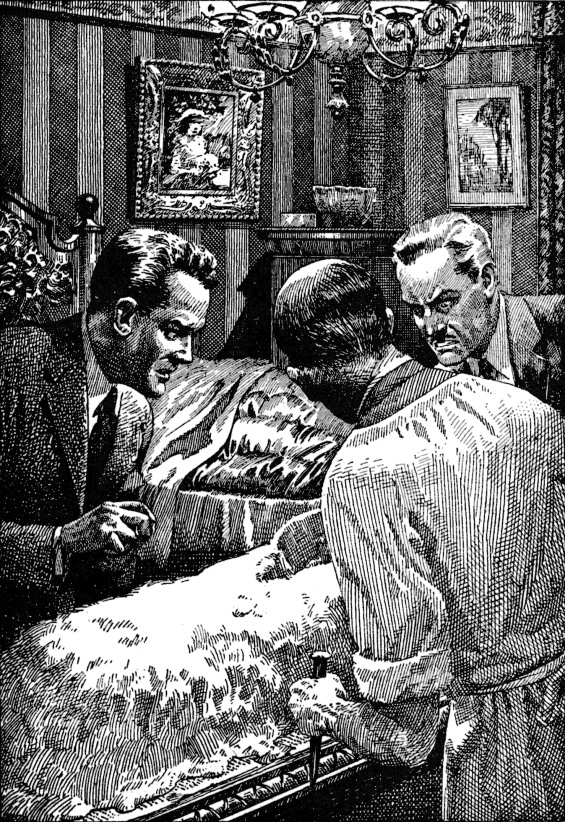
"In Five Minutes We Had A Plaster Mold Of The Creature"

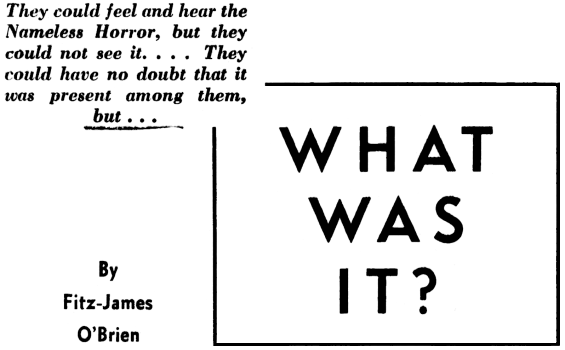
What Was It? by Fitz-James O'Brien - illustration from Famous Fantastic Mysteries, December 1949

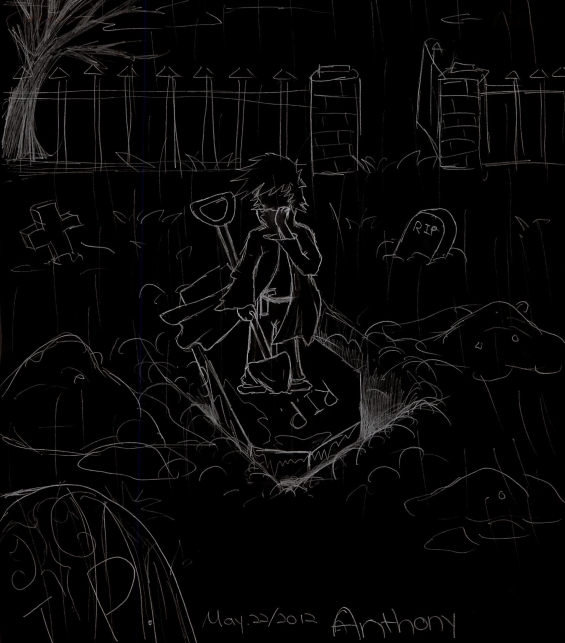
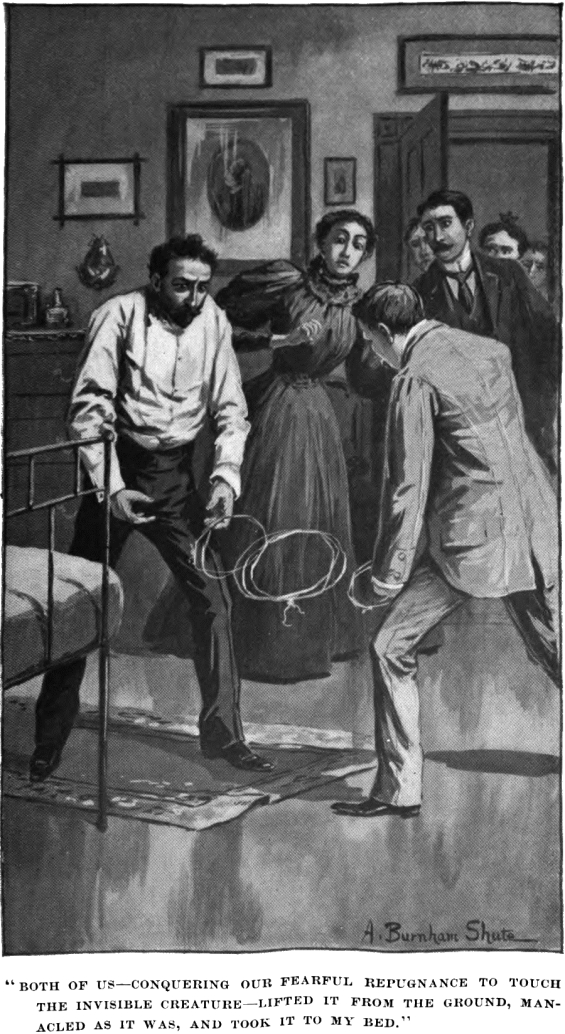
What Was It? by Fitz-James O'Brien - from A Stable For Nightmares, 1896

LibriVoxWhat Was It?
By Fitz-James O’Brien; Read by Peter Yearsley
1 |MP3| – Approx. 35 Minutes [UNABRIDGED]
Publisher: LibriVox.org
Published: May 2006
|ETEXT|
One of the earliest known examples of invisibility in fiction is What Was It? by Fitz-James O’Brien – He’s been called “the most important figure after Poe and before Lovecraft” and this story serves as a kind of a bridge between the supernatural and the scientific, between the likes of de Maupassant’s The Horla and Wells’ The Invisible Man.
First published in Harper’s Magazine, March 1859.

Here’s a |PDF| complied from the Famous Fantastic Mysteries, December 1949 publication.

Posted by Jesse Willis
Michael Bekemeyer’s reading of Harry Harrison’s The Velvet Glove

SFFaudio Online Audio

You may recall that one Michael Bekemeyer recorded a Harry Harrison story, The Velvet Glove, for The Time Traveler Show podcast back in 2007. He’s got a new project in development:

And here’s the story:

The Time Traveler Show #22 - Harry Harrison’s The Velvet GloveThe Velvet Glove
By Harry Harrison; Read by Michael Bekemeyer
1 |MP3| – Approx. 1 Hour [UNABRIDGED]
Podcaster: The Time Traveler Show
Podcast: December 28, 2007
First published in Fantastic Universe, November 1956.

[via Rick Jackson aka The Time Traveler]

Posted by Jesse Willis

LibriVox: The Good Neighbors by Edgar Pangborn

SFFaudio Online Audio

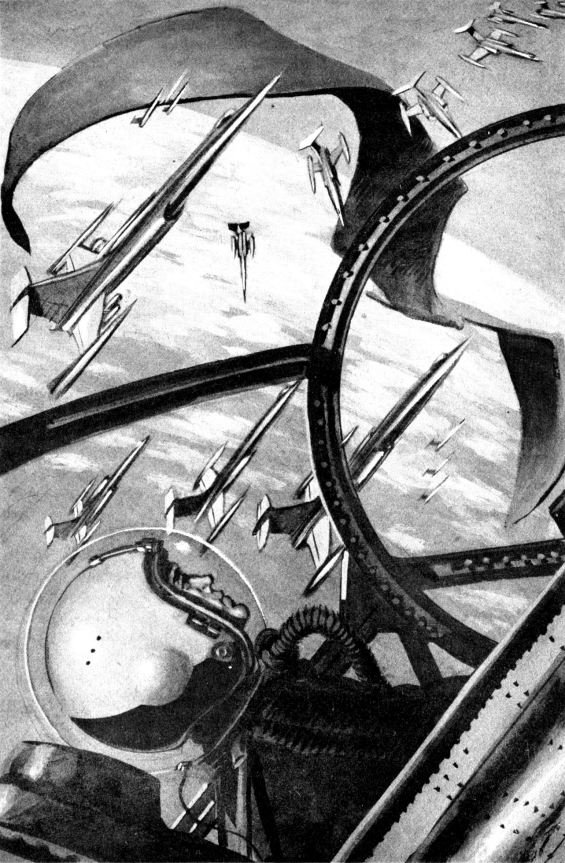
LibriVoxA first contact story and a mystery story! When a massive alien, the size of a city, enters Earth’s atmosphere fighter jets are scrambled to meet it. The alien seems to be in search of something – but what it is won’t turn out to be what we expect. Here’s part of the description of the alien:

She had a head, drawn back most of the time into the bloated mass of the body but thrusting forward now and then on a short neck not more than three hundred feet in length. When she did that the blunt turtle-like head could be observed, the gaping, toothless, suffering mouth from which the thunder came, and the soft-shining purple eyes that searched the ground but found nothing answering her need. The skin-color was mud-brown with some dull iridescence and many peculiar marks resembling weals or blisters. Along the belly some observers saw half a mile of paired protuberances that looked like teats.

The Good Neighbors by Edgar Pangborn - illustrated by Wood

LibriVox - The Good Neighbors by Edgar PangbornThe Good Neighbors
By Edgar Pangborn; Read by Gregg Margarite
1 |MP3| – Approx. 12 Minutes [UNABRIDGED]
Publisher: LibriVox.org
Published: February 21, 2009
|ETEXT|
You can’t blame an alien for a little inconvenience—as long as he makes up for it! First published in Galaxy Science Fiction, June 1960.

And here is a |PDF| made from the original publication in Galaxy.

Posted by Jesse Willis

LibriVox: Under The Knife by H.G. Wells

SFFaudio Online Audio

Under The Knife by H.G. Wells

Here’s an interesting story by the always pioneering H.G. Wells – it’s Horror of sorts – or as close as the master of SF can come to it – it features an out of body experience, a near death experience, and astral projection!

Under The Knife by H.G. Wells - Editorial Introduction by Hugo Gernsback

Under The Knife by H.G. Wells - Illustration from Amazing Stories

LibriVoxUnder The Knife (aka Slip Under the Knife)
By H.G. Wells; Read by William Coon
1 |MP3| – Approx. 35 Minutes [UNABRIDGED]
Publisher: LibriVox.org
Published: January 07, 2007
A patient, under surgery, relates his sense experiences as careens around the physical universe in a celestial journey. First published in The New Review, January 1896.

Here’s a |PDF| made from the March 1927 issue of Amazing Stories.

Posted by Jesse Willis

Review of The Summer Isles by Ian R. MacLeod

SFFaudio Review

AUDIBLE FRONTIERS - The Summer Isles by Ian R. MacLeodThe Summer Isles
By Ian R. MacLeod; Read by Steve Hodson
Audible Download – Approx. 13 Hours [UNABRIDGED]
Publisher: Audible Frontiers
Published: 2012
Themes: / Alternative History / Dystopia / History / Fascism / Homosexuality /

I have always been intrigued by alternative histories. Unfortunately my knowledge of history sometimes limits my enjoyment, being more of an overview of the subject. I often can’t tell if an event has been changed, and if so, whether it is significant or not. In some of the better alternate histories you can get away with not knowing too much about the period and still enjoy the story. Thankfully, in this case, I had recently been reading a history of Europe covering the same period from the early 1910’s to 1940.

MacLeod’s The Summer Isles is set primarily in a 1940 where Great Britain lost The Great War in 1918. America doesn’t enter the war and France makes an appeasement with Kaiser Wilhelm II’s Germany. The result is that Britain, not Germany, is left in a state of shock, feeling betrayed by their supposed allies. A young soldier, John Arthur, rises to power in the bleak years that follow, suggesting a parallel to Hitler, who gets only a single reference, never having the opportunities to gain power that losing the war afforded. The great Empire that was Britain is stripped away in the reparations following the war. That sense of betrayal is used to fuel Arthur’s rise to power as he brings in his political movement “Modernism”. John Arthur’s portrait hangs everywhere, even in the men’s public toilets.

Modernism is a very British take on fascism and drove several of the same horrors that Naziism did in our own history. Jews, homosexuals, intellectuals, the Irish and any and all other ‘deviants’ are persecuted and ultimately removed from the new Modernist society. The Jews in particular are sent to be “resettled” on the eponymous Summer Isles.

The story is told by Geoffrey Brook, a secretly homosexual Oxford history Don, who had some prestige for having been a favourite teacher of John Arthur as a child. Brook is in his 60’s in 1940 when he receives the news that he has at terminal lung cancer.

Brook, in trying to reconcile himself with his past, recounts in flashbacks the one true love of his life that he lost in the Great War. More flashbacks fill in the years before and after that war; several of the scenes flowing together with the present day as Brook’s mind drifts in and out of his reminiscences. Particularly when he visits some of the same locations.

MacLeod’s writing is excellent, at times didactic, as the historian narrator recounts past political and social events, yet by turns touching, confused, detailed and frightened as more personal or recent events are recounted. Slow at times, this fits will with the drifting recollections of the narrator as the hidden story is gradually revealed. The final act of the novel moves at a much faster pace, while still holding convincingly onto the character of the narrator. The Summer Isles was nominated for the John C Campbell Memorial Award, the Sidewise Award for Alternate History and the World Fantasy Award.

The audio narration by Steve Hodson fits the character perfectly. The weariness with life, the broken rapture at prized but lost moments of love and of lust are all perfectly portrayed. He even nails virtually all of the Scottish pronunciations; a pet peeve sf mind, being Scottish myself, with several other narrators.

Posted by Paul [W] Campbell