The SFFaudio Podcast #892 – READALONG: Ring Around The Sun by Clifford D. Simak

Jesse and Scott talk about Ring Around The Sun by Clifford D. Simak

Talked about on today’s show:
Galaxy 1952, 1953, one of his earliest novels, Cosmic Engineers, Empire, not really Simakian, very Campbelly, Campbell rejected it, City, guess the right answer, what does the D standfor, the D stands for Philip K. Dick, this book is superDick, kinda wild, a kitchen sink, so much happening, under the discipline of a competent writer, a great writer but competence is not the word for him, not natural, tons of wild ideas, under control, why does the little girl show up in the first scene?, cookin breakfast, infodump, why are you not married, this book is largely about childhood, child-like, we’ve been following an android the whole goddamn book, growin a beard, getting hungry, the big conflict is he’s fighting with himself, split into three, given his essence, what kinda book is this?, fairyland, as one might, familiar with fairyland, the topped stripes, a very strange book, David Pringle, a critic, The 100 Best Novels 1949-1984, an English Language Selection, 2 simaks, Way Station and City, 1949-1984, this is a good book, a Tall Tale, too complicated for its own good, prose style, a new plot twist in almost every chapter, a very ornate book, the McCarthyite era, economic speculation, technological panaceas, telepathic androids, robots who are also hungry, a very good Simak novel, after reading Shakespeare’s Planet, Way station, good book, sparkier, All Flesh Is Grass, Stephen King, parallel structure, not just because it has androids, a forever car, at the end of his career, a ton of Simak, keep going, recurring things, revist these things, houses, something was in the house, a bit of mental separation to avoid conflation, coming from everything you witnesses prior, every person has in common, they had some sort of childhood, even if you’re six and im sixty, graduation, your first job, your first love, start with the basics, always a possibility, Simak is not a boy, gotta get that top, almost Bradburyesque, the system that we live in, the economy, Star Trek economics, the forces, people protecting what they have, extraction, it doesn’t seem possible, not as good as The Visitors, almost all the parts, false notes, so many sparks, as maturity sets upon you, that theme I touched on earlier, very mysterious, setup pretty early, rumours of a forever car, it’s cheap, when things are happening in the economy, participate or not participate, cultural discipline like the Amish, they have to review it, they have to make the case, a benefit vs. a disruption, assailed by iphones and androids and robots and waymos, you can’t control what your government decides to subsidize or ban, all you can do is see what’s happening, the solution, the pretentionists, super-interesting, grilling him, what his particular cosplay is about, a sign of what’s going on, the conflict, there is technicality conflict, partly fighting with himself, why is this disruption happening, Simak would like some alternatives, razor, lightbulb, everything is free, how close they are, comin out of WWII, this cold war thing, spread outside of the cities, a big country, no target, constant extreme disappointment and hopeful, the mob is in the background, he doesn’t let that get him down, not a black pill book, locking us into ways of behavior, he’s searching for it, can’t we just all agree, a nice walk, changing of the seasons, an agrarian populist, doesn’t want cities making all the rules, we need farmers, making sure that way of life is protected, rustic rather than agrarian, people who love the countryside, people’s views on policies, one colour another colour, different motivations, the people have needs, one needs a truck and the other needs a subway pass, the uniparty (whatever flavour) doesn’t give you the cheap reliable bus or truck, supersmart, what if we take the idea of automation and use it as an application of disruption for the benefit of people, teetering on the edge of being evil, Crawford is a representative, a think tank, a billionaire class or higher, deep down they’re all the same guy, essentially just Simak, we’ve got to do something, the doing something is writing this book, for serialization in Galaxy, Simak was a newspaperguy, the Minneapolis Star, keeps you in a world, an academic, who the president is, tax policy, you have to understand it and get it out there everyday, being a political advisor, the politicans don’t do any research, so many things going on in this book, what’s the motivation behind this, even the Cold War might be wrapping up, set in the 80s (or 77), worries about the economy going bad, the word carbohydrates, we don’t just need foodbanks, soylent green, a FOOD episode, Gravy Planet aka The Space Merchants, on a parallel earth, manufacturing carbohydrates, wood goes in cellulose comes out, the scene on one of the covers, exploring the factory, bringing in raw materials, who is paying for all those robots, selling at a subsidy, inputs are free, drill down, what his economic solution, nobody gets paid anything, all profits, everybody gets everything, communism, altruism, Crawford is a sympathetic evil guy, I wanna let you live, make me understand it, you can’t threaten the way things are, the alternate people who seem leaderless, Robert A. Heinlein, By His Bootstraps, time doesn’t exist, this book has a lot going on, a coup happening, a breakoff civilization, agrarian populist, there’s no voting, there’s only opting in or dropping out, this is not an evil book, Beggars In Spain, Slan, mutants, quasi science fiction, his first sale is published in 1952, 1953, Clifford Dick Simak, Dick’s not influenced by this, this is a parallel extraction, Dick cites Null-A and Van Vogt, Realms Of Fantasy, renfaire shit, Society For Creative Anachronism, the 70s, mutant = X-men, rebellion, The Golden Man, the danger room, his subversion of mutants, what if they’re superattractive to women but don’t know how to read, women with three breasts, so mutated they look like slugs, so mutated we don’t recognize them as mutants, what John W. Campbell was asking for: more mutants, mutant stories, in essence, you’re supposed to think I’m a SLAN, we the people who can see the future, man walking on the Moon, telepathy, an autist when it comes to tops, he can think about childhood real good, I can read a different science fiction next week, the podcast mutant, observation/joke/question, people on twitter, how much to spend on editorial revisions/covers, they’re in the bubble, you’re the weirdo, as a percentage of the population, people who read 10 books a year, they absolutely exist, 1 guy Tony C. Smith, discovered science fiction as an adult, got excited about reading like a kid, knew how to read, just didn’t do it, book addicts, get books cheaper, give books cheaper, can’t afford them, and thus SFFaudio was born, a family of readers, both sets of grandparents, reading something non-fiction, an immediate upbringing, ancestrally, school teacher, shop teacher, great uncle, voracious reader, great grandparents, their book collection if they had one, you inherit things you don’t even realize, they have different things, are you ashamed of your books, gi joes, transformers, music, a personal culture for each family, used to be anyway, figuring out what this book dealing with, it’s so big, society and the personal, the weirdest aspect, that’d be loving himself?, the most broken part of the book, too spinning in on itself, wow, an interesting thoughtful guy, recurring, hopefulness, knowledge in the stars, Time Is The Simplest Thing, disrupting the economy, read this week, chapter 33, so he was an android, an artificial man, the cunning of man’s mind, the mutants did!, even he himself would never know, artificial women too, and a host of other gadgets, wreck the race from which they sprang, China is disrupting our economy!, good jobs, the mystery of the story, how he composed the book, it mostly fits together, the mystery is less important than rumniating on the topics themselves, sparky full of ideas, flying witches on broomsticks, steal ideas, bring them home through Mexico, Walmart style disruption stores, wow, rejected by the girl’s family, fairyland of youth, memory, super-hilarious, the past is the most interesting place, a hilarious and interesting genre, the Merryland books, 1672ish, Erotupoia, Bettyland, a genre of fiction, a visitor reports back on a place he went to, a geographical version of a woman’s body, hills over there, rivers down here, having fun, making fun of the genre, with childhood, that Bradburyesque sense, certain scenes, endless summer, how come we can’t live in a good world, feel that, meanwhile, boardroom tables, privacy policy, extract more from you, televisions are so cheap, they’re using the tv to influence, Netflix button, put ads in your operating system, Enshittification by Cory Doctorow, the whole point is to extract from you, a car you can hand down to your grandkids, forever clothes, forever razor, Stressed Out by 21 pilots, momma sang us to sleep, build a rocketship, you need to make money, getting out from under, whoever’s doing this, Vickers says, and his parents need to be thawed out, so it turns out…, horrible capitalist system, all my contents are correlated, he was the guy behind all of this, go talk to the robot, the plan is to make things better for people, doing these things to the economy, the importance of knowing what your doing, mindfulness sounds really bad, pitchfork and torch, we’re gonna do this to accelerate the badness that’s happening, the evil people in our world, saying to themselves, if they think of you at all, we have a mandate to make profits for our shareholders, Cora’s tweet: every time I see this guy I want to punch him in the face, Albania’s ai minister, power good government with good solid nuclear power, the disruption happening seems familiar to us, the forever car, how people think about Teslas, tended to be publicly enthusiastic, the promise of them, the batteries won’t, in the frame, bends the frame, throwing the car away, the cars have televisions in them, all the smart cars, Windows 10 isn’t supported anymore, your Ford Focus isn’t supported anymore, Ford Mustang from 1964, a throwback pickup truck, can fix it yourself, anyone can fix it themselves, emissions are why, you can’t achieve good emissions without electronics, waiting at the light the engine is turned off, save theoretical emissions, the biggest expulsion, it’s all gamed, theater, try not to play any games you can’t win, the casino, not gonna win, not gonna go, Bryan Alexander travels a lot for work, an endless nightmare of airport problems, sleeping in the airport, much rather not, it’s incredible that we’re here, what air travel is going to look like in the future, bar lounge area, seats too small, crammed in, extracting you, the Chinese with their flying cars, not allowed to disrupt our world, the pretentionists, Samuel Peyp diarists, pretending to be cats and dogs and birds, my area of study is Aztecs, online video games, Balder’s Gate III, escapism, building games, Minecraft, the biggest genre, survival, farming, sandbox games, everything’s easy, 2 seconds to mine, crafting, rock and stick and 2 seconds later you got a handaxe, 10 minutes later log cabin, building your own log cabin, pretty satisfactory, digital log cabin, didn’t have to get sweaty, I live in my game, the people at the renfair, jousting, friendly and together, conventions, leavin the world, a bubble for 4 days, similar interests, I was somewhere else, Robert Silverberg is still alive, every science fiction convention, during COVID, theoretically left science fiction for a while, he feeds on the same interests, people that read a bunch of books, grinding horror, driving across the United States, the next 2 Dortmunder books, if you’re painting a warehouse, a lot of ceilings, intense labour, a kind of pretention, you’re out of your head, drudge work, great experience of another world, arms and eyes, appreciating some thoughts goin on, a really amazing thing, a kind of dissociation, something going on in this book, MK Ultra, The Manchurian Candidate sort of stuff, CIA, human robotoids, wipe people’s memories, implanted memories, very Philip K. Dick, for political control, assassinations, interrogations, send messages, the Jason Bourne series, MK Ultra fiction, extensive in the United States and farmed out to Canada, we have to invest, at least 20 years, the Chinese are doing it, maybe the Russians are doing it, POWd by the North Koreans or the Chinese, act strangely, obviously brainwashed them, we need to be able to brainwash, how can he be an android, fully functional, a scene where Data has a beard, can he control the growth, you can imagine a model of Data that has that ability, everything about him is a man except we’re told he is not a man, people are programmable, you learn these languages, something that humans have that dogs don’t have, responding to their environment, programmed to learn human things, Simak is reading the paper and reading between the line, Philip K. Dick was not a connected guy, he worked at a music shop, this is not public at the time, from the Nazis originally, news stories, the Korean War, they must be brainwashed because they’re rejecting the United States in favour of North Korea and China, on the wrong team, other possibilities than mind control, the most powerful street is Madison Avenue, both are scary, K Street, think tanks, the justifications, the oligarchs to do what they want, Crawford is not as bad a guy as we thought, come on friend, he said softly, Simak doesn’t want war, a lot of horror, he doesn’t know the way, hopin to make the place better, less of a Catholic book than his other ones, not a Catholic guy, some of the thoughts, more of a spirtual level to it, how Arthur C. Clarke’s The Star, a jesuit, a relationship to the stars, pathos and suffering and understanding, more scattered, touch on it a few times, page 178, end of chapter 39, how he came to be, his purpose and his end, a tool of immortality, the orderly progression, the next step, law unto the entire universe, the strength of human face, divinity, terrible need of faith, question and doubt, no need of faith, faith replaced with knowing, questing, a lot of great stuff in this book, so sparky, continually impressed by him, so philosophical, idea books, not stuff happening books, thoughtful and exploratory, an OCR, the fire wheel dog formula, the formula of the mutants, an earlier forward step, fire, cook things, pull things, dogs?, bows, plumb line, technologies, ssomethin super interesting, an extinct [breed] of dog, canis vertigus, the turning dog, manor house, run on the wheel to turn the spit, a small dog with curled legs, literally three technologies all together, replaced by motors, technology leads to technologies, a border collie, different labs, different from goldens, programmed differently, retrieve birds from swamps, love your children, take you on walks and be happy to see you, herding, keeping their sheep in their proper place, moving them from place to place, talking about technology in that way it is science fiction, you can’t have science fiction without connection to technology, it isn’t engineering fiction, mine the asteroids, that isn’t about how to make the rocket go, atomic pile!, what will it do to the people?, if there is a main thrust in this book, products that will no longer have to be manufactured or repaired, intentionally destroying society, a tv with spyware built into it, well you’ve got food that free, who is being evil?, the oligarchs, want progress to stop to maintain the status quo, conserve their profits, pretend I was somewhere else, more interesting or better or not like this, zombie apocalypse games, Project Zomboid, ambulance driver or cop or teacher or athlete, survive for as long as you want, an endless game, no victory conditions, Sid Meier’s Civilization, if they’re trying to hurt you, doing it and don’t care, changing it to help me win this game, taking stuff from you and putting it in my pocket, Crawford is from the old guard, America 1950, the other world mutants, help the population, he makes a film, talk to the pretentionists, evacuate the earth to these other worlds, on to the stars if necessary, a temporary solution to this particular crisis, we in our present, people out of work, carbohydrates are the solution, going off to be pioneers, let’s do enclosures, fill it full of sheep, goodbye people, crimes that can get you exported as your punishment, free land in an empty continent, more profits for Hudson’s Bay Company shareholders, love or indifference or hate, probably not going to be neutral, “mutants”, not telling what’s going on, we spread this out, $500 per room, trade that in, they’re not trynna make a profit, the help is accelerationist, for a not religious guy, lying is evil, deception is not necessarily evil, you shouldn’t lie to people, the oligarchs are hurting society somehow, the mob, trynna hunt people down and kill them, offscreen in the book, “populist”, kind of a slur in the United States, people getting what they want, close to fascism, we bind you up together, a whole bunch of farmers, get our voices heard together, the popular voice vs. the bound stick for violence, on team Simak, a bit of violence, story is about conflict, Hamlet the play, the first detective story, when does the ghost appear, the soldiers see Hamlet go talk to the ghost, the ghost of his father, the rest of the play is him trying to testing his hypothesis, does my mom know?, to know or not to know, should I just go along?, a philosophical investigation, everybody dies, Ophelia dies, he kills Polonius, the ultimate answer is maybe you, do I want to turn over this rock of knowledge, feel something, catharsis, detective fiction comes out of Poe, when it hits with Sherlock Holmes and Agatha Christie, a little bit of science fiction and a lot of mystery, this essential question in us, not being satisfied, a conspiracy book vs. a mystery book, turns out it is a third of me, what a book!, so good, glad to have read it, YouTube video, different things there, what Simak next?, May 2nd, The Handle by Richard Stark, gonna love it, Way Station, All Flesh Is Grass, 1965, how many did he write in the 70s?, lots in the 70s, A Choice Of Gods, Enchanted Pilgrimage, The Fellowship Of The Talisman, The Werewolf Principle, The Fisherman, a rusty rocket, a scene in the book, so rich, he’s the man, overcountry travel, he’s the flyover country science fictionist, New York guys, Bradbury in Los Angles, Missouri, Colorado, California, Orson Scott Card in Utah, when you get to the west, Wyoming, east of, Ohio, Kansas, is Kansas the west, right in the middle, Shaun D. Standfast, passed away, notebook lm, 9 interviews, living in Minnesota, geographic and philosophic backwater, east coast, New York, distinct effects, professional isolation, the science fiction swim, tied closely to his desk, a lot of publication with John W. Campbell, rely on letters, a Clifford Simak letters set, Isaac Asimov and Jack Williamson, Minneapolis, Poul Anderson and Gordon R. Dickson, tell me more, the distilled info, people that like audio, an audiobook, make it feel like a real conversation, shaving and smoking, pops out an mp3, my android ran out of cigarettes and is grateful to have some more, how much Dick have you read, not as coherent at novel length, some of the images, his best novel, very disputed, Galactic Pot-Healer, very funny, it ends like a flat tire, great scenes, not exactly a Simak novel, what makes it so great, if he’s Tolkien it is his Lord Of The Rings, rougher and sillier, the basis as a place to escape, wasting time on the internet, gets a call from god, raise a sunken cathedral, other pilgrims, yarrow stalks, The Man In The High Castle, how great Dick can be, what did we settle on, All Flesh Is Grass.

Posted by Jesse Willis

The SFFaudio Podcast #523 – AUDIOBOOK/READALONG: The Tomb by H.P. Lovecraft

Podcast

The SFFaudio PodcastThe SFFaudio Podcast #523 – The Tomb by H.P. Lovecraft; read by D.E. Wittkower. This is an unabridged reading of the short story (32 minutes) followed by a discussion of it. Participants in the discussion include Jesse, Paul Weimer, and Evan Lampe.

Talked about on today’s show:
The Vagrant, March 1922, June 1917, Weird Tales, 1926, his first adult story, so polished, Jesse’s favourite Lovecraft story, personality, Jervas Hyde or Jervas Dudley, how you interpret the events of the story, I want to be somewhere else, Polaris, WWI, a civil war among the Teutonic races, complex loyalties, bacchanalians, beautiful not horrific, Gaudeamus, lyrics for an Ale Storm, out of character, out of place, the one flaw in the story, that’s the point, possessed, genetic connection, lucky for me, dreamed all day, are the events all real, humouring him?, a palliative?, Hiram should be black in the film adaptation, an aged and simple minded servitor, who like me loves the churchyard, he insults everybody, an archetype, the male nanny, the absent nanny in The Outsider, everybody is kindly, a kindly espionage, insane boy, insanely lonely boy, the opening, three sentences, this refuge for the demented, a comedy piece, a disclaimer, even funnier, I’m smarter than all of you, a psychologically sensitive few, Supernatural Horror In Literature, he’s right, the premise of The Call Of Cthulhu, this is just truth, there is no sharp distinction between the real and the unreal, flashes of supersight, more bragging, a truth that most people never think about, epistemology, a construction, not looking vs. not seeing, maybe my blue is your red, the wine dark sea, orange, an article about blue, rare in nature, the history of race, Asians as the yellow race, a hoax, George Psalmanazar, Formosa, Taiwan, Grey Owl, he’s a fraud, putting on an artificial personality, what resonates, something very real, childhood, everybody gets one, we’re always looking back, that whole experience, a very autobiographical story, “Jesse Willis: Dreamer and Visionary”, literally true, born into a wealthy family, ancient and little know books, 1711, Boston gentry, a coach-ride away, somewhere in Lovecraft country, his connection to Poe, a reincarnation of Poe, how can this be?, visited Edgar Allan Poe’s grave, the inventor of monomania, The Black Cat

FOR the most wild, yet most homely narrative which I am about to pen, I neither expect nor solicit belief.

an open temperament vs. insane psychopath, “pen”, neither expect nor solicit empathy, a penknife, walking on eggshells for this poor broken boy, such a sympathetic character, The Green Dragon Inn, the Hobbits are interested in Earthly pleasures, a sex party across the Brandywine, making so many Tooks, fear of thunderstorms, an interesting detail, an overlay, this is the goth kid, imposing too much of the libertine upon Lovecraft, the horror is losing control, Beyond The Wall Of Sleep, The Shadow Out Of Time, a story about adolescence, he can’t admit that, Lovecraft is horrified, a straight up bacchanalia, gay blasphemy tore from my lips, Castro’s confession in The Call Of Cthulhu

Suddenly a peal of thunder, resonant even above the din of the swinish revelry, clave the very roof and laid a hush of fear upon the boisterous company.

if that’s the case…, playful, restrained, echoed early on

I do not think that what I read in these books or saw in these fields and groves was exactly what other boys read and saw there; but of this I must say little, since detailed speech would but confirm those cruel slanders upon my intellect which I sometimes overhear from the whispers of the stealthy attendants around me. It is sufficient for me to relate events without analyzing causes.

other stuff going on in the hollow

I have said that I dwelt apart from the visible world, but I have not said that I dwelt alone. This no human creature may do; for lacking the fellowship of the living, he inevitably draws upon the companionship of things that are not, or are no longer, living.

the trees, the rocks, and the graves, a walk with one of his aunts, a man out of time (born two centuries too late)

Close by my home there lies a singular wooded hollow, in whose twilight deeps I spent most of my time; reading, thinking, and dreaming. Down its moss-covered slopes my first steps of infancy were taken, and around its grotesquely gnarled oak trees my first fancies of boyhood were woven. Well did I come to know the presiding dryads of those trees, and often have I watched their wild dances in the struggling beams of a waning moon—but of these things I must not now speak.

as a toddler, The Great God Pan by Arthur Machen, dryads and nymphs, fancies, he makes of them friends, another way to tell this story, from the Private Eye’s POV, is the P.I. lying?, What?!, he doesn’t actually ever go in there, the key is a dream key, a Dreamlands story, he never actually goes into that tomb, astral projection, he’s a dreamer, in the woods and the books, a bolt of lightning, by what miracle?, what colour is this dress?, a supernatural agency, a malevolent force

“Sedibus ut saltem placidis in morte quiescam.”
—Virgil.

from The Aeneid, “give a dead man a place to rest in”, unquiet dead, he’s a ghost, very sensitive, he’s going to get what he wants in the end, kind of beautiful, The Case of Charles Dexter Ward, the Halloweening season, suspicion of festivals and gathering, Halloween is the return of the spirits, placate the spirits, basket of emptiness, when we read Roman history, ancient roman documents, Cicero is just a dude, Marcus Aurelius, Hiram was a buddy of Solomon, a Tomb of Hiram, the Comb or Tomb of Hiram, extreme antiquity, Lovecraft’s awareness, little call-outs, the only book that gets mentioned, textual references, the Arkham Insiders podcast (the German version of The H.P. Lovecraft Literary Podcast), Plutarch’s Lives, Frankenstein, a worm eaten translation, a true story, the life of Theseus, tokens of destiny, the time was not yet ripe, the will of fate, he does learn to do this, unlocking things with his dreams, a box in the attic that contains the key, entirely plausible, predicted, he’s 11 years old, so well put together, so much detail, a dozen times, Parallel Lives of the Noble Greek and Romans, aspects, Romulus, listening through a hole, spied upon, the blank slate, ivory tower, a mix, a monster and a well-spoken gentleman, the effect, a self-harm story, wearing the black beret and black nail polish, creepy and good, a great story, latch onto the festivities, understanding Lovecraft’s view of history of the Atlantic and civilization and race, the Georgian playfulness, very very bad,

Then, whispered Castro, those first men formed the cult around small idols which the Great Ones shewed them; idols brought in dim aeras from dark stars. That cult would never die till the stars came right again, and the secret priests would take great Cthulhu from His tomb to revive His subjects and resume His rule of earth. The time would be easy to know, for then mankind would have become as the Great Old Ones; free and wild and beyond good and evil, with laws and morals thrown aside and all men shouting and killing and revelling in joy. Then the liberated Old Ones would teach them new ways to shout and kill and revel and enjoy themselves, and all the earth would flame with a holocaust of ecstasy and freedom. Meanwhile the cult, by appropriate rites, must keep alive the memory of those ancient ways and shadow forth the prophecy of their return.

freedom and degeneration and evil, dive into Lovecraft’s letters, quite an adventure, barbarism and the frontiers, long rants, freedom is going to bring us all down, letters to Robert E. Howard, civilization vs. barbarism, talking past each other, the Alexandrian chaos, hybridity, interracial marriage, witches, Maroon communities, pirates, zootsuiters, celebrating freedom, building a wall, 122 of the Weird Tales version, charnel conviviality, I must not describe, the THING happened, you absolutely must read The Loved Dead by H.P. Lovecraft and C.M. Eddy Jr., that’s his bent, the greatest sense of humour,

For a week I tasted to the full the joys of that charnel conviviality which I must not describe, when the thing happened, and I was borne away to this accursed abode of sorrow and monotony.
I should not have ventured out that night; for the taint of thunder was in the clouds, and a hellish phosphorescence rose from the rank swamp at the bottom of the hollow. The call of the dead, too, was different. Instead of the hillside tomb, it was the charred cellar on the crest of the slope whose presiding daemon beckoned to me with unseen fingers. As I emerged from an intervening grove upon the plain before the ruin, I beheld in the misty moonlight a thing I had always vaguely expected. The mansion, gone for a century, once more reared its stately height to the raptured vision; every window ablaze with the splendour of many candles. Up the long drive rolled the coaches of the Boston gentry, whilst on foot came a numerous assemblage of powdered exquisites from the neighbouring mansions.

presiding x2, powder (and ash), faces and wigs, “throng”,

With this throng I mingled, though I knew I belonged with the hosts rather than with the guests. Inside the hall were music, laughter, and wine on every hand. Several faces I recognised; though I should have known them better had they been shrivelled or eaten away by death and decomposition. Amidst a wild and reckless throng I was the wildest and most abandoned. Gay blasphemy poured in torrents from my lips, and in my shocking sallies I heeded no law of God, Man, or Nature.

out of control, the lighting bolt in Frankenstein, The Witch-Cult In Western Europe by Margaret Murray, druids, cthonic religions, Cultures Of Darkness: Night Travels In The Histories Of Transgression by Bryan D. Palmer, carnival, masquerades, secret societies, cultural night, anti-capitalist, resistance comes out at night, on the side of the state, Livy’s account of the bacchanalians, Augustus’ moral reforms, men have to get married, promiscuous character, more uncleanliness, small government, morally transgressive, some YouTube idiot, it’s always moral decline, not great at economics or politics, sensitive to night, astronomy and night walks, not directly inspired by a dream, dreams are central, ultimately connected, super-creative and imagination connected, full of fancies, is there a victory here? or is it a tragedy?, that barred room, not a triumph, We Can Build You by Philip K. Dick, delusion, connection with his ancestors, some philosophy line: being-toward-death, thantophilic

It is midnight. Before dawn they will find me and take me to a black cell where I shall languish interminably, while
insatiable desires gnaw at my vitals and wither up my heart, till at last I become one with the dead that I love.
My seat is the foetid hollow of an aged grave; my desk is the back of a fallen tombstone worn smooth by devastating
centuries; my only light is that of the stars and a thin-edged moon, yet I can see as clearly as though it were mid-day. Around
me on every side, sepulchral sentinels guarding unkempt graves, the tilting, decrepit headstones lie half hidden in masses of
nauseous, rotting vegetation. Above the rest, silhouetted against the livid sky, an august monument lifts its austere, tapering
spire like the spectral chieftain of a lemurian horde. The air is heavy with the noxious odors of fungi and the scent of damp,
mouldy earth, but to me it is the aroma of Elysium. It is still–terrifyingly still–with a silence whose very profundity bespeaks
the solemn and the hideous. Could I choose my habitation it would be in the heart of some such city of putrefying flesh and
crumbling bones; for their nearness sends ecstatic thrills through my soul, causing the stagnant blood to race through my
veins and my torpid heart to pound with delirious joy–for the presence of death is life to me!

incredibly connected to this story, Ashes, very delectable, not a cannibal story, utterly delightful.

Adventure Comics - H.P. Lovecraft's THE TOMB, Issue 3

Ballantine Books - H.P. Lovecraft's THE TOMB And Other Tales

H.P. Lovecraft's THE TOMB legoized by Jesse Willis

H.P. Lovecraft's THE TOMB (II) legoized by Jesse Willis

H.P. Lovecraft's THE TOMB adapted for Strange Aeons, issue 2

H.P. Lovecraft's THE TOMB illustration by Mcrassusart

Posted by Jesse Willis

The SFFaudio Podcast #463 – READALONG: Altered Carbon by Richard K. Morgan

Podcast

The SFFaudio PodcastThe SFFaudio Podcast #463 – Jesse, Paul Weimer, Marissa van Uden, Bryan Alexander, Luke Burrage, and Maissa Bessada discuss Altered Carbon by Richard K. Morgan

Talked about on today’s show:
2002, a pretty good book, cyberpunk continuing, classic film noir detective stuff, sleeving, an old book, the Netflix TV adaptation, 10 years of the Science Fiction Book Review Podcast, too heavy, too violent, sex scenes, long and graphic, too much tumescence?, a major part of the book, having partial control of your body, Ortega connection, his dick understands, your biology and your mind, Luke is his penis and his brain, the disconnect, what a lot of this book is, hard to listen to a narrator narrate, not Morgan’s forte, the action, the love of the guns, the sheen of the blades, a really interesting idea book, the second and the third book, the narrator’s pronunciation of Kovach (in book 2 and 3), Todd McClaren’s narration, a causal vs a casual link, Bancroft has Mr Burns (from The Simpsons) voice, thinking about the sex and the violence, a book about the first year of the war on terror?, Battlestar Galactica, part of his identity, a ghost in the book, The Maltese Falcon, Bay City, a setup for the traditional private eye novel, hardboiled novels, the femme fatale, the noir detective, a murder mystery, a locked room murder mystery, a false ending, we are with the detective, proper timing, missing the whole lightness of being, it feels like a first novel, merging a hardboiled detective novel with a real science fiction idea, alien technology, the perennial spoilers are uninteresting conversation, consciousness uploading and downloading, a whole economy that works inside of the technological system, real death, “organic damage”, Prof. Eric S. Rabkin’s “transformed language”, capitalism can go a step further, repossessing you body, mortgaging your body, what the riches of the ultra-capitalist winners look like, Market Forces, Morgan understands global capitalism in a way few science fiction writers rarely do, Neuromancer by William Gibson, when Case disparaging the meat-sack, so much smoking, sleeve-sickness, cross-sleeving, a fourth book?, skip to the third book, Broken Angels, military SF, Woken Furies, Quellist struggles, the ideal series, like Doctor Who or James Bond, what would normally trigger a lot of people, a big backlash?, racism-proof, accidentally funny, whitewashing, not enough of the Asian identity, two different faces in the mirror, Ghost In The Shell (2017), Maissa was witness to the Falcon Heavy launch and recovery, making note of Miriam Bancroft, Jesse tells a story that turns out to be importantly incorrect, loving James M. Cain at age 14 or 15?, a terrible crash of destiny, stories about femme fatales, which Takeshi Kovacs, childhood memories set the program, telling Jesse’s sad stories, feeling betrayed, face punch exchanges, you’re not supposed to hit women, legitimate hitting, resonating for a reason, personality formation, not enough or the right kind of trauma, all kinds of experiences, resleeving and doing the podcast again, weird connections, identical twin problems, growing up and not being a single human unit, Luke and Nathan go to see the head teacher, tedious and annoying and boring, that’s not the fun game, everybody got Luke and his brother mixed up, what it’s like to be your own identical twin, one particular trauma to magnify, how long will it take to be two different people, rock-paper-scissors, virtual, taking the randomness out of it, taking out all the whims, how can they even be throwing differently, quantum improbabilities, slight differences, it isn’t chance, trying to lose, fun sex party, second guessing to win and lose, how attached they were to that life, proud to have been able to have killed himself, a will, the institution of you continuing on after your death, codicils, the A.I. hotel, Jimi Hendrix, Purple Haze, the reason for the change, the Hendrix estate, Hendrix was a big fan of SF, the language of H.P. Lovecraft, Edgar Allan Poe, the sidekick, a second trope, the possessive girlfriend nature of the hotel, a lot more personality, meeting the Hendrix, social graces and hotel service, subsumed inside his job, everybody in the police station has a mohawk, why does Ortega cut her own hair?, an undeveloped plot thread?, she’s Catholic, is it possible she doesn’t have a cortical stack implant?, everybody would have the scar, savoring that idea, when you can live forever and nothing can kill you, less meaning to existence, savouring the moments, never do a show twice, we’re never going to do one again, poignancy, the upcoming Dune show, the holiday lasted forever, permanent memoirs, people re-act, the physicality of the sonic booms, startling emotions, why am I crying?, death is more meaningful, seeing in the background, the first bit of violence, death isn’t final, “we saved the stack”, sixteen real deaths, more meaningful, not just movie violence, Ryker didn’t like mohawks, the default in computer gaming is multiple games, iron man mode, flushing your cache, stuck with the consequences, get to the next screen, PlayerUnknown’s Battlegrounds vs. Battlefield 4, completely different vibes, paranoia sneaks up on you, constant electrical shocks, one life to live mode, all the more meaningful, an accomplishment, the highest highs and the lowest lows, as a game mechanic, thirty minutes in, becoming very meaningful, seeming to rely on neurochem as superhero juice, neurochemicals, if you can control your neurochemicals you can control a lot of your world, dials you can up or down, pouring my coffee is doing the neurochem, anticipating the hit, fight sequences, about the meths, meth now means something else, more relevant, economic inequality, more in the consciousness, about the 1%, eat the rich, Black Man aka Thirteen, the Jesus-land idea, a very different resonance, a just reward for hard work, race and gender, the U.S. Democratic party, still fighting the 2016 election, a dystopia in the worst way, everything we have now except it will never end!, Baby Boomers, Nancy Pelosi sacrificed herself by standing for eight hours, Morgan really knows what’s going on, his wife is Spanish, teaching English in non-English countries, a world book, the quintessential American noir detective novel, not Agatha Christie, the femme fatale wife, the ultra rich guy paying the bills, private justice, the cop who is the enemy and the friend, a tangled romantic past, all backstory, his body has a history, he has a history outside his body, well layered, the Patchwork Man story, Frankenstein, Golems, Neuromancer, just delete me, man, Galatea 2.0 by Richard Powers, Charles Stross, Douglas Adams, Raymond Chandler, his politics, economics, deep corruption, strikingly feminist, strikingly anti-religion, these resonate, the triad boss, it feels like fifteen short stories before it, the pacing, what would you cut, the book is about the sex, cut down the fights, the Thunderdome, Head-In-The-Clouds, kung-fu for 15 minutes, and now a gunfight, fade to black, toggling the text in or out, dial it up, you can’t easily skim read an audiobook, super-aware of the narrator, Jonathan Davis on performing sex scenes, the post torture rampage, time working differently in virtual, the rampage feels lifted straight out of Robert E. Howard’s The Vale Of Lost Women, rampage mode, stack killing (RDs), a very dark Dashiell Hammett, Red Harvest, the weapon that he is, an important scene, the unicorn backpack is turning into a meme, to film that scene, designed to be a film, it isn’t a Blade Runner rip-off, a different kind of dystopia, we’re going on a run, the visual connections, a cartoon, why can’t all cityscapes, Blade Runner: 2049 as a silent film or a wordless film, plenty of direct links, “freeze and enhance”, Rick Deckard, bounty hunter and mercenary, film noir tropes, the visuals do not come out of the book, let’s play out the same thought experiments, everything is at night in the rain, Dark City (1998), off to the rest of the galaxy, stagnation, why is it so conservative?, the leftovers, Earth?, that shithole, this is not the home planet, quaint and ancient, a lampshading way of saying we’re not going to invent that much more, how hard it is to write near future SF, why isn’t it called San Fransisco, PoCo, IOCO, PoMo, slang terms, more transformed language, Farewell, My Lovely by Raymond Chandler, Harlan’s World = Harlan Ellison’s world, UBC Museum of Anthropology, mossy and rocky with beautiful forest, mom and dad and sister, not just a rampage book, smoking, what is it like to come back to the homeworld and think of it as a dump?, The Impossible Planet, Wall-E, Milk Of Paradise by James Triptree, Jr., environmental, on the nose, the underbelly, Head-In-The-Clouds vs. Licktown, seeing what it is, Miriam Bancroft, Chinatown (1974), the proposition, ‘it’s all about the money, man’, the puppetry by the rich of the inconsequential, where are they getting all the human bodies?, disposiblity, working to grow your clown, a mismatch between the scarcity of bodies and the plurality of bodies, increasing the number of crimes, The Jigsaw Man by Larry Niven, exploitation, synth-bodies, The Crack In Space, an orbiting whorehouse, Westworld, loving one and not caring about another, feeling a connection, an anti-hero, rooting for the mission (not the man), Jimmy’s story, Poe, a fairly good job at adapting, Dollhouse, body hopping, virtual reality, an almost sexual urge, the show’s appeals, the grandma, exiting Bryan’s brain, bonding with the main character, Luke thinks about his penis a lot, fun to read, such a sad life, a twisted sense of humour, skewering global capitalism, Car Wars, hedge-fund managers play Mad Max, what’s wrong with us, we’re being manipulated, extending life, what about everybody else?, leave the planet, if we don’t treat it as a metaphor, people act as if, this long view of the world, Bancroft has been alive longer than the history of my planet, would you live in this world?, taking a chance, in a sim?, South America, India, dystopia is already here it’s just not evenly distributed, hanging out with Ortega, super-corrupt, Ryker would go around beating people up, torture program, we did that, there are no good cops, seeing the world from the civilian POV, seeing cyberpunk having an extended life, sub-genres, steampunk, alternate history, Ridley Scott, more of that, not that many good ones, Neuromancer remains the great one, a subterranean vibe, a masterpiece you don’t enjoy watching, such a cultural impact, what comes through, Jack Womack, computer gaming, manga, power and influence, to persist, looking back over the years in science fiction, we’re too close, Gollanz Masterwork series, wait twenty years, 40 years for Moby-Dick, we’re accelerated, what is the good movie?, the Best Picture Oscar winners are a photo-negative of quality, hype machine, more than a twitter, good speech takes a long time, short speech is advertising, Mad Max: Fury Road, come back in a new sleeve in twenty years, all the evil corportations are named S.A., the European version of LLC, Tessier-Ashpool S.A., the orbital battle scenes, the client, Miriam Bancroft gets a punch in the face from me, the fist remembers, Annihilation, a long time since Berlin, hiking the hills, Honeybear lives, organic dog damage, does the dog have a person in it, a tiger sleeve, sleeved in a snake, What It Is Like To Be A Bat, qualia, an attempted-masturbation scene.

Altered Carbon - The Patchwork Man

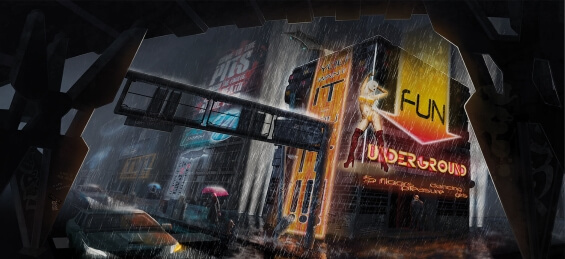
Altered Carbon street scene

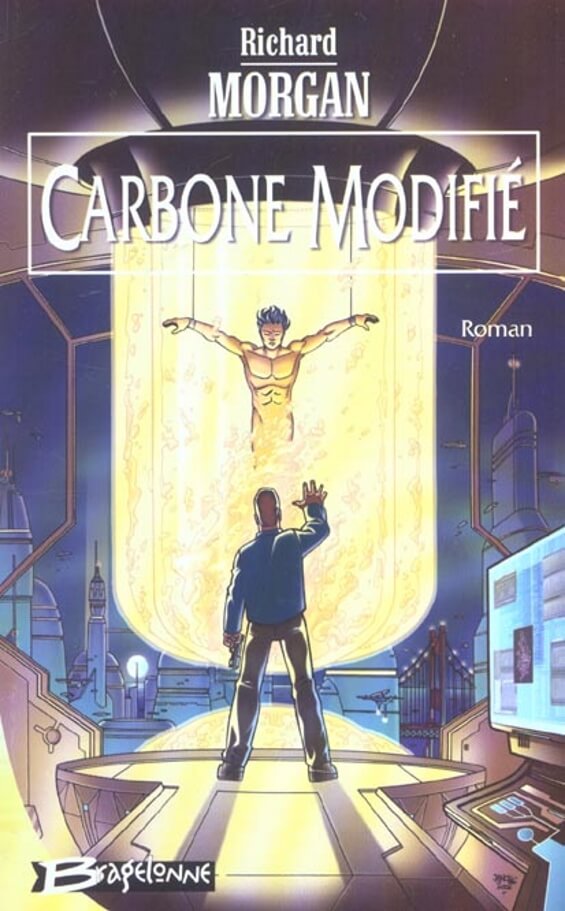
Carbone Modifie

TANTOR - Altered Carbon by Richard K. Morgan

Posted by Jesse Willis
Review of IT by Stephen King

SFFaudio Review

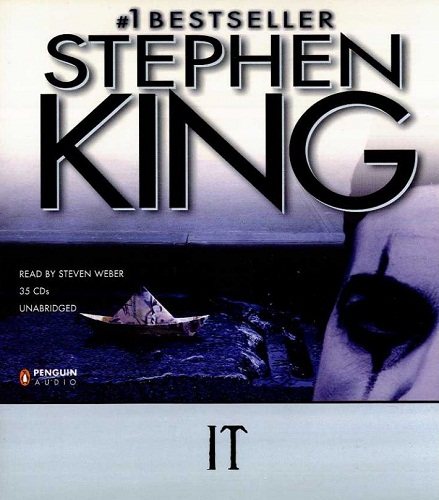
Horror Audiobook - IT by Stephen KingIT
By Stephen King; Read by Steven Weber
45 hours – [UNABRIDGED]
Publisher: Penguin Audio
Published: 2010
Themes: / Horror / Childhood / Adulthood / Monsters /

You don’t have to look back to see those children; part of your mind will see them forever, live with them forever, love with them forever. They are not necessarily the best part of you, but they were once the repository of all you could become.
—Stephen King, IT

What quality separates an adult from a child? Is it responsibility in the former and unbridled freedom in the latter? Do adults possess a higher order of thinking? Or, to take a cynical view, are adults merely physically larger (perhaps they/we never really do grow up)?

I happen to think there is a difference, though it’s hard to say precisely what. You could describe adulthood as a phase through which we all must pass, else we remain stunted and undeveloped, looking backward instead of forward, unable to transform into the mature beings that the hard world requires. Indefinable and amorphous, you may as well call this period of transition it. Stephen King did, and in 1985 he wrote a massive book by the same name about this very subject.

As is King’s forte, IT is also a horror story, and a terrifying one at that. The villain of IT is a creature that lurks in the sewers of Derry, Maine, one that takes the shape of our worst fears. IT’s favorite shape is a painted clown known as Pennywise, friendly at first glance but whose greasepaint smile reveals a double-row of Gillette razor teeth. Pennywise can also take the form of a werewolf, the Creature from the Black Lagoon, Frankenstein, and more. Whatever a particular child finds most terrifying, Pennywise can take its shape.

Pennywise has been preyed on the children of Derry for untold generations, emerging from a deep slumber in the sewers every 27 years to feed. After a year of gruesome killings (written up in the press as mysterious child disappearances, or frequently blamed on other sources), the cycles end with a culminating event, typically an awful orgy of destruction, after which the creature resumes its hibernation.

But Pennywise—aka., IT—always comes back. Derry is perennially under its pall and seems to accept the darkness as “just the way things are” and the horrors continue in cyclical fashion. But then comes the summer of 1958. A group of 10 and 11-year-old children called the Loser’s Club, led by a stuttering, charismatic child known as Bill Denbrough, unite to battle Pennywise. All have had close brushes with the monster. Scarred by their experiences but united in purpose (Bill’s six year old brother Georgie is dragged into the sewer and killed in a gruesome scene at the beginning of the novel, and Bill vows revenge), they travel into Derry’s byzantine sewer systems to put an end to the monster. Following an epic confrontation in the creature’s den the children vow to return to Derry should Pennywise/IT ever return.

One of the club, Mike Hanlon, remains behind in the ensuring decades to watch and wait. When Pennywise does re-emerge 27 years later the children of the Loser’s Club are now adults in their late 30s. Some higher power has mercifully allowed them to forget the terrible events of their childhood and move on with their lives. But now they have to fight the terrible evil once more and growing up has diminished them in some way. This time around they find themselves less equipped to fight.

IT is a great story full of memorable events, places, and characters. King imbues Derry with its own personality, and the town feels like a member of the cast. King skillfully weaves in events from Derry’s awful past, including past murder sprees and the culminating bloodbaths that sent IT back into the sewers, including a horrific nightclub fire (The Black Spot) and the explosion of the Kitchener Ironworks.

But in the end, what I like most about IT, and what separates the book from much of the rest of King’s oeuvre, is its thoughtful exploration of that amorphous crossing of the bar from youth to maturity. To get where you want to go in life you have to grow up, King says, but it’s not a simple process. The transition from childhood to adulthood is a complex and bittersweet, its benefits equivocal. Adulthood brings with it at least some measure of financial, parental, and geographic freedom. We can leave those hometowns that are so frequently a source of shame and failure and hidden darkness. But in so doing we lose a lot, too—our dreams, our innocence, our closest friends, and sometimes even our faith in a higher power. And the only way to defeat Pennywise—that monstrous, childhood IT—is through faith.

King has been accused by his critics of being shallow, all style and no substance (he did himself no favors by once calling himself “the literary equivalent of a Big Mac and Fries”). But I’ve found that his best material has more depth than meets than eye. IT is not just about battling monsters. Or rather it is about that, but the monsters are also the real, adult fears of loneliness, guilt, and dependency, of growing up, of confronting the monsters of one’s past and trying to move on. We are all incomplete until we face our past and determine who we are, what we stand for, and how we want to live our lives. This personal struggle, as much as visceral, horrific battles with Pennywise, is what brings me back to IT again and again.

I will say that IT is not without its problems, including a sequence that remains controversial among King’s readers. Without spoiling the story, it involves a coming of age ritual in the sewers that is a bit off-putting and jarring, even though I do understand its purposes. Some of the characters feel a bit one-trick and allegorical (representative of concepts rather than three-dimensional human beings). Other readers have complained that IT’s big secret—Pennywise’s final reveal—a bit of a let-down after 1,000 pages of build up. King is unfortunately often guilty of unsatisfying endings to otherwise great novels, and IT arguably suffers from the same problem. I don’t necessarily agree, as I find the epilogue incredibly satisfying, but others have made this criticism.

But despite its flaws, IT is one of my favorite books by King. With a memorable monster, a nice cast of characters, and a compelling, decades-spanning storyline with an epic final showdown, IT is a horrific page turner with deeper literary ambitions that it mostly fulfills.

Posted by Brian Murphy

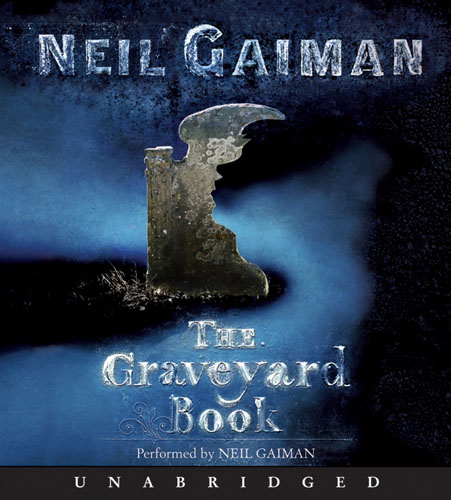
Review of The Graveyard Book by Neil Gaiman

SFFaudio Review

The Graveyard Book by Neil GaimanThe Graveyard Book
By Neil Gaiman; Read by Neil Gaiman
Audible Download – Approx. 8 Hours[UNABRIDGED]
Publisher: Harper Audio
Published: 2008
Themes: / Fantasy / Ghosts / Childhood / Revenge / Parenting / Afterlife / Humor / YA /

In a few words: Not as disturbing as Coraline (which is… a bit) and every ounce as entertaining as I hoped.

Now, details: The Graveyard Book is Neil Gaiman’s latest YA novel. The story is about Nobody Owens, a young boy who starts the novel as a toddler that ends up in a graveyard late at night, all by himself. I’ll let Gaiman tell you how that happens, because the journey is all the fun here. Nobody Owens grows up, and Gaiman’s ghosts do all the parenting.

Again, Gaiman manages to be both sinister and funny at the same time, like he’s telling you the worst thing you’ve ever heard, but with a smile and a wink. Here’s the first lines of Chapter 1:

There was a hand in the darkness, and it held a knife. The knife had a handle of polished black gold, and a blade finer and sharper than any razor. If it sliced you, you may not even know you had been cut. Not immediately.

You’d think what follows would be a bit grisly, and I suppose it is, but it’s all so fantastic that I smiled through most of that chapter, with the sort of glow I get around Halloween. A pair of ghosts (the Owens’s) raising a live boy, that boy growing up and learning his letters off gravestones and his life’s philosophy from the perspective of dead but well-meaning people; well, it’s just a great idea, and it’s perfectly presented by Gaiman. My kids love it too. This is the kind of book that will be revisited in my house often. In addition, I’d say that if you have a Harry Potter fan on your Christmas list, this book might be just the right fit, and it has the added bonus of introducing him or her to the likes of Neil Gaiman, which in turn could open that fan up to the rest of the world of books as well.

Gaiman also narrates, and like I’ve said elsewhere, he’s one of the few authors I’ve heard that could make a comfortable living as an audiobook narrator. I can’t imagine this audiobook being read by someone else, and I’m very happy that it isn’t.

Edited to add the SFFaudio Essential, which was forgotten by the reviewer. He has been sacked.

Posted by Scott D. Danielson

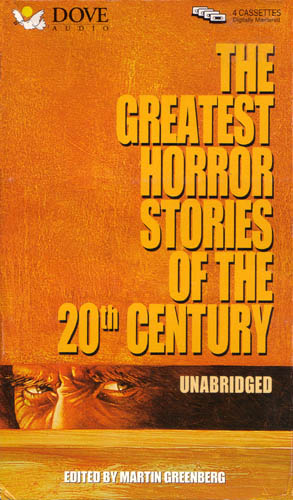
Review of The Greatest Horror Stories of the 20th Century

Horror Audiobooks - The Greatest Horror StoriesThe Greatest Horror Stories Of The 20th Century
Edited by Martin Greenberg; Read by Various Readers
4 Cassettes – Approx. 6 Hours [UNABRIDGED]
Publisher: Dove Audio
Published: 1998
ISBN: 0787117234
Themes: / Horror / Fantasy / Science Fiction / Urban Fantasy / Magic / Curses / Telepathy / Childhood / Demons /

“Featuring some of the masters of the genre, past and present, The Greatest Horror Stories Of The 20th Century are as remarkable for their literary value as for their scream factor. Whether you are a passionate horror lover or a devotee in the making, you will find much to entertain. Listen for screams as ancient and unspeakable evil meets the modern psyche.”

Judicious use of musical cues are the only enhancement to these horror stories. Twelve horrific short stories, to be sure, but are they truly the greatest of the 20th century? Read on, MacDuff….

“The Graveyard Rats” by Henry Kuttner
Read by Michael Gross
A creepy Lovecraftian tale that almost could have been written by H.P. Lovecraft himself. It was first published in Weird Tales’ March 1936 issue. A worthy addition to the list of The Greatest Horror Stories Of The 20th Century list and Michael Gross does a good job with it. And by the way, the R.O.U.S.’s probably don’t really exist.

“Calling Card” by Ramsey Campbell
Read by Juliet Mills
First published in 1982, Ramsey Campbell’s entry in this anthology is more confusing than scary. Juliet Mills is fine but she couldn’t help unravel what we’re supposed to be afraid of. Something about a nice old lady and her mailman delivering a 60-year-old Christmas card?

“Something Had To Be Done” by David Drake
Read by John Aprea
First published in Fantasy & Science Fiction Magazine’s February 1975 issue, this is an excellent Vietnam War era is a freakshow of the ‘coming home in a bodybag story’. It combines the friendly fire and frag stories of that war with the accelerating fear of the supernatural – the tension builds until the closing moment – very similar in tone and quality to Robert R. McCammon’s Nightcrawlers. Reader John Aprea does good work with good material!

“The Viaduct” by Brian Lumley
Read by Roger Rees
“The Viaduct” is a Stephen King-ish tale without the supernatural element – two boys make an enemy of another and come to a sticky end. This is the longest tale in the collection, overly long in my estimation. I was amazed how little content this story has, especially for its length, none of the characters are sympathetic and by the end I was almost rooting for them all to be killed- just as long as it was done soon. Ineffectual because of its length and exploitative and I don’t mean that as an insult, it plays, if it plays at all, on fear without telling us anything about ourselves or anything else. On the other hand Roger Rees’ reading was just fine. “The Viaduct” is in my opinion not up to the standards of some of the stories in this collection.

“Smoke Ghost” by Fritz Leiber
Read by Beverly Garland
An early Fritz Leiber yarn, “Smoke Ghost” posits what a ghost from an urban industrial society would be like, as opposed rattling chains, old bed sheets and creaky haunted houses of the pre-industrial age. Frighteningly well written and very well read. First published in Unknown Magazine’s October 1941 issue.

“Passengers” by Robert Silverberg
Read by William Atherton
William Atherton did a very nice reading of this Hugo Award nominated and Nebula winning short story (1969). “Passengers” is more SF than horror but it is 100% worthy of inclusion. It is about the uninvited guests who wouldn’t leave. These evil aliens have invaded the Earth telepathically and at unpredictable times, seize control of a human mind and force a person to do… things(!). Society has adjusted, but not every individual person will go along with all the conventions humanity has adopted to deal with the “Passengers”. Silverberg’s story examines a relatively small SF theme, stories involving involuntary control of one’s body… think the character of Molly in Neuromancer or the Frederik Pohl and C.M. Kornbluth’s short story Sitting Around the Pool, Soaking Up Some Rays or Robert A. Heinlein’s The Puppet Masters – it is a horror story because it speaks to such a violation of one’s body. Also interesting is the counterfactual raised by the premise – illustrating how difficult it is to determine exactly where the boundary line between free-will and determinism lies.

“Sticks” by Karl Edward Wagner
Read by Patrick MacNee
Set in 1942, “Sticks” is a World Fantasy Award nominated story (1974) that is decidedly Lovecraftian in content and execution. Think Blair Witch Project meets pulp magazine illustrations and you’ll get the idea. Narrator Patrick MacNee does fine work with it too. With all this inspired by Lovecraft storytelling I only wish they’d included some of H.P.’s original prose, but in lieu of that “Sticks” is a good substitute.

“Yours Truly, Jack The Ripper” by Robert Bloch
Read by Robert Forster
First published in Weird Tales’ July 1943 issue “Yours Truly, Jack The Ripper” is actually a better story than it reads now. What seems a mite cliched today was quite fresh in 1943 and this tale was one of the earliest works of fiction to use ‘the ripper redjack’ – something that is relatively common today. Some narrators have a voice that grabs you and won’t let go, Robert Forster is one of them, his range is good, he does a great English accent on this one too – but its his cadence and his gravelly voice that pull me into his orbit every time. Well read and a good yarn.

“The Small Assassin” by Ray Bradbury
Read by Alyssa Bresnahan
Alyssa Bresnahan, professional full time narrator and AudioFile Magazine Golden Voice, does a very good reading of Bradbury’s short story. “The Small Assassin” is about a young couple and their first child; everything would be okay if only the newborn would only accept the world outside the womb. Horror as parenthood – who’d of thunk it? Newly minted parents probably. This tale was previously recorded by Ray Bradbury himself by pioneering audiobooks publisher Caedmon.

“The Words Of Guru” by C.M. Kornbluth
Read by Susan Anspach
Originally published under Kornbluth’s “Kenneth Falconer” pseudonym, in Stirring Science Stories’ June 1941 issue. Well regarded despite its pulpy exposition, “The Words Of Guru” is a genre-crosser full of cosmic demonism and full-tilt weirdness that comes to a thundering crash just minutes after it starts.

“Casting The Runes” by M.R. James
Read by David Warner
I was quite lost listening to this one. I couldn’t tell who was speaking much of the time, this has to do with the fact that many of the characters aren’t given names and the fact that the way this tale was written it would flow far easier on the printed page than it does aurally. In the paper version some names are blanked out (as if censored), David Warner does his best to fill in these gaps which are unreproducable in audio, but ultimately his efforts are unsuccessful. Magic and curses. First published in 1911!

“Coin Of The Realm” by Charles L. Grant
Read by Louise Sorel
Reminiscent in theme of Neil Gaiman’s style of urban fantasy, “Coin Of The Realm” is an interesting tale of the employees of a toll booth on a lonely highway who occasionally collect some very odd coins from the drivers on their road. First published in a 1981 Arkham House collection entitled Tales from the Nightside.

Posted by Jesse Willis