News, Reviews, and Commentary on all forms of science fiction, fantasy, and horror audio. Audiobooks, audio drama, podcasts; we discuss all of it here. Mystery, crime, and noir audio are also fair game.
Previously, Gabrielle de Cuir’s narration of Prince Bull by Charles Dickens is HERE. And next up, will be Dick Hill’s narration of Two Illuminating Stories: The Story Of The Bad Little Boy, and The Story Of The Good Little Boy by Mark Twain, that’s HERE.
Then, check out the full Spoken Freely Presents: Going Public … In Shorts compilation which will be available on June 30, 2013 over on Downpour.com – all proceeds for which go to Reach Out And Read.
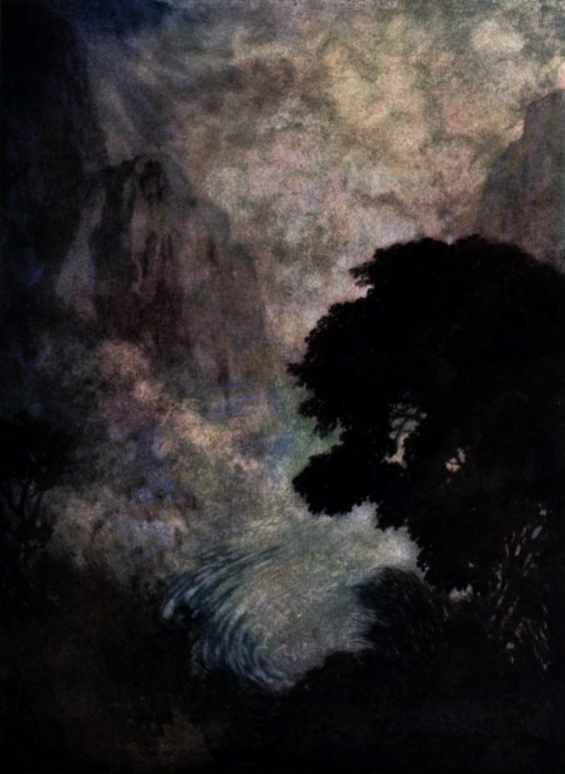
Though Edgar Allan Poe’s The Valley Of Unrest predates most post-apocalyptic ideas, this beautiful poem, about an empty valley, seems to me about exactly that.
Let me plant a seed for you, that may grow as you read it:
What are the azure towers if not skyscrapers?
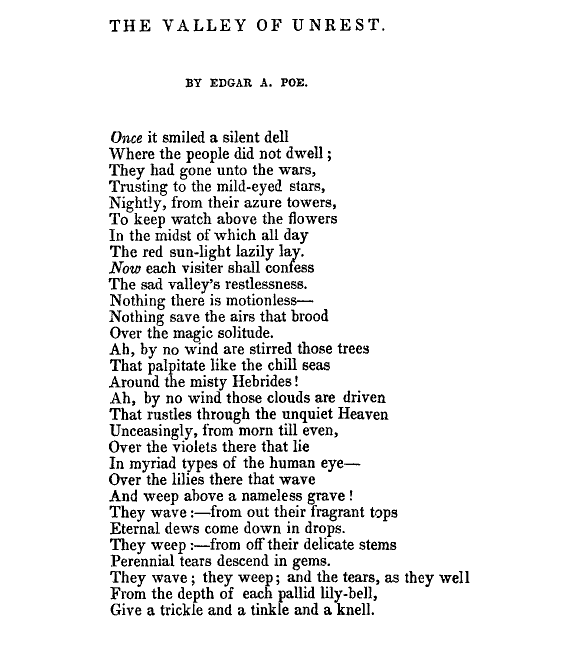
The Valley Of Unrest by Edgar Allan Poe
Once it smiled a silent dell
Where the people did not dwell;
They had gone unto the wars,
Trusting to the mild-eyed stars,
Nightly, from their azure towers,
To keep watch above the flowers,
In the midst of which all day
The red sunlight lazily lay.
Now each visitor shall confess
The sad valley’s restlessness.
Nothing there is motionless —
Nothing save the airs that brood
Over the magic solitude.
Ah, by no wind are stirred those trees
That palpitate like the chill seas
Around the misty Hebrides!
Ah, by no wind those clouds are driven
That rustle through the unquiet Heaven
Uneasily, from morn till even,
Over the violets there that lie
In myriad types of the human eye —
Over the lilies there that wave
And weep above a nameless grave!
They wave:— from out their fragrant tops
Eternal dews come down in drops.
They weep:— from off their delicate stems
Perennial tears descend in gems.
First published in 1831, as “The Valley Of Nis” The Valley Of Unrest would take its final form in the April 1845 issue of the American Review:
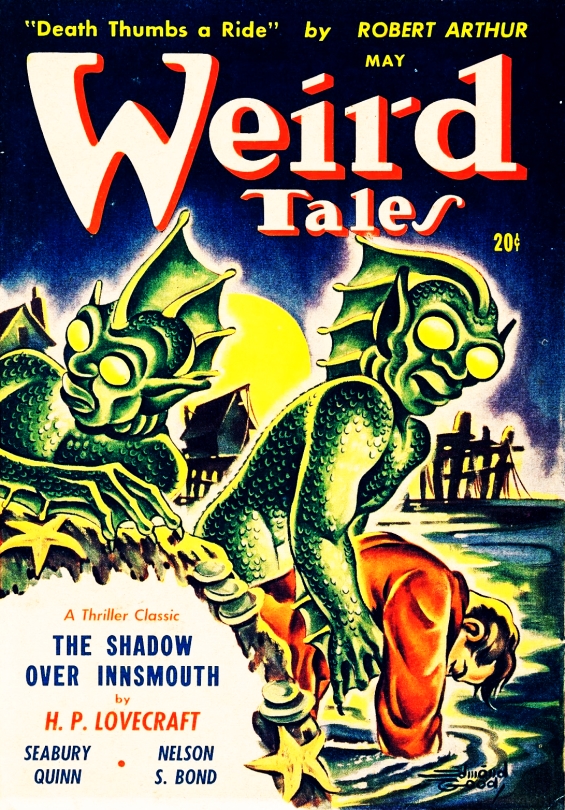
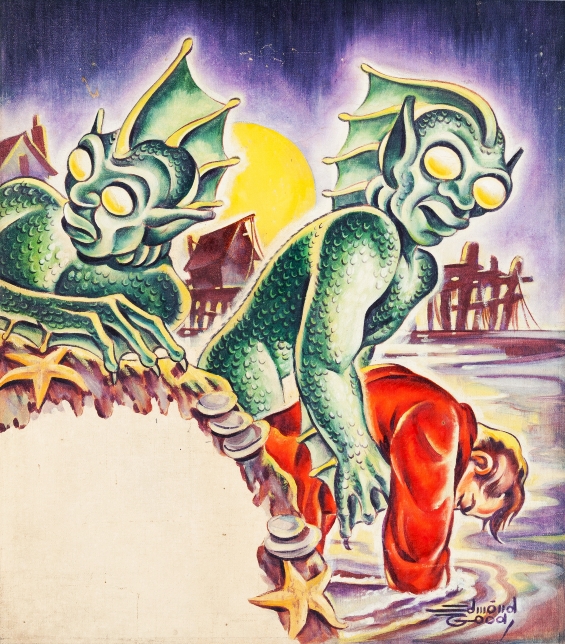
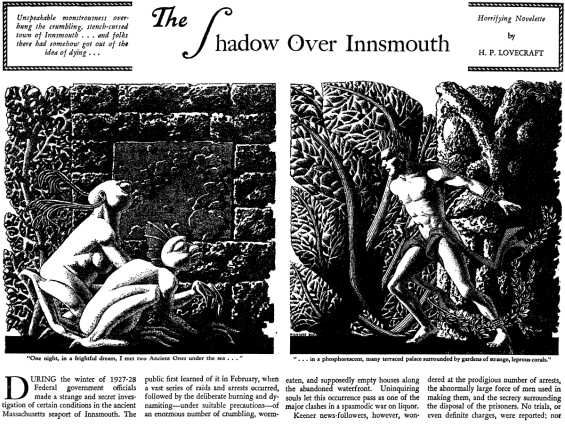
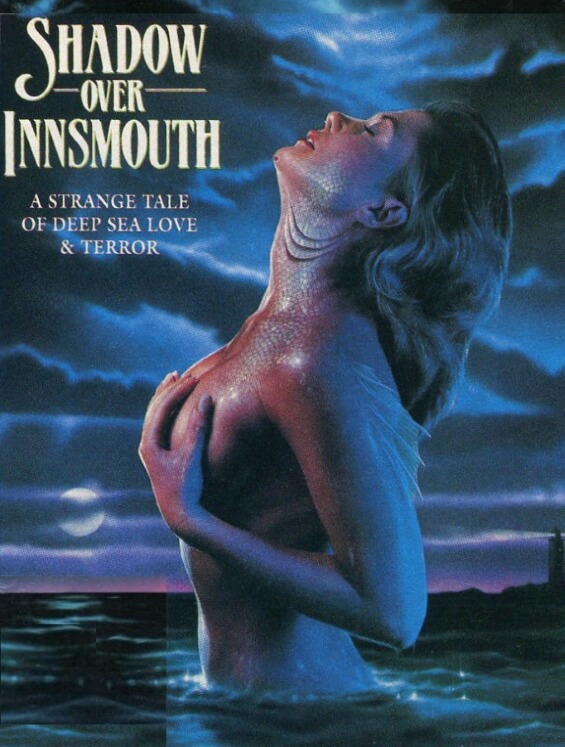
The SFFaudio Podcast #214 – The Shadow Over Innsmouth by H.P. Lovecraft; read by the fabulous Mike Bennett. This is a complete and unabridged reading of the novella (3 hours 2 minutes) followed by a discussion of it. Participants in the discussion include Jesse, Julie Hoverson, and Mr. Jim Moon.
Talked about on today’s show:
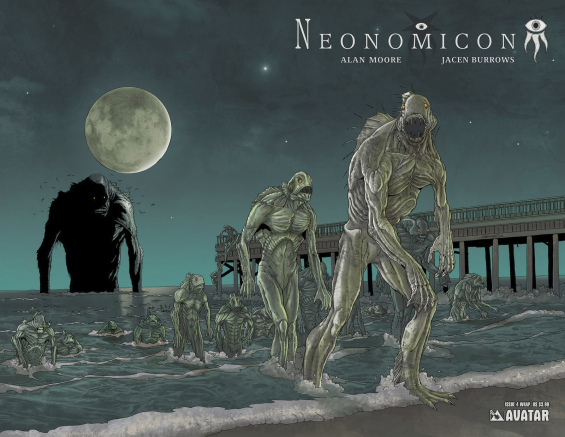
My only holy book, Deities & Demigods, Deep Ones, Dagon, serving the will of Cthulhu, “they can only be killed by violent death”, why are they evil, seafood, miscegenation, the war on alcohol, they like to drink and wear jewelry, are there Deep Ones in Guantanamo Bay?, only crackers and soup, Innsmouth, Massachusetts, Captain Obed Marsh, persuaded to breed with a deep one, immortality, 19th century, “festering quietly”, “a nice family reunion”, why is The Shadow Over Innsmouth so cherished?, Call Of Cthulhu The Dark Places Of The Earth, a Skyrim mission, Dagon and Mother Hydra, Dagon, New England Tahitians, Walter Gilman in The Dreams In The Witch House, The Thing On The Doorstep, Doctor Who’s The Sea Devil is The Shadow Over Innsmouth with less schtupping, The Silurians, can’t go wrong with a good sea monster, The Creature From The Black Lagoon, Julie’s adaptation will have more sex!, Alan Moore’s Neonomicon, g-men, an Esoteric Order Of Dagon style-cult, a traumatic read, the end, the film of Dagon (set in Spain), Stuart Gordon, Castle Freak is one of the best dramatic Full Moon films, the Masters Of Horror adaptation of The Dreams In The Witch House, The H.P. Lovecraft Historical Society adaptation (Dark Adventure Radio Theatre), the framing story, The Statement Of Randolph Carter, who is our protagonist confessing to?, Double Indemnity, heredity and atavism, 1920s, 1930s, Zadok Allen, Julie’s adaptation of The Rats In The Walls, The Picture In The House, female characters in Lovecraft, Cool Air, Lovecraft cares about words, House Of The Dead, the San Juan Islands, the naming of islands, Lovecraft crafts with love, August Derleth!, “the full gibbous moon”?, racism, the “Gilman Inn” is a pun, The Whisperer In Darkness, he’s there for the architecture, “reluctant fascination”, that old uncle who smells weird, The Shuttered Room by August Derleth, the worst fanfic writer ever, posthumous collaboration, Fishhead by Irvin S. Cobb, The Harbor-Master by Robert W. Chambers, an inbred wild-man, local rednecks, “a bit too close to the sea”, an economic depression, isn’t it a good deal?, arranged marriages, what’s with the Innsmouth Chamber Of Commerce?, in the Octopus’ garden, Brown Monkey, Dick Dynamo: The Fifth Dimensional Man, meta, 118 Migration, Afterlives (a Bangsian fantasy), the golden era of internet audio drama, a new idea, Hypnobobs, classics vs. moderns, old books have vocabulary, Jack London, MTV saturated audiences?, Goodreads reviews of Dracula, Fifty Shades Of Grey, atheist vicars?, the stress on the importance of reading may breed bad books, teachers pick books with big social value, Little Dorrit by Charles Dickens, A Christmas Carol, turning kids off literature, Wilkie Collins, The Moonstone, using Robinson Crusoe as a guide to life, police procedural, obstreperous, The Murders At The Rue Morgue by Edgar Allan Poe, the audiobook of The Moonstone.
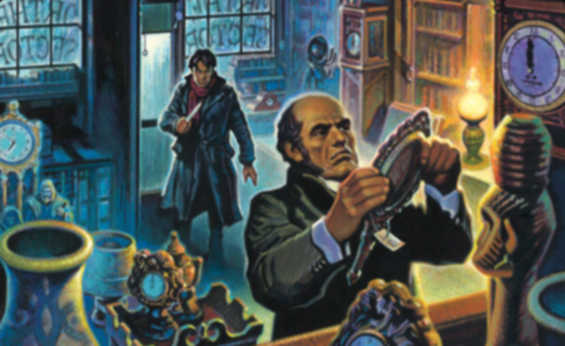
I’ve posted about Robert Louis Stevenson’s murderous classic, Markheim, before (the audiobook and another radio drama). But, I’ve just discovered a very good new adaptation (from 2006) available at RadioArchive.cc. The sound design is excellent, and its lengthy enough to bring out most of the nuance in the text.
Markheim
Adapted from the story by Robert Louis Stevenson; Adapted by John Taylor; Performed by a full cast
MP3 via TORRENT – Approx. 45 Minutes [RADIO DRAMA]
Broadcaster: BBC Radio 4
Broadcast: February 1, 2006 On Christmas Day 1886 with London shrouded in fog, a man shadows a girl across Blackfriars Bridge towards the back streets of Holborn. His name is Markheim and his intentions are unremittingly dark.
Directed by John Taylor
Cast:
Tommy – Mark Straker
Markheim – Jack Klaff
Girl – Abigail Hollick
Visitor – Anton Rodgers
Crispin – Anthony Jackson
And for German listeners there’s THIS sexy sounding version produced as a part of a cool series called Gruselkabinett (which translates to “Chamber of Horrors”).
Setting:
There is no finer model for the study of setting than this story affords. It is three o’clock in the afternoon of a foggy Christmas Day in London. If Markheim’s manner and the dimly lighted interior of the antique shop suggest murder, the garrulous clocks, the nodding shadows, and the reflecting mirrors seem almost to compel confession and surrender. “And still as he continued to fill his pockets, his mind accused him, with a sickening iteration, of the thousand faults of his design. He should have chosen a more quiet hour.” So he should for the murder; but for the self-confession; which is Stevenson’s ultimate design, no time or place could have been better.
Plot:
There is little action in the plot. A man commits a dastardly murder and then, being alone and undetected, begins to think, think, think. It is the turning point in his life and he knows it. Instead of seizing the treasure and escaping, he submits his past career to a rigid scrutiny and review. This brooding over his past life and present outlook becomes so absorbing that what bade fair to be a soliloquy becomes a dialogue, a dialogue between the old self that committed the murder and the new self that begins to revolt at it. The old self bids him follow the line of least resistance and go on as he has begun; the newly awakened self bids him stop at once, check the momentum of other days, take this last chance, and be a man. His better nature wins. Markheim finds that though his deeds have been uniformly evil, he can still “conceive great deeds, renunciations, martyrdoms.” Though the active love of good seems too weak to be reckoned as an asset, he still has a “hatred of evil”; and on this twin foundation, ability to think great thoughts and to hate evil deeds, he builds at last his culminating resolve.
The story is powerfully and yet subtly told. It sweeps the whole gamut of the moral law. Many stories develop the same theme but none just like this. Stevenson himself is drawn again to the same problem a little later in “Dr. Jekyll and Mr. Hyde.” Hawthorne tried it in “Howe’s Masquerade,” in which the cloaked figure is the phantom or reduplication of Howe himself. In Poe’s “William Wilson,” to which Stevenson is plainly indebted, the evil nature triumphs over the good. But “Markheim,” by touching more chords and by sounding lower depths, makes the triumph at the end seem like a permanent victory for universal human nature.
Characters
If the story is the study of a given situation, Markheim, who is another type of the developing character, is the central factor in the situation. We see and interpret the situation only through the personality of Markheim himself. Another murderer might have acted differently, even with those clamorous clocks and accusing mirrors around him, but not this murderer. There is nothing abnormal about him, however, as a criminal. He is thirty-six years old and through sheer weakness has gone steadily downward, but he has never before done a deed approaching this in horror or in the power of sudden self revelation. He sees himself now as he never saw himself before and begins to take stock of his moral assets. They are pitifully meager, though his opportunities for character building have been good. He has even had emotional revivals, which did not, however, issue in good deeds. But with it all, Markheim illustrates the nobility of human nature rather than its essential depravity. I do not doubt his complete and permanent conversion. When the terrible last question is put to him – or when he puts it to himself – whether he is better now in anyone particular than he was, and when he is forced to say, “No, in none! I have gone down in all,” the moral resources of human nature itself seem to be exhausted. But they are not. “I see clearly what remains for me,” said Markheim, “by way of duty.” This word, not used before, sounds a new challenge and marks the crisis of the story. Duty can fight without calling in reserves from the past and without the vision of victory in the future. I don’t wonder that the features of the visitant “softened with a tender triumph.” The visitant was neither “the devil” as Markheim first thought him nor “the Saviour of men” as a recent editor pronounces him. He is only Markheim’s old self, the self that entered the antique shop, that with fear and trembling committed the deed, and that now, half-conscious all the time of inherent falseness, urges the old arguments and tries to energize the old purposes. It is this visitant that every man meets and overthrows when he comes to himself, when he breaks sharply with the old life and enters resolutely upon the new.




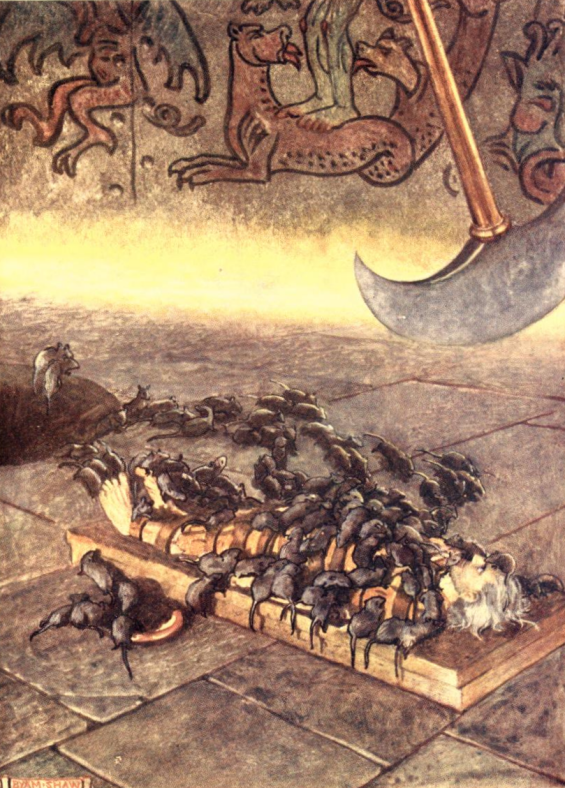
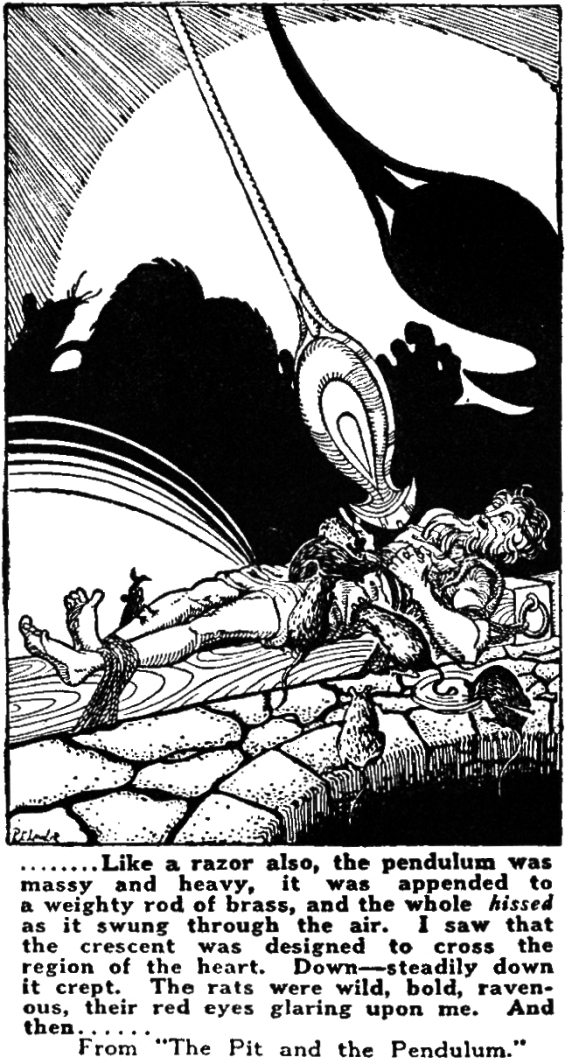
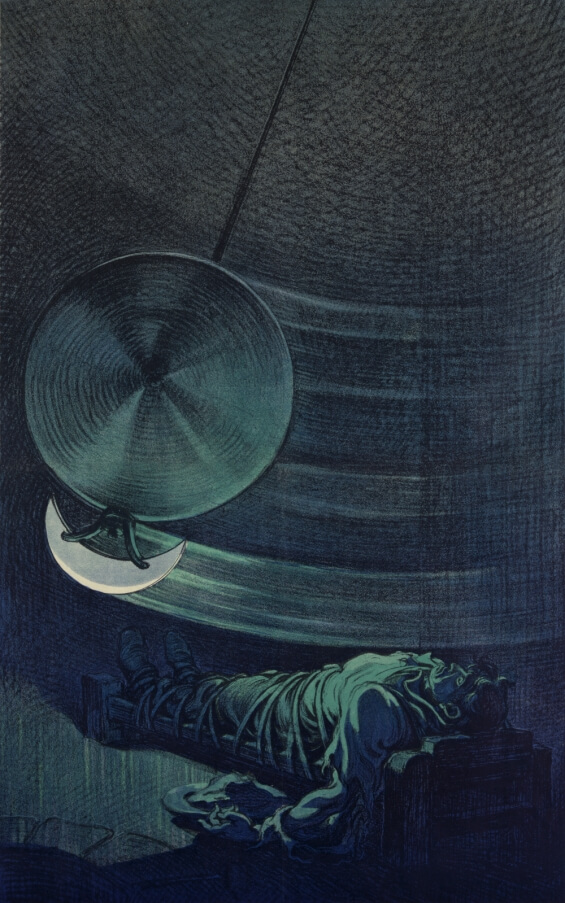
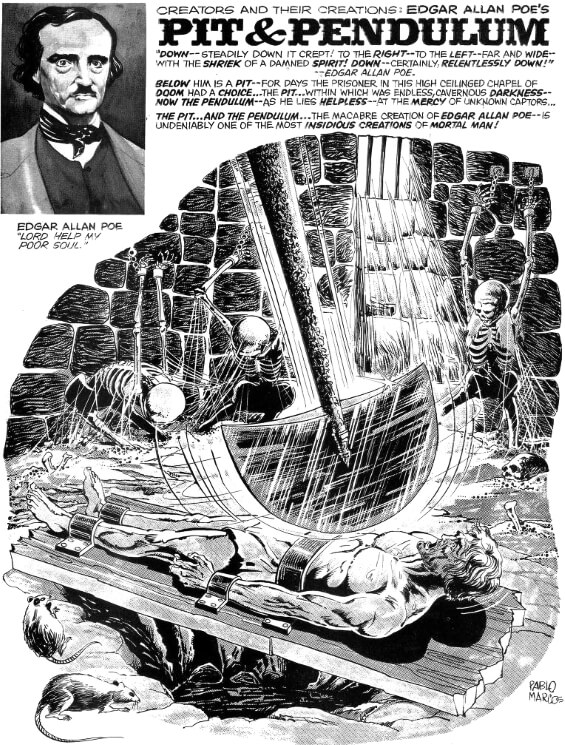
 The SFFaudio Podcast #216 – The Pit And The Pendulum by Edgar Allan Poe, recorded by Paul Michael Garcia for Spoken Freely: Going Public In Shorts.