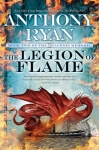
 The SFFaudio Podcast #426 -Jesse and Juliane Kunzendorf talk about A Fine And Private Place by Peter S. Beagle
Talked about on today’s show:
1960, is it true that Peter S. Beagle wrote A Fine And Private Place when he was 19?, Mary Shelley, Mr Rebek has been in the graveyard for 19 years, self-aware, unforeseen circumstances, November 2016, lightweight material, subtext, it’s not deep, on the nose, a bit long?, novel length for a novella idea, a raven here, a lady doing her shopping, a time capsule, 1960-ish, darn interesting, how New York was, a social study, science fiction and werewolves, a light touch fantasy, pretty effective, 272 pages, six to eight hours, narrated by Peter S. Beagle himself, a calm voice, a pleasant listen, more better work, a special and distinct voice, kind of amazing, it feels super-old, wise, philosophical about death and how to live, how do you get to this?, The Raven by Edgar Allan Poe, one of Jesse’s favourites, nobody cared, Jesse’s theory as to what is going on in The Raven and how it relates to this story, Andrew Marvell’s To His Coy Mistress, a metaphysical poem, start to kissing, rhyming with the comeuppance, but none do there embrace, reading poems aloud, forced rhymes,
Had we but world enough and time,
This coyness, lady, were no crime.
We would sit down, and think which way
To walk, and pass our long love’s day.
Thou by the Indian Ganges’ side
Shouldst rubies find; I by the tide
Of Humber would complain. I would
Love you ten years before the flood,
And you should, if you please, refuse
Till the conversion of the Jews.
My vegetable love should grow
Vaster than empires and more slow;
An hundred years should go to praise
Thine eyes, and on thy forehead gaze;
Two hundred to adore each breast,
But thirty thousand to the rest;
An age at least to every part,
And the last age should show your heart.
For, lady, you deserve this state,
Nor would I love at lower rate.
But at my back I always hear
Time’s wingèd chariot hurrying near;
And yonder all before us lie
Deserts of vast eternity.
Thy beauty shall no more be found;
Nor, in thy marble vault, shall sound
My echoing song; then worms shall try
That long-preserved virginity,
And your quaint honour turn to dust,
And into ashes all my lust;
The grave’s a fine and private place,
But none, I think, do there embrace.
Now therefore, while the youthful hue
Sits on thy skin like morning dew,
And while thy willing soul transpires
At every pore with instant fires,
Now let us sport us while we may,
And now, like amorous birds of prey,
Rather at once our time devour
Than languish in his slow-chapped power.
Let us roll all our strength and all
Our sweetness up into one ball,
And tear our pleasures with rough strife
Through the iron gates of life:
Thus, though we cannot make our sun
Stand still, yet we will make him run.
sweet!, come on baby!, 1681, a tutor to a rich man’s daughter, post-mortem publication, The Twilight Zone, World Enough And Time, inspired, amorous birds of prey, iron gates of life, chaste love, Jonathan and Mrs. Clapper, finding another person to be with, all during WWII, an interesting backstory, reading books, washing his clothes in the bathroom sink at night, is it all in his head?, is he just a crazy homeless man?, fitting the facts, dirty and smelly, well groomed, disheveled, shaving, grooming, what are we to make of Mrs. Clapper falling in love with not the greatest catch ever?, her (dead) husband, tickles a sense of adventure, I’m not your husband, the rain-jacket, museum visitor than stay-at-home, the store scene, the Stillman family, when are you getting married?, she’s trapped in her role, her place in society, her apartment, the social environment of the 1960s, widowhood, when are you going to Florida?, other options, how she’s going to be buried, Mr. Rebek’s prison, an incomplete explanation, acting as a witch-doctor, love-potions, the scarred up boxer, making a love-potion, it’ll just make her receptive, when the love-potion works…, a weak character, he plays along, whiter teeth, his girlfriend died and he can’t get over her, he’s fleeing from the world and responsibility, in a time loop, frozen in time, just being, going on vacation is not a life, more of the same, his icy tomb, other stories like this, Beatrice in Dante’s Paradise, Orpheus and Eurydice, Odysseus, is Mr. Rebek going to move in with Mrs. Clapper?, living together, wearing her husband’s old clothes?, his room, they have to find a new apartment, from the Goodwill (but actually from her), she’s trying to replace her dead husband, marriage, domains, the boss, the nameless raven, Elijah, a squirrel with a wife, more raven, a couple of rules, how ghosts act and animals can talk, the ghosts, subversion, that’s what ravens do, the nightwatchman, alcohol, Spanish singing, sung as it should have been sung, another reflection of the raven, a psychopomp, Charon, the ferryman, Anubis, Pluto, deep in every religion, a man alive in the place of the dead, you’re a terrible guard, a passenger stuck on the barge to the underworld, not dead, not alive, seeing the dead, Mrs. Clapper can’t see the dead, an idea working below the surface, a lazy slow river journey, a slowboat to hades, Michael, I don’t want your nepenthe, Laura, more friends than anything else, a seagull lost in Iowa, seeing a bird, what is the metaphor there?, heavy with metaphors, things underlying, Juliane has time, listening to the sound of Edgar Allan Poe’s The Raven, certain sad uncertain rustling, a story of madness, Jesse’s theory but first the poem itself, Beagle must have been familiar with The Raven, books: “many a quaint and curious volume”, not nameless, wrought as a homophone for rot, a ghost of flame, morrow and marrow, surcease of sorrow, ending sorrow by reading, distraction, “to still the beating of [his] heart,” December, at night, midnight, “once”, Charles Dickens, big on ghosts, Into That Darkness Peering a collection of Poe narrated by Wayne June, what is he dreaming about?, suicide, what’s behind suicide, teasing, the passive voice, Guy de Maupassant, premature burial, Japanese or Korean ghosts, a real creepy ghost story, back from the dead, “chamber” not house, a lattice, panes and shutters, curtains, a shade, purple as the royal colour, layers, why is his soul burning?, slight variations, eyelids as shutters, “perched upon a bust of Pallas”, Athena, why Pallas?, palace, there were two goddesses, Pallas was eaten by Athena, distance away from Athena, perched above wisdom, “though thy crest be shorn and shaven”, Sampson, you can’t shave a raven, you can pluck a raven, crest, no fur nor hair nor feather’s on it’s head, that’s a different bird, it’s a condor aka a buzzard aka a carrion eater aka a vulture, why vultures head’s are are shaven, mistaking the bird, his perception of it as a raven is odd, why doesn’t anybody comment on this?, Athena’s helmet has a Raven on it, when you make a drawing you have to choose, in a poem we can have it both ways, a comparison to a vulture, craven as lustful, vultures don’t look young, he’s having it both ways, a much scarier story, a fire theme, ungainly = ungraceful, a talking raven, nesting ravens, does the Raven always tell the truth?, “fiery eyes” burning, Gustave Doré, a ray of light, fire and light, censer, seraphim, nepenthe again, always subverting, William Shakespeare’s The Tempest, desert land, balm in Gilead, skin soothing stuff, radiant, “still is sitting, still is sitting”, how can the shadow throw from the lamp stream over?, “my soul from out that shadow”, he burned his house down and he’s a ghost, the perfume of smoke, a room (not a house), Mr. Rebek’s house is a tomb, a man without a Lenore, eh, what are you going to do?, ravens in Greek mythology, Apollo, why all ravens are black today, creator god, the Ravens in the Tower of London, Mabel and Grip, trickster god, ravens stealing food, experiments with crow communication, sharing information, Jesse’s crow friend, zebras, lions making a plan, he cried like a baby, a reading raven, a gentle fantasy, the social structure, Michael and Laura, suicide or murder?, a prison of his own making, the prison of her own head, a golden cage, a satisfactory book, Mr. Rebek is 53, Mrs. Clapper is a little older (maybe), children are really absent, what’s real and what’s just in his head?, the nightwatchman is the sanest of all of them, so little evidence for insanity, very little below the surface, The Last Unicorn film adaptation, thematic connections, the death theme, The Innkeeper’s Song, five novels, We Never Talk About My Brother, funerals, death of child, hanging out in graveyards, pillars that didn’t support anything, the symbology of graveyards, a broken column indicates a life cut short, burial vs. cremation, a line between life and death, formalized words, affective, more philosophical, working as a mortician, Six Feet Under, a good book and pretty impressive, The Graveyard Book by Neil Gaiman (and the comic book adaptation), similarities, Rudyard Kipling’s The Jungle Book, a boy raised by ghosts, Tarzan, raised by animals, Tantor the elephant, Nobody Owens aka Bod, subtle illustrations, the babysitter characters, reading with students, tweeting Neil Gaiman, a signed poster, monster characters, Coraline, Tim Burton, thanatophilic, a weird relationship with death, if you’re dead you’re just gone, exactly like before you were born, we’re all just living in our heads.


Posted by Jesse Willis

 Reading, Short And Deep #078