LibriVox: The History Of Rasselas, Prince Of Abissinia by Samuel Johnson

SFFaudio Online Audio

LibriVoxThere are a lot of new audiobooks showing up on LibriVox every day of the week. This means I get to pick and choose amongst a vast roster of titles that I could possibly tell you about. One that I was not planning to post about was a 1759 Fantasy novel by Samuel Johnson. I had nothing against Johnson. I just hadn’t read any of his books. Sure I knew he had written a dictionary, but it wasn’t one of the ones that I had read. The problem really was I just didn’t know enough about Johnson to be interested in his novel. Frankly, the first thing that came to mind when I thought of Dr. Samuel Johnson was how great a character he was in the Ink and Incapability episode of Blackadder. That one never gets old.

But, then today I was listening to my favourite Australian podcast, ABC Radio National’s The Philosopher’s Zone, and they mentioned this book. I suspect this wasn’t fated, it being the 300th anniversary of Johnson’s birth people around the world are thinking about old Johnson – but even if it was fate – either if I changed my mind or my mind was changed – after listening to that show I’m telling you about this novel now. The show |MP3| was actually on Johnson’s stoic christian philosophy – or rather his reaction to the ancient stoics. Host Alan Saunders, and guest, John Wiltshire, talked about a poem and then this book and it’s position in Johnson’s philosophy. It was fascinating! Now to listen…

LibriVox - The History Of Rasselas, Prince Of Abissinia by Samuel JohnsonThe History of Rasselas, Prince of Abissinia
By Samuel Johnson; Read by Martin Geeson
17 Zipped MP3 Files or Podcast – Approx. 5 Hours 31 Minutes [UNABRIDGED]
Publisher: LibriVox.org
Published: September 25, 2009
In this enchanting fable (subtitled The Choice of Life), Rasselas and his retinue burrow their way out of the totalitarian paradise of the Happy Valley in search of that triad of eighteenth-century aspiration – life, liberty and happiness. According to that quirky authority, James Boswell, Johnson penned his only work of prose fiction in a handful of days to cover the cost of his mother’s funeral. The stylistic elegance of the book and its wide-ranging philosophical concerns give no hint of haste or superficiality. Among other still burning issues Johnson’s characters pursue questions of education, colonialism, the nature of the soul and even climate alteration. Johnson’s profoundest concern, however, is with the alternating attractions of solitude and social participation, seen not only as the ultimate life-choice but as the arena in which are played out the deepest fears of the individual: “Of the uncertainties of our present state, the most dreadful and alarming is the uncertain continuance of Reason.”

Podcast feed:

http://librivox.org/bookfeeds/rasselas-prince-of-abyssinia-by-samuel-johnson.xml

iTunes 1-Click |SUBSCRIBE|

In addition to the reader, Martin Geeson, this audiobook was produced by:

Dedicated Proof-Listener: Stav Nisser
Meta-Coordinator/Cataloging: Leni

[Thanks to all three LibriVoxateers]

Posted by Jesse Willis

Chapter Two of The Gathering Storm Available at Tor

SFFaudio Online Audio

The Gathering Storm by Robert Jordan and Brandon SandersonTor appears to be going all-out in its promotion of the 12th installment of Robert Jordan’s Wheel of Time series, The Gathering Storm, co-written by Brandon Sanderson. In partnership with Macmillan Audio, Tor.com has made the novel’s second chapter, “The Nature of Pain” narrated by Kate Reading, available for online listening.

The Gathering Storm, Chapter Two, “The Nature of Pain”

Registration on Tor.com is required, but it’s fast and free to sign up. The novel’s Prologue, “What the Storm Means”, is also available at Audible for a low price, and the first chapter, “Tears from Steel”, is readable–sadly no audio–at Tor.com. The Gathering Storm will be released on 27 October.

Posted by Seth Wilson

LibriVox: My Father’s Dragon by Ruth Styles Gannett

SFFaudio Online Audio

LibriVox

This audiobook is made from a respected kid’s fantasy book from 1948. It has a unusual narrative voice being the adventures of the narrator’s father. Even better the actual narrator of this audiobook is himself a kid! Yup, it’s made of pure awesomeness. Seriously, it’s got a drippy cat, a kid named Elmer Elevator, a baby dragon and 25 peanut butter sandwiches! What more do we need? Maybe seven tigers who love chewing gum? Check!

LibriVox - My Father's Dragon by Ruth Styles GannettMy Father’s Dragon
By Ruth Styles Gannett; Read by Gregory Holdsworth
10 Zipped MP3 Files or Podcast – Approx. 51 Minutes [UNABRIDGED]
Publisher: LibriVox.org
Published: September 14, 2009
A story about a boy who befriends a cat and then sets off on an adventure to rescue a dragon.

Podcast feed:

http://librivox.org/bookfeeds/my-fathers-dragon-by-ruth-stiles-garnett.xml

iTunes 1-Click |SUBSCRIBE|

The eText version of this book is also available at the University Of Pennsylvania’s Digital Open Library’s website. It’s definitely worth checking out as each chapter of this book has wonderful illustrations! See it |HERE|.

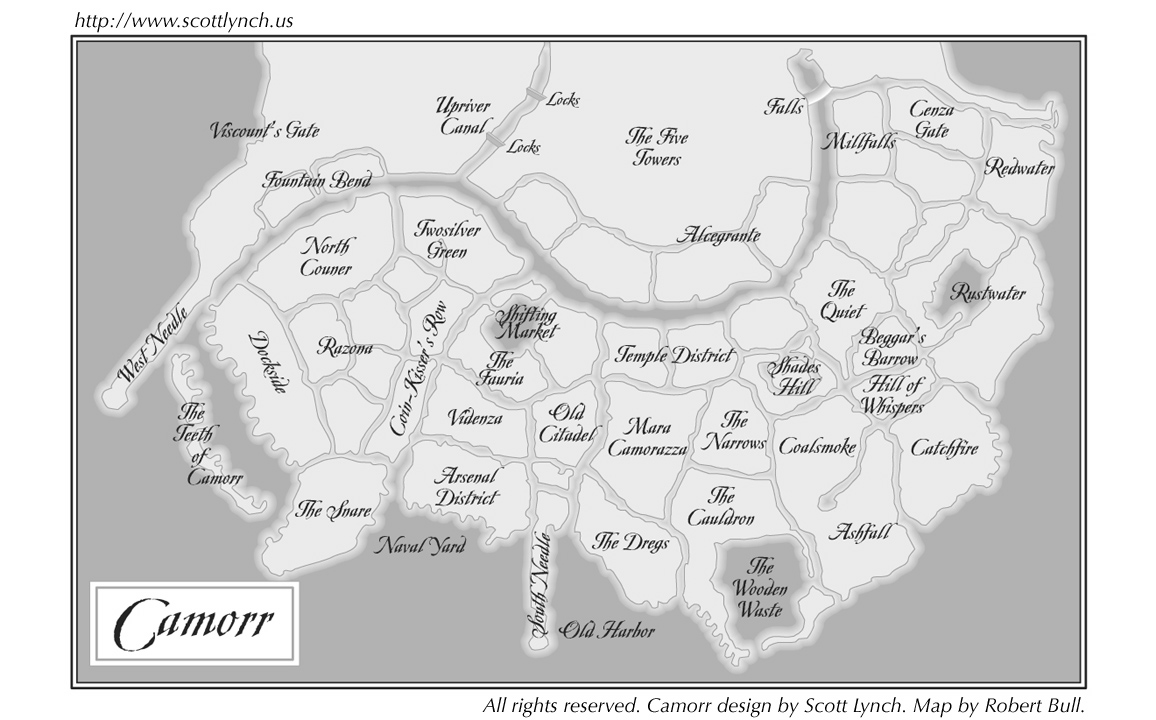
You can’t build up a proper Fantasy world without giving your reader a map, so here it is:

My Father's Dragon - Map Of The Island Of Tangeria And Wild Island

Also check out the Wikipedia.org entry for this book, it details the history, sequels and filmic adaptation.

Posted by Jesse Willis

Review of The Steel Remains by Richard K. Morgan

SFFaudio Review

Science Fiction Audiobook - The Steel Remains by Richard K. MorganThe Steel Remains
By Richard K. Morgan; Read by Simon Vance
[UNABRIDGED]
Publisher: Tantor Media
Published: 2009
ISBN: 9781400139637
Themes: / Fantasy / Noir / Hard Boiled / Magic / War / Homosexuality /

“Men were like blades, they would all break sooner or later, you included. But you looked around at the men you led, and in their eyes you saw what kind of steel you had to hand, how it had been forged and tempered, what blows, if any, it would take.”

—Richard Morgan, The Steel Remains

With his new book The Steel Remains, Richard Morgan sets out to (as main character Ringil Eskiath might say) “prick the bloated arse” of J.R.R. Tolkien and post-Tolkien fantasy. Elsewhere on the web Morgan has expressed his deep dissatisfaction with traditional high fantasy, which often pits stainless forces of good against hordes of irredeemable evil in bloodless, antiseptic sword play. He’s accused Tolkien of the same shortcomings (a flawed analysis with which I vehemently disagree). Against this backdrop, Morgan set out to write The Steel Remains as a deliberately gray, grimy, alternative viewpoint. His book succeeds in sliding cold steel into the lie of childlike fantasy, with which my favorite genre of fiction is admittedly littered.

But when the screaming of gutted men and the skirling of steel dies down, and the full extent of the destruction is laid bare for us to see, The Steel Remains does not have much to offer. The old cliché that it’s easier to tear down and destroy than to build anew applies here. In its falling over itself desire to slice and dice fantasy’s traditional conservatism, The Steel Remains indulges in plenty of its own predictable clichés: Every priest is a religious fanatic and a sex fiend, every leader a morally and ethically corrupt, egotistic blowhard, for example. The book lacks a moral compass; Morgan the author’s world view must be a bleak one, indeed.

The action of The Steel Remains focuses on the converging storylines of three uneven characters—one very well done (Ringil, a sarcastic, war-weary, homosexual master swordsman), one middling (Egar, a brawling, boisterous, randy barbarian from the steppes), and one rather forgettable (Archeth, a black, female half-breed of human and Kiriath, deadly with throwing knives and hooked on drugs). All three are veterans of a recent war against an invading race of “scaly folk,” in which humanity staved off utter destruction at a very high price. Ringil, a war hero but now combat- and world-weary, has retreated from his mercenary lifestyle and is living a slothful, under-the-radar existence, until he’s summoned by an urgent message from his mother: Ringil’s cousin, Sherin, has been sold into slavery to repay a debt, and Ringil’s mother wants her back. Ringil reluctantly agrees.

Soon Ringil finds out that the slavery web in which Sherin has been caught is very dark, wide, and sinister. At its centre are a race of alien beings called the dwenda—tall, attractive, human-like, magic-using creatures that are a combination of Michael Moorcock’s Melniboneans with their cruel and alien immorality, and Poul Anderson’s Nordic-inspired, haughty, and warlike elves (Morgan lists Anderson and Moorcock as two of his sources of inspiration; the third is, unsurprisingly, Karl Edward Wagner). The dwenda are planning to incite a second war on earth and then destroy the victor, taking back their ancestral lands (the dwenda dwelled on earth many years ago). The dwenda require the sacrifice of barren human females to fuel the dark powers that are the source of their sorcery.

There’s much to like in The Steel Remains. Morgan’s prose is sharp and highly readable, and he shows a fine eye for detail and realism in his culture and city-building. Trelayne—a nasty, sprawling, brawling city in which whoring, slavery, and public executions are practiced openly—feels real. Egar’s Majak culture is based on pre-colonized North American Indians, and is well-done with its shamans and superstitions, trade in vast herds of buffalo, and armor and weapons suited to a nomadic lifestyle on the plains.

In addition, if you like your battles bloody and realistic, Morgan is your man. His fight scenes are well-done and you get a great sense of Ringil’s skill with his deadly broadsword of Kiriath steel, and Egar’s brutal butcher’s work with his two-bladed Majak lance. Disembowelings, beheadings, and other ghastly wounds are rife.

Much of the book passed under my eyes as well-oiled but heartless machinery producing graphic combat carnage and highly explicit sex (I’ll pause here to state that the blood and semen-soaked pages of The Steel Remains would make George R.R. Martin blanch, and Eric Van Lustbader—author of The Ninja—green with envy). I found the characters rather unlikeable and unengaging, and the plot fair at best. Very little actually clicked with me until the concluding act, in which Ringil, Egar, and Archeth reunite to fight a desperate last stand against the duenda. This was one of the few moving scenes in the book in which I actually felt some measure of concern and identification with our heroes. Ringil’s rousing speech is of the stuff with which great heroic fantasy is made. I wish there was more like this.

In summary, we know that life is can be dirty and horrible. War is hell, yes, and men are weak and piggish. But Morgan drives the same points home, again and again, over 400 dark, cynical, iconoclastic pages of The Steel Remains, which by the end is too one-note and sacrifices story at the expense of the author’s agenda.

Narrator Simon Vance does a terrific job as narrator, changing his voice to suit the temperaments and personalities of the various characters in Morgan’s novel. Clarity and precision are among Vance’s strengths as a reader and he does not disappoint here. When I began listening to The Steel Remains, and before I had seen the narration credits, I recognized Vance’s distinctive voice from his wonderful depiction of Count Dracula and the rest of the characters from Bram Stoker’s Dracula (Blackstone Audiobooks). For unknown reasons Vance performed Dracula under the pseudonym, Robert Whitfield.

[For more of Brian’s thoughts on The Steel Remains check out The SFFaudio Podcast #034]

Posted by Brian Murphy

The SFFaudio Podcast #034 – READALONG: The Steel Remains by Richard K. Morgan

Podcast

The SFFaudio PodcastThe SFFaudio Podcast #034 – Jesse and Scott have invited a roster of internet celebrities on for this podcast to talk about Richard K. Morgan‘s novel The Steel Remains. Listen in as…

Brian Murphy (of The Silver Key blog and The Cimmerian),

Gregg Margarite (LibriVox.org narrator and book coordinator),

and Luke Burrage (professional juggler and host of the Science Fiction Book Review Podcast) discuss…

The Steel Remains by Richard K. Morgan [AN UNABRIDGED AUDIOBOOK from TANTOR MEDIA]!

Talked about on today’s show:
The Cimmerian blog, Deathworld by Harry Harrison @ LibriVox.org, The Real Fantastic Stuff an essay by Richard K. Morgan, J.R.R. Tolkien, The Lord Of The Rings, noir, Sci-Fi Dimensions interview with Richard K. Morgan (not Dark Horizons), homosexuality, nihilism, anti-hero, the Takeshi Kovacs novels (Altered Carbon, Broken Angels, Woken Furies), Morgan’s Thirteen (aka Black Man), Tolkien’s The Silmarillion, Adam Robert’s letter to Hugo fans (about the Hugo nominees), Cory Doctorow’s Little Brother, Neil Gaiman’s The Graveyard Book, the Hugo Awards, Morgan’s Market Forces, Lord Valentine’s Castle by Robert Silverberg, George R.R. Martin’s A Song Of Ice And Fire, David Eddings, Warbreaker by Brandon Sanderson, Terry Brooks, the Dragonlance series, magic, Tolkien’s use of magic, Morgan’s use of magic in The Steel Remains, characterization in The Steel Remains, recurring themes in Morgan’s novels, Robert E. Howard‘s Conan, what is Ringil Eskiath’s motivation?, what does everyone think of The Steel Remains?, what is the nature maps in Fantasy novels?, The Darkness That Comes Before by Scott Bakker. Next week we’ll talk about more audiobooks with these guys too.

Posted by Jesse Willis

Review of Giants of the Frost

SFFaudio Review

Giants of the Frost by Kim WilkinsGiants of the Frost
By Kim Wilkins; Read by Edwina Wren
13 CDs – 15 hrs 18 min [UNABRIDGED]
Publisher: Bolinda Audio
Published: 2007
ISBN: 9781740939676
Themes: / Fantasy / Norse gods / Weather science /

Fleeing a failed engagement and mother who makes life decisions based on a psychic’s predictions, skeptic Victoria Scott joins a weather team on a Scandinavian island. Harassed by insomnia and her unpredictable boss, she writes off her dreams of a breath-sucking hag and forest creature made of twigs as nightmares. Eventually, however, she discovers that these creatures are real and possibly the least of those she may encounter.

The island is actually Midgard, a gate between our world and that of the old Nordic god, Asgard. The book alternately tells Victoria’s story and that of Vidar, a son of Odin, who has been waiting a thousand years for Victoria to be born. In Vidar’s world we meet, among others, his bondmaid Aud, who tells much of the story, and his cousin Loki, trickster god of the Norse pantheon.

At first, Victoria is extremely shallow and self-absorbed, especially in her constant worries that any kind man has designs upon her. However, as the story unfolds and mythological elements gradually are incorporated, this feeling is lessened. My foreboding that this story was simply a typical romance was relieved completely when Aud’s and Vidar’s voices began to be heard. At that point the story became more intricate and took on weight and depth. By the last third of the book, I was on the edge of my seat wondering how the destiny of the two star-crossed lovers could possibly have the happy ending that I desired. Although such questions drive the story forward, much of the story’s true strength comes from Wilkins’ almost poetic incorporation of accurate Norse mythology and weather science.

Narrator Edwina Wren delivers the story in either English or Scandinavian accents as the story requires. Her performance is compelling, especially when depicting Aud and Vidar. Transitions from one section to another are indicated with music which is welcome in helping the listener make the necessary mental switch in a book that has many points of view. This is an extremely pleasing audio book overall and Wren is a narrator to seek out in the future.

I had never heard of Kim Wilkins’ before but this book was a great treat. Definitely recommended. I will be looking forward to future works from both her, hopefully featuring a variety of cultural mythologies which I found one of the most interesting aspects of the book. As well, kudos to this audio label which put together such a good listening experience.

Posted by Julie D.