Dan Carlin’s Hardcore History: #42 Logical Insanity

SFFaudio Online Audio

Dan Carlin’s Hardcore History podcastPowerful podcasting, that’s what Dan Carlin’s Hardcore History was. Carlin used to put out the most powerful podcasts I’d ever heard. With episodes like Punic Nightmares, Ghosts Of The Ostfront, and Steppe Stories (now available as audiobook downloads). Half-way through them I’d be calling up friends and telling them “Hey, new Dan Carlin is out!” and then start telling them how awesome the show was.

And over the years I can’t say the show ever went bad – because it really never did – it just didn’t consistently hit the incredibly high highs that it had earlier. That is until just before this point this morning…

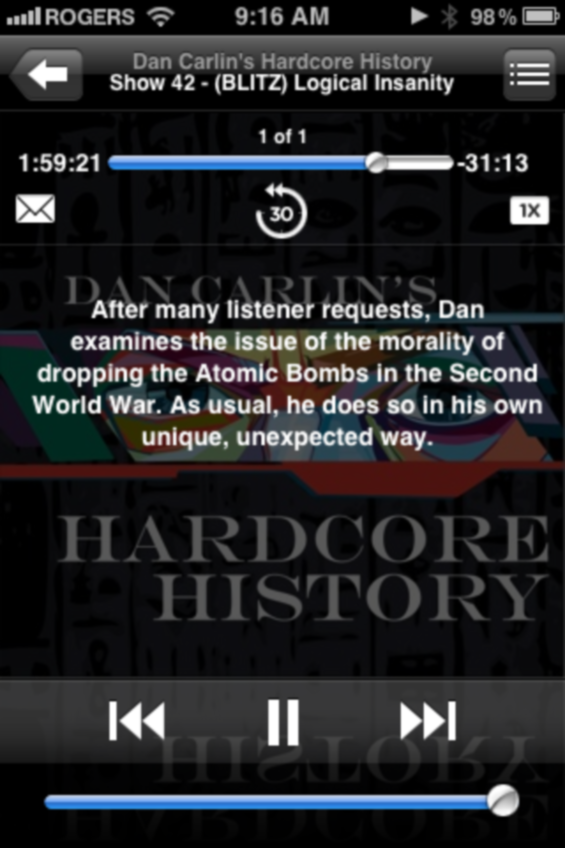
Dan Carlin's Hardcore History - #42 Logical Insanity

…where I realized that there was a new classic Dan Carlin out.

Carlin’s connective thread in this episode – that the insane choices of 20th century history are in fact a kind of horrific logic – delivered with fascinating historical evidence and illustrated with his incredible storytelling skill, shows the inevitable, frightening, awful logic of bombing cities full of people – even with nuclear weapons.

Carlin poses questions like. ‘In war, how many enemy civilians are you willing to kill in order to save one of your own people’s lives?’

And of course if that number is not equal to zero you’re down the path towards logical insanity.

Here’s the episode |MP3|

Podcast feed:
http://feeds.feedburner.com/dancarlin/history?format=xml

Posted by Jesse Willis

Spartacus on television and in history podcasts

SFFaudio Online Audio

Spartacus - Season 3

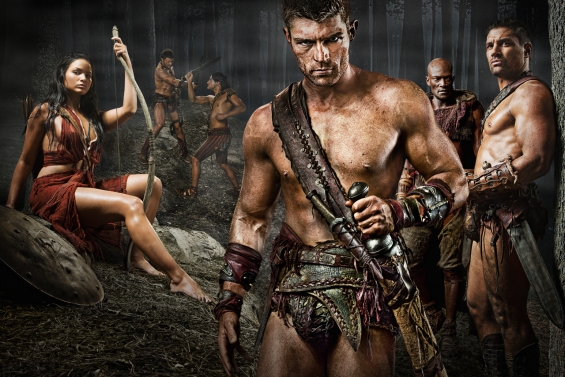
I’ve been enjoying, with a growing admiration, the New Zealand based Spartacus television series. I like it not least for the unique grammar the writers have developed. It’s a kind of a latinized English – mighty and subjectless sentences that are admirable.

The first episode nearly made me dismiss the show entirely. I didn’t like the 300-style effects, the slow motion blood, the constant bobbling of boobs nor the wall to wall green screening. But as the season went on I realized there was more to the show that the jeering mobs, the spectacle, and the nudity. By the final episode I was hooked. That was Spartacus: Blood and Sand. It gave us our hero’s origin story and his various reactions to slavery (denial, acceptance, pride, rebellion). And just as good were a pair of intensely (un)likeable villains, played by a pair of terrrific actors, showcased a cockeyed view of morality, Roman morality. Indeed, that first season began to tell the same story as the 1960 epic film staring Kirk Douglas (which itself was based on an book by Howard Fast). It did so at a slower pace, allowing for more of the historical detail to be played out.

Then there was the prequel series, Spartacus Gods Of The Arena, showing more of the background for the villains and supporting players. That season was supposed to be a stopgap, and it was, telling stories that were themselves only a background for the later seasons. But their own resonances resonated and proved themselves worthy. And now with the second (or third season depending on how you look at it) we have Spartacus: Vengeance, which outlines the beginnings of the bigger story, the latter half of the film version, and the massive slave rebellion that began in the Roman Republic.

the time, the first century BC, approximately 25% of all persons in Italy were slaves. And that’s where the heft of Spartacus comes from. It’s like Battlestar Galactica, but with a grounding in actual history. Spartacus was a real person. As were Crixus and Oenomaus. In these current episodes we see the foundations of the Third Servile War. It is history as drama, but it’s also the history of the opressed, not the rich, not popes, or kings, or robber barons. And this makes Spartacus unique among television programs currently airing.

Here are a couple of excellent old podcasts that made the show work all the better for me:

The History Of RomeMike Duncan’s excellent and long running The History Of Rome podcast covered the Spartacus story back in 2008. It’s still available and still fascinating!

|MP3|

Podcast feed: http://feeds.feedburner.com/TheHistoryOfRome


Military History PodcastAlso in 2008 George Hageman, who had a great podcast called the Military History Podcast, looked at the story of Spartacus from a more battles-based-perspective. Perhaps giving us a peek at the next season?

|MP3|

Podcast feed: http://geo47.libsyn.com/rss

Posted by Jesse Willis

SFBRP #152: Time Travel Special, part 2 – Isaac Asimov’s – The End Of Eternity

SFFaudio Online Audio

The Science Fiction Book Review Podcast Episode #152 of The Science Fiction Book Review Podcast is a discussion of Isaac Asimov’s The End Of Eternity. It’s also a follow-up to the previous time travel episode (#151). Luke and I discuss the book and related time travel tales.

|MP3|

Podcast feed: http://www.sfbrp.com/?feed=podcast

Discussed on the show:
A Connecticut Yankee In King Arthur’s Court by Mark Twain, a flexible chronology, Luke’s first Isaac Asimov review for SFBRP, Robert A. Heinlein, Nightfall by Isaac Asimov (and Robert Silverberg) is bad, Isaac Asimov has ideas to spare, the Wikipedia entry for The End Of Eternity, “what clever idea can I use, in time travel, that hasn’t been used before”, time loops, time barriers, “are you your own grandpa?”, Poul Anderson’s time corps, bureaucracy, how does time travel work?, time travel is discovered, eternity is a place outside of time, powering a time travel technology is easy if you can time travel, The Time Machine by H.G. Wells, the “kettle”, Ray Bradbury’s A Sound Of Thunder, A Gun For Dinosaur by L. Sprague de Camp, time lords?, Adjustment Team by Philip K. Dick, Back To The Future, remembering the works of culture and developments in realities that no longer exist, 13 different versions of the complete works of William Shakespeare, the academic background of professorial jockeying, are there two different endings for The End Of Eternity?, being outside of time, “the outside of the inside of eternity”, the malleability of reality through time travel, a limited butterfly effect, the inertia of history, killing Hitler, William The Conqueror vs. King Harold Godwinson, Genghis Kahn’s descendants, computers (the vocation) vs. computers (the devices), technicians don’t get any respect, “They feel an unspoken collective guilt which causes them to scapegoat the ‘Technicians’, the experts who actually execute Reality Changes by doing something that will alter the flow of events.”, a caste system, Minding Tomorrow by Luke Burrage, making changes by setting your mind to it, Bill And Ted’s Excellent Adventure, Harlan is a bit of a dim bulb, Demolition Man, time travel as a secret (paralleling magic as a secret), The Accidental Time Machine by Joe Haldeman, mutable realities, the grandfather paradox, unmanipulated reality, alternate history, Sidewise In Time by Murray Leinster, later Heinlein novels, unrestricted freedom in multiple realities can be extremely disheartening, Groundhog Day, infinite universes are boring, By His Bootstraps by Robert A. Heinlein, All You Zombies by Robert A. Heinlein, making a knot out of your own timeline, giving a young William Shakespeare a copy of The Complete Works Of Shakespeare, motherless objects and motherless ideas, giving your younger self an object (or advice), multiple timelines, “if that’s possible then that’s not possible”, time traveller’s convention, BoingBoing’s time travelers (I and II), European Juggling Convention 2003, Time Travel #2 Advanced Time Travel Techniques, Paradoxes For Beginners, Harlan Ellison, Murder At The ABA by Isaac Asimov, Darius Dust (dry as dust), Tales Of The Black Widowers, sexism, women are not suitable time travelers, an apocryphal tale of the Obamas, energy bodies, sending a message from the past to the future, you have an energy body but paper magazines?, a future vs. the future, The Door Into Summer, Escape Pod’s recording of All You Zombies, Asimovian characters, The End Of Eternity is about Earth, House Of Suns by Alastair Reynolds, something so big and so mind bogglingly complex, SFFaudio Podcast #073 George R. Stewart’s Earth Abides, “Gregg Margarite and that other guy (Jesse) are losers”, batshit theories, Eric S. Rabkin, Adam and Eve, fairy tales, sex, “the unconscious does exist”, Luke’s original fiction, “we do these podcasts for ourselves”, interesting bullshit, Luke’s Creative Podcast (with Gregg Margarite), “make your own podcast if you don’t like one.”

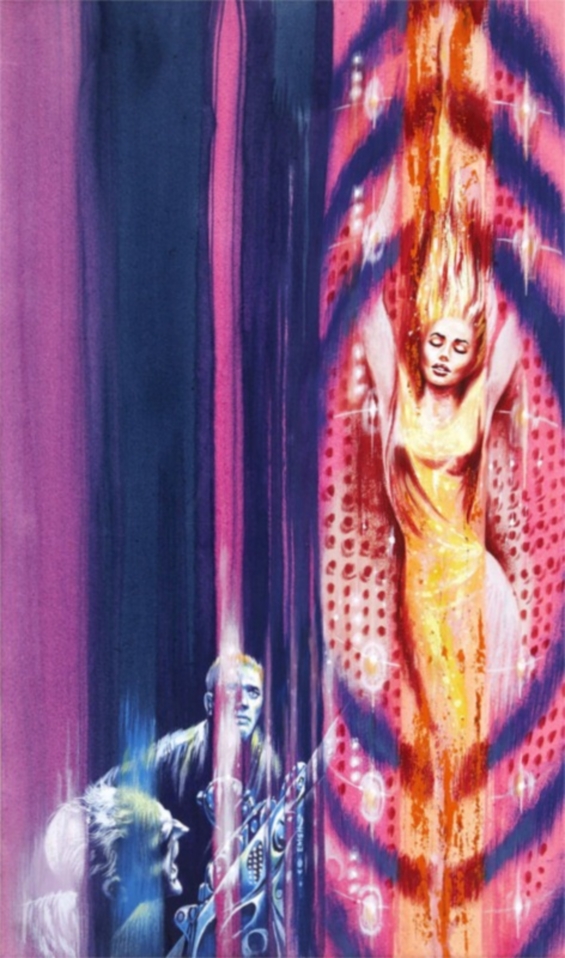
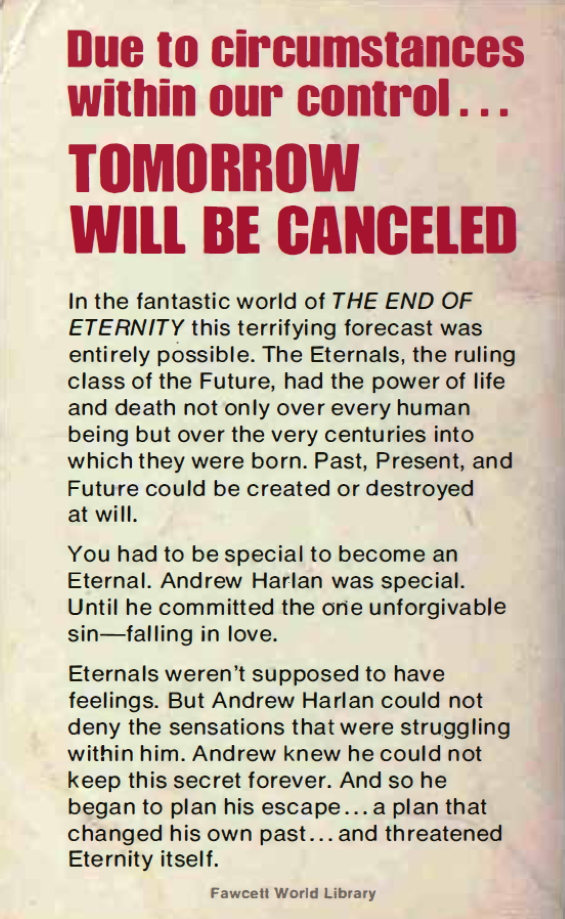
Ed Emshwiller cover illustration of Isaac Asimov's The End Of Eternity

FAWCETT The End Of Eternity by Isaac Asimov

Posted by Jesse Willis

The SFFaudio Podcast #145 – READALONG: Little Brother by Cory Doctorow

Podcast

The SFFaudio PodcastThe SFFaudio Podcast #145 – Little Brother by Cory Doctorow. Jesse, Tamahome, Professor Eric S. Rabkin and Jenny discuss Little Brother by Cory Doctorow. |ETEXT|

Talked about on today’s show:
Tam can’t trust anyone over 25, Jesse’s review in 2008, re-reading Little Brother in 2012, South Carolina, did Jenny vote Herman Cain (Stephen Colbert)?, SOPA/PIPA, non-fiction essay combined with YA, cliche, didacticism vs. propaganda vs. agitprop, we loved the infodumping, the underlying Oedipal structure, Robert A. Heinlein, libertarian bent, The Moon Is A Harsh Mistress, Starship Troopers, Ray Bradbury, Something Wicked This Way Comes, ‘this book has well devolved mythic structure’, levers vs. buttons, relevance, Homer, Electronic Frontier Foundation, the future of money, Luke Burrage’s review of Down And Out In The Magic Kingdom, money is hard to understand, Little Brother is a call to arms, National Defense Authorization Act (suspending habeous corpus as outlined in Article One of the United States Constitution), Nineteen Eighty-Four, George Orwell, Ms. Galvez’s Social Studies class, history, Heinleinian straw men vs. Doctorowan straw men, DHS, TSA, pebbles in your shoes, gait recognition, Oedipus = lame-foot, Charles Walker, the yippies, “this is a masterwork”, Jesse hates sequels, will the sequel to Little Brother deliver anything like what we might expect?, idea based writing vs. character based writing, w1n5t0n, trust, Marcus’ moral problem (RFID cloning without consent for the “greater good”), what act of violence is allowable?, moral relativism, the ends vs. the means, adolescence, “when is it time to overthrow the government?”, treason, Jenny makes “a gorgeous point”, Cory Doctorow’s choice to set Little Brother in, Law & Order (Lenny Briscoe), British North American Act, Canada didn’t have a bill of rights until 1981, The Charter Of Rights And Freedoms, Canada’s founding fathers are not demi-gods, Byron Sonne, G-20, is Little Brother a libertarian book?, “freedom is something you have to take for yourself”, Friedrich Hayek, Prometheus Award, the government of California is the hero (or the CHP), authority tries to perpetuate itself, UC Berkley, sex, juvenile vs. YA, “we live on Mars but we keep our houses extremely hot”, Snow Crash by Neal Stephenson, The Dervish House, Ready Player One, The Diamond Age, Eric makes a minor discovery, Big Brother -> Little Brother, Star-Begotten by H.G. Wells has the origin of “Big Brother”, Olaf Stapledon, “man is the boy who won’t grow up”, Spanish Civil War, The Midwich Cuckoos by John Wyndham (aka The Children Of The Damned), The Iron Heel by Jack London, comparing Doctorow with London, what is propaganda?, pamphleteering, Joseph Goebbels, Eric thinks etymologically, propagation and ideology, the Wikipedia entry on propaganda, is The Moon Is A Harsh Mistress propaganda?, “Oceania is now”, more strawful men, Sinclair Lewis, agitprop fiction, Science Fiction, “it’s a call to arms”, being a hacker, “go forth and hack my children”, “pay attention”, Gitmo by the bay, Iraq, Hacking The X-Box, Mac vs. PC ads, the hacker ethic is the science ethic, LARPing, “just to be smarter about the world around me”, alternative schooling, BART (Bay Area Rapid Transit), SkyTrain, The People Mover (The DPM), jitney, first person perspective, how to care, the terrorism detector and super-AIDS, Jane Jacobs, Jenny’s favourite character was Andrew, crystallizing the Oedipal issues, the Scoville scale, “the word is mister”, Ange vs. mom, The Tempest, severe haircut lady’s sadism, The Dark Knight Returns, is there a hero-normative angle?, The Puppet Masters, Friday, Have Spaceship-Will Travel, the ideal audience, Good Night Moon, Kirby Heybourne’s narration, transitional objects, Cory’s analogies are wonderful, taking a hiatus from Science Fiction, a pleased (but silent) smile, Jesse still has all his LEGO, a balding grey haired kid, Paranoid Linux, Jenny is ambivalent about whether she is of two minds, that couldn’t really happen here … could it?, Erich Fromm’s Escape from Freedom, the closer you get to power the more obvious it becomes, idelogical blindness, Drew wants to be able to believe, “He loved big brother.”
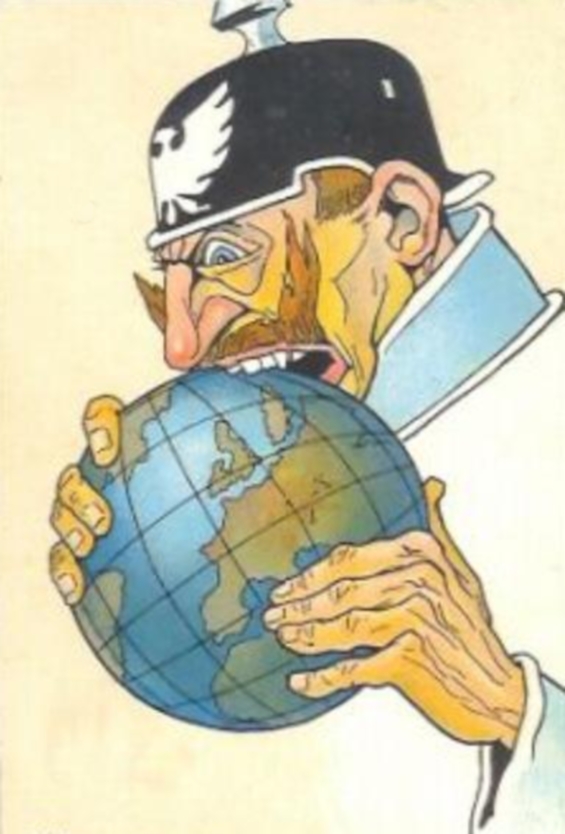
Kaiser Wilhelm II biting the world
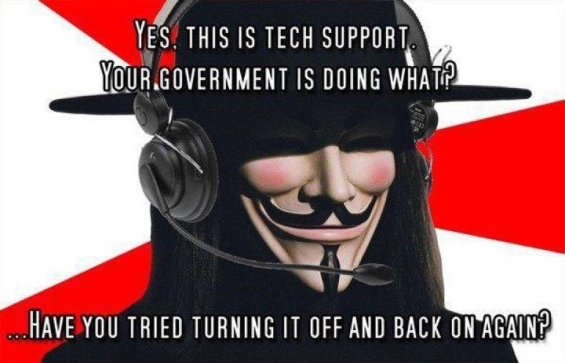
Govenment Tech Support

Posted by Jesse Willis

BBC Radio 4: In Our Time – a new podcast for every subject with shows from the past 14 years

SFFaudio Online Audio

Our friend Anne has added a wonderful new post to his Anne Is A Man blog about podcasts. Says Anne:

“I used to write that one should always download the In Our Time podcasts and keep for ever. The BBC used to keep only the last episode in the feed. In case one had not kept the episode, the only option to listen was to go to the on-line archive and listen while streaming. While that has become less and less of a bother with WiFi all around and capable smartphones, it still was a pity you had no option. All of this now belongs to the past; the archive is also available for download and one can lay ones hands on any chapter ever.”

The archive has been categorized into five separate feeds, sorted by subject:

BBC Radio 4 - In Our Time - CultureIn Our Time Archive – Culture
Melvyn Bragg and his guests discuss the history of ideas. Topics in the Culture feed include: architecture, the Renaissance, writing forms (like the novel, the sonnett and biography), as well as a multitude of specific persons.

Podcast feed: http://downloads.bbc.co.uk/podcasts/radio4/iotc/rss.xml


BBC Radio 4 - In Our Time - HistoryIn Our Time Archive – History

Melvyn Bragg and his guests discuss the history of ideas. Topics in the History feed include: The Wars of the Roses, specific battles, a multitude of historical personages, as well as the history of tea.

Podcast feed: http://downloads.bbc.co.uk/podcasts/radio4/ioth/rss.xml


BBC Radio 4 - In Our Time - PhilosophyIn Our Time Archive – Philosophy

Melvyn Bragg and his guests discuss the history of ideas. Topics in the Philosophy feed include: just war, rhetoric, great thinkers (Confucius, Popper, Socrates) as well as specific works of philosophy.

Podcast feed: http://downloads.bbc.co.uk/podcasts/radio4/iotp/rss.xml


BBC Radio 4 - In Our Time - ReligionIn Our Time Archive – Religion

Melvyn Bragg and his guests discuss the history of ideas. Topics in the Religion feed include: fundamentalism, prayer, the Devil, paganism, the Holy Grail, and the Spanish Inquisition.

Podcast feed: http://downloads.bbc.co.uk/podcasts/radio4/iotr/rss.xml


BBC Radio 4 - In Our Time - ScienceIn Our Time Archive – Science

Melvyn Bragg and his guests discuss the history of ideas. Topics in the Religion feed include: genetic engineering, artificial intelligence (and regular intelligence), quantum gravity, oceanography, aliens and cryptography.

Podcast feed: http://downloads.bbc.co.uk/podcasts/radio4/iots/rss.xml

Posted by Jesse Willis

Commentary: What use is public radio in a time of podcasts?

SFFaudio Commentary

Of what use is public radio in a time of podcasts?

That is, other than providing the funding for programmes that can be podcast – is there any use for radio medium specifically?

I suggest there is.

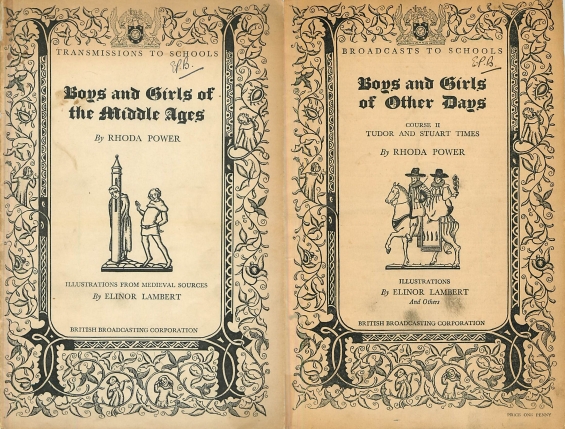
BBC - Transmissions To Schools (1927 and 1928)

Beyond giving local news and weather, there’s a traditional use which could be used again. Consider these two 1920s BBC publications, pamphlets in the “BBC Transmissions To Schools” series:

Boys And Girls Of The Middle Ages by Rhoda Power with illustrations by Elinor Lambert |PDF|
Broadcasts on Mondays from September 26 – December 12, 1927 at 2:30pm

Boys And Girls Of Other Days by Rhoda Power with illustrations by Elinor Lambert and others |PDF|
Broadcasts on Mondays from January 16 – March 26, 1928 at 2:30pm

BBC, CBC and ABC Radio National do a tremendous job at providing excellence in public adult programming with an educational bent, but in terms of children it seems to fall very short

The above documents show how public radio broadcasting can help with education of elementary school children. I’d love to see some education programming of this sort, aimed at children, turning up on CBC radio, with PDF downloads and podcast feeds as a compliment to national broadcasts.

For more information on the use of radio in schools, BroadcastForSchools.co.uk

Posted by Jesse Willis