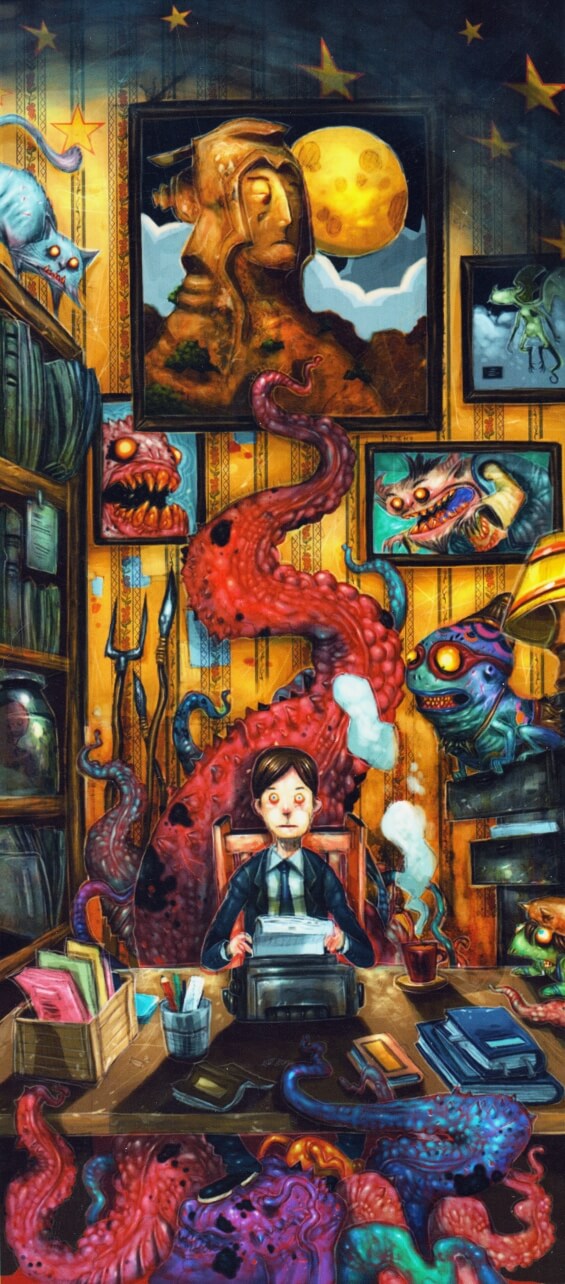

The SFFaudio Podcast #361 – AUDIOBOOK/READALONG: The Circular Ruins by Jorge Luis Borges

Podcast

The SFFaudio PodcastThe SFFaudio Podcast #361 – Jesse, Bryan Alexander, Mr Jim Moon, and Paul Weimer talk about The Circular Ruins by Jorge Luis Borges

Talked about on today’s show:
the dream of Bryan Alexander, the nightmare that is Paul, 1940, 1962, almost a disaster, this story hit them like ton of bricks, Frankenstein, disturbing, a simple plot, leading you in circles, rising action, the horrible Freytag pyramid, creating a person out of dreams, a Joseph Campbell plot, learning Spanish, listen to the negatives, no one was unaware that the silent man, the unanimous night, it claustrophobic cloaks, the beginning of Moby Dick, in The Garden Of Forking Path, Jeff Vandermeer’s Ambergris, the circularity of the text, there is no “collected works” of Borges, Broges’ translations, the language of doppelgangers, the father and son angle, a mediation on parenthood, a god of fire, if Eric Rabkin were here, Prometheus, realizing you’re a dream, a trapped figure in endless circularity, parenting, once the colour of fire and now that of ashes, a grey man under unknown leaves, tributaries of sleep, weaving a rope of sand, coining the faceless wind, a folkloric reference, a Cornish legend, The Lottery Of Babylon, the company knows all, a ruin of a religion that somehow comes true, the most difficult task a man could undertake, an infinite amount of time for the hairs on the arm, not the god of the bible, food and figs, a dream god, a hilarious line from Celephais, I’m a prodigious dreamer, a dream man who dreams a dream man into existence, a dream written down, meta accusations in the post modern school, a hero to post-modern thinkers, The Babylonian Lottery, where the Zend language, characteristics of a society, too much leprosy, Tlön, Uqbar, Orbis Tertius, the moonness was going above the river, the beautiful language of a dream, Voltaire’s Zadig, a fake Babylon, the book of Zend, The Library Of Babel, real world Greek, this river, bamboo canoe, other burned temples, H. Rider Haggard, double negative, Xenophon’s Anabasis, 10,000 mercenaries, epic adventure, populated or unpopulated, in the aftermath of disaster, Detroit, Peter Jackson’s Lord Of The Rings, yet another abandoned village, The Warriors (1979), an optimistic version of New York, being a vegetarian, Frankenstein’s creature is a vegan, he’s got to dream some meat into being, this is Abel not Cain, where the story really gets cooking, his body is a temple, dialectic dreams, clouds of taciturn students, interpolate him into the real world, a man lecturing the clouds, The Boy Who Disappeared Clouds by Lawrence Block, seeing images in the clouds, people are like clouds in dreams, a two sided coin, the dialectics, dissection theater, in the Gnostic cosmogonies, a red Adam who cannot stand, the world was created by the demi-urge, Valis by Philip K. Dick, addendum to the creation story, Lilith, the red mercury story (a geopolitical urban legend), alchemical texts, a locked Wikipedia entry, the cold fusion of terrorism, a golem, a man made out of clay but without a soul, Adam of dust, Adam of dreams, the wizard is the dreamer, again Frankenstein, why would it have been better?, Edgar Allan Poe’s William Wilson, H.P. Lovecraft’s Hypnos, doppelganger fiction, mirrors, Borges’ philosophy of Poe’s Composition, the literary equivalent of Escher, more like Lovecraft than Dick, aristocratic families, grandparents who were big into books, loved suits, loved their hometowns, Buenos Aires, a love of reading, wrote about writing, letter writers, connected with their readers, strange visionary figures, gregarious men, authors confused (conflated) with his own characters, complex truth and curious parallels, beauty, meaning and the belief in the power of story, how we make sense of the universe and how we interpret knowledge, both seeking to blow minds, Borges read Lovecraft, There Are More Things by Jorge Luis Borges is dedicated to Lovecraft, arguing with Lovecraft, cosmic is the word (not eldritch) or dream, The Call of Cthulhu, interpolate connects us to Dick as well, a bit of sense data, we don’t see just by having the world come into our eyes, we also project, the story is not complete, filling in the steps between fire and grey, Dick, Borges, and Lovecraft are working the world in a different way showing us their dreams, what would a Borgesian city in Kadath (the Dreamlands) look like?, Inception is a Borgesian story, far more concreteized, a heist, the grey man kissed the mud, the blades which were lacerating his flesh, the brambles delacerated his flesh, where did the blades come from?, what is certain, there’s something on the bank injuring him (or the blades are in him already), the crown of thorns, the temple was crowned, from out of the south, almost biblical, interesting, the plaything of forces far greater than he can comprehend, mental terror, the incessant trees, obligation, inconsolable shriek, the birdless morning, the phoenix, the tiger is man, Tyger Tyger, horses as a symbol of force, power, dynamism, and nobility, horse or tiger, domesticated vs. wild, super enigmatic yet we know exactly what happened, the creation of the heart, the moon, fourteen lucid nights, from lucidity to obscurity?, meticulous love, to rectify it with a glance, invoking the name of a planet, Mars?, Venus?, Mercury?, it could be the penis, much more meticulous from, the innumerable hair was the most difficult task, full moon?, starting the cycle again, the circularity of the ruins, re circularity, a disc vs. an amphitheater, the geography of the Library of Babel, a torus, the bottom of an amphitheater, it’s a magic spell, Lovecraft fandom, Cthulhu prayer breakfast, Borges was the darling of the literary set when he was alive, the New American Library edition, Borges is still a god of modern literature, intertextuality, Borges’ made up quotes and citations, Ibid by H.P. Lovecraft, a parody of 19th century scholarship, the adventures of a man’s skull, groundhogs worshiping a skull as a deity, the sense of humour, S.T. Joshi, a classic schoolboy error, BBC Radio documentary, humour in Borges, loops and whorls, sophisticated humour, blades vs. brambles, Poe the prankster, Herman Melville, extraordinary sentences, puckish and wry, apotheosis.

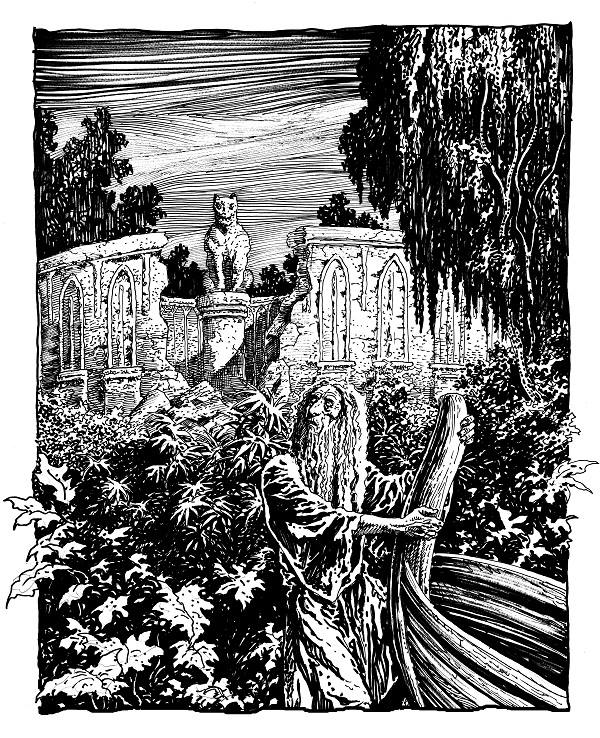
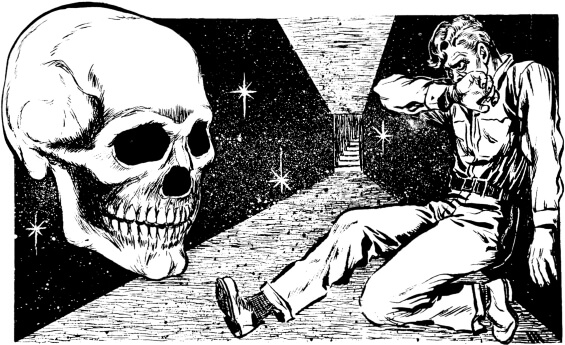
The Circular Ruins by Jorge Luis Borges - illustrated by Jesse

The Circular Ruins by Jorge Luis Borges

Posted by Jesse Willis

Reading, Short And Deep #005 – The Ancient Track by H.P. Lovecraft

Podcast

Reading, Short And DeepReading, Short And Deep #005

Eric S. Rabkin and Jesse Willis discuss The Ancient Track by H.P. Lovecraft

The Ancient Track was first published in Weird Tales, March 1930.

Here’s a link to the PDF of the poem.

Posted by Scott D. Danielson

The SFFaudio Podcast #355 – READALONG: The Dream-Quest Of Unknown Kadath by H.P. Lovecraft

Podcast

The SFFaudio PodcastThe SFFaudio Podcast #355 – Jesse, Mr Jim Moon, and Paul Weimer talk about The Dream-Quest Of Unknown Kadath by H.P. Lovecraft

Talked about on today’s show:
novel or novella, would Lovecraft have published it had he lived longer?, left in a drawer, a first draft, smoothing out, an amazing talent, a fascinating fun world, The Wizard Of Oz, a tour of Lovecraft’s material, not the place to start with Lovecraft, no existential bleakness, surprisingly gentle, even Nyarlathotep is kind of nice, more adventurous, extended into nonsense, marshaling armies, Conan’s messing about is strictly small potatoes, a gregarious jolly man, a sense of fun, poems about Frank Belknap Long’s cat, more lucidity than you expect, the ghouls, the Fungi From Yuggoth cycle, three travelers who’d previously visited the dreamland, one must be the unnamed narrator of The Crawling Chaos, King Kuranes, the narrator of Hypnos, the smoking cosmic gun, The Other Gods, the priest, The Strange High House In The Mist, a night-gaunt, the mythos was largely invented by fans, the nexus point, The Statement Of Randolph Carter, is the graveyard in the Dreamlands?, other ways to get to the Dreamlands, ghoul tunnels, the ghouls are quite friendly, Warren is dead!, the enchanted wood, the Vaults Of Zin, the realm of the Gugs, The Divine Comedy, The Cats Of Ulthar, lots of cats from Ulthar, almost an anime style plot, hilarious, whimsical, swarming cats, unlocking, context, Dunsananian, Polaris, the Land Of Lomar, ahead of Robert E. Howard and Clark Ashton Smith, C.S. Lewis, J.R.R. Tolkien, Paul’s own RPG Dreamlands, slavers, fighting the Moon Men, surprisingly visual, Celephaïs and The White ship, much mining, the Moon wine, lava gatherers, chalcedony mining, Mr. Merchant, Nyarlathotep is the wizard (and the wicked witch), Sauron, Azathoth does the gnawing, Carter’s passivity, Carter’s activity, Indiana Jones in Raiders Of The Lost Ark, an explorer’s adventure, the hound is Belloq, Bryan Alexander, not a horror book, more comedy than horror, the Nigh-Gaunts sound scary but their major power is tickling, Lovecraft has a wicked dry sense of humour, playing with a caricature of himself, based on his own nightmares, squirming feelings, “there’s more of gravy than of the grave about you”, Marley’s ghost, a bit of undigested beef, A Christmas Carol by Charles Dickens, the HPLHS’ A Solstice Carol, adapting three Lovecraft stories by way of Dickens, The Festival, Pickman’s Model, The Outsider, it all connects up, Richard Upton Pickman, The Shadow Over Innsmouth, this grand tapestry, Jim’s ball of wax, The Thing On The Doorstep, a shoggoth in those pits, Night-Gaunts (the poem), not seeing the whimsical side of it, a gamer style fashion, in Deities & Demigods, that was all bullshit, Michael Moorcock’s Elric, flying on the night-winds with the ghouls, an internal Lovecraftian world, maps, the map from the Call Of Cthulhu‘s Dreamland Supplements, Sandy Petersen, Jason Thompson’s Dreamlands map, The Green Meadow, the Vaults Of Yin, the Gardens of Zin, how do they get to the Moon on this map?, straight on until morning…, dream logic supplies an endless supply of water, how much is personal and how much is external?, Carter’s Sunset City (Kadath), the gods of earth have abandoned it for Kadath, cosmic horrors, the Games of Divinity, Fungi From Yuggoth, Homecoming (Sonnet V), our experience of reading Lovecraft, Recognition, the book is the key,

IV. Recognition

The day had come again, when as a child
I saw—just once—that hollow of old oaks,
Grey with a ground-mist that enfolds and chokes
The slinking shapes which madness has defiled.
It was the same—an herbage rank and wild
Clings round an altar whose carved sign invokes
That Nameless One to whom a thousand smokes
Rose, aeons gone, from unclean towers up-piled.

I saw the body spread on that dank stone,
And knew those things which feasted were not men;
I knew this strange, grey world was not my own,
But Yuggoth, past the starry voids—and then
The body shrieked at me with a dead cry,
And all too late I knew that it was I!

, the next poem

V. Homecoming

The daemon said that he would take me home
To the pale, shadowy land I half recalled
As a high place of stair and terrace, walled
With marble balustrades that sky-winds comb,
While miles below a maze of dome on dome
And tower on tower beside a sea lies sprawled.
Once more, he told me, I would stand enthralled
On those old heights, and hear the far-off foam.

All this he promised, and through sunset’s gate
He swept me, past the lapping lakes of flame,
And red-gold thrones of gods without a name
Who shriek in fear at some impending fate.
Then a black gulf with sea-sounds in the night:
“Here was your home,” he mocked, “when you had sight!”

then we get The Lamp, Zaman’s Hill, The Port, The Courtyard, XX. Night-Gaunts, XXI. Nyarlathotep, XXII. Azathoth, XXV. St. Toad’s, seeking after visions, XVI. The Window, I.N.G. Culbard’s adaptation of The Dream-Quest Of Unknown Kadath, this is a poem as well, word choices for assonance and alliterative sound, very aural, a pleasure to listen to, meant to be read aloud, Carter looks a lot like Lovecraft (in I.N.G. Culbard’s adaptation, Jason Thompson’s adaptation of The Dream-Quest Of Unknown Kadath, from Dunsany and Poe, it all goes back to Poe with his Dream-land poem, Ulalume, The Narrative Of Arthur Gordon Pym Of Nantucket by Edgar Allan Poe,

Dream-Land
by Edgar Allan Poe
By a route obscure and lonely,
Haunted by ill angels only,
Where an Eidolon, named NIGHT,
On a black throne reigns upright,
I have reached these lands but newly
From an ultimate dim Thule—
From a wild weird clime that lieth, sublime,
Out of SPACE—Out of TIME.

Bottomless vales and boundless floods,
And chasms, and caves, and Titan woods,
With forms that no man can discover
For the tears that drip all over;
Mountains toppling evermore
Into seas without a shore;
Seas that restlessly aspire,
Surging, unto skies of fire;
Lakes that endlessly outspread
Their lone waters—lone and dead,—
Their still waters—still and chilly
With the snows of the lolling lily.

By the lakes that thus outspread
Their lone waters, lone and dead,—
Their sad waters, sad and chilly
With the snows of the lolling lily,—
By the mountains—near the river
Murmuring lowly, murmuring ever,—
By the grey woods,—by the swamp
Where the toad and the newt encamp,—
By the dismal tarns and pools
Where dwell the Ghouls,—
By each spot the most unholy—
In each nook most melancholy,—
There the traveller meets, aghast,
Sheeted Memories of the Past—
Shrouded forms that start and sigh
As they pass the wanderer by—
White-robed forms of friends long given,
In agony, to the Earth—and Heaven.

For the heart whose woes are legion
’T is a peaceful, soothing region—
For the spirit that walks in shadow
’T is—oh, ’t is an Eldorado!
But the traveller, travelling through it,
May not—dare not openly view it;
Never its mysteries are exposed
To the weak human eye unclosed;
So wills its King, who hath forbid
The uplifting of the fring’d lid;
And thus the sad Soul that here passes
Beholds it but through darkened glasses.

By a route obscure and lonely,
Haunted by ill angels only,
Where an Eidolon, named NIGHT,
On a black throne reigns upright,
I have wandered home but newly
From this ultimate dim Thule.

the double negative, seeing the mysteries of the dreamlands with the eyes unclosed, protean quality, an evolution of that Dream-Land, the seed that took root in Lovecraft’s mind, pools with lolling lilies, Eldorado, a prodigious dreamer, Tweeting dreams, “I’m prodigious dreamer.”, keeping a dream diary, deeper and more vivid, a dream New York City, Jesse recounts dream of swimming through the streets, a sea-monster, rafts, tables, wonderful wonderful comic books, it is very difficult to read books in dreams, #nightmare, forgetting that he is dreaming, close to waking, dreams while dreaming, Dennis Quaid, Dreamscape (1984), if we can just get the internet of dreams working, awesome and amazing, Waking Life (2001), dreams as prison, Curanes story is in the middle, Curanes has trained a bunch of locals to act English, totally Wizard Of Oz, the magic of three, The Crawling Chaos by H.P Lovecraft and Winifred Virginia Jackson, some sort of plague, opium, he’s inside his own head and walks into the Dreamlands, all cities of amber and chalcedony, deserted cities, amazing imagery, inside baseball, once you’re deep into the trenches…, The Graveyard Book by Neil Gaiman has the same kind of ghouls, the way ghouls get their names (the first person they eat), maybe Pickman got eaten by a ghoul (retcon), meeps or glibbers, planning the assault on Kadath.

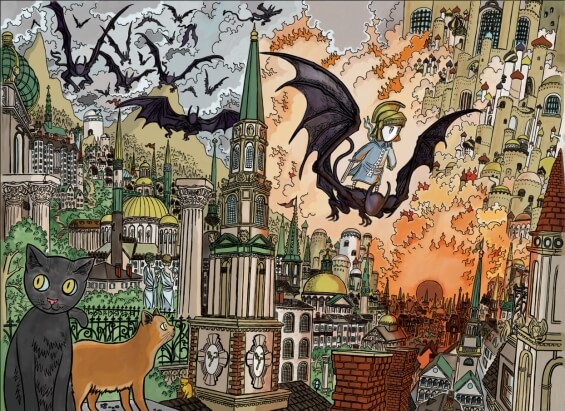
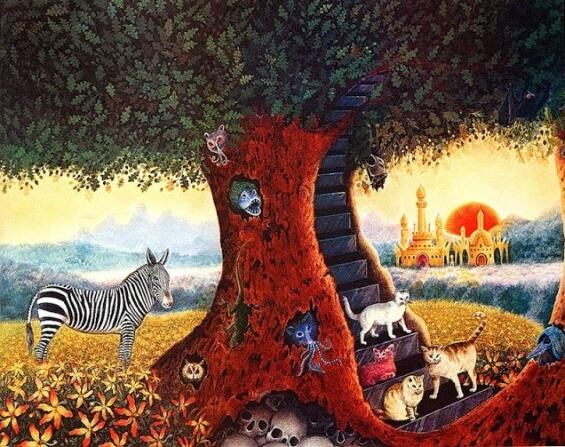
The Dream Quest Of Unknown Kadath by H.P. Lovecraft - illustration by Jason Thompson

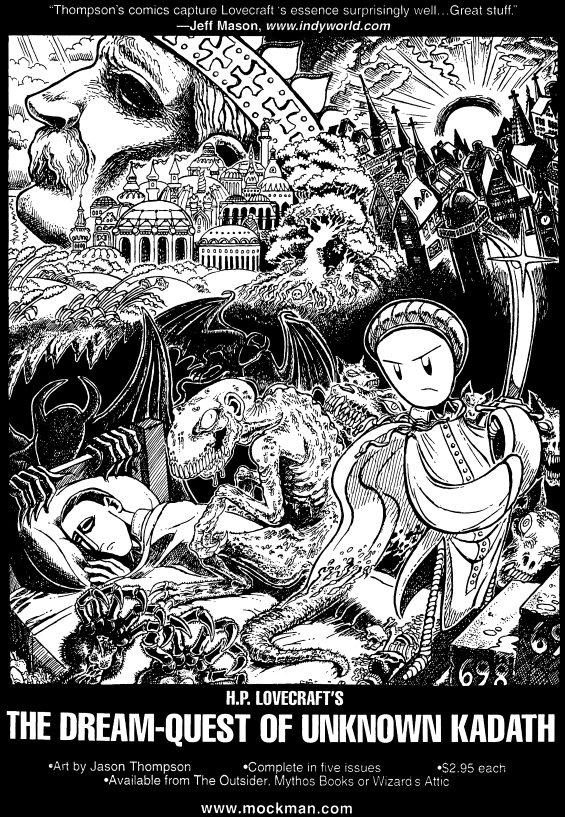
ad for H.P. Lovecraft's The Dream-Quest Of Unknown Kadath by Jason Thompson - from The Unspeakable Oath issue 16/17

Posted by Jesse Willis

The SFFaudio Podcast #354 – AUDIOBOOK: The Dream-Quest Of Unknown Kadath by H.P. Lovecraft

Podcast

The SFFaudio PodcastThe SFFaudio Podcast #354 – The Dream-Quest Of Unknown Kadath by H.P. Lovecraft, read by Martin Reyto.

This is an UNABRIDGED AUDIOBOOK of the novella (5 hour 20 minutes) comes to us courtesy of Legamus.eu.

The Dream-Quest Of Unknown Kadath was first published in 1943.

The next SFFaudio Podcast will feature our discussion of it!

Ballantine Books - The Dream-Quest Of Unknown Kadath by H.P. Lovecraft

The Dream-Quest Of Unknown Kadath by H.P. Lovecraft - illustration by Leong Wan Kok

The Dream-Quest Of Unknown Kadath by H.P. Lovecraft - illustration by Frank D. McSherry, Jr.

Posted by Jesse Willis

The SFFaudio Podcast #352 – TOPIC: Doors, Gates, and Portals (and Rubicons)

Podcast

The SFFaudio PodcastThe SFFaudio Podcast #352 – Jesse, Mr Jim Moon, and Prof. Eric S. Rabkin talk about doors, gates, and portals (and rubicons)

Talked about on today’s show:
thinking about doors, individual phenomena, a phenomenological way, white and purity, water, Edmund Husserl, an intensional act of consciousness, the conquistadors, when did WWII happen?, what kind of a phenomenon is a door?, doors are artificial, Narcissus and the lake, a boundary, passages for the whole body, windows, two-way passages, quicksand, horizontal movement, four qualities, the story of Oedipus, the riddle of the Sphinx, man -> mankind, the founding myth of Western culture, Aristotle, from one world to another, Eric in his professorial mode, the word world, were = man, the age of Man, in the world of…, the social domain that human beings create for themselves, prisons, doors as phenomena are artificial boundaries between two different worlds, social changes from one side of a door to another, doors as a phenomenon represent changes from consciously defined worlds, outdoors vs. indoors, inside and outside the gingerbread house, the morning thesis, the idea for this show, windows as opposed to doors, The Wonderful Window by Lord Dunsany, wanting to turn windows into doors, a rich example, sliding doors vs. sliding windows, in Science Fiction…, Robert A. Heinlein, defining the writing style of Science Fiction, the ideal Science Fiction sentence, Beyond This Horizon, “The door dilated and a voice from within said ‘Come in Felix.'”, wasting energy, one little change makes it a Science Fiction world, Heinlein invented the word “slideway”, Friday, from the reader’s armchair world it the fantastic world, folklore, liminality, crossing rivers, wandering into the forest, a wild world with gods and monsters, agrarian rural society -> industrial living, the wardrobe, The Door In The Wall, The Gable Window by H.P. Lovecraft and August Derleth, Dreams In The Witch-house, a locked-room mystery, The Secret Garden, a Wellsian door in the wall, what’s behind the door could be anything, mythical monsters, vampires need your permission to cross your threshold, Dracula comes in through the window, defying gravity and the phenomenology of windows, an instant subliminal marker, ho ho ho, Murders In The Rue Morgue by Edgar Allan Poe, the lore of changelings, leaving the house by the chimney, Little Red Riding Hood, “dispatched by typical female means” (cooking), Alice In Wonderland and Through The Looking Glass, Alice is fantasizing before she leaves the bank of the river, the river side is a liminal domain, dazing, daisies, crossings, protective imagination, opening the door for a sequel, Neverwhere by Neil Gaiman, a girl named Door, London’s underclass, being homeless is living outdoors, a hunter named Hunter, Door’s father is Lord Portico, a door back into Heaven, another rich text, worlds within worlds, the word hinge, ideas hinge upon something, stiles aren’t like doors, stiles don’t have hinges, lichgates and side doors to churches, the dead enter the church through a different door than the living, The Superstitious Man’s Tale by Thomas Hardy, shades of everybody, fourteen saints, a holiday in Germany, the blood of a sacrificial lamb, Exodus, keeping death from the door, all saints day, Jack-O-Lanterns scare off the returning dead, nature, walking through a gate, spirits pass through, how do gates function in keeping out the spirits of the dead, gates as territorial boundaries, “you come in through here”, the laws of territoriality, a keeper of the gate, the gate is the cover of the book, the door is what we cross “Once upon a time…”, “the second page of the first paragraph of a famous book”, why round?, why the exact center?, why green?, Eric’s eyes are green, The Door In The Wall has a green door, magic doors are often green, The Magic Door The Green Door (aka The Little Green Door) by Mary E. Wilkins-Freeman, horrible and messy and smelly, fundamental jokes in the Shrek series, Shrek is green too, kids love farts, About Time (2013), Domhnall Gleeson going through doors, “doors are amazing”, The Phantom Tollbooth by Norton Juster, the Chinese Scholar’s garden at Snug Harbour cultural center, moon gates, gates post signs, gates offer viewpoints, from The Haunted Palace by Edgar Allan Poe:

And all with pearl and ruby glowing
Was the fair palace door,
Through which came flowing, flowing, flowing
And sparkling evermore,
A troop of Echoes, whose sweet duty
Was but to sing,
In voices of surpassing beauty,
The wit and wisdom of their king.

But evil things, in robes of sorrow,
Assailed the monarch’s high estate;
(Ah, let us mourn!—for never morrow
Shall dawn upon him, desolate!)
And round about his home the glory
That blushed and bloomed
Is but a dim-remembered story
Of the old time entombed.

And travellers, now, within that valley,
Through the red-litten windows see
Vast forms that move fantastically
To a discordant melody;
While, like a ghastly rapid river,
Through the pale door
A hideous throng rush out forever,
And laugh—but smile no more.

the mouth as a door for voice and wisdom (and later a gate for flies and maggots), orifices, doors are artificial, eyes as windows, windows as natural, calm water as a window, the night sky as a window into the universe, window = wind and eye, a metaphor switching meaning, a heart is like a pump and a pump is like a heart, Babylon 5, star-gates, the Twilight Zone show inside Futurama: The Scary Door, Fredric Brown: “The last man on Earth sat alone in a room. there was a knock on the door.”, William F. Nolan’s the door problem, a seventy-foot bug, the imagination trumps revelation, film, Shiley Jackson’s The Haunting Of Hill House (in the book and the film), banging vs. knocking, the unopened door, the end of The Monkey’s Paw by W.W. Jacobs, The Psychoanalysis Of Fire by Gaston Bachelard, “fire: fine servant, horrible master”, poor little rich boys, the ultimate irony: Arbeit Macht Frei, an open gate, the phenomena interpenetrate, Rubicon (lost and found), The Cold Equations by Tom Godwin, “h amount of fuel will not power an EDS with a mass of m plus x”, uni-directional time travel as a kind of rubicon, Julius Caesar’s crossing, Alea iacta est (“The die is cast”), suicide, Jean Paul Sartre, Rip van Winkle, rubicons are natural, driving in Los Angeles county, counties and shires divided by rivers, the mouth as a (mostly) one way door into the body, Protector by Larry Niven, the tree of life root is a one way door (a rubicon), The King In Yellow by Robert W. Chambers, The Ring, the River Styx, ancient heroes and gods crossing back and forth across the river Styx, biological machines, Jesus Christ’s tomb door, a locked room mystery, doubting Thomas, The Cold Equations as a demarcation between materialist SF and all other kinds, rejecting the premise of the story, two kinds of laws, “Marilyn willingly walks into the airlock and is ejected into space.”, myth vs. hard Science Fiction vs. soft Science Fiction, The Hitch-Hiker’s Guide To The Galaxy by Douglas Adams, a few examples in literature, The Pied Piper of Hamelin, seven gates to Hell in Pennsylvania, Hell, Michigan, Audie Murphy’s To Hell And Back, a rubicon as an irrevocable choice, The Subtle Knife by Philip Pullman, Will cutting portals to other realms, “the ability to create portal given to someone on the cusp of puberty”, age 21 (given the key to the door), Key to the city, garter -> gate, barbicans, walled homes in the northern Mediterranean, doors within doors, protected by the laws of the city, the freedom of the city given to military units, Janus -> January, a two faced god and the god of doors, the doors to the temple of Janus are closed, open cities, Brussels, the locking of doors, growing up in New York you’re never fully at peace, living in Strawberry Point, Iowa, wifi open vs. wifi encrypted, wardriving, keeping the door open, the subspecies, dutch-doors, squeaky hinges, a door that opens up, China Mountain Zhang by Maureen F. McHugh, “falling backwards into a world in which a consciousness extends infinitely in all directions”, “the phenomenology changes the epistemology”, ontological differences, The Star Rover by Jack London, a portal to other places and times via astral projection, even in confinement one can find ways out, The Demolished Man The Stars My Destination, Hypnos by H.P. Lovecraft, the restriction of the coffin of the body, jaunting, The Count Of Monte Cristo by Alexandre Dumas, The Twilight Zone episode The Hunt, a country bumpkin -> a rural American, all dogs go to heaven, gatekeepers and doorkeepers, porter, the Battle of the Teutoburg Forest, wine drinkers and beer drinkers, the Sapir-Whorf hypothesis, was anything down that hatch on Lost?

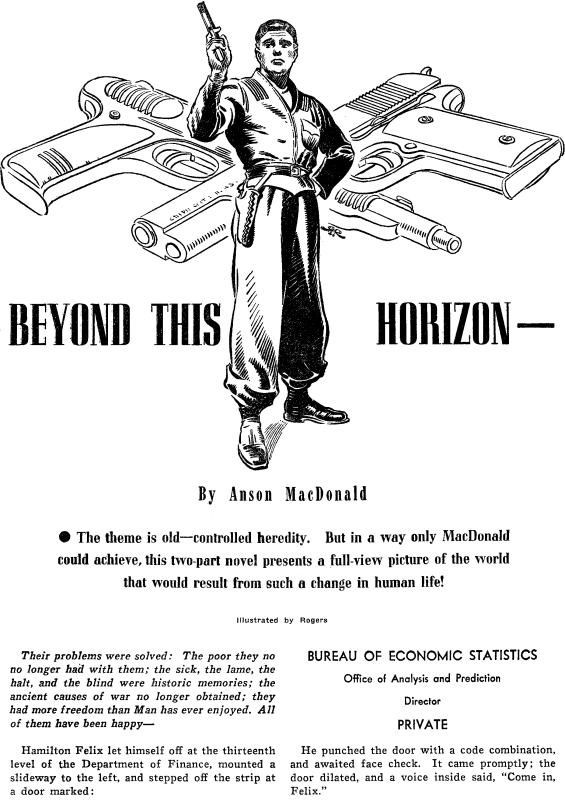
Beyond This Horizon - Astounding Science Fiction April 1942 - illustration by Hubert Rogers

Dr. Sun Yat Sen Classical Chinese Garden

Posted by Jesse Willis

The SFFaudio Podcast #349 – READALONG: The Ghost Pirates by William Hope Hodgson

Podcast

The SFFaudio PodcastThe SFFaudio Podcast #349 – Jesse and Mr Jim Moon talk about The Ghost Pirates by William Hope Hodgson

Talked about on today’s show:
1909, from the later middle, more sophisticated than The Night Land, more tightly plotted than The Boats Of The Glen Carrig, all the letters of H.P. Lovecraft that talk about William Hope Hodgson, revisions to Supernatural Horror In Literature, a doomed an haunted ship, terrible sea-devils of quasi-human aspect, latent horrors in nature, “reaches enviable peaks of power”, the LibriVox audiobook, not as jam-packed with incident, the Carnacki stories, cosmic vistas, accessibility, a straightforward story, what it was like to being a working sailor, cliques and alliances, tremendous fun, time travel that good literature can give you, the poopiest book of all of Hodgson’s work, the taffrail, mood, a ghostly haunted ship, From Beyond by H.P. Lovecraft, Algernon Blackwood’s The Willows, an intrusion by other forces, shadows, strange figures, disappearances, underwater ships, not just a ghost, predation, dimensional drift, pirate skeletons ghosts don’t fit, its the ship that’s haunted, but not only the ship, the ship’s name is “Mortzestus”, “Sangier” (the bloodier), “I’m going to get my money out of this ship”, the pay scene in Aliens (1979), a thing from outside, bubbling below the surface is the corporatism problem, a commercial venture, mutiny, the officers want it hushed up, writing it up in the log, it is regrettable that Bryan isn’t here, why Marx wrote his works in England, the relationship between the means of production (the ship) and its sailors, taking care vs. making money, commercial considerations, historical piracy, in the lulls between sea-devils, “mate” reminds us of “comrade”, we’re all in this together mate (or comrade), why were there so many pirates?, why piracy happened, a Freudian (or Marxist) reading, the Sindey Sime illustration of The Ghost Pirates, “pale eyes”, mummified figures, are the ghost pirates a projection of the crew’s submerged collective unconscious?, the pirate articles, communism and democracy, parallels the Russian Revolution style, the captain, the quartermaster, the hatred that Hodgson had for commercial sailing, spooky, a sub-layer to the tale, the frustrations of the crew, “that old bully”, we are in trouble now, the devils take them all, the slang for the ship is “this packet”, the crew as a wrapping on the parcel, the language of spiritualism, Jessup’s theory as to what’s going on:

“Well, I’ve formed a bit of a theory, that seems wise one minute, and cracked the next. Of course, it’s as likely to be all wrong; but it’s the only thing that seems to me to fit in with all the beastly things we’ve had lately.”

“My idea is, that this ship is open to be boarded by those things,” I explained. “What they are, of course I don’t know. They look like men— in lots of ways. But—well, the Lord knows what’s in the sea. Though we don’t want to go imagining silly things, of course. And then, again, you know, it seems fat-headed, calling anything silly. That’s how I keep going, in a sort of blessed circle. I don’t know a bit whether they’re flesh and blood, or whether they’re what we should call ghosts or spirits.”

this ship is “open”, what happened on this ship that “opened it up”, The Haunted Jarvee (a Carnacki story), there’s something about the ship, there’s a crack in it, a tear in the fabric of reality, a sitting duck for otherworldly buccaneers, what is the goal of the sea-devils, what are they doing up in the rigging, four ghost ships, aliens?, aliens from the ocean?, are they Doctor Who sea-devils?, are they deep ones?, a parallel reality, From Beyond, Crawford Tillinghast is turning up ghosts, vestigial organs, ultra-violet,

“What do we know,” he had said, “of the world and the universe about us? Our means of receiving impressions are absurdly few, and our notions of surrounding objects infinitely narrow. We see things only as we are constructed to see them, and can gain no idea of their absolute nature. With five feeble senses we pretend to comprehend the boundlessly complex cosmos, yet other beings with wider, stronger, or different range of senses might not only see very differently the things we see, but might see and study whole worlds of matter, energy, and life which lie close at hand yet can never be detected with the senses we have. I have always believed that such strange, inaccessible worlds exist at our very elbows, and now I believe I have found a way to break dawn the barriers.

if this was adapted today it would be explained by the cargo, an intra-dimensional material from atomic tests, 1920, The Dreams In The Witch House, 1934, The Banshee Chapter (2013), From Beyond (1986), a Freudian reading, Bill Clinton, in the language of apology, venereal disease, drugs, a found footage film, the framing story, believe it or not, The Ghost Pirates would make a great audio drama, showing the figures, crystallizing, Carnacki’s explanation in The Haunted Jarvee:

‘Well,’ replied Carnacki, ‘in my opinion she was a focus. That is a technical term which I can best explain by saying that she possessed the “attractive vibration” that is the power to draw to her any psychic waves in the vicinity, much in the way of a medium. The way in which the “vibration” is acquired – to use a technical term again – is, of course, purely a matter for supposition. She may have developed it during the years, owing to a suitability of conditions or it may have been in her (“of her” is a better term) from the very day her keel was laid. I mean the direction in which she lay the condition of the atmosphere, the state of the “electric tensions,” the very blows of the hammers and the accidental combining of materials suited to such an end – all might tend to such a thing.

making a magnet by hammering a nail, it’s not a person, it’s not something on the ship, it is the ship, electrical technology, a blend of science and the supernatural, BPRD: Plague Of Frogs, Mark Turetsky, slaves in chains at the bottom of the sea, a ship on its last voyage, the detritus of previous voyages, a Marxist resentment of the treatment of every crewman brought to the ship, end the of The Willows by Algernon Blackwood, working the same mine of feeling, the preface to the original edition, The House On The Borderland, certain conceptions of elemental kinship, flinging open the door wide, a kaleidoscope, scene upon scene, the door is open only a crack, speculation, what was the purpose, four shadowy galleons, the four ships below, are they mirrored (upside-down in the water), visualizing it is shocking, the Red Scare, they’re going to come here and take what we have, the Spartacus rebellions, an inter-dimensional idea, overwhelmed and pulled down, the other side of the veil, working a different passage in a nether dimension, if Neil Gaiman were to take this book as inspiration…, the surface of the sea, scraping along the surface of another world, the power of nautical ghost stories is in that liminal space between an ocean of air and an ocean of water, water as a liminal place in folklore, “where two elements meet strange things may intrude”, an inverted frog-men version of our world, are the sails like fins?, trade routes, how you portray the shadow ships, invisible would be fun, mirror world beneath the waves, the covers of various editions, skull and crossbones with a cutlass, whatever you see when you see through the eyes of Jessup, a fishy version of the pirate captain, mood effect, what the hell’s going on with those pig men?, a short novel, extended novellas, “I AM A NOVEL”, the Wikipedia entry, the unfinished novel, had Hodgson lived longer…, Captain Dang, the Sargasso Sea, the dawn of the pulp era proper, embracing the 20th century, The Hog, a complete collection.

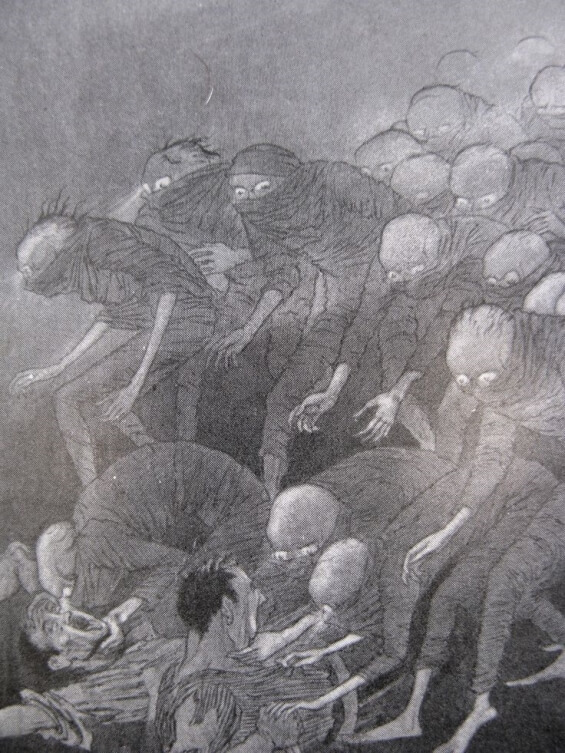
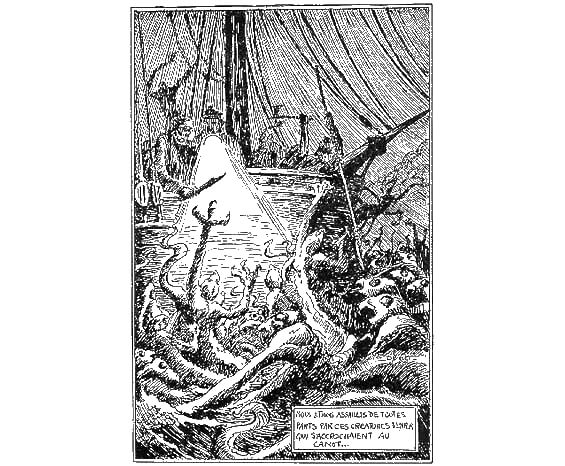
The Ghost Pirates by William Hope Hodgson - illustrated by Sidney Sime

The Ghost Pirates by William Hope Hodgson

Posted by Jesse Willis