
The SFFaudio Podcast #220 – AUDIOBOOK/READALONG: The Machine Stops by E.M. Forster

Podcast

The SFFaudio PodcastThe SFFaudio Podcast #220 – The Machine Stops by E.M. Forster; read by Elizabeth Klett (for LibriVox). This is a complete and unabridged reading of the story (1 hour 13 minutes) followed by a discussion of it. Participants in the discussion include Jesse, Professor Eric S. Rabkin, and Mr. Jim Moon.

Talked about on today’s show:
Novelette or novella, novellini?, E.M Forster wrote some Science Fiction?, genre boundaries, H.G. Wells, adventure, horror, The Time Machine, a critique of English society, dystopias, diegesis, a didactic approach, The War Of The Worlds, a bogus bifurcation of the body and the spirit (or the mind), ambiguous possibility, the “Machine” of the titles, Morlocks and Eloi, a reversal, a complement, prophetic vs. appropriate, looking through my blue plate, this book is the biggest existential critique of my lifestyle, it was lovely to meet Jim and Eric, a caricature and a critique, blackberry season, a swaddled lump of flesh, a curiously intrusive narrative technique, a fable, author backchat, in C.S. Lewis’ Narnia, J.R.R. Tolkien, lampshading, breaking the fourth wall, an aural phenomena, a fable, a parable, philosophical scenarios, Plato’s Myth Of The Cave, The Republic, Socrates, ontological imaginary equivalents, The Metamorphosis by Franz Kafka, the narrator isn’t exactly human, “back chat”, man is not necessarily the measure of all things, empiricism vs. rationalism, the unanswerable questions of the stars, everyone is a lecturer in the future, “second hand ideas”, the French Revolution not as it was but as it might be in our society, Alexander The Great’s monstrous rampage through Asia, “the juice of the individual human experience”, we have many books, books as experience generators, Ion, J.R.R. Tolkien, “there is a muse”, the rhetor, aiming out of the subterranean, why are we obsessed with essays?, SAT style essays, a quasi-Aristotelian view of happiness, what does a happy horse look like?, fleet fleets make happy shipwrights, happiness verb, man is not an animal like the others, the body doesn’t matter, man is a mind, big fat babies, the wealthy vs. the working, the bloom of Victorian society (men in sheds), a satire of academia, the Logical Positivists, natural deductive logic, Mr. Jim Moon does a lot of research, rehashing, Terry Jones, Christopher Columbus, Nathaniel Hawthorne, an unexpected continent, the North-West Passage, telling powerful and relevant, the use of the word “idea”, “forms”, Rene Descartes, interpenetration, Orion, the hunter giant,” when you give a bad podcast do you ask for euthanasia afterwards?”, you’re not there for the characters, a very erudite story, Vashti (from the Book of Esther), Purim, the worst possible kind of mother, “the book”, unmechanical, religion, what is the machine exactly?, is the machine Capitalism? Google? Wikipedia? The Internet? Communism?, the beds only come in one size, the six sided cell, a hive society, command societies, totalitarianism, “machines are in the saddle and ride mankind”, the trains make us run on time, a network of machines is the Machine, a perfected machine disallows individuality, “In the dawn of the world our weakly must be exposed on Mount Taygetus”, the worship of Helios, Ancient Greece, the homeless don’t die, despite being set in the future this is a danger in human existence, a perfect social system (utopia), an inversion of the ancient Spartan technique, not to go against the Greek, an inversion of the Garden of Eden story, in real life, a very disturbing story, a hopeful ending, a white snout, sexual competition as in Dracula, have we learned our lesson?, a passion for connection, Wall-E, infantilized adults, vomitorium, Logan’s Run, We by Yevgeny Zamyatin, an anti-romantic Eden, “they give me no ideas”, “metal blind”, Brave New World by Aldous Huxley, E.M. Forster invented Skype?, pneumatic tube, Paris, Looking Backward by Edward Bellamy, the business of Science Fiction isn’t technological prediction, a totalizing synergy, the blue slates, an Edwardian future, the machine religion, humans enslaved by their own social attitude, Cory Doctorow, the mending committee doesn’t know how to fix anything, personifying and deifying the machine, Voltaire’s “The better is the enemy of the good.”, Protagoras, the Sophists, a sophist editorial cartoon, give me money and pay attention to me, an incredibly weak story with spectacularly fruitful ideas, what does it mean to say “I read something and liked it?”, The City And The Stars by Sir Arthur C. Clarke, its left to us to ponder some very deep questions, we’re not at The City And The Stars tech yet, the 1970s and the 1990s was the time for Brave New World, complementary drugs, the work and the context we read them in, recycling of knowledge and group consensus, exciting and relevant for our time, where and when we are when we first read something is important, Against The Fall Of Night, The Catcher In The Rye, To Kill A Mockingbird, Have Space-Suit, Will Travel, Little Brother, the civilized society and the outer savage, Dr. Eric & Mr. Moon.


LEGOized - The Machine Stops by E.M. Forster

Which Killer Deserves To Have Been Read His Miranda Rights?

Posted by Jesse Willis

LibriVox: A Witch Shall Be Born by Robert E. Howard

SFFaudio Online Audio

Weird Tales, December 1934 - A Witch Shall Be Born by Robert E. Howard

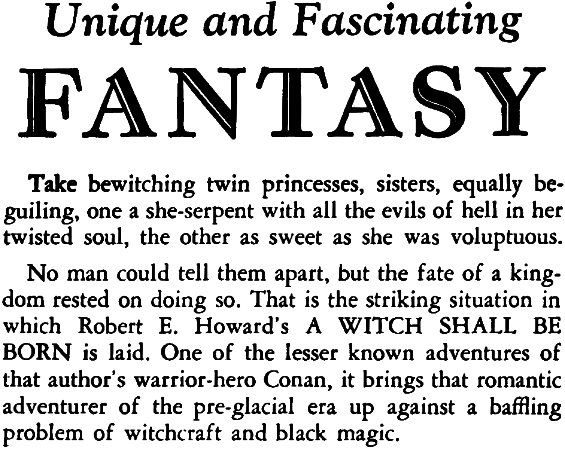
Here is Donald A. Wollheim’s introductions to A Witch Shall Be Born, as published in Avon Fantasy Reader, #10:

Robert E. Howard’s stories of the wanderings of Conan the Cimmerian through the realms of the pre-Glacial era were based upon a carefully structed “history” of those ages devised by Howard before starting his series. It is, we think, this careful groundwork which makes these tales so colorfully realistic, so vivid, so varied in background. We sense that he has woven into his literary tapestry not merely varicolored threads but clothes of different textures, so that his prehistoric kingdoms are national not merely because he calls them by different names but because he has thought of them as different in culture, approach, tradition. This is no mean feat for a purely imaginary world and it is one of the things that have made Robert Howard’s stories so much more memorable than attempts at similar construction by more commercially slanted writers.

Unique And Fascinating Fantasy (Introduction from Avon Fantasy Reader #10)

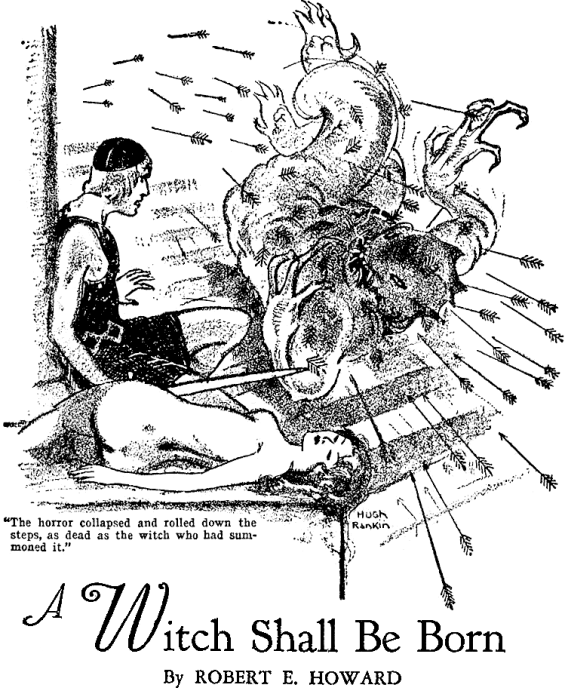
A Witch Shall Be Born by Robert E. Howard - illustration by Hugh Rankin

LibriVoxA Witch Shall Be Born
By Robert E. Howard; Read by Phil Chenevert
6 Zipped MP3 Files or Podcast – Approx. 2 Hours 5 Minutes [UNABRIDGED]
Publisher: LibriVox.org
Published: June 17, 2013
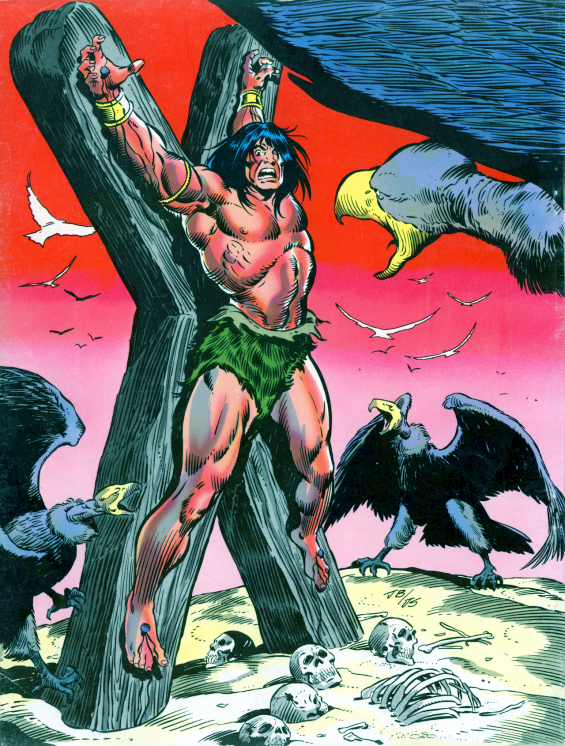
The kingdom of Khauran is admittedly small, but blessed with an abundance of rich soil, hard working inhabitants and much gold but most of all by a sweet young queen who is as wise and beneficent as she is beautiful. But then a horrible witch (her evil twin sister) secretly replaces her and introduces devil worship, human sacrifice and other things too repulsive to mention. Conan, who was the captain of her guard is captured and crucified in the desert. First published in Weird Tales, December 1934.

Podcast feed: http://librivox.org/rss/7946

iTunes 1-Click |SUBSCRIBE|

And here’s a |PDF| of A Witch Shall Be Born as scanned from Avon Fantasy Reader #10.

A Witch Shall Be Born by Robert E. Howard - illustration by John Buscema

[Thanks also to Britannia and Phil]

Posted by Jesse Willis

Review of Sailing Alone Around The World by Joshua Slocum

SFFaudio Review

Sailing Alone Around The World by Joshua SlocumSailing Alone Around The World
By Joshua Slocum; Read by Alan Chant
1 |M4B|, 22 Zipped MP3 Files, or Podcast – Approx. 7 Hours 52 Minutes [UNABRIDGED]
Publisher: LibriVox.org
Published: May 9, 2007
|ETEXT|
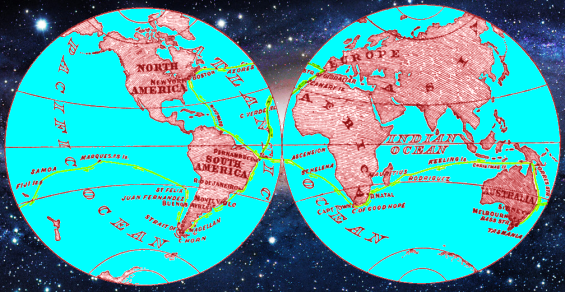
Joshua Slocum was the first man to sail around the world alone in a small boat. He personally rebuilt an 11.2 metre sloop-rigged fishing boat that he named the Spray. On April 24, 1895, he set sail from Boston, Massachusetts. More than three years later, he returned to Newport, Rhode Island, on June 27, 1898 having circumnavigated the world, a distance of 46,000 miles (74,000 km). In 1899 he described the voyage in Sailing Alone Around the World now considered a classic of travel literature. It is a wonderful adventure story from the Age of Sail and a book of which Arthur Ransome declared, “boys who do not like this book ought to be drowned at once.”

Podcast feed: http://librivox.org/bookfeeds/sailing-alone-around-the-world-by-joshua-slocum.xml

iTunes 1-Click |SUBSCRIBE|

I was listening to an episode of the CBC Radio One Ideas podcast, entitled Sailing Alone Around The World |MP3|, and was struck by the story of the first man to do that very thing. The program uses excerpts from Slocum’s book of the same name, and interviews those modern solitary sailors who’ve followed in Slocum’s wake. The fact that, in some sections of the sea, the next nearest human being to a lone sailor might be someone on the International Space Station, was an astounding revelation to me. The fact that there have been fewer solitary circumnavigators than there have been people in space, also astounding. So, not even half-way through the show I set my sights on LibriVox, where I searched for, found, and downloaded an M4B of the audiobook.

Slocum was an Canadian by birth and a naturalized American. In the late 19th century, upon finding himself out of work (the age of coal powered ships had begun in earnest), Slocum found there was no more call for a tall ship captain. One day Slocum finds himself having been gifted with an aged sloop. And so he sets about refitting it, hires himself out to himself plans to write a book (serialized in the Century magazine), loads up his cabin with food, supplies and lots of books, and sets sail on a solitary circumnavigation of the planet earth.

What he finds in the adventure is, simply put, real adventure! Slocum is alone for the entire trip except for The Spray itself, Slocum’s sloop, which is full of emotions (it feels happy when the sailing is good, and becomes anxious when in port too long). Similarwise he has a few passengers, there’s a hungry goat, a sneaky bilge rat, and a long suffering spider (it meets another just like it half a planet away from where it was born).

In his more than three years at sea Slocum meets with ship thieves, admirals, colonial governors, the widow (and adopted son) of Robert Louis Stevenson, friendly natives, hostile natives, officious bureaucrats, friendly bureaucrats, storms, reefs, sickness, and even a ghost!

Along the way he salute’s the sea god Neptune, ports at many memorable anchorages, including the island of the real life inspiration for Daniel Defoe’s Robinson Crusoe (Alexander Selkirk), and becomes an international celebrity.

Slocum’s narrative is helped by his enjoyable sense of humor and hindered by his prejudices. And while the various characters that he meets in the book may sometimes benefit from Slocum’s breezy writing style I got no real sense of the other side of the story. Incidents with thieves, one man steals his pistol, and one South American boy tries to steal his ship, come across as far less frightening than they might really have been. Indeed, there’s something of a deliberate storyteller to this travel narrative, something which reminds me of Sławomir Rawicz’s extraordinary adventure memoir The Long Walk (it may have been entirely made up). That said, the documentation seems far more present, and the journey here does seem to have actually occurred.

Narrator Alan Chant has an English accent and a relaxed reading style. There’s a bit of background noise in the recording, but the audio is very serviceable. Each chapter begins and ends with a bit of seabird song. Recommended.

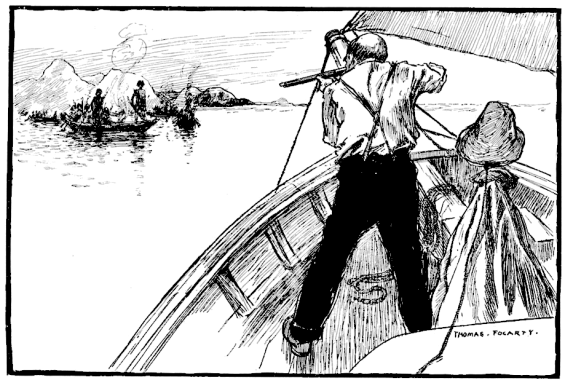
A Brush With Fuegians

The Voyage Of The Spray

Posted by Jesse Willis

The Thing At Nolan by Ambrose Bierce

SFFaudio Online Audio

Virtually all of Bierce’s tales are tales of horror; and whilst many of them treat only of the physical and psychological horrors within Nature, a substantial proportion admit the malignly supernatural and form a leading element in America’s fund of weird literature.”

-H.P. Lovecraft, from Supernatural Horror In Literature

A 1,500 word horror tale by Ambrose Bierce, typically bundled as the final of seven short horror stories, under the collective “Some Haunted Houses”, The Thing At Nolan was first published on its own. And that’s why I’ve edited up a special The Thing At Nolan from a larger LibriVox version.

The Thing At Nolan by Ambrose BierceThe Thing At Nolan
By Ambrose Bierce; Read by Peter Yearsley
1 |MP3| – Approx. 10 Minutes [UNABRIDGED]
Publisher: LibriVox.org
Published: 2006
First published in San Francisco Observer, August 2, 1891.

And here’s a |PDF|.

There’s also a CBS Radio Mystery Theater adaptation, adapted by actor Arnold Moss! It fills in a lot of the details from the very sketchy sketch of Bierce’s original story. Moss also takes a role!

CBS Radio Mystery TheaterCBSRMT #0920 – The Thing At Nolan
Adapted from the story by Ambrose Bierce; Adapted by Arnold Moss; Performed by a full cast
1 |MP3| – Approx. 44 Minutes [RADIO DRAMA]
Broadcaster: CBS Radio
Broadcast: November 20, 1978
Source: CBSRMT.com
When a father vanishes while digging a ditch in frontier Missouri, suspicions fall on the rebellious son who recently threatened him with bodily harm. His mother believes his claims of innocence, but the rest of the townsfolk do not.

Cast:
Court Benson
Russell Horton
Arnold Moss
Bryna Raeburn

Posted by Jesse Willis

A Martian Odyssey by Stanley G. Weinbaum

SFFaudio Online Audio

A Martian Odyssey by Stanley G. Weinbaum

A Martian Odyssey is a classic of alien human interaction. Isaac Asimov said of it and of Weinbaum:

“With this single story [A Martian Odyssey], Weinbaum was instantly recognized as the world’s best living science fiction writer, and at once almost every writer in the field tried to imitate him.”

It is also argued that this is the first story to satisfy Astounding editor John W. Campbell’s famous challenge:

“Write me a creature who thinks as well as a man, or better than a man, but not like a man.”

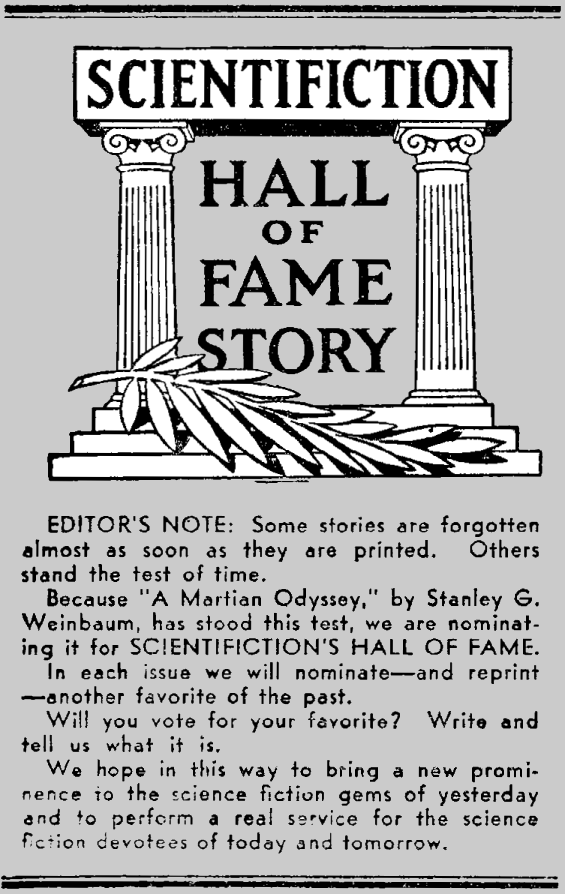
When it was republished, just 4 years later, in Startling Stories, A Martian Odyssey was added to the “Scientifiction Hall Of Fame”:

Scientifiction Hall Of Fame - Editor's Note
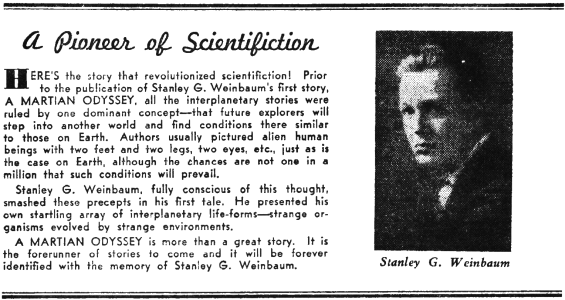
And with that that same printing was this extolling editorial explanation:
Stanley G. Weinbaum - Pioneer Of Scientifiction

LibriVoxA Martian Odyssey
By Stanley G. Weinbaum; Read by Gregg Margarite
1 |MP3| – Approx. 58 Minutes [UNABRIDGED]
Publisher: LibriVox.org
Published: January 13, 2009
Early in the twenty-first century, nearly twenty years after the invention of atomic power and ten years after the first lunar landing, the four-man crew of the Ares has landed on Mars in the Mare Cimmerium. A week after the landing, Dick Jarvis, the ship’s American chemist, sets out south in an auxiliary rocket to photograph the landscape. Eight hundred miles out, the engine on Jarvis’ rocket gives out, and he crash-lands into one of the Thyle regions. Rather than sit and wait for rescue, Jarvis decides to walk back north to the Ares. First published in Wonder Stories, July 1934.

Here’s an illustrated |PDF| made from the original publication in Wonder Stories.

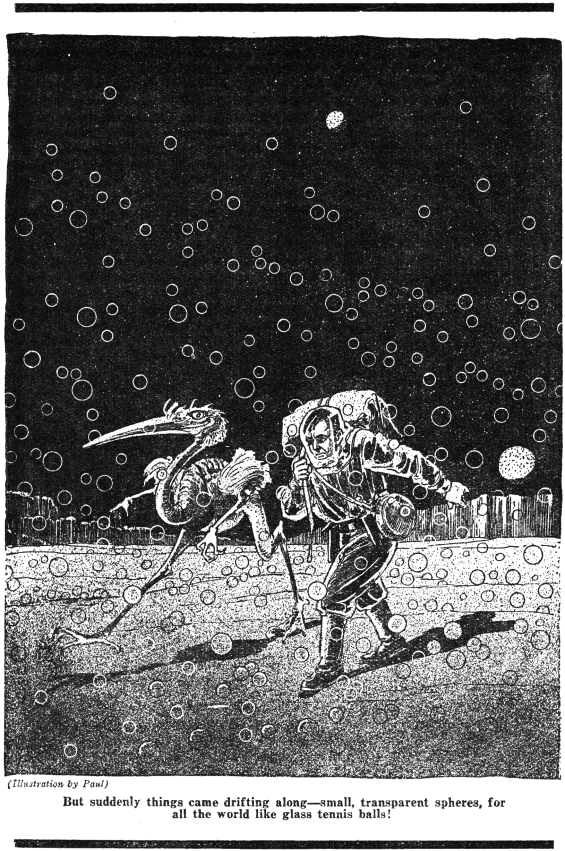
A Martian Odyssey - illustration by Frank R. Paul

Posted by Jesse Willis

The Wonderful Window by Lord Dunsany

SFFaudio Online Audio

The Wonderful Window by Lord Dunsany

Very comparable in theme to H.G. Wells’ The Door In The Wall is The Wonderful Window by Lord Dunsany. It’s a Fantasy about the silliest young man in Business, and his foolish acquisition of a small leaded glass window from an oriental vagrant. It was first published in Saturday Review (UK), February 4, 1911.

And here’s the cleaned up LibriVox version, read by Greg Elmensdorp. |MP3| Approx. 13 Minutes [UNABRIDGED]

The Wonderful Window by Lord Dunsany |PDF| 11 Pages

The Wonderful Window by Lord Dunsany |PDF| 4 Pages

Posted by Jesse Willis