News, Reviews, and Commentary on all forms of science fiction, fantasy, and horror audio. Audiobooks, audio drama, podcasts; we discuss all of it here. Mystery, crime, and noir audio are also fair game.
“[Hosiprog] was founded by the late Dennis Rookard to create and provide drama and features for hospital radio, audio magazines for the blind and community radio stations. Essex Audio Theatre and the Old Court Radio Theatre Company continue to produce and record original material for Hosiprog, with John Rhodes as recording engineer. Anyone is welcome to listen to the recordings, or to download them, and they may be broadcast freely by voluntary and community-run radio stations. The archive for the recordings are linked and provided in the Group at Times Past.”
The Mazarin Stone
By M.J. Elliott; Adapted from the story The Adventure Of The Mazarin Stone by Sir Arthur Conan Doyle; Performed by a full cast
1 |MP3| – Approx. 28 Minutes [AUDIO DRAMA]
Producer: Old Court Radio Theatre Company
Produced: 2007
|ETEXT|
Based on a stage play (The Crown Diamond: An Evening With Mr Sherlock Holmes) by Sir Arthur Conan Doyle. First published as a short story in the Strand Magazine, October 1921.
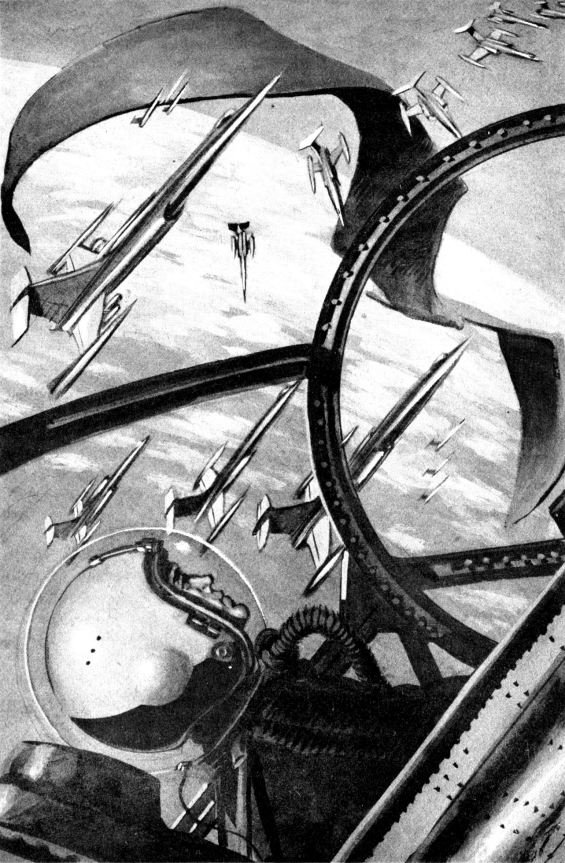
A first contact story and a mystery story! When a massive alien, the size of a city, enters Earth’s atmosphere fighter jets are scrambled to meet it. The alien seems to be in search of something – but what it is won’t turn out to be what we expect. Here’s part of the description of the alien:
She had a head, drawn back most of the time into the bloated mass of the body but thrusting forward now and then on a short neck not more than three hundred feet in length. When she did that the blunt turtle-like head could be observed, the gaping, toothless, suffering mouth from which the thunder came, and the soft-shining purple eyes that searched the ground but found nothing answering her need. The skin-color was mud-brown with some dull iridescence and many peculiar marks resembling weals or blisters. Along the belly some observers saw half a mile of paired protuberances that looked like teats.
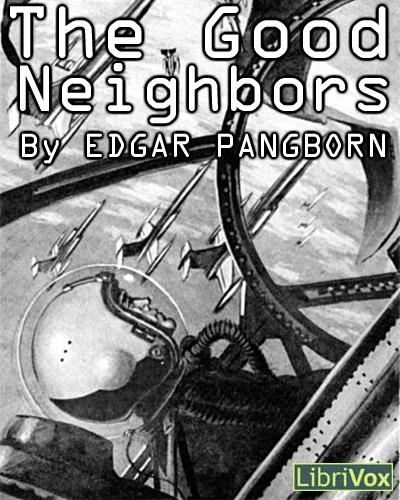
The Good Neighbors
By Edgar Pangborn; Read by Gregg Margarite
1 |MP3| – Approx. 12 Minutes [UNABRIDGED]
Publisher: LibriVox.org
Published: February 21, 2009
|ETEXT| You can’t blame an alien for a little inconvenience—as long as he makes up for it! First published in Galaxy Science Fiction, June 1960.
And here is a |PDF| made from the original publication in Galaxy.
The SFFaudio Podcast #154 – Scott, Jesse, Tamahome, Mirko and David Stifel talk about An Occurrence At Owl Creek Bridge by Ambrose Bierce (read by Bob Neufeld for LibriVox).
Talked about on today’s show: The Devil’s Dictionary, comic irony, an American classic, German drama, Famous Monsters Of Filmland, Sleep No More, Nelson Almstead, The Twilight Zone, The Outer Limits, One Step Beyond, civil war stories, quantum mechanics, The Damned Thing, the genres: horror, ghost, “weird”, “weird war”, “dream”, or SUSPENSE, alternate reality, why is An Occurrence At Owl Creek Bridge so popular with high-school English teachers?, time perception, not-SF, “the man who was engaged in being hanged”, passivity, “go for it hands”, “a dream story”, David used to have out of body dreams, “stream of consciousness”, subjectivity, Henry James, the radio drama adaptations (Escape, Suspense, CBS Radio Mystery Theater),
“Each year thousands of short stories roll out from a multitude of typewriter, march across the pages of our magazines toward well deserved oblivion. Few are memorable, fewer still are classics. They pass the time and are forgotten even before the paper on which they are written is reduced to black ash. But occasionally a story is written that is a true classic, an unforgettable tale.”
astral projection, H.P. Lovecraft, Accessory Before The Fact by Algernon Blackwood, near death experience, Bierce’s headwound, Sigmund Freud, A Dream Play by August Strindberg, The Horla by Guy de Maupassant, the driftwood, the slowdown of time, it’s a mystery story, a million blades of grass, infinite detail and infinite depth, Isaac Asimov, The Turn Of The Screw, The Twilight Zone version (which was a French short film), what’s with the corporal?, of the body, a hidden pun or joke, it was a setup, a great suspicion of death or dying, the kicking legs = running, unconscious insight result in surprise and relief, the tongue, wish fulfillment, the suspicion begins, naturalistic interpretation, Igor (Son Of Frankenstein), the history of hangings, botched hangings, popping heads, Hang ‘Em High, Braveheart, can it be truly spoiled?, war,
“Death is a dignitary who when he comes announced is to be received with formal manifestations of respect, even by those most familiar with him. In the code of military etiquette silence and fixity are forms of deference.”
constitutional rights, the Alfred Hitchcock Presents adaptation, The Twilight Zone short film version, HuffDuffer, CBS Radio Mystery Theater adaptation, “it’s best read”, an audio drama adaptation, impressionism, mapping back, additional scenes, a water moccasin, narration, is it a miracle that the rope breaks, a heavenly Eden like land, gates, Sergei Bondarchuk’s War And Peace, Leo Tolstoy, altered state, (The Crawling Chaos), sex choking, speculative fiction, life passing before you, the telescoping of time, remembering the classics, 100,000 high school teachers, one of the most podcast short stories, O. Henry stories are cute, an existential story, “trapped in a world he never made”, an exegesis.
Sci-Fi Radio Theater is “the brain child of international internet man Charles Davis and opera singer Josie Corichi.” Here’s their mission statement:
To produce high quality original fiction radio play podcasts that fall within the science fiction, fantasy and horror genres.
Why Sci-Fi? Because it’s what we like and it’s what we know. At SFRT we are huge personal fans of this genre of story telling and we feel that we have more to offer to the science fiction community than being observers. Our drive is to be active participants in the creation of original Science Fiction stories.
Why a Radio Play Podcast? Because the greatest imagery that exists is within your own mind. We believe that by delivering these stories in an audio format we allow the listener to be taken to a far deeper and more complex world than we would be able to offer through video.
Another reason is the freedom of length. One of the joys of a science fiction story is the depth and detail you are able to get into. By presenting these radio plays as a podcast we are able to tell a story as long as it naturally takes to tell.
The only question I have is whether the narrator is intentionally doing a Bill Hollweg impersonation.
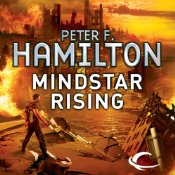
Mindstar Rising (Greg Mandel, #1)
By Peter F. Hamilton; Read by Toby Longworth
Audible Download – 14 Hours 52 Minutes [UNABRIDGED]
Publisher: Audible Frontiers
Published: December 1st 2011
Themes: / Science Fiction / Mystery / Global Warming / Psychic Abilities
It’s the 21st century, and global warming is here to stay, so forget the way your country used to look. And get used to the free market, too – the companies possess all the best hardware, and they’re calling the shots now. In a world like this, a man open to any offers can make out just fine.
A man like Greg Mandel for instance, who’s psi-boosted, wired into the latest sensory equipment, carrying state-of-the-art weaponry – and late of the English Army’s Mindstar Battalion. As the cartels battle for control of a revolutionary new power source, and corporate greed outstrips national security, tension is mounting to boiling point – and Greg Mandel is about to face the ultimate test.
This is an older Peter F. Hamilton novel, first published in 1993. It’s relatively short compared to his later books. Just this year it got reprinted in America with Quantum Murder as one book. (I guess thick books sell more?) It has also just gotten the audio treatment from Audible Frontiers. Peter F. Hamilton is kind of a potboiler sf writer, and yet he’s really smart. He seems to put a lot of research into his scenes, including some science. Sometimes I feel like he’s giving too many details compared to someone like Joe Haldeman, and I get a little restless. Maybe it’s my fault and I’m getting confused, which is easier to do in an audiobook. But then something shocking or intense happens, and it keeps me going. Plus his character development is above average for a genre writer. And he doesn’t shy away from sex or violence as much as other writers. I feel like he writes for adults. If you thought the Night’s Dawn or Void trilogies had too many fantasy elements, you might prefer this series. It is more straight science fiction. That’s assuming you don’t consider psychic abilities to be fantasy. At least they’re framed here in a scientific way. You may encounter some libertarian political messages as well. The setting is a post global warming world where a Leftist government has left England in shambles. It will become important to the plot.
I happen to know that Hamilton is a plotter and outlines in advance. I experienced the ‘Connie Willis effect’ while reading — I wasn’t sure why a certain character or location was introduced, but then it all tied together in the end. The last three or four hours here really cooked. He can describe beam weapons and explosions well. (Compare the end of his The Neutronium Alchemist with the end of Samuel R. Delany’s Nova.) Although I caution you there’s a somewhat grisly escape. And I don’t like the word ‘tropes’, but some of the ‘cool stuff’ you’ll see in this novel are mind uploading, cybernetic brain enhancement, and genetically enhanced animals.
Talked about on today’s show:
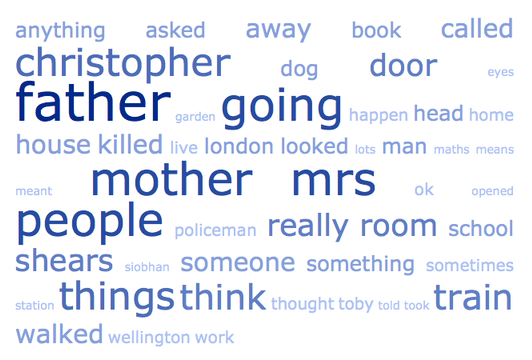
the upside-down dog cover, Jesse doesn’t like the cover, Eric finds hidden meaning in the cover, Sir Arthur Conan Doyle, is it mainstream or a mystery or YA?, Asperger’s or autism?, what is it like to be inside another person’s head?, generates tolerance, Elaine’s post on TED Talk: Elif Şafak on The Politics Of fiction, neurotypical characters, extraordinary abilities and extraordinary deficits, Constituting Christopher: Disability Theory And Mark Haddon’s by Vivienne Muller, Scott loves lists, the reader is ahead of the narrator, unreliable narrators, Flowers For Algernon by Daniel Keyes, The Speed Of Dark by Elizabeth Moon, mystery vs. family drama, Oedipus, “Sophocles not Freud”, Christopher Robin, (Winnie The Pooh), “there is something naively wonderful going on”, information vs. meaning, who did it? vs. why did it get done?, moving from what to why, Eric found the book joyful and uplifting, at the end?, abusive vs. human vs. murderous, PETA would not be pleased, “sometimes people want to be stupid”, Occam’s Razor, “now I know what box they fit into”, Cinderella, the Grimm Brothers, Jesse loves the infodumps, the asides are a highlight, where is Siobhan?, the Recorded Books audiobook version has a great narrator (Jeff Woodman), prime numbered chapters, are the pictures necessary?, Orion (the hunter in the sky), the most common word in the book is ‘and’, “he’s adding things up”, “this is a very true book”, “lies expand infinitely in all directions”, what Science Fiction and mystery look for, “sometimes people want to be stupid”, prime numbers are like life, rationalism vs. empiricism, Christopher yearns for uniqueness, right triangles, the appendix (is not in the audiobook), the brown cow joke, unreliable narrator, Conan Doyle’s beliefs, information vs. understanding, Harriet The Spy, dude don’t stab people, “a tag cloud of the novel”, Alexander And The Terrible, Horrible, No Good, Very Bad Day by Judith Viorst, Slaughterhouse Five by Kurt Vonnegut, Jr., “Repent Harlequin!”, Said The Ticktockman by Harlan Ellison, sense of wonder, Toby the rat (Algernon), Uncle Toby, The Life And Opinions Of Tristram Shandy by Laurence Sterne, the poet “does not number the streaks of the tulip 18th century”, The History of Rasselas by Samuel Johnson, Candide by Voltaire, books inside books, Have Spacesuit, Will Travel by Robert A. Heinlein, Three Men In A Boat by Jerome K. Jerome, Donald E. Westlake, Lawrence Block, Jo Walton’s Among Others, the third season of Star Trek, art making reference to itself, The Time Machine by H.G. Wells, Star Trek‘s third season, Spectre Of The Gun, “we just need the skeleton to tell the story”, “most of the protagonists in Science Fiction novels don’t read Science Fiction”, Jenny’s review of Ready Player One, The Emperor Of Mars by Allen_Steele (audio link), standing the test of time, Jesse’s extended metaphor about winnowed books washing up on beaches 100 years later, Eric is reading Uncle Tom’s Cabin by Harriet Beecher Stowe, propaganda melodrama, Super Sad True Love Story by Gary Shteyngart, Light In August by William Faulkner, the humanizing influence, comparing The Curious Incident Of The Dog In The Night-Time with The Speed Of Dark, the novel’s form shapes the novel market, Jesse thinks series hurt readers, wondering what’s going to happen next vs. what idea is being explored, the value of series, the train trip, the maths exam, “the walls are brown”, in Science Fiction metaphors are real, clarified butter and clarified mother, the word “murder”, Julie Davis’s reading of Uncle Tom’s Cabin, Carrot Juice Is Murder by Arrogant Worms, the fairy tale that is Sherlock Holmes, is the father good?, a clarified father, Jesse was tricked into reading this book, Jenny likes Margaret Atwood’s trilogy, “get ‘im Jenny”, Oryx And Crake, H.G. Wells didn’t need any sequels!, sequel is as sequel does, David Copperfield by Charles Dickens, The Godfather, the market rules, the world building is the point (for series and authors), Agatha Christie, The Tyranny Of The “Talented” Reader, The Wheel Of Time by Robert Jordan, has Neuromancer by William Gibson passed it’s prime? (tune in next week to find out), Home Is The Hunter by Henry Kuttner, Jesse looks to books to deliver on ideas (not to make time pass).

 The Mazarin Stone
 A first contact story and a mystery story! When a massive alien, the size of a city, enters Earth’s atmosphere fighter jets are scrambled to meet it. The alien seems to be in search of something – but what it is won’t turn out to be what we expect. Here’s part of the description of the alien: