The SFFaudio Podcast #878 – AUDIOBOOK/READALONG: A Tramp Abroad by Mark Twain

The SFFaudio Podcast #878 – A Tramp Abroad by Mark Twain (15 hours 33 minutes) read by John Greenman for LibriVox, followed by a discussion. Participants in the discussion include Jesse, Scott Danielson, and Cora Buhlert.

talked about on today’s show:
1880, western Europe?, France, Switzerland, mostly Germany, 6 travel books, the semi-official sequel, Innocents Abroad, 1869?, the answer is none, Paul [Weimer] and Trish [E. Matson] and David J. West, a really good book, tipped hand, the audiobook, washed over, some gaps, non-fiction, pick it up again wherever, not so much a cohesive story as a series of coorespondences, Travels With Charley by John Steinbeck, very first cruise ship, the start of modern tourism, 9 years later, in full swing, pilgrimage, requisite Grand Tour, 1878, Switzerland, the hotels, makes fun of the German language, difficult to learn, pitfalls, he’s Twain now, much more interesting, Baden Baden, from the South, exaggerations not lies, student swordfights, fraternity, young men, suspicious, still have swordfights, the swordfighting section, Otto Skorzeny, Hitler’s commando, non women at the time, all men, the elites, dueling scars, what killed off these fraternities, post-WWII education reform, people from different areas, left wing liberal, 1848, pro-limited democracy, conservative, 1960s-1980s, own events, steal the caps, a bounty for every cap stolen, much diminished, 2024, just boys being boys, 1933, epee, goggles, nose protection, went into the brain, old universities, student prisons, they still exist, German-Polish border, graffiti the students left behind, that scene is illustrated, smites, very proud of it, so you could see it, that’s why they’re doing it, showing off their manliness, Bismark in prison, writing on the wall, RACHE, means vengeance/revenge, A Study In Scarlet by Arthur Conan Doyle, a carving in blood or red paint, the police are baffled, Rachel, a red herring, Conan Doyle was an avid reader, where he’s stealing stuff from, stealing from Poe, how dare you compare me to C. August Dupin, very interested in foreign affairs, things outside of London, the KKK, the Mormons, A Scandal In Bohemia, guy from India, rip stories from the headlines, to Reichenbach Falls, Easter Germany, Czechoslovakia, Lichtenstein, Luxembourg, Belgium, the Netherlands, this specific, the Bond movie, On Her Majesty’s Secret Service (1969), George Lazenby, San Fransisco Chronicle, daily correspondence, people tuned into the newspaper everyday, what is this funny guy doing, very sequential, everything is incidents, a travelogue, a diary, bluejays for 3 chapters, whatever strikes him, local legends, the Lorelei, no nymph, no statue, the way the best understood, hilarious exaggerations, close studies, highly accurate, plays it for fun sometimes, an immensely close recreation, the next chapter he’s in France playing the second of a duel, the funniest thing you’ve ever read, the contrast between the two, a journalist, he’s playing it for comedy, choose your weapons, Gatling guns at 15 yards, attendees, apologize and hug each other, some grain of truth at the bottom, climbing Mount Blanc, all the things they bring, tobacco and beds, 138 umbrellas, mountaineering, reason to climb, outlaws fleeing the law, pay a yodeller, endlessly entertaining, stumbling around in his bedroom, a whole chapter, this is what people are paying to read, what’s so striking about it, through movies, he’s Hamburg, Germany gets its sense of identity by what Julius Caesar said about the Germans, this is us, only a united nation for 7 years, small kingdoms, dukedoms, so clean and so nice and so new, in about 2000 years, describe Switzerland to the Swiss, a foreigner coming in, everything that he writes in this book, unimpeachably true, a guy named Harris, in really fun and good American literature, Fear And Loathing In Las Vegas, a travel book, there’s no way to have that experience and be able to write about it, the aftermath of a party in a room, how it looks, what must have happened, these soap bars, journalists, cars haven’t been invented yet, the train, rafting, very Twain, a steamboat guy, Twain was a civil war officer for the South, they’re best friends, John Jakes’ North And South, anti-slavery, his unit disbanded promptly, went off to Nevada, San Fransisco, Travels by Michael Crichton, very different people, romp, tramp, a good genre, pilgrimage to Spain, the medieval pilgrimage, Anthony Bourdain’s show, quality of the narration, the street food, a vacation through the stomach, Michael Palin, Jeremy Clarkson, infamous, popular, what they have in common, the populace likes them, with airs about it, the finest restaurants, the kitchen, German coffee, chicory, a giant vat of boiling water, here’s your coffee sir, real coffee, fake coffee, malted grain, has to be imported, Heidelberg, the coffee ports, Bremen, they have to carry it by donkey, trains, a real guy, Goethe wrote a play about him, the iron hand, fight with an archbishop, he may lick my ass, this book in mind, a radio show, brief in the book, the Lion of Lucerne, carved into this cliff, this is something to see, there it is across the water, a wound in it, dying or dead, in memory of some event, to see it, a tourist destination, a kind of a secular version of pilgrimage, recreating Byron’s life, that book is inspiring, an activity, Antarctica, At The Mountains Of Madness, you hate cruises, literature, how powerful it is, there are countries created out of fantasy, Israel, Germany, the second German empire, what to include, why Austria is separate, the Prussian king, keep Austria out, weird south east European places, into modern Russia, minorities, a book set in Antarctica, Edgar Allan Poe, the act of imagination, William Dean Howells, A Traveler From Altruria, a commune, the secret is that books are incredibly powerful, I would like to go to Europe, Mark Twain’s A Connecticut Yankee in King Arthur’s Court, Karl Mai, an early cosplayer, read for generation, hike the mountains, Kurdistan, why the obsession, why do you go to Baker Street?, a museum, destroyed in WWII, answers letters to Sherlock Holmes, humans are monkeys, monkey see monkey do, tictock dances, I wanna be a cowboy/astronaut, you’ve found your identity, Foundation by Isaac Asimov, archaeology, sociology, a chemist, Paul Krugman, Newt Gingrich, Osama Bin Laden, one of those books, it will wreck you at the right age, travel agencies and cruise operating, free copies of At The Mountains Of Madness, a few other things that are striking, the American who has the same conversation with everyone he meets, what ship did you come over on?, is this your sister?, that personality, you meet people like this, a character sketch, in the previous one, he went into a church, gave a blind woman a gold coin, steals it from her hand, that incident, visiting again, the Acropolis, broke in, climbing over fences, chasing after them, if you’re an animal, see food you eat it, read another of his books, so personable, so relatable, whatever he’s thinking, not crass, what was actually happening there, is this a prostitute?, very young girls, he doesn’t take advantage, Dorothy Quick is great, encouraged her to write, her friendship, they were friends, a really good incident, looking at a woman, how old is she?, are you 18, I’m so glad you came over, how is this person, what did you name him?, not admitting the truth at the beginning, delightful and breezy and easy, still tremendously enjoyable, laughed out loud several times, the essay on the German language, I attack them, so funny, convincing one of the guides to jump off the cliff with the umbrella, let someone else do it, a giant extended joke, how credulous can you be?, he is funny, an appendix on portiers, extinct by now, the American way, giving everybody tips, concierge, high end luxury hotels, the Ritz, Singapore, such a weird thing, still has these, New Orleans, Arthur Hailey’s Hotel, the courier, in chapter 32, courier du bois, the tradesman, this job has disappeared, find some natives, load up with furs, come back to the fort, how Canadian history works, eventual shipment to Europe for hats, not for furs, something else, chocolate coloured, still it was worth it to inquire, ask for the price, above all not to reveal, it’s a hundred francs too much, broken German, a pleasant surprise, please do not let your courier know that you’ve bought it, I do not have to pay you a percentage, 100 francs, twice or thrice, both get a percentage, getting ripped off, travel without a guide is completely horrible, the guides get lost, Philip K. Dick, the assumptions, pulling the rug out from under us, never a maliciousness, not even mean, what he’s doing, it works everytime, met the pope, there was a guide, exactly what to do, get close to the aisle, had bad seats, extremely helpful, knows all the rope, tour guides, a different name now, on the Neckar river, barge, travel within the United States, the air b&b route, a neighbourhood, living like the people who live there live, how to do the research?, people to meet, local guides, a seminar conference, looked up online, see this, see that, an uber, extremely easy, there was a book, Let’s Go Europe, Let’s Go Mexico, Ford Prefect, The Hitchhiker’s Guide To The Galaxy, gets a percentage, canny, a travel agent, cheap the whole way, the cheapest whatever, when the museum is free, largely replaced with online stuff, a paper map of the city, a painting in a museum, on the Rome trip, St. Peter’s, a guided thing, they hired somebody, a historian, spent the whole day there, get around, if you live in a place for a couple of weeks, vs. passing through, the ideal way of doing it, commenting on all sorts of different experiences, schoolboys fighting, get involved, white hats, how many boys fight per day, French honour, very present to whatever it presented to him, take him on a certain ride, disappointed by something, becomes very memorable, the squalor and poverty of the people, the animals, starving to death, very old, a hotel like that, it was a grand hotel, pay the full freight, it doesn’t come across as mean spirited, Edgar Allan Poe tried to start a magazine, she was rich, his hobby of a magazine, died right before the wedding, just wait, 15-20 years later, Mark Twain becomes wealthy because of the popularity of his books, being honest, a savage critic, he would scalp you, he would let you know, the guy who hated him Rufus Griswold, puffed everybody, no matter what you write you get puffed, this crypto-bro scheme of becoming writers, selling on Amazon, 20booksto50k, if you don’t play the game, to not offend anybody, completely non-offensive, the recipe for success, thoroughly entertain everybody, they thought it was bad, kept investing in things, what a great writer, his major stuff, Tom Sawyer, Huckleberry Finn, Joan Of Arc, a funny book for him to write, The Prince And The Pauper, Poe mostly wrote short stories and a lot of criticism, as a journalist, The Celebrated Jumping Frog of Calaveras County, Cannibalism In The Cars, senators eating each other, the sense of humour, the reverence for experience and life, why do you want to go on a trip to Europe?, experiencing these things, that is what he is seeking, that delight, just the pictures, half the men are smoking, weird old-fashioned pipes, something we pass over now, the same software, there’s no electricity, there’s no electric anything, impressed by the gaslight, what happened to the hotel, entranced, the discourse on Wagner, nobody likes Wagner, you get to like it, the longer the better, serialized chapters, comes at you in waves, go out and pick specific things?, wouldn’t you pay?, they stopped hiring Mark Twain, on tv sort of, Netflix, the personality of the deliverer, also dead, Herman Goutmann, a slightly different personality, an abrasive personality, a witticism for everything, Hermann Gutmann, Dave Barry, The Ultimate Melody by Arthur C. Clarke, every wedding, Lohengrin, pyromania, opera house, sweaty, Angela Merkel enjoyed it, sweatspots, stuffy, talk about Twain for a minute, never fell anything by him that fell flat, whatever he does is super-reliable, the guy you can always turn to, there is a Mark Twain I haven’t read, every book has worked, how he came to do it, very episodic, it’s not the coherence that matters, A True Story by Mark Twain, laughing on the front porch, servant/cook/maid, there is no funniness in it at all, making fun of the maid, she’s making fun of them, that man is alive in that text, a man who’s still with us, this is a living man, Shakespeare, very excited about maybe Shakespeare isn’t Shakespeare, as Borges points out, he’s thinking about how people are actors, players, wherever Mark Twain goes he’s right there, she’s illiterate, all he does is transcribe what she said, it’s not a fossil it’s alive, reading good books, kept comparing, what it looked like in the 19th century, German and American education system, very accurate, university is very specialized, listen to lectures, more school-like today, go in line with, somewhat like this, a lot of freedom, you could not attend a lecture, it’s different now, school-track school-system, gymnasium, academic track, very well educated, more than a U.S. high-school diploma, college in the U.S., the kind he describes, ancient Greek and Latin, 1970s brutalist school, still require Latin, take Latin at school, a year from now?, Following The Equator (More Tramps Abroad), The Gilded Age: A Tale of Today by Mark Twain and Charles Dudley Warner, a reason to keep reading, good book, learned a lot, reduced to Huckleberry Finn man, mean true things about the German language, more John Irving and Anne Tyler, if not the greatest, Westlake, sad story, Two Much next sunday, Simak the week after, Phantasties, Travels With A Donkey.
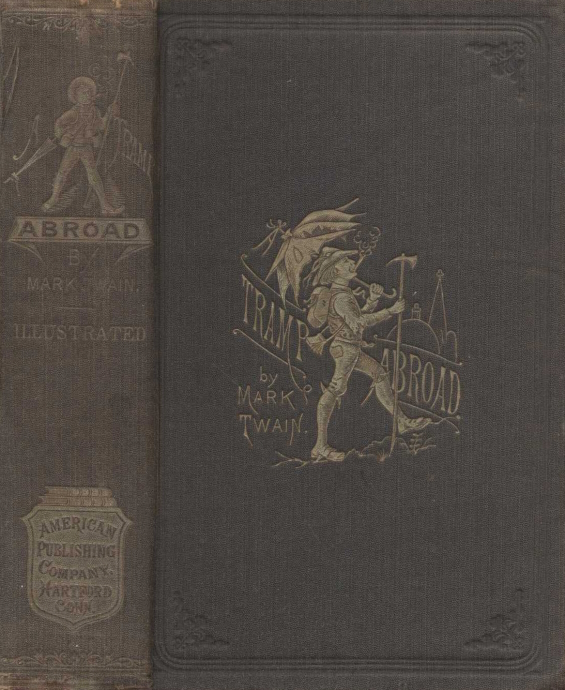
A Tramp Abroad by Mark Twain

Posted by Jesse Willis

The SFFaudio Podcast #522 – READALONG: Astounding by Alec Nevala-Lee

Podcast

The SFFaudio PodcastThe SFFaudio Podcast #522 – Jesse, Paul Weimer, Marissa VU, Evan Lampe and Amy H. Sturgis talk about Astounding: John W. Campbell, Isaac Asimov, Robert A. Heinlein, L. Ron Hubbard, and the Golden Age of Science Fiction by Alec Nevala-Lee

Talked about on today’s show:
Alex Nevala-Lee, a book and an audiobook, thinking about legacies, thinking about audiobooks before, the original cool guy, adorable, its nice to be read to, 100 pages of footnotes, Evan, your book doesn’t exist as an audiobook, nobody wants to read anymore, Evan’s gotten to the stage, reading history books, non-fiction is so good on audio, rekindling pleasure, everything is cited, really he said that?, “Fuck, Eando Binder!”, “lambasted dianetics”, its all cited, 13 hours, not padded, way too long, more about their sexual problems, wife-swappin’ again, a problem for a lot of books, so easy to read, just have a little listen, so engrossing, so well written, The Amazing, The Astounding, And The Unknown by Paul Malmont, the Navy yard, commentary on the stories, I Will Fear No Evil, John W. Campbell is important, Ben Bova, two confusing awards, Hugo Gernsback needs his own version of this, the one person who is completely missing from this book is H.G. Wells, Olaf Stapledon, Arthur C. Clarke, what about this?, Jesse’s complaints are not very legit, The Return Of William Proxmire by Larry Niven, modern science fiction, the intellectual historian, markets for genres, the 20s-30s-40s, the Cold War, turn towards nativism, a profound effect, the Science Fiction League, a self-aware community, WWII, a fledgling dialogue, this revolution, connecting SF with science, Microcosmic God, this is on Campbell, distinctly American?, issues sent as ballast to the UK, all the foreign editions of Astounding, the British fanzines, Hugo was nuts for electronics, we’re going to invent our own televisions, home amateurs, ham radio operators, the science fiction reader, Tom Swift, the edisonade, fertile soil, the radio boys, Electronic Experimenter, a pulp fiction collection, reading Amazing vs. reading Astounding, technical drawings and weird editorials, not only space opera, The Electrical Experimenter, Larry Niven, they’re weird dudes, a pathetic figure, a tragedy, a mire of pseudoscience, Asimov’s biography, Heinlein’s letters, no no, a horror suspense movie, uplifting, it worked on Heinlein, Asimov was his own little being, the tragedy is coming, blind spots and prejudices, good fiction and good science, the new wave, Harlan Ellison, Ursula K. Le Guin, a machine for generating analogies, he’s given them the tools to push back against him, still influential, descent into pseudoscience and self delusion, Asimov’s preface to Dangerous Visions, we’re the squares, the passing of the torch, the sexual revolution, a cultural revolution vibe, Asimov was a square, “I fuck a lot, man.”, almost sexless, The Gods Themselves, weird alien sex, Heinlein’s weirdness, a lot of revealing things, the role of the wives, a biography of Kay (Catherine) Tarrant, spelling the names, Campbell wasn’t needed, behind the scenes, Astounding is so important, still under copyright, Heinlein getting mad at Campbell, Philip K. Dick has one story in Astounding, what’s going on?, Impostor, Campbell wanted superhumans, The Golden Man, a superhuman idiot, writing in reaction to it, Galaxy Magazine, H.L. Gold’s aesthetic, Campbell didn’t take Alfred Bester!, a gatekeeper, Frederik Pohl, how important The Cold Equations is, you have to keep re-writing this until you get it right, what it does, this is what we are talking about, this is how far we can go, a Star Trek story, here is an episode of something that we can imagine happening, Nightfall by Isaac Asimov, what Campbell was aiming at, a study in what editors can do, seeding the same idea multiple times, turning Asimov down, how would that intelligence work?, a black POV character, a leap of imagination, racism and homophobia as compartmentalization, Dune World by Frank Herbert, Mack Reynolds, Black Man’s Burden, Commune: 2000, the problem is scarcity (there is none, except in jobs), universal basic income, it didn’t matter to you that the kid was Filipino, what the difference between a rationalists and empiricists, here’s how drunk driving should work, you’re not clear yet, a technical journal, that’s not how science works, how science works, grinding lenses, Verne -> submarines, Wells -> warplanes, Campbell -> atom bombs, science fiction leading the science, a legacy, Rocket Ship Galileo, Tom Swift in the Rocket Age, Nancy Drew is not the same, Nazis on the moon, action fun excitement, Elon Musk, pushing in all directions, badly inspired, Paul Krugman, Asimov’s Foundation series, a weird tension, the scientific approach to all things, psychology, a desire to make everything scientific, A.E. Van Vogt, enough to be dangerous, enthusiasm for the ideas didn’t follow through to the methodology, we can make this science too, Hubbard had no interest in science (or science fiction, really), Heinlein’s failing, Asimov was a sexual asshole, a tragic figure, Heinlein falls for Hubbard because he had a uniform, a lying used car salesman, cults, its not about your intelligence, lacking critical thinking, charisma doesn’t translate from the page, judging eyes, I no longer trust you, the worst insult Heinlein could ever give anybody, broken legs and gonorrhea, the asshole sections of Jesse’s email, Heinlein was really blinded by patriotism, the Vietnam War, we need a renaissance for the Heinlein juveniles, Farnham’s Freehold makes a lot more sense now, trying to make a point about Campbell being wrong, hopeful commentary, not including Hubbard, the serpent in the garden, transformative, “the competent man”, competitors and community members, we’re doing something that’s important, the conversations we’re having are important, they hung together for decades, personal loyalty, trolls, the story of the first Worldcon, women nurturing men who were nurturing other men, Donald A. Wollheim was a better troll than anyone living today, contributing something positive, Mimic, he bought a lot of Philip K. Dick, Asimov as a youth, your idea of heaven, the power of picking up one of these magazines, the one thing missing from this book is the history of the covers, the art, fill the space, a little bit of technology, pitch me three new magazine, Weird Tales, tiny little things, when H.P. Lovecraft turns down the editorship of Weird Tales, what would we have or what would we be missing?, a magazine with a legacy, Elon Musk is a Heinleinian character, old letters pages are fossils, D.D. Harriman, The Man Who Sold The Moon, a trap, not hard enough on the Soviets!, a whole lifetime of a really complicated human being, the whole point, the functionalist stuff sounds like Campbell, creativity doesn’t work that way, how writing works, The Trouble With Tribbles, everything is in reaction, H.G. Wells doesn’t seem to have a massive precursor, The Time Machine, Last And First Men, Olaf Stapledon, Starmaker, those men are heroes, page 370 and 371, Barry M. Malzberg, sympathize with his critics, the question of victimization, a problem solving medium, not everyone is a hero, the way science fiction is today, science fiction should explore everything, schlubs, we all live in a world that’s increasingly become science fictional, Wells’ heroes are assholes, the New Wave pushes back against the Campbellian revolution, J.G. Ballard, mistrust of the meta-narrative, setting up things that come later, wanting 15 other books to be written, a companion volume on the Futurians, creating editors, Judith Merrill, here’s another community, C.M. Kornbluth, glimpses, Arena by Fredric Brown, The Orville is new Star Trek: The Next Generation, the a plot and the b plot, season 8 Next Generation, Enemy Mine, Hell In The Pacific, Lee Marvin, no alien movie, Star Trek, Deep Space Nine, Enterprise, Space: 1999, The Most Dangerous Game, Predator, somebody sitting around, Gilgamesh and Enkidu, the b-plot, The Corbamite Maneuver, The Kobayashi Maru, Amy’s Looking Back At Genre History, Microcosmic God by Theodore Sturgeon, always asking questions, how do you know, a meta-story, it’s about what happens when you read Astounding, Sandkings by George R.R. Martin is a retelling of Microcosmic God, Dragon’s Egg by Robert L. Forward, Hal Clement, science fiction luminaries, missing an ode to Hal Clement, the chapter titles, Who Goes There?, it doesn’t give you what you want, Don A. Stuart, Twilight, two types of storytellers, historical narratives, a remarkable achievement, history is a pruning job, a really important book, more books just like this, every time we say “Astounding” take a drink, endnotes, bibliography, a gift that’s going to keep on giving, what happens after this, some editor discovered or promoted Dashiell Hammett, Black Mask, railroading magazines, westerns, isn’t Analog still going today?, finally why this magazine called Analog?, it’s a metaphor, Analog Science Fiction and Fact, factless, Willy Ley, trying to make the reality behind science fiction more real, giving writers a grounding, Asimov: what a man!, writers who are complaining about low pay rates, E.E. Doc Smith, the Dean drive, a reactionless space drive, more biographies of these pulp era mags, The World Of Nitrogen, The Realm Of Measures, Asimov On Numbers, super-clear writing, Campbell’s book of collected editorials, Lecherous Limericks, bra-snapping and carrying on, Annoted Gulliver’s Travels, a writing and learning machine, Ellery Queen’s Mystery Magazine, mysteries, the joy of reading and the joy of writing, his mind was always elevator, that kind of curiosity is so rare, he wanted to know the answers to everything, a powerful force in reality, The End Of Eternity, a fun book.

Astounding by Alec Nevala-Lee

Posted by Jesse Willis

New Release: Eldritch Tales – A Miscellany Of The Macabre by H.P. Lovecraft

New Releases

Available via Downpour.com (and Audible.com) this massive collection of H.P. Lovecraft stories, poems and essays is absolutely MUST GET listening.

Eldritch Tales by H.P. Lovecraft

Eldritch Tales – A Miscellany Of The Macabre
By H.P. Lovecraft; Read by Tom Weiner, Simon Vance, Simon Prebble, Bronson Pinchot, Elijah Alexander, Malcolm Hillgartner, Sean Runnette, Stefan Rudnicki, Gildart Jackson, Robertson Dean, Pamela Garelick, and Armando Durán
Download – Approx. 20.1 Hours [UNABRIDGED]
Publisher: Blackstone Audio / Downpour.com
Published: 2014

Table of contents:
History of the NECRONOMICON
The Alchemist
A Reminiscence of Dr Samuel Johnson
The Beast in the Cave
Memory
Despair
The Picture in the House
Beyond the Wall of Sleep
Psychopompous: A Tale in Rhyme
The White Ship
The House
The Nightmare Lake
Poetry and the Gods (with Anna Helen Crofts)
Nyarlathotep
Polaris
The Street
Ex Oblivione
Facts Concerning the Late Arthur Jermyn and His Family
The Crawling Chaos (with Winifred Virginia Jackson)
The Terrible Old Man
The Tree
The Tomb
Celephais
Hypnos
What the Moon Brings
The Horror at Martin’s Beach (with Sonia H. Greene)
The Festival
The Temple
Hallowe’en in a Suburb
The Moon-Bog
He
Festival
The Green Meadow (with Winifred Virginia Jackson)
Nathicana
Two Black Bottles (with Wilfred Blanch Talman)
The Last Test (with Adolphe de Castro)
The Wood
The Ancient Track
The Electric Executioner (with Adolphe de Castro)
Fungi From Yuggoth
The Trap (with Henry S. Whitehead)
The Other Gods
The Quest of Iranon
The Challenge from Beyond
In a Sequester’d Providence Churchyard Where Once Poe Walked
Ibid
Azathoth
The Descendant
The Book
The Messenger
The Evil Clergyman
The Very Old Folk
The Thing in the Moonlight
The Transition of Juan Romero
Supernatural Horror in Literature [unabridged essay]
Afterword: Lovecraft in Britain by Stephen Jones

Posted by Jesse Willis

Review of Brick By Brick: How LEGO Rewrote the Rules of Innovation and Conquered the Global Toy Industry by David Robertson and Bill Breen

SFFaudio Review

Brick By Brick - How Lego Rewrote The Rules Of Innovation And Conquered The Global Toy IndustryBrick By Brick: How LEGO Rewrote The Rules Of Innovation And Conquered The Global Toy Industry
By David Robertson and Bill Breen; Read by Thomas Vincent Kelly
Approx. 10 Hours 23 Minutes [UNABRIDGED]
Publisher: Random House Audio
Published: June 25, 2013
ISBN: 9780449806524
Themes: / Non-Fiction / Business / LEGO / STAR WARS / Denmark / Copyfight /

Sample |MP3|

I’m not one for business books, and this is explicitly a business book. The closest I’ve come to one, in the last decade, was Joseph Finder’s corporate espionage thriller Paranoia. On the other hand, I really am one for LEGO and Brick By Brick: How LEGO Rewrote The Rules Of Innovation And Conquered The Global Toy Industry is an audiobook about The LEGO Group.

Most of the book is about the recent history of LEGO, how it became unprofitable, and how it, through controlled innovation, recovered from that unprofitably. Along the way there is a fair amount about the company’s history – and even more importantly about the philosophy behind the “system” of The LEGO Group’s core product, the LEGO bricks themselves.

I started with LEGO in the mid-1970s, and barring a few pieces (lost, vacuumed, and stolen) along the way I still have much of it. But, similar to many other AFOLs (adult fans of LEGO) I experienced a decline in interest in LEGO as I entered my teens. As a kid I appreciated that LEGO allowed you to build your own toys, as a tween I programmed my own robotic LEGO creations (LEGO LOGO for Apple II) – but shortly thereafter the corporation seemed somehow go off track – creating products that were less LEGO sytem than LEGO branded toys. That is until around the mid-1990s. And that’s about when my re-invigoration of interest in LEGO started. No coincidence there, as this was also about the same time as the company’s financial revival. It seemed that the more I got more into LEGO the more the company became financially viable – but, of course, it was actually the reverse.

Indeed, Brick By Brick is essentially Robertson and Breen trying to figure out how the company works, where it went wrong, and how it recovered. In doing this they have looked at a number of failed projects, how they came to fail, how the company reorganized itself and how, with help from both adult LEGO fans and child LEGO fans they learned to operate without patent protection.

One of the more interesting comparisons between companies that Robertson and Breen make is that of LEGO to Apple. The parallels between the companies’ aesthetic philosophies (and cult like devotion by their customers) are many. I myself am a committed Apple iPhone user, not because I buy into the ecosystem, but rather because of the sculptured discipline of the technology. Likewise, though Megablocks and other LEGO competitors are making bricks that are 100% compatible with (and cheaper) than LEGO I am scrupulously careful to weed out MEGABLOCKS and other “fake lego” from my collection. The iPhone’s competitors aren’t really competitors, and the LEGO system’s competitors aren’t really competitors.

Back to the book, David Robertson and Bill Breen talk about a number of LEGO lines that I like, particularly the CITY, SPACE, and CASTLE lines but they also explain the thinking behind popular licensed IPs like STAR WARS, INDIANA JONES, and THE LORD OF THE RINGS. Several chapters cover the creation of the successful BIONCLE line (originally conceived as a line called “VOODOO HEADS”), the innovative board game division (that sneakily gets moms to buy more LEGO), and the massively expensive failure of the LEGO UNIVERSE project (an ambitious project aimed at disrupting LEGO’s own core market). And that last one is one of the most fascinating sections of Brick By Brick. By trying to make the experience perfect, by trying to produce a graphically rich massively multiplayer online game without bugs, then charging a whopping $40 to start playing it LEGO screwed up royally. The failure of the LEGO Universe project is all the more ironic in that a lone computer game programmer, Markus “Notch” Persson, came to create a sucessful kind of digital competitor to LEGO system, in the form of Minecraft. Peterson’s success, using almost no resources and no money, make the error of LEGO hierarchy all the clearer. But in an even more ironic move LEGO has since produced a Minecraft set!

In my view the only thing missing from Brick By Brick is talk about the very successful, collectible Minifigures line (now up to Series 10). To my ears Minifigs get very short shrift in Brick By Brick. I’d love to hear a two or three hour audiobook about that alone.

There’s very little to say about narrator. Thomas Vincent Kelly is a relatively new narrator, his reading is clear and precise, like the LEGO system. The occasional Danish place-name pronunciation, and the names of the LEGO products themselves are the only real narrative challenges. Kelly delivers.

David Robertson: The Story of LEGO from BrightSightGroup on Vimeo.

Posted by Jesse Willis

Review of Sailing Alone Around The World by Joshua Slocum

SFFaudio Review

Sailing Alone Around The World by Joshua SlocumSailing Alone Around The World
By Joshua Slocum; Read by Alan Chant
1 |M4B|, 22 Zipped MP3 Files, or Podcast – Approx. 7 Hours 52 Minutes [UNABRIDGED]
Publisher: LibriVox.org
Published: May 9, 2007
|ETEXT|
Joshua Slocum was the first man to sail around the world alone in a small boat. He personally rebuilt an 11.2 metre sloop-rigged fishing boat that he named the Spray. On April 24, 1895, he set sail from Boston, Massachusetts. More than three years later, he returned to Newport, Rhode Island, on June 27, 1898 having circumnavigated the world, a distance of 46,000 miles (74,000 km). In 1899 he described the voyage in Sailing Alone Around the World now considered a classic of travel literature. It is a wonderful adventure story from the Age of Sail and a book of which Arthur Ransome declared, “boys who do not like this book ought to be drowned at once.”

Podcast feed: http://librivox.org/bookfeeds/sailing-alone-around-the-world-by-joshua-slocum.xml

iTunes 1-Click |SUBSCRIBE|

I was listening to an episode of the CBC Radio One Ideas podcast, entitled Sailing Alone Around The World |MP3|, and was struck by the story of the first man to do that very thing. The program uses excerpts from Slocum’s book of the same name, and interviews those modern solitary sailors who’ve followed in Slocum’s wake. The fact that, in some sections of the sea, the next nearest human being to a lone sailor might be someone on the International Space Station, was an astounding revelation to me. The fact that there have been fewer solitary circumnavigators than there have been people in space, also astounding. So, not even half-way through the show I set my sights on LibriVox, where I searched for, found, and downloaded an M4B of the audiobook.

Slocum was an Canadian by birth and a naturalized American. In the late 19th century, upon finding himself out of work (the age of coal powered ships had begun in earnest), Slocum found there was no more call for a tall ship captain. One day Slocum finds himself having been gifted with an aged sloop. And so he sets about refitting it, hires himself out to himself plans to write a book (serialized in the Century magazine), loads up his cabin with food, supplies and lots of books, and sets sail on a solitary circumnavigation of the planet earth.

What he finds in the adventure is, simply put, real adventure! Slocum is alone for the entire trip except for The Spray itself, Slocum’s sloop, which is full of emotions (it feels happy when the sailing is good, and becomes anxious when in port too long). Similarwise he has a few passengers, there’s a hungry goat, a sneaky bilge rat, and a long suffering spider (it meets another just like it half a planet away from where it was born).

In his more than three years at sea Slocum meets with ship thieves, admirals, colonial governors, the widow (and adopted son) of Robert Louis Stevenson, friendly natives, hostile natives, officious bureaucrats, friendly bureaucrats, storms, reefs, sickness, and even a ghost!

Along the way he salute’s the sea god Neptune, ports at many memorable anchorages, including the island of the real life inspiration for Daniel Defoe’s Robinson Crusoe (Alexander Selkirk), and becomes an international celebrity.

Slocum’s narrative is helped by his enjoyable sense of humor and hindered by his prejudices. And while the various characters that he meets in the book may sometimes benefit from Slocum’s breezy writing style I got no real sense of the other side of the story. Incidents with thieves, one man steals his pistol, and one South American boy tries to steal his ship, come across as far less frightening than they might really have been. Indeed, there’s something of a deliberate storyteller to this travel narrative, something which reminds me of Sławomir Rawicz’s extraordinary adventure memoir The Long Walk (it may have been entirely made up). That said, the documentation seems far more present, and the journey here does seem to have actually occurred.

Narrator Alan Chant has an English accent and a relaxed reading style. There’s a bit of background noise in the recording, but the audio is very serviceable. Each chapter begins and ends with a bit of seabird song. Recommended.

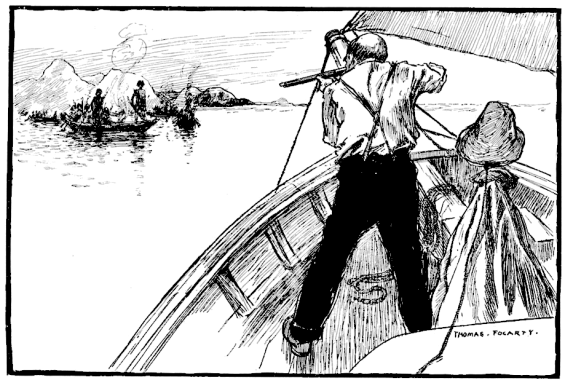
A Brush With Fuegians

The Voyage Of The Spray

Posted by Jesse Willis

Review of The Invisible Hook: The Hidden Economics of Pirates by Peter T. Leeson

SFFaudio Review

AUDIBLE - The Invisible Hook by Peter T. LeesonThe Invisible Hook: The Hidden Economics of Pirates
By Peter T. Leeson; Read by Jeremy Gage
Audible Download – Approx. 7 Hours 41 Minutes [UNABRIDGED]
Publisher: Audible, Inc.
Published: September 4, 2009
Themes: / Economics / Piracy / History / Slavery / Democracy / Anarchy /

Pack your cutlass and blunderbuss–it’s time to go a-pirating! The Invisible Hook takes readers inside the wily world of late seventeenth- and early eighteenth-century pirates. With swashbuckling irreverence and devilish wit, Peter Leeson uncovers the hidden economics behind pirates’ notorious, entertaining, and sometimes downright shocking behavior. Why did pirates fly flags of Skull & Bones? Why did they create a “pirate code”? Were pirates really ferocious madmen? And what made them so successful? The Invisible Hook uses economics to examine these and other infamous aspects of piracy. Leeson argues that the pirate customs we know and love resulted from pirates responding rationally to prevailing economic conditions in the pursuit of profits.

I love non-fiction, and I love books that look at history, books that look at history through one lens or another are even better! And so there is much to love in The Invisible Hook. The title is a play on Adam Smith’s elegant metaphor for how markets work, the invisible hand. Most of the examples cited deal with the Atlantic and Caribbean pirates, rather than earlier Roman era or modern day pirates. But we get a sense of how it likely worked in other regions and times. Chapters on the paradoxical attitudes towards pirate slavery, the wildly contradictory stories about piratical impressment, and the chapter on the Jolly Roger, the pirate flag, are absolutely fascinating. And, as something of a piratical hobbyist myself, I’m pleased to report they deliver clear insights only hinted at in other non-fiction books about piracy. You know you’ve got a good book in hand when you find yourself relating the premises, arguments, and conclusions of whole chapters to friends.

How good is the analysis really? That’s kind of hard to tell. Democracy and equality as a function of economics? Wonderful! Seems logical, seems plausible. And that’s the sort of thing you don’t hear often enough. Indeed, economist Steven Levitt, of Freakonomics fame, gets a shout out early on in The Invisible Hook. This is a book in that vein, a kind of entertaining pop-economics, well written, and very thoughtful. But it also boasts the same kind of inarguable psychohistory-style post-analysis of such books. It reminds me of books like William Rosen’s The Most Powerful Idea in the World, and Jared Diamond’s Collapse. Well written history looked at through the lens of a soft science makes the seemingly inexplicable events of history seem almost inevitable. That is to say, this book should be just one of many such on such topics. In the end though how can you not wanto to read a book that makes piracy, as depicted in The Princess Bride, actually very plausible?

But this is not as merry a ship as it might be. As with many book published these days, there’s some bit of puffery. Concepts well illustrated in a paragraph or two are revisited, whole passages nearly reworded, and I’m betting that this for reasons of market driven economics. It might be that each chapter can be looked at on it’s own, textbook style, but listened to as I did, back to back the chapters have a tendency to revisit the same ports too often. This is one of my major complaints about books these days. Too many books are being published with too many words that don’t say different things. At under eight hours even this relatively slim volume, by today’s market standards, but it’s still puffier than any pirate’s shirt really ought be. It is like a pirate cutter on the stalk, slowed down by a sea-anchor of unneeded repetition. Saying the same thing over and over and over. Get my point? Okay, its the market, and to be fair Adam Smith’s own The Wealth Of Nations is a bloody long book, 36 hours! I’d be willing to bet my strong right arm that the original article, as published by Levitt (mentioned in the book), would be an even better audiobook than this very fine one, and no doubt it’d measure at least a peg leg shorter.

Narrator Jeremy Gage is from the old school of audiobook narration, the kind I like. He doesn’t so much as perform a book as read it. His conspiratorial tone typically him a great choice for first-person POV novels, like Lawrence Block’s Burglars Can’t Be Choosers. This is the first non-fiction book I’ve heard him narrate. So now I can say he’s great for non-fiction too.

Posted by Jesse Willis