
The SFFaudio Podcast #339 – READALONG: Vulcan’s Hammer by Philip K. Dick

Podcast

The SFFaudio PodcastThe SFFaudio Podcast #339 – Jesse, Paul, and Marissa talk about Vulcan’s Hammer by Philip K. Dick

Talked about on today’s show:
1960 novel, 1956 novella, the Goddreads reviews, Reddit, re-listening, very visual, John Mcclane at the end of Die Hard, conference room scenes, vague characters, awesome ideas, three Philip K. Dick stories that could have inspired The Terminator movies, no time travel, Doctor Futurity, Skynet, the drones (the hammers), UAV style drones vs. terminators, drone technology, there were drones in WWII, remote controlled bombers [ex. Operation Aphrodite], almost nothing “invented in SF” was actually invented in SF, infiltrators, Jesse has become a Terminator geek, Terminator: The Sarah Connor Chronicles, Screamers (adapted from Second Variety by Philip K. Dick), two battling computers, humans as pawns, both computers are in the same building!, proxies, the Internet is missing, Vulcan 3 is building the Internet, Skynet’s drones, Skynet doesn’t have central control, when Vulcan 3 is controlled, Vulcan 3 as a baby, creepy, at the periphery of the plot, the education sub-theme, a little red headed girl, being raised by a terminator, such a fanny show, the movies are recycling scene and catchphrases, at the school, a non-conformist school, Philip K. Dick’s kid is in school, regular school crushes creativity, meritocracy, nepotism, an unfinished thought, cronyism, technocratic government, getting through by hard work, was he an A.I. controlled by Vulcan 3, “hey the system works!”, sociological ideas, how un-Dickian this novel is, a relatively straightforward mystery, no weird obsessions (like with infidelity), the obligatory black haired girl, the president of the world comes into the world takes a little girl out of school and takes her home?, WTF?, the teacher’s okay with this?, the classroom, the concentration camp in Atlanta is a psychology camp, the conformist world in A Wrinkle In Time, Marissa learns Science Fiction, a planet of complete conformism, “you let them play an unstructured game?”, stifling of independent thought and creativity, why was the teacher killed?, reading Lolita, secretly reading forbidden books, is Philip K. Dick improving the books when he re-writes them (consensus is NO), two cults, a cult of reason and rationality, why is that rebellion group called the “Healers”, like alternative medicine, the worship of the computer, Greys, blue collars against the white collars, “we shouldn’t undervalue people just because their skills are in their hands and in their fingers”, vaxxers vs. the anti-vaxxers, back to Dr. Futurity, Vulcan 2 in the novella, piecing Vulcan 2 back together like a damaged hard-drive, the data is recovered aurally, listening to the broken thoughts of Vulcan 2, not just white noise in between the broken sentences, a groaning of ghosts, psychology, weird and interesting, absolutely NOT what anyone else does in Science Fiction, the Butlerian Jihad, because… Skynet, nobody says actually technology is really quite useful, 43% of the Earth’s resources?, the paragraph, maintaining the computer, the “lesser order of human needs”, some sort of metaphor 43 percent of calories go to the brain?, a biological parallel, making the decisions, making the policy, a subtle allusion to Plato, the greys the technician class are “guardians”, denying a brain data (big mistake), The Just City by Jo Walton, Athena sets up Plato’s Republic, automatons for physical labour, seeing the connections, The Republic, Socrates, like the old Atlanteans, the Gold the Silver and the Bronze (ditch diggers and truck drivers), the Silver (the police, functionaries, tax-collectors), the Gold (the enlightened, the philosophers), Vulcan 3 is the Gold, the T-class (experts and specialists), these books are all being suppressed (due to copyright), a pretty good title, Hammer shaped robots?, Vulcan (aka Hephaestus), the ancient Greeks and Romans, Hephaestus built a robot for Athena, the Greeks were really into automata, metal beings, the Talos of Crete, Vulcan as the wizard of metal, a Philip K. Dick conference lecture, when the Greeks thought of gods they thought of A.I. (sort of), these atoms over here have desires, intelligence in non-living things, a little bit under cooked, what about Vulcan 1?, or does it?, maybe Vulcan 1 is hiding, in a degenerate state, Deus Irae and The Last C., tactical nukes, a lot of weakness but it makes up for it, a bit of paranoia, that’s usually what causes the problem, self-preservation, when Saddam Hussein is threatened, the emotional computer, pleading only as a human could do, “We can come to an arrangement!”, shades of 2001: A Space Odyssey, 2001: A Space Odyssey is a microcosmic version of Vulcan’s Hammer, several Star Trek episodes, The Ultimate Computer, Star Trek as a metaphor for American foreign policy, The Apple, they kill the computer that regulates their society, they killed the snake but…, vegetarians are now hunting, put some controls on this, as a metaphor for society, a rebellion against pain in the body, the mind as the government, living in a post-WWIII world, WarGames, the Russians had a battle computer called “The Dead Hand“, a dead-man’s trigger, WWIII was looming in 1956 and 1960, so good even though its not that good, Dick loves blue collar workers, Father Fields, making something out of the air-conditioner, a dropped thread, a completely weird metaphor, The Borderlands series, Scooter, a technopath, The Variable Man by Philip K. Dick, “he fixed things”, a great tagline, “I don’t got Philip K. Dick for action”, living in a disposable society, everything is disposable, is there a TV-repair shop left in North America?, modern cars, only 5.5 hours, zoning out, cool predictions, the paranoid artificial intelligence, Sam Harris and Joe Rogan, caging an A.I., setting up honey-traps, Jesse thinks that’s not going to be the issue, Neuromancer all A.I.’s have digital shotguns strapped to their heads, “the smartest man in the world”, Elon Musk and Stephen Hawking, worries, better as a metaphor than as a prediction, we shouldn’t be unconcerned, Colossus: The Forbin Project, it isn’t 1s and 0s on a screen, seeing inside a burned diary, The Moon Is A Harsh Mistress by Robert A. Heinlein, Mike the computer (aka Mycroft Homles), what’s missing from Vulcan’s 3‘s life is a friend, kids want to know, I think you guys are liars if…, kids are going to get into everything and that’s not a bad thing, more information is better, Vulcan 2’s decision, Occupy, Black Lives Matter, you are totally welcome to prosper if you are willing and able to play a certain kind of game, the push-back is caused by the masses rejecting stability, the adventurer class, “more concerned with gain than with stability”, the phrases: “life is cheap”, big gambles, the Netflix series Narcos, communist guerrillas living in the jungle, if you are living in a corrupt society you get a lot of gamblers, the striking opening scene, “can’t you get a better picture?”, they all wear the uniform of their class, another theme, destroying stability, going back to entropy, it is kind of Philip K. Dickian after-all, undercooked or maybe overcooked, the same with Time Pawn, this is my worst book, Dean Koontz’s 1973 novel of Demon Seed has a rapey robot computer, with the rewrite of Demon Seed Koontz has mellowed out, writing for the market, even after his death, Puttering About In A Small World by Philip K. Dick, everything’s always better with a robot wife.

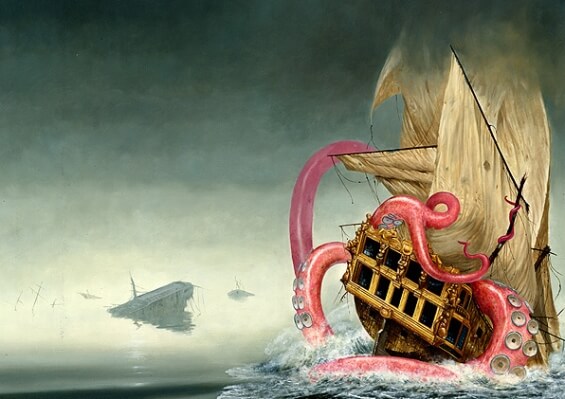
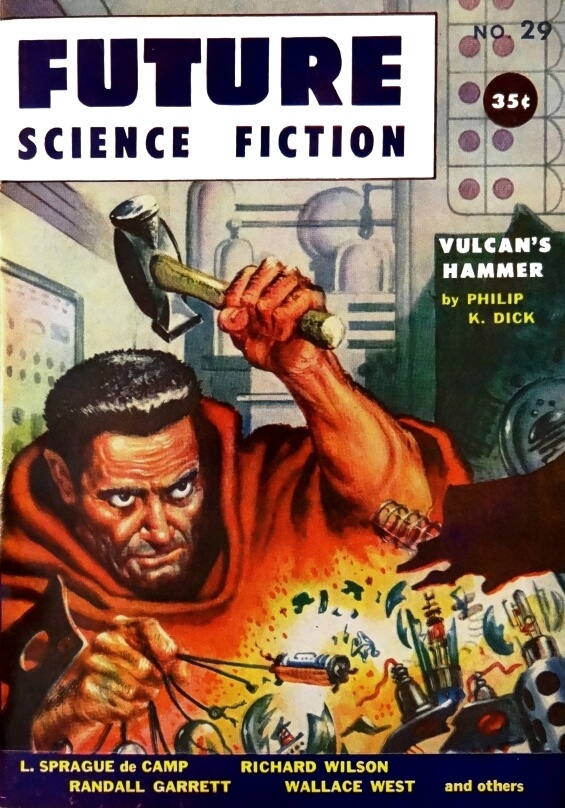
Future Science Fiction No. 29 (1956). Cover Art by Frank Kelly Freas
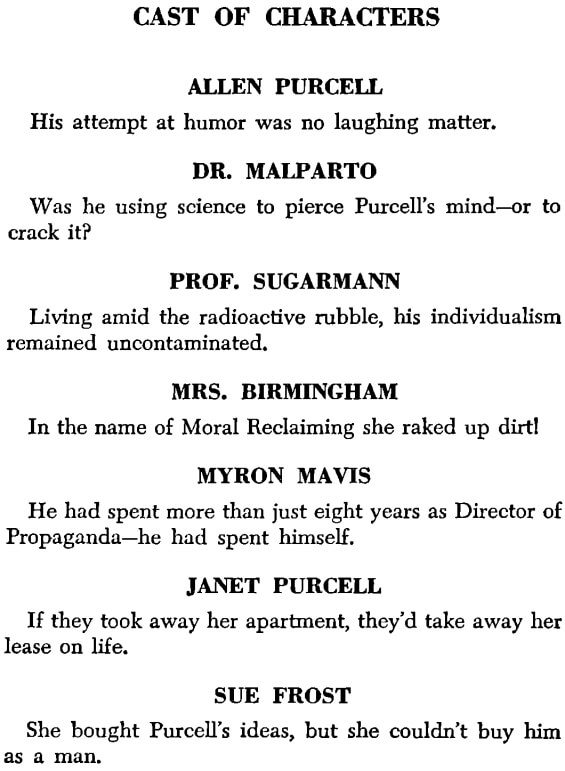
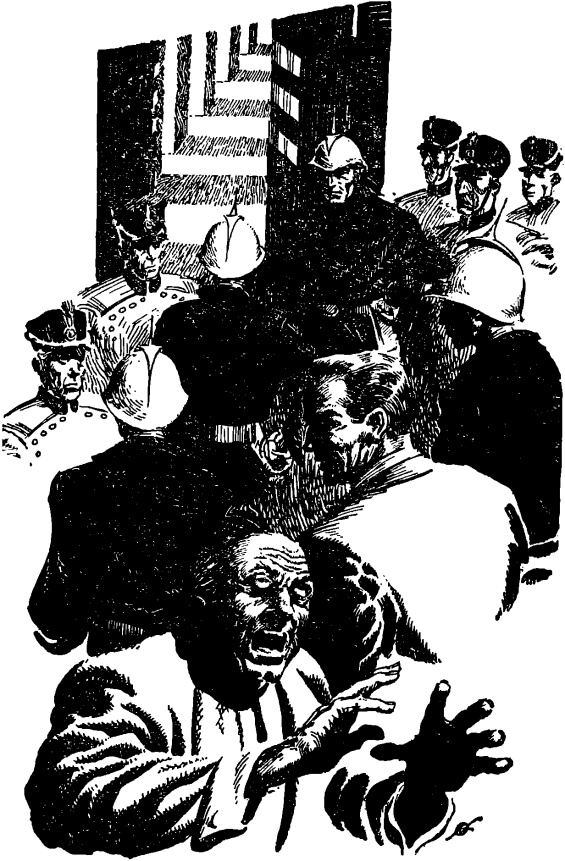
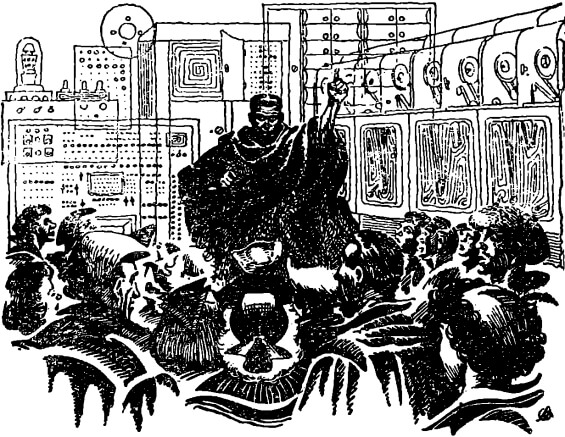
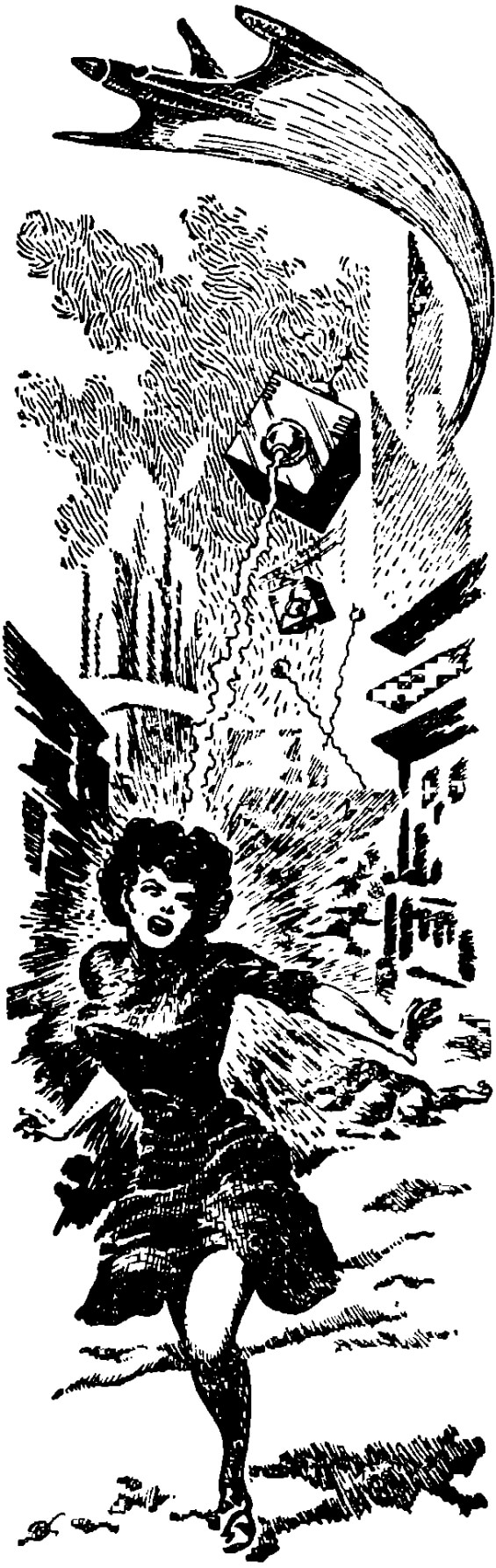
Vulcan's Hammer by Philip K. Dick interior art

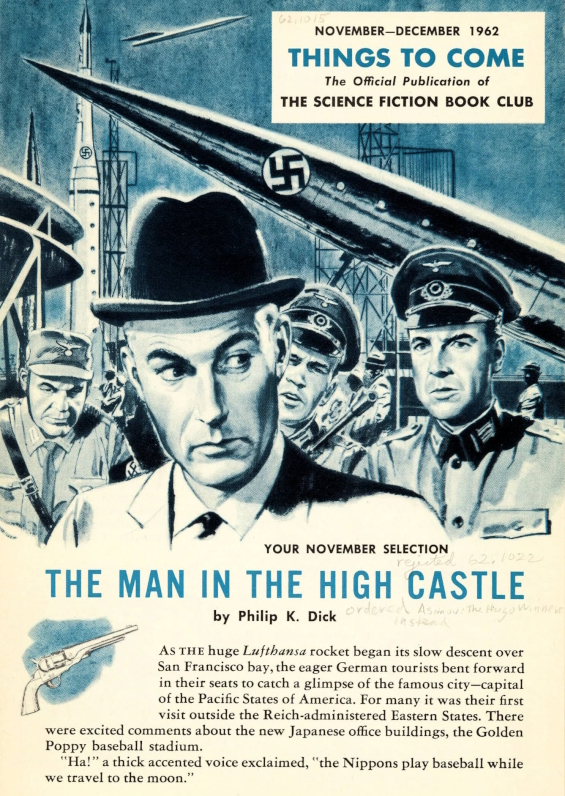
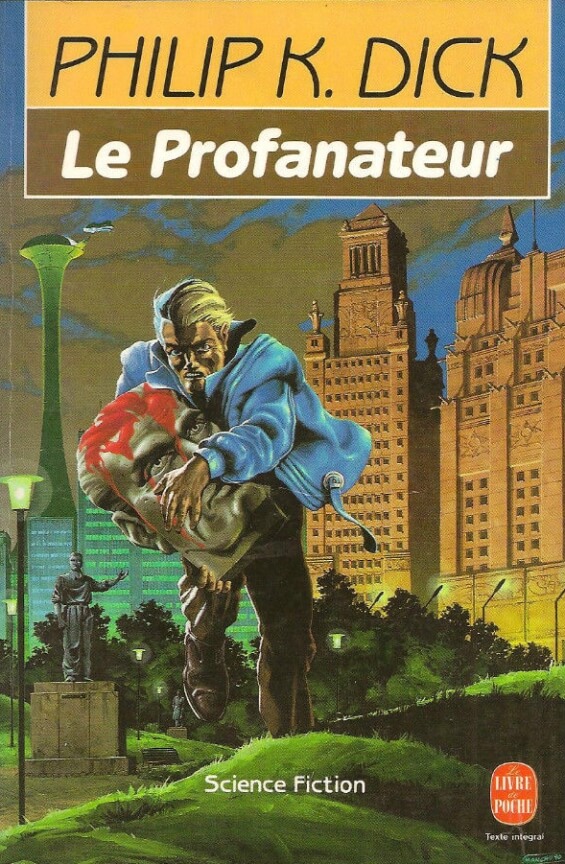
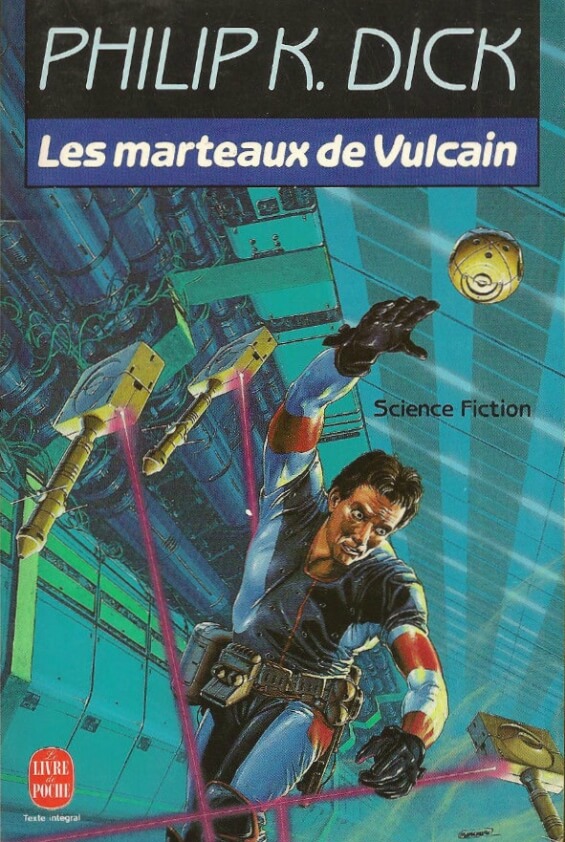
Vulcan's Hammer by Philip K. Dick - FRENCH

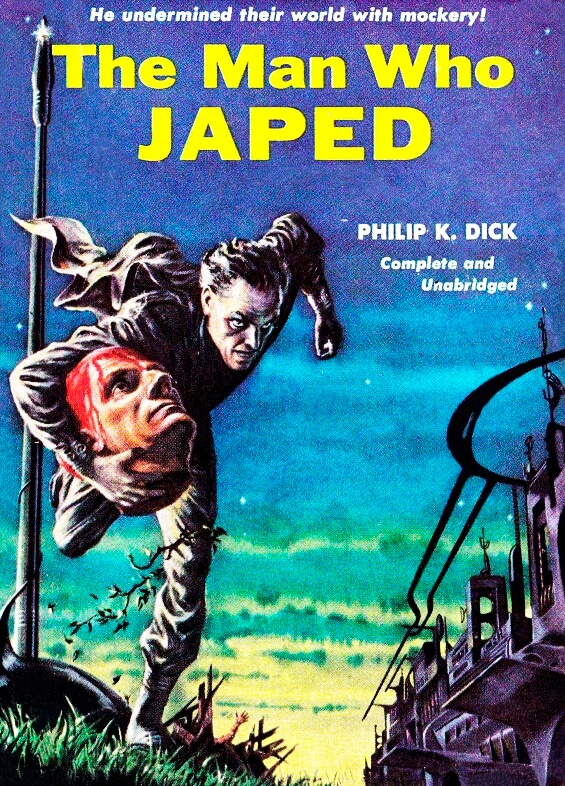
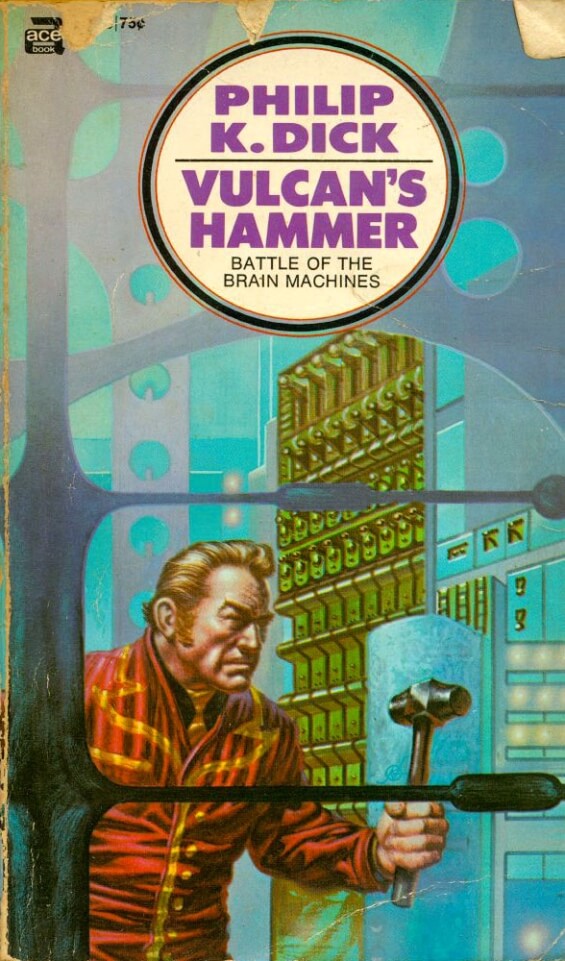
ACE - Vulcan's Hammer by Philip K. Dick

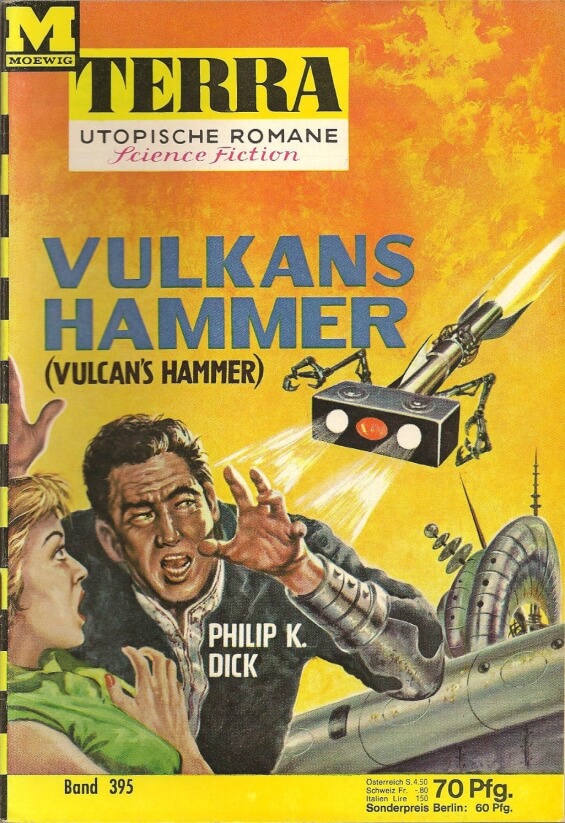
Vulcan's Hammer by Philip K. Dick - German

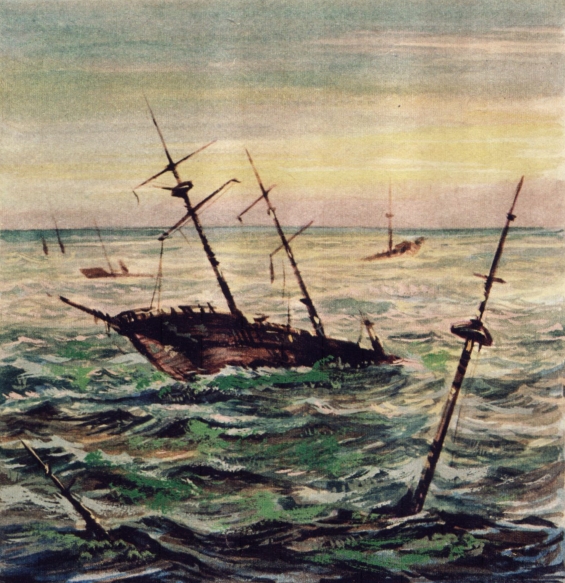
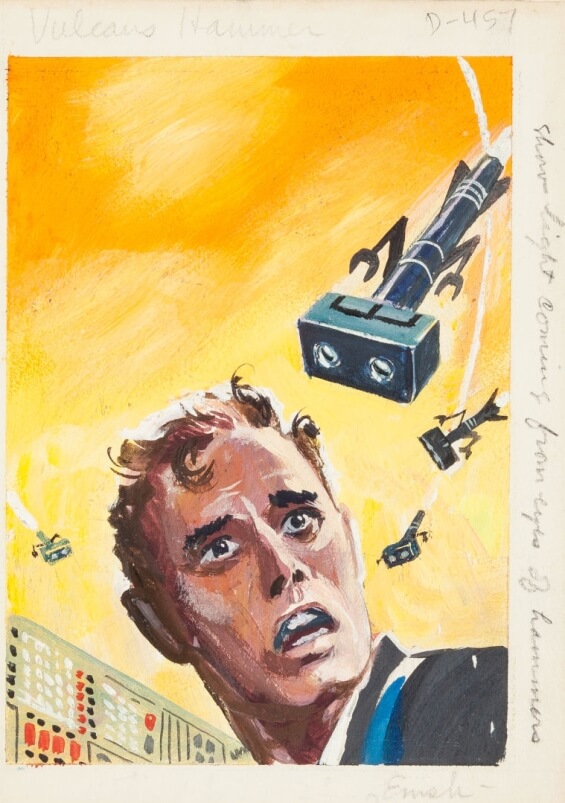
Vulcan's Hammer - preliminary art D-457

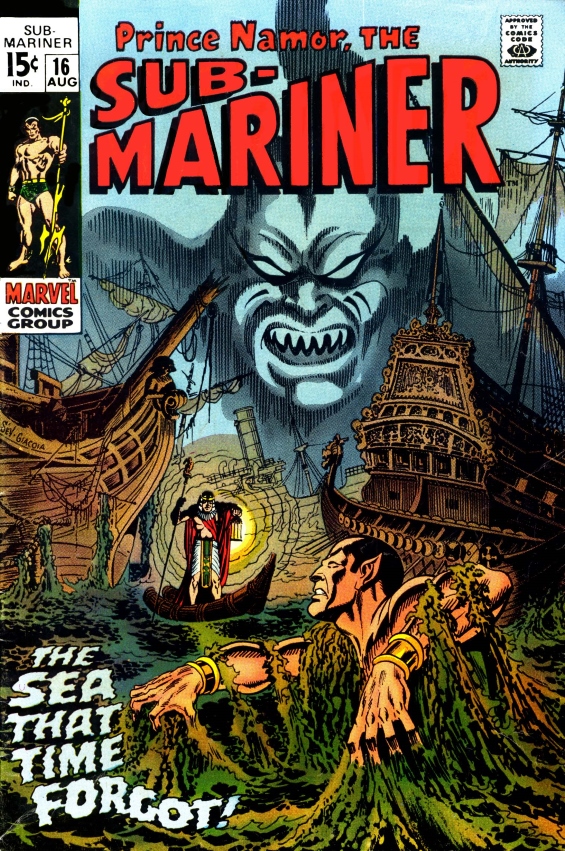
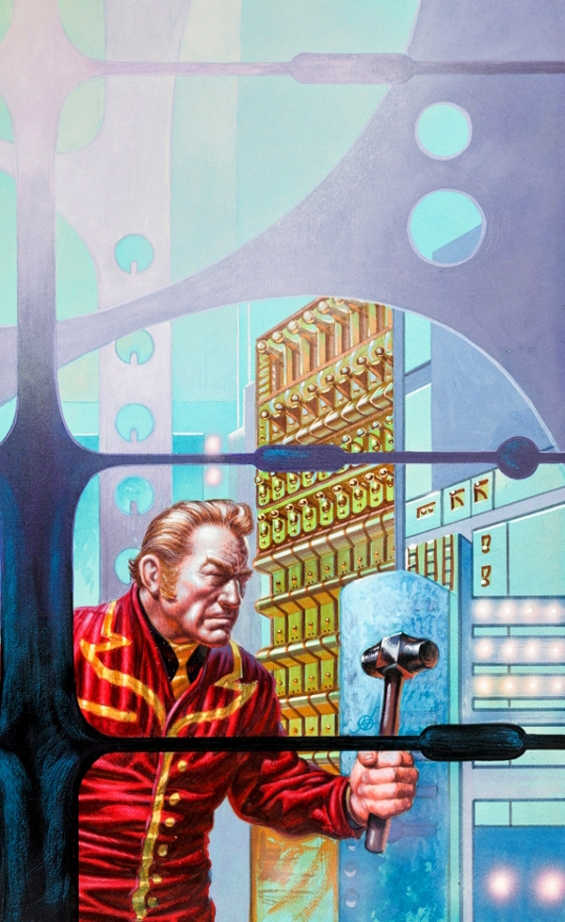
Kelly Freas cover art for Vulcan's Hammer by Philip K. Dick

Posted by Jesse Willis

The SFFaudio Podcast #338 – NEW RELEASES/RECENT ARRIVALS

Podcast

The SFFaudio PodcastThe SFFaudio Podcast #338 – Jesse, Tamahome, and Paul talk about new releases and recent arrivals (audiobooks, books, and comics).

Talked about on today’s show:
Aftermath: Star Wars (Journey to Star Wars: The Force Awakens) by Chuck Wendig, read by Marc Thompson, not a curse fest, the crawl, grief, The Geeks Guide To The Galaxy, one star reviews, diversity up down left and sideways, a pink lightsaber, a rainbow lightsaber, Timothy Zahn, sounds like Star Wars names, Heirs Of Empire by Evan Currie, read by Deric McNish, Brilliance Audio, it sounds like a Stars Wars book (but isn’t), a 47 North Novel, The Three Stigmata of Palmer Eldritch by Philip K. Dick, read by Luke Daniels, drugs!, sounds trippy, re-reading Philip K. Dick (for The SFFaudio Podcast), different assumptions, by the inventor of Science Fiction… In the Days of the Comet by H.G. Wells, read by Walter Covell, the salvation of the human race, cynical then preachy, The Star by H.G. Wells, The Poison Belt by Sir Arthur Conan Doyle, 1906, The World Set Free, The Sea Lady by H.G. Wells (a mermaid in Edwardian society), Stranger In A Strange Land by Robert A. Heinlein, a comedic bicycling novel, military SF, David Weber, The Child by Keith F. Goodnight, read by Nick Podehl, Tam’s macho voice, Adam Christopher’s The Burning Dark, Event Horizon, hyperspace as a Hellraiser universe, this all goes back to H.P. Lovecraft’s From Beyond, drugs plus radar shadowing, a terrific adaptation The Banshee Chapter, the 1980s adaptation of From Beyond, fear of the dark in a lighted world, The Oncoming Storm by Christopher G. Nuttall, read by Lauren Ezzo, the youngest captain in naval (future) history, what is 47 North? it’s Amazon’s publishing house, synergy, PlayStation has it’s own TV show (based on a comic book called Powers), an Honor Harrington novel with the serial numbers filed off, fantasy (non epic), Locke And Key by Joe Hill, adapted by Elaine Lee and Frederick Greenhalgh, audio drama, AudioComics, 13.5 hour audio drama, Gabriel Rodriguez, Paul needs to get Welcome To Lovecraft, horror, dark fantasy, hyper-imaginative, Joe Hill looks and writes like his dad (Stephen King), kids in a creepy situation, the manipulation of power, more fantasy elements, the origins of the keys at Key House, back stories, Fred Greenhalgh as a champion of field recorded audio drama, a film production unit without cameras, listening with headphones, this could be the star of something really amazing, the business model, word-of-mouth then the long tail?, Elaine Lee’s Starstruck, William Dufris, epic fantasy, Twelve Kings In Sharakhai (Song of Shattered Sands #1) by Bradley P. Beaulieu, read by Sarah Coomes, Paul is a fan of Bradley P. Beaulieu’s writing, “his best novel yet”, it is impossible to promote books you aren’t enthusiastic about, “the ones that sing to the song in your blood”, Paul is a long term epic fantasy fan, true confessions, Robert Jordan, Brandon Sanderson, epic fantasy as a lifestyle choice, Kate Elliot, The Cinder Spires: The Aeronaut’s Windlass by Jim Butcher; read by Euan Morton, Penguin Audio, urban fantasy, airships!, a new steampunk secondary world, beautiful endpapers and maps Priscilla Spencer, books in the middle of series: Darken the Stars (Kricket #3) by Amy A. Bartol, read by Kate Rudd, The Ciphers of Muirwood (Covenant of Muirwood #2) by Jeff Wheeler, read by Kate Rudd, Unholy War (The Moontide Quartet #3) by David Hair, read by Nick Podehl, Dryad-Born (Whispers from Mirrowen #2) by Jeff Wheeler, read by Sue Pitkin, Jenny’s favourite section “dystopia, unrest, destruction, apocalypse”, an interesting theory about zombies and dystopias, it fits in with the Christian end times, Revelations and rapture theology, the 1950s optimism, we’re not in Star Trek times anymore, 2 Walking Dead TV series and Z Nation, zombies never die, The Heart Goes Last: A Novel by Margaret Atwood, read by Cassandra Campbell and Mark Deakins, an economic and social collapse, the “Positron Project”, what is the point of the premise?, allegory not SF?, an Asimovian word, she doesn’t really care about the consequences of science, people who are interested in science, Ted Chiang, what if…, doesn’t that mean XYZ?, let her write her books, paranormal romance, Dark Ghost (Dark Saga #28) by Christine Feehan, read by Phil Gigante and Natalie Ross, a bounty hunter, a vampire slayer, a geologist, fairy tales, Two Years Eight Months and Twenty­-Eight Nights by Salman Rushdie, read by Robert G. Slade, history and folklore, “the time of the strangenesses”, a djinn­­, 1,001 nights (two years, eight months, and twenty­-eight nights), a Nobel Prize for Literature, a print book, Joy To The Worlds: Mysterious Speculative Fiction For The Holidays, a mix of mystery and speculative fiction and Christmas, Maia Chance, Janine A. Southard, Raven Oak, G. Clemans, upcoming authors, Andy Weir, that’s how the young people are reading, get of Tam’s lawn, House Of M, Marvel Comics, why is Thor a girl now?, Scarlet Witch can re-write reality, annoying-off people(?), the $1 floppy deals, Free Comic Book Day, The Unbeatable Squirrel Girl is fun and fabulous, her squirrel sidekick, a silver age happy go lucky superhero in our cynical grim age, she’s got squirrel blood!, writing comics for kids, Genosha, kids Squirrel Girl cosplaying looks fun, making your own costume, Princess Leia (Marvel Comics/Star Wars), there’s something wrong with Princess Leia, Disney is making so much more product than Lucas, Alan Moore and Jacen Burrow’s Providence (Avatar comics), Neonomicon, when will the first Providence trade come out, what Moore is doing and saying with Providence, an examination and meditation on H.P. Lovecraft stories, Providence doesn’t seem to have a very important plot, Herbert West’s equivalent, if you are deeply involved in Lovecraft…, if you don’t know Lovecraft can you still enjoy Providence?, the turns!, not merely visually shocking, The Dunwich Horror, a trans-dimensional invisible character, Moore is wrestling with Lovecraft, Watchmen, Alan Moore and Gabriel Andrade’s Crossed Plus One Hundred, “124C41+”, “Return Of The King”, “Glory Road”, “A Canticle For Leibowitz”, “Tyger, Tyger”, “Foundation and Empire”, the difference between crossed zombies and regular zombies, the Crossed series, Alan Moore is about thinking deeply about things, evolution, “the big surprise of 2008”, bone piles, the change of language, AFAWK, Moore has reconstructed English in the way of A Clockwork Orange or Anathem, zombies as a fear of death, zombies as a fear of loss of individual volition and personality, a fear of Alzheimer’s, we don’t talk about death, The Walking Dead Volume 12 (hardcover), everybody’s infected, no matter what happens you become a zombie, zombies as a non-scary version of momento mori, Brian K. Vaughn and Steve Skroce’s We Stand On Guard, the invasion of Canada by the United States, the only time Canada has ever been invaded was by the United States, reading for writers not for artists, the Dark Adventure Radio Theatre series, The H.P. Lovecraft Historical Society, DART The Horror At Red Hook, a straight up adaptation of The Horror At Red Hook by H.P. Lovecraft, DART Dagon: War Of Worlds, Dagon by H.P. Lovecraft, imagine War Of The Worlds not from Space but from beneath, X-COM: UFO DEFENSE, X-COM: Terror From The Deep, aliens at the bottom of the ocean, the Orson Welles style War Of The Worlds, mapping out all of Lovecraft’s squiddy watery fears, The Shadow Over Innsmouth, The Call Of Cthulhu, “I love that!”, attention to detail, if it says it in the story they take it seriously, The Whisperer In Darkness, Infocom games included props, H.P. Lovecraft The Spirit Of Revision Lovecraft’s Letters To Zealia Brown Reed Bishop, David Michelinie and Brett Blevins’ The Bozz Chronicles, originally from Epic Comics, a 19th century Sherlock Holmes alien mashup, lots of nudity, The New Mutants artist, Dover Publications, a 200 page trade-paperback for $20, a feel of the new Doctor Who, Madame Vastra, what if Sherlock Holmes was not Sherlock Holmes, Fred Saberhagen’s Bezerker story, Fred Saberhagen’s Dracula novels, Conan Red Sonja, a lack of attention to details, 1980s sensibilities vs. 20teens sensibilities.

October 2015 - Recent Arrivals

Posted by Jesse Willis

The SFFaudio Podcast #330 – READALONG: Dr. Futurity by Philip K. Dick

Podcast

The SFFaudio PodcastThe SFFaudio Podcast #330 – Jesse, Paul, and Marissa talk about Dr. Futurity by Philip K. Dick.

Talked about on today’s show:
Time Pawn by Philip K. Dick, 1960, The Little Black Bag by C.M. Kornbluth, Science Fiction Hall Of Fame: Volume 1, The Marching Morons by C.M. Kornbluth, Idiocracy, if smart people don’t have babies…, a kind of Heinleinian authority, a little grey case, his bag is missing, grey vs. black, a doctor from the past visiting a future society, medicine as a crime, interfering with euthanasia, another weird interesting post nuclear war world, primitive or advanced?, we don’t talk about death, reflecting our world back at us, youth culture, worshiping youth, movie heroes used to be old men, Logan’s Run, Nolan’s world, what is the appeal of that world?, a culture will run things for you if you don’t think a lot, the Ancient Egyptian culture of death, you will live your life in your death, the soulcube, immortality through the species itself, The City And The Stars by Sir Arthur C. Clarke, nobody wants to see that, kids are stupid, the wisdom of the grandmothers, the Vietnam War, genetic stupidity, Language For Time Travelers by L. Sprague de Camp, Stargate, Astounding, an editorial note for Time Pawn, the right to live, ruthless euthanasia, time travel, Dr. Jim Parsons, the character is a time pawn, the second arrow, an inevitability, to ensure their own existence, deterministic, the standard classic scene, being careened, the auditorium at the first Beatles concert is only filled with time travelers, Dick’s take on time travel, familiar stars. not familiar? why aren’t they familiar, figuring out the future of the character as he’s writing it, “huh, that’s weird”, completely unpredictable vs. completely predictable, van Vogtian, Paul employs a railroad metaphor, Sir Francis Drake, line by line rewrites, from New York to San Fransisco, matter to mine, Time Pawn vs. Dr. Futurity, glittering vs. illuminated, darting like silver fish, no aircars?, nobody is going to be reading Time Pawn anytime soon, “the chamber was a blaze of light…dead gods waiting to return”, a rushed novel?, what’d you do with all that?, standard Dick tropes: a wife shuffled to the side, missing the wife less in Dr. Futurity, the description of the women is much lengthier, always heaving breasts, there’s no questioning of reality, no surveillance, less questioning, an uncharacteristically straightforward story, it feels like all the other Ace Doubles, in the mode of reading SF, all the tropes are assumed, Margaret Atwood, Michael Crichton, going through the evolution to understand the SF tropes: Wells -> Gernsback -> the 60s, three a week, that’s all we need to know, airbags everywhere, flame retardant spray, toxic chemicals vs. being on fire, we live in a screwed up culture, mercury poisoning, asbestos, guide beams, the google car, GPS, if there was a solar flare…, Aftermath, a Charles Sheffield novel, old infrastructure could save us, Cuba, Alpha Centauri goes supernova, the Three Hoarsemen podcast, steam-punk without the steam is just punk, Pastwatch: The Redemption Of Christopher Columbus by Orson Scott Card, a monster, the Columbian exchange, Dick has just read about Sir Francis Drake, Drake’s voyage, he’s famous for making Queen Elizabeth I a big pile of money, Expo 86, the Golden Hind, Drake’s landing point, Oregon, Vancouver Island, Nova Albion, Albion, British Columbia, albino, a weird figure to fixate on, Cortez, Pissaro, The Mask Of The Sun by Fred Saberhagen, caught in the machinations of time traveling empires, more bushwhacking, Daniel Abraham, the way they talk in this future society, it keeps not working, his presence eventually changes their society, starting that whole tribe, the scene with the arrow, a predestination paradox, those stone markers, “I’ll get around to it”, that whole planet is covered in markers, the way Dick ended it, leaving it loose, why Time Pawn is so much of a better title, he feels he is the chess master after a certain point, the extended spaceship to Mars scene, the robot computer with a rat brain, such a creepy scene, “I wonder what’s going to happen”, if the character doesn’t want to get on track, what’s that about?, what are those guns for?, Shupos?, always people confronting him, make remarks about the women, this is NOT a book written by committee, don’t read this as your first Dick, more fodder for your feed.

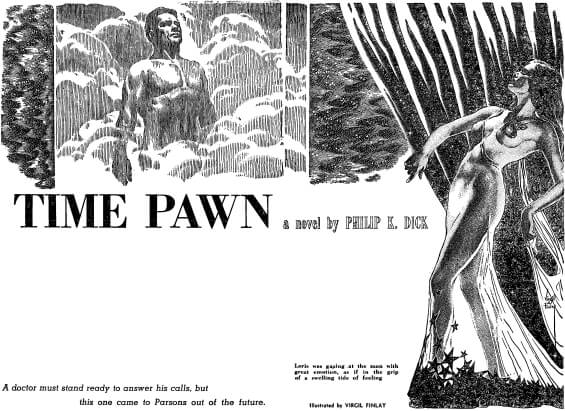
Time Pawn by Philip K. Dick - illustrated by Virgil Finlay

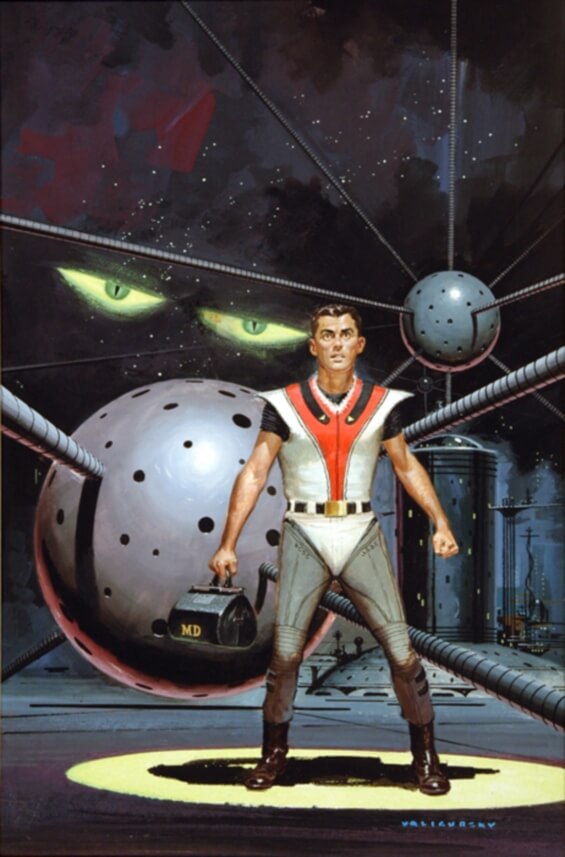
Dr. Futurity by Philip K. Dick - illustrated by Ed Valigursky

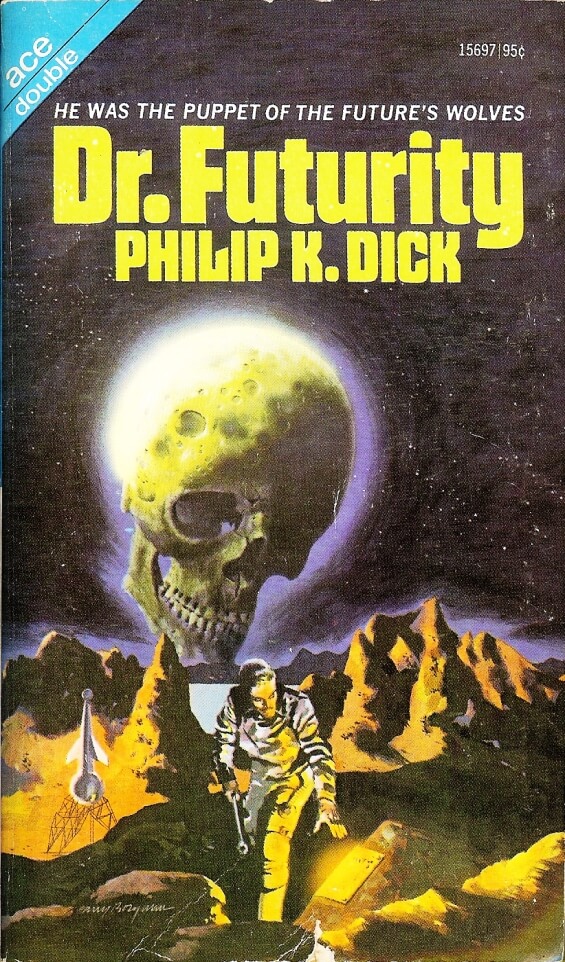
Dr. Futurity by Philip K. Dick - illustrated by Harry Borgman

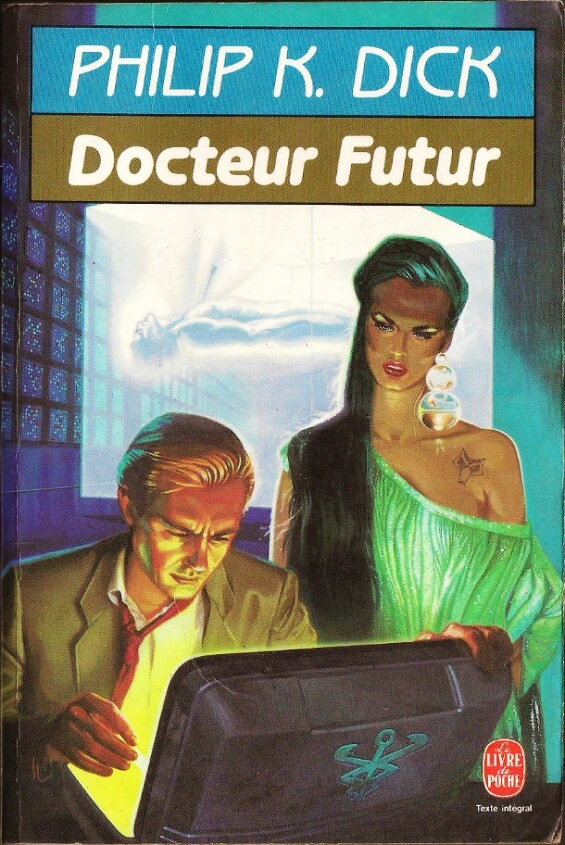
Docteur Futur by Philip K. Dick

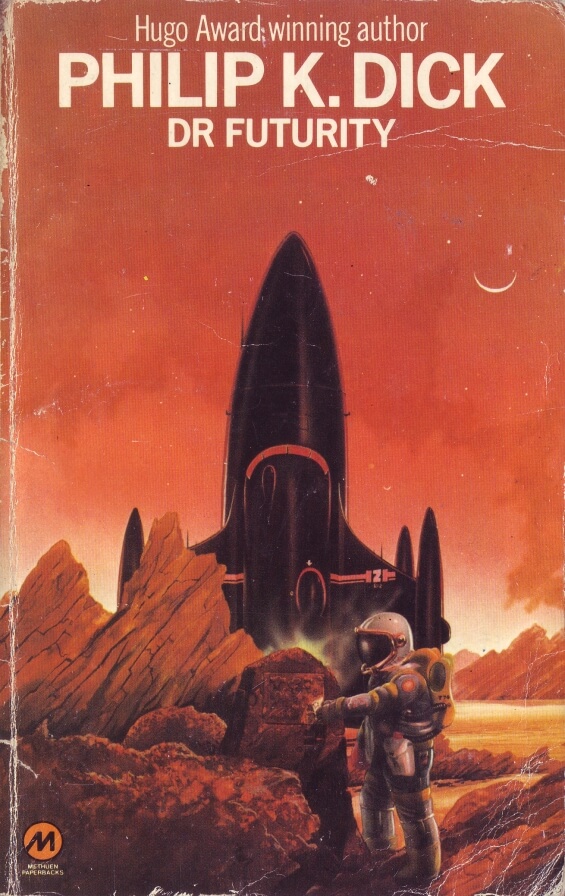
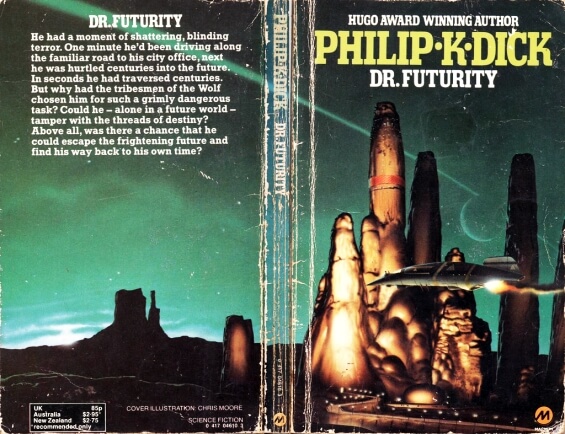
Dr Futurity by Philip K. Dick (Methuen)

Dr Futurity by Philip K. Dick - illustrated by Chris Moore

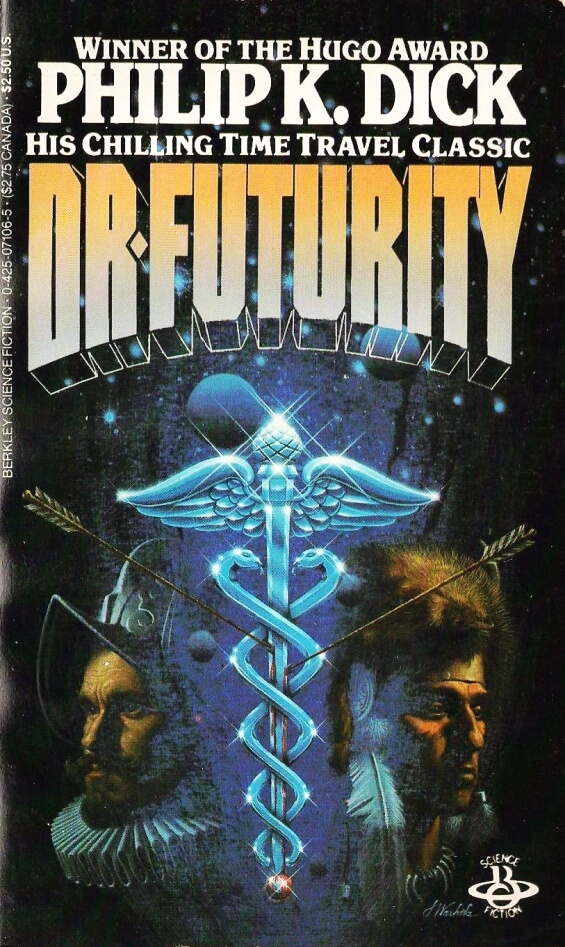
Dr. Futurity by Philip K. Dick (Berkley)

Posted by Jesse Willis

3 Philip K. Dick stories that could have inspired THE TERMINATOR

SFFaudio Commentary

I think The Terminator may be the best Science Fiction film ever made. And I think that no one person, credited or uncredited, can take all the credit for it.

In the video below, edited from an episode of Prisoners Of Gravity, Harlan Ellison explains how he got his screen credit in The Terminator:

Soldier is the first episode of Season 2 of The Outer Limits (the original series). It’s plot features a futuristic time traveling soldier who, after a thunder crack, appears in a then modern urban alley. The soldier is nearly indestructible, and is incredibly strong. Later, he breaks into a gun shop. In the ultimate scene he confronts his (also) futuristic enemy and they are both destroyed. Those are the basic plot commonalities between Soldier and The Terminator. There are many, many differences. Visually though, there are some striking similarities. These are nicely documented here and here.

That all said, Soldier‘s story plays out very differently from The Terminator, you can see a lot more connections, if you squint really hard.

For example, the solider is scarred like Kyle Reese and is sometimes unintelligible like Schwarzenegger’s T-800 – but ultimately the two, the TV episode and the feature film, are radically different in both scale and scope.

Interestingly, Demon With A Glass Hand the fifth episode of the second season of the original The Outer Limits television series, also written by Ellison, has similarities to both The Terminator and another film.

Like Soldier and The Terminator, Demon With A Glass Hand features a protagonist sent from the future into the past. But in this case, unlike in the title character in Soldier, the time travel was done quite deliberately – and done by humans in order to save mankind – more like The Terminator right?

Also similar, our hero in Demon With A Glass Hand, is nearly indestructible, can survive being shot over and over, feels no need to sleep, is being hunted by enemies also sent from the future, and he is programmed! Those are the basic plot commonalities between Soldier and The Terminator. More on that other movie a little later.

In the Starlog article (December 1984) there is no mention of The Outer Limits or Ellison. But, in it James Cameron does say: “I read all the classics, all the old Ace paperback novels.”

Starlog, December 1984

I do not expect that Cameron read all of the following stories. In fact I don’t think it is even necessary to know, and it isn’t crucial to my argument. Indeed, only one of the following stories was actually published in an “old Ace paperback”, (Second Variety was published in The Variable Man and Other Stories, Ace D-261).

My argument is that the story ideas and story points, even more than visuals, from the The Terminator, came very much out of 1950s science fiction.

Now before we get to the meat of my argument I’ll do a little sidestep towards another film, just to make it all the more confusing… its actually laying the groundwork for something, trust me.

Look at these images:

Kyben from Demon With A Glass Hand and Pris from Blade Runner

Demon With A Glass Hand and Blade Runner in the Bradbury

As you can see Demon With A Glass Hand shares something in common with Blade Runner, as much Id say as Soldier does with The Terminator.

The baddies in Demon With A Glass Hand, seen above, have racoon style eye makeup, like Blade Runner‘s Pris. Our hero in Demon With A Glass Hand, as it turns out, is an android that didn’t know he was one, just like in Blade Runner (and Do Androids Dream Of Electric Sheep?). Blade Runner was also shot in the same stylish office building in Los Angeles (the Bradbury Building*). And, the final fight of both stories ends in the same way, out the window and onto the roof of the Bradbury!

The “cybernetic organism” of The Terminator is in essence an android, a robot that looks like a human being, specifically a male human being if you want to get all technical.

Now even more than Ellison, who does have an android in Trent, the hero of Demon In A Glass Hand it is Philip K. Dick who is best known for his androids. Though robots that look like, think they are, or can pass for human aren’t unique or original to Dick, they are something he kind of specialized in. Stories like Imposter and The Electric Ant have androids and of course there is Do Androids Dream Of Electric Sheep?.

Now practically everyone knows that Do Androids Dream Of Electric Sheep? was adapted into a 1982 film called Blade Runner.

But do these folks know that the title of the Blade Runner was licensed from a book by a different author and entirely unrelated to Dick’s?

It was!

Ridley Scott acquired the rights to the title of a script based on an unrelated 1974 Science Fiction novel entitled The Bladerunner.

Why did he do this?

He didn’t have to, nobody has the legal right to claim exclusivity on book and movie titles – but as a matter of smart practice, when millions and millions of dollars are at stake, they often do such crazy things.

Now back to Philip K. Dick. He could, had he been alive in 1984, argued that his stories could have inspired The Terminator or even Demon With A Glass Hand!

Ellisons 1958 script for Demon With A Glass Hand has a “time mirror” – a device related to time travel – and so does a Philip K. Dick story.

For example, Dick uses what he calls a “time scoop” and a “time mirror” in a story called Paycheck (Imagination, June 1953). A time “Dip” turns up in a story named Meddler and in his novel Dr. Futurity (itself an expansion of a novella, Time Pawn) has a time “dredge.”

Here’s a snippet from Paycheck:

“It’s developed a time scoop.”

“What?”

“A time scoop. It’s been theoretically possible for several years. But it’s illegal to experiment with time scoops and mirrors. It’s a felony, and if you’re caught, all your equipment and data becomes the property of the Government.” Jennings smiled crookedly. “No wonder the Government’s interested. If they can catch Rethrick with the goods –”

“A time scoop. It’s hard to believe.”

But Dick didn’t invent the idea either, a story from Amazing Stories, December 1942, has the same tech, its actually in the title!

The Time Mirror by Dwight V. Swain

Another story that could have inspired The Terminator is The Skull. This 1952 story was published in If: Worlds Of Science Fiction. In it the protagonist is sent back in time in order to kill a man who can’t be allowed to live. He doesn’t know the man’s identity, but the clue lies within his own head, kind of like The Terminator.

The Skull by Philip K. Dick

Now to get out of time travel, let me ask you, where is Skynet, the evil A.I. in either of those Ellison stories? They are absent. But, he has evil computers, ones that want to destroy humanity even, for example there’s AM, the evil A.I. from I Have No Mouth, and I Must Scream. But that story is from 1967, and is not Skynet, exactly…

Well, let me tell you about The Great C, first published in Cosmos Science Fiction and Fantasy Magazine, September 1953. This story is set in a Fallout-style post apocalyptic wasteland. Straight away we learn that a band of humans have survived underground after a global nuclear war. The plot consists of following:

One of their number as he sets off with three questions to visit what the reader infers to be a great oracle. The oracle is the titular “Great C” with “C” being short for “Computer”. But unlike the Colossus supercomputer (from Colossus: The Forbin Project) that merely threatens nuclear war, this supercomputer pulled a full-Skynet and actually used the offensive nuclear capability on it’s creators, man.

See?

The Great C by Philip K. Dick

Now Second Variety, first appeared in Space Science Fiction, May 1953. And it was later adapted to film as Screamers. It is set in a post-WWIII world where killer robots, known as “Claws”, are developing newer and newer models of killer robot for human infiltration.

Check out these two illustrations from the story:

Second Variety by Philip K. Dick - illustration by Ebel

Second Variety by Philip K. Dick - illustrated by Ebel

So, why did Cameron’s The Terminator have to give credit to Harlan Ellison if Scott didn’t have to give it to Blade Runner?

I suspect it all happened pretty much as Ellison said it did. That in the unpublished interview notes for that Starlog interview Cameron actually said that he “ripped-off a couple of Outer Limits segments” and perhaps even “a couple of Harlan Ellison stories.”

But it doesn’t matter to me. Credits or dollars, the only thing I really care at all about the story, and I think that The Terminator builds on great SF stories by the likes of Philip K. Dick and Harlan Ellison and Isaac Asimov and H.G. Wells, and some Outer Limits TV episodes, and maybe some other movies too.

Humans do this and it is a good thing. I’m glad so many humans had a hand in making it.

By listening to stories, and by retelling them we continue the process of story refinement. The Terminator wasn’t a “rip-off” it was a tribute, it stands alone, and it stands tall and proud next to the great SF stories that came before it, in 1950s TV, 1950s books and 1950s magazines and probably to the decades before it too.

As for the James Cameron Harlan Ellison dispute, well, Cameron may have had a “huge ego”, as Harlan Ellison put it, or maybe he didn’t – who knows – Ellison had “never met the man” – it may just have been a self-deprecating statement. We can all use a little of that, and a lot more Philip K. Dick.

Posted by Jesse Willis
*The “Bradbury” in the Bradbury Building is no relation to Ray Bradbury … or is it?

Review of Puttering About in a Strange Land

SFFaudio Review

Puttering About in a Strange Land PKDPuttering About in a Strange Land
By Philip K. Dick; Performed by Luke Daniels, Kate Rudd, Amy McFadden
Publisher: Brilliance Audio
[UNABRIDGED] – 11 hours

Themes: / marriage / boarding school / literary / infidelity /

Publisher summary:

When Roger and Virginia Lindhal enroll their son Gregg in Mrs. Alt’s Los Padres Valley School in the mountains of Southern California, their marriage is already in deep trouble. Then the Lindhals meet Chic and Liz Bonner, whose two sons also board at Mrs. Alt’s school. The meeting is a catalyst for a complicated series of emotions and traumas, set against the backdrop of suburban Los Angeles in the early fifties. The buildup of emotional intensity and the finely observed characterizations are hallmarks of Philip K. Dick’s work.This is a realistic novel filled with details of everyday life and skillfully told from three points of view. It is powerful, eloquent, and gripping.

Puttering About in a Small Land (written 1957 but first published in 1985) feels very different from Philip K Dick’s usual stuff. It’s a dark and funny slow-burn set in 1950s Southern California, but there are no simulacra, no time slips, and no telepaths, and the only artificial reality is the one built out of society’s expectations of suburban married life.

It also seems unusually sensitive for PKD – not in a corny or sentimental way but just finely tuned into human relationships. He captures the subtle and imperfect communications of a dysfunctional marriage where two people are pretending to work together but are really pushing and pulling below the surface, wanting different things and resenting each other for it.

“I’ll be back pretty soon,” he said. From his eyes shone the leisurely, confident look; it was the sly quality that always annoyed her.

“I thought maybe we could talk,” she said.

He stood at the door, his hands in his pockets, his head tilted on one side. And he waited, showing his endurance, not arguing with her, simply standing. Like an animal, she thought. An inert, unspeaking, determined thing, remembering that it can get what it wants if it just waits.

“I’ll see you,” he said, opening the door to the hall.

“All right,” she said.

The story is told in three alternating points of view: Roger, his wife Virginia, and the “other woman” Liz. All three are trapped, one way or another, in self-made realities they don’t enjoy.

Some readers complain that PKD writes unflattering female characters, and as usual these ones aren’t much to admire: Virginia is gossipy and judgmental, her mother is a controlling nag (who often corners Roger and has some of the funniest scenes in the book), and Liz Bonner is so naïve and childlike she verges on the idiotic.

“She’s sort of a—” Mrs Alt searched for the word. “I don’t want to say lunatic. That isn’t it. She’s sort of an idiot with a touch of mysticism.”

But even so, Virginia has her strengths, and Liz Bonner is lovely in a quirky way. Her flaws and naïve unpredictability are exactly what free her from society’s expectations, and are what attract Roger. Despite the deceit and infidelity, their love story is somehow still beautiful.

And to be fair, PKD also writes pretty unflattering men. For example, Roger not only cheats on his wife, he also abandoned his previous wife and daughter and seems to be a compulsive liar. He’s a bristly, bad-tempered, and indifferent to his wife’s gestures of love and compromise. All he really cares about his TV retail-and-repair business, which is where the book title comes from: he’s a little king “puttering about in a small land.”

The waning of a marriage and infidelity appear in a lot of PKD’s stories, but in this one they really drive this plot. Normally I wouldn’t try to detect an author’s own life in his fiction, but since PKD has openly admitted he weaves autobiographical details into all his stories, it seems safe to see something of him in Roger.

His essay “How to Build a Universe That Doesn’t Fall Apart Two Days Later” might give some more clues to his approach to fiction set in the real world. Just because the characters’ universe is based in reality doesn’t mean PKD won’t try to disintegrate it.

I like to build universes which do fall apart. I like to see them come unglued, and I like to see how the characters in the novels cope with this problem. I have a secret love of chaos. There should be more of it. Do not believe—and I am dead serious when I say this—do not assume that order and stability are always good, in a society or in a universe. … Unless we can psychologically accommodate change, we ourselves begin to die, inwardly. What I am saying is that objects, customs, habits, and ways of life must perish so that the authentic human being can live.”

I listened to Puttering About in a Small Land on audio and read the print version too. The audiobook was read by Amy McFadden, Kate Rudd, and Luke Daniels, one for each of the main characters. All three were great, although using three narrators didn’t work so well for me since the story is in third-person. Hearing the same characters read three slightly different ways gave the audiobook a patchwork feel and was a bit jarring and distracting sometimes.

I’d recommend Puttering About in a Small Land for PKD fans but not so much as an entry to his works. For anyone who knows his style, it’s very cool to see a more subtle side of him and to see how beautifully he can write about human relationships in the artificial universe we call reality. Definitely worth the read.

Posted by Marissa van Uden


The SFFaudio Podcast #322 – NEW RELEASES/RECENT ARRIVALS

Podcast

The SFFaudio PodcastThe SFFaudio Podcast #322 – Jesse and Jenny talk about new audiobook releases and recent audiobook arrivals.

Talked about on today’s show:
many sins, paperbooks, The Architect Of Aeons by John C. Wright, Tor Books, The Voyage Of The Basilisk by Marie Brennan, beautiful illustrations and blue text, cover art, a bias against bad art, the way kids talk about book covers, fonts and graphic design, stock photos, don’t mix serif’d fonts, use classic art in the public domain, don’t muddy it up, Graysun Press Class M Exile by Raven Oak, Star Trek, Self Made Hero, I.N.J. Culbard, The Shadow Out Of Time, The Case Of Charles Dexter Ward, The Dream Quest Of Unknown Kadath, the difficulty of promotion for small press publishers, Horror!, The Scarlet Gospels by Clive Barker, John Lee, Macmillan Audio, Pinhead, Hellraiser, random bloody body horror, The Midnight Meat Train, Bradley Cooper, the way Clive Barker’s stuff works, Audio Realms, Limbus, Inc. Book 2, a shared world anthology by Jonathan Maberry, Joe R. Lansdale, Gary A. Braunbeck, Joe McKinney, Harry Shannon edited by Brett J. Talley, space for creativity, David Stifel’s narration of The Monster Men by Edgar Rice Burroughs, The Island Of Doctor Moreau meets Frankenstein done Burroughs style, The Man Without A Soul, David Stifel knows everything about Edgar Rice Burroughs, Jurassic Park by Michael Crichton, read by Scott Brick, Mad Max: Fury Road, 3D is a gimmick, Vampire Horror! by M.R. James, John Polidori, F. Marion Crawford, Anthony Head, M.R. James is the country churchyard ghost story guy, John Polidori was Byron’s Doctor, Mary Shelley won the contest, The Vampyre by John Polidori, Lord Ruthven is kind of based on Lord Byron, an autobiographical fantasy horror, music!, all the good D words, Survivors by Terry Nation, Doctor Who, Blake’s 7, who wrote House, M.D.?, writing credit in the UK, a familiar premise, the original TV series and the remake, The Walking Dead, all the fun stuff we like about post-apocalyptic storytelling, simultaneous existence, The Death Of Grass by John Christopher, A History Of The World In Six Glasses by Tom Standage, our dependence on grasses, The Road, canned food isn’t a long term plan, Station Eleven by Emily St. John Mandel, deer in the woods, the high price put on poaching, the other solution is cannibalism (also not very sustainable), The Water Knife by Paolo Bacigalupi, cutting water, this is already how things are, the atomic bomb scenarios are played out, the water problem, the new dust bowl, North Carolina and South Carolina, Seattle and Vancouver, Dr. Bloodmoney by Philip K. Dick, read by Phil Gigante, a comic version of Doctor Strangelove, Marissa Vu, Paul Weimer, The Gold Coast by Kim Stanley Robinson, Pacific Edge by Kim Stanley Robinson, Luke Burrage’s reviews of the Orange County books, Find Me by Laura van den Berg, silver blisters?, Guy de Maupassant style, The End Has Come edited by Hugh Howey and John Joseph Adams, Carrie Vaughn, Megan Arkenberg, Will McIntosh, Scott Sigler, Sarah Langan, Chris Avellone, Seanan McGuire, Leife Shallcross, Ben H. Winters, David Wellington, Annie Bellet, Tananarive Due, Robin Wasserman, Jamie Ford, Elizabeth Bear, Jonathan Maberry, Charlie Jane Anders, Jake Kerr, Ken Liu, Mira Grant, Hugh Howey, Nancy Kress, Margaret Atwood’s serial, Science Fiction in Space and the Desert, Seveneves by Neal Stephenson, read by Mary Robinette Kowal and Will Damron, very sciencey, too many Jesses, Rob’s commute, Nova by Margaret Fortune, read by Jorjeana Marie, a human bomb, Imposter by Philip K. Dick, The Fold by Peter Clines, read by Ray Porter, another Philip K. Dick story called Prominent Author, a joke story, 14 by Peter Clines, Expanded Universe, Vol. 1 by Robert A. Heinlein, read by Bronson Pinchot, Blackstone Audio, Robert A. Heinlein is a weird idea man, Nemesis Games by James S.A. Corey, Hachette Audio, Sword & Laser, The Darkling Child (The Defenders of Shannara) by Terry Brooks, read by Simon Vance, Casino Royale by Ian Fleming, larger than life voices, The Red Room by H.G. Wells, the accents, BBC audio dramas of James Bond books, the David Niven Casino Royale, The Brenda & Effie Mysteries: Brenda Has Risen From the Grave! (4), Bafflegab, Darwin’s Watch: The Science of Discworld III: A Novel by Terry Pratchett, Ian Stewart and Jack Cohen, read by Michael Fenton Stevens and Stephen Briggs, Uprooted by Naomi Novik, read by Julia Emelin, The Invasion of the Tearling by Erika Johansen, read by Davina Porter, Sarah Monette’s The Goblin Emperor, coming of age in a fantasy world, librarians recommend!

The Brenda And Effie Mysteries (4) Brenda Has Risen From The Grave by Paul Magrs

Posted by Jesse Willis