BBC Radio 4: Great Lives – Series 26 – Philip K Dick

SFFaudio Online Audio

BBC Radio 4 - Great LivesThe Great Lives programme, now in it’s 26th series, is a half hour biography show that explores the lives of “the greatest people who ever lived.” Host Matthew Parris interviews an eminent guest who argues for the magnetism of his or her historical hero.

And guess who is was profiled just the other day?

Philip K. Dick!!

Here’s the official description:

Actor Michael Sheen (Frost/Nixon; The Queen; Midnight In Paris) champions the life of Philip K. Dick and explains why he had such a big influence on his recent production of Hamlet.

Michael first discovered Philip K. Dick through the film Blade Runner, and moved onto his short stories which got him thinking about science-fiction in a new way. Whilst reading about philosophy, quantum physics, and comparative mythology, it struck him how Dick was intuitively weaving narratives around all the most interesting elements that these fields were throwing up.

He talks about Philip K. Dick’s innate interest in multiples realities, and how they overlap with Sheen’s own family experiences of mental health issues. In fact the more he found out about him, the more he was drawn to this enigmatic writer.

The description fails to mention that SF scholar Roger Luckhurst is also in on the conversation. |MP3|

Podcast feed: http://downloads.bbc.co.uk/podcasts/radio4/greatlives/rss.xml

Producer: Toby Field.

[Thanks Dave!]

Posted by Jesse Willis

The SFFaudio Podcast #138 – AUDIOBOOK/READALONG: The Crawling Chaos by Winifred V. Jackson and H.P. Lovecraft

Podcast

The SFFaudio PodcastThe SFFaudio Podcast #138 – The Crawling Chaos by Winifred V. Jackson and H.P. Lovecraft, read by Wayne June. This is a complete and unabridged reading of the short story (21 Minutes) followed by a discussion of it (by Jesse, Tamahome, Jim Moon and Wayne June). Here’s the ETEXT.

“In The Crawling Chaos the narrator flees inland, taking his adjectives with him.” -L. Sprague de Camp (from Lovecraft: A Biography)

Talked about on today’s show:
Wayne June is still alive!, first impressions of The Crawling Chaos, Wikipedia’s plot summary of The Crawling Chaos, dream logic, an opium vision, the tripiness, the philosophy behind The Crawling Chaos, The Haunted Palace by Edgar Allan Poe, the self as a haunted palace, Poe is so 19th century, The Raven, The Fall Of The House Of Usher, entropy, there is no meaning in this uncaring universe, “and all the planets mourned”, you’d need a lot of Prozac (or opium) to go through a life like that, the catharsis of apocalypse, a cosmic apocalypse, the plot is a jumble of junk, the biblical echoes, “only the gods reside there” (in Teloe), a very old testament vibe, “lest you turn into a pillar of salt”, the protagonist is us (mankind), Lovecraft’s recurring themes, the ordinary man who swaps places with another, The Shadow Out Of Time, Polaris, Beyond The Wall Of Sleep, transcendental mind-swap stories, the story was a pseudonymous collaboration between Elizabeth Berkley (aka Winifred V. Jackson) and Louis Theobald, Jun. (aka H.P. Lovecraft), Nyarlathotep, “send me some money”, a lot of dross with a powerful effect, “the year of the plague”, the “oriel window” is an eyeball!, “calm down Howard”, “he’s in his own brain”, who or what is “the crawling chaos”?, the ocean pounding is his heart beating, “We’re all doomed!”, what is the crawling chaos?, S.T. Joshi, Rudyard Kipling, the peninsular beach house, Tiger Tiger (from The Jungle Book), The Tyger by William Blake, is the beautiful youth Mowgli?, who are “they”?, a fawn faced youth, Weena from H.G. Wells’ The Time Machine, did Winifred read The Time Machine before sleep?, what is the meaning of “Teloe”? is it teleology, reaching for meaning or purpose and losing it, Amber and Chalcedony, pleasure barges bound for blossomy Cytheron, Liquid Gold, Lord Dunsany, the heavenly host, the destruction of the physical (the corpse-like clay), black clouds like vultures, Supernatural Horror In Literature by H.P. Lovecraft, “the oldest and strongest emotion of mankind is fear”, City In The Sea by Edgar Allan Poe, opium addiction, why opium?, Confessions Of An English Opium-Eater by Thomas De Quincey, Charles Baudelaire, a waking dream, if the story was written in the 1960s…, LSD, morphine and Morpheus (dream), a waking dream, Aldous Huxley, Timothy Leary, The Doors Of Perception, out of Plato’s cave, Philip K. Dick, mindset and environment, mescaline, dreams vs. drug trips, journeys into the unconscious, Mouthpiece by Edward Wellen, decoding the death ravings of Dutch Schultz (HERE), William Burroughs, Robert Anton Wilson, “French Canadian Bean Soup”, stream of unconsciousness, Frances vs. French people, “swimming through New York”, The Librarian TV series, “perfectly ordinary strange adventures”, puns are big for the subconscious, Samuel R. Delany, Groucho Marx.

The Tyger by William Blake

The United Co-Operative, April 1921 - The Crawling Chaos

Posted by Jesse Willis

Barely Literate: The Man In The High Castle by Philip K. Dick

SFFaudio Online Audio

Barely LiterateThe Barely Literate podcast, back in 2009, put out a wonderful and thoughtful podcast discussion of Philip K. Dick’s The Man In The High Castle. Chris Berg, Jim Dempsey, Sam Hansen and Colin Marshall had various levels of experience with Philip K. Dick reading – and they all brought something interesting to the conversation. This is great discussion about a great book!

|MP3|

Here’s the podcast feed:

http://barelyliterare.libsyn.com/rss

Posted by Jesse Willis

The SFFaudio Podcast #137 – READALONG: A Princess Of Mars by Edgar Rice Burroughs

Podcast

The SFFaudio PodcastThe SFFaudio Podcast #137 – Scott, Jesse, Tamahome and David Stifel talk about the audiobook of A Princess Of Mars by Edgar Rice Burroughs.

Talked about on today’s show:
A Princess Of Mars, the martian novels, Edgar Rice Burroughs’ first novel was originally titled Under The Moons Of Mars, “I can write rot as bad as this”, WWI, Orville and Wilbur Wright, Normal Bean vs. Norman Bean vs. normal brain, All-Story, Gods Of Mars, Tarzan, Pellucidar, H.G. Wells, Earnest Hemingway, the science with fantastic elements, Mastermind Of Mars, organ (and brain) transplants, radium rifles with radium bullets, zeppelins, the Martian navy, David has been acting since he was 13 years old, the 1960s resurgence of Burroughs books, Ballantine Books vs. Ace Books (in a war for the drug store paperback racks), the authorized vs. unauthorized editions of Burroughs and J.R.R. Tolkien books, The Lost Continent, Tarzan At The Earth’s Core, Del-Rey Books, Tarzan Of The Apes, getting into narration, Irwin Porges, a rich rhythm of language, “Sator Throg is a personal friend of mine”, Tars Tarkas is David’s impression of James Earl Jones doing Darth Vader, Sola, “rescue the girl, escape from capture, become a gladiator and save the planet”, A Princess Of Mars begins as a western, Zane Grey, Arizona, Idaho, it is a kind of a western on Mars, “all of his slaves worshiped the ground he walked on”, good to his slaves and good to his animals, Burroughs loved animals (especially horses), themes of A Princess Of Mars include a love of animals and nature (and nudism), ERBZine website, the James Killian Spratt edition of A Princess Of Mars (puts the nudity up front and center), modesty vs. showmanship, everybody is nude on Barsoom, Teddy Roosevelt, the 19th century physical culture movement, Conan and Robert E. Howard, Edgar Rice Burroughs, the oddness of an author who disdains writing, “back to nature and forward”, Flavor Flav or Max von Sydow, repulsor rays, Son Of Frankenstein, a telescope on Mars is looking at Earth, Percival Lowell, Lieutenant Gullivar Jones: His Vacation, the dying civilization that we see, The War Of The Worlds by H.G. Wells, The Martian Chronicles by Ray Bradbury, Philip K. Dick, “esoteric metaphysical spiritualism”, telepathy, John W. Campbell, lying for honorable reasons, the inconsistencies of lies and deceit in a world with telepathy, How John Carter Got To Mars (is kind of like the Mormon idea of the afterlife), astral projection, Houdini, Thuvia, Maid Of Mars, “the thought was made flesh”, Burroughs was a religious man, the unexplained preservation of Carter’s dead body, Bram Stoker, H.P. Lovecraft, “this is a fun book”, “like a Buck Rogers serial”, the serialization, cliffhangers, Swords Or Mars, Synthetic Men Of Mars, “Deja Thoris has laid an egg”, the curiously oviparous martians, the disney John Carter movie, Princess Of Mars, “Tarzan in a vest, does that work for you”, an evil Russian in cahoots with a French countess, “he was a splendid specimen of the white race”, Gone With The Wind, Greystoke: The Legend of Tarzan, Lord of the Apes, The Lord Of The Rings (movies), the Dynamite Entertainment Warlord Of Mars cover (#5 is done in the style of Norman Rockwell), Marvels Comics, Frazetta, HBO, a stage adaptation of A Princess Of Mars, a ballet of Spartacus (!), Gustav Holst’s Mars, Bringer Of War, Flash Gordon, Franz Liszt, Bronson Pinchot was interviewed by Grover Gardner (Blackstone Audio), the process of narrating an audiobook, The Godfather, Deja Thoris doesn’t get much screen time, Sola is a good character, Thuvia gets more of a leading role in Thuvia, Maid Of Mars, arbitrary customs that extend the narrative, S.M. Stirling’s In The Courts Of The Crimson Kings, Burroughs’ Venus books, all planets are occupied by people (except Mercury).

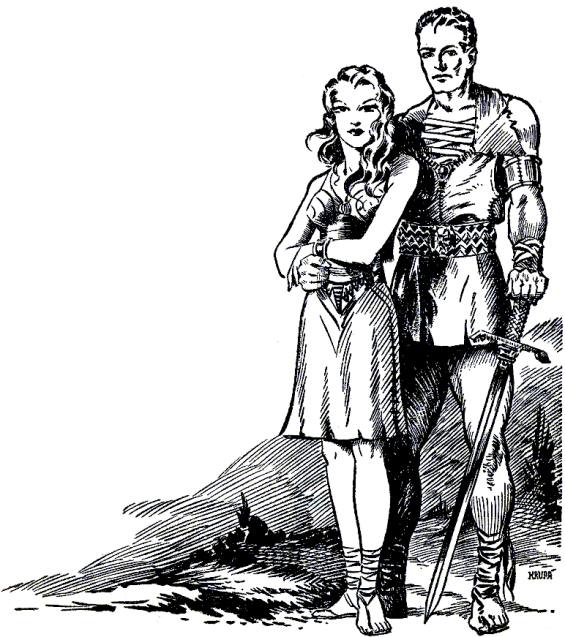
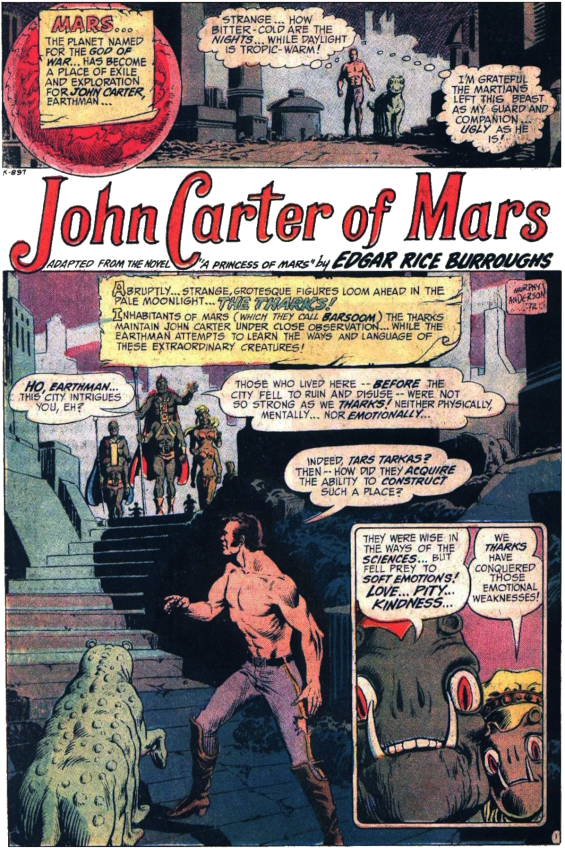
John Carter of Mars and Deja Thoris Princess of Helium (fully clothed)
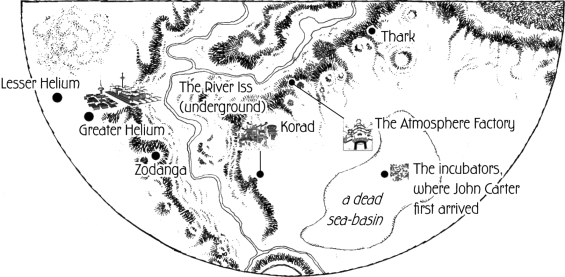
Map Of Barsoom from Dynamite Entertainment's Warlord Of Mars (illustrating the events of A Princess Of Mars)
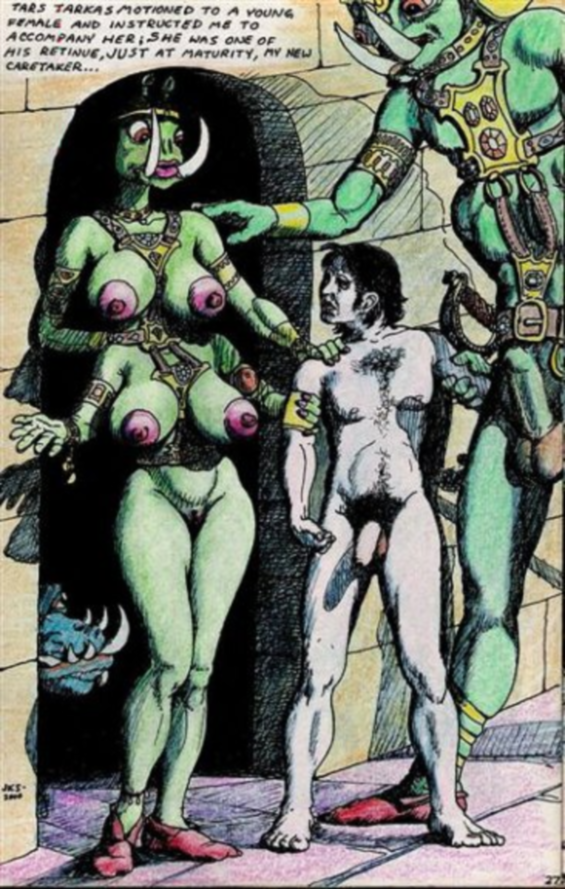
John Carter meets Sola - illustration by James Killian Spratt.
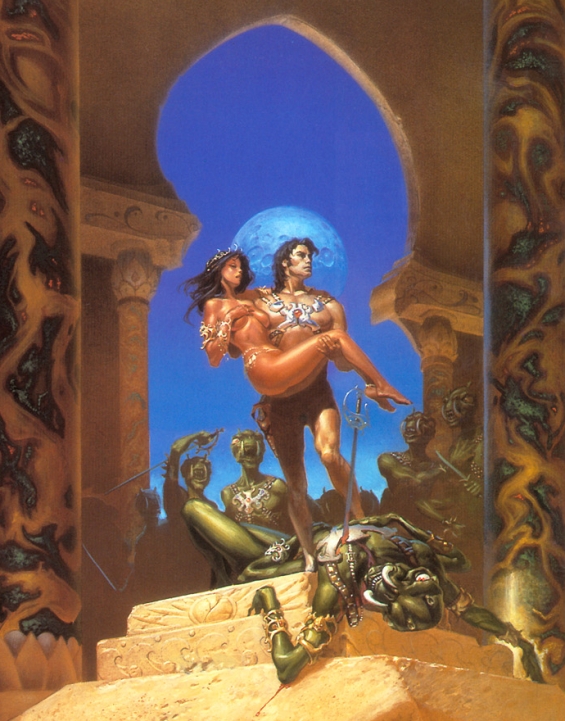
Michael Whelan - A Princess Of Mars
Warlord Of Mars Issue #5 cover by Joe Jusko
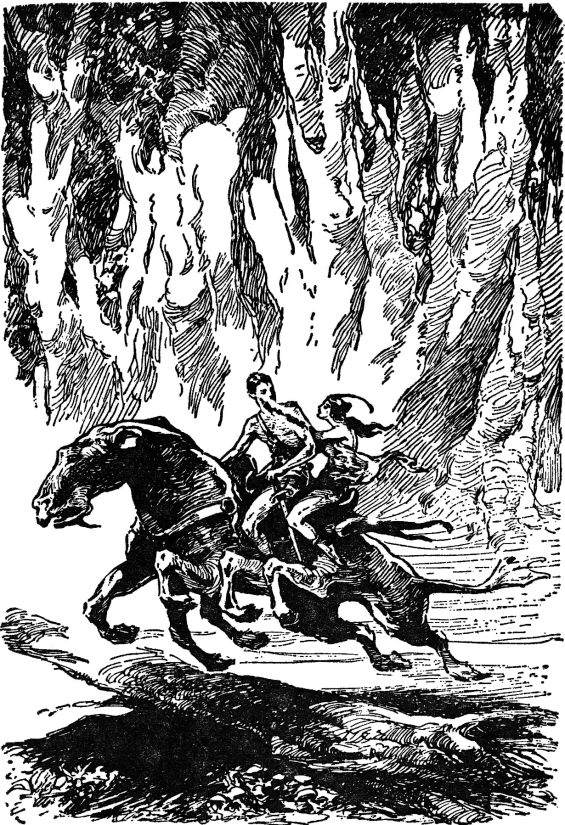
Riding A Thoat
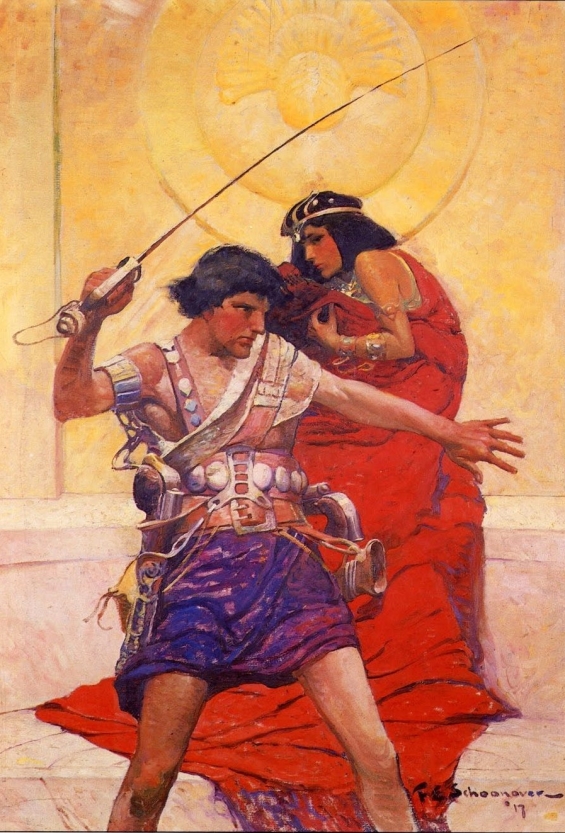
A Princess Of Mars - illustration by Schoon
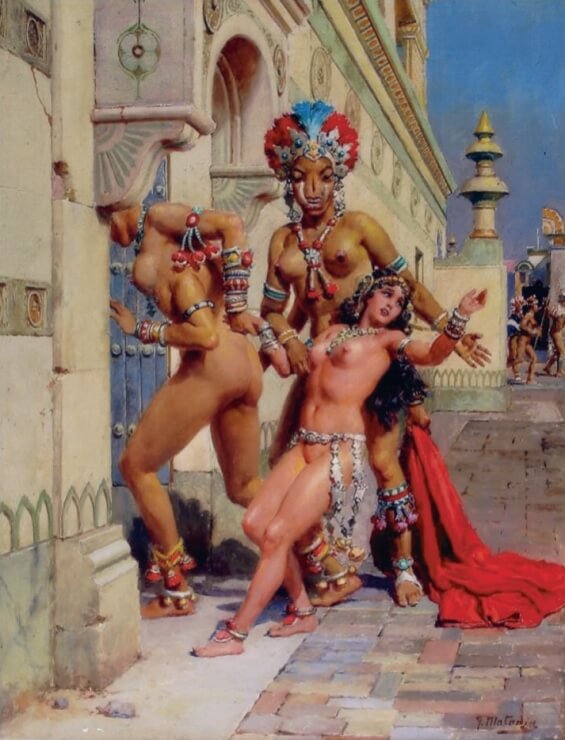
Fortunino Matania illustration of a scene from A Princess Of Mars by Edgar Rice Burroughs
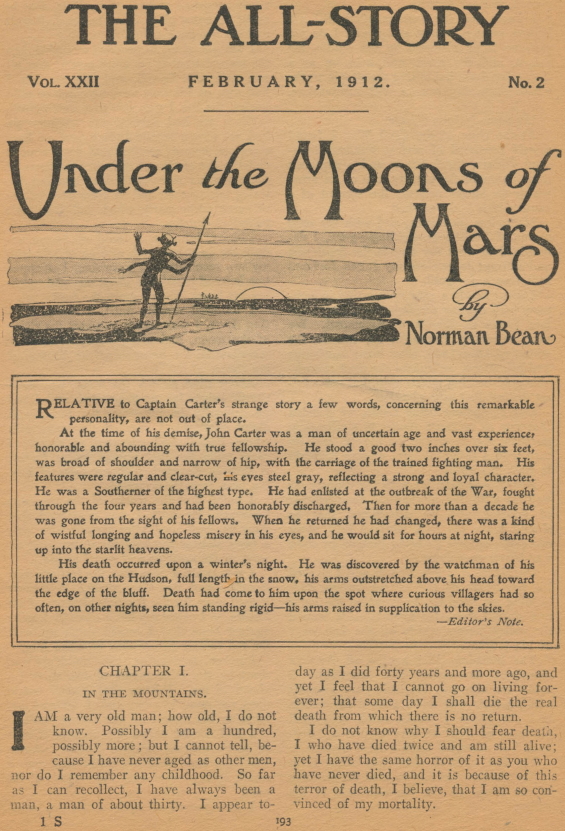
All-Story, February 1912
DC Comics Tarzan - John Carter
A PRINCESS OF MARS by Edgar Rice Burroughs

Posted by Jesse Willis

Learning it wholesale – my Halloween 2011 class on Philip K. Dick’s We Can Remember It For You Wholesale

SFFaudio Online Audio

World's Best Science Fiction 1967 - We Can Remember It For You Wholesale - illustration by Jack Gaughan

My favourite class at the moment is Monday 4pm-6pm. The students are all about at the same level, all diligent scholars, and all engaged with the material. Since September we’ve been working our way through many of Philip K. Dick’s short stories. Dick is great for teens. Reading his stories we get to thinking deep thought, write essays about interesting topics, and learn plenty of valuable vocab. On Halloween 2011 we finished off Philip K. Dick’s We Can Remember It For You Wholesale. You might think of it as a junior version of The SFFaudio Podcast.

|MP3|

Podcast feed: http://huffduffer.com/tags/rememberit/rss

iTunes 1-Click |SUBSCRIBE|

Learning it wholesale – my Halloween 2011 class on Philip K. Dick’s We Can Remember It For You Wholesale : SFFaudio on Huffduffer

Students in the class in, order of appearance, include Kevin, Jennifer, Jay and (eventually) Selina. The actual class doesn’t begin until about twenty minutes in.

If you’re a teacher, and curious, we used the Citadel Press edition, which is a cheap trade paperback (I wish there was a hardcover edition available):

CITADEL PRESS - We Can Remember It For You Wholesale And Other Classic Stories BY Philip K. Dick

I love my job.

Posted by Jesse Willis

The SFFaudio Podcast #136 – READALONG: Neuromancer by William Gibson

Podcast

NEUROMANCER
The SFFaudio PodcastThe SFFaudio Podcast #136 – Jesse, Tamahome, Eric S. Rabkin, and Jenny talk about Neuromancer by William Gibson.

Talked about on today’s show:
What was really going on in 1984, the introduction to the audiobook, 3 MB of RAM, Commodore 64, Apple IIe, TI-99/4A, the 10 Year Anniversary Edition of Neuromancer, video arcade vs. arcade, Tank War Europa, Spy Hunter, Sinistar, BBC audio drama adaptation of Neuromancer, cyberpunk, Jenny couldn’t connect with Case the first time, Alfred Bester, the revolutionary effect of Neuromancer, “a very special book”, Mexico City, “an important novel”, Yevgeny Zamyatin’s We, The New Yorker’s parody of Neuromancer, the New Wave, “one great new idea per book”, Samuel “Chip” Delany, The Einstein Intersection, The Lovesong Of J. Alfred Prufrock by T.S. Eliot, “The sky above the port…”, Blade Runner, “time to murder and create”, Hesiod, “And he never saw Molly again.”, an untethered morality, the Rastafarian religion, WWI, virtual worlds, Second Life, Gibson’s intentions, Gravity’s Rainbow by Thomas Pynchon, conspiracy, The Crying Of Lot 49, William S. Burroughs, Naked Lunch, “the silent frequency of junk”, The Wonderful Wizard Of Oz, Dorothy’s shoes, L. Frank Baum, “the face of evil is the face of total need”, The Electric Kool-Aid Acid Test by Tom Wolfe, “slouching through the streets of Paris”, Case is a “man of decided inaction”, God was Adam’s employer, Dixie Flatline wants to die, Free Will, Eric felt for Case, 1980s, Watergate, a totemic fascination with color and material, branding, Pattern Recognition, the Sanyo spacesuit, Hosaka is a computer?, a dead channel would be blue (today), Ian Fleming, James Bond, Walther PPK, “elegance and cosmopolitanism”, John Brunner’s Stand On Zanzibar, Escape From New York, Johnny Mnemonic, the fear of what technology is going to bring, Case’s youth, detritus vs. kipple, Philip K. Dick, Martian Time-Slip, Galactic Pot-Healer, “you can’t prove that the United States exists” in Neuromancer, Case was a street-kid, Gibson has built something that has mythic power, the lame Braun robot, Molly -> Mother -> Mary, SSN vs. SIN, a Case study (pun), he has been assigned a SIN, Oedipus, they function as if they were physical, Case: “You know you repeat yourself man.” Dixie: “Yeah, it’s my nature.”, the Sprawl trilogy and “when it changed”, when is Neuromancer set?, “a rich kid’s hideout”, real kipple vs. fake kipple, “built by carpenters to look rustic”, 18th century fake ruins, Versailles (and the Hameau de la reine), the Tessier-Ashpool are fucked up, Mona Lisa Overdrive, cloning, Count Zero, “they dumped themselves into this matrix”, communication technologies begin with porn, A Chorus Line, SimStim gets short shrift in Neuromancer, Strange Days, Molly’s meat-puppet memories, 1-900 numbers, the lotus eaters, Circe, the Sirens song, The Lion of Comarre by Arthur C. Clarke, the heisters are motivated or moved by their A.I. puppet-master, Case’s motivation, Molly’s motivation, Corto/Armitage’s motivation, like Rabbit in Vernor Vinge’s Rainbow’s End, these characters want to believe in their own free will, Neuromancer‘s motivation, “who’s the bad guy in this book?”, “who isn’t?”, the shuriken is the only moral totem in the book, dystopia vs. dystopic, “the wavelength of amphetamine”, spit instead of cry, Jenny is kind of cheating (because she’s read the sequels), is Molly wrong for Case?, Eric questions the new pancreas, it’s Noir (because everyone smokes), Jo Walton’s review of Neuromancer (see the top and comment 59.), Jesse appreciates the world (and the great motivation of the plot), Eric likes Case (in part) because he’s the only one who doesn’t want to physically hurt anyone else, O’Neil colony, the fake French youths, Case is not Neo, The Matrix is a fairy tale with a prophecy whereas Neuromancer is Science Fiction, the Sprawl Trilogy vs. The Matrix Trilogy, Star Wars, “stuck in bullet time”, V: For Vendetta is a fantastic movie, Jenny thinks we should listen to the soundtrack to The Matrix, “the machine and the moment”, Tama thought the second half of Neuromancer dragged, Mary Shelley’s Frankenstein is also Necromancer‘s antecedent ,”what do we owe to what we create?”
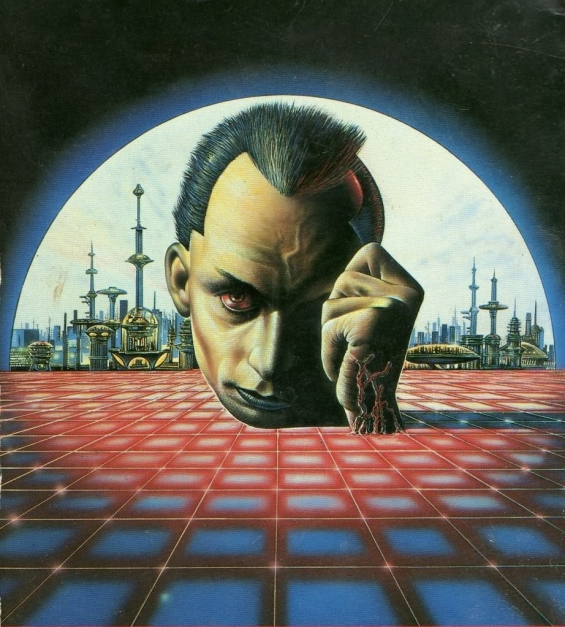

Neuromancer

Julian Assange has a copy of Neuromancer by William Gibson

NEUROMANCER - illustration by Barclay Shaw

Posted by Jesse Willis