LibriVox: The Beetle by Richard Marsh

SFFaudio Online Audio

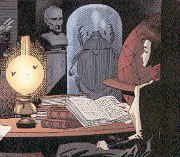
LibriVoxa panel from The League Of Extraordinary GentlemenAttentive readers of Alan Moore’s The League Of Extraordinary Gentlemen may have noted this panel…

…according to Jess Nevins, of The Fourth Rail, it depicts a “giant beetle in [a] vacuum tube.” and asserts that it

“is the Beetle, from Richard Marsh’s The Beetle (1897). In that novel, a shapechanging Egyptian princess, who can take the form of a giant, malign beetle, a beautiful androgyne, and an old woman or man, pursues a vendetta against a British M.P.”

Prior to the release of The Beetle as a LibriVox audiobook I hadn’t even heard of it. But a little online research indicates that The Beetle came out the same year as Bram Stoker’s Dracula and initially outsold it! How did I not hear of this book before?

LibriVox Horror Audiobook - The Beetle by Richard MarshThe Beetle
By Richard Marsh; Read by various readers
48 Zipped MP3 Files or Podcast – Approx. 11 Hours 56 Minutes [UNABRIDGED]
Publisher: LibriVox.org
Published: April 24, 2009
A story about a mysterious oriental figure who pursues a British politician to London, where he wreaks havoc with his powers of hypnosis and shape-shifting, Marsh’s novel is of a piece with other sensational turn-of-the-century fictions such as Stoker’s Dracula, George du Maurier’s Trilby, and Sax Rohmer’s Fu Manchu novels. Like Dracula and many of the sensation novels pioneered by Wilkie Collins and others in the 1860s, The Beetle is narrated from the perspectives of multiple characters, a technique used in many late nineteenth-century novels (those of Wilkie Collins and Stoker, for example) to create suspense.

Podcast feed:

http://librivox.org/bookfeeds/the-beetle-by-richard-marsh.xml

iTunes 1-Click |SUBSCRIBE|

Posted by Jesse Willis

Review of Lamentation by Ken Scholes

SFFaudio Review

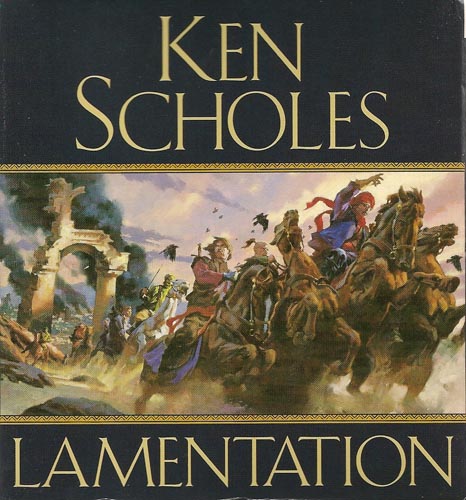
Lamentation by Ken ScholesSFFaudio EssentialLamentation
By Ken Scholes; Read by Scott Brick, William Dufris, Maggi-Meg Reed, and Stefan Rudnicki
12 CDs – 15 Hours [UNABRIDGED]
Publisher: Macmillan Audio
Published: 2009
ISBN: 9781427206251
Themes: / Fantasy / Epic Fantasy / Religion / Politics /

A pillar of black smoke rises from the plains where the ruins of a city lie. Four people watch it. Petros, an old fisherman; Nebios, a boy who is the only eyewitness; Rudolfo, the Gypsy King and Lord of the Ninefold Forest; and Jin Lee Tam, consort of a powerful madman. Each takes up the story in turn and we learn as they do what has happened and what changes it bodes for the Named Lands.

Through their eyes, Ken Scholes masterfully unfolds layer upon layer of complexity to reveal an epic tale of the struggle not only for power but to serve the Light. This struggle between vengeance, knowledge, mercy, and justice is what drives the main characters. Scholes takes us into a world where Machiavellian politics are constantly intertwined between characters’ motivations. However, because he uses interesting characters to tell his story, it always feels personal and we realize the “epic” quality only as we look back over storyline development. As well, he skillfully manipulates these believable people (and, let us admit it, his readers as well) so that I literally went from worrying about one character being killed to hating him to coming back into sympathy and understanding again by the end of the book. In the end, what we see is that despite epic qualities, the question the book is asking is a simple one. Who was the evil mastermind that destroyed Windwir and why?

Scholes’ world is a mesh of societies that come from disparate sources but which blend seamlessly into an intriguing whole. Reminiscent of medieval times are the city-states and trading factions wielding great power. The people of the Ninefold Forests put one in mind of Robin Hood with their wood-wise ways that shun large, established cities. The Church has a pope and an Androfrancine order that seeks ceaselessly to acquire knowledge and store it for the common good. This too hearkens back to our historical past, yet there are also distinct elements informing us that this is instead a distant future after mankind’s knowledge was used to wreak a terrible calamity resulting in The Time of Laughing Madness. There is a distinctive steam-punk flavor to be found in the inventions that are discovered and released by the monks into general society.

This is a world in which long distance communication is done by messenger bird but where robots exist (mecho-servitors). As well as spoken, coded conversation, there is a fascinating finger tapping code used by those in the know. We also meet one of the mecho-servitors, Isaak, whose suffers from extreme guilt over possibly being used for the destruction and who seems to be developing a soul.

Finally, although we breathlessly follow the characters on their journeys, knowing that there are several books to follow in the series, Scholes does us the courtesy of tying up the story lines for all but a very few situations. This was extremely refreshing and much appreciated. Simultaneously, he opened a few intriguing threads of possibility that lead us to eagerly await the next novel. True to the mastery that we saw in the rest of the book, he does so with a few well written scenarios that leave the reader realizing that these are situations that were hinted at but essentially “hidden in plain sight” until the author decided to pull them into use.

Narration was brilliantly voiced by Stefan Rudnicki, Scott Brick, William Dufris, and Maggi-Meg Reed. All were perfect for their parts, with Brick doing the heavy lifting on any sections told from a point of view that came from other than the main four characters. What I found most interesting was the opportunity for comparison between how the four readers interpreted different characters. The book changes point of view between characters by stating the person’s name and then using what might be called over-the-shoulder story telling in third person from that point of view. Therefore, each of the narrators is called upon to do dialogue for various characters as they engage in conversation with the protagonist of the moment. Hearing how each interpreted Isaak’s robotic voice or Petros’s aged tones provided fascinating contrasts.

Highest recommendations go to this audio book and author Ken Scholes.

Posted by Julie D.

Review of Stonefather by Orson Scott Card

SFFaudio Review

Stonefather by Orson Scott CardStonefather
By Orson Scott Card; Read by Emily Janice Card
Audible Download – 3 hours – [UNABRIDGED]
Publisher: Blackstone Audio
Published: 2008
Themes: / Fantasy / Magic / Nature / Politics / Youth /

Runnel is nothing special. He was never good at anything nor exceptionally bad at anything, just plain ordinary. He is frequently beat by a just as frequently angry father. He lives in a house with more than a dozen children. “Runnel” is a water name, which he was given out of piety to the god Yegut. Even though he has a water name, the only thing that Runnel is better than the other children at is rock climbing. He can find footholds and crevices where other children can’t.

As Runnel approaches his “man height” the other kids begin playing mean jokes on him. During one of these jokes Runnel finds himself on the top of a mountain all alone looking at a road heading to Mitherhome, the city of water mages. He decides to leave and starts to walk towards Mitherhome which is an island surrounded by a deep gorge in the land. He walks to the town of Hetterfairy, the only way to get to Mitherhome. Here he meets a servant named Lark who becomes his first friend. Runnel persuades her to take him to her masters house where he gets a job and discovers something amazing about himself.

This book is written by Orson Scott Card and is read by his daughter Emily Janice Card. Orson Scott Card is the famous award-winning author of the Ender series, Bean Series, and the Earthfall Series. “Stonefather” is a story set in a series he is writing, an introduction you might say.

Emily Janice Card read this book amazingly. This is the first audio book that I have heard that she has read and I was pretty surprised. She is not the best reader in the world but she is very very good. I could see the same voice in all the characters but this did not distract me from the story.

Card’s clever use of words had me from the beginning as all of his books do. I could tell each character not only from their voice but from their style of words. Some had very similar styles but there was always a little tweak in it that I could see and it made it all the better. I dislike books in which I can not tell who is speaking.

Posted by DanielsonKid (Age 14)

Review of Ender In Exile by Orson Scott Card

SFFaudio Review

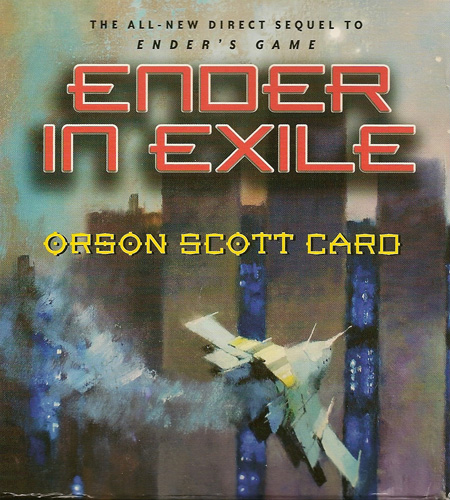
Ender in Exile by Orson Scott CardEnder in Exile
By Orson Scott Card; Read by David Birney, Cassandra Campbell, Emily Janice Card, Orson Scott Card, Gabrielle de Cuir, Kirby Heyborne, Don Leslie, Stefan Rudnicki, and Mirron Willis
12 CDs – Approx. 14 Hours [UNABRIDGED]
Publisher: Macmillan Audio
Published: 2008
ISBN: 9781427205124
Themes: / Science Fiction / Colonization / Starships / Religion / Politics / War / Aliens /

Over the last six years or so, Orson Scott Card has had nearly everything he’s written published as an audiobook. His writing is particularly suited to audio; his style is dramatic, clear, and driven by conversations, both internal and external. Card’s storytelling ability is also first rate.

The other half of an audiobook is its presentation, and here Card’s audiobooks also excel. In the Ender and Ender’s Shadow series of audiobooks, Stefan Rudnicki has led a talented crew of narrators in expert productions. Ender in Exile is the ninth novel written in the universe started by Ender’s Game, and all of them have been produced in a similar manner – with multiple narrators that change with shifts in the point of view of the story.

The entire novel takes place between the last two chapters of Ender’s Game. I’ll try not to spoil Ender’s Game for those who haven’t read it, but the main events of that book have finished, and the teenaged Ender Wiggin can not stay on Earth for various and interesting reasons. He is put on a colony ship, and much of the book takes place there. The conflict for him is not over. He’s distrusted by powerful adults, and because of his fame he distrusts the motives of everyone else. He’s still very much alone.

You’d think after four novels about Ender Wiggin that there wouldn’t be anything else to say about him. But Ender in Exile is one of the best novels in the series, mostly because of the insight it provides into the most interesting aspect of Ender Wiggin’s life: his transformation from Battle School student to Speaker for the Dead.

An atypical aspect of this novel is that it is really a sequel to two books: Ender’s Game and Shadow of the Giant. Because of the relativistic effects of space travel, three of the four Shadow novels take place while Ender is en route to his colony. Some of the things that happen in those books affect events in this one.

Despite all that, this book can be read standalone, though a good experience is made even better by knowing the whole story.

And, a bonus mini-review from DanielsonKid: It was very good, but I wouldn’t call it one of his best.

Posted by Scott D. Danielson

Maria Lectrix podcasts: Hail To The Chief by Randall Garrett

SFFaudio Online Audio

Sez Maureen of the Maria Lectrix podcast:

Hail to the Chief is a near future piece of political science fiction, which seems a fitting choice now that the presidential race is heating up. The concept:

What if the best choice for an elected office were someone too boring for the voters to elect?

Garrett’s style in this story seems to me to have been inspired by Allan Drury’s political thrillers, at least in its careful refusal to name parties. (A very shrewd move by Drury and Garrett, as it enables anyone to enjoy and profit by their stories, and removes the authorial temptation to get partisan.)

This story was first published in the February 1962 issue of Analog Science Fact and Science Fiction under Randall Garrett’s “SAM AND JANET ARGO” pseudonym.

Science Fiction Audiobook - Hail To The Chief by Randall GarrettHail To The Chief
By Randall Garrett; Read by Maureen O’Brien
4 MP3s – [UNABRIDGED]
Podcaster: Maria Lectrix
Podcast: September 2008
Part 1 |MP3| Part 2 |MP3| Part 3 |MP3| Part 4 |MP3|
What if the best choice for an elected office were someone too boring for the voters to elect?

And, check out our new RANDALL GARRETT author page!

Posted by Jesse Willis

Review of The Dreaming Void by Peter F. Hamilton

SFFaudio Review

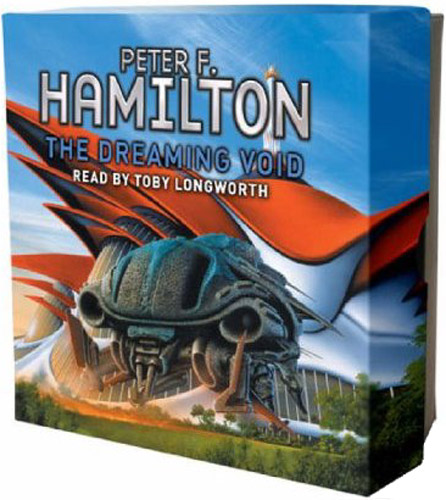
Science Fiction Audiobook - The Dreaming Void by Peter F. HamiltonThe Dreaming Void
By Peter F. Hamilton; Read by Toby Longworth
20 CDs – 23 Hours [UNABRIDGED]
Publisher: Pan Macmillan Audio UK
Published: February 2008
ISBN: 9780230709829
Themes: / Science Fiction / Aliens / Artifact / Nanotechnology / Politics / Singularity / Space Travel /
AD 3580. The Intersolar Commonwealth has spread through the galaxy to over a thousand star systems. It is a culture of rich diversity with a place for everyone. Even death itself has been overcome. But at the centre of the Commonwealth is a massive black hole. This Void is not a natural artefact. Inside there is a strange universe where the laws of physics are very different to those we know. It is slowly consuming the other stars of the galactic core – one day it will devour the entire galaxy. Inigo, a human, has started to dream of a wonderful existence in the Void. He has a following of millions of believers and they now clamour to make a pilgrimage into the Void to live the life they have been shown. Other starfaring species fear their migration will cause the Void to expand again. They are prepared to stop them no matter what the cost. And so the pilgrimage begins…

The Dreaming Void is a very big book and it’s an even bigger audiobook. Peter F. Hamilton’s story is one of the better recent SF stories that I’ve experienced in any form, full of fascinating settings, situations, and ideas. It has many fully realized subplots and varied characters, too many. What could have been at least two brilliant stories, one of the commonwealth dealing with the potentially disastrous consequences of an attempted pilgrimage into the Void, and one of the much more low-key story of Inigo’s dreams, is instead merely a long opening to a longer trilogy.

The main plot(s) of the story are wonderful. It is science fiction as it should be. It takes the imagination to new vistas, mixing newer ideas (the Void, gaiafield, etc) with core traditions of SF (space travel, aliens, etc). Indeed, the basic story is nearly perfect but with all the stretching, it greatly overstays its welcome. Somewhere around the twelve hour mark, listening to The Dreaming Void became a chore. If I had not already committed so much time to the story, I would have quit then.

Final analysis: The Dreaming Void is just too big a novel, filled with many unnecessary subplots and distractions. It is far too easy loose track of the multitude of characters inhabiting this enormous beginning to the “Void Trilogy.” Yet, it is far from a hopeless audiobook. Throughout the epic story, the skill of both author and the reader are quite apparent and each part of the story is interesting. I am still of very mixed opinions about the story. I will look for more stories written by Peter F. Hamilton and more read by Toby Longworth, but only if they are about half this length or shorter. However, the audiobook might well be worth the effort for someone who has a lot of free time and is willing to take notes.

Posted by David Tackett