
The SFFaudio Podcast #266 – READALONG: When The Sleeper Wakes by H.G. Wells

Podcast

The SFFaudio PodcastThe SFFaudio Podcast #266 – Jesse, Luke, and Juliane Kunzendorf discuss When The Sleeper Wakes by H.G. Wells

Talked about on today’s show:
Julianne’s first SFFaudio Podcast, what do we call them?, readers and talkers, 1899/1910/1923, When The Sleeper Wakes, The Sleeper Wakes, The Sleeper Awakes, Blackstone Audio’s audiobook version, the serialization in The Graphic magazine, the 1910 preface, “an editorial elder brother”, going to the original sources, a forecast of technology, technological changes between the revisions, aeroplanes and aeropiles, the introduction to the 1923 edition, “fantasias of possibility”, “suppose these forces go on novel”, H.G. Wells thought the rich were evil geniuses (prior to meeting them), “rather foolish plungers”, “vulgar rather than wicked”, Ostrog, “a nightmare of capitalism triumphant”, capitalist/socialism (kind of like Japan), The Unincorporated Man is pretty much the same story, yay Marxism!?, when Graham wakes up, Chapter 7, there only audiobooks in the future, The Man Who Would Be King by Rudyard Kipling, The Madonna Of The Future by Henry James, Heart Of Darkness by Joseph Conrad, phonetic spelling, an H.G. Wells way of writing, is it the nature of a serial, the reader transplanted into the year 2100, The War Of The Worlds, suicide, Isbister, Warming, Ostrog, Lincoln, “body fag is no cure for brain fag”, “while he was breaking his fast”, the language, lying in a crystal box, a passive character, establishing the genre, space elevators, Buck Rogers has the same premise, Idiocracy, Eine Billion Dollar by Andreas Eschbach, A Connecticut Yankee In King Arthur’s Court by Mark Twain, the importance of money, the gilded age, wealth disparity, the labour company, a dystopia along the lines of Brave New World, the Martian invasion, The Time Machine, is this the start of the Morlocks and the Eloi?, 1984 by George Orwell, the proles, the pleasure cities, distractions, the value of work beyond being paid, a class trap, what is Wells saying?, Wells’ ambivalence towards the proles, there are no more school examinations, is this a meritocracy?, technological dystopias (like 1984), social dystopias, Brave New World is a medical dystopia, genetic dystopias, knowing you live in a dystopia, North Korea, knowledge of other societies, the time before Big Brother, Julia, the Anti-Sex League, genetically dumbified, Flowers For Algernon by Daniel Keyes, religious dystopia, advertizing Christianity, prosperity gospels, church revivals, advertising, the babel machines, movies and television, what will this culture do to the culture?, “people don’t read”, airplanes, heavier-than-air aircraft, smashing airplanes into other airplanes, aerial ramming, flying machine vs. aeroplane vs. airplane vs. aeropile, My First Aeorplane by H.G. Wells, rocketships, the pilot’s union, the look of the airplane, the clothing, Victorian age dresses, the church, hanging in the air, the Thames has run dry, megalopolis, the building material, the Eiffel Tower, steel, concrete, plastic, glass, carbon fiber, biotech, Pandora’s Star, a coral house, 3D printing, Ikea Hacks, print on demand houses, economics, factories and automation, The Roads Must Roll by Robert A. Heinlein, The City And The Stars by Arthur C. Clarke, slide-walk, edamite, Ostrog, Ostrogoths, Lincoln, foment a revolution, race and racism, Senagalese, ostrog as “fortress”, a Serbian Orthodox Church, Ostrog will boss the show, “in bounds”, are these are revolutionary names?, Che Guevara, Abraham Lincoln’s freeing the slaves, thug force, Berlin, June 17th, 1953, the Berlin Wall, outside forces, Dan Carlin’s Hardcore History, Gurkhas, “see we’re all friends”, smiling bright shiny teeth, “they are fine loyal brutes”, racism is in there but it is not the point of the book, The War Of The Worlds, a little hypocritical, we can’t see the issue, massive economic suppression, calculating boys, hypnotism, economic slavery, the wealth gap, the White Council, the blaring speakers, the media firehouse, talk radio, people wearing their headphones everywhere, podcasts, each one of those streams are newspapers, a newspaper for everybody, broadsheets vs. tabolids, your newspaper tells your class, daily free newspapers, Jack The Ripper, Melville Macnaghten, Michael Ostrog (thief and con-man), the symbolism of the aircraft, the three books, Helen is the Madonna of the future, it’s a joke, the novel’s end, ‘my Graham dies without certainty of victory or defeat’, ambiguous airplanes, “literally that’s his dream”, flying dreams, cliffs and high places, Isbister and Warming -> Lincoln and Ostrog, “its fun”, “in such a fall as this countless dreams have ended”, dream falling, the different endings, the future of that future, Olaf Stapledon’s The Last And First Men, many futures, Olaf Stapledon takes what Wells does a little farther, Graham as a Christ figure, risen from the dead… etc., in Graphic detail, full colour holographic Jesus, the empty tomb moment, allusions to other literature in the Bible, Arthur C. Clarke, the Son of Man, A Story Of The Days To Come, the emptying of the countryside, the enclosures, Scotland, Canada, Glasgow, Berlin, well more than 50% of the world’s population lives in cities now, Among Others by Jo Walton, Wales, the merits of country living, the economic theory behind everything, access to internet, staring at the internet, services, live entertainment, “my choice of Christian girls was three girls”, poor Luke.

When The Sleeper Wakes by H.G. Wells
When The Sleeper Wakes by H.G. Wells - illustration by H. Lanos
When The Sleeper Wakes by H.G. Wells
H.G. Wells' 1921 Preface to The Sleeper Wakes
Amazing Stories Quarterly, Winter 1928 - illustration by Frank R. Paul

Posted by Jesse Willis
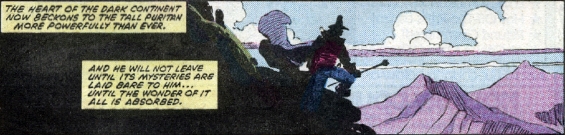
The SFFaudio Podcast #236 – AUDIOBOOK/READALONG: The Hills Of The Dead by Robert E. Howard

Podcast

The SFFaudio PodcastThe SFFaudio Podcast #236 – The Hills Of The Dead by Robert E. Howard, read by Paul Boehmer (courtesy of Tantor Media’s The Savage Tales Of Solomon Kane). This is a complete and unabridged reading of the story (60 minutes) followed by a discussion of it. Participants in the discussion include Jesse, Mr Jim Moon, Matthew Sanborn Smith, and Bryan Alexander

Talked about on today’s show:
Second-to-last Solomon Kane story chronologically, “Red Shadows” and “Wings of the Night” close contenders for Solomon Kane stories, the latter featuring harpies from Jason and the Argonauts, history of Solomon’s staff explained in other stories, fetishes (not THAT kind!), juju stick, magical weapons, Wandering Star edition illustrated by Gary Gianni, comic book adaptations, vampire-slaying, story uncharacteristically well-plotted including foreshadowing, “plains and hills full of lions” oh my!, lion sleeping habits, “Africa is full of never-explained mysteries” excuses plot holes, prefigures Richard Matheson’s I Am Legend, Kate Beckinsale’s Underworld movies, one of few stories to depict ‘nation of vampires’, Kiss of the Vampire (film), Transylvania, homeopathic symbolism, sex sells, ‘Howardian damsel in distress’, voodoo, feminization of the jungle, homoerotic undertones, Howard biography Blood and Thunder by Mark Finn, post-Colonial critique, vampires in fiction oscillate between sexualized and homicidal, Stephen King slams Stephanie Meyer’s Twilight vampires, Nosferatu (relatively unknown at the time of this story’s writing) introduced the idea that sunlight kills vampires, the Devil as source of Kane’s lustful urges, “Howard doesn’t do metaphors very well”, vampire-zombie continuum, Howard as great visual writer, animal characteristics ascribed to Kull and Conan but not Kane, snake imagery (related to serpent in Garden of Eden?), Slave Coast, vultures, nature of the soul, “Rogues in the House” (written in one sitting while Howard had a headache), the dangers of over-interpreting Howard, Howard’s subconscious, early 20th-century magazines preoccupied with race, Cosmpolitan (it was once a literary magazine), race hierarchy, Solomon Kane less racist than Howard himself, racial hierarchy, Berbers, Solomon Kane’s conflicted personality, the New Model Army, Howard’s characters are solitary, Puritans, Kane has a death wish, Kane’s celibacy, significance of Solomon Kane’s name, Ben Jonson satirizes Puritan names (in Bartholomew Fayre), so does Terry Pratchett (in Lords and Ladies, Mormonism, concept of congregation of all believers, English Civil War and its sects, Grendel in Beowulf as descendant of Cain, Sandman comics, Kane is “always on the road”, Matthew Hopkins witchfinder general, wood imagery, we learn what a palaver is, The Dark Tower series, temptation, inquisition, H. P. Lovecraft, cohesion of Howard’s works, history of the English language, George Harrison’s coyright infringement, parallel evolution in fiction, Clark Ashton Smith, Charles Baudelaire, genocide, the importance of a shared reader-author premise, shared cultural values, Hitler, The King in Yellow, Woodrow Wilson was a racist, zombies vs. animals.

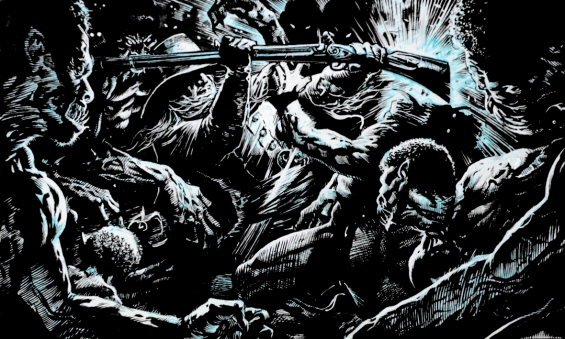
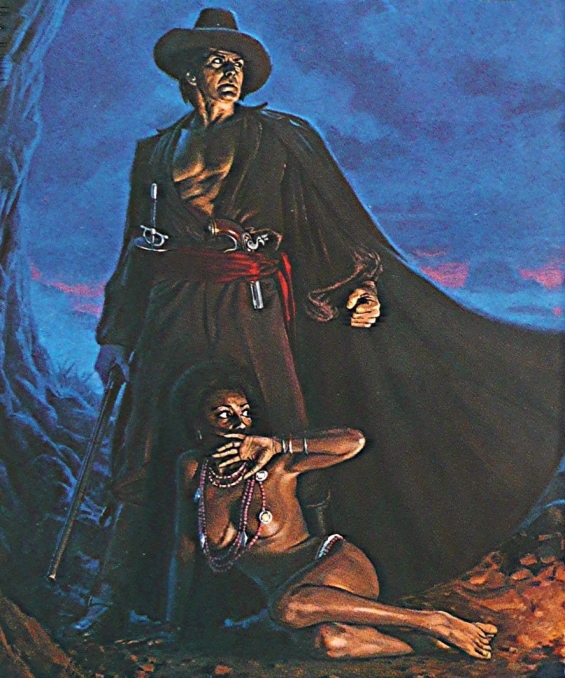
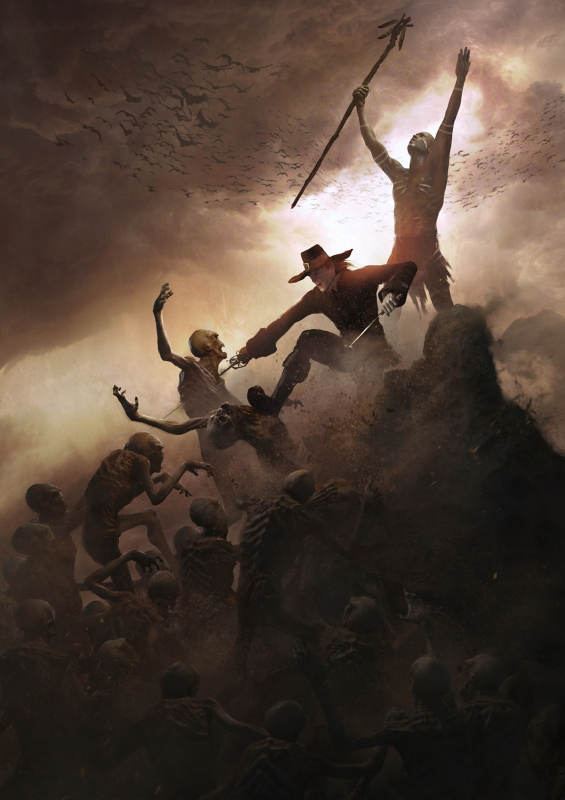
The Hills Of The Dead - Illustration by Greg Staples

The Hills Of The Dead by Robert E. Howard

The Hills Of The Dead

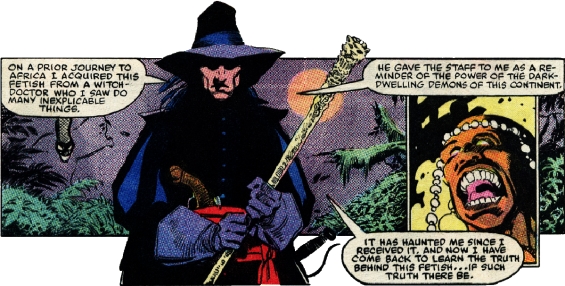
Solomon Kane's Fetish Staff

Solomon Kane in Africa

The Hills Of The Dead by Robert E. Howard

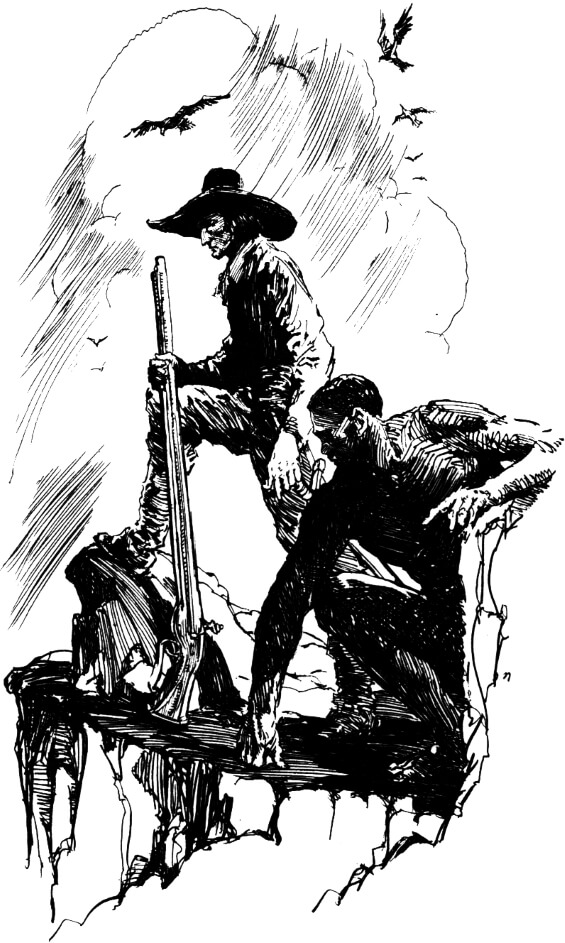
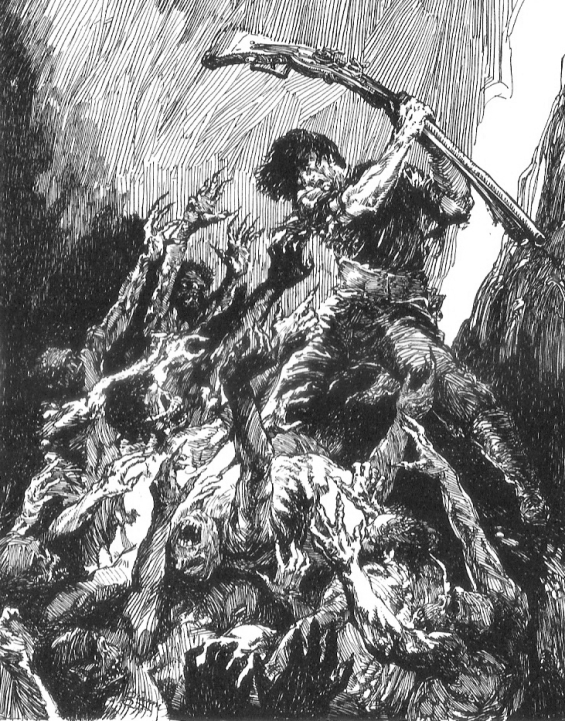
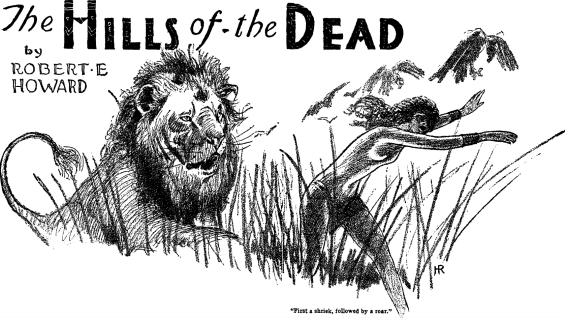
The Hills Of The Dead by Robert E. Howard - illustration by Hugh Rankin from Weird Tales, August 1930

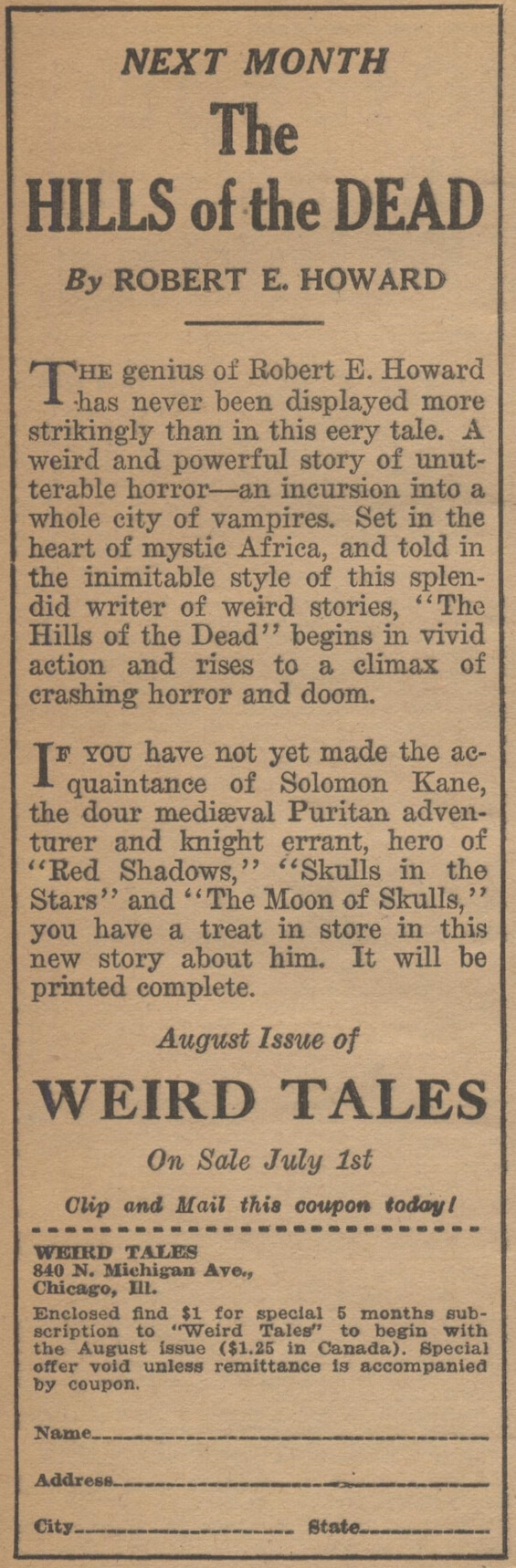
ad for The Hills Of The Dead by Robert E. Howard from WEIRD TALES, July 1930

ad for The Hills Of The Dead by Robert E. Howard from WEIRD TALES, July 1930

The Hills Of The Dead - illustrated by Gary Gianni

Guillem H. Pongiluppi illustration of The Hills Of The Dead

Marcus Boas art - Robert E. Howard's Hills Of The Dead

Posted by Seth Wilson

The SFFaudio Podcast #228 – READALONG: Last And First Men by Olaf Stapledon

Podcast

The SFFaudio PodcastThe SFFaudio Podcast #228 – Jesse and Jenny talk about the Last And First Men by Olaf Stapledon.

Talked about on today’s show:
the near and far future, not a novel, an imagined planetary history, the scope, Penguin Books, philosophy, the introduction, The Iron Heel by Jack London, a future history, human civilizations, two thousand million years (two billion years), universes => galaxy, man is a small part of the universe, Starmaker by Olaf Stapledon, Doctor Who, 2001: A Space Odyssey, what the plot would look like if there was one, the eighteen periods of man, evolution and construction, it’s set in 1930, is there ever an end to humanity?, Last Men In London by Olaf Stapledon, Last And First Men was popular in its day, Stapledon served in the ambulance service in WWI, plotlessness, period themes, the flying theme, the depletion of fossil fuels, The Mote In God’s Eye by Larry Niven and Jerry Pournelle, Venus, Mars, Neptune, the Martians, the Venusians, the genocide on Venus, Luke Burrage (the Science Fiction Book Review Podcast), racism, a Science Fiction mythology, the poetic musical ending, deep time, to the end of the Earth and beyond, Stapledon as an historian, civilizations always fall, there’s no one thing that ends civilizations, humanity as a symphony, the returns to savagery, establishing the pattern, Arthur C. Clarke, The House On The Borderlands by William Hope Hodgson, The Night Lands, The Time Machine by H.G. Wells, H.P. Lovecraft and cosmicism, the Wikipedia entry for Last And First Men, Fritz Leiber, Forrest Ackerman, scientificion, matchless poignancy, S. Fowler Wright, Lovecraft’s love of the stars (astronomy), one of the species of man is a monkey, another a rabbit, no jokes but perhaps humour, a cosmic joke, monkeys have made human their slaves, Planet Of The Apes, an ability to hear at the subatomic level, intelligence, a fourteen foot brain supported by ferroconcrete, obsession with gold, obsession with diamonds, pulping people, it’s written like a history textbook or essays, the Patagonia explosion, the upstart volcanoes, Earth Abides by George R. Stewart, The Scarlet Plague by Jack London, chiseling knowledge into granite, Olaf loved coming up with different sexual relationships, the 20 year pregnancy, suicide, euthanasia, an unparalleled imagination, groupthink, telepathy, oversimplification, we must press on, the baboon-like submen, the seal-like Submen, the divergence of man into other ecological niches, the number of ants in New York, ecosystems, nuclear weapons, robots are missing, where is the robot man?, the over-emphasis on fossil fuels as the only source of energy, if you could see us now, post-humans, ultimately a love letter to humanity, not aww but awwww!, Starmaker as a masterpiece, Sirius, uplifting a dog, a fantasy of love and discord, dog existentialism, who am I and where is my bone?, Olaf Stapledon in the PUBLIC DOMAIN, influential vs. famous, a very different read.

Last And First Men by Olaf Stapledon

Olaf Stapledon illustration by Neil Austin

Posted by Jesse Willis
The SFFaudio Podcast #227 – AUDIOBOOK/READALONG: The Dreams In The Witch House by H.P. Lovecraft

Podcast

The SFFaudio PodcastThe SFFaudio Podcast #227 – The Dreams In The Witch House by H.P. Lovecraft; read by Julie Hoverson. This is a complete and unabridged reading of the novelette (1 hour 42 minutes) followed by a discussion of it. Participants in the discussion include Jesse, Julie Hoverson, Mirko Stauch, and John Feaster.

Talked about on today’s show:
1933, a pretty terrible Lovecraft story, which story?, science fiction vs. horror, crappy cheesy, Julie’s audio drama adaptation of The Dreams In The Witch House, bad ending vs. interesting journey, nobody wants August Derleth to be right, Mirko likes it, a magnificent failure?, an unusual narrative, standard witch story #4, The Size Of The Universe by Willem de Sitter, is the Dark Man made out of dark matter?, the first fanfic Mary Sue writer, Hypnos, witches, magic, what does a being from beyond space need with baby guts, why is Nyarlathotep crusing the streets with a dude in his pajamas?, Prohibition, a supervillain squad, a nerve specialist, Herbert West, Re-Animator, Douglas Adams, space is really really really big, the total perspective vortex, Lovecraft humour, Pickman’s Model, Walter Gilman is blind to the danger, the Masters Of Horror adaptation, The Whisperer In Darkness, The Colour Out Of Space, a homesteading concept, Darkest Of The Hillside Thickets, The Shadow Out of Tim, the science fiction aspect, a scary fascination, the sunburn, the blown out ear drums, Azathoth, the Pythagorean view, “everything is made of numbers”, mathematics, Galen, is Keziah Mason dead?, is Walter Gilman doomed from the start?, Brown Jenkin looks like Chuck E. Cheese, what is Brown Jenkin?, witches familiars, Blackadder, “bloody milk!”, bubbles -> Beelzebubbles, modern witches, “the witch stole my penis”, mob mentality, Caligula, proscription, Crassus, the Polish landlord and tenants, a drunken loom-mender?, the looming evil, the cross prayer, the cross giver, the cross as a weapon, Walpurgis Night, the skeleton is quantum physics, Halloween, the maypole, the Brocken, pagan rituals, prank gardening, tree stealing, mascot kidnapping, “excessively religious”, Elwood, The Thing On The Doorstep is internally logical, Tales From The Crypt, Lovecraft’s racism, The Haunter Of The Dark, presenting light, superstition, Mount Everest, icky areas, Lovecraft’s characters aren’t into self-preservation, 1960s, addiction, psychedelics, helmet refusers, “outspokenly Wiccan”, The Call Of Cthulhu RPG, 20 sided die, weird angles, 4 sided die, Julie’s die scar, sharp Doritos, caltrops, “grimoire”, sleeping on Elwood’s couch, a cohesive awesome, the endings, the star wanderings, Beyond The Wall Of Sleep, Polaris, an obsession with evil stars, astral projection, the movement of the stars, Lovecraft’s astronomic efforts, The Festival, a weird plot thread, Lovecraft as an untethered balloon, there’s a lot of puppy dog in H.P. Lovecraft, “the poky little Lovecraft”, Montreal, a historical-building-o-phile, Bingo The Birthday Clown, Star Crunch (a Lovecraftian sponsor), “a field of red jelly with bones floating in it”, hot dog water, ultimately everyone is consumed, Tunus the Unstoppable, a soap opera with only three people, an anthropomorphic supercomputer, Krusty the Klown, a fascinating unpleasant series, The Lovecraft Five, Facts Concerning The Late Arthur Jermyn And His Family, He, The Picture In The House, H. Rider Haggard’s She done as a comedy, Brown Monkey’s The Dreams In The Witch House, Uncle George’s House Party, 19 Nocturne Boulevard, The Hole Behind Midnight by Clinton Boomer, Broken Eye Books’s Kickstarter, a professional audio novel, a giant evil naked clown, the HPLHS movie adaptation of The Whisperer In Darkness, the changes, Mr. Jim Moon’s review of The Whisperer In Darkness, it’s fucking terrifying, Julie’s reading, Julie loves to play crazy old people, a love letter to H.P. Lovecraft, “fun, surprising, and terrifying”, The Creeping Unknown, more suspense and less action, Charles Fort (played by Andrew Leman), Septimius Felton by Nathaniel Hawthorne, “Doctor Portsoaken”, “Robert Hagburn”, Charles Dickens, Curse Of The Crimson Altar, Die, Monster, Die!, The Curse, Thriller, Pigeons From Hell, The Resurrected, Bleeders (aka Hemoglobin), a micro-budget with Rutger Hauer.

Classics Illustrated - Dreams In The Witch-House - illustration by Pete Von Sholly

The Dreams In The Witch House - Room For Rent

Dreams In The Witch-House - illustrated by Ben Templesmith

Posted by Jesse Willis
Fishhead by Irvin S. Cobb

SFFaudio Online Audio

Fishhead by Irvin S. Cobb

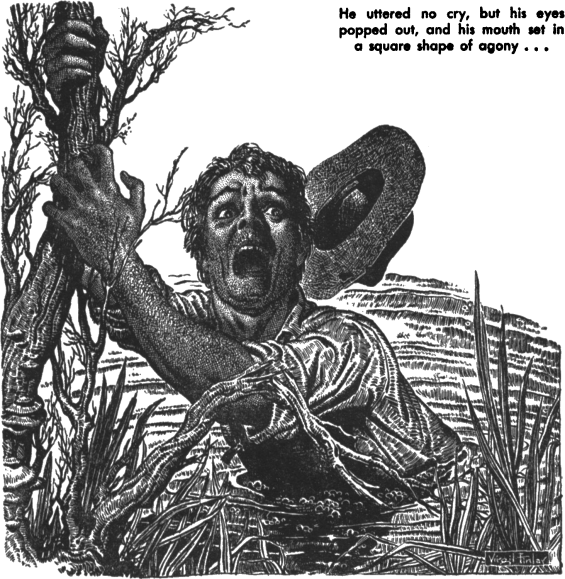
Fishhead by Irvin S. Cobb - illustrated by Virgil Finlay

First published in The Cavalier, January 11, 1913, Fishhead (aka Blood-Brother Of The Swamp Cats) is something of an ancestor to H.P. Lovecraft’s The Shadow Over Innsmouth.

In a letter published the same year, a 22-year-old H.P. Lovecraft, wrote, regarding Irvin S. Cobb’s short story Fishhead:

“It is the belief of the writer that very few short stories of equal merit have been published anywhere during recent years.”

Later, when composing his long essay, Supernatural Horror in Literature, Lovecraft described Fishhead as:

“banefully effective in its portrayal of unnatural affinities between a hybrid idiot and the strange fish of an isolated lake, which at the last revenge their biped kinsman’s murder.”

I’m very impressed by it, and so, after gently twisting my friend John Feaster‘s arm, here is his 23 minute unabridged narration of Fishhead by Irvin S. Cobb |MP3|.

You’re welcome.

And, here are two PDFs of it. First an easy reading version |PDF| and second an illustrated version from Famous Fantastic Mysteries |PDF|!

Posted by Jesse Willis
Review of The Crack in Space by Philip K. Dick

SFFaudio Review

The Crack in Space by PKDThe Crack in Space
By Philip K. Dick; Performed by Benjamin L. Darcie
Publisher: Brilliance Audio
[UNABRIDGED] – 7 hours

Themes: / racism / politics / alternate worlds / parallel universes /

Publisher summary:

When a repairman accidentally discovers a parallel universe, everyone sees it as an opportunity, whether as a way to ease Earth’s overcrowding, set up a personal kingdom, or hide an inconvenient mistress. But when a civilization is found already living there, the people on this side of the crack are sent scrambling to discover their motives. Will these parallel humans come in peace, or are they just as corrupt and ill-intentioned as the people of this world?

Philip K. Dick’s The Crack in Space was published in 1966, however the novel has its genesis in the short story Prominent Author which debuted in the May 1954 issue of IF: Worlds Of Science Fiction. This story has been featured previously on the SFFaudio website and is available as a PDF.

The focus of this story is a futuristic teleportation device known as a Jiffi-scuttler which is a product of the Terran Development company. In the short story, a prototype of the device is defective, which while works as a teleportation device, also serves as a sort of gateway into  alternate times and/or realities. I recommend reading the short story first before tackling the novel as some of the key concepts are introduced which took some time to get used to in the full length novel.

The Crack in Space take places in the year 2080 and is interesting to read today as the focal character Jim Briskin is in the midst of a political campaign to become  the first black president of the United States. This campaign takes place at a time that the country is still very much racially divided, with the population divided between “Cols” and “Caucs,” terms which are abbreviated forms of the words “Coloreds” and “Caucasians.” Due to the overpopulation, a large number of people (mostly “Cols,”) are kept in a state of cryogenic sleep while waiting for a time when the economy turns around and a solution to the overpopulation problem is found. These people are referred to as “bibs.”

The narration is handled by Benjamin L. Darcie who does a great job with the material. Benjamin also handles narration for Philip K. Dick’s A Maze of Death as well as has narrated a variety of other crime, sci-fi/fantasy, and horror titles. In addition to acting and film, Ben Darcie is also the beer editor for West Michigan’s REVUE magazine and known for the Beer Tasting Classes he hosts at breweries around Grand Rapids. I recommend the audiobook of The Crack in Space as a very interesting read with a contrasting mid-60’s view of the future given the current state of politics in the United States.

Posted by Dan VK