
Starring Vincent Price!
[via Movies For The Blind]
Posted by Jesse Willis
News, Reviews, and Commentary on all forms of science fiction, fantasy, and horror audio. Audiobooks, audio drama, podcasts; we discuss all of it here. Mystery, crime, and noir audio are also fair game.


 The SFFaudio Podcast #201 – The Inn (aka Ulrich The Guide) by Guy de Maupassant, read by Mirko Stauch. This is a complete and unabridged reading of the short story (34 minutes) followed by a discussion of it. Participants in the discussion include Jesse and Mirko.
Talked about on today’s show:
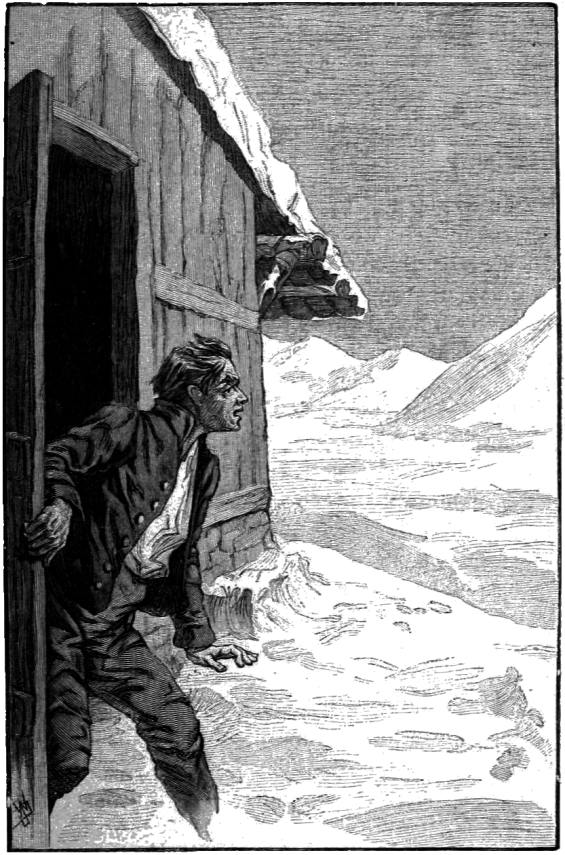
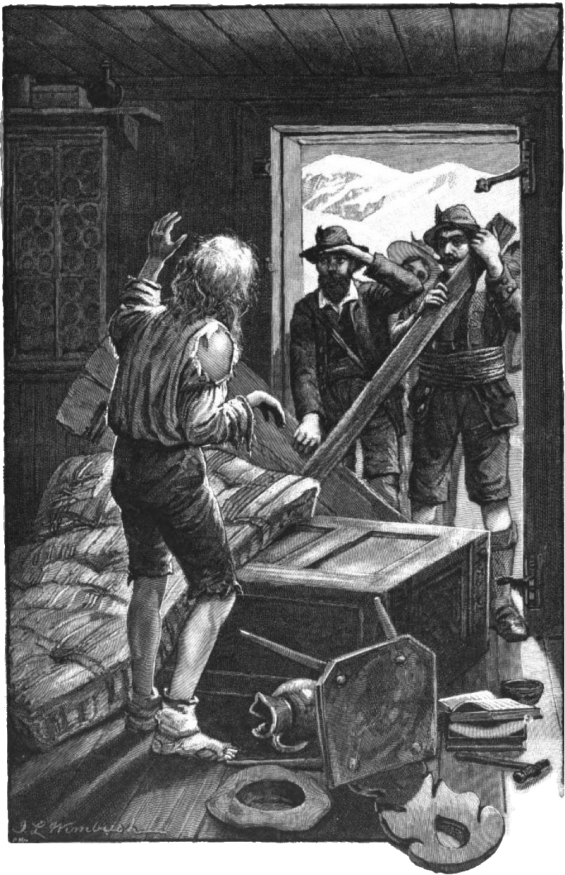
Where and why, more and more Maupassant, is there a definitive list of Guy de Maupassant SFF stories?, German translations, the BBC audio drama adaptation of The Inn, RadioArchive.cc, a ghost story, the twist in the end or the twist middle, great writing, an ambiguous ghost story, a psychological happening, the dog’s reaction, revenant, “it becomes the monster”, Louise Hauser, is Ulrich dead?, Gaspard, The Others, Maupassant tricks us, “they bury themselves”, Ulrich is punished for no reason, the voice, white noise, Ulrich’s religious beliefs, Cologne on a cold night, the ravens!, the audio drama improves on the short story!, a filling metaphor, “the immense ocean of pale mountain summits”, mainstream, the vertical issue, Wolfgang von Goethe, “only a very stable character”, a proto-cosmic horror, The Festival by H.P. Lovecraft, a Christmas story, describing nature, the second meaning, “arose from the snow itself”, “he’s alone on the Moon”, being alone, cabin fever, we are alone in the cosmos, community allows us to hide from the harsh truth, gambling, “I would have brought a bunch of books”, “illiterate mountain peasants”, a lonely island, did Gaspard fall into a crevasse?, nature is the monster, the unknown is more terrifying, the terror of the soul, undeserved guilt, “eighteen degrees of frost”, “he was of a sleepy nature”, 1886, Guy de Maupassant visited the Alps, riddled with disease, the Inn at Schwarenbach, The Shining by Stephen King, an internal flaw, “he could speak no human words”, Nightflyers by George R.R. Martin, Perry Rhodan, Silent Running, I Am Legend by Richard Matheson, the dog as a symbol, the dog as a companion, the importance of routine for the lonely, the demon of loneliness, “all is busy work before the grave”, Robinson Crusoe by Daniel Defoe, Castaway, The Piece Of String (aka The Piece Of Yarn), “eating a sandwich that you find on the sidewalk”, he dies alone and unloved, “two feets”, every Norman is trapped in disbelief, it could have happened to us!, his hair turned white, Supernatural Horror In Literature by H.P. Lovecraft, “the unseen”, “the outer blackness”, able to appreciate the immensity of reality, Honey Boo Boo, The Horla by Guy de Maupassant, The Call Of Cthulhu, “when I think of H.P. Lovecraft I don’t think of immense tentacles.”

Posted by Jesse Willis

Derived from an incident in which he and a friend were dangerously tailgated by a large truck on the same day as the Kennedy assassination, Duel is emblematic of Richard Matheson’s queer existential fiction. It was first published in the April 1971 of Playboy.
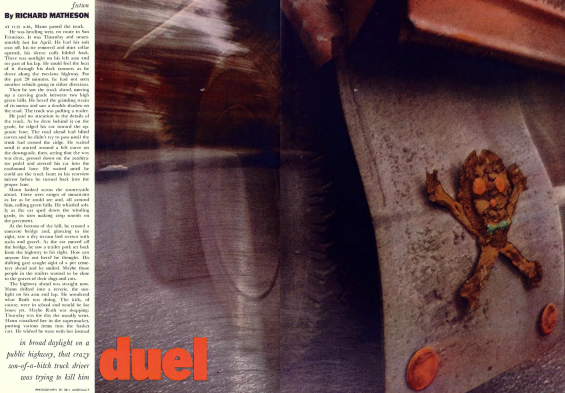
The most accessible version of this classic story is this one, put out by Harper Audio in 2009:
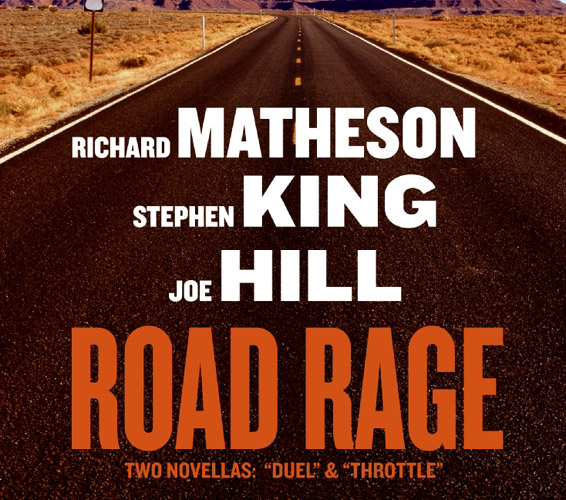 Duel (from Road Rage)
By Richard Matheson; Read by Stephen Lang
1 |MP3| – Approx. 63 Minutes [UNABRIDGED]
Publisher: Harper Audio
Published: February 2009
“Driving to San Francisco, a businessman finds himself the victim of a deadly game being played by the driver of a huge, mysterious truck. Later to become Steven Spielberg’s classic 1971 film.”
But, back in 2006 BBC Radio 7 (now BBC Radio 4 Extra) did a special broadcast in honour of Richard Matheson’s 80th birthday. Along with a specially recorded interview there was also an unabridged reading of Duel. That version is available via torrent over on RadioArchive.cc:

 Duel
Duel
By Richard Matheson; Read by Nathan Osgood
2 MP3s via TORRENT – Approx. 1 Hour [UNABRIDGED]
Broadcaster: BBC Radio 7
Broadcast: February 18, 2006
“A huge truck plays deadly games with an innocent motorist.”
Blackstone Audio’s collection, Nightmare at 20,000 Feet, released in 2009 also includes it:
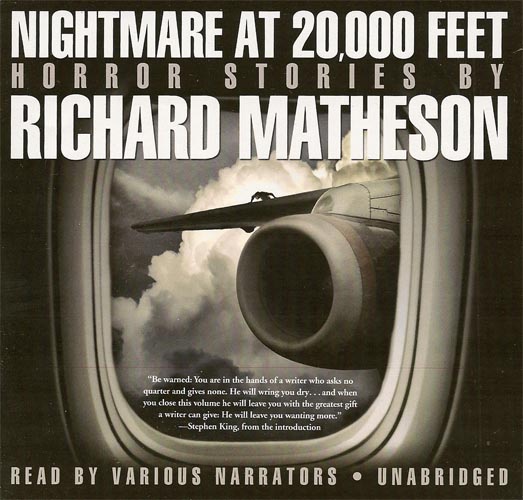 Nightmare at 20,000 Feet
By Richard Matheson; Read by Various
10.5 Hours – [UNABRIDGED]
Publisher: Blackstone Audio
Published: 2009
And while the movie version is currently available, in its entirety, on YouTube this short film version, recut from Spielberg’s TV-Movie is perhaps even better:
Posted by Jesse Willis

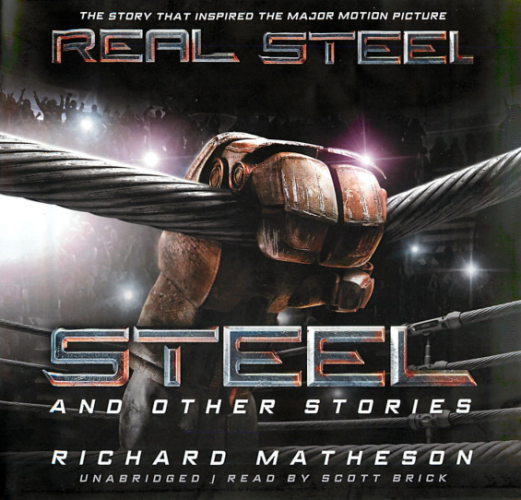 Steel And Other Stories – Steel
By Richard Matheson; Read by Scott Brick
Approx. 59 Minutes [UNABRIDGED]
Publisher: Blackstone Audio
Published: 2011
ISBN: 1455112127
Themes: / Science Fiction / Boxing / Robots /
Steel, a novelette, was first published in the May 1956 issue of The Magazine of Fantasy & Science Fiction.
The editorial introduction preceding it described Steel as a “tale of strength and endurance” and as “a science fiction sports story so realistic, simple and powerful that it should prove moving even to sports-loathing readers who have never let a boxing bout darken their television screens.” The story would just a few years later, in a 1963 adaptation as an episode of the Twilight Zone brighten the living rooms of many. And, in 2011 it would inspire the big budget movie Real Steel. So, how does the original novellete, stand up to repeated blows of history?
Pretty well. If you like Matheson’s writing Steel is definitely worth hearing. This story captures in a relatively short space the oddity, the kind of quirk that Matheson seems forever working on. It’s something I’ve noticed in practically every story by Matheson that I’ve read. His main characters always seem to want to make a human connection with strangers, and in their efforts to do so always fail – and always for the same reason. In their desire to be heard, and be understood, they always disregard the needs and desires of those strangers. I’ve never seen a writer tackle anthing like this, over and over, like Matheson always seems to. Let’s tale Steel as our example. One of the two main characters, Paul, goes to great lengths to get engage an uninterested stranger in a conversation about the exploits of his dilapidated robot boxer. That the stranger, who doesn’t know anything about boxing, doesn’t care about boxing, and has never even heard of Paul’s robot, is obviously completely uninterested in what Paul is saying. This doesn’t seem to occur to Paul. It’s as if Paul’s own need to reach out and be heard – to be something – is greater than the interests of the stranger – whatevber those interests might be. It’s not so much a Science Fiction issue as it is an existential one. It’s almost as if Matheson is using his fiction to try to find a way to navigate around a massive blind spot in human relations. Like in his novel The Incredible Shrinking Man Matheson has the plot of Steel be a manifestation of a character’s internal difficulties.
Scott Brick narrates this bare bones dialogue driven story. I’m often ambivalent about Brick’s narrations. Sometimes he works for me, sometimes he doesn’t – and I think I’ve finally realized why. Brick is excellent at delivering emotion. But if the emotion is from a third person perspective it comes across as too operatic. But, if the story is told in first person perspective then it work well. In Steel there are basically only two voices – Paul’s and Kelly’s. And when Brick voices either one I can’t readily enough distinguish difference between them. Yet when a story is told in first person Brick’s narration really works. Take this sample |MP3| from Nelson DeMille’s The Lion’s Game (which is first person perspective). And now compare it with this |MP3| from Steel.
I came away feeling somewhat unsatisfied with Steel. It’s not that the story is uninteresting, or unoriginal, Steel is both original and interesting. Kelly and Paul are a pair of boxing enthusiasts – and I’m more of an enthusiast of ideas. There’s just not enough intellectual heft to their journey. I think The Twilight Zone adaptation, penned by Matheson himself and starring Lee Marvin, does the story better mostly because it’s a lot quicker too it. The movie version is hardly an adaptation, being much more of a family father and son traditional conservative values tale than an existential exploration. None of versions of the story did what I wanted them to do, namely get into the robot’s POV. The fact that none of the adaptations treat the robot as anything other than an external manifestation of their root interests is kind of depressing. But then again, I don’t go to Matheson for uplifting, I like his depressing ideas.
Posted by Jesse Willis
 Back in August 2011 Tom Elliot, of the terrific The Twilight Zone Podcast, posted a wonderful interview with the makers of Charles Beaumont: The Short Life of Twilight Zone’s Magic Man. Jason and Sunni Brock talk to Tom for 45 minutes, it’s great stuff!
|MP3|
Podcast feed: http://feeds.feedburner.com/TheTwilightZonePodcast
iTunes 1-Click |SUBSCRIBE|
Posted by Jesse Willis
The SFFaudio Podcast #144 – Jesse, Tamahome and Gregg Margarite talk about the audiobook of Robert Sheckley’s 1959 novel Immortality, Inc..
Talked about on today’s show:
Time Killer was nominated for a Hugo, the Blackstone Audio audiobook, Sheckley’s family of themes, a collage of images, Immortality, Inc. is a comedy, Bronson Pinchot’s narration, Peter Lorre, Midnight Cowboy, “those are real tears”, a cartoon, Buddhism, reincarnation, the yoga machine, “manipulation catches up to theory”, surviving beyond death, Futurama, suicide booths, New New York, Douglas Adams, Matt Groening, zombies, are we chicking or egging, Mindswap by Robert Sheckley (SFFaudio Podcast #076), Richard K. Morgan’s Altered Carbon, “you are not…”, are you your memories?, hundreds of trillions of assumptions, “why did communism fail?”, Tam knits, sweet sweet coffee, Harrison Bergeron, we need the CPU as well as the memory, Gregg would still be Gregg in another body, a body as an automobile for genes, aren’t skills a part of your mind, your memories?, bayoneting skills, Gregg wants longer pinkies, dynamic finger growth is optimal, episodic, the hunt, have the lawyer leave the room, “what if there is nothing more?”, this is a book about death, ghosts, walking through all the explanation for what happens after they die, tomb like an Egyptian, sane ghosts vs. nutjob ghosts, “the competition never ends”, “different dimension, same shit”, “transplant”, a black-market copy of a sensory recording of our hero’s story, interest in the twentieth century is waning, 1950s New York, Jesse has never been to New York, security theater, Gregg promises to take Jesse to New York, a private Winnebago?, the suspension of habeas corpus, Canada is a country that doesn’t work in theory (but works in practice), the United States as a utopian experiment, Australia has mandatory voting, Mayberry, “the right to die”, death is exactly like before you were born, you can only look forward to death, Mark Twain, death is just one damn thing after another, What Dreams May Come by Richard Matheson, Dante’s Inferno, does love conquer all?, Cinderella, happily ever after, arguments that get all of us killed, Pakistan vs. India, tribalism, Ghandi vs. Jinnah, “the enemies of progress”, China, Buddhism, Confucianism, Shinto, ancestor worship, Khmer mythology, Hanuman the monkey king, “reality is only inside you”, are most people half-believers?, Sheckley doesn’t pick one way, did the serialization inform the storytelling, The Status Civilization, Sheckley looks at the world and laughs, there’s no thesis Sheckley is trying to explicate, Sheckley is “a sane Phil Dick”, horror vs. humor, Freejack is a loose adaptation of Immortality, Inc., Emilio Estevez and Mick Jagger, the role of the reader, the magic of radio (drama), The World According To Garp (film vs. novel), converting the nonconvertible, a romantic relationship, Aristotle’s Poetics, plot should follow necessarily (or at least probably) from that which came before, Accessory Before The Fact by Algernon Blackwood, “it all happens at the same time”, flat characters vs. round characters, do we live in a serial world?, if Hamlet was a television series, Gilgamesh still works, Star Trek, Gene Roddenberry vs. J.J. Abrams, an anthologic approach, Babylon 5 as the counter-example, Neil Gaiman, J. Michael Straczynski, Doctor Who, the vehicle of the series, will the dancing toilet paper company care?, Gregg: “I’m no longer god”


Posted by Jesse Willis