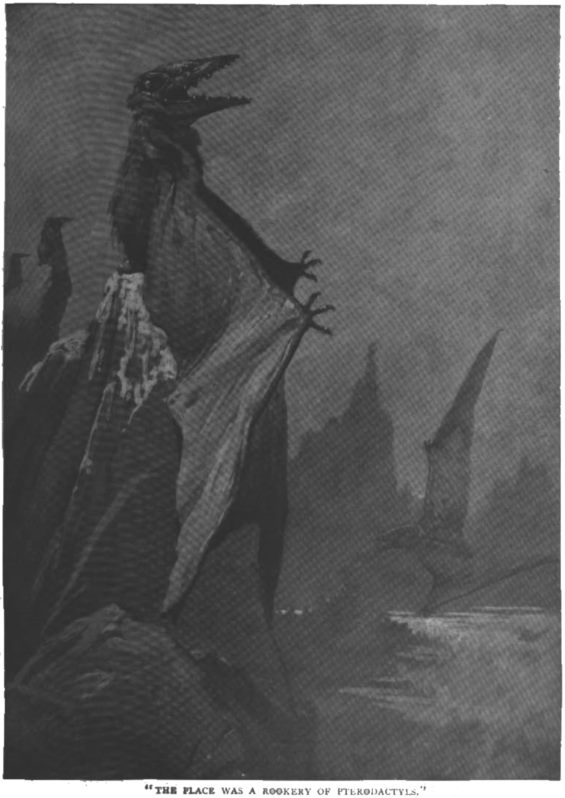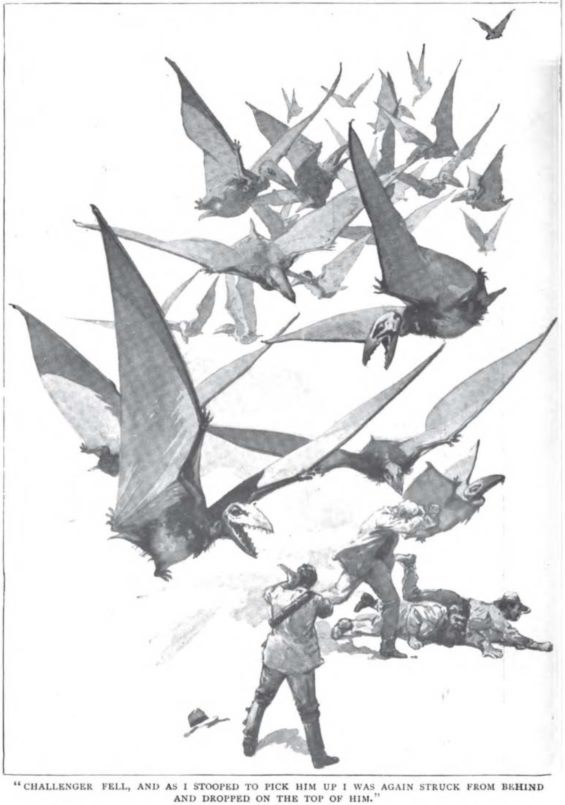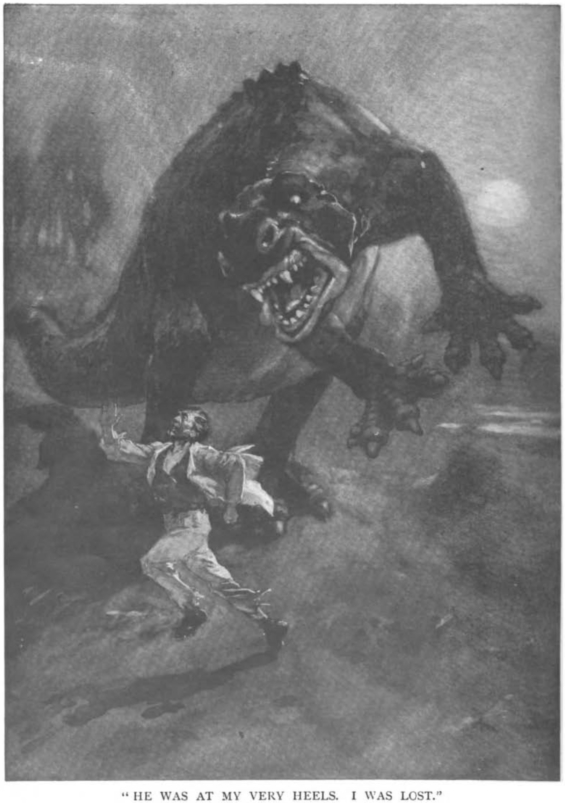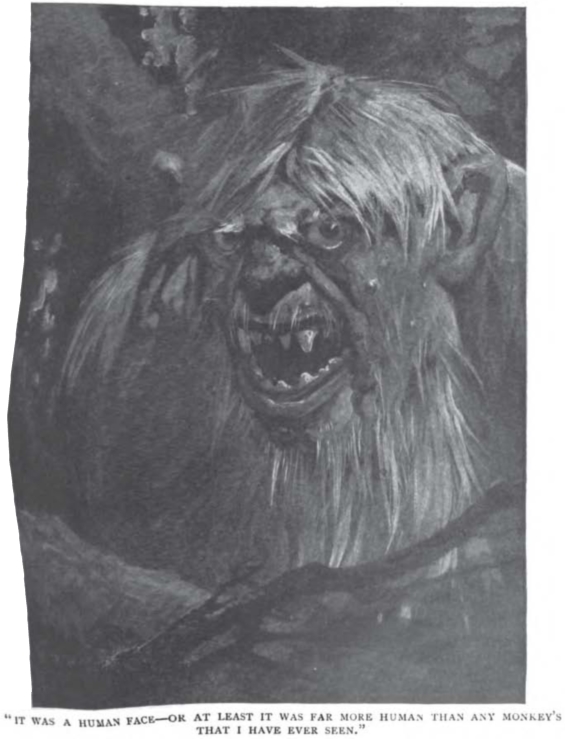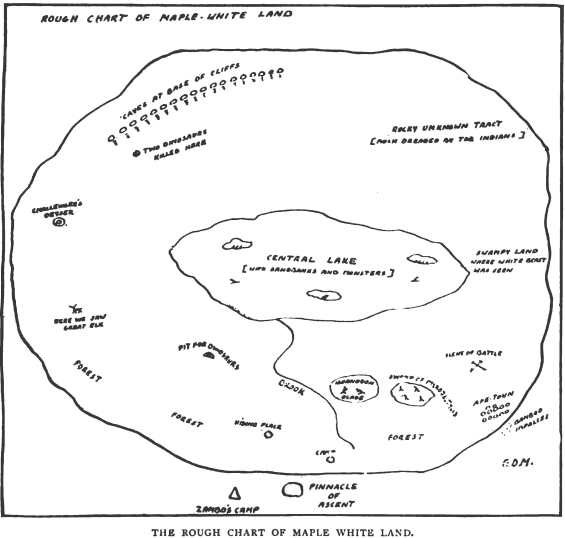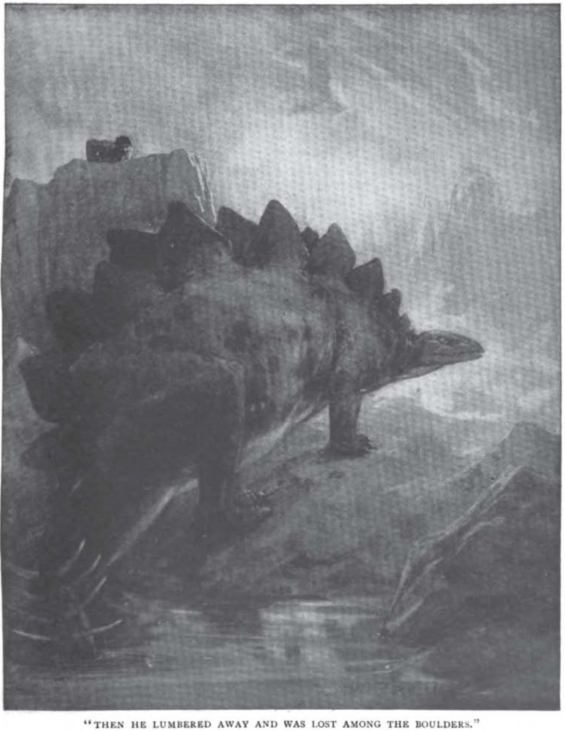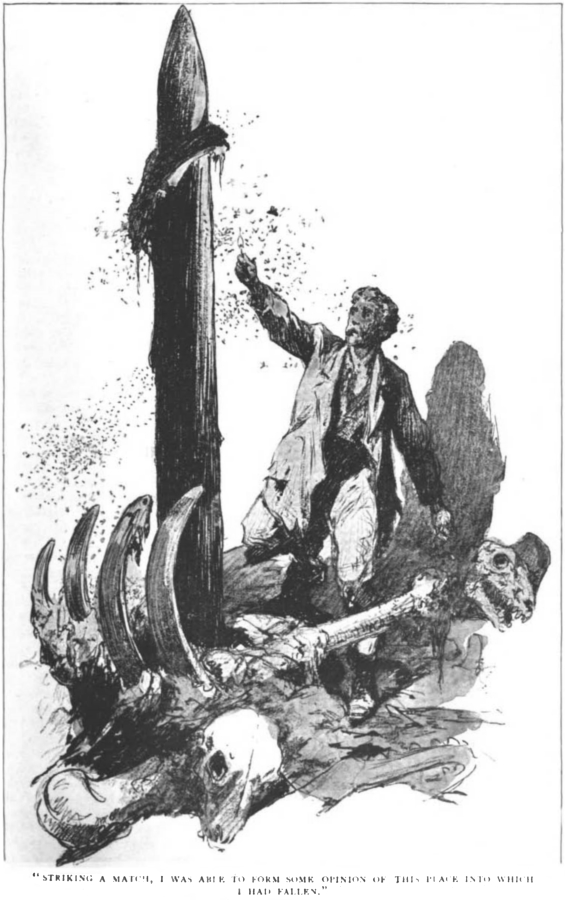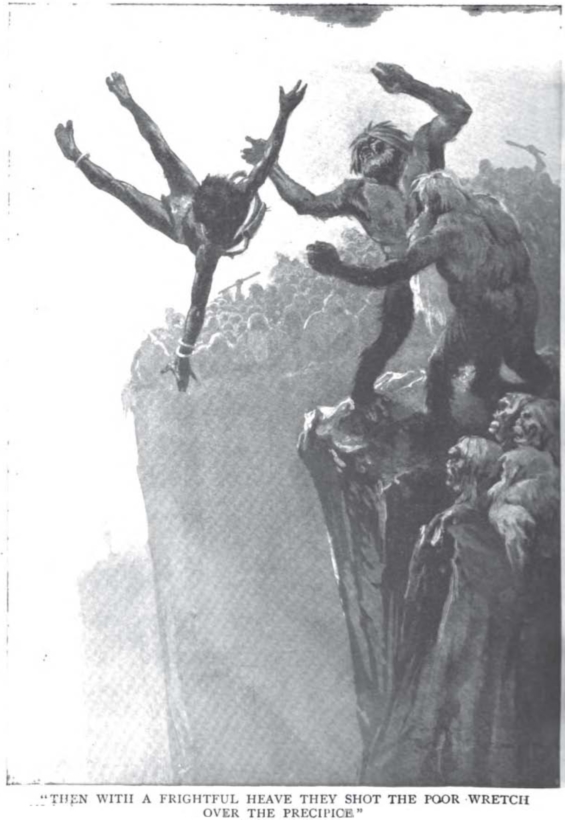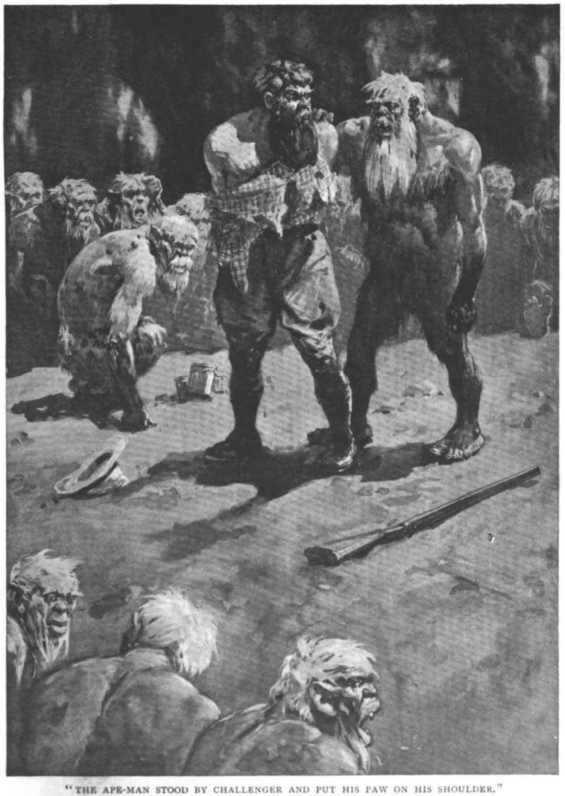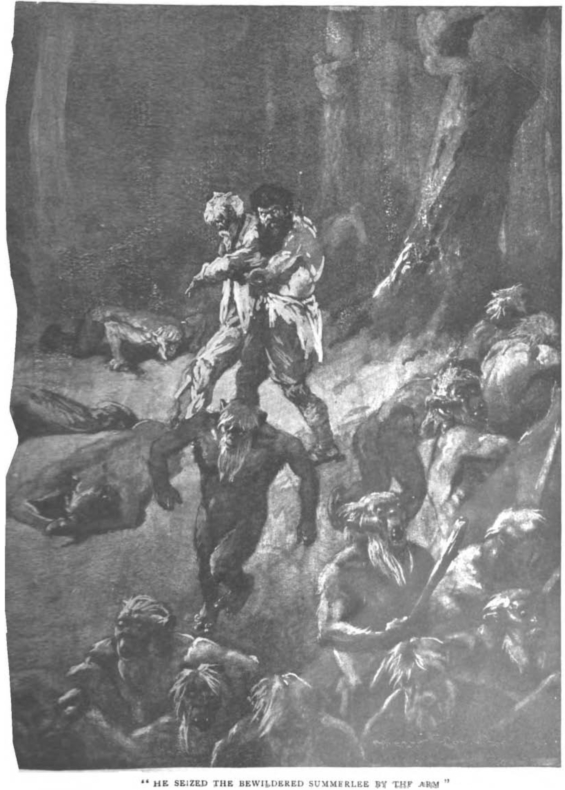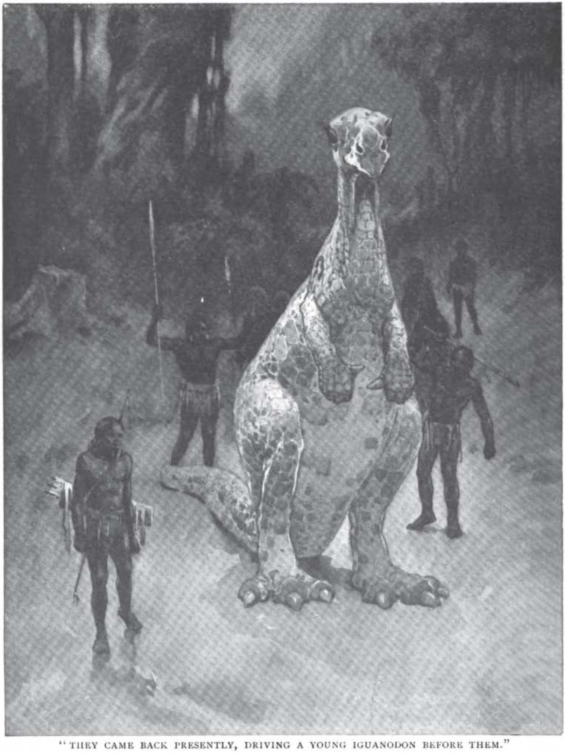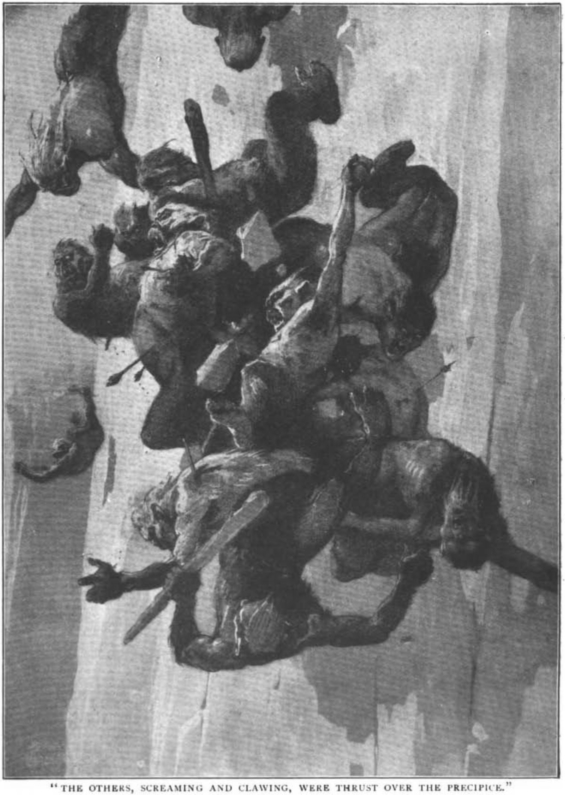

The SFFaudio Podcast #325 – AUDIOBOOK: The Lost World by Sir Arthur Conan Doyle

Podcast

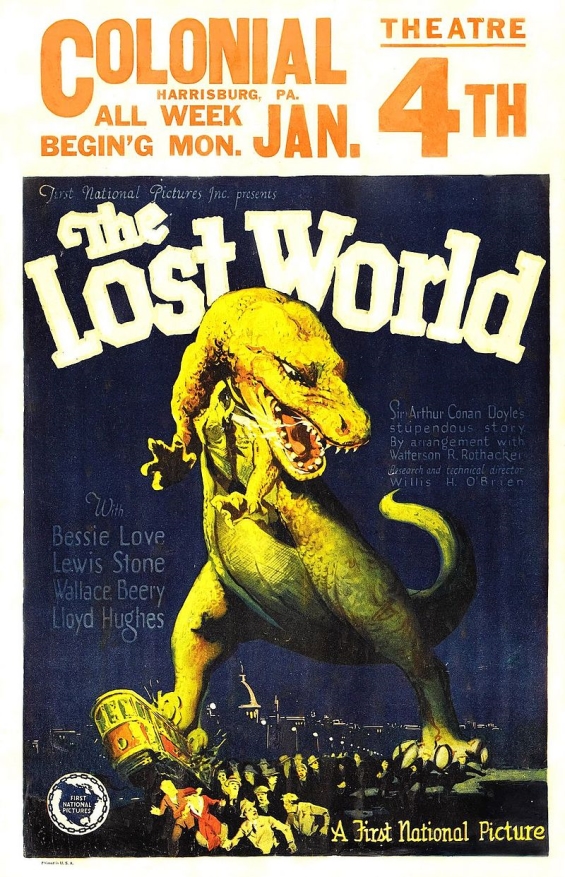
The SFFaudio PodcastThe SFFaudio Podcast #325 – The Lost World by Sir Arthur Conan Doyle, read by Bob Neufeld.

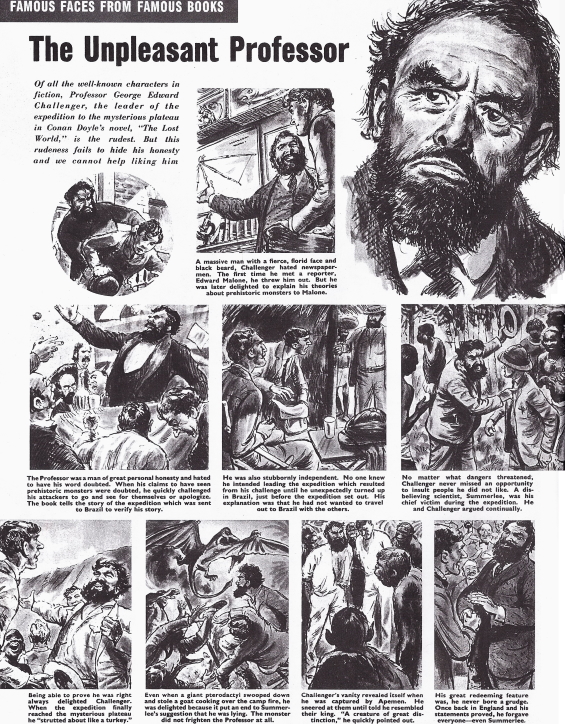
This UNABRIDGED AUDIOBOOK (8 hours 20 minutes) comes to us courtesy of LibriVox.

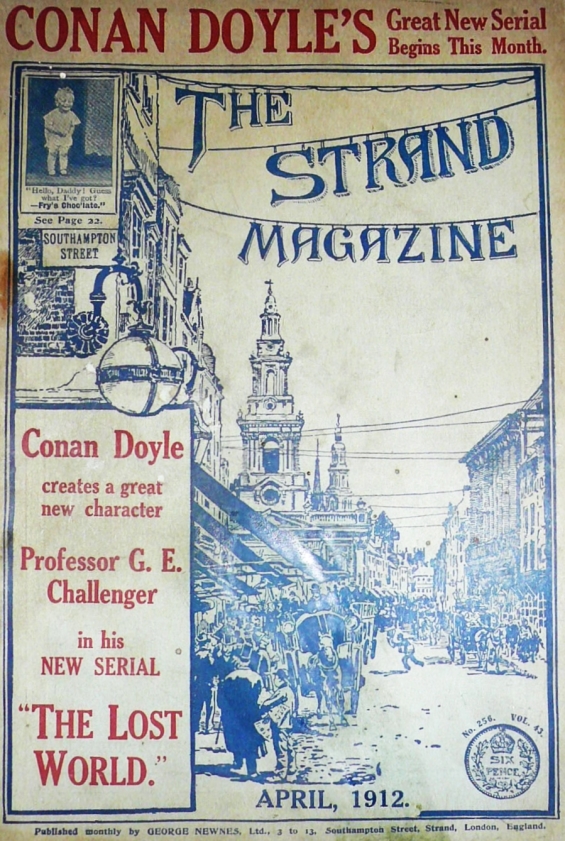
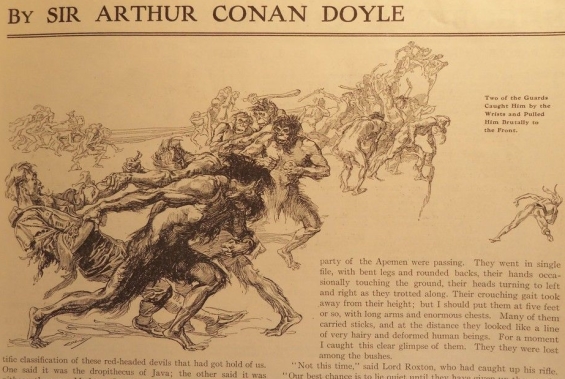
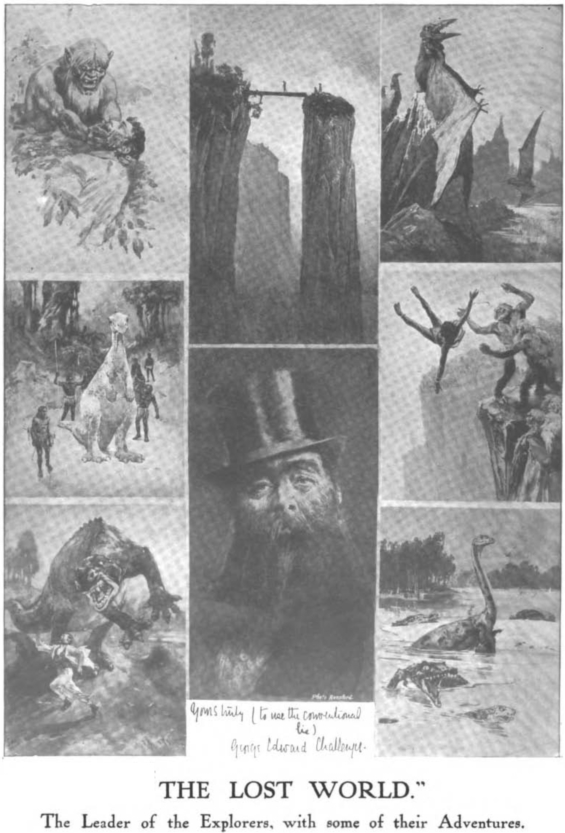
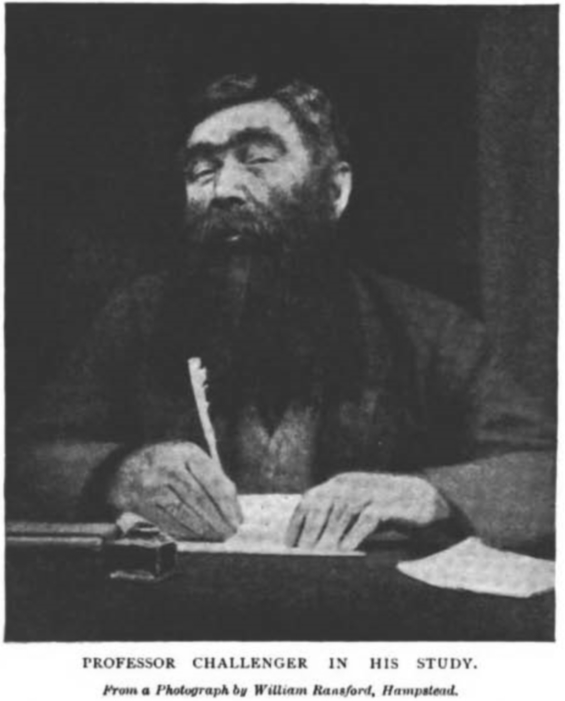
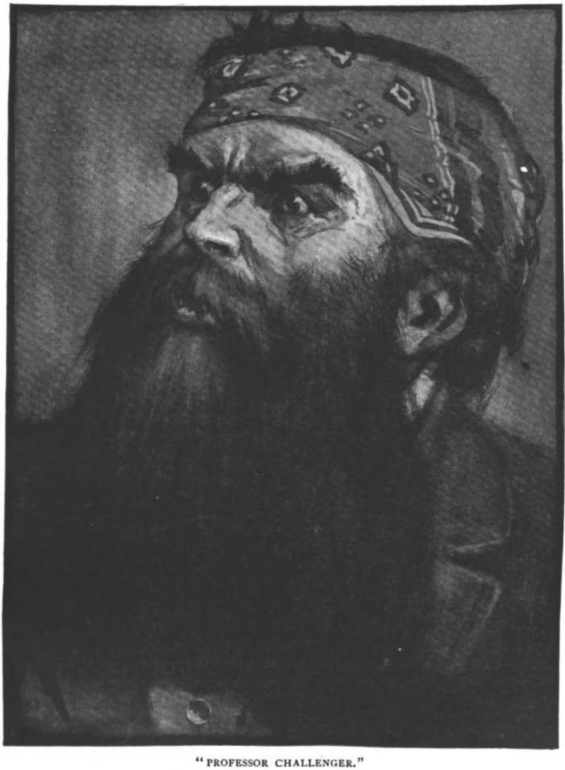
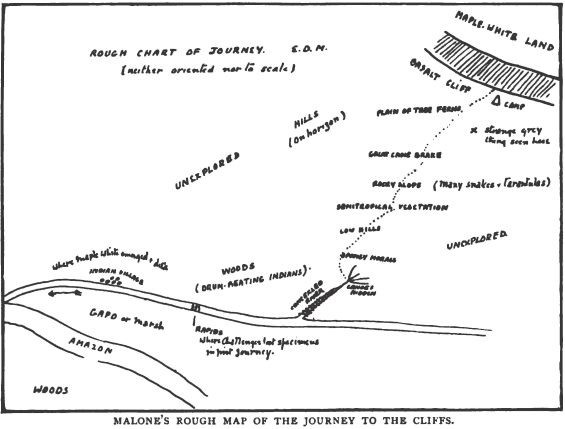
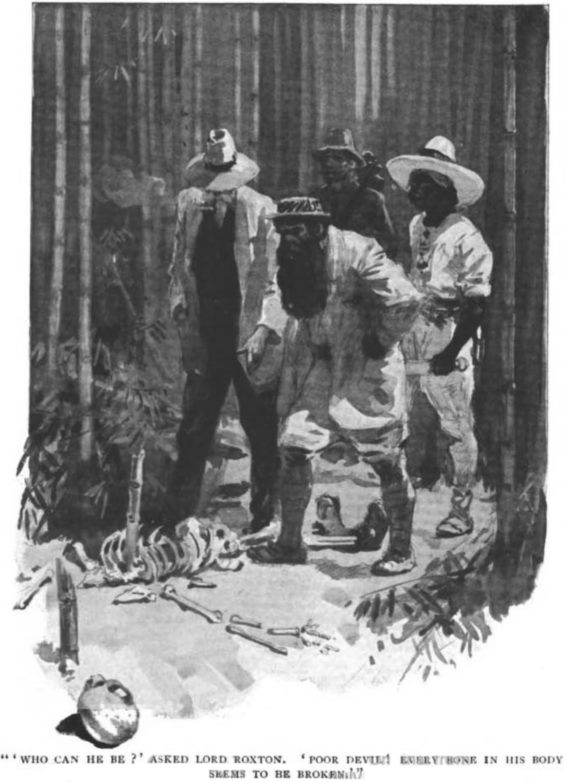
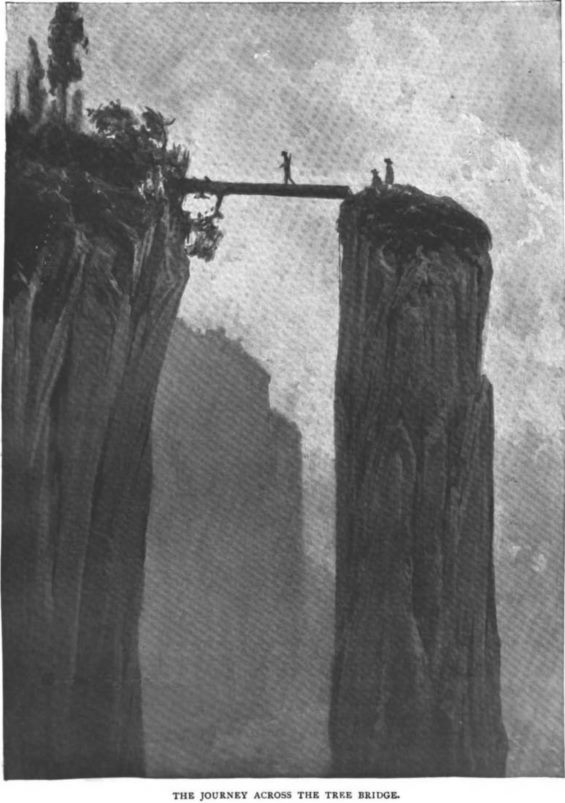
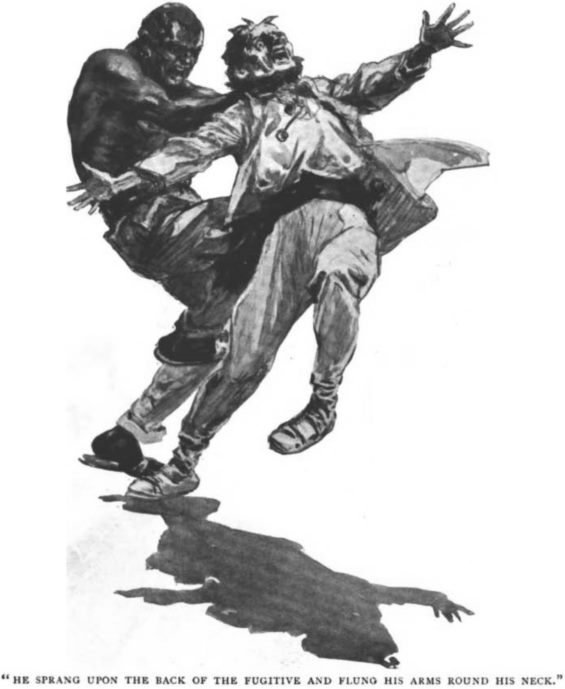
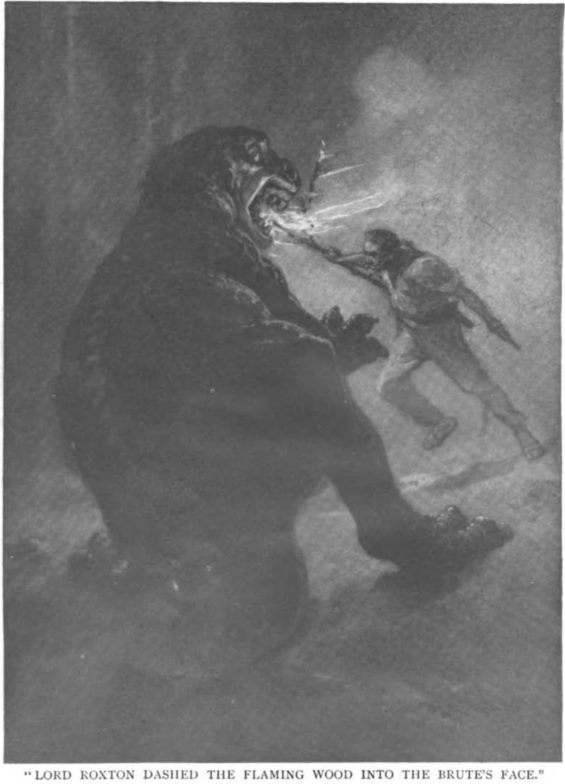
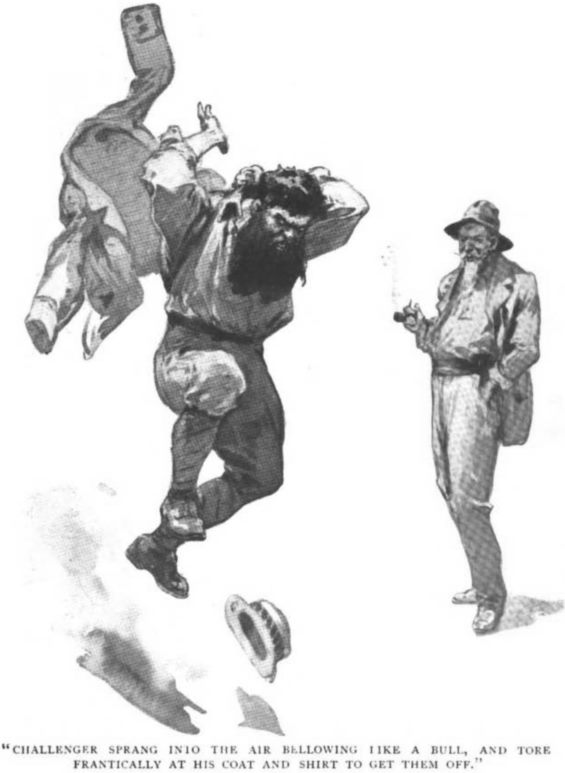
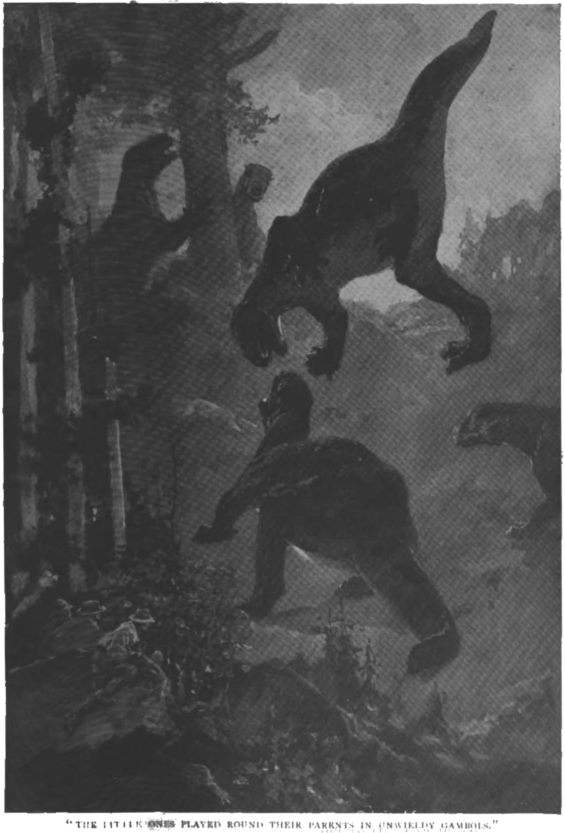
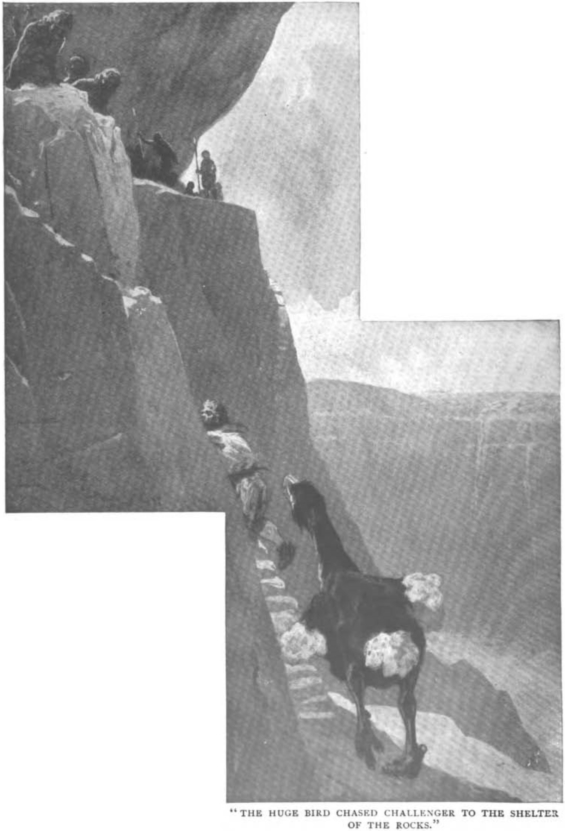
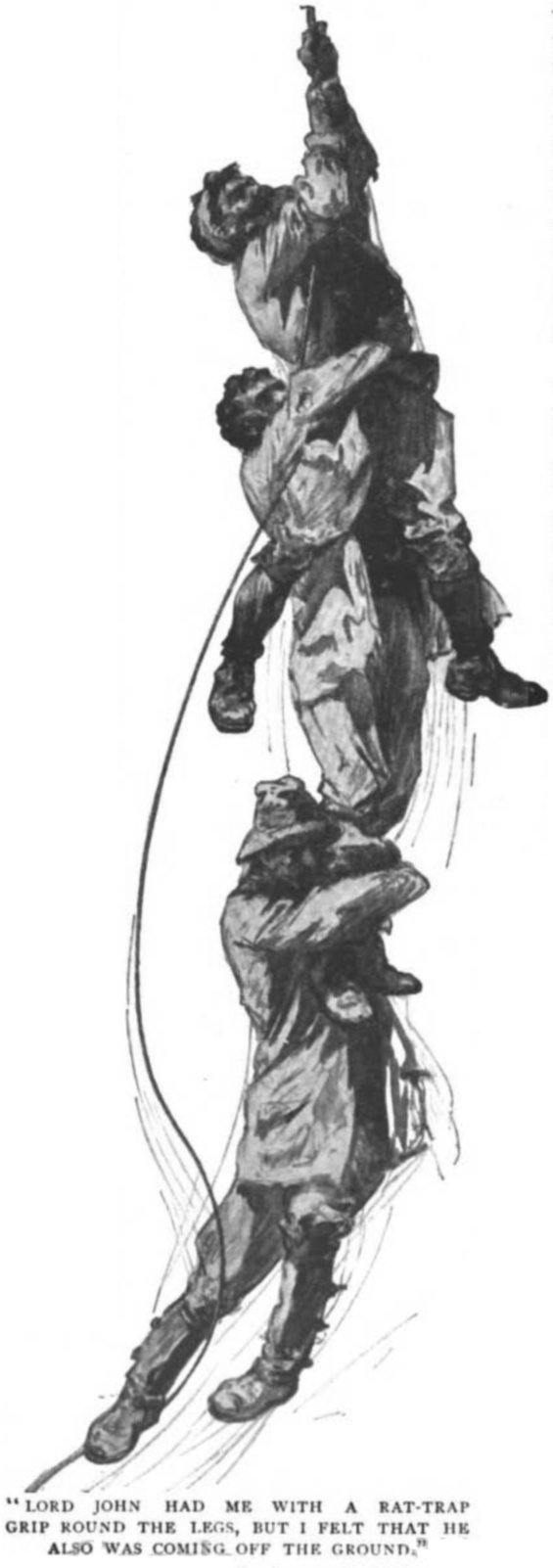
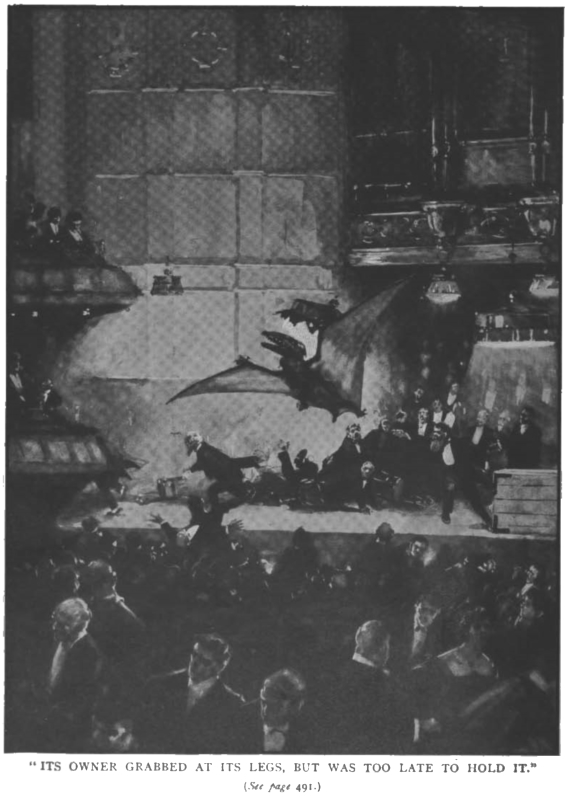
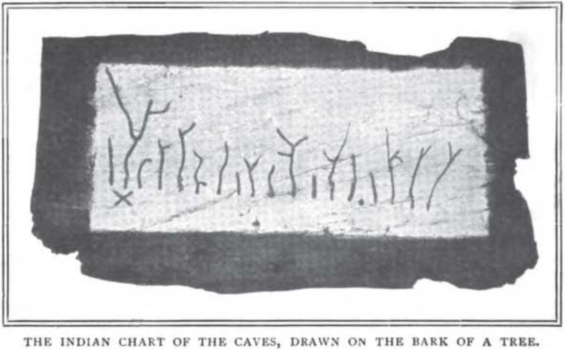
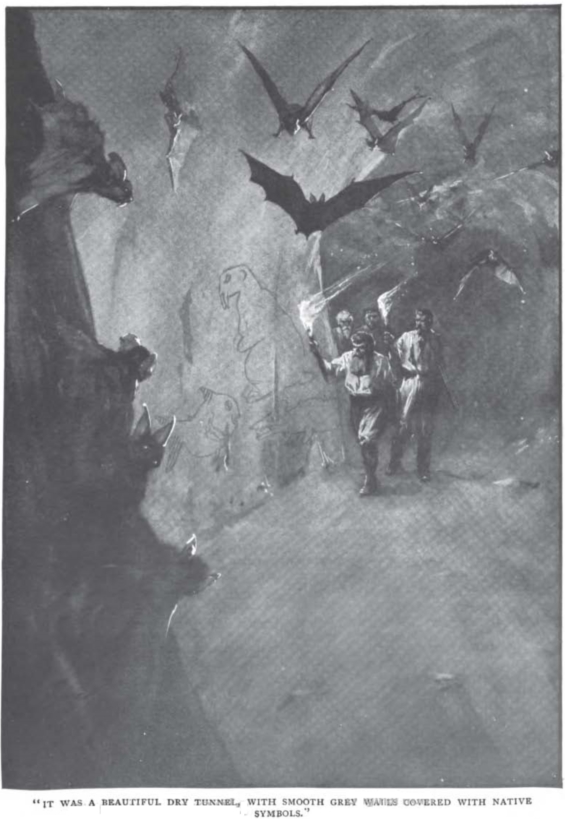
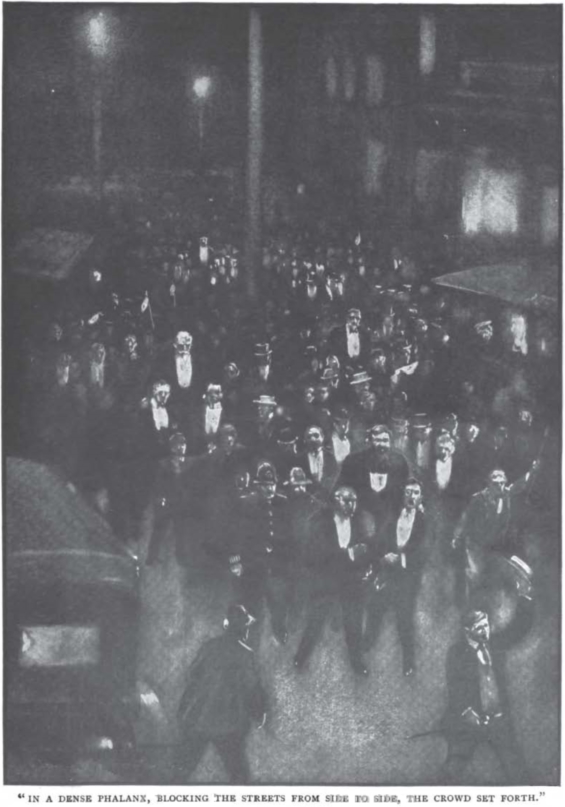
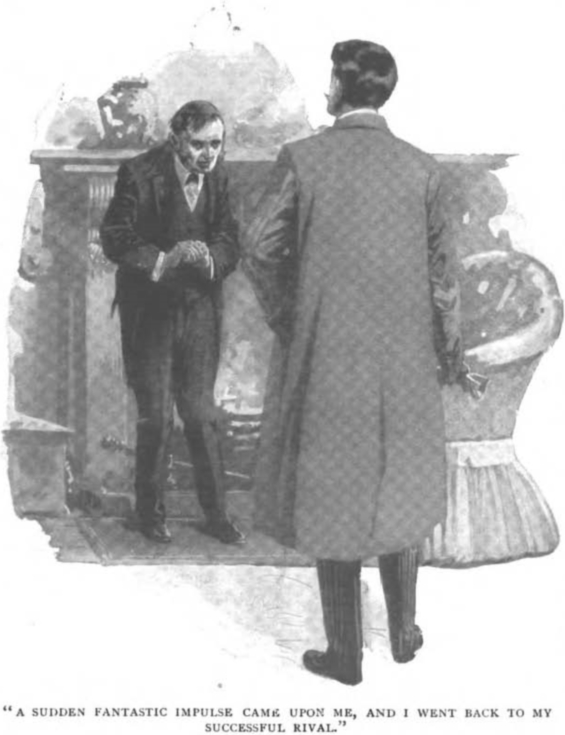
The Lost World was first published as a serial in The Strand Magazine from April to November 1912.

The next SFFaudio Podcast will feature our discussion of it!

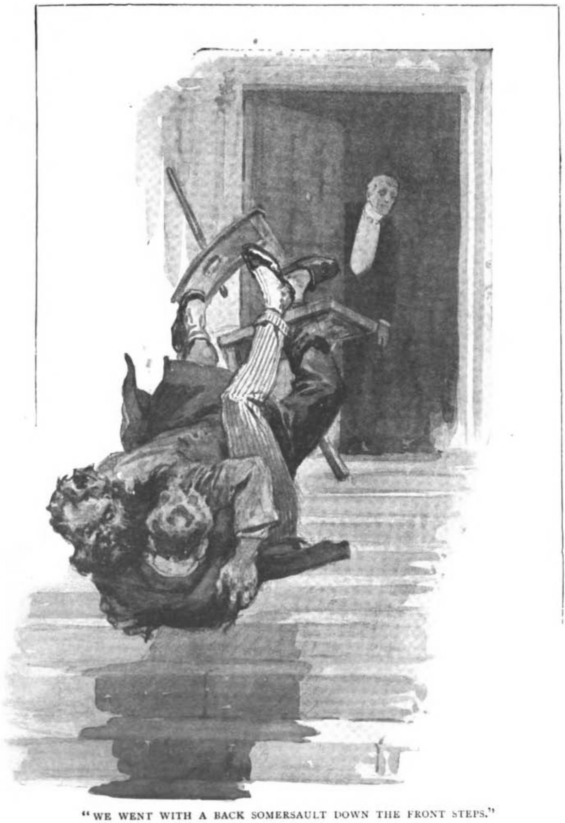
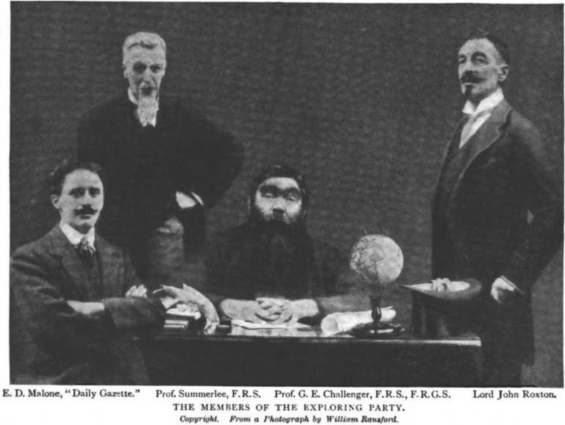
TheStrandMagazine1912aVol.XliiiJan-jun_Page_376

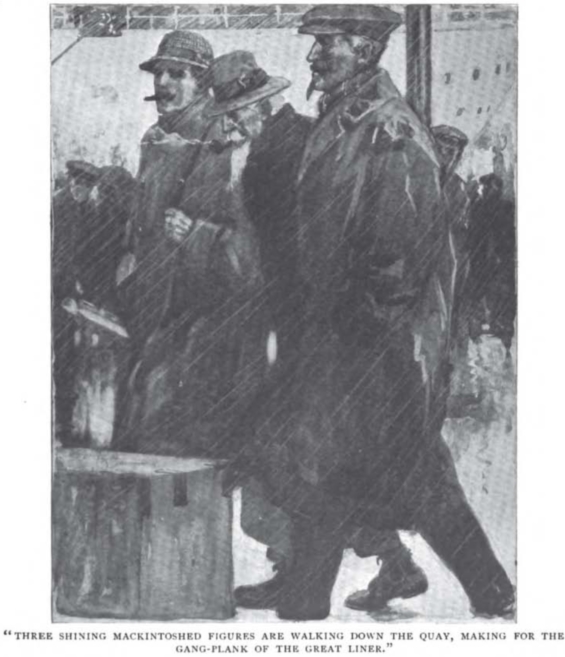
TheStrandMagazine1912aVol.XliiiJan-jun_Page_378

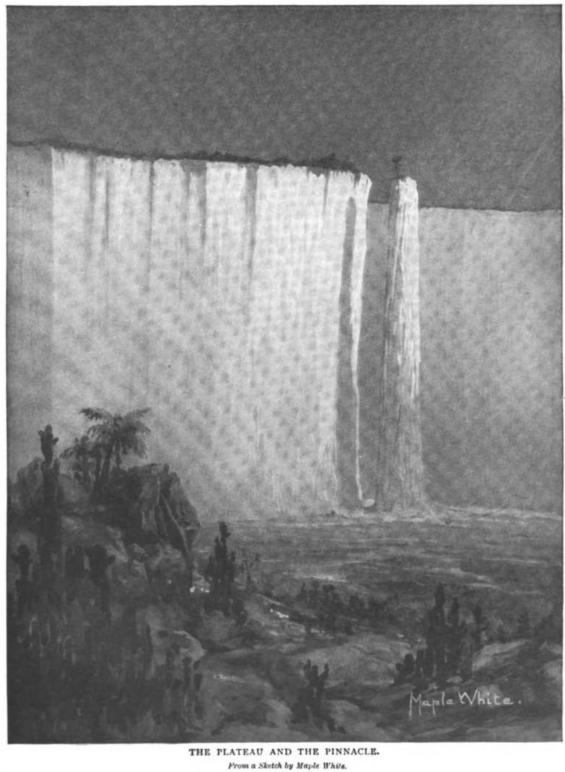
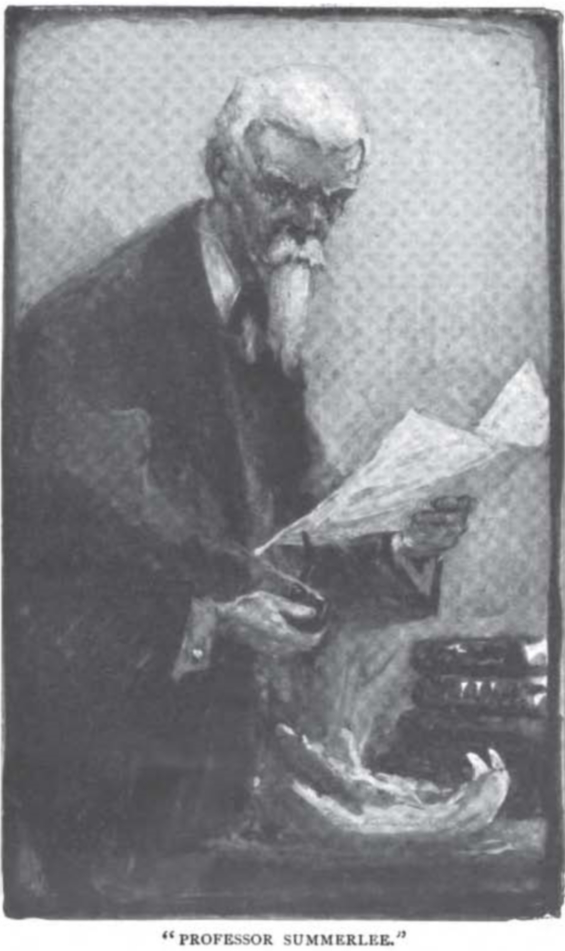
TheStrandMagazine1912aVol.XliiiJan-jun_Page_379

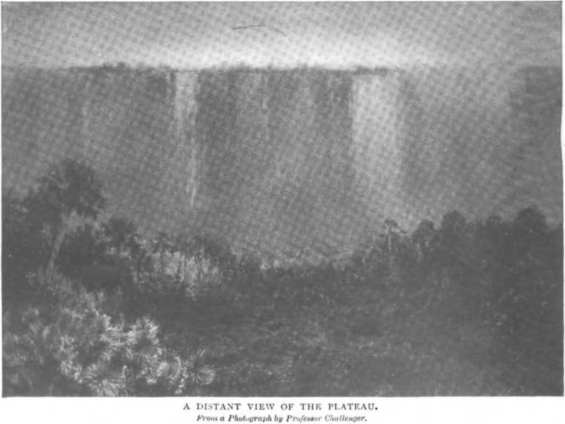
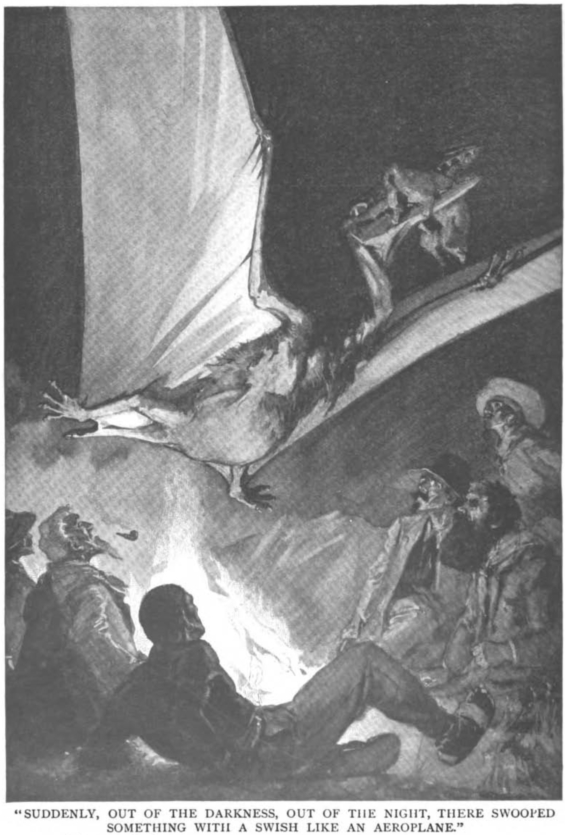
TheStrandMagazine1912aVol.XliiiJan-jun_Page_385

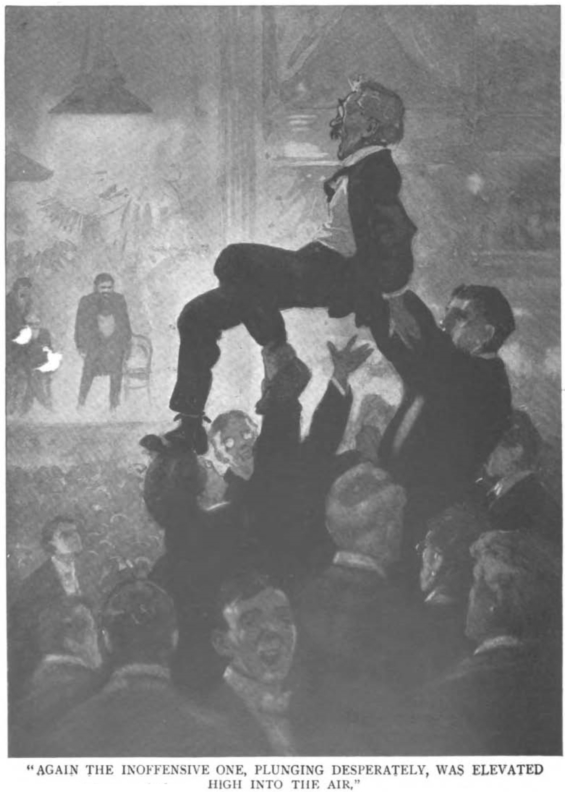
TheStrandMagazine1912aVol.XliiiJan-jun_Page_387

TheStrandMagazine1912aVol.XliiiJan-jun_Page_391

TheStrandMagazine1912aVol.XliiiJan-jun_Page_392

TheStrandMagazine1912aVol.XliiiJan-jun_Page_394

TheStrandMagazine1912aVol.XliiiJan-jun_Page_494

TheStrandMagazine1912aVol.XliiiJan-jun_Page_499

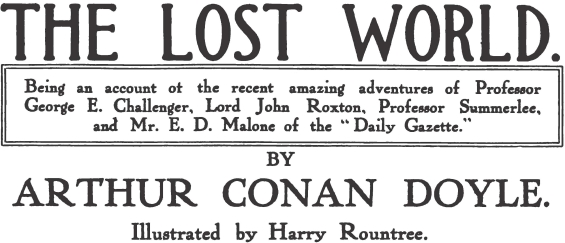
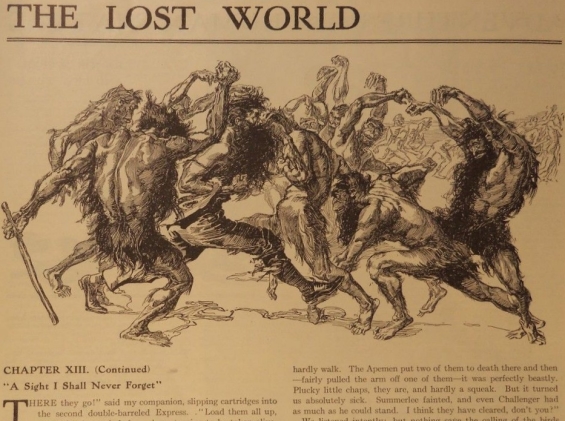
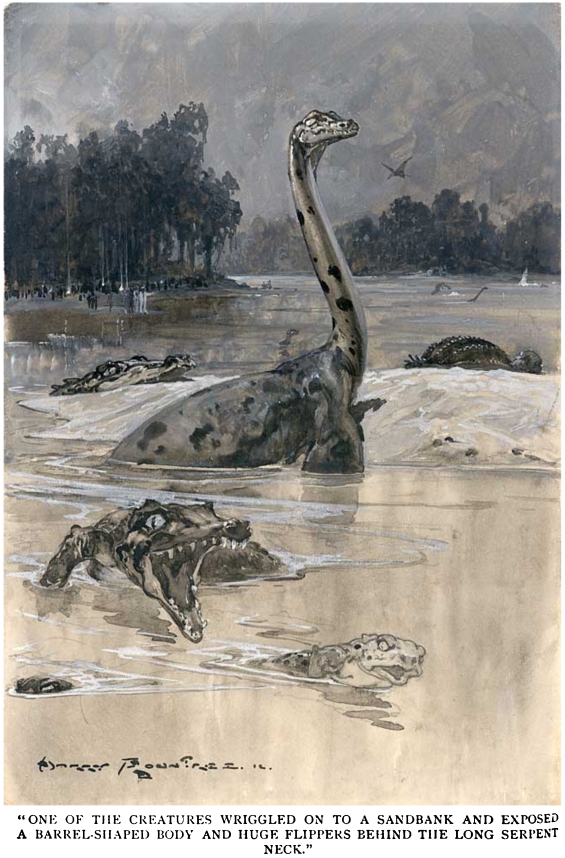
The Strand Magazine - 1912 - The Lost World by Sir Arthur Conan Doyle illustrated by Harry Rountree

TheStrandMagazine1912aVol.XliiiJan-jun_Page_505

TheStrandMagazine1912aVol.XliiiJan-jun_Page_506

TheStrandMagazine1912aVol.XliiiJan-jun_Page_508

TheStrandMagazine1912aVol.XliiiJan-jun_Page_509

TheStrandMagazine1912aVol.XliiiJan-jun_Page_511

TheStrandMagazine1912aVol.XliiiJan-jun_Page_614

TheStrandMagazine1912aVol.XliiiJan-jun_Page_617

TheStrandMagazine1912aVol.XliiiJan-jun_Page_621

TheStrandMagazine1912aVol.XliiiJan-jun_Page_622

TheStrandMagazine1912aVol.XliiiJan-jun_Page_625

TheStrandMagazine1912aVol.XliiiJan-jun_Page_631

TheStrandMagazine1912aVol.XliiiJan-jun_Page_633

TheStrandMagazine1912bVol.XlivJul-dec_Page_0012

TheStrandMagazine1912bVol.XlivJul-dec_Page_0014

TheStrandMagazine1912bVol.XlivJul-dec_Page_0017

TheStrandMagazine1912bVol.XlivJul-dec_Page_0019

TheStrandMagazine1912bVol.XlivJul-dec_Page_0020

TheStrandMagazine1912bVol.XlivJul-dec_Page_0132

TheStrandMagazine1912bVol.XlivJul-dec_Page_0137

TheStrandMagazine1912bVol.XlivJul-dec_Page_0139

TheStrandMagazine1912bVol.XlivJul-dec_Page_0143

TheStrandMagazine1912bVol.XlivJul-dec_Page_0145

TheStrandMagazine1912bVol.XlivJul-dec_Page_0147

TheStrandMagazine1912bVol.XlivJul-dec_Page_0252

TheStrandMagazine1912bVol.XlivJul-dec_Page_0257

TheStrandMagazine1912bVol.XlivJul-dec_Page_0261

TheStrandMagazine1912bVol.XlivJul-dec_Page_0262

TheStrandMagazine1912bVol.XlivJul-dec_Page_0265

TheStrandMagazine1912bVol.XlivJul-dec_Page_0370

TheStrandMagazine1912bVol.XlivJul-dec_Page_0374

TheStrandMagazine1912bVol.XlivJul-dec_Page_0377

TheStrandMagazine1912bVol.XlivJul-dec_Page_0379

TheStrandMagazine1912bVol.XlivJul-dec_Page_0380

TheStrandMagazine1912bVol.XlivJul-dec_Page_0383

TheStrandMagazine1912bVol.XlivJul-dec_Page_0490

TheStrandMagazine1912bVol.XlivJul-dec_Page_0492

TheStrandMagazine1912bVol.XlivJul-dec_Page_0493

TheStrandMagazine1912bVol.XlivJul-dec_Page_0501

TheStrandMagazine1912bVol.XlivJul-dec_Page_0502

TheStrandMagazine1912bVol.XlivJul-dec_Page_0504

Posted by Jesse Willis

Review of Mountain of Black Glass by Tad Williams

SFFaudio Review

Mountain of Black GlassMountain of Black Glass (Otherland #3)
By Tad Williams; Narrated by George Newbern
Publisher: Penguin Audio
Publication Date: 17 March 2015
[UNABRIDGED] – 27 hours, 17 minutes

Themes: / techno-thriller / science fiction / Greek mythology / game simulation /

Publisher summary:

Mountain of Black Glass is the third volume of Tad Williams’s highly acclaimed four-book series, Otherland. A truly unique reading experience combining elements of science fiction, fantasy, and techno-thriller, it is a rich epic tale in which virtual reality could prove the key to a whole new universe of possibilities for the entire human race – or become the exclusive domain of the rich and the ruthless as they seek a technological pathway to immortality.

The sequel to City of Golden Shadow and River of Blue Fire, this is the third installment (of 4) in the Otherland series. As with River of Blue Fire, Mountain of Black Glass picks up where the last one left off. Where I rated River of Blue Fire 3 stars (it was a solid “middle book” in a series), this one gets 4 because of the time spent in Greek mythology, something I’ve always loved.

As a “middle book” in a series, it’s hard not to say things about Mountain of Black Glass that I didn’t say in my reviews for City of Golden Shadow or River of Blue Fire. The story started with key characters still separated (as they were at the end of River of Blue Fire), though much of the book was spent either a) moving them back together, b) exploring their pasts, learning more about their history, or c) giving the reader more insight into the Otherland network itself and the motivations of the people running the network. Unlike River of Blue Fire, in this book, many details seemed to “finally” be pieced together, so more complete histories of characters were formed. It was also a transformative time for some of the Otherland network owners/operators, as they put the final pieces together to try to gain immortality. Other characters, such as the psychopathic servant of the Otherland founder also get a lot of time in this book, as do the police officers looking into his murderous ways. Sellers, the old man who remains quite a mystery but seems to be some of the force that brings the heroes together, also has a key storyline, though it took quite a different turn from what I expected going into the story.
An adventure from proverbial cover to cover (since I listened to the audiobook), a lot of time in this book was spent with the characters all trying to reach the Otherland‘s version of Troy. One of the characters is actually Odysseus, while others play key characters in the Trojan War, including Achilles, his companion Patroclus, and even Diomedes. The character who became Odysseus was forced through the Otherland simulation to re-enact Odysseus’ story somewhat in reverse, having seemingly gone through the events of The Odyssey prior to living through the Trojan War, as told in The Iliad. Our other heroes also eventually ended up in Troy, but not without enduring some trying circumstances in a few different worlds. As one might expect, though, these experiences allowed them to learn more about the network itself, and will undoubtedly help them in their quest to overthrow the Otherland founders (The Grail Brotherhood) and save the children who seem to be trapped by the network.

It’s not all sunshine and roses, though. After finally learning more about each character, becoming significantly more invested in each of them, it seems that one or more of them may have actually died through the course of the narrative. It’s hard to tell for sure, and I suspect I’ll find out what exactly happened when I finish the series with Sea of Silver Light, but the emotional gut punch was harder than I expected it would be. It’s a credit to Williams’ writing that I could simultaneously know how literally frail each of these characters are, playing a life and death game where they don’t know the rules and the rules seem to change, yet still be surprised and saddened when harm (or death) comes to a character. Or how much I really hate Dredd, the servant turned monster, preying on Otherland users/members for his own fun and games.

Tad Williams again seemed to have fun with the simulation worlds, making alternate worlds of popular stories such as the previously-mentioned The Iliad and The Odyssey. There were at least two other worlds explored in this book. One seemed to be an “empty” world, what someone might consider the null space of code to be…since the Otherland network is only code, after all, it does make some sense that the users (our heroes and our villains) would sometimes find literally empty space. There was another world, a world of a house, the reference I didn’t connect (if there was a literary reference, which I suspect that there was). Still, the worlds all felt real, were able to bring me in. This is especially true for the Trojan War. I have long been a fan of Greek mythology, and it was a fun but unexpected surprise to spend so much of this book in that world…at least, that simulated world.

The audiobook was great to listen to, if the narration was slightly slow. I listened to it slightly sped up (using the 1.5x feature for spoken word playback on my iPhone) and it seemed perfect. George Newbern does a great job making the characters come to life. Where some narrators can seem flat or one-note, he always makes it clear which character is talking, and further engages the listener by taking on the exclamation, the feeling of the words. If someone is surprised, for example, his voice lets you know it, you don’t have to rely solely on supporting descriptors. He brings the book to life.

I’m looking forward to starting into Sea of Silver Light, which is queued up and ready to go. It’s a good bit longer than any of the other books in the series (~10 hours longer than this one), but that just means I’ll have to find more excuses to listen.

Posted by terpkristin.

The SFFaudio Podcast #324 – AUDIOBOOK/READALONG: This Crowded Earth by Robert Bloch

Podcast

The SFFaudio PodcastThe SFFaudio Podcast #324 – This Crowded Earth by Robert Bloch; read by Gregg Margarite. This is an unabridged reading of the novel (3 hours 30 minutes) followed by a discussion of it. Participants in the discussion include Jesse and John Feaster.

Talked about on today’s show:
the only public domain novel by Robert Bloch, a member of the Lovecraft circle, fans of Lovecraft vs. the public at large, The Shambler From The Stars, a sense of humour, Leffingwell = livingwell, a Nazi-esque character, Paul F. Thompkins, 1958, Make Room, Make Room, 1968, overpopulation, The Population Bomb, the baby boom, the Asiatics, a terrible book, a monster of a book, the yardsticks aren’t a metaphor for racism, “midgets”, The Lonely Crowd, the women in this story…, housewives and pretend nurses, not a pure SF novel, Slaughterhouse Five by Kurt Vonnegut, a sociological novel, Jesse isn’t a fan of Psycho, Yours Truly Jack The Ripper, mainstream hack solutions, Bloch is a fan of science fiction, he’s talking about Clifford [D.] Simak here, the solution to overpopulation is to make everybody smaller, you have to lean into that, a weird pacing, Game Of Thrones, an underground secret society, the meta stuff is pretty good, the opening chapter, 70s era Jack [L.] Chalker, caesarian section is the solution?!, an entertaining story, why the heck is little Harry Collins named Harry Collins?, “you’ve dropped your premise”, western wildernesses, why is the President of The United States so excited about 20 pounds of hamburger, really undercooked (hamburger), the 7 hour workday, the 5 hour workday, the 4 hour workday, a 15mph commute, population efficiency, just fix the trains in this world, Soylent Green, not enough room (physical space), telecommuting, personal transport laws, a mash-up of Nineteen Eighty-Four, the Project Mayhem portion of Fight Club and The Wizard Of Oz, Collins is constantly searching for the wizard, mistaking Beatniks for a religious order, a high-Daddio, The Planet Of The Apes premise, a dog and cat disease, accepting the premise, playing with science fiction tropes, an impressionistic idea of the world and the path it is on, the naturals or naturalists, its almost hippies, a generational metaphor, drug use, everybody takes yellow jackets, barbiturate, mixing with alcohol, a one child policy is IMPOSSIBLE?, emigration is IMPOSSIBLE, faster maturity faster death, living on Mars would make you barrel chested, island isolated animals change their size (Island gigantism or Insular dwarfism), pilots need to be short, small people and women endure g-forces better, little people on generation starships, food consumption, he follows through with his own joke, a buffet of ridiculous premises, a strange buffet, an entertaining buffet, politics and the super-rich go hand-in-hand, “the little plan”, “small government”, “it’s a small world after all”, Little John, silly, packed with a lot of weirdness, like a season of Star Trek, written over a weekend?, such a little apartment, “he’s living in a closet”, this would have to be a cartoon if it were a film, the world is a Flintstones background, if there had only been a female character who…, Stephen King loves westerns but can’t write them, lean into it, so why is this world not our problem?, LosSisco, William Gibson’s the Sprawl, Chicago and Milwaukee, well crafted characters (for talking heads), Pol Pot, no actual shitbags, the story of a 15 year old, sociologically and emotionally, the Goodreads reviews, Isaac Asimov’s the Hari Seldon plan, Marching Morons by C.M. Kornbluth, breeding a crazy man, West End Games, Paranoia, the crappy text adventure games (that were fun to play), walking off to the unmapped areas, what about this bugbear?, in a future where cows are caviar, “bring your wife, we’ll have a party”, I’ll bang off something for Planet Stories, Psycho, 1959 and 1960, John defends Psycho, Bloch’s Star Trek script “Wolf In The Fold“, Bloch’s obsession with Jack The Ripper, Richard Matheson’s Night Gallery episode, Time After Time, a future thrill kill story [sounds somewhat like The Roller Coaster by Alfred Bester], before The Silence Of The Lambs, Hannibal, charismatic serial killers is a trope now, Ed Gein, H.H. Holmes (not H.H. Munro), the Chicago murder castle, a writer re-writing and thinking about an idea over and over again, serial writers must do it again, to “recreate it”, seeing a writer writing outside of his main genre, Stephen King’s The Dark Tower series, it’s a little 15-year old, simply written to pay a bill, finally Scotty gets his own episode, I canna remember, Star Trek with a serial killer is weird, That Hellbound Train, The Gold Key The Twilight Zone comics, an EC Comics knockoff, I’m being published for crappy reasons, nobody’s going to read this in two weeks so read it now, this story is a bird-house made by a talented mechanic, a giant truck that is the internet, 60s and 70s era Robert Bloch are sealed up outside of the trunk that is the internet, accept it within its boundaries, a character from the 1950s in a crazy 1950s future, how does the story affect you?, a Rorschach test, it doesn’t care about you, this story is a friend of yours off in the corner playing with LEGOs and the only thing you can do is criticize what he’s building.

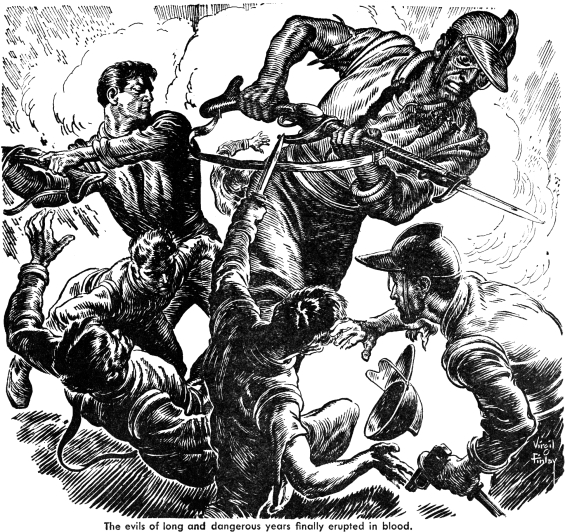
This Crowded Earth by Robert Bloch - illustrated by Virgil Finlay

Posted by Jesse Willis

The SFFaudio Podcast #323 – READALONG: The Monster Men by Edgar Rice Burroughs

Podcast

The SFFaudio PodcastThe SFFaudio Podcast #323 – Jesse, John Feaster, and David Stifel discuss the audiobook of The Monster Men by Edgar Rice Burroughs (narrated by David Stifel)

Talked about today’s show:
Project Gutenberg, Ace Book, The Girl From Hollywood, The Mucker, dope rings, The Efficiency Expert, ERB’s wife meets Earnest Hemingway, Frankenstein, The Island Of Doctor Moreau, nitric acid, what Frankenstein studies at university, alchemy, growing people, mandrake root, Luigi Galvani, the chemical tradition, girl with a machine gun, a feisty heroine, an axe, Virginia, constant clinging Deja Thoris, how old is Virginia?, there’s nobody good enough to marry my daughter, eugenics, racism of the period, Sing is the hero of the story, stalking, I bet you a car, some of the most improbable stuff, Number 13’s identity, “The Man Without A Soul”, a Scooby Doo theme, a nice rich stalking man (if he’s rich), test tube men, playing to the audience, nothing is more horrible than miscegenation, noble savages, Burroughs hated Germans, more of the creation, Burroughs is good at action, the bullwhip, the orangutan females (beautiful ladies), Von Horn, pirates, headhunters, evolution, brutish, stone age, The Synthetic Men Of Mars, the Caspak series, slow evolution, the progression of man, Charles Darwin, “oh, by the way you’re all apes”, Gods And Generals, why not a European castle?, nameless creatures, a series of unfortunate events, the aborted second creation (the bride of Frankenstein’s monster), a woman’s right not to marry, Penny Dreadful‘s Frankenstein Caliban and Proteus, Professor Maxon’s madness, why Borneo?, an exotic location, silly laws, Breaking Bad, the edge of the world, Jack London, black-birding, Dayak, Sarawak, James Brooke, Rajah of Sarawak, go west young man, poor demonized orangutans, Edgar Allan Poe, Fritz whipping the monster, playing god, one of the most fun writers ever, the spice of this guy, a satisfying writer, the Hollywood recipe, a forced love connection, Burroughs seems genuinely interested in man-woman romance, a Heinleinian father figure, Edgar Rice Burrough’s Twilight, a heroine with gumption, Christan waitresses worshiping Twilight (save yourself before marriage), no vampires, severed head creatures in Chessmen Of Mars, mind-flayers, Erol Otus, no supernatural elements, Mastermind Of Mars, Turus Tur, the power of will, a man of action (from money and breeding), if Tarzan’s parents had been plumbers, the most undercooked part of the book, had the man actually not had a soul…, Burroughs bully Teddy Roosevelt athletic men, conventional morality, a clean cut white man, the alternate love interest turns out to be the villain, is Townsend Harper a late addition?, y’ever seen a newborn baby?, just out of the cooker, that dull yellow eye, Young Frankenstein, lookism, in Edgar Rice Burroughs world it seems reasonable, was there cannibalism in that boat?, it is strongly inferable, drawing straws, tiger woman, cheetah lady, a light romp, wondering about H.G. Wells as a person, The Island Of Lost Souls, vivisection, unpleasantness, no Negroes in Tarzana, California, with not a single European, loyal Sing, yellow perily, Burmese, its the U.S. Navy!, this book really has everything, every kind of possible conflict, he wasn’t interested in doing dangerous quirky stuff, there’s a reason this isn’t an Earnest Hemingway podcast, a grand connected universe, Tarzan in Africa, John Carter on Mars, John Feaster should be pitching this as a show to the ERB estate, public domain tropes, Tarzan At The Earth’s Core, the Gridley Wave, more mash-up, the John Carter movie should have been more popular, picking a couple of nits with the film, limiting the focus of their world, Woola, the missing dog!, just another superior white man, number zero, Cornell, Ithaca, NY, Beyond Thirty (aka The Lost Continent) by Edgar Rice Burroughs, how will WWI wind up?, a submarine/airship, all the Mars are finished, Caspak is finished, Tarzan is finished, social realism, The Efficiency Expert, The Outlaw Of Torn, The Mad King, a Ruritanian romance, Winston Churchill’s ruritanian romance, helping to restore the monarchy (except it’s a republic), other authors?, meeting with the ERB estate, James Sullos, Edgar Rice Burroughs audiobooks need to be read by a California, Singapore, “Celestials” as a term for Chinese, Deadwood, the politically correct term at the time, negro, the “c” epithet?, on the side of the heroes, ERB was liberated for his time, Robert E. Howard didn’t have the wealthy heroes, Jack London, conservative free enterprise, the power of will, big muscles, when Roosevelt was obsessed with breaking up the trusts.

Frank Frazetta - The Monster Men by Edgar Rice Burroughs
The Monster Men by Edgar Rice Burroughs - dust jacket
The Monster Men - illustrated by Mark Schultz
The Monster Men by Edgar Rice Burroughs - illustrated by Michael Herring for Ballantine Del Rey, 1992
A Man Without A Soul, from ALL-STORY, November 1913

Posted by Jesse Willis

The SFFaudio Podcast #321 – READALONG: Solar Lottery by Philip K. Dick

Podcast

The SFFaudio PodcastThe SFFaudio Podcast #321 – Jesse, Paul, and Marissa talk about Solar Lottery by Philip K. Dick

Talked about on today’s show:
Philip K. Dick’s first published novel, The Demolished Man by Alfred Bester, the Psi-Corps, a solar empire, getting away with murder, raw power, a telpath’s guild is a logical consequence, a 1950s idea, Dune, the John Preston sub-plot, Prester John is middle age superhero fan fiction, Marco Polo, Robert Silverberg, “the cynicism of later Dick”, the quizmaster bodyguard plan, Dickian action sequences, the conclusion on Mars, Batavia, that’s the cover too, androids on the Moon, Ace Books, how do you explain the guy not in the space suit, the protagonist, Doctor Who, the culture, androids, surprisingly little info-dumping, minimax (game theory), there’s so much going on, loyalty oaths, corporate feudalism, cheap Chinese goods, fealty to corporations, Total Recall, Johnny Cab!, distinguishing between male and female, imagine how difficult it will be for robots to determine gender, an elegant solution, the world is amazing, The Golden Man, nuclear war, post nuclear war, Indonesia, Batavia, no mention of the USA at all, such an ambitious book, it gets better in the re-reads, everyone’s obsessed with good luck charms, a metaphor for the whole society, stifling progress, very The Man In The High Castle, The Price Is Right, sell more goods, increasing demand for supply, pacifying the population, what does the quizmaster actually do?, lingering through the subways, algae growing on the bathroom pipes, a literal channel, a metaphorical channel, Channel M, Ted Bentley, his favourite bedgirl agency, the McDonalds of prostitution, virgin’s milk and boiled owl spit, all of his psychological problems were solved for the day, bare breasted, quivering breasts, his interests coming to the fore, cheating may or may not be legal, cynicism, the public service, bio-chemical engineering, secretaries, a minimum quality of life for everyone, defeating corruption by subverting competition, power cards, p-cards, figuring out how the lottery actually works, The Library Of Babylon by Jorge Luis Borges, the lottery starts as something for the lower classes, an interplanetary society, it just so happens that this story is in the the public domain, the 1962 English publication of The Library Of Babylon, great minds think…, I’m not playing this game, defeating corruption, avoiding cynicism, a total inversion of meritocracy, how the assassin as an anti-corruption measure, corrupting the anti-corruption measure, crackpots in power, the cynicism of Glory Road by Robert A. Heinlein, fatalism, am six year old wife, France, the premise of Glory Road, a sense of futility, SFF writers for and against the Vietnam War, International Science Fiction Magazine, a response to America 1950s, getting out of the system somehow, when do you not obey the law, so not full of philosophy, courtroom drama, Marissa needs to expand this book, “cluttered”, Dick’s later works are meditations, René Descartes, what the hell is the Flame Disc?, John Prester wrote four books, Prester is dead on Earth, Prester is dead in a bottle, what does 2 plus 2 equal?!, a buoy, Sky Captain And The World Of Tomorrow, unanticipatable, keep cooking that idea, looking for the 10th planet, bedgirls working in the mines on Mars, work-camps, random punishments, very Borgesian, neo-colonialism, Call Me Joe by Poul Anderson, Avatar, Desertion by Clifford D. Simak, just like in Avatar, him and his dog, escaping reality, A Princess OF Mars and Glory Road, let’s go live in this book, The Peripheral by William Gibson, time travel, computer simulations of historical characters, Socrates is a troll, Socrates trolls Francisco Pizarro, Keith Pellig has the bomb, another android with a bomb, Imposter by Philip K. Dick, Impostor, Astounding Science Fiction, it’s not terrible at all.

Solar Lottery by Philip K. Dick - Ace Double
Solar Lottery by Philip K. Dick - G-718, Ace Books
Urania #193 - Il Disco Di Fiamma bi Philip K. Dick
Impostor by Philip K. Dick
SFF writers for and against the Vietnam War
Il Disco Di Fiamma by Philip K. Dick
Solar Lottery by Philip K. Dick - illustration by Karel Thole
JACK GAUGHAN illustration for Philip K. Dick's SOLAR LOTTERY

Posted by Jesse Willis

The SFFaudio Podcast #320 – READALONG: The Cosmic Puppets by Philip K. Dick

Podcast

The SFFaudio PodcastThe SFFaudio Podcast #320 – Jesse, Paul, and Marissa talk about The Cosmic Puppets by Philip K. Dick

Talked about on today’s show:
1957, 1983, early Philip K. Dick, A Glass Of Darkness, a Biblical reference, written prior to Solar Lottery, revision, refinement, rewrite, Ace Doubles, Sargasso Of Space, is this book a lot smarter than we are?, an ambitious book, Persian mythology, European publications, Virginia, Beamer’s Knob, why is this set in rural Virginia?, a Virginia novel, anywhere USA, PKD lived in D.C. as a kid, returning to your hometown, The Commuter by Philip K. Dick, collapsing the wavefront (?), a different couch, also a baby and a wife, the park and the cannon and “the Stars and Bars”, recreating the park, Ted’s superpower is a good memory, We Can Remember It For You Wholesale, Men In Black, Lilo & Stitch, my mere existence is my superpower, Ted saves the universe, the harpy wife, dispelling the Ahriman’s illusion, when only the town drunk agrees with you…, less doubt than usual, a pat ending, a typical Philip K. Dick character leaving the dull wife, he’s going to see her everywhere, Upon The Dull Earth, The Odyssey, bringing a dead wife back to life, she inhabits the bodies of everyone he meets, Being John Malkovich, everybody is Malkovich, what is the wife doing in this book?, phone calls can get through the barrier, a plot device, she’s the harridan wife, Stephen Brust’s characters martial problems, a dirty and sweaty wife, a passive aggressive way to get a divorce, he’s not present in the conversations, is Mary already manipulating him?, eighteen before …. how did Mary do this?, why mommy and daddy can’t live together, sluggy pus monster, a Lovecraftian shoggoth, this is Philip K. Dick’s The Shadow Over Innsmouth with a positive spin, the Dagon movie, Stuart Gordon, not an SF novel, not a typical fantasy novel, mythological fantasy?, more Neil Gaiman, fantasy horror, like the horror world in Eye In The Sky, Katamari Damacy, Expendable (aka He Who Waits) by Philip K. Dick is a kind of joke story, insects in a war with spiders, our allies the birds, The Outer Limits episode ZZZZZ, a honeytrap!, if Dick had been more of a horror writer, reality distortion, Steve Jobs’ reality distortion field, changing the reality of the world around you with your personality, all children have the superpower of imagination … then loose them as they grow up, action figures and dolls, unless you play role playing games, a consensual participatory hallucination, The Days Of Perky Pat by Philip K. Dick, Chew-Z, in game gold (bought using real world money) to buy things for your sims, League Of Legends, “skins”, virtual goods is a billion dollar business, a kind of a trap, we are manipulated by other people’s perceptions of us, a smart book, the wanderers, The Faith Of Our Fathers, competing realities, Flow My Tears The Policeman Said, meeting a girl who is an avatar of a god, this is a completely different kind of faith, false gods, Galactic Pot-Healer, Ohrmazd, ghosts, aren’t there any wanderers where you’re from?, rotting in the walls, the drunk, Zoroastrianism, The Builder by Philip K. Dick, the ultimate review of The Cosmic Puppets by Philip K. Dick, how would this book be appreciated in Iran?, a goddess with black hair, renewal, “Mary and Peter are in fact engaged in a low-intensity supernatural proxy war”, the forces of deception and corruption vs. clarity and sunlight, Ahrimati as a soil fertility goddess, the overturned logging truck scene, stopping time and boasting about it, Mary’s first interactions with Ted Barton, a real Mary and a golem of Ahrimati, the novel is a bit undercooked, golems for the gods, golems making golems, making men out of clay and women out of men made out of clay, Prometheus, religions as by the Brothers Grimm, Prometheus and Pandora’s box, Shiva and death metal, an essay by Barb Morning Child on The Cosmic Puppets, in the age of Wikipedia, a worthwhile book, how early is it?, too dualistic and too pat, by year of composition, The Cosmic Puppets is Dick’s 5th composed novel, height of his powers, The Man In The High Castle, Galactic Pot-Healer is Dick’s best novel (according to Jesse), a British-American cold war, L. Ron Hubbard’s Fear, when the IRS went up against the Church of Scientology, all of L. Ron Hubbard’s fiction are holy texts

Satellite Science Fiction, December 1956 - A Glass Of Darkness by Philip K. Dick
A Glass Of Darkness by Philip K. Dick - Satellite SF, December 1956 interior art
A Glass Of Darkness by Philip K. Dick - Satellite SF, December 1956 illustration by Arnold Arlow
Urania 280 - La Citta Sostituita A GLASS OF DARKNESS by Philip K. Dick
The Cosmic Puppets by Philip K. Dick - illustration by Ed Valigursky
The Cosmic Puppets by Philip K. Dick ENGLISH
The Cosmic Puppets by Philip K. Dick FRENCH
Les Pantins Cosmiques by Philip K. Dick
The Cosmic Puppets by Philip K. Dick POLISH

Posted by Jesse Willis