
The SFFaudio Podcast #283 – READALONG: Watchers by Dean Koontz

Podcast

The SFFaudio PodcastThe SFFaudio Podcast #283 – Jesse, Seth, and Steen discuss Watchers by Dean Koontz

Talked about on today’s show:
1987, Amazon and Goodreads reviews, what the fuck’s going on, super-clear = refreshing, mainstream, science fiction elements, a mainstream thriller with sufficently science fiction trappings, the bad guy, action and science fiction, supermarket fiction, Stephen King, Dean Koontz, Michael Crichton, flirting with the fantastic, Koontz could go deep if he wanted to, excitement and involvement, an intelligent dog, a human serial killer and the good guy is always super good, a lonely lady who needs fixing, no need for a job, Garrison, the vet, money ex machina, wish fulfillment, sniffing the books, writing instinctual, “I like books”, readers are readers, is Koontz wealth (?) an accident, the same book over and over again with different sentences, dogs, odd without a dog, back to dogs, the fictional golden retriever, service dogs, Trixie Koontz, dog POV, Travis and Nora, if I could only communicate…, five stars with more than 1,000 reviews, cat lovers, sappy wish fulfillment, clunky dialogue, Seth’s retired guide dog, emotional scenes, Einstein, emotional beats hitting home, the Outsider, slow pitch Science Fiction, the NSA, research as depth of feeling, why the eyes, the Mickey Mouse telephone, a direct philosophical descendant of Frankenstein, we must treat our creations with justice and mercy, the disfigured (?) monster, extreme violence is a turn-off, dogs as wild animals that we tamed, a glacial Frankensteinian process, dogs as infantilized wolves, a dog’s nature is to be cowardly, breeding for violence (?), no savagery gene, baboons, bonobos, the creepy cable-guy stalker, delusions of immortality (?), money, surreality, The Call Of The Wild reference, survivalists, true love with a threat, preppers, Home Alone, what do Europeans think of gun culture?, fully automatic uzi kits, the baking of the cookies, the Dean Koontz genre, Phantoms, the town of Snowfield is deserted, a sink-full of jewels, creepy with wish fulfillment, and fun, multiple bad guys (monster and otherwise), The Mysteries Of Udolpho, let’s look at the parallel structure…, snake killing, some (more) cookies, pity, the underlying strength of the book, did the Outsider think that it killed Einstein?, Dean Koontz likes: cookies, mercy, and guns, Koontz’s hair transplant, political things, the soliloquy on technology, computer hacking (prior to the web), a preoccupation with Central/South America, Lebanon, Delta Force, quasi-domestic operations, The Outsider by H.P. Lovecraft, the crappy 1988 movie of Watchers, the horror/1980s-gore aspect, Koontz and King adaptations, completely forgettable single word titles, Koontz’ preferred title would have been “Guardian”, Philip K. Dick’s first story Roog, offering urn, the education of Einstein (paralleling the education of Frankenstein’s monster), Agatha Christie, it makes you happy, 2 Jesses, “a book you will never forget!”, a candy book, The Giver, Lawrence Block, Donald Westlake, taking experiences from their own life, Ray Bradbury never had an experience that he didn’t turn into a fix-up novel, turn your brain off, smooth flowing fun, the complainers, the style of dialogue, a straw man of the dialogue, why is the Outsider after Einstein?, a “thing that should not be”, Huey, Dewey, and Louie, page turning machines, stewing in resentment, the Outsider has no bride and hasn’t read Paradise Lost, a shared love of Mickey Mouse, the yin and yang of humanity, the NSA agent’s role is like that of Detective Fix in Around The World In Eighty Days, the level of characterization, Dean Koontz is by himself on his own little island.


Watchers (1988)

An Astronomers Theory illustration by Virgil Finlay

Posted by Jesse Willis

The SFFaudio Podcast #282 – READALONG: Ancillary Justice by Ann Leckie

Podcast

The SFFaudio PodcastThe SFFaudio Podcast #282 – Jesse, Tamahome, Bryan Alexander, and Julie Davis discuss Ancillary Justice by Ann Leckie.

Talked about on today’s show:
a recent novel, Hugo Award, Nebula Award, a long novel, a genderless society, an absence of vocabulary, a politics-biology-language fusion, a light space opera, a murder mystery, a multi-body perspective, foreshadowing a sequel, confusing historical allusions, empire, imagination, personal story, dialogic, magnetic fiction in space, a puppet-like main character, mysterious actions, an unsatisfactory explanation, slave women, a fight for emancipation, Do Androids Dream of Electric Sheep? by Philip K. Dick, auxiliaries, the story of Spartacus, Roman family bonding, Jane Austen, dystopia, slaves into servants, expected violence, Roman colonization, a distinct approach to human ethics, the Old Testament, old-fashioned faith, short stories, key words, views of reality, spiritual progress, omnipotent deities, reconstructed ancient religions, J.R.R Tolkien, Lieutenant Ahn, Hindu deities, tea, Jo Walton, coffee, Japanese morality, Shintoism, Horrible Histories, Scholastic books, Frank Herbert, religious engineering, Hellstrom’s Hive by Frank Herbert, government religion, Dune by Frank Herbert.

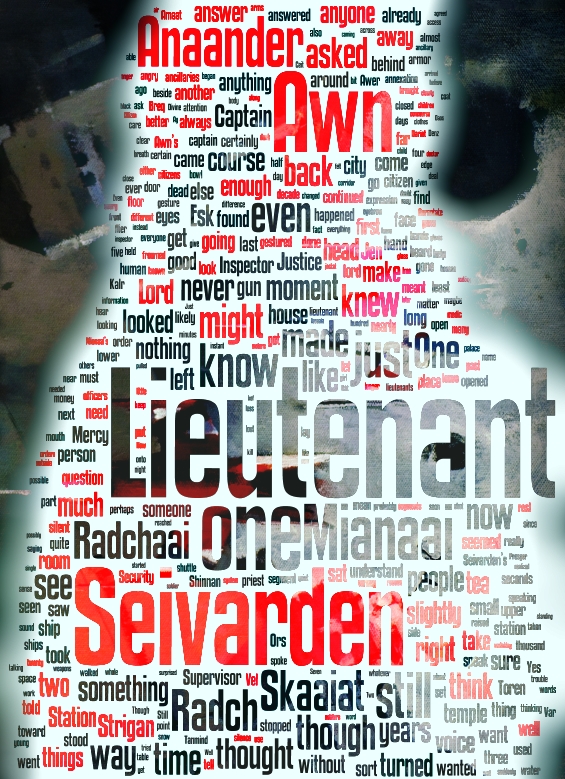
Ancillary Justice by Anne Leckie WORD CLOUD

Posted by Jesse Willis

The SFFaudio Podcast #281 – READALONG: Do Androids Dream Of Electric Sheep? by Philip K. Dick

Podcast

Do Androids Dream Of Electric Sheep? by Philip K. Dick

The SFFaudio PodcastThe SFFaudio Podcast #281 – Jesse, Mr Jim Moon, and Bryan Alexander discuss Do Androids Dream Of Electric Sheep? by Philip K. Dick.

Talked about on today’s show:
1968, science fiction by Philip K. Dick, Blade Runner, abridged version, audiobook, repetition of theme, an introductory novel to Philip K. Dick, The Man In The High Castle by Philip K. Dick, jam packed with action, one long day, the fake police station, a classic Dick move, how many androids are there in this book?, movies, androids, legitimate slavery, Luba, minority, androids v. slaves, reality of humans, psychological tests, visuals, dialogic science fiction, Wilder Penfield, The Terminal Man by Michael Crichton, mood organ, existential humor, satire, artificial, unbelievable world, endless competition, goat glands, Sydney’s Catalog, the BBC Radio 4 audio drama by Jonathan Holloway & Kerry Shale, parallel characters, undercut truth, an animal theme, religious allusions, Mercer, Unbreakable (M. Night Shyamalan), lurker, detective story, lack of world descriptions, less striking scenes in the movie, Galactic Pot Healer by Philip K. Dick, tomb world, fraud corpses, Mercer v. Jesus, lack of introduction in the movie, Frankenstein by Mary Shelley, the maker, hope of freedom, androids as fiends, humans yet not humans, what is the definition of human?, the question, the title, empathy to androids, Deckard’s predictions, Ubik by Philip K. Dick, predestination, fake things, simulacra, electrically modified ecology, emotional drug, consumerism, The Days of Perky Pat by Philip K. Dick, Nanny by Philip K. Dick, the vale of reality, the cuckoo clock in Blade Runner, layered symbols, visualizing future technologies, Kayla Williams, unobvious connections, paranoia, suspicion of government, The Exit Door Leads In by Philip K. Dick, unimportance of religious reality, environmental awareness, Silent Spring by Rachel Carson, dehumanization in war, androids = inverted human, Fahrenheit 451 by Ray Bradbury, television, The Veldt by Ray Bradbury, 1984 by George Orwell, podcasting, Metropolis (Fritz Lang), Max Headroom, “Five Minutes Into the Future”, The Red Room by H.P. Lovecraft, haunted media.

Marvel Comics Blade Runner

Blade Runner Haffmans Entertainer

Blade Runner Illustrated by Syd Mead

Do Androids Dream Of Electric Sheep? WORD CLOUD

SIGNETDoAndroidsDreamOfElectricSheepByPhilipK.DickCOVER565

SIGNET - Do Androids Dream Of Electric Sheep? by Philip K. Dick

Chris Moore illustration of Do Androids Dream Of Electric Sheep? by Philip K. Dick

Donato Giancola illustration for Do Androids Dream Of Electric Sheep?

Posted by Jesse Willis

Review of The Naked Sun by Isaac Asimov

SFFaudio Review

Naked Sun by Isaac AsimovThe Naked Sun (Robots #2)
By Isaac Asimov; Read by William Dufris
Publisher: Random House Audio
Publication Date: July 2014
[UNABRIDGED] – 7 hours, 41 minutes

Themes: / robots / colonization / science fiction / detective /

Publisher summary:

A millennium into the future, two advancements have altered the course of human history: the colonization of the Galaxy and the creation of the positronic brain.  On the beautiful Outer World planet of Solaria, a handful of human colonists lead a hermit-like existence, their every need attended to by their faithful robot servants. To this strange and provocative planet comes Detective Elijah Baley, sent from the streets of New York with his positronic partner, the robot R. Daneel Olivaw, to solve an incredible murder that has rocked Solaria to its foundations. The victim had been so reclusive that he appeared to his associates only through holographic projection. Yet someone had gotten close enough to bludgeon him to death while robots looked on.

What a shocker! I suspected the murderer but not the ending Asimov gave us. Wow.

The Naked Sun gives us a look at the mysterious Outer Worlds, first mentioned in The Caves of Steel. Solaria has never had a crime, due to their extremely privileged population served solely by robots who, of course, never commit crimes of passion. Lige Bailey finds this open, practically empty environment poses both the challenges of solving the mystery and of adapting his agoraphobic nature, thanks to a lifetime of living in underground cities on overpopulated Earth.

Asimov has fun looking at the sociological effects of a high-tech, low population world. I was fascinated by Asimov’s contrast of Elijah Bailey, used only to an overcrowded Earth, with the outworld Solarian society which had open space, eugenics, and many robots. There is no way Asimov could have foreseen our computer-oriented society today, but I found the Solarian society’s preference for “viewing” through screens rather than “seeing” in person to be a disturbing echo of what we ourselves seem to be moving toward.

I originally read this long ago and remembered a lot about the Solarian society but almost nothing about the mystery itself. Listening to William Dufris’ excellent narration, so long after my first reading, I found this a wonderful mystery. Dufris surpassed his performance in The Caves of Steel as he voiced a wide range of Solarian characters from sensuous to prim, blowhard to reserved, blustering to withdrawn. My favorite voices actually were the Solarian robots which were precisely what you’d expect, and which we hadn’t heard yet though several robots spoke in The Caves of Steel.

If you haven’t revisited this series lately I recommend it highly, especially this audio version which brings it to life in a fresh way.

Posted by Julie D.

Review of Pump Six and Other Stories by Paolo Bacigalupi

SFFaudio Review

Science Fiction Audiobook - Pump Six and Other Stories by Paolo BacigalupiPump Six and Other Stories
By Paolo Bacigalupi; Read by Jonathan Davis, James Chen, and Eileen Stevens
11 CDs – Approx. 13 Hours [UNABRIDGED]
Publisher: Brilliance Audio
Published: December 1, 2010
ISBN: 9781441892201
Themes: / Science Fiction / Dystopia / Biopunk / Politics / Society/ Environmentalism / Technology / Food / Death / Thailand / Asia /

The eleven* stories in Pump Six chart the evolution of Paolo Bacigalupi’s work, including the Hugo nominated “Yellow Card Man,” and the Sturgeon Award-winning story “The Calorie Man,” both set in the world of his novel The Windup Girl. This collection also demonstrates the power and reach of the science fiction short story. Social criticism, political parable, and environmental advocacy lie at the center of Bacigalupi’s work. Each of the stories herein is at once a warning and a celebration of the tragic comedy of the human experience.

Let me get the praise out of the way first: Paolo Bacigalupi is an imaginative genius with a message. At times the writing is brilliant. “The Fluted Girl” is excellent, well-written, surely a classic. Every idea in every story is worthy of exploration and consideration and the three narrators are just fine, thanks. His views of dystopia are clever warnings; his ideas endlessly fresh and characters sympathetic. Slow pace is forgivable in his stories, like home-cooked food, worth the wait. James Chen’s reading of the Chinese accents is a great addition to the appropriate stories.

But there are problems. I don’t like having a book of short stories that doesn’t list the names – I shouldn’t have to look on-line for names of the stories and the order in which they appear. I also feel strongly that there is a missing editor. Some of the stories feel as though they are not in final draft version. If I had the print version, my teacher’s red pen would have been in hand marking suggestions for edits. Some information seemed more than unnecessary to the stories (these are short stories after all). It is disappointing that such genius is allowed “out” without polish. Is it possible that the world he created in Pump Six, where literacy has all but disappeared, is actually at its beginning, or did Paolo do it on purpose to see if we are paying attention?

Should you listen to this audiobook? Yes. Brilliant, not perfect, but should definitely not be missed.

*Only ten stories included in the audiobook:
Pocketful Of Dharma • (1999) • novelette • read by James Chen
The Fluted Girl • (2003) • novelette • read by Eileen Stevens
The People Of Sand and Slag • (2004) • novelette • read by James Chen
The Pasho • (2004) • novelette • read by Jonathan Davis
The Calorie Man • [The Windup Universe] • (2005) • novelette • read by Jonathan Davis
The Tamarisk Hunter • (2006) • short story • read by Jonathan Davis
Pop Squad • (2006) • novelette • read by Jonathan Davis
Yellow Card Man • [The Windup Universe] • (2006) • novelette • read by James Chen
Softer • (2007) • short story • read by James Chen
Pump Six • (2008) • novelette • read by Jonathan Davis

Posted by Elaine Willis

Review of Caves of Steel by Isaac Asimov

SFFaudio Review

cavesCaves of Steel (Robots #1)
By Isaac Asimov, read by William Dufris
Publisher: Random House Audio
Publication date: 15 July 2014
[UNABRIDGED] – 7 hours, 43 minutes

Listen to an excerpt: | MP3 |

Themes: / science fiction / robots / detectives / over-population / colonization /

Publisher summary:

A millennium into the future two advancements have altered the course of human history: the colonization of the galaxy and the creation of the positronic brain. Isaac Asimov’s Robot novels chronicle the unlikely partnership between a New York City detective and a humanoid robot who must learn to work together. Like most people left behind on an over-populated Earth, New York City police detective Elijah Baley had little love for either the arrogant Spacers or their robotic companions.

“Like most people on the over-populated Earth, New York City police detective Elijah Baley has little love for either the arrogant Spacers or their robotic companions. But when a prominent Spacer is murdered under mysterious circumstances, Baley is ordered to help track down the killer. Then he learned that they had assigned him a partner: R. Daneel Olivaw. Worst of all was that the ” R” stood for robot.”

I originally read this book when I was a teenager and loved it from the beginning. Isaac Asimov’s descriptions of an overpopulated future Earth were de rigueur for science fiction of the time. What gave this story a fresh spin was that it was a bona fide mystery.

Many years later, listening to William Dufris’ splendid narration, it still holds up. I still remembered the main points of the mystery and detective Lige Bailey’s personality. This left me free to fully appreciate the details of Asimov’s imagined future society, complete with spacemen and robots to provide tension and interest.

I’m not sure if I completely forgot or just never registered the points Asimov was making in this book about technology, adaptation, and the human soul. I was quite surprised to see that Lige Bailey knew his Bible so well that he could quote it in either the King James version or the modern version. And that he used religion as a main point of differentiation (along with art, beauty, and other intangibles) between humans and robots. Atheist Isaac Asimov didn’t deny that faith can lift people higher and that is something one rarely, if ever, sees these days in science fiction.

I also was really interested in watching the way the germ of an idea took hold and was spread from person to person. It was fascinating to see how many things that idea applied to once it had wormed its way into the person’s consciousness.

All in all, this short but satisfying mystery is much richer than I recalled. It was greatly enhanced by the audio where William Dufris became a one man theater company in the way he voiced different characters. There was never any fear of my mistaking who was talking in straight exchanges of dialogue. He was simply masterful whether it was world-weary detective Bailey, slightly robotic Daneel Olivaw, jumpy Jessie, or the nervous Commissioner.

Highly recommended.

INTERESTING SIDE NOTE
Wikipedia notes:

It is a detective story and illustrates an idea Asimov advocated, that science fiction is a flavor that can be applied to any literary genre, rather than a limited genre itself. Specifically, in the book Asimov’s Mysteries, he states that he wrote the novel in response to the assertion by editor John W. Campbell that mystery and science fiction were incompatible genres. Campbell had said that the science fiction writer could invent “facts” in his imaginary future that the reader would not know. Asimov countered that there were rules implicit in the art of writing mysteries, and that the clues could be in the plot, even if they were not obvious, or were deliberately obfuscated.

All hail opinionated John Campbell and Isaac Asimov’s determination to prove him wrong. Today there are a lot of different mash-ups included in the science fiction genre and Asimov led the way with this book.

Posted by Julie D.