News, Reviews, and Commentary on all forms of science fiction, fantasy, and horror audio. Audiobooks, audio drama, podcasts; we discuss all of it here. Mystery, crime, and noir audio are also fair game.
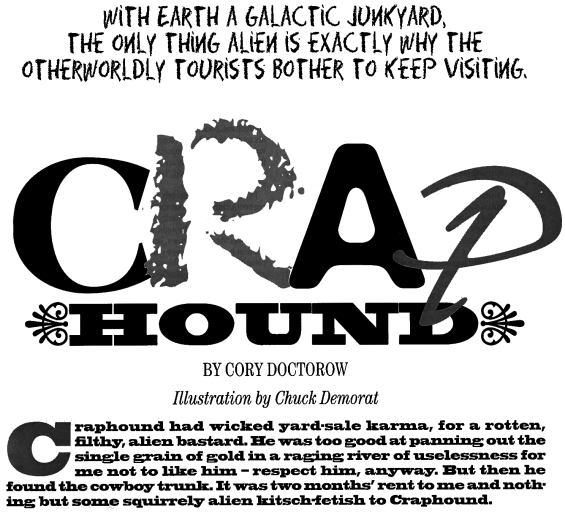
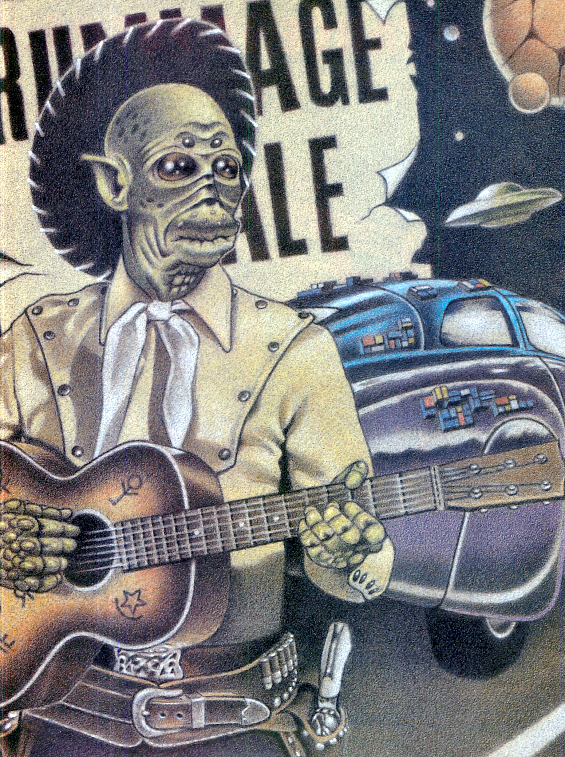
Craphound, wasn’t Cory Doctorow’s first short story, but it was the first one I’d ever read of his. Published in Science Fiction Age, a slick full sized magazine in which Doctorow had a regular column, it featured many of the elements you’ll find in his other stories and novels. A kind of curious combination of warm and fuzzy nostalgia with a clear eyed thinking. Craphound is also what Doctorow named both his website and podcast.
Craphound
By Cory Doctorow; Read by Jesse Thorn
1 |MP3| – Approx. 45 Minutes [UNABRIDGED]
Podcaster: Escape Pod
Podcast: January 2006 “Aliens have once again decided to visit Earth in this lighthearted romp. Rather than having conquest on their minds, they merely wish to visit, and explore. Jerry is a junk dealer, a collector, a pack rat of crap and antiques and memorabilia, depending on your point of view.” First published in Science Fiction Age, March 1998.
Is it an updated version of The Prisoner or an early version of Lost or in a class of itβs own?
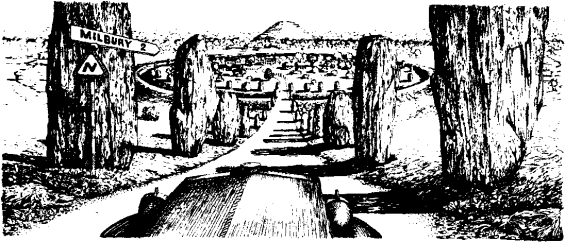
You could also describe Children Of The Stones as kid’s version of The Wicker Man (except with the whole village doing goofballs) or as a very good episode of Jon Pertwee era Doctor Who (except starring Rog Blake) – but really, however you describe it, Children Of The Stones is a great combination of intelligent storytelling and intelligent characters in a very cool mysterious plot involving all the sort of stuff smart people are into. And thus its a great show for smart kids and smart adults alike.
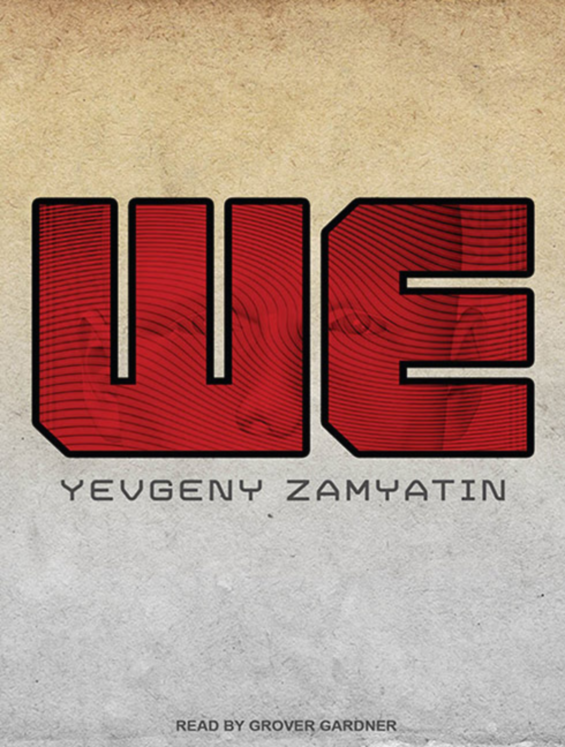
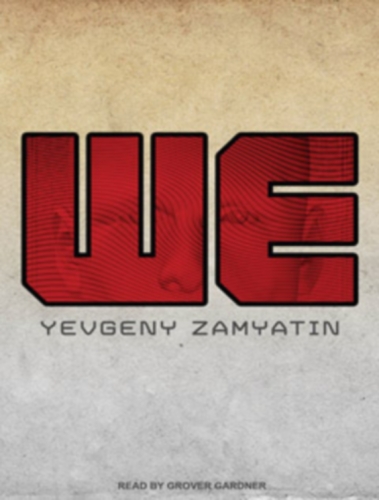
Here’s another classic SF novel we’ll be discussing on an upcoming podcast. Read by the irreplaceable Grover Gardner!
We
By Yevgeny Zamyatin; Translated by Clarence Brown; Read by Grover Gardner
MP3 Download – Approx. 7 Hours [UNABRIDGED]
Publisher: Tantor Media
Published: March 2011 Set in the twenty-sixth century A.D., Yevgeny Zamyatin’s masterpiece describes life under the regimented totalitarian society of OneState, ruled over by the all-powerful “Benefactor.” Recognized as the inspiration for George Orwell’s 1984, We is the archetype of the modern dystopia, or anti-Utopia: a great prose poem detailing the fate that might befall us all if we surrender our individual selves to some collective dream of technology and fail in the vigilance that is the price of freedom. Clarence Brown’s brilliant translation is based on the corrected text of the novel, first published in Russia in 1988 after more than sixty years’ suppression.
In his latest Science Fiction Book Review Podcast, #173, Luke Burrage reviews the new audiobook of The Simulacra, one of the many previously unrecorded PKD novels from Brilliance Audio.
It’s a comedic and relevant SF novel. The plot makes very little sense, but the themes and ideas are terrific. It skewers and examines various forms of crazy – from the American political system (and a kind of proto Occupy movement), to a rampant pharmacological industry, to the perils of psychotherapy. Add in musical contest TV shows, artificial people, and the planet Mars and you get a kind of crazy nuts book that only Dick can pull off.
And Luke, in turn, must abandon his usual format to try to make sense of the thing.
The podcast is here |MP3| and you can subscribe to Luke’s podcast via this feed:
The SFFaudio Podcast #189 – Jesse, Tamahome, Jenny, and Tim Prasil talk about the six episode anthology series Marvellous Boxes, recorded and podcast by Decoder Ring Theatre. But first we play an episode, Facing Cydonia.
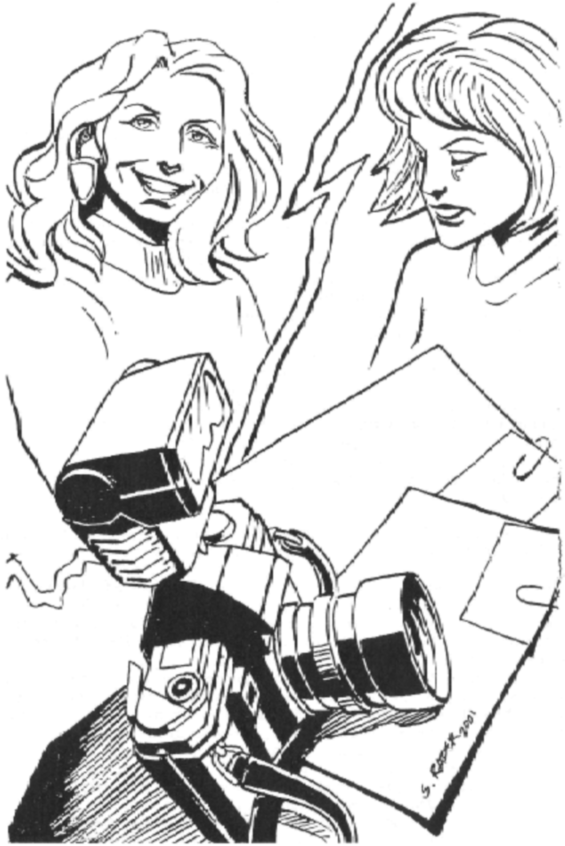
Talked about on today’s show: The Magic Of The Movies, The Crasher, horror, stage play (post Meridian Radio Players), Thinking In Trinary, Decoder Ring Theatre, Gregg Taylor, the Cobol Club, OTR, radio commercials, flash fiction, CBC, The Age Of Persuasion, “Sunday! Sunday! Sunday!”, Plotting For Perfection (the short story), stage play, the Vera Van Slyke stories, occult detectives, Fitz-James O’Brien, audio dramatizations of the Vera Van Slyke stories, Black Jack Justice, The Red Panda Adventures, why be locked into the 1/2 hour audio drama format?, A Demon Once Removed, a one set one act play, Nicole (the peripheral character with a personality), Chekhov’s Gun, an alternate history, “Gregg Taylor need not be played by Gregg Taylor”, Orson Welles, history, Frozen Words Thawed, Remembering The Martians, an all black cast of MacBeth, The War Of The Worlds, H.G. Wells, The Tempest (as an alien contact story), William Shakespeare, a controversy over the character names in Facing Cydonia, Jenny will sing us a song, the boxes, “are there more boxes in you?”, ghosts, the button, the wax cylinder recorder, the Piltdown Man hoax, Sir Arthur Conan Doyle, an authentic hoax, Conan Doyle is the most gullible, the Cottingley Fairies, FairyTale: A True Story, Harry Houdini, Terry Jones, Lady Cottington’s Pressed Fairy Book, the EULA on wax cylinders, Thomas Edison, the most science-fictiony story, Plotting For Perfection, a femme fatale story without the femme fatale, “talk about your retro-causality”, “a box with a hole in it”, Andrea Lyons?, Scene Of The Crime, Remembering The Martians, racism, difference, tolerance, Doctor Who – The Power Of Three, fish people, are the Martians really dead?, binary fission, fruitful names, Jacob, Jason, Easter eggs, Finbar, The Silver Tongued Devil, The Sonic Society, Roger Gregg, it’s a pseudo-documentary, a joke/haiku, “conclusions should be drawn with a pencil not a pen”, Aliens Are Like Mirages, “it’s an indictment I’m just not sure what it’s an indictment of”, “if we had this power would we use it?”, the curiousness of the chaplaincy, prequels are for readers not writers, the miracle, the yup, human history in a nutshell, To Serve Man, narrative structure, why is X-Minus One a good name?, Marvellous Boxes as a name doesn’t have a super-punch, steampunky, “steamy contraptions”, Murdoch Mysteries (CBC TV), “a little less steam and a little more electricity”, Netflix in Canada sucks, Weeds, Walk Off The Earth.
A new five part abridged reading, with added sound effects, of the first part of A Canticle For Leibowitz, “Fiat Homo”, begins here:
A Canticle For Leibowitz
By Walter M. Miller, Jr.; Read by Nigel Lindsay STREAMING AUDIO – [ABRIDGED]
Broadcaster: BBC Radio 4 Extra
Broadcast: November 26, 2012 Set in a Catholic monastery in the desert of the southwestern United States after a devastating nuclear war, the story spans thousands of years as civilization rebuilds itself. The monks of the fictional Albertian Order of Leibowitz take up the mission of preserving the surviving remnants of man’s scientific knowledge until the day the outside world is again ready for it.
First published in 1959.