
LibriVox: Beside Still Waters by Robert Sheckley

SFFaudio Online Audio

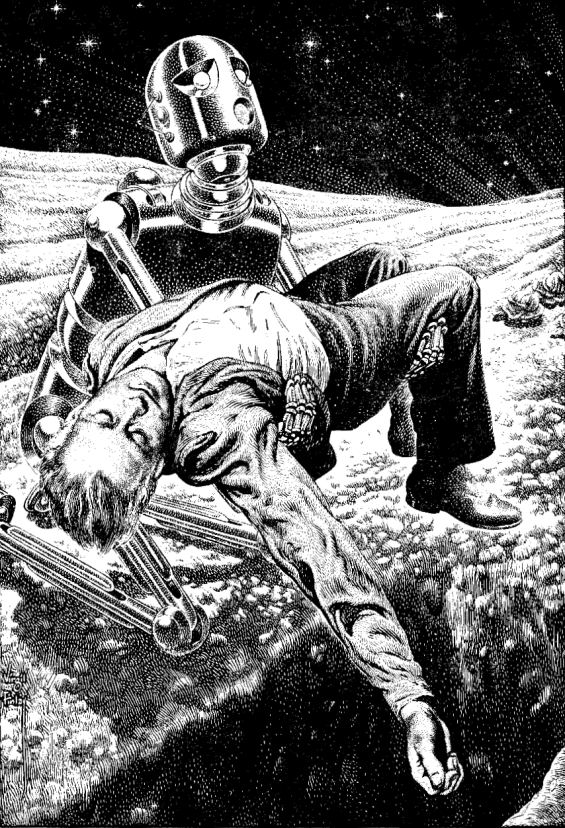
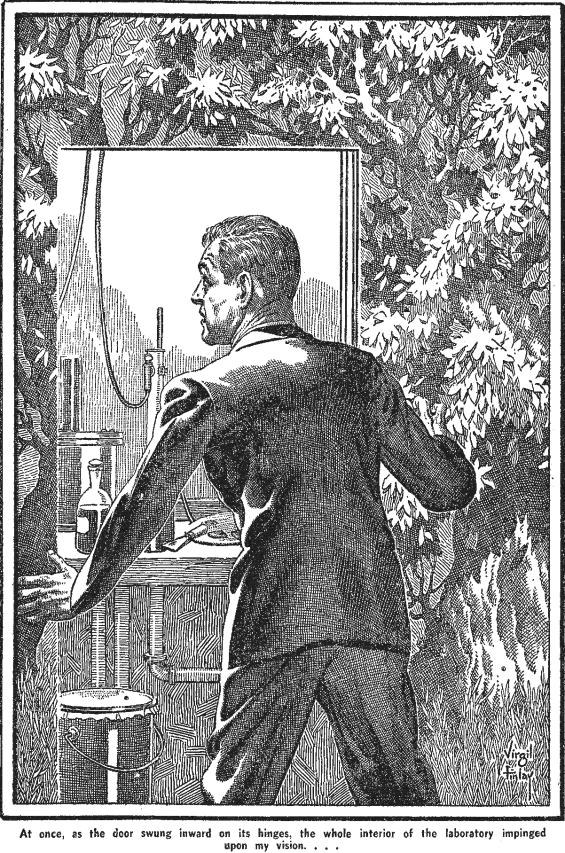
Robert Sheckley was a joker, a satirist, a poker of fun at all of the silliness in life. But there’s something more going on in this short short story from 1953. Sure there’s the existentialist angle, and of course there’s the requisite Sheckley humor, but it’s the other quality in Beside Still Waters that makes this Sheckley story a bit different. You can see it right there in the title (taken from Psalm 23 of the Hebrew Bible), and you can see it in the Virgil Finlay’s illustration for the story too:

Beside Still Waters by Robert Sheckley - Illustration by Virgil Finlay

Beside Still Waters is an elegiac tale, offering only a cup of sadness to the reader, it’s the sort of story that Clifford D. Simak might have written. And that should be recommendation enough.

LibriVoxBeside Still Waters
By Robert Sheckley; Read by Frank Malanga
1 |MP3| – Approx. 10 Minutes [UNABRIDGED]
Publisher: LibriVox.org
Published: November 28, 2010
When people talk about getting away from it all, they are usually thinking about our great open spaces out west. But to science fiction writers, that would be practically in the heart of Times Square. When a man of the future wants solitude he picks a slab of rock floating in space four light years east of Andromeda. Here is a gentle little story about a man who sought the solitude of such a location. And who did he take along for company? None other than Charles the Robot. First published in Amazing Stories Oct.-Nov. 1953.
|ETEXT|

And here’s the |PDF| I made from the original magazine publication.

Posted by Jesse Willis

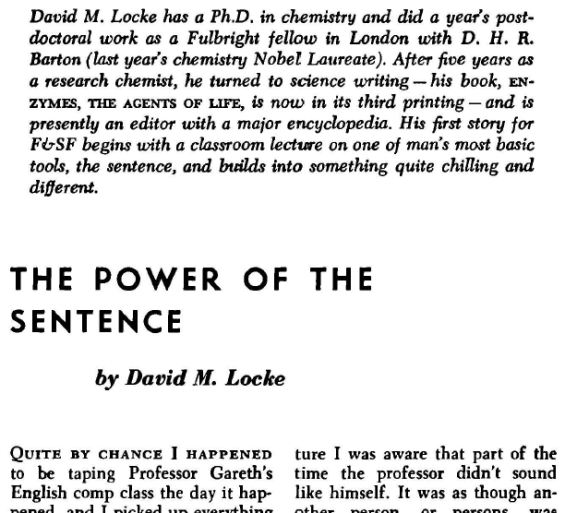
Mindwebs: The Power Of The Sentence by David M. Locke

SFFaudio Online Audio

I just got an email from a friend of the site. He had this to say:

So, in between listening to Carlin’s podcast [Dan Carlin’s Hardcore History], and the Mindwebs episode I’m including here, I remember something one of your guests said during one of your podcasts. It might have been Gregg, and I can’t remember which podcast, but he said something to the effect that human bodies are vessels to carry ideas into the future, so that bodies are irrelevant, beyond that purpose. That’s a very interesting idea to explore, the pervasiveness of ideas, how once an idea is in the open, no amount of censorship can make it go away, and hence this Mindwebs episode.

My friend had added a recording as an attachment to the email, and after scanning it for viruses, I listened to it.

The Power Of The Sentence

Contrary to my anti-virus software’s opinion the audio does contain a danger.

And now after sharing that warning sentence with you I should point out that The Power Of The Sentence was David M. Locke’s only Science Fiction work. I’m wondering now if perhaps the story was not fiction, and that maybe the story was finished by a student of his.

Here are the details…

MindwebsMindwebs – The Power of the Sentence
By David M. Locke; Read by Michael Hanson
1 |MP3| – Approx. 28 Minutes [DRAMATIZED READING]
Broadcaster: WHA Radio (Madison, WI)
Broadcast: April 21, 1978
Provider: Archive.org
An English professor lecturing about the use of sentences finds his examples are taking on a life of their own. First published in the April 1971 issue of Fantasy & Science Fiction

Incidently, more details about Mindwebs are available at the OTRPlotSpot.com.

[Thanks Mel … I think … We think.]

Posted by Jesse Willis

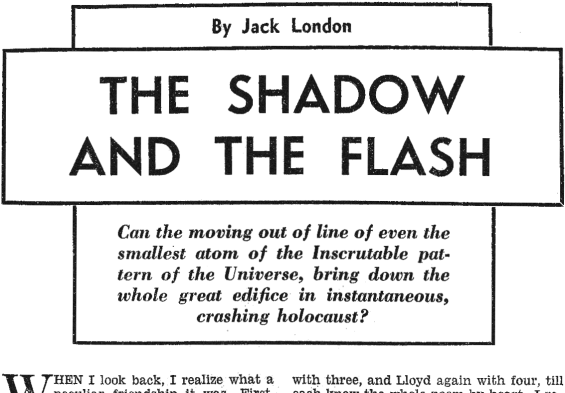
The Shadow And The Flash by Jack London

SFFaudio Online Audio

The Shadow And The Flash by Jack London

Famous Fantastic Mysteries, June 1948 COVER - The Shadow And The Flash by Jack London

Famous Fantastic Mysteries, June 1948 - The Shadow And The Flash by Jack London

Here’s one of Gregg Margarite’s earliest narrations for LibriVox. Because it was so early it sounds like one of his more amateur recordings – mostly because Gregg reads it too fast. But one thing that didn’t really change, that needed no refinement, his skill at picking stories to record. This Jack London short story is fun Science Fiction. It’s about a pair of nearly identical, ferociously competitive, brothers. The tale was written in 1902, five years after The Invisible Man, by H.G. Wells, was published as a novel.

Indeed, the plot is rather … how shall I put this ? … familiar ? … with the The Invisible Man. But that’s okay as there’s a line aknowledging it by one of the brothers. At least it’s a hat-tip in that direction. But instead of one mad scientist as in Well’s novel, we have two in The Shadow And The Flash – in fact were they a pair of superheroes (or supervillains) that’d be each of their names (The Shadow and The Flash) as they get their powers from the way they approached the problem of invisibility – that is to say from opposite ends, as it were.

It was at about seven minutes in before the story really took off – here’s the part that grabbed me:

Lloyd warmed to the talk in his nervous, jerky fashion, and was soon interrogating the physical properties and possibilities of invisibility. A perfectly black object, he contended, would elude and defy the acutest vision.

“Color is a sensation,” he was saying. “It has no objective reality. Without light, we can see neither colors nor objects themselves. All objects are black in the dark, and in the dark it is impossible to see them. If no light strikes upon them, then no light is flung back from them to the eye, and so we have no vision-evidence of their being.”

“But we see black objects in daylight,” I objected.

“Very true,” he went on warmly. “And that is because they are not perfectly black. Were they perfectly black, absolutely black, as it were, we could not see them—ay, not in the blaze of a thousand suns could we see them! And so I say, with the right pigments, properly compounded, an absolutely black paint could be produced which would render invisible whatever it was applied to.”

“It would be a remarkable discovery,” I said non-committally, for the whole thing seemed too fantastic for aught but speculative purposes.

LibriVoxThe Shadow And The Flash
By Jack London; Read by Gregg Margarite
1 |MP3| – Approx. [UNABRIDGED]
Publisher: LibriVox.org
Published: March 12, 2009
A tale about two brothers who take different routes to achieving invisibility, as narrated by their best friend. First published in The Bookman, June 1903. Later published in The Windsor Magazine, October 1904, and in Famous Fantastic Mysteries, June 1948, Leoplan #502 (May 18, 1955).

Here’s The Windsor Magazine edition |PDF|, here’s the Famous Fantastic Mysteries edition |PDF|, and here’s a Spanish translation from Argentina’s Leoplan |PDF|.

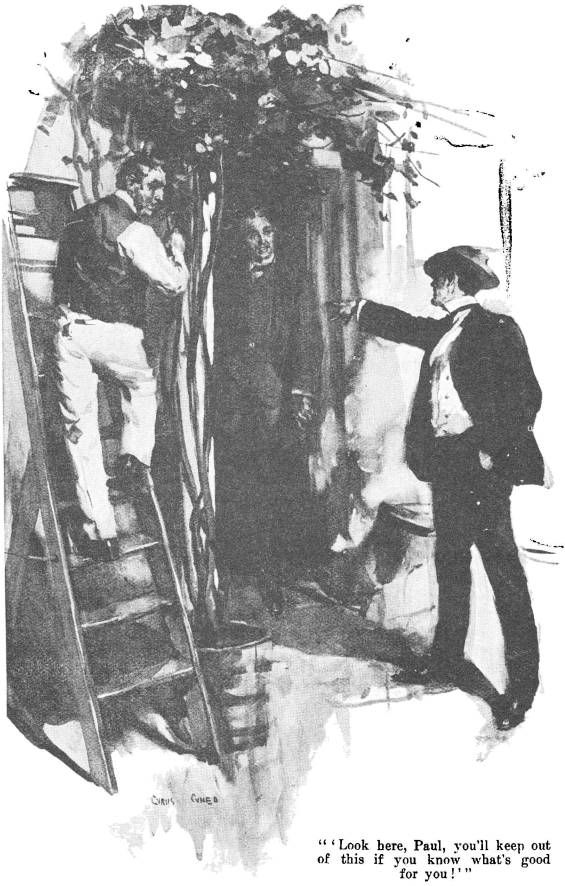
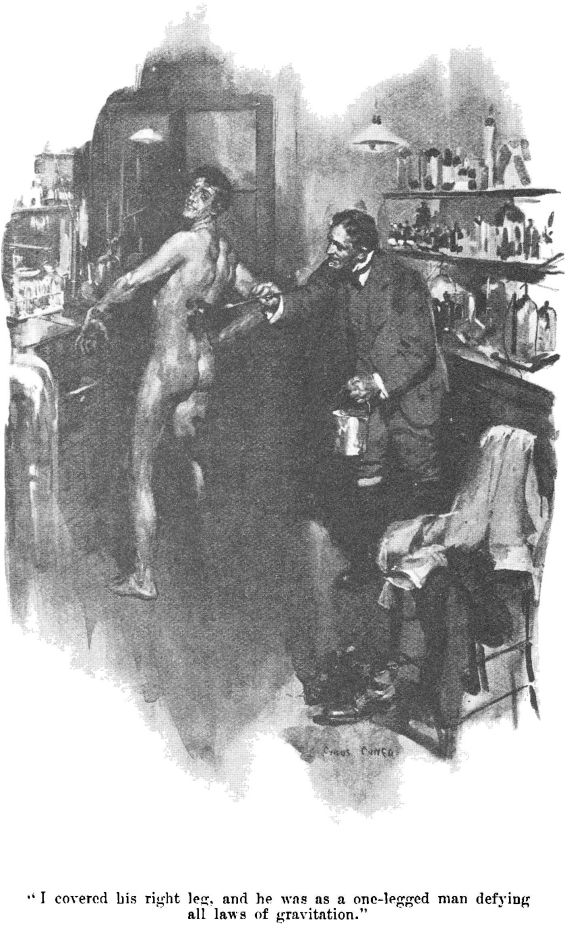
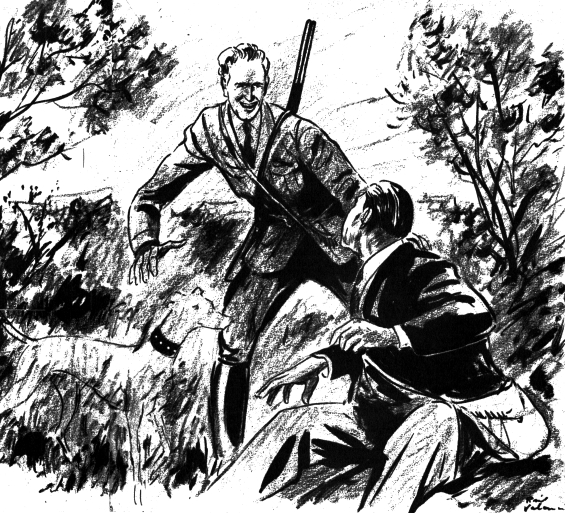
Illustrations from The Windsor Magazine publication:
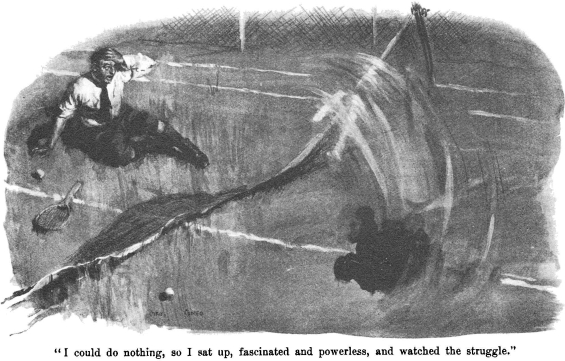
The Shadow And The Flash - illustration from The Windsor Magazine

Virgil Finlay’s illustration from Famous Fantastic Mysteries:
Famous Fantastic Mysteries, June 1948 - The Shadow And The Flash illustration by Virgil Finlay

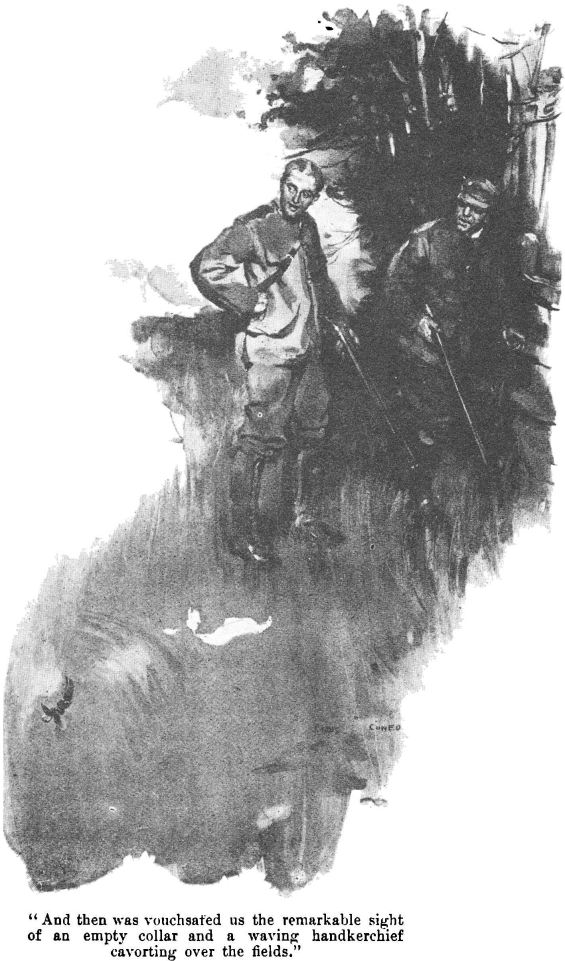
Raul Valencia’s illustrations from LeoPlan 502:
The Shadow And The Flash - illustration by Raul Valencia

Posted by Jesse Willis

Philip K. Dick, in his own words, a portrait from late 1952, early 1953

SFFaudio News

In my researches of the public domain short stories, novelettes, and novellas of Philip K. Dick I’ve just discovered this wonderful, sad, and surprising self-portrait by Philip K. Dick. It appeared as the inside front cover of Imagination’s February 1953 issue (which would have been when Dick was about 24 years old).

In it he talks about his early origins as an Science Fiction reader, paints a picture of himself as a misunderstood fan of scientificition (which he abbreviates as “stf”), and as a person who dreams of one day seeing SF magazines in public libraries (and school libraries). To me that’s the really sad part. Heinlein can dream of seeing a man on the moon and see that achieved in his own lifetime. But I’ve yet to see a public library, let alone a school library, with a regular subscription to any SF magazine.

On the bright side of things we learn that his cat, at the time, was named “Magnificat” – and that’s pretty damned awesome.

Here’s the scan:

Introducing The Author: Philip K. Dick - from the February 1953 issue of Imagination

And here is the complete text:

Once, when I was very young, I came across a magazine directly below the comic books called STIRRING SCIENCE STORIES. I bought it, finally, and carried it home, reading it along the way. Here were ideas, vital and imaginative. Men moving across the universe, down into sub-atomic particles, into time: there was no limit. One society, one given environment was transcended. Stf was Faustian; it carried a person up and beyond.

I was twelve years old, then. But I saw in stf the same thing I see now: a medium in which the full play of human imagination can operate, ordered, of course, by reason and consistent development. Over the years stf has grown, matured toward greater social awareness and responsibility.

I became interested in writing stf when I saw it emerge from the ray gun stage into studies of man in various types and complexities of society.

I enjoy writing stf; it is essentially communication between myself and others as interested as I in knowing where present forces are taking us. My wife and my cat Magnificat, are a little worried about my preoccupation with stf. Like most stf readers I have files and stacks of magazines, boxes of notes and data. parts of unfinished stories, a huge desk full of related material in various stages. The neighbors say I seem to “read and write a lot”. But I think we will see our devotion pay off. We may yet live to be present when the public libraries begin to carry the stf magazines, and someday, perhaps, even the school libraries.
-Philip K. Dick

Posted by Jesse Willis

Beyond Lies The Wub by Philip K. Dick

SFFaudio Online Audio

There’s probably always going to be a place in my heart for Philip K. Dick’s Beyond Lies The Wub. It was my first PKD short story. It’s very short and usually runs just over fifteen minutes read aloud – which I frequently do. And even though Dick claimed only to have been paid $15 for it*, I find it absolutely invaluable.

I’ve felt that way from the very first time I heard it, back in 2006. The narrator, Mac Kelly, delivered the story at a measured pace that really sang the story to me.

Since then I’ve become even more enamored with Gregg Margarite’s rendition, recorded for LibriVox in 2009.

And that’s the one I’d like to share with you. I share it with you now, but you can share it with your friends too because, not only is the story public domain, the audiobook itself is too!

LibriVox - Beyond Lies The Wub by Philip K. DickBeyond Lies The Wub
By Philip K. Dick; Read by Gregg Margarite
1 |MP3| – Approx. 16 Minutes [UNABRIDGED]
Publisher: LibriVox.org
Published: May 4, 2009
|ETEXT|
The slovenly wub might well have said: Many men talk like philosophers and live like fools. First published in Planet Stories, July 1952.

Planet Stories, July 1952 - TABLE OF CONTENTS BANNER

Planet Stories, July 1952 - Beyond Lies The Wub by Philip K. Dick - Page 69

Wub illustration from Planet Stories, July 1952

And here’s a combination of the narration with the magazine scans:

Posted by Jesse Willis

*As reported in Dick’s introduction to the story in First Voyages, a 1981 anthology of the first published short stories by famous SF authors.