The SFFaudio Podcast #333 – READALONG: The Picture Of Dorian Gray by Oscar Wilde

Podcast

TheSFFaudioPodcast600The SFFaudio Podcast #333 – The Picture Of Dorian Gray by Oscar Wilde. Participants in the discussion include Jesse, Julie, Seth, and Rose.

Talked about on today’s show:
the 1891 version, the 1890 version, Heather Ordover‘s reading of The Picture Of Dorian Gray, a rich odor of lilac, a saddle-bagged divan, Mark Twain’s A Double Barrelled Detective Story, making fun of somebody, a single esophagus, elaborate descriptions, oriental texts, the monotony and tedium of this kind of life, Lord Henry’s epigrams, entertainment vs. a savage critique of society, the dark side, being clever vs. delving deeper, Basil, sin, vanity, a Faustian pact, eternal beauty, beauty as inspiration, don’t say such things in front of Dorian!, the preface, epigrammatic writing, the trial, celebrity, the libel lawsuit, Basil’s trip to France, giving in to the senses, the decadent movement, turns of phrase, the cost of everything and the price of nothing, little witticisms, art and artists, the Gothic parts, those who find ugly meanings in beautiful things, taking the preface seriously, Edgar Allan Poe, should I take this seriously, the decline of the epigrammatic novel, linguistic sophistry, “all influence is immoral”, being immoral is fine, the seven deadly virtues, The Hound 001 - high top nike sneakers with swirls on skin tags - Nike Shox TL Black Playful Pink IH4485 by H.P. Lovecraft, a wizard’s medallion, so full of ennui, St. John is a mangled corpse, devastating ennui, only the somber philosophy of the decadents, Baudelaire, that detestable course, Lovecraft’s response to what Wilde was responding to, the Black Museum, voluminous black hangings, the uncovered grave, just like Dorian Gray, another literary connection, The Great Gatsby, skeletons in his closet, the critic and the spectator, all art is quite useless, putting too much into art, the lowest form of art, Lord Henry never involves himself, Wilde can’t adhere to his own philosophy, putting yourself into art, the yellow covered book, he was poisoned by a book, swayed by everything, the book argument, Sibyl Vane, Juliet, Imogen nike air huarache drift black ah7335 001, Viola, perpetuating Basil’s error, lots of cool things in it, the jewels and the clothing and the fabric, Renaissance poisonings, evil as a mode to realize the beautiful, so many good things to like, Sibyl Vane as a reflection of Dorian Gray, reflected suicide, Vane as a triple entendre, killed by her grease paint, the Yellow Book, Jesse loves intertextual things, À Rebours by Joris-Karl Huysmans, ten bound copies bound in different colours, double the amount of orchids and no white ones, every flavour of feeling and experience, indulging in every kind of experience, living your life as a piece of art, the Yellow Book rebound for every mood he was in, camouflage, yellow as code for gay, the yellow nineties (the 1890s), adding a layer, To Kill A Mockingbird, 1894, The Yellow Book (magazine), 1895, The King In Yellow by Robert W. Chambers, symbolism of artistic movements, the vane family, Dorian as a byproduct of melodrama, an allegory for artistic movements, a reaction to Victorianism, reveling in immorality, a sin of thoughtlessness, eventually all that’s left is evil, the rage of Caliban, this is a really important book, the deal with the devil, super-realistic, a very constructed book, making a very real point, the second time Caliban comes up, the Lipincott’s version, the critics mostly savaged the book, then the preface as a standalone defense, the volume publication, edits, the second appearance of Caliban, The Tempest by William Shakespeare, Miranda, the beginning of chapter 7, the Jewish manager, The Horror At Red Hook, racism, a pompous humility, going bankrupt over a poet, anti-semitism, making fun of Charles Dickens, is it just Dorian Gray that’s racist?, the most amazing waistcoat, gorgeous servility, behind the scenes, the “Bard”, you can’t trust anything Lord Henry says, private letters, Dorian Gray starts to resemble in his interests and his appearance the Jew manager, ugly on the outside, overly dramatized servility, Mrs. Vane’s words, indentured servitude or genuine theatrical enthusiasm, wanting Sibyl Vane to succeed, you can’t trust appearances, the chapter about jewels, cloth, Dorian Gray is obsessed with exterior appearance, Fitz-James O’Brien’s The Diamond Lens, a microscopist, what you need is a diamond for your microscope, it doesn’t count, casual racism, this is why we cannot censor books, “man” instead of “Jew”, the hideous man in an amazing waistcoat, re-reading Uncle Tom’s Cabin by Harriet Beecher Stowe, we love them, in one letter, a massacre of Jews, Wilde loves to shock, Basil is who Oscar Wilde sees himself as, artists pouring things in to books that they can’t themselves see, an accumulated spackle (of censorship), Geoffrey Chaucer, Julie’s movie group, Philomena, what are we doing?, putting a taboo on looking at power, horrible corruption, Basil’s murder, first time reads, Lord Henry’s wife is named Victoria, why it isn’t called a “portrait” of Dorian Gray, The Oval Portrait by Edgar Allan Poe, “It’s perfect!”, The Canterville Ghost as a redemptive and sweet story, an obvious homage to Mr Hyde from Strange Case Of Dr Jekyll And Mr Hyde by Robert Louis Stevenson, how do you balance, looking at temptation, starting in a garden, the poison of the book, Henry is wreathed in smoke [like Satan!], something with strawberries, if this is a Faustian tale…, the issue we all deal with all of the time, The Long Conversion Of Oscar Wilde, flirtations with Catholicism, 1888, the very first book where spoiler applied is Strange Case Of Dr Jekyll And Mr Hyde, we know about the painting, the scientist friend should have been named Dr Jekyll, Jesse watched almost every movie version, I need my equipment…I hate you, a later suicide, this book applies to the entire Victorian society, saying the same thing a different way, Sherlock Holmes, 1891, The Yellow Wallpaper, 1892, The Time Machine, 1897, Dracula, The Island Of Dr Moreau, 1899, Heart Of Darkness, will the books of this decade be remembered in 120 years?, The Rosie Project, Fifty Shades Of Dorian Gray, are we sympathetic?, nudges, and the audio drama, will you stay tonight, the 1945 film version is very good and faithful, the use of color, fifty shades of silver, 1973 TV movie version (is on YouTube), Dark Shadows, Angela Lansbury as Sibyl Vane, 1976 version, Jeremy Brett as the painter, the 2009 horror movie version is horrible, Colin Firth, the niece, every Dorian Gray is handsome, too handsome, why is no one asking about his youthful appearance?, diet or exercise, male Dorian Grays, the Selfie Of Dorian Gray, modern gender views, really quite gay, Wilde, Stephen Fry, Wilde’s children and wife, the term “homosexual”, indecency.
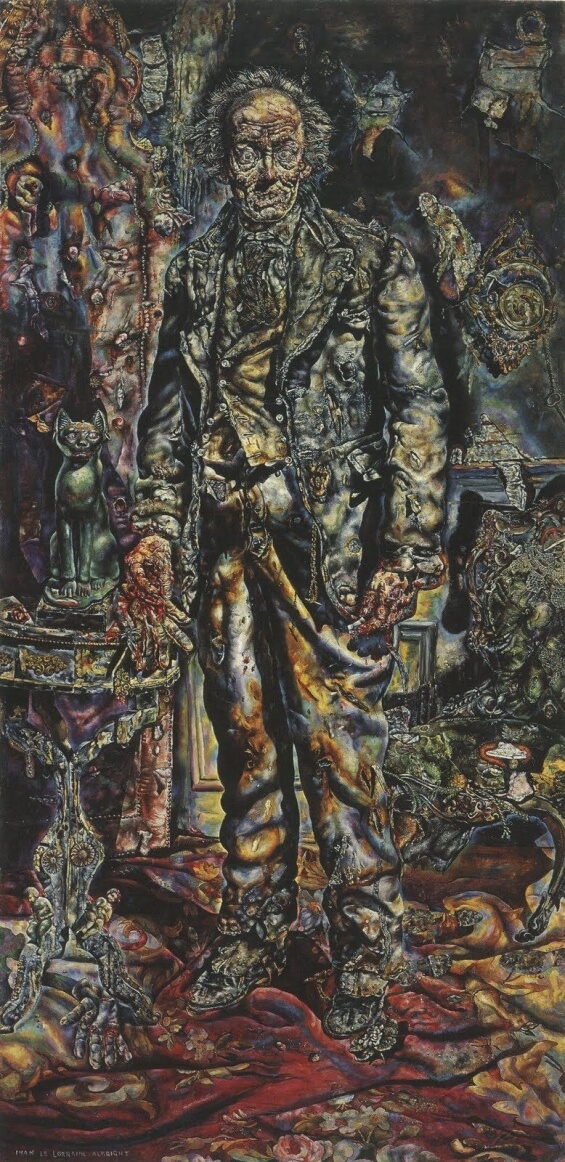
A Portrait Of Dorian Gray from the 1945 movie

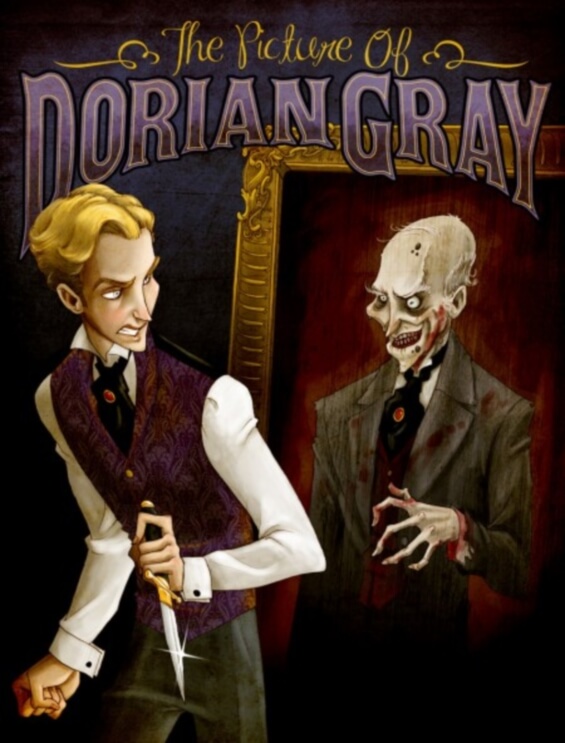
The Picture Of Dorian Gray by Oscar Wilde - illustration by Lisa K. Weber

Posted by Jesse Willis

The SFFaudio Podcast #327 – AUDIOBOOK/READALONG: The Moon-Bog by H.P. Lovecraft

Podcast

The SFFaudio PodcastThe SFFaudio Podcast #327 – The Moon-Bog by H.P. Lovecraft; read by Martin Reyto courtesy of Legamus. This is an unabridged reading of the short story (24 minutes) followed by a discussion of it. Participants in the discussion include Jesse Willis, Seth Wilson, Jim Moon, and Juan Luis Pérez.

Talked about in this episode:
Title has a hyphen; published in Weird Tales in June 1926, but written for a St. Patrick’s Day event; most critics dismiss the story; most characters are nameless; no Cthulhu mythos; Greek ties to Lovecraft’s The Tree; H.P. Lovecraft Literary Podcast; thematic similarities to The Rats in the Walls and Hypnos; conflict between the bog goddess and her servants; frogs; moonbeams; Greek Pan pipes, not Celtic pipes; on the story’s un-Irishness; competing models of colonization; Protestant work ethic; Pied Piper of Hamelin; surviving narrator motif similar to Ishmael in Moby Dick; departure from the traditional Lovecraftian narrator; the poetry of Lovecraft’s prose, alliteration, etc.; Lovecraft’s Supernatural Horror in Literature; spoiler in Weird Tales art; the joys of reading aloud; Lovecraft’s Dunsanian story The Festival; architecture; Tolkien’s Dead Marshes and the gothic symbolism of bogs, etc.; Lovecraft’s descriptionn of cities in The Mountains of Madness and landscapes in The Dunwich HorrorThe Cabinet of Dr. Caligari and similar impressionism in film; The Quest of Iranon; unreliable narrators à la Edgar Allan Poe, especially The Fall of the House of Usher; laughing; bog draining and the curse of the Tiddy Mun; the city of Bath and the intersection of Roman and Celtic cultures; John Buchan’s The Grove of Ashtaroth; this is actually a happy Lovecraft story!; Robin Hood and the defense of the land; humans destroy megafauna; Lovecraft’s The Hound; American horror trope of the Indian burial ground; the lack of Celtic mythology; will-o’-the-wisps; how does one drain a bog? Ask the Dutch; disappointment in scientific explanation for stories; the ruins and the Gothic tradition.

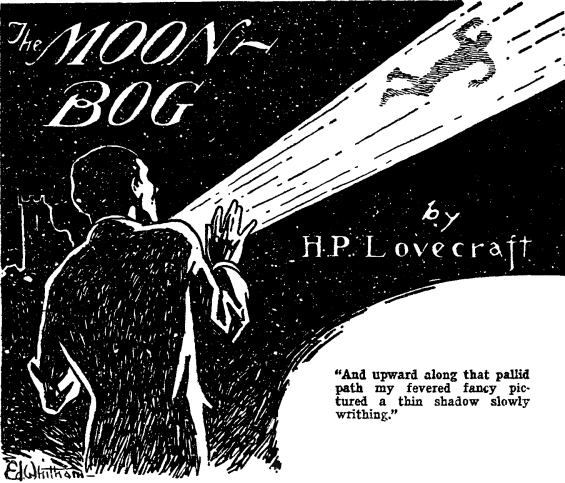
The Moon-Bog by H.P. Lovecraft

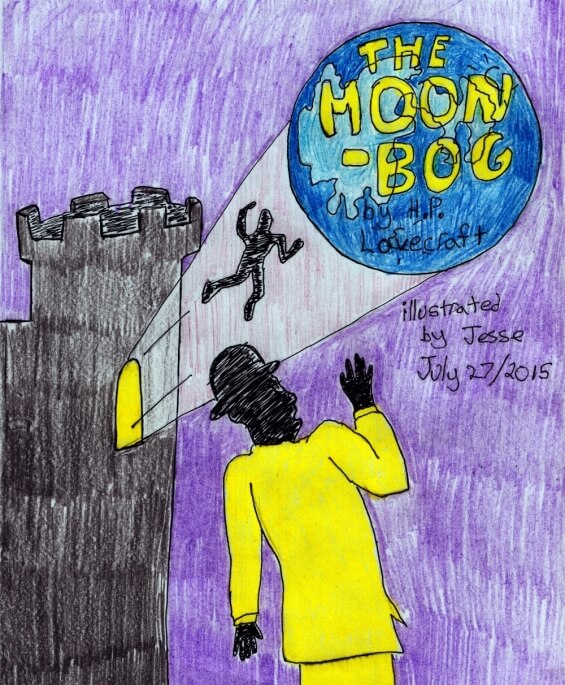
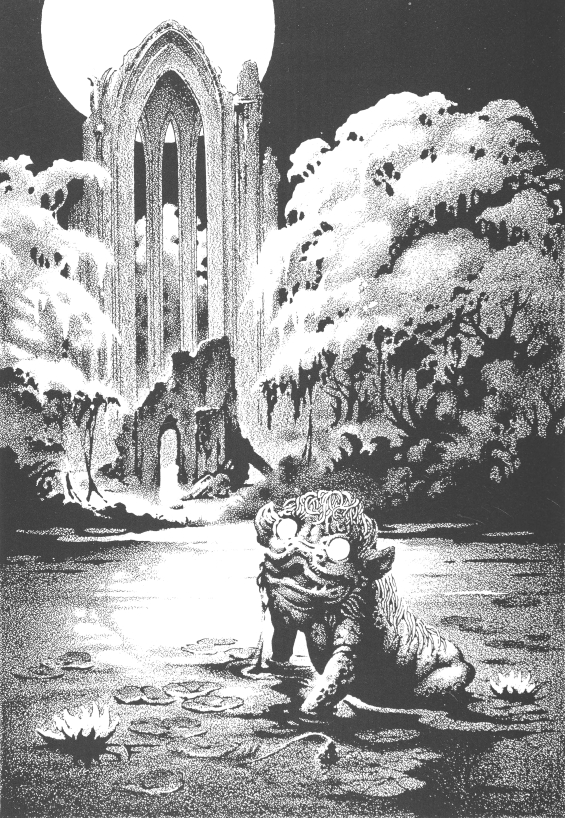
The Moon Bog by H.P. Lovecraft - illustrated by Jesse

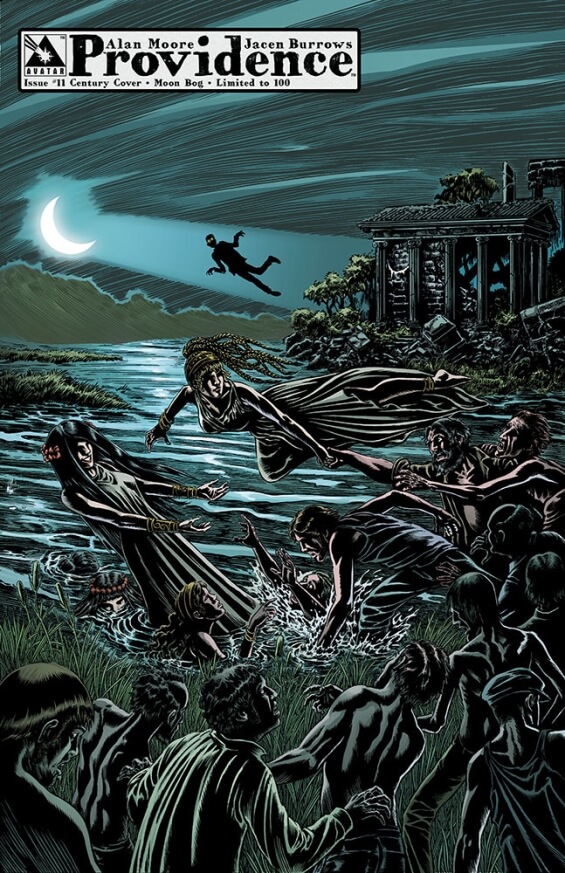
Providence, Issue 10, The Moon-Bog by H.P. Lovecraft - illustrated by Raulo Cáceres

The Moon-Bog by H.P. Lovecraft - art by Stephen Fabian

Posted by Jesse Willis

The SFFaudio Podcast #293 – AUDIOBOOK/READALONG: Carmilla by J. Sheridan Le Fanu

Podcast

J. Sheridan Le Fanu's CARMILLA
The SFFaudio PodcastThe SFFaudio Podcast #293 – Carmilla by J. Sheridan Le Fanu; read by Elizabeth Klett (for LibriVox). This is an unabridged reading of the novelette (3 hours 7 minutes) followed by a discussion of it. Participants in the discussion include Jesse, Mr Jim Moon, and Elizabeth Klett.

Talked about on today’s show:
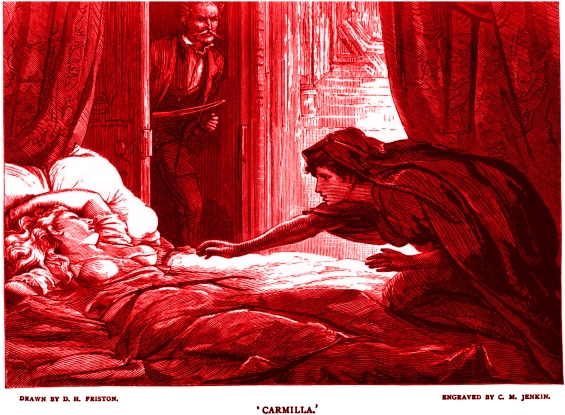
1871, 1872, Elizabeth’s first solo for LibriVox, a per-adolescent kid, Dracula, a novella and not a novel, Dracula is obsessed with its own structure, dictaphone, the manner of the telling, The Dark Blue magazine, the framing device, the Dr. Martin Hesselius framing device, wee have the papers to prove it, not with that ending, so chilling, eight years after the major events, three hundred, Duke Charles, CBS Radio Mystery Theater adaptation, the setting, the nearest inhabited village is twenty leagues away, the ruins of Karnstein, white lilies, swans, perch, in the moat, the story within the story, Spielsdorf’s letter, Millarca and her “mother”, fete, a masked ball, a vampire scam, a glamour on the father, pulling Laura’s father aside, is she glamouring him?, so lonely, giving in to her whim, why don’t the vampires not immediately suck some folk dry?, preying on the village girls, Varney The Vampire, the name as an anagram, the blue mark, the lonely vampire, “you’re going to die into me”, “I live into your warm life and you’ll die sweetly into mine”, Laura has been stalked since she was six, enchanted by the pretty lady, needles, “just a blue spot”, the father and the doctor are shielding Laura, shielding Mina from the truth ends up hurting her, the female characters in both stories are more capable than the male characters give them credit for, religion, the crucifix doesn’t figure into Carmilla, the complicated layering of imagery, Carmilla’s escape from the castle, enclosure, Carmilla can transcend enclosures, transcendent confinement, an extra-transmissive female, the Mountebank peddlar, the little dog, amulets for protection against the oumpire, a very sharp tooth like a fish, a transaction through a window, a liminal space, invading the domestic space, well educated in trickery and juggling, the mountebank half-recognizes Carmillas as a vampire, a clever recipe, Harker’s shaving mirror, Markheim by Robert Louis Stevenson, Carmilla thinks of herself as a product of nature, “all things proceed from nature”, girls as caterpillars while they live in the world, relying on God to take care of us is naive, a post Darwinian perspective, Dracula’s Guest by Bram Stoker, Horror Europa with Mark Gatiss, Nosferatu was nearly destroyed by copyright claims, the invasion of the home, Eric Rabkin, vampires are for aristocrats whereas werewolves are for peasants, The Odyssey as a series of stories about the host-guest relationship, Carmilla’s only virtue is that she’s pretty, Bertha, the striking image of Carmilla crawling onto Bertha’s bed, a phallic sword, there’s no hiding the fact that this is all sex sex sex, The Vampire Lovers, Hammer Horror with nudity, the British Board of Film Censors, “this is literature”, The Killing Of Sister George, Richard LeStrange from Cork, adaptations of Carmilla, the servants, a quick snack on the peasants, bathing in seven inches of blood, Elizabeth Bartolde, floating of coffins in blood, entirely shielded from ghost stories and fairy tales, languorous and dream-like, languorous and languid, a code word for sensual, sated, façade, interest in beauty, metamorphosis, your chrysalis is your coffin, how vampires leave their graves, revenants, Karnstein = fleshstone, out of folklore and into proto-science fiction, turning Laura into a vampire, one of the great questions in Carmilla – who is her mother? who is the man in black, the cuckoo nest scenario, who are these people?, the “broken” carriage charade, the cuckoo in the nest, pushing the other chicks out of the nest, a wonderful horrible story, Laura Palmer in Twin Peaks, a lot of Laura victims, lesbianism and incest, corruption beneath the veil of respectability, why the mother is missing, the doom to come, Morella by Edgar Allan Poe, Ligeia, Berenice, all up in the creepy, all possessing consumption, waiting for the fruit to be ripe, Blood And Roses, the petals of the rose, is it like a venereal disease?, M.R. James, the lens of distance,

“Magia Posthuma,” “Phlegon de Mirabilibus,” “Augustinus de cura pro Mortuis,” “Philosophicae et Christianae Cogitationes de Vampiris,” by John Christofer Herenberg; and a thousand others

the rules for vampires, Count Alucard, the writing itself, vic-fic, the clarity and economy of Le Fanu’s prose, clear but evocative, he doesn’t over-egg the pudding.

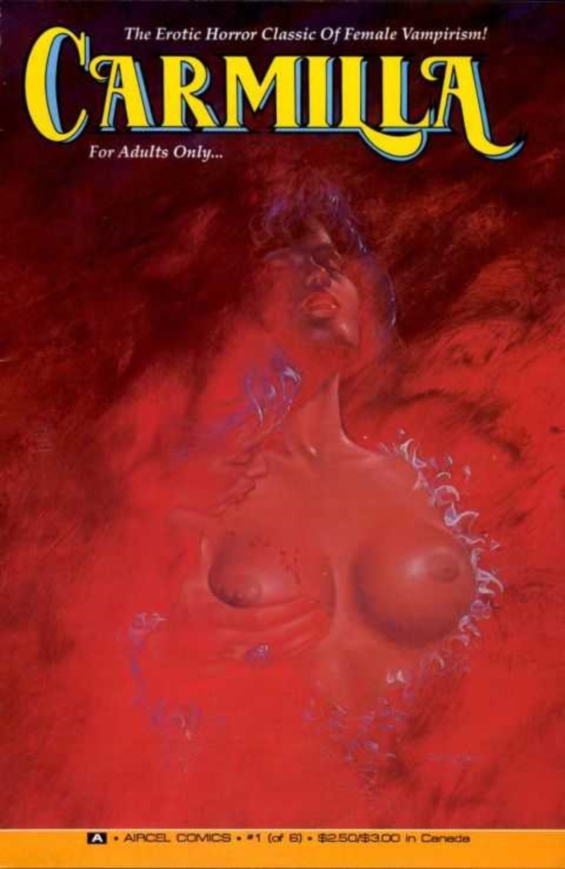
Aricel Comics - Carmilla, issue 1

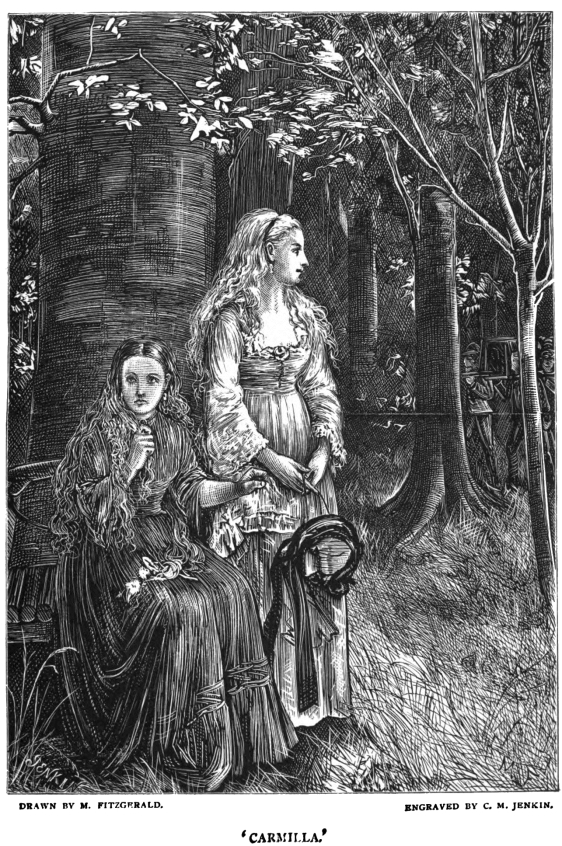
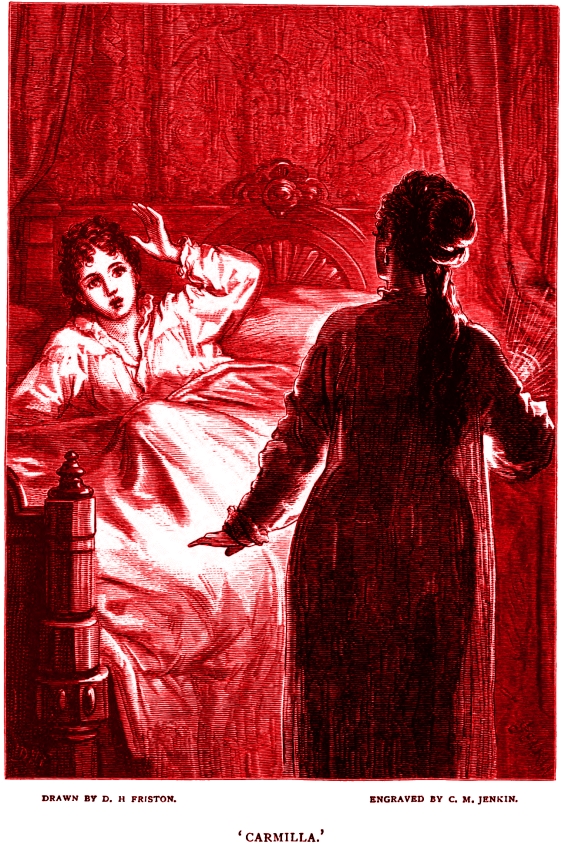
Carmilla by J. Sheridan Le Fanu

Carmilla by J. Sheridan Le Fanu

Carmilla by J. Sheridan Le Fanu

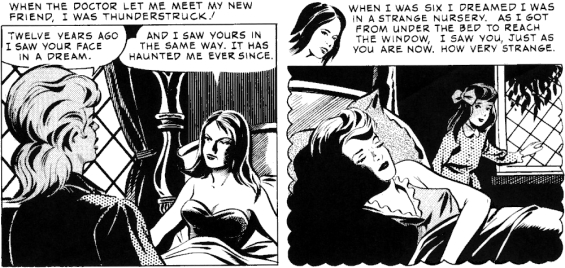
Carmilla adaptation from Creepy Magazine 19

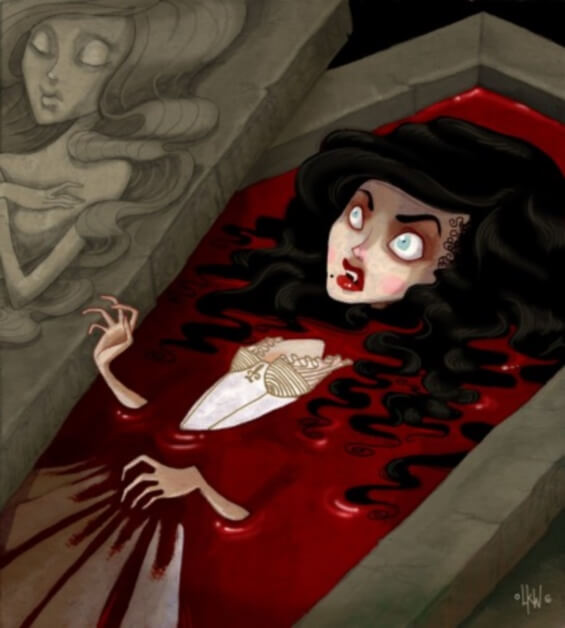
Carmilla - illustration by Lisa K. Weber

Posted by Jesse Willis

Hypnobobs: Mother Of Toads by Clark Ashton Smith

SFFaudio Online Audio

Mother Of Toads by Clark Ashton Smith

The horrors of medieval witchery in rural France! Hear Mr. Jim Moon narrate the “darkly erotic” Mother Of Toads, originally censored in its Weird Tales publication, Mr. Jim Moon reads it in its “full uncut glory.”

HypnobobsMother Of Toads
By Clark Ashton Smith; Read by Mr. Jim Moon
1 |MP3| – Approx. 1 Hour 16 Minutes [UNABRIDGED]
Podcaster: Hypnobobs
Podcast: January 27, 2013
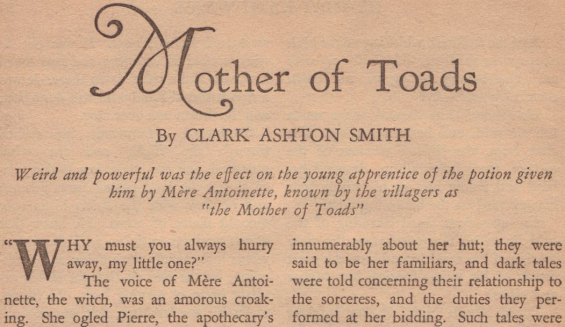
Weird and powerful was the effect on the young apprentice of the potion given him by Mere Antoinette, known by the villagers as “the Mother of Toads.” First published in Weird Tales, July 1938.

Here’s a |PDF| made from the censored version that appeared in Weird Tales.

Posted by Jesse Willis
Listen To Genius: Goblin Market by Christina Rossetti

SFFaudio Online Audio

I listened to a great episode of BBC Radio 4’s In Our Time about Christina Rossetti recently. I was fascinated by their brief discussion of her poem Goblin Market. Melvyn Bragg and guests described it as:

‘celebrated, fascinating, bizarre, extraordinary, powerful, strange, lascivious, and religious.’

I tracked down a reading, a very good one, and I think you’ll agree it is really amazing!

This poem is totally sexual, yet does not feature a word of sex. Full of lesbianism, incest, fruit and at least nine kinds of wow!

Listen To Genius!Goblin Market
By Christina Rossetti; Read by Kate Reading
1 |MP3| – Approx. 23 Minutes [POETRY]
Publisher: Redwood Audiobooks (Listen To Genius)
Published: 2008?
Source: Listen To Genius
Lizzie and Laura are two innocent sisters inhabiting a beautiful “per-raphaelite” fairy tale pastoral land. They hear the calls of the goblin men, sample the fruit once, buy’s a curl of her hair. First published in 1862.

Here’s a |PDF| featuring illustrations by Rossetti’s brother.

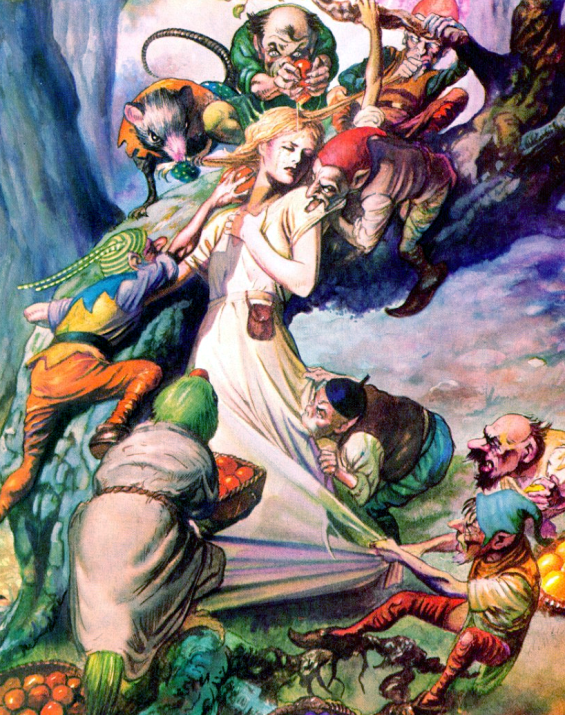
And behold a snippet from John Bolton‘s gorgeous 1983 comics adaptation of Goblin Market:

Goblin Market ilustration by John Bolton

Posted by Jesse Willis