
The SFFaudio Podcast #486 – AUDIOBOOK/READALONG: The City Of The End Of Things by Archibald Lampman

Podcast

The SFFaudio PodcastThe SFFaudio Podcast #486 –The City Of The End Of Things by Archibald Lampman; read by Mr Jim Moon. This is an unabridged reading of the poem (5 minutes) followed by a discussion of it. Participants in the discussion include Jesse, Mr Jim Moon, and Prof. Eric S. Rabkin.

Talked about on today’s show:
Jesse goes crazy, this guy’s amazing!, unheard of, earlier and later weird poetry, Ezra Pound and T.S. Elliot, the poems of Clark Ashton Smith, child prodigy out of California writes amazing poetry!, Hamilton, poetry without music isn’t mainstream anymore, rhyme and verbal invention, evolutionarily pro-adaptive, mate-getting and gene replication, fashion, Dr. Bowdler’s Legacy, Sir Walter Scott, immoral novels, flat-chested sexy women, enormously mammary sexy women, almost perfect rhyme and rhythm, doggerel, Alexander Pope, the Canadian Keats, romantic poetry, William Wordsworth, Archibald Lampman on twitter: @alampman, H.P. Lovecraft, almost Lovecraftian, cosmicism, a dream poem, A Thunderstorm, multi-valent meaning, depths, circles, 1894, multiple ways to understand,

BESIDE the pounding cataracts
Of midnight streams unknown to us,
’T is builded in the dismal tracts
And valleys huge of Tartarus.
Lurid and lofty and vast it seems;
It hath no rounded name that rings,
But I have heard it called in dreams
The City of the End of Things.

Its roofs and iron towers have grown
None knoweth how high within the night,
But in its murky streets far down
A flaming terrible and bright
Shakes all the stalking shadows there,
Across the walls, across the floors,
And shifts upon the upper air
From out a thousand furnace doors;
And all the while an awful sound
Keeps roaring on continually,
And crashes in the ceaseless round
Of a gigantic harmony.
Through its grim depths reëchoing,
And all its weary height of walls,
With measured roar and iron ring,
The inhuman music lifts and falls.
Where no thing rests and no man is,
And only fire and night hold sway,
The beat, the thunder, and the hiss
Cease not, and change not, night nor day.

lurid night, end of days, a Dying Earth story, an automated factory, a city at the end of time, post humanity, the end of things we have made, at the end of the concept of things (manufacture and industry), bursting with different ways of looking, a Canadian Shelley, “hail to thee blithe spirit”, Ozymandias, the works of man, creation, what does the first “of” mean, the telos of things, removing humanity, leafless vs. dismal, sonorous description, murky, flaming, what does this presage?, “wandering lonely as a cloud”, the creations of man persisting, leafless tracts, lands with no leaves, books without pages, making decisions, this is a fantasy or this is a science fiction, dreams as vision, genre distinctions, Edgar Allan Poe, Dreamland, “bottomless vales”, pastoral Gothic bound in human emotion, looking forward, shadows echoes, rings and rounded, the end of a cycle, a nadir, the end of a phase, the poem is the city, the poem becomes the city, “unknown to us”, fore and aft in time, adjective vs. adverb, multiple meanings, once we “see”, a derivative meaning of cataracts, waterfall, extraordinary! extraordinary!, referring to himself, putting in vs. allowing in, this city has no name, it hath no rounded name, “Megacity 422”, a sense of gears turning, verticality and depth, this could be a clock (except for all the fire), foundry factory, uninhabitable, seeing this as astronomy, the music of the spheres, an awful sound (full of awe for us), what is a rounded name? Bubbles, Radar, the fixed stars, wandering planets, the Earth, a sublunary place, in addition, none know it now, set in Hell, Tartarus, the “Titan Woods” in Dreamland, a place and a being, Chaos and Gaia, Hesiod, an area in Hades, defeated titans, imprisoned cyclopes, the Gold, Silver, Brass, and Iron ages, the heat death of the universe, Samuel Taylor Coleridge, an absent sun, the end of the industrial world, philosophical depths, how is a height weary?, The Machine Stops by E.M. Forster, Kubla Khan; or, A Vision in a Dream: A Fragment, The Time Machine by H.G. Wells, the hell of the mechanized underworld, and the garden above (until the night comes),

In Xanadu did Kubla Khan
A stately pleasure-dome decree:
Where Alph, the sacred river, ran
Through caverns measureless to man
Down to a sunless sea.
So twice five miles of fertile ground
With walls and towers were girdled round;
And there were gardens bright with sinuous rills,
Where blossomed many an incense-bearing tree;
And here were forests ancient as the hills,
Enfolding sunny spots of greenery.

sunlights and blossoms, a dream interrupted, a river ringing the city of the end of things is Omega,

And moving at unheard commands,
The abysses and vast fires between,
Flit figures that, with clanking hands,
Obey a hideous routine.
They are not flesh, they are not bone,
They see not with the human eye,
And from their iron lips is blown
A dreadful and monotonous cry.
And whoso of our mortal race
Should find that city unaware,
Lean Death would smite him face to face,
And blanch him with its venomed air;
Or, caught by the terrific spell,
Each thread of memory snapped and cut,
His soul would shrivel, and its shell
Go rattling like an empty nut.

It was not always so, but once,
In days that no man thinks upon,
Fair voices echoed from its stones,
The light above it leaped and shone.
Once there were multitudes of men
That built that city in their pride,
Until its might was made, and then
They withered, age by age, and died;
And now of that prodigious race
Three only in an iron tower,
Set like carved idols face to face,
Remain the masters of its power;
And at the city gate a fourth,
Gigantic and with dreadful eyes,
Sits looking toward the lightless north,
Beyond the reach of memories:
Fast-rooted to the lurid floor,
A bulk that never moves a jot,
In his pale body dwells no more
Or mind or soul,—an idiot!

ITS ROBOTS!, Hephaestus, automaton owls, iron lips, warehouses, dump truck, the garbage truck, automated sounds, metaphorizing the pieces of the machine, exquisite control of language, imabic tetrameter, that empty nut, a prelapsarian time, the mechanized is ultimately the problem, mysterious, people built this city, now they’re dead except for three, Jesse’s illustration, a nightmare vision, the controllers of the city?, a fourth, Dreams Of Yith by Duane W. Rimel and H.P. Lovecraft, The Night Land by William Hope Hodgson, the huge sentinel, an insane person (a nut case), vapid empty mindlessness, trapped in the iron tower, prisoners, The Technological Society by Jacques Ellul, the citizen who does not participate, the three and the one, we’ve done this to ourselves, human perfection as an oxymoron, mortal races, who did the setting?, an exclusion, the idiot remains,

But some time in the end those three
Shall perish and their hands be still,
And with the masters’ touch shall flee
Their incommunicable skill.
A stillness, absolute as death,
Along the slacking wheels shall lie,
And, flagging at a single breath,
The fires shall smoulder out and die.
The roar shall vanish at its height,
And over that tremendous town
The silence of eternal night
Shall gather close and settle down.
All its grim grandeur, tower and hall,
Shall be abandoned utterly,
And into rust and dust shall fall
From century to century.
Nor ever living thing shall grow,
Or trunk of tree or blade of grass;
No drop shall fall, no wind shall blow,
Nor sound of any foot shall pass.
Alone of its accurséd state
One thing the hand of Time shall spare,
For the grim Idiot at the gate
Is deathless and eternal there!

who is this grim idiot?, idiom, Time, Lean Death, playing VR games, are they the masters?, master’s, Voices Of Earth, the mechanism underneath everything, the physics underneath reality, if this is all metaphor…, emojis that look like you, emoticons, technology, part of the reason to have poetry: to communicate the incommunicable, “grim”, a haunting spirit, “the graveyard grims” giant spectral hounds that guarded cemeteries, the wheel, the Hell turns off, a science fiction poem, The Valley Of Unrest by Edgar Allan Poe,

Once it smiled a silent dell
Where the people did not dwell;
They had gone unto the wars,
Trusting to the mild-eyed stars,
Nightly, from their azure towers,
To keep watch above the flowers,
In the midst of which all day
The red sun-light lazily lay.
Now each visitor shall confess
The sad valley’s restlessness.
Nothing there is motionless —
Nothing save the airs that brood
Over the magic solitude.
Ah, by no wind are stirred those trees
That palpitate like the chill seas
Around the misty Hebrides!
Ah, by no wind those clouds are driven
That rustle through the unquiet Heaven
Uneasily, from morn till even,
Over the violets there that lie
In myriad types of the human eye —
Over three lilies there that wave
And weep above a nameless grave!
They wave: — from out their fragrant tops
Eternal dews come down in drops.
They weep: — from off their delicate stems
Perennial tears descend in gems.

Reading, Short And Deep, But who Can Replace A Man? by Brian Aldiss, a missing piece of the puzzle from the dialogue of science fiction and fantasy, City Of The Titans, City At The Edge Of Forever by Harlan Ellison, an anthology of Victorian verse, The Atlantic Monthly, March 1894, the praise of Lampman as a nature poet, The City by Ray Bradbury, inimical to man, There Will Come Soft Rains by Ray Bradbury, Sara Teasdale’s There Will Come Soft Rains, WWI,

There will come soft rains and the smell of the ground,
And swallows circling with their shimmering sound;

And frogs in the pools singing at night,
And wild plum-trees in tremulous white;

Robins will wear their feathery fire
Whistling their whims on a low fence-wire;

And not one will know of the war, not one
Will care at last when it is done.

Not one would mind, neither bird nor tree
If mankind perished utterly;

And Spring herself, when she woke at dawn,
Would scarcely know that we were gone.

we are very dangerous for ourselves, a poet who should not be forgotten, the scholarship, so many layers, its marvelous, repeating words strategically, the theme being revealed, such a deep feeling for what it is that he’s about.
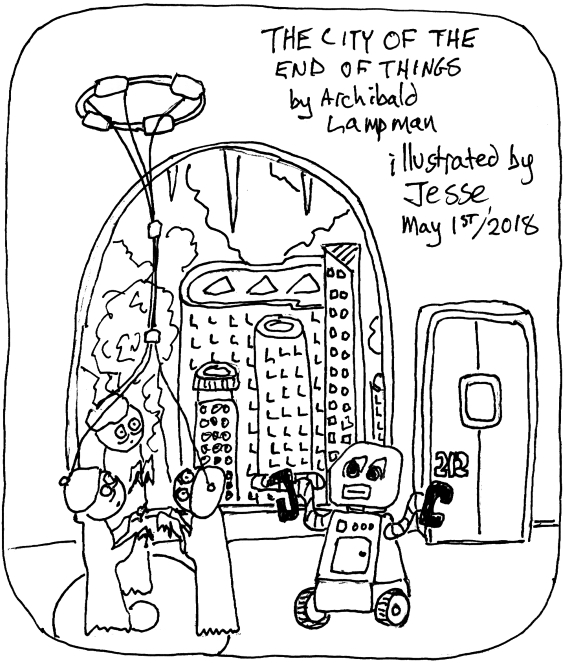
The City OF The End Of Things

Posted by Jesse Willis
The SFFaudio Podcast #367 – READALONG: The Prince And the Pauper by Mark Twain

Podcast

The SFFaudio PodcastThe SFFaudio Podcast #367 – Jesse, Julie Davis, and Maissa talk about The Prince And the Pauper by Mark Twain.

Talked about on today’s show:
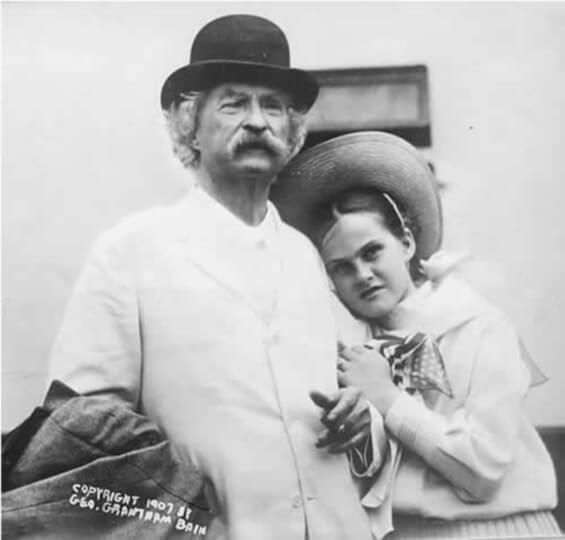
1881, 1882, Julie’s Mark Twain obsession, realistic fiction, children’s literature, reading with teenagers, old books teach you their vocabulary, quasi-historical fiction, Tom Sawyer, something classier, Sir Walter Scott, like Dickens-lite, sooo Dickens!, Huckleberry Finn, young people of all ages, anything public domain was marketed for children, appealing to children, sympathetic characters, lacking wry cynicism, less biting, he’s an anglophile, making points, how do we treat people, trading places, The Pickwick Papers, Nicholas Nickleby, Bleak House, the progress of an author, everybody knows the story, enters the popular culture like a fable, a meta-issue, where’s the science fiction and the fantasy?, Jesse’s thinking, The Prisoner Of Zenda, Ruritania, inspired by, precursors, an immediate classic, that Ringo (1974) movie, Carrie Fisher, that Monty Python thing, so much fun, and his talentless half brother, Vincent Price, John Ritter, chock-full of fun, The Man In The Iron Mask by Alexandre Dumas, Double Star by Robert A. Heinlein, this phenomenon, replacing the king, Citizen Of The Galaxy, the influence of Twain is in SF, Three Men In A Boat by Jerome K. Jerome, Great Expectations, David Copperfield, the Wishbone adaptation, way down into the culture, Dave (with Kevin Kline and Sigourney Weaver), Moon Over Parador with Richard Dreyfuss, in that continuum, A Connecticut Yankee In King Arthur’s Court, research and divergence, footnotes, Edward, Lady Jane Gray, Star Trek: Mirror, Mirror, parrallel worlds, Freaky Friday, so many avenues, Big with Tom Hanks, swapped identity, genre defining, what it says on the tin, parody versions, The Monkees, 25 minutes of ridiculous, The Monkees a fake version of The Beatles, Twain’s Joan Of Arc book, incredibly well plotted, dreaming the life of a king, Tom is the king of Offal Court, crazy, King of the Gamecocks and King Foofoo, Miles Hendon’s story is parallel to Prince Edward’s plot, it goes really deep, Tom’s two sisters, Nan and Bess, Mary and Elizabeth, everybody gets to be king or queen for a day, queen for nine days, Mary’s short reign, Elizabeth’s long reign, a lot of pain and torture and unjust punishment and superstition, the psychological irony, every king should live by the laws of his subjects, the Blue Laws, pardonings, wise judgement, chapter 22/23, not a joke book, situational humour, doing the Robin Hood thing, the Ruffler, a beggar who refuses to beg, threatening the tinker with a soldering iron, a thief who won’t steal, putting a clime on him, a cant term for an ulcer, a slatternly woman and a diseased baby on the side of the road, an here’s the recipe, the mother daughter witches, witchcraft, the wisdom of Solomon from the mouths of babes, foolishly wise, native common sense, hath it always this dread effect?, a parallel scene, when Edward is in gaol as Tom, the crime of being Baptists, who burned?, burned at the stake, Tom had watched a procession, crisp flesh, some gruesome stuff, not a satire, straightforward historical (romanticized), Errol Flynn as Miles Hendon in the 1937 movie, the Oliver Reed movie adaptation (1977), tainted by Ringo, too heavy, Ernest Borgnine, Rachel Welch, interchangeable beauty, you monster!, he’s Errol Flynn-ing it all over the place, a heavy focus on the Miles story, Charlton Heston as Henry VIII, he was every historical male figure, all the time travelers form the 1970s movies, Miles’ brother is sent to the American colonies and becomes a politician, making it more satirical, the 1977 adaptation is very faithful to the novel, comedy, Edith, the children’s hospital, when Twain visited Europe he bought a lot of books, after his ordeal, teachings out of books, The Merchant Of Venice, reading the classics, I’ll make a classic tale, as if it has been with us forever, absolutely historical fiction and yet…, a Disney version, a timeless story, remember the humanity of the people around us, applying your humanity, anchor in reality, the kids, forgoing the crazy laws, I’m going to honor children always, meta-stuff, a short reign, the romantic relationship, she spurns Tom and marries a rich old Earl, Romeo And Juliet, twin brother from another mother, Ivanhoe, close enough, about as far away from SFF as Jesse will go, Moby Dick, Wrath Of Khan, William Shatner is the white whale, Patrick Stewart, the whipping boy, “to cheapen miracles by wasteful repetition”, he’s going places, what do you do with your time?, the Prince’s eyes flashed, speak on, we wade and swim in the canals, reality was so dreary, be careful what you wish for, the grass is always greener, delicious irony, adults child relationships, Mark Twain’s relationship with Dorothy Quick, on a trans-Atlantic crossing, a Disney movie about their relationship, Dorothy Quick was a Weird Tales poet, a New York Times obituary for March 16th, 1962:

DOROTHY QUICK, POET AND AUTHOR
Mystery Writer Dies – Was Friend of Mark Twain

Mrs. Dorothy Quick Mayer of 880 Park Avenue and East Hampton, L.I., a writer who treasured a childhood friendship with Mark Twain, died yesterday at her home here after a long illness.

Miss Quick was a girl of 11 in 1907 when she met the famous author on an Atlantic crossing. She was returning to Plainfield, N.J., from Europe with her parents, the late Mr. and Mrs. Henry Quick.

Recognizing Twain (Samuel L. Clemens) by his wavy hair and white suit, she walked around and around the deck, passing very slowly by his chair each time, until he finally came over and introduced himself.

“It was the beginning of a friendship that was to last until the very day of his death,” [1910] she recalled in 1954.

After the voyage she received a telegram from Twain asking whether she would prefer as a birthday present “one elephant or 10,000 monkeys.” She replied that she would prefer his books – which he sent her, along with a tiny white elephant.

Her memories of Mark Twain were published last year by the University of Oklahoma Press under the title “Enchantment.”

Miss Quick was married in 1925 to John Adams Mayer, who died in 1940. She continued to write under her maiden name. Her collected poems were published by the University Press, Washington. She also wrote mystery stories and contributed a weekly column for many years to newspapers in East Hampton and Riverhead, L.I.

Since 1960 Miss Quick had been honorary president of the Mark Twain Association of New York. Her other literary memberships included the P.E.N. Club, Pen and Brush, the National League of American Penwomen, the Brooklyn Poetry Circle, Women Poets of New York, and the Society of Composers, Artists and Authors.

over-sexualizing everything, Jack London and H.G. Wells, Nathaniel Hawthorne and Herman Melville, Wilkie Collins and Charles Dickens, Edgar Allan Poe and Charles Dickens, a persuasive fan letter, Poe and Dickens had a private lunch, my pet raven, the end of Barnaby Rudge, a can of leaded paint, Poe had been struggling with a particular poem: The Raven, Dickens is the epitome of success, his reviews, there’s a reason why, put that in, worth a reread!

Mark Twain and Dorothy Quick

Posted by Jesse Willis
The SFFaudio Podcast #299 – READALONG: Northanger Abbey by Jane Austen

Podcast

The SFFaudio PodcastThe SFFaudio Podcast #299 – Jesse and Julie Davis talk about Northanger Abbey by Jane Austen.

Talked about on today’s show:
North ANGER! Abbey, this is a comedy, parody and meta-gothic novel, The Mysteries Of Udolpho, an inversion, Jane Austen is hilarious, The Jane Austen Book Club (the movie), documentaries, “its very meta”, her first (and almost) last novel, the advertizement from the authoress, fashions of literature and clothing, Tilney and Thorpe, the price of everything, a braggart, going afoul, a terrible sketch,
A Jane Austen Education: How Six Novels Taught Me About Love, Friendship, And the Things That Really Matter by William Deresiewicz, don’t just believe what everybody teaches you, desperate characters, Pride And Prejudice, letting you think, going along, women are supposed to be passive, a woman’s only right is to refuse, railroaded by stronger personalities, “…born to be an heroine”, a mundane life, Catherine is living her life in the third person as a Gothic romance heroine, 1,000 alarming presentiments, romance subverted, The Mysteries Of Udolpho as a less realistic and hyped up version of Northanger Abbey, the labyrinth is society not Mrs. Radcliffe’s Apennines, Emma, Mrs. Allen, it’s just not done, Isabelle’s master list of Gothic Novels, “there’s nothing I wouldn’t do for someone who isn’t my friend”, an open conversation, “I wish we knew someone here”, she’s 15, true to human nature, the arch narrator, hands and heads in the proper number to go around for all the children, Frederick, I’ve broken with my father, just like in a Gothic novel, the (BBC) audio drama of The Mysteries Of Udolpho, “you should really try Ursula K. Le Guin”, absolutely horrid!, the black wardrobe!, a character sketch (illustrated below), “She seized, with an unsteady hand, the precious manuscript, for half a glance sufficed to ascertain written characters; and while she acknowledged with awful sensations…”, a washing bill!, Eleanor, everything is explained, the volumes, a rushed ending?, the mysterious messenger, Henry’s true character, reining in your own imagination, Washington Irving’s The Legend Of Sleepy Hollow, he’s spooking himself, the description of the birds, the slaves, New York, giving facts and making comments, we are doing a lot of the colouring, the one thing we know about readers is that they read, the reading process, the black veil <-is from The Mysteries Of Udolpho, The Minister’s Black Veil by Nathaniel Hawthorne, a very funny (as in curious) story, Castle Of Otranto by Horace Walpole, supernatural elements, the refinements, the timelessness, Phyllis Whitney, Mrs. Radcliffe, The Oval Portrait by Edgar Allan Poe, what went wrong?, The Turn Of The Screw by Henry James, Herman Melville’s Billy Budd, The Devil To Pay, Sir Walter Scott, H.P. Lovecraft, Georgette Heyer, Northanger Abbey as a modern novel by Val McDermid, a YA novel, Fahrenheit 451, serving as a feeder, everybody is reading these trashy novels, an impassioned defense of the novel, you can’t live your life as if it was a novel, two movie adaptions, the 2007 ITV production, plot shorthand, Lord Byron, something terrible coming out of London, two tombstones and a lantern on the frontispiece, all of Jane Austen’s books have soldiers in them, a timeless focus on the people, when Julie met Jenny, these are characters not plots, sitting at the piano, The Many Lovers of Jane Austen, a Texas convention, with Klingons and Kirks, WWI, cigarettes and something to read, Mansfield Park, Mrs. Allen but with an edge, Juliet Stevenson as a narrator, 170 books read (in 2014), reading speed, a stumbling savourer, The Pickwick Papers by Charles Dickens, solitary reading vs. group reading, trains boost reading, “drawing room reading like singing, piano playing, and card”, scandalous reading, reading out loud, David Timson’s Dickens narrations, dramatic readings, Dickens invented the audiobook, Charles Dickens And The Great Theatre Of The World by Simon Callow, Elizabeth Klett’s reading of Carmilla, oh my!,

I leave it to be settled, by whomsoever it may concern, whether the tendency of this work be altogether to recommend parental tyranny, or reward filial disobedience.

“Who? What? Your love? Well, that’s super”, he was not in the least addicted to locking up his daughters,

“…and he was not in the least addicted to locking up his daughters. Her mother was a woman of useful plain sense, with a good temper, and, what is more remarkable, with a good constitution.”

surrounded by children, they all have to tucked in, they’re genteel, it was wet that day, a good introduction to Jane Austen.

Northanger Abbey - Marvel Comics Adaptation

Catherine Morland - Character Sketches (1892)

Posted by Jesse Willis
The SFFaudio Podcast #290 – AUDIOBOOK/READALONG: The Legend Of Sleepy Hollow by Washington Irving

Podcast

The Legend Of Sleepy Hollow by Washington Irving
The SFFaudio PodcastThe SFFaudio Podcast #290 – The Legend Of Sleepy Hollow by Washington Irving; read by Chip (for LibriVox). This is an unabridged reading of the novelette (1 hour 23 minutes) followed by a discussion of it. Participants in the discussion include Jesse, Mr Jim Moon, and John Feaster.

Talked about on today’s show:
1820 (1819), the idea behind the story, Celtic folklore, Sir Gawain And The Green Knight, the Wild Hunt, Geoffrey Crayon, Popular Tales Of The Germans, Volksmärchen der Deutschenby Karl Musäus, racing to a bridged, a shattered gourd, Sir Walter Scott, “the wizard of the north”, Tam O’ Shanter by Robert Burns, headless ghosts, Anne Boleyn, headless horses!, jack-o’-lantern, is this a Halloween story or a Thanksgiving story?, 1834, the word “coconut” (head and soul), the South Pacific, breadfruit, The Red One by Jack London, the shattered pumpkin becomes carved into a Jack-O-Lantern, Brom Bones, meta-textual inference, Washington Irving is buried in Sleepy Hollow, NY, a Hessian artilleryman, a sleepy forgotten area, Rip Van Winkle, the Dutch of New York are like the Irish of the British empire, a Connecticut Yankee teacher, sleep, bustling New York City, Tarrytown, Nathaniel Hawthorne, Irving’s loving description of the landscape is like Lovecraft’s loving description of architecture, the jokey Washington Irving, Guests From Gibbet Island by Washington Irving, pirates, Pluto, “nod, wink, and giggle”, a comedy with a great sense of mood, the many birds, Crane, pudding in their bellies, the Van Tassel larder, a low yield version of 20,000 Leagues Under The Sea by Jules Verne, an excellent ragù, an exquisitely painted portrait, Jeff Goldblum playing Ichabod Crane, the dilating abilities of an anaconda, the full orchards, the rooster with his wives, The House Of The Seven Gables, “the world’s first Scooby Doo ending”, Brom Bones is a colossal prick, anti-intellectual, having read several books all the way through, Cotton Mather, the labour of headwork, headlessness, a practical joke, the post-script, the moral (if it has one or if it needs one), The Cask Of Amontillado by Edgar Allan Poe, a deathbed confession, family portraits or a mirror, “in pace requiescat”, alternate endings, the 1999 movie adaptation with Johnny Depp, “Rip van Kolchak”, beheading an embryo, the imagery, Christopher Lee, Marvel Comics adaptations, Ghost Rider, a goblin, J.R.R. Tolkien, distinguishing between goblins and orcs, interchangeable terms, Scrooge, FOLKLORE ON FRIDAY – Headless Horsemen, a whip made of a human spine, the Comics Code Authority, Morbius: The LIVING Vampire, the gaffers at von Tassel’s quilting frolic, an old brower, the Wild Hunt (again), rivers marking town boundaries, “liminal areas”, “a marvelously gruesome book”, Vampires, Burial, and Death: Folklore and Reality by Paul Barber, vampires can’t cross running water, a Dukes of Hazzard crossover, the Disney/Bing Crosby cartoon, The Wind in the Willows, The Partially Examined Life (talking the American philosophers), walking while reading a book vs. walking while reading a phone, van Ripper, Gunpowder (the horse), anti-intellectual vs. hyper-competence, Sleepy Hollow as a vision of America (as opposed to Europe), William James, Henry James, young and different, Henry David Thoreau, Walden, the American Revolutionary War, NYC vs. NY State, Irving regretting the American revolution, Lovecraft’s nostalgia, a very American story, “the world’s turned upside down!”, Ivanhoe, enbosomed in the mountains, a debunking, Frank L. Baum’s new creations for an American fantasy, Kansas, the tin woodsman’s chopping, a cyborg version of the Ship of Theseus, written for little children, the heart is more important than the brains, Brom Bones as the hero, Ichabod mucks-in, haunted tulip tree, Major Andre, an unselfconscious hero, corporal punishment, Wackford Squeers from Nicholas Nickleby by Charles Dickens, a wise-schoolmaster, spare the rod and spoil the child, “six of the best when they were ten”, dancing around the issue, squishing, Starship Troopers by Robert A. Heinlein, “if this were the middle ages and he were a viking…”, Sons Of Anarchy vs. Vikings, bearded vengeance, ichthyology, von Ripper, von Brunt, von Tassel, von Brunt Colonel Ichabod Crane, The Castle Of Indolence by James Thomson, Gothic credentials, autumn, the sleepy hollow boys, Twin Peaks and the Bookhouse boys, the good old boys, more references to NASCAR, Brom Bones as an archetype, the Sleepy Hollow TV show, we can’t CGI our way out of bad writing, “Alan Moore-esque”, “nice, self-contained, and pretty much done”, Katrina as a master manipulator, singing lessons, it’s been haunted forever (maybe 30 years), belief in hauntings vs. belief in ghosts, a haunted green shag carpet, the stain, something was dragging itself on the ground, “The Stone Tape” hypothesis, “creeped by some creepy creepness”, a bad place, Salem’s Lot by Stephen King, poltergeist activity, Brom Bonesey, the 1790 setting, a haunted beach?, Center Lake, a hat sodden with blood, a headless borrower, a local Jimmy Hoffa, folklore becomes enmeshed, why does she settle for Brom Bones?, “a man of great parts”, Shakespeare: “Ale promoteth the desire but taketh away all performance”, Diogenes: “If only I could alleviate my hunger by rubbing my belly”

Supernatural Thrillers - The Headless Horseman Rides Again
The Headless Horseman and Ichabod Crane
The Legend Of Sleepy Hollow - Word Cloud
The Legend Of Sleepy Hollow - "What Fearful Shapes And Shadows Beset His Path" (1899)
The Legend Of Sleepy Hollow by Washington Irving - illustration by Jason Juta
Sleepy Hollow - illustration by Scott Gotto

Posted by Jesse Willis
The SFFaudio Podcast #275 – READALONG: Ivanhoe by Sir Walter Scott

Podcast

Sir Walter Scott's Ivanhoe

The SFFaudio PodcastThe SFFaudio Podcast #275 – Jesse and Mr Jim Moon discuss Ivanhoe: A Romance by Sir Walter Scott

Talked about on today’s show:
1820, the Tantor Media audiobook as read by Simon Prebble, 3 comic book adaptations!, the July 2014 BBC Radio 4 adaptation (1hr), General Mills Radio Adventure Theater, immensely important, Wamba and Gurth, looking at adaptations, refinement, Robin Hood (1973), the splitting of the arrow, a willow wand, daring-do fiction, archery, folktale, Will Scarlet splits the arrow in the Queen Katherine Ballad, the historical inaccuracies, Rob Roy, a plump text, King Richard and Friar Tuck, The Merchant Of Venice by William Shakespeare, a very Shakespearean novel, pithy and punchy, dialogue and banter, The Lord Of The Rings by J.R.R. Tolkien, fully motivated characters, Athelstane, colour cloaks, where does Isaac stat at Ashby?, Chapter 2 Gurth is “this second Eumaeus”, Ivanhoe is a retelling of Odysseus’ return to Ithaca, the usurpation, the governance of Scotland, the Saxons as the Scots under the English yoke, Loxley, Prince John, King John, Magna Carta, robber barons, Brian de Bois-Guilbert (wants Rebecca), Reginald Front-de-Boeuf, “Front of Beef” (wants Isaac’s money), Maurice de Bracy (wants Rowena), war and God, the 1997 BBC TV adaptation of Ivanhoe, an Arthurian style obsession, the reconciliation, Athelstane is almost a Hobbit, Athelstane death is a comedic version of a Guy de Maupassant or Edgar Allan Poe premature burial story, The Fall Of The House Of Usher done as farce, Monty Python And the Holy Grail, surprisingly few deaths, “boys own adventure”, The A-Team, Ulrica’s death, the the Waverley Novels, almost a Fantasy, magic, The Prisoner Of Zenda, venison, the Douglas Fairbanks Robin Hood, the Black Knight – who could it be?, how easy would the disguises be seen through in 1820, bigger than Stephen King or J.K. Rowling, stage adaptations, Waverley places around the world, Abbotsford, British Columbia is named (in part) after Sir Walter Scott’s home, Ivanhoe’s popularity in the southern United States, invasion, slavery and chivalry, underselling the power of fiction (as compared with non-fiction), On The Origin Of Species by Charles Darwin, The Communist Manifesto, Tolkien, understanding fiction, the revelation of truth through fiction, novels were once quite novel, the need for novels, models of action, 1984 changes, helps and improves you, “what is honorable action?”, the power of oaths, rapacious acquisition vs. honorable service, the destruction of the Templars, banishment was a harsh punishment, an obsession with love, Rebecca is the female Ivanhoe, the role of the Jews in the book vs. the adaptations, banking, this is not an anti-Semitic book (shockingly), the coin counting scene, the roasting scene, Friar Tuck is super-anti-Semitic, Churchill’s background, why is it that English were not as anti-Semitic as most of Europe?, a zeitgeisty historical novel, looking at the present through a historical lens, puffy, the level of intellect is very high – the etymology of pig, Lincoln Green, the final battle, a powerfully intellectual book for a piece of fiction, mid-19th century fiction isn’t as punchy, wit and intelligence in peasant characters, J.K. Rowling must have read Ivanhoe, Sir Walter Scott’s was “the Wizard Of The North”, Cedric <-the name comes from this book, "freelance" <-lances for hire, Robin Hood: Prince Of Thieves, Robin Hood (Ridley Scott), Robin Hood’s nom de guerre, ITV’s Robin Of Sherwood <- both Robin Hood mythologies are in it!, the "Dread Pirate Roberts", a good knight but a bad king, pagan gods, Herne the Hunter, Ivanhoe popularized the Middle Ages, Arthurian scholarship, folk customs, the ancient Egypt craze, A Connecticut Yankee In King Arthur’s Court by Mark Twain, a big powerful book, A Song Of Ice And Fire is kind of the anti-Ivanhoe, the Dunk And Egg stories, surprisingly modern, the symmetry of Ivanhoe, a tonic for gallstones, HBO should commission Ivanhoe, the 1952 version, the 1982 version, Ciarán Hinds, Mark Hamill, Kevin Costner vs. Alan Rickman, a noir ending averted.

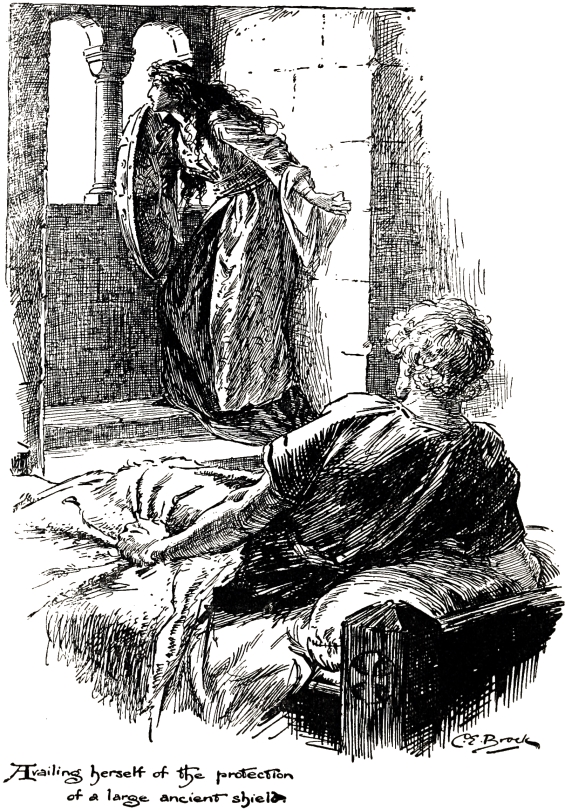
Rebecca and Ivanhoe - illustration by C.E. Brock (1905)

Ivanhoe illustrated by Clarence Leonard Cole (1914)

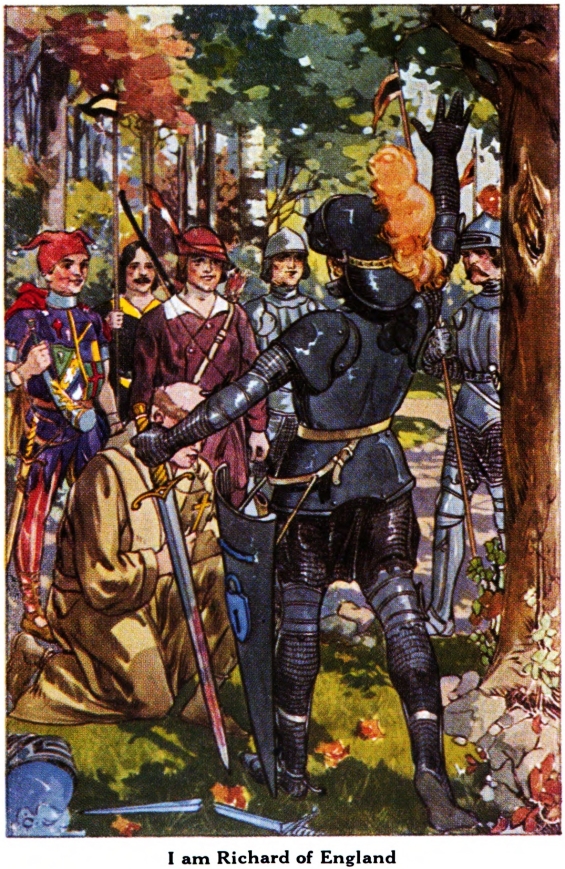
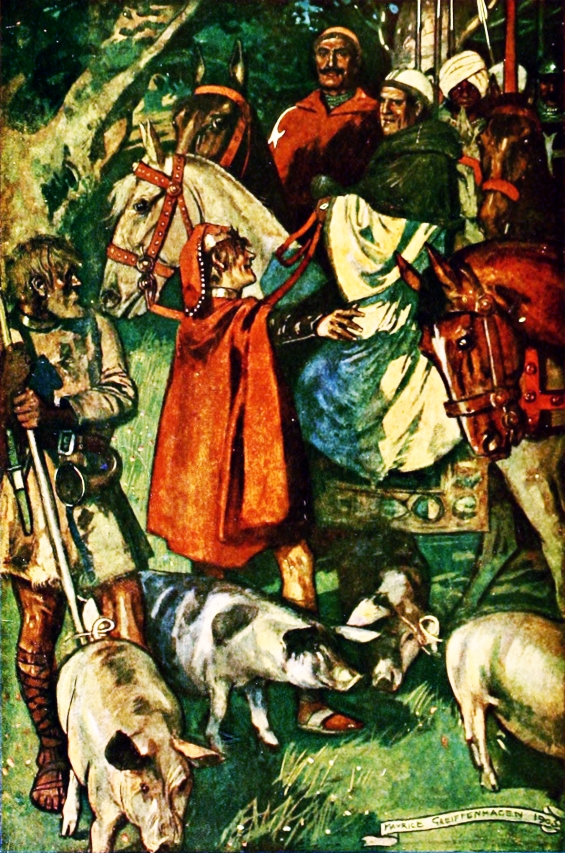
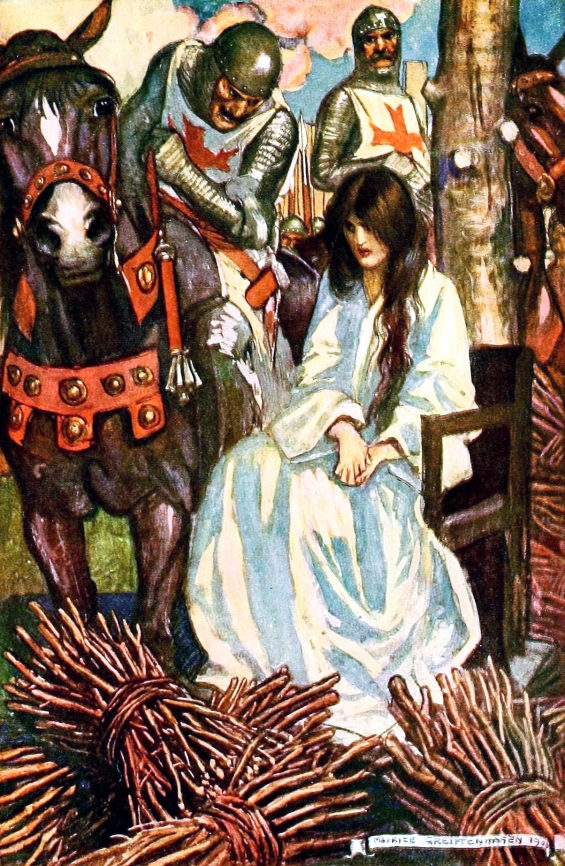
Ivanhoe illustrated by Maurice Greiffenhagen

Ivanhoe illustrated by Maurice Greiffenhagen

Ivanhoe illustrated by Maurice Greiffenhagen

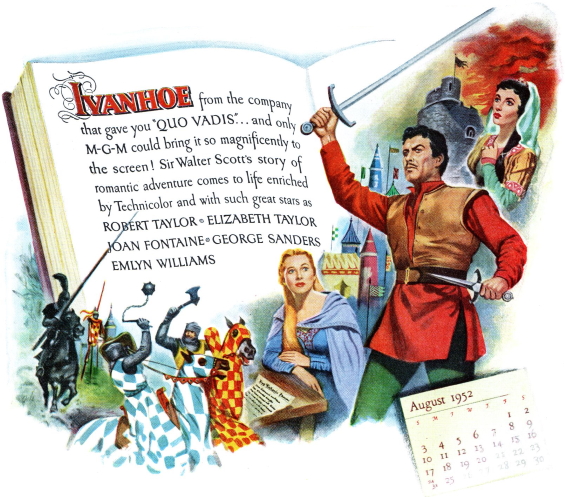
ad for Ivanhoe from Good Housekeeping, August 1952

Posted by Jesse Willis
The SFFaudio Podcast #240 – READALONG: Frankenstein by Mary Shelley

Podcast

The SFFaudio PodcastThe SFFaudio Podcast #240 – Jesse, Scott, Julie Davis, and Bryan Alexander discuss Frankenstein by Mary Shelley.

Talked about on today’s show:
The 1818 edition versus the 1831 edition, the half-made up prologue, Leaves Of Grass, are there any body changes?, “the corpus”, Downpour.com’s version with Simon Templeman, Anthony Heald, Stefan Rudnicki, Frankenstein vs. the monster, creature, wretch, demon, insect, incoherent with rage, face to face, moving on, the fainting hero or heroine, swooning, Lovecraftian fainting, cosmic horror, Herbert West: Re-Animator, Young Frankenstein, Cool Air by H.P. Lovecraft, Edgar Allan Poe, M.R. James, becoming god, why are we reading a book by a teenager from almost 200 years ago, Edinborough, the broken reader, Sir Walter Scott, Ivanhoe, etymology, Paradise Lost, Gulliver’s Travels, Percy Shelley, William Shakespeare, Macbeth, Caliban, The Tempest, Science!, hey I’m killing your family and stuff, Spirits!, Russia, the Arctic, Prospero, Caliban the dogsbody, Sycorax, the pre-science world to the science world, Christopher Marlowe, “I’ll burn my books!”, the education of young Victor, religious swearing, Brian Aldiss, spark, the electrical element, Galvani and the frog’s legs, more chemical (than electrical), the Romantics, the heart of the the book, “the modern Prometheus”, nature, the North Pole, Siberia, Things As They Are; Or, The Adventures of Caleb Williams by William Godwin, berries and nuts, vegetarianism, the bringing of fire, The Wonderstick (the coming of the bow) “spooky action at a distance”, fire as technology, Eric S. Rabkin, fire -> knowledge -> enlightenment, the blasted oak, the family tree destroyed, this mortal clay, body stealing, Burke and Hare (are a lot of fun), ‘there are some things man was not meant to know’, a motherless monster, Young Frankenstein, what’s so cool about Young Frankenstein is that it solves the problems caused by previous movie adaptations, “Hey there handsome”, is the creature really hideous?, “a very Jewish movie”, “this is a boy that the world will love”, community, Victor had no Igor, Eyegor, or Fritz, well formed, euphemisms, dull yellow eye, proportionate limbs, is he veiny?, black and flowing hear, a pearly whiteness, a feminist novel, a misogynist fantasy, the framing narrative, males behaving badly, Gothic, gender coding, the curse of the Frankensteins, Frau Blücher, the Kenneth Branagh adaptation of Frankenstein, The Revolt Of Islam by Percy Bysshe Shelley, Justine (and the lack of justice she receives), Anne Rice, “I’m never going to sleep again”, the path of evil, Victor had a temper, the abnormal brain (Abbie someone), a “blank slate”, Henry Frankenstein, Young Frankenstein retcons the book and the 1931 movie (and the Hammer movies), Froderick Frankenstein, Boris Karloff, Transylvania Station, The Body Snatcher, Robert Louis Stevenson, The Black Cat (1934), Bela Lugosi, a movie from a parallel dimension, the perfect romantic character, the “noble savage” and the “blank slate”, flowery language and obfuscation, a baby story, that’s Science Fiction right there, an eight foot baby, how do we detect the world, what is light?, a blind man given sight, sphere vs. pyramid, Johann Wolfgang von Goethe, an urbane monster, the ideal syllabus, Mary Shelley is showing the heck off, Paradise Lost, The Sorrows Of Young Werther, suicide, Lives Of The Noble Greeks And Romans by Plutarch, Ruins Of Empires by Constantin-François de Volney, Frankenstein’s lab notes, Safie, the Ottoman Empire, Turkey as a proxy for European society, Olaf Stapledon, the hapless fate of the aboriginals of North America, Shelley’s hanging out with radicals, an anti-American dream, three years after the fall of Napoleon, Lord Byron, dreams, “how are we living with each other?”, Prometheus Unbound, The Last Man, Prometheus should be our hero, Harlan Ellison, Walton, Bryan’s dissertation was on Frankenstein, The Rime Of The Ancient Mariner, The Narrative Of Arthur Gordon Pym Of Nantucket, At The Mountain Of Madness, Star Trek, doppelgangers, doubles all the way down, perfectly symmetrical, The Prestige by Christopher Priest, Melmoth The Wanderer by Charles Maturin, The Saragossa Manuscript by Count Jan Potocki, the fire and ice, “in the cottage we are the monster”, lookism, when they see the monster, “as a lion rends the antelope”, Blade Runner‘s ending, all those murders, a child having a temper-tantrum, where you gonna get that wood?, standing on an ice-floe, Dante’s Inferno and the final circle of hell, Inferno by Larry Niven and Jerry Pournelle, Bryan reads Frankenstein every year, teaching Frankenstein in high-school, a perfect ending, is the monster still out there?, Edison’s 1910 film adaptation of Frankenstein (it’s 10 minutes), imagine Tesla adapting Frankenstein, a shameless self-promoter, “Victory Frankenstein fucked with Mother Nature, and She bore him a strong son”, ‘there are some things that man was not meant to know’, Walton wants to find the source of the pole’s magnetism, “it’s not just loving your family – it’s also loving your fellow being”, “if you make a mistake – own up”, Walton learns from the story, Young Frankenstein, it’s an ethics book, mad scientists, a Kennedy son, Moby Dick, C.L.R. James, a ship as a microcosm of society, “I smell readalong!”, Hitlerland: American Eyewitnesses to the Nazi Rise to Power by Andrew Nagorski, “the kids loved Uncle ‘Dolf”, “charisma leaking out all over the place”, charisma and beauty, a bear doesn’t understand charisma, real-life parallels, what is the function of Henry Clerval in the book, is he us?, a homoerotic reading, Percy and Bryon go hiking, it’s Simon Pegg and Nick Frost, World’s End, Shaun Of The Dead, Hot Fuzz, Elizabeth’s provenance and the weird relationship with her cousin/brother/owner Victor, a subterranean psychodrama, Victor’s wild dream in which Elizabeth dies and then turns into his mom, grave worms, a maternal figure and a corpse.

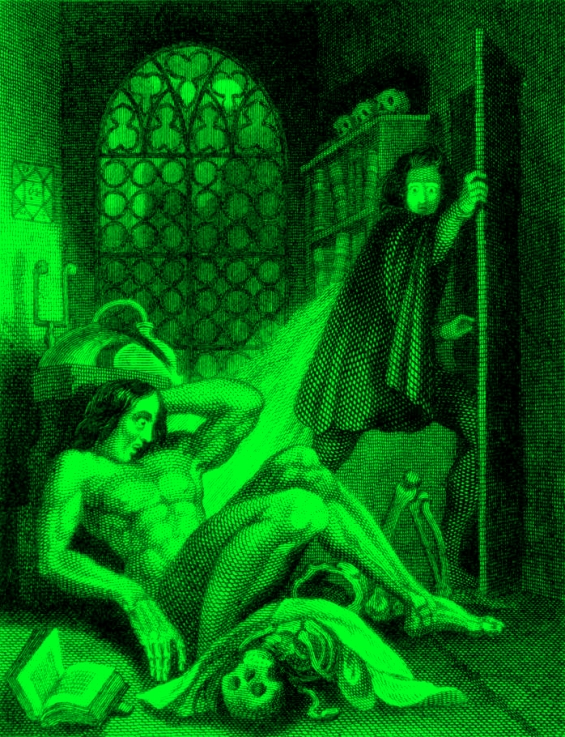
Theodor von Holst - Frankenstein

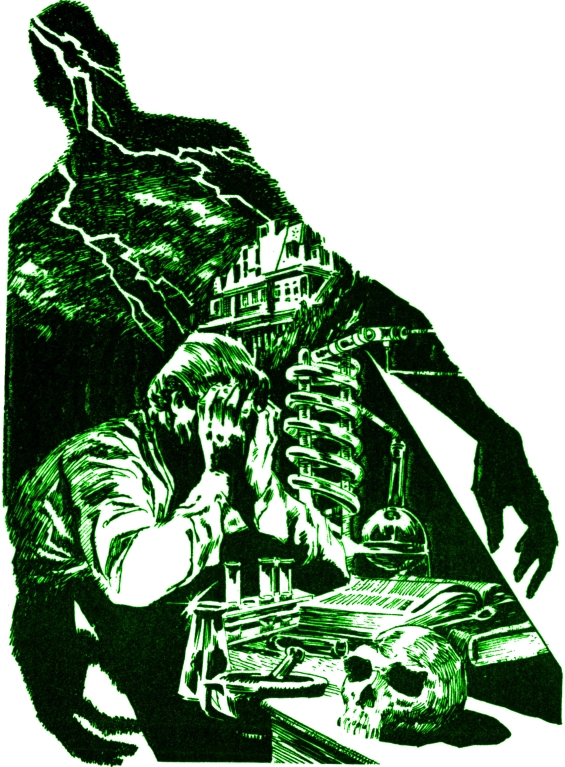
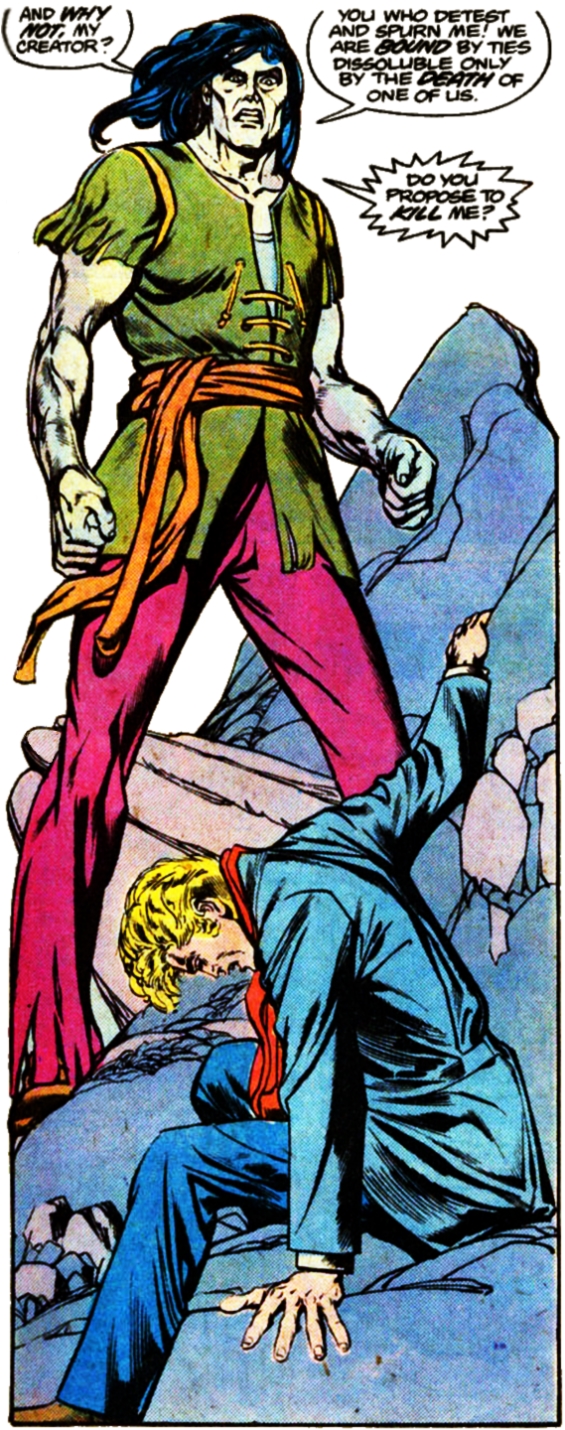
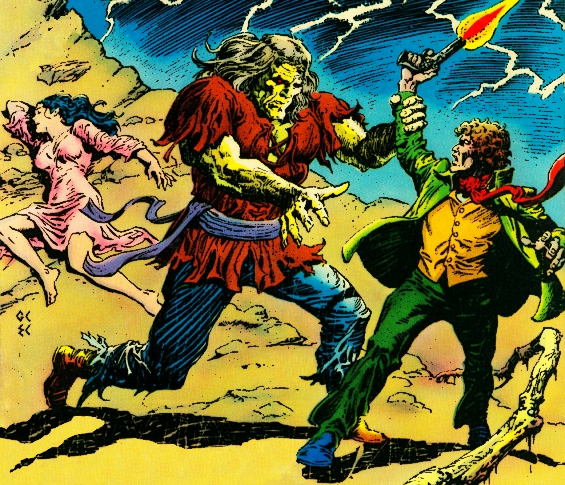
Frankenstein - illustration (possibly by Ernie Chan)

Frankenstein

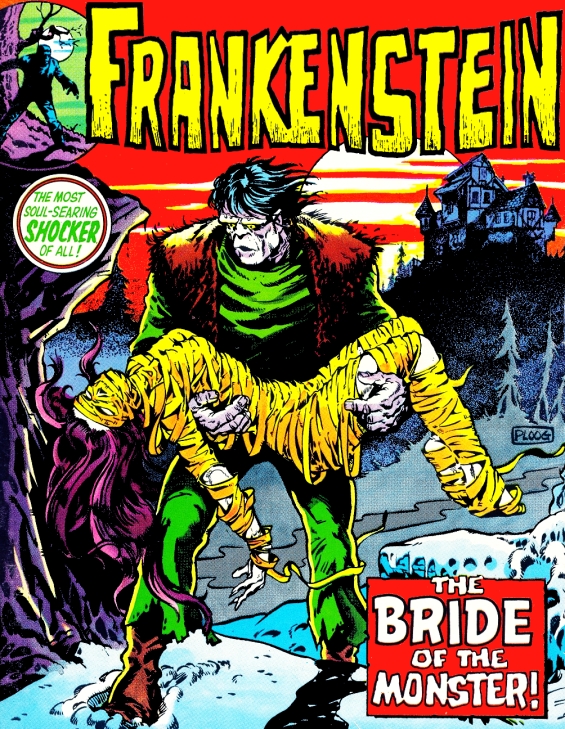
FRANKENSTEIN - The Bride Of The Monster - illustration by Mike Ploog

FRANKENSTEIN - illustration by Dino Castrillo

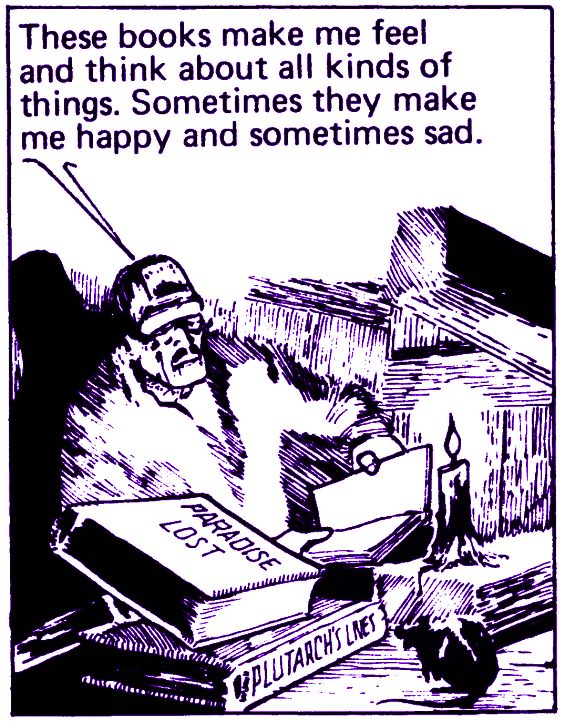
These Books Make Me Feel...

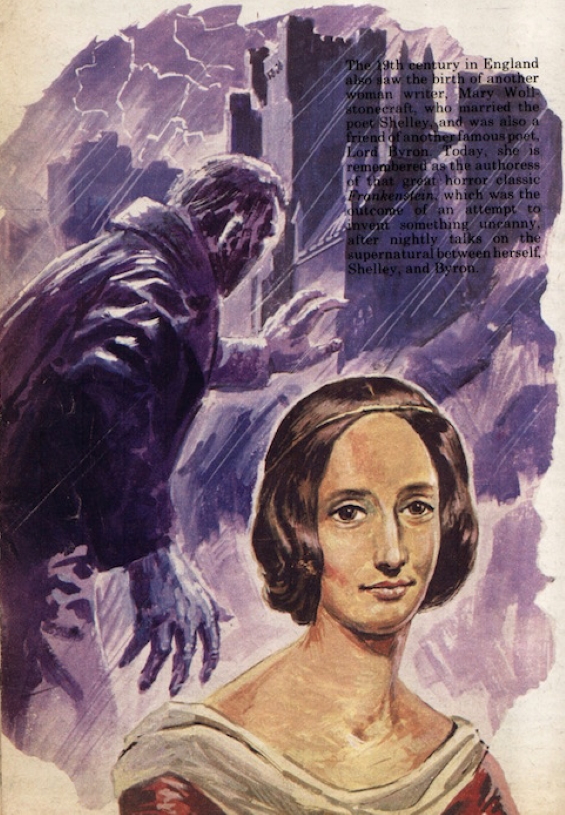
World Of Wonder - Mary Shelley

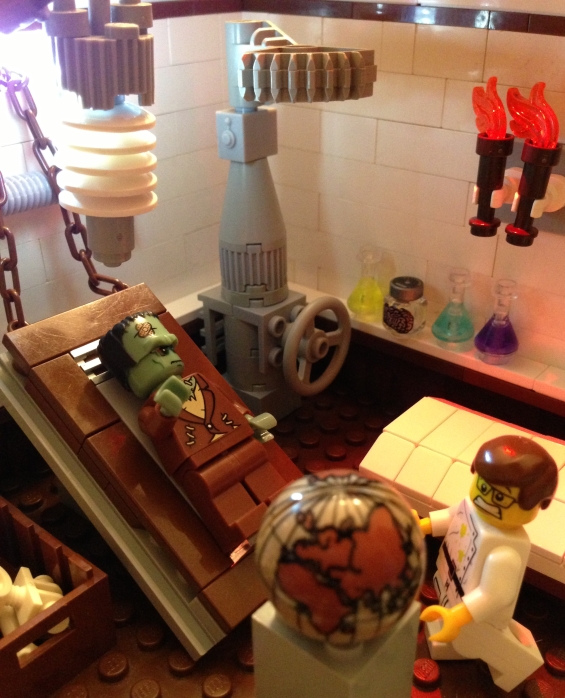
LEGOized Frankenstein

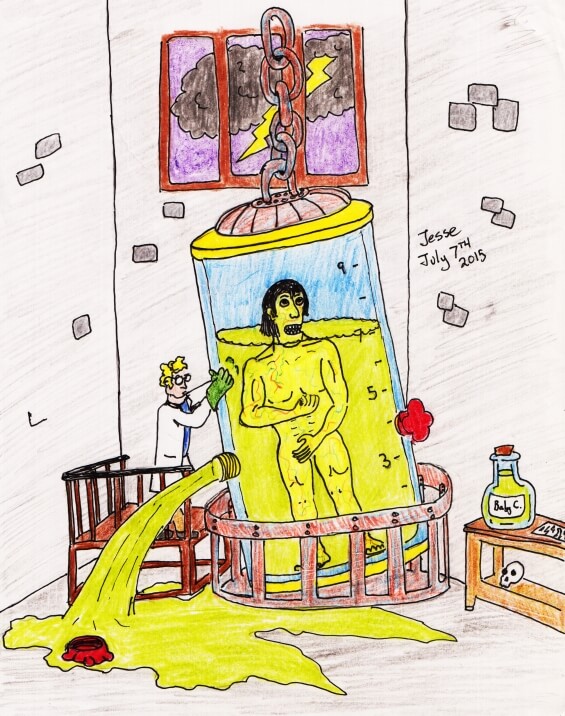
The Creation Of Frankenstein's Creature - illustrated by Jesse

Posted by Jesse Willis