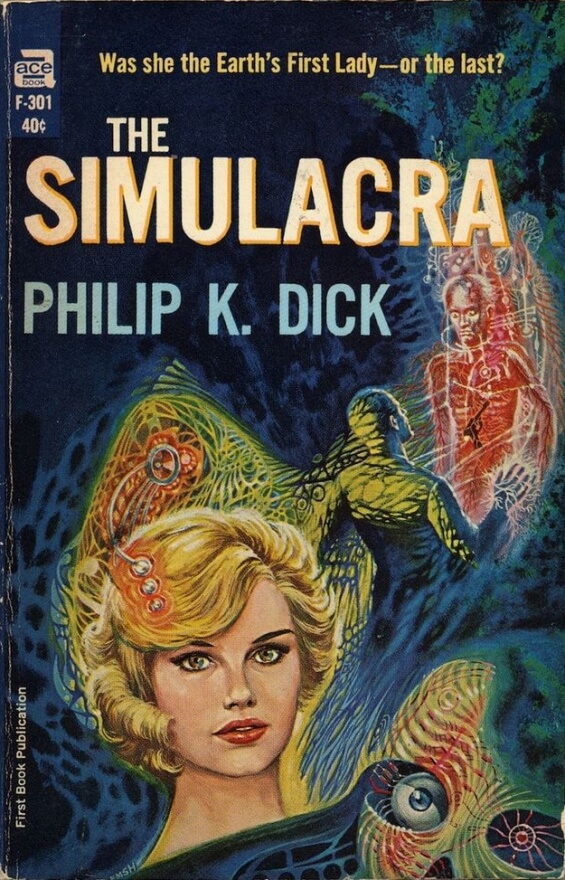

The SFFaudio Podcast #352 – TOPIC: Doors, Gates, and Portals (and Rubicons)

Podcast

The SFFaudio PodcastThe SFFaudio Podcast #352 – Jesse, Mr Jim Moon, and Prof. Eric S. Rabkin talk about doors, gates, and portals (and rubicons)

Talked about on today’s show:
thinking about doors, individual phenomena, a phenomenological way, white and purity, water, Edmund Husserl, an intensional act of consciousness, the conquistadors, when did WWII happen?, what kind of a phenomenon is a door?, doors are artificial, Narcissus and the lake, a boundary, passages for the whole body, windows, two-way passages, quicksand, horizontal movement, four qualities, the story of Oedipus, the riddle of the Sphinx, man -> mankind, the founding myth of Western culture, Aristotle, from one world to another, Eric in his professorial mode, the word world, were = man, the age of Man, in the world of…, the social domain that human beings create for themselves, prisons, doors as phenomena are artificial boundaries between two different worlds, social changes from one side of a door to another, doors as a phenomenon represent changes from consciously defined worlds, outdoors vs. indoors, inside and outside the gingerbread house, the morning thesis, the idea for this show, windows as opposed to doors, The Wonderful Window by Lord Dunsany, wanting to turn windows into doors, a rich example, sliding doors vs. sliding windows, in Science Fiction…, Robert A. Heinlein, defining the writing style of Science Fiction, the ideal Science Fiction sentence, Beyond This Horizon, “The door dilated and a voice from within said ‘Come in Felix.'”, wasting energy, one little change makes it a Science Fiction world, Heinlein invented the word “slideway”, Friday, from the reader’s armchair world it the fantastic world, folklore, liminality, crossing rivers, wandering into the forest, a wild world with gods and monsters, agrarian rural society -> industrial living, the wardrobe, The Door In The Wall, The Gable Window by H.P. Lovecraft and August Derleth, Dreams In The Witch-house, a locked-room mystery, The Secret Garden, a Wellsian door in the wall, what’s behind the door could be anything, mythical monsters, vampires need your permission to cross your threshold, Dracula comes in through the window, defying gravity and the phenomenology of windows, an instant subliminal marker, ho ho ho, Murders In The Rue Morgue by Edgar Allan Poe, the lore of changelings, leaving the house by the chimney, Little Red Riding Hood, “dispatched by typical female means” (cooking), Alice In Wonderland and Through The Looking Glass, Alice is fantasizing before she leaves the bank of the river, the river side is a liminal domain, dazing, daisies, crossings, protective imagination, opening the door for a sequel, Neverwhere by Neil Gaiman, a girl named Door, London’s underclass, being homeless is living outdoors, a hunter named Hunter, Door’s father is Lord Portico, a door back into Heaven, another rich text, worlds within worlds, the word hinge, ideas hinge upon something, stiles aren’t like doors, stiles don’t have hinges, lichgates and side doors to churches, the dead enter the church through a different door than the living, The Superstitious Man’s Tale by Thomas Hardy, shades of everybody, fourteen saints, a holiday in Germany, the blood of a sacrificial lamb, Exodus, keeping death from the door, all saints day, Jack-O-Lanterns scare off the returning dead, nature, walking through a gate, spirits pass through, how do gates function in keeping out the spirits of the dead, gates as territorial boundaries, “you come in through here”, the laws of territoriality, a keeper of the gate, the gate is the cover of the book, the door is what we cross “Once upon a time…”, “the second page of the first paragraph of a famous book”, why round?, why the exact center?, why green?, Eric’s eyes are green, The Door In The Wall has a green door, magic doors are often green, The Magic Door The Green Door (aka The Little Green Door) by Mary E. Wilkins-Freeman, horrible and messy and smelly, fundamental jokes in the Shrek series, Shrek is green too, kids love farts, About Time (2013), Domhnall Gleeson going through doors, “doors are amazing”, The Phantom Tollbooth by Norton Juster, the Chinese Scholar’s garden at Snug Harbour cultural center, moon gates, gates post signs, gates offer viewpoints, from The Haunted Palace by Edgar Allan Poe:

And all with pearl and ruby glowing
Was the fair palace door,
Through which came flowing, flowing, flowing
And sparkling evermore,
A troop of Echoes, whose sweet duty
Was but to sing,
In voices of surpassing beauty,
The wit and wisdom of their king.

But evil things, in robes of sorrow,
Assailed the monarch’s high estate;
(Ah, let us mourn!—for never morrow
Shall dawn upon him, desolate!)
And round about his home the glory
That blushed and bloomed
Is but a dim-remembered story
Of the old time entombed.

And travellers, now, within that valley,
Through the red-litten windows see
Vast forms that move fantastically
To a discordant melody;
While, like a ghastly rapid river,
Through the pale door
A hideous throng rush out forever,
And laugh—but smile no more.

the mouth as a door for voice and wisdom (and later a gate for flies and maggots), orifices, doors are artificial, eyes as windows, windows as natural, calm water as a window, the night sky as a window into the universe, window = wind and eye, a metaphor switching meaning, a heart is like a pump and a pump is like a heart, Babylon 5, star-gates, the Twilight Zone show inside Futurama: The Scary Door, Fredric Brown: “The last man on Earth sat alone in a room. there was a knock on the door.”, William F. Nolan’s the door problem, a seventy-foot bug, the imagination trumps revelation, film, Shiley Jackson’s The Haunting Of Hill House (in the book and the film), banging vs. knocking, the unopened door, the end of The Monkey’s Paw by W.W. Jacobs, The Psychoanalysis Of Fire by Gaston Bachelard, “fire: fine servant, horrible master”, poor little rich boys, the ultimate irony: Arbeit Macht Frei, an open gate, the phenomena interpenetrate, Rubicon (lost and found), The Cold Equations by Tom Godwin, “h amount of fuel will not power an EDS with a mass of m plus x”, uni-directional time travel as a kind of rubicon, Julius Caesar’s crossing, Alea iacta est (“The die is cast”), suicide, Jean Paul Sartre, Rip van Winkle, rubicons are natural, driving in Los Angeles county, counties and shires divided by rivers, the mouth as a (mostly) one way door into the body, Protector by Larry Niven, the tree of life root is a one way door (a rubicon), The King In Yellow by Robert W. Chambers, The Ring, the River Styx, ancient heroes and gods crossing back and forth across the river Styx, biological machines, Jesus Christ’s tomb door, a locked room mystery, doubting Thomas, The Cold Equations as a demarcation between materialist SF and all other kinds, rejecting the premise of the story, two kinds of laws, “Marilyn willingly walks into the airlock and is ejected into space.”, myth vs. hard Science Fiction vs. soft Science Fiction, The Hitch-Hiker’s Guide To The Galaxy by Douglas Adams, a few examples in literature, The Pied Piper of Hamelin, seven gates to Hell in Pennsylvania, Hell, Michigan, Audie Murphy’s To Hell And Back, a rubicon as an irrevocable choice, The Subtle Knife by Philip Pullman, Will cutting portals to other realms, “the ability to create portal given to someone on the cusp of puberty”, age 21 (given the key to the door), Key to the city, garter -> gate, barbicans, walled homes in the northern Mediterranean, doors within doors, protected by the laws of the city, the freedom of the city given to military units, Janus -> January, a two faced god and the god of doors, the doors to the temple of Janus are closed, open cities, Brussels, the locking of doors, growing up in New York you’re never fully at peace, living in Strawberry Point, Iowa, wifi open vs. wifi encrypted, wardriving, keeping the door open, the subspecies, dutch-doors, squeaky hinges, a door that opens up, China Mountain Zhang by Maureen F. McHugh, “falling backwards into a world in which a consciousness extends infinitely in all directions”, “the phenomenology changes the epistemology”, ontological differences, The Star Rover by Jack London, a portal to other places and times via astral projection, even in confinement one can find ways out, The Demolished Man The Stars My Destination, Hypnos by H.P. Lovecraft, the restriction of the coffin of the body, jaunting, The Count Of Monte Cristo by Alexandre Dumas, The Twilight Zone episode The Hunt, a country bumpkin -> a rural American, all dogs go to heaven, gatekeepers and doorkeepers, porter, the Battle of the Teutoburg Forest, wine drinkers and beer drinkers, the Sapir-Whorf hypothesis, was anything down that hatch on Lost?

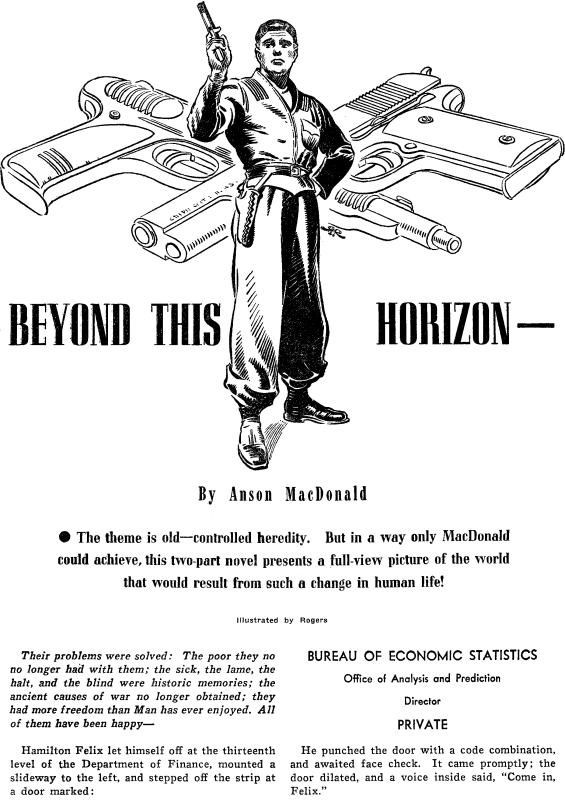
Beyond This Horizon - Astounding Science Fiction April 1942 - illustration by Hubert Rogers

Dr. Sun Yat Sen Classical Chinese Garden

Posted by Jesse Willis

The SFFaudio Podcast #351 – READALONG: The Long Goodbye by Raymond Chandler

Podcast

TheSFFaudioPodcast600The SFFaudio Podcast #351 – Jesse, Julie Davis, Seth, and Maissa talk about The Long Goodbye by Raymond Chandler.

Talked about on today’s show:
1953, Philip Marlowe, the long answer is no, The Big Sleep, “noir”, A Good Story Is Hard To Find, Double Indemnity, Billy Wilder, Elliot Gould, abridgements, long or too long, spending time with the detective, forgetting about plot, Ray Porter, The Maltese Falcon, Dashiell Hammett, The Big Sleep, the book, the 1978 audio drama (90 minute), the Japanese 5-part miniseries, the recent BBC audio drama, the 1973 movie, overdosed on goodbyes, this is not a noir book, typically hardboiled is with detectives, noir is typically not with detectives, hardboiled vs. noir, Greek tragedy, a basic distinction, poisonville, a certain lack of hope, the detective with a heart of gold, Mickey Spillane, the anti-Philip Marlowe, being more cynical, more punchy, twisted, he’s hitty, Chandler’s best lines, how many times “goodbye” comes up, see you in a line-up, you never say goodbye to the cops, this is just quiet enough, cynicism, he cares too much, do you ever get paid?, $1,200 in the bank, he’s got a portrait of Madison, “I’m a romantic Bernie”, “the smear”, coffee, the little wake, a mystery, remember that pigskin suitcase?, pigskin gloves, the central mystery, who murdered Terry Lennox’s wife, Wade’s wife, his test, I wish I could have killed them both at once, Sylvia, he couldn’t perform?, a more successful version of herself, femme fatale, muddled by drugs, a Linda Loring, throwing the suitcase, that’s the suitcase, Sylvia’s face, is that something Eileen could do?, she’s like the worst thing in her life, when you go crazy mad, caught in a lie, what about the blood?, we infer she beat Sylvia to a bloody pulp, why would she lie?, she wants to make it seem more real, my husband shot her then beat her, emotion and drugs, the 1973 movie, the Elliot Gould movie, the Q&A with Elliot Gould, diverged, plot and tone, weird and good, lighthearted and noir, script by Leigh Brackett (of Empire Strikes Back), a return to Los Angeles, Eileen is still alive in the movie, a conspiracy, Mrs. Wade is in love with Terry Lennox (and married to him as well), she despises him (or is she lying?), Eileen blames Sylvia for everything, the cool thing about this book is that it is very open, experiencing the mystery (rather than solving), just supposition, the mailbox, its almost as if the Mexican Terry Lennox doesn’t know what’s going on, a rotter from the beginning, what we read a lot of these books for, the mystery as the vehicle, Derek Jacobi reading The Adventures Of Sherlock Holmes, there’s a humanity to this, making different choices when in custody, Marlowe saw something in Lennox worth redeeming, if Bryan Alexander were here…, because it is a war book, huuuuhhhn, 1920s book by authors who survived WWI, which regiment was Lennox in?, the SAS in 1942 in Norway, taxi drivers and cops are vets, Chandler’s Marlowe is a vet, using the terminology, the one thing that is left unsaid, why is Terry Lennox acting this way?, his wife, he’s a wastrel, how the other characters react to Terry Lennox, the criminal in Los Vegas, Randy Starr, Manny Menendez, there’s no need, why didn’t you call sooner?, the reason he’s got those scars on his face, against my better judgement, picking up a wounded warrior, he does that for all kinds of people, Double Indemnity wasn’t fueled by war, where does that go into Some Like It Hot?, Terry Lennox is a bookend, pointing fingers and taking names, drugs and partying and corrupt police, why the analogy doesn’t work, the guy who’s not fighting during the war, James M. Cain, about rich selfish people who are wasting their lives, the plot, throwing them into relief, the contrast, seeing Terry Lennox lying on the road, what Terry Lennox has those scars for, the Japanese version, everything is inverted, he can’t be an American soldier, the enemy is the Russians, a different spin on it, dealing in the results of war, post-traumatic stress syndrome, over-the-top, over-saturated lighting, a lot of coffee, a comic book adaptation, answering unanswered questions, sympathetic, Candy is Julie’s favorite character, the war is central to the Japanese adaptation, reading it now, the first four or five Robert B. Parker Spencer books, The Godwulf Manuscript, a war novel, The Guns Of Navarone, The Lord Of The Rings as a way of dealing with WWI, talking about other things, A Voyage To Arcturus by David Lindsay, Mary Shelley’s Frankenstein, what it was like to be in the Ardennes in the winter of 1944, it was like being homeless, hoping the supply train is going to come through, why is he getting drunk all the time, hidden secrets and identities, there’s something about Marlowe, a survivor of the war of life, the drunk tank, the POW camp, Chandler thinks this is his best book, taxi drivers reading escapist science fiction magazines, if I was in that kind of condition…, we’re all in the same army, just want to make things right, to try and set some sort of reset, fix things, once in a long while you get dead, a load of grief and a bit of money, stopping the entropy, why can he not have a normal life any more, it’d be reductionist to say it was about war, post-war USA had a hell of a lot of drinking, half gin and half Rose’s lime juice will still get you soused (a gimlet), autobiographical (Chandler’s wife was dying while he was writing The Long Goodbye), author talks, Chandler is showing us a complete look at detective work and all that it takes, they’ve all got a scam going, sold his soul to the company store, his journalist friend, working the problem, Idle Valley (where the rich people live), Marlowe as an ex-drunk, what the drunk-tank is like, the life of an alcoholic, Chandler had drinking issues, a recovering alcoholic, more coffee than gin, the 1973 movie scene, “let’s get drunk”, trying to find the truth, the F. Scott Fitzgerald connection, The Last Tycoon, more idle rich, Wade writes historical romance (instead of detective fiction), translating to Japanese culture, hentai, taking off the layers of dresses (a woman who has never taking a bath), hanging out with Wade, self-destructive not wife-destructive, he didn’t kill that woman, an incompetent femme fatale, might-have been sort of a hooker, Wade brought her out of the gutter, their Mexico is Taiwan, a period piece, he was driving an American car (left hand drive), they must have had fedoras and gimlets, a jazz version of, “it’s okay with me”, hash-brownies, Arnold Schwarzenegger with a mustache, it WASN’T okay with him, justice, Eileen Wade got to sit with it, dispensing justice, somehow it is the same story, in cahoots with the gangsters, political gain, why did Marlowe abandon Terry at the very end, re-question, red-herrings (or not red-herrings), re-framing everything, that’s how we actually live (unlike a Scooby Doo ending), I would never have come out had you not smoked me out, he puts stuff out there, I was in the commandos, you’re not hear anymore, as elegant as a fifty-dollar whore, prove to me you’re not that way, “that was the last I saw of him”, he had a chance to become better, wanting to see the truth done and the innocent people taken care of, detectives poke at things, there’s nothing inside, two empty people, one filling with alcohol one filling with drugs, both ruined by the war (or whatever), the perpetual human problem, what’s the hole that’s left inside, ya ya ya ya ya ya, full of really good quotes, Chapters (Canadian book store), this book is so much fun, [we quote from the book], one for Julie, one for Seth, a briefcase one, at the bar it was always five in the afternoon, Terry Lennox became a Mexican, a Mexican syncopation to his speech, how refreshingly unconcerned about political correctness, when a Mexican…, sooo racist, sooo genderist, it’s of the the time, the fact that he’s got a knife, a little more granular sense that he’s a little person, there’s no fake characters, heart of gold vs. cynicism, how far am I gonna go with this?, the way they dealt with each other (in the Japanese adaption), you would clean the war off me, a relationship of debt, subtitles with footnotes, the second time through, little bits of description, a bird chirping, the car was gone, a red oleander bush, a baby mockingbird, a single harsh warning chirp, birds have to learn too, priming you for all sorts of things, it’s rich, it works on more than one level, so much of their time, how much is a sandwich, drinking their night away, they didn’t think about it the way they do now, the movie Airplane!, he has a drinking problem, flashbacks to the war (WWII), out of context it’s hilarious, it still sort of true, we’re always going to have the cultural baggage, none of Jesse’s students know who the Flintstones are, Flitstone vitamins is an echo of The Honeymooners, The Simpsons, reading a book like this is kind of like time travel, tiny houses with orange trees in Los Angeles, L.A. Noire (PC game), the game reconstructs a huge part of Los Angeles, the Grand Theft Auto games, Chinatown, The Black Dahlia, L.A. Confidential, playing the game is kind of like revisiting that period, oh hey I’m in the middle of an investigation here, games vs. books, Robert B. Parker co-wrote the final Marlowe book Poodle Springs, Ray Porter’s narration, female voices, the Joe Ledger series by Jonathan Maberry, the Mexican characters, Elliot Gould’s narrations, nicely abridged, he’s a weird speaker, a Robert Altman movie, what is lost was all those Chandlerisms, a collapse of characters, well what have you got now, the movie starts with a cat, Michael Connelly, there’s something cool happening in that 3 o’clock in the morning, the cat abandons him, the cat is Sylvia Lennox, you can’t lie to a cat, they demand truth, the sunrises and the sunsets in the Japanese version, the colour of a sunset and a Japanese print, the things that they take, two BBC radio adaptations, a LIVE TV movie in 1954 (now lost).

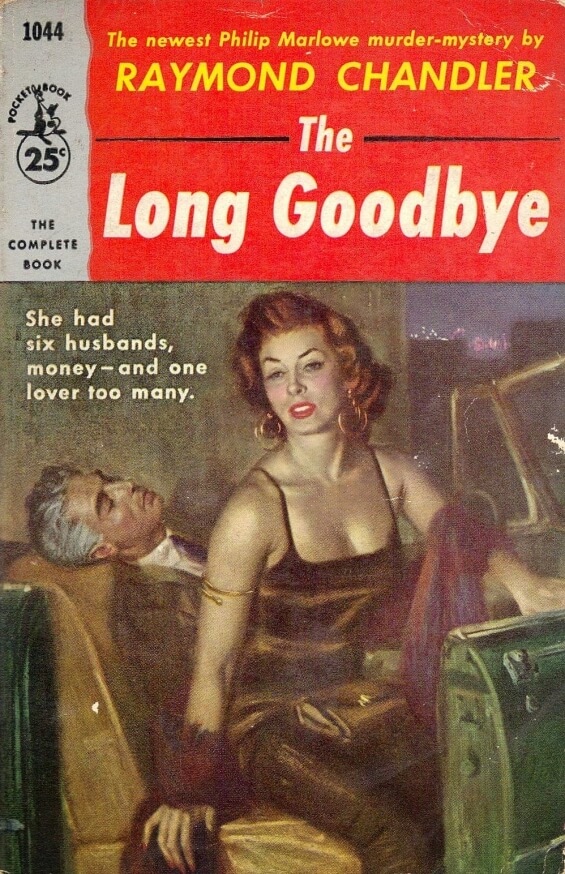
Pocket Books - The Long Goodbye by Raymond Chandler - Illustrated by Tom Dunn

Posted by Jesse Willis

The SFFaudio Podcast #344 – READALONG: Now Wait For Last Year by Philip K. Dick

Podcast

The SFFaudio PodcastThe SFFaudio Podcast #344 – Jesse, Paul, and Marissa talk about Now Wait For Last Year by Philip K. Dick

Talked about on today’s show:
1966, in the high end, if you want to know what Philip K. Dick writes, it has everything, interplanetary, pretty-earthbound, marriage issues, resonances with other novels, Eric Sweetscent, a nice Dick protagonist, touchy relationship stuff, “misogynist”, he loves women too much, his “headbasher”, The Search For Philip K. Dick, when he was ending their relationship, impotence, psychoology, a husband-father formula, a teenage alternate girlfriend, Eric is so sweet and so sympathetic, an evil bitch destroying the relationship, sympathetic and pathetic, addiction, JJ-180, drugs, time travel, the robot goes with her, robants, the secret service agents, the bill collector robant, the cab robant, “Sir, we’re not allowed to get married”, the robant that wants a bribe, Total Recall, the secretary with the fingernails that change colour, nude breasts with dye and sparkles, a decorative secretary, We Can Remember It For You Wholesale, Blade Runner, wheels, a confusing start, using amoebas to make stuff?, Wash30 = Washington 1930, the Philip K. Dick Fans site, none of this stuff is possible, the print amoeba, really cool writing, “in bed alone”, potent spirits of the past, a graveyard, describing space, is Cheyenne underground?, writing Wyoming again, NORAD?, dialogue vs. description, a nice state capital, “he was enjoying the sight of her dressing”, Lillistar’s secret police, creepy, the Reegs, Gino Molanri, a single medal on his uniform, that’s Hitler!, Gino Molinari is Mussolini, the Earth is Italy and the Star Men are the Nazis, Mussolini is not Hitler, the first fascist dictator, Rimmer from Red Dwarf, not racism but power and glory, when the Americans and the Canadians and the British invade Italy, the soft underbelly of Europe, why Molinari is getting sick, Mussolini’s alpine prison, Otto Skorzeny, rescue/liberate, “Hey, Hitler!”, Molonari is a smart Mussolini, the Reegs are nice, we look like the star-men but we have more in common with the reegs, Tony And The Beetles, telepathic females, one of the weirdest Philip K. Dick stories, a weird ending, the racist father, a frightening story, The Father-Thing, Hansel and Gretel without Gretel: The Cookie Lady, a really creepy story, a quasi sequel or a dry run for Now Wait For Last Year, the same themes, grapefruit sized baseball heavy plastic brains, the lazy brown dogs, the Martian print amoeba, from another Dick story, Colony and Beyond Lies The Wub, attacks by microscopes and towels, “I trusted the rug completely.”, camouflage aliens, when Cathy has her first trip, the history of their tech, matching furs, Virgil, he destroyed the fur industry, killing amoebas is ok?, the fur bearing animals are saved, “furs, that’s the best thing you can think of to do?”, Do Androids Dream Of Electric Sheep?, monad lazy brown dogs, “The quick brown fox jumps over the lazy dog”, are they dog brains?, fur is not alive in the first place, brains are plastic, both meanings, non-living brains, half a cent, so sweet, super sweet, their attacking each other, animal nature, they are as much alive as we are, their god is black, Himmel = heaven, the martian bat guano business, Molan-air-e, Wash-35, collecting stuff, authentic artifacts, The Thirteenth Floor, and Eye In The Sky, Time Out Of Joint, artificial towns, recreated towns, recapturing youth, a rich person’s game, Pitts39, the robant was lying… wasn’t it?, who is the liar?, strange and weird, a similar character in Do Androids Dream Of Electric Sheep?, a flawed god, his unsightly body, shambling, a pathetic figure, it does something to the whole book, first the book takes the shape and then at the end it is fixed, there’s a little animal at the end of Do Androids Dream Of Electric Sheep?, all this ersatz, Jonas, as dead as a robant, suicide, Tijuana, the absurdity of their jobs, seeing to it that factory-rejects got their place in the sun, “I love this stuff”, strong resonances, Wash35 is a 135 year old man recreating a frozen moment in time, time is NOT frozen, Dick has it every which way, “do you object to a stereotape…”, the orchestra isn’t there, all you possess is 1,200 feet of iron-oxide tape, we live with illusion daily, The Iliad is as much a fake as the robant children trading stamps, old-age making its dread appearance, “have an affair with me doctor”, The Cosmic Puppets, set in Virginia, Dick recreating his childhood, remembering the details, alternate presents, a cloud of possibilities, Tijuana Fur and Dye, “Mrs. Sweetscent, sweetheart”, when Cathy destroys the comedian recordings, Dick’s got some awesome recording…, by the way about that American Weekly with that article on the Sargasso Sea…, the Hearst newspapers, an empty cigarette package, antiques are the mcguffin for The Man In The High Castle, he’s right! we don’t live in the present, tweeting dreams, the internet is more reliable than the sun, it’s always on, the internet never goes off, we are living in a weird illusionary reality, when Cathy gets Korsakoff’s syndrome, all these elements that almost completely come together, the gel doesn’t completely set, there’s so much love for Cathy, the robot says he’s a good man, getting into the female character’s mind, he’s a boob man, so much empathy for people, hate and spite, she’s so mad, a movie star named Marm, the microwave dings, my purpose is to make your life a living hell, “good luck with that”, totally re-readable, I would love it again, we had no idea, what is with Molinari getting diseases from his staff?, his zipper was open, he kills people, we don’t know what’s true about him, he’s using his diseases, pulling a sick-day to avoid meetings, a plot device, sympathy pains, hypochondria, empathizing, the uber-empathizer, Bill Clinton felt your pain, literally, JJ-180 is the main character of this book, playing rope-a-dope with the Star-men, brain-freeze, Lord Kalvan of Otherwhen, Starman (1984), Return To Lilliput, every toddler’s dream, the war like Lilliputians, little Napoleons, we’re getting pushed around by little tiny people, taking slave labour from Earth, so we can win this war, whether the illnesses are real or not they are a great strategy, you can’t have Italy fighting on your side unless you’ve got Mussolini, Molinari is finding the middle ground, admirable, thinking the way Nixon is thinking in the Vietnam War, as we re-experienced with Iraq and Afghanistan, slow or fast peeling a band-aid, a self inflicted wound, an exploratory examination, “Molinari you are awesome”, Molinari is the hero, he saves Eric Sweetscent, so many good resonances, thinking while listening, why this isn’t the best ever Philip K. Dick novel ever.

Now Wait For Last Year - DAW Books

URANIA - Now Wait For Last Year by Philip K. Dick

Posted by Jesse Willis

The SFFaudio Podcast #336 – READALONG: A Voyage To Arcturus by David Lindsay

Podcast

The SFFaudio PodcastThe SFFaudio Podcast #336 – Jesse, Paul Weimer, and Bryan Alexander talk about A Voyage To Arcturus by David Lindsay

Talked about on today’s show:
the original title Nightspore Of Tormance, colouring a reading, a really weird book, William Blake meets Gene Wolfe but Scottish, H.G. Wells in the 1960s taking acid, John Bunyan meets science fiction, The Pilgrim’s Progress, do they leave the Earth?, the first five chapters, multiple resonances, future echoes, quasi-science fiction philosophy, a time travel book, a time loop, a Buddhist reincarnation story, everyone at the party, Krag, Surtur, and Shaping, a gnostic novel, re-reading the ending, Crystalman, a terrifying demi-god, a breathtaking thing, later Philip K. Dick, Galactic Pot-Healer is a happy version of this story, like the Epic Of Gilgamesh, profound and disturbing, the death-toll, The Odyssey, everyone who sails with Odysseus gets killed, Maskull is a killer, a freebooter, one half Conan, detailed set-up, energetic, furious, uncontrolled, coming to self-knowledge, the demi-urge we’ve been looking for, maybe the events are co-temperanous, the events on Arcturus vs. the events on Earth, time-travel, myth, mythic time is always happening, coming to awareness, pursuit of liberation, the point of process, the 1971 movie, black and white and low budget, hippie hair on Maskull, Mr. Hair, the medium, you are about to witness a materialization, isn’t that clever?, Lindsay injected so much resonance, dream-like, everything that Nightspore says and does shows his experience level, All You Zombies, By His Bootstraps, Predestination (an adaptation of Robert A. Heinlein’s All You Zombies), this book is about gender, female and male selves, the third gender, the Wombflash story, another version of Maskull, Joywind, a story about the human experience, Maskull = man-skull or mask-all, really profound!, like a religious text, explaining the conflicts with women, Oceaxe, Panawae, sacrificed for him, the Wikipedia chapter summaries, Starkness observatory, an observatory without telescopes!, The Crawling Chaos by H.P. Lovecraft, a house as a symbol for the body, climbing the observatory, he had three times the gravity, roll-up their sleeves, spitting on their wounds, this is a suicide story too, Joiwind, blood swap, blood brothers, quick sex, Crag spits on the blood, Steven Universe, naked wrestling, horseplay, matterplay, very 1960s, I Will Fear No Evil, Stranger In Strange Land, Mah-skuul, the voyage removes the masks, a total vision of the universe, explaining all of nature, Hindu reincarnation, a Promethean element, the fire of the gods, Fred Kiesche, the Ballantine publication, a sixties thing, the tower’s levels, climbing the Karmic ladder, what has need got to do with it?, each window is a life, Tormance = torment + romance or to romance, a quasi-scientific romance, Tralfamadore, Tormance as a platonic version of Earth, Eric S. Rabkin’s science fiction class, new senses, new organs, new colours, the sheer weirdness, a lake that is a musical instrument, like Ringworld, Carcosa, Jale and Ulfire (new colours), Mr. Jim Moon, The Night Land by William Hope Hodgson, a lack of rockets doesn’t prevent travel to the stars, a torpedo, backlight, quasi-science fiction, Edgar Rice Burroughs, like John Carter’s journey to Mars, like Superman under the yellow sun, a 19 hour journey, the profound understanding of the size and age of the universe, The Shadow Out Of Time by H.P. Lovecraft, deep time, massive space, the limitation of physics and limitations of matter, Violet Apple website (about David Linday), Oceaxe from Sycorax (from William Shakespeare’s The Tempest), Harold Bloom’s A Flight To Lucifer, C.S. Lewis was the first and only fan of the book, a complaint about the theology?, The Razor’s Edge by W. Somerset Maugham, wanting to find meaning in a godless or evil-godded universe, the strict rules of realism, The Glass Bead Game by Hermann Hesse, a post-apocalypse novel, a game of all of human knowledge, Siddhartha, Jesse is anti-realism, after reading A Voyage To Arcturus Jesse feels uplifted, it is all wrapped up in an H.G. Wellian style explanation, the greatest joke ever, the guy attending the seance is the guy who is called forth at the seance, The Red Room, bridging the gap between the ghost story and the real science fiction philosophy quest for the purpose of existence, Cavorite, a way to get to the thing that you want, a chapter about colour theory, art theory, Eric would be interested in Joiwind’s eating habits, eating Gnallwater, philosophy of food, vegetarianism, raising animals for food, Hinterland Games’ The Long Dark, as a WWI novel, the traumatic waste, the bonding of an individual to the will of a country, the Vietnam War, go out and kill people?, explaining the seance, the U.S. Civil War, 1920s and 1930s fiction, Mrs. Dolloway by Virginia Woolf, unseated and violent, this is a guy who went to war and didn’t like what he saw, Robert Graves, Goodbye To All That, comparisons to J.R.R. Tolkien’s textual texts, Lewis is more projective, Narnia, Lindsay and LEwis looking forward and Tolkien looking back, Middle Earth as the original history of Earth, Lewis looking forward, so much suicide, this book doesn’t shy away from anything, homoeroticism, Anne Leckie’s new exciting non gendered pronoun book, yeah well so does this 1920 novel, this book has everything, the third sex, gender swapping, how could this book ever make the mainstream?, Michael Bay production, Die Farbe (the German movie adaptation of The Colour Out Of Space), out on DVD-R, black and white and colour, colour changes, always travelling north, Maskull get on a train and go north to Scotland, back to Buchan, Olaf Stapledon, getting the cosmos, the universe becomes a character, The Last And First Men, Martian energy beings, Starmaker is like Edgar Rice Burroughs, massive issues of being, an ethical call to people, there’s nothing quite like it to day in fiction, Hypnos by H.P. Lovecraft, astral projection, we’ll go to the Moon, The Crystal Egg, working with the limited physics that is possible, Star Trek, Tsiolkovsky and Goddard, Star Wars, green corpuscles, the midichlorians, an airplane/submarine, Abaddon’s Gate by James S.A. Corey, an echo of Verne and Wells, mundane science fiction, this is bullshit!, their all jobless!, this is not planetary romance, more like H.P. Lovecraft’s dreamlands, dream rules apply, the experience of reading Gene Wolfe, mythic power with personal power, something is happening right around you.

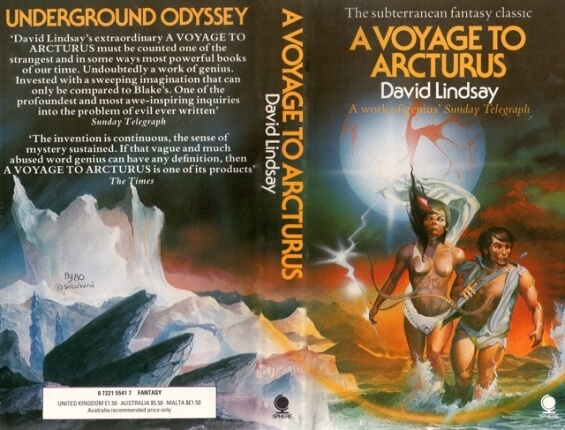
Sphere - A Voyage To Arcturus by David Lindsay

Posted by Jesse Willis

The SFFaudio Podcast #330 – READALONG: Dr. Futurity by Philip K. Dick

Podcast

The SFFaudio PodcastThe SFFaudio Podcast #330 – Jesse, Paul, and Marissa talk about Dr. Futurity by Philip K. Dick.

Talked about on today’s show:
Time Pawn by Philip K. Dick, 1960, The Little Black Bag by C.M. Kornbluth, Science Fiction Hall Of Fame: Volume 1, The Marching Morons by C.M. Kornbluth, Idiocracy, if smart people don’t have babies…, a kind of Heinleinian authority, a little grey case, his bag is missing, grey vs. black, a doctor from the past visiting a future society, medicine as a crime, interfering with euthanasia, another weird interesting post nuclear war world, primitive or advanced?, we don’t talk about death, reflecting our world back at us, youth culture, worshiping youth, movie heroes used to be old men, Logan’s Run, Nolan’s world, what is the appeal of that world?, a culture will run things for you if you don’t think a lot, the Ancient Egyptian culture of death, you will live your life in your death, the soulcube, immortality through the species itself, The City And The Stars by Sir Arthur C. Clarke, nobody wants to see that, kids are stupid, the wisdom of the grandmothers, the Vietnam War, genetic stupidity, Language For Time Travelers by L. Sprague de Camp, Stargate, Astounding, an editorial note for Time Pawn, the right to live, ruthless euthanasia, time travel, Dr. Jim Parsons, the character is a time pawn, the second arrow, an inevitability, to ensure their own existence, deterministic, the standard classic scene, being careened, the auditorium at the first Beatles concert is only filled with time travelers, Dick’s take on time travel, familiar stars. not familiar? why aren’t they familiar, figuring out the future of the character as he’s writing it, “huh, that’s weird”, completely unpredictable vs. completely predictable, van Vogtian, Paul employs a railroad metaphor, Sir Francis Drake, line by line rewrites, from New York to San Fransisco, matter to mine, Time Pawn vs. Dr. Futurity, glittering vs. illuminated, darting like silver fish, no aircars?, nobody is going to be reading Time Pawn anytime soon, “the chamber was a blaze of light…dead gods waiting to return”, a rushed novel?, what’d you do with all that?, standard Dick tropes: a wife shuffled to the side, missing the wife less in Dr. Futurity, the description of the women is much lengthier, always heaving breasts, there’s no questioning of reality, no surveillance, less questioning, an uncharacteristically straightforward story, it feels like all the other Ace Doubles, in the mode of reading SF, all the tropes are assumed, Margaret Atwood, Michael Crichton, going through the evolution to understand the SF tropes: Wells -> Gernsback -> the 60s, three a week, that’s all we need to know, airbags everywhere, flame retardant spray, toxic chemicals vs. being on fire, we live in a screwed up culture, mercury poisoning, asbestos, guide beams, the google car, GPS, if there was a solar flare…, Aftermath, a Charles Sheffield novel, old infrastructure could save us, Cuba, Alpha Centauri goes supernova, the Three Hoarsemen podcast, steam-punk without the steam is just punk, Pastwatch: The Redemption Of Christopher Columbus by Orson Scott Card, a monster, the Columbian exchange, Dick has just read about Sir Francis Drake, Drake’s voyage, he’s famous for making Queen Elizabeth I a big pile of money, Expo 86, the Golden Hind, Drake’s landing point, Oregon, Vancouver Island, Nova Albion, Albion, British Columbia, albino, a weird figure to fixate on, Cortez, Pissaro, The Mask Of The Sun by Fred Saberhagen, caught in the machinations of time traveling empires, more bushwhacking, Daniel Abraham, the way they talk in this future society, it keeps not working, his presence eventually changes their society, starting that whole tribe, the scene with the arrow, a predestination paradox, those stone markers, “I’ll get around to it”, that whole planet is covered in markers, the way Dick ended it, leaving it loose, why Time Pawn is so much of a better title, he feels he is the chess master after a certain point, the extended spaceship to Mars scene, the robot computer with a rat brain, such a creepy scene, “I wonder what’s going to happen”, if the character doesn’t want to get on track, what’s that about?, what are those guns for?, Shupos?, always people confronting him, make remarks about the women, this is NOT a book written by committee, don’t read this as your first Dick, more fodder for your feed.

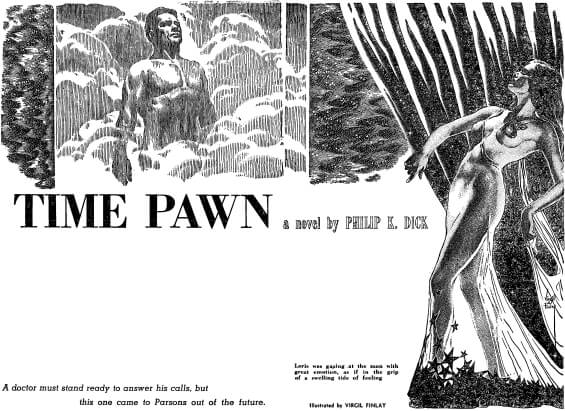
Time Pawn by Philip K. Dick - illustrated by Virgil Finlay

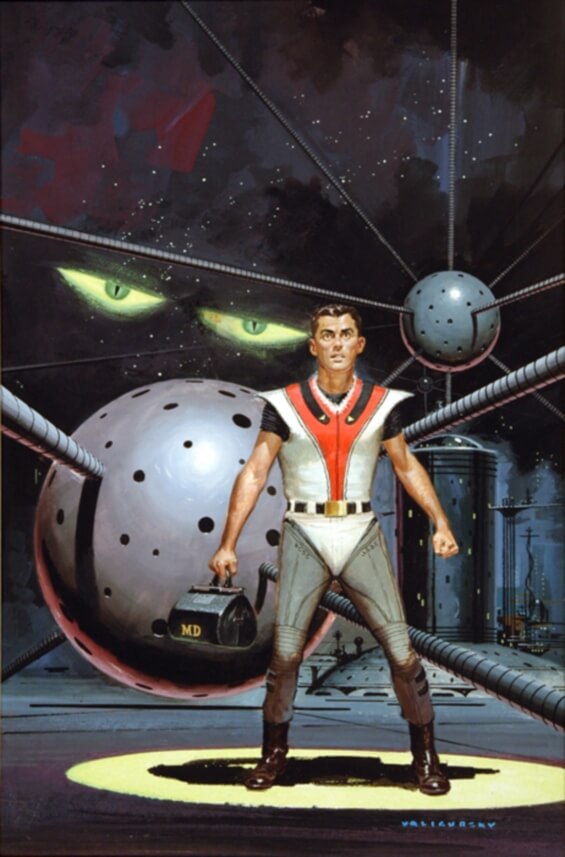
Dr. Futurity by Philip K. Dick - illustrated by Ed Valigursky

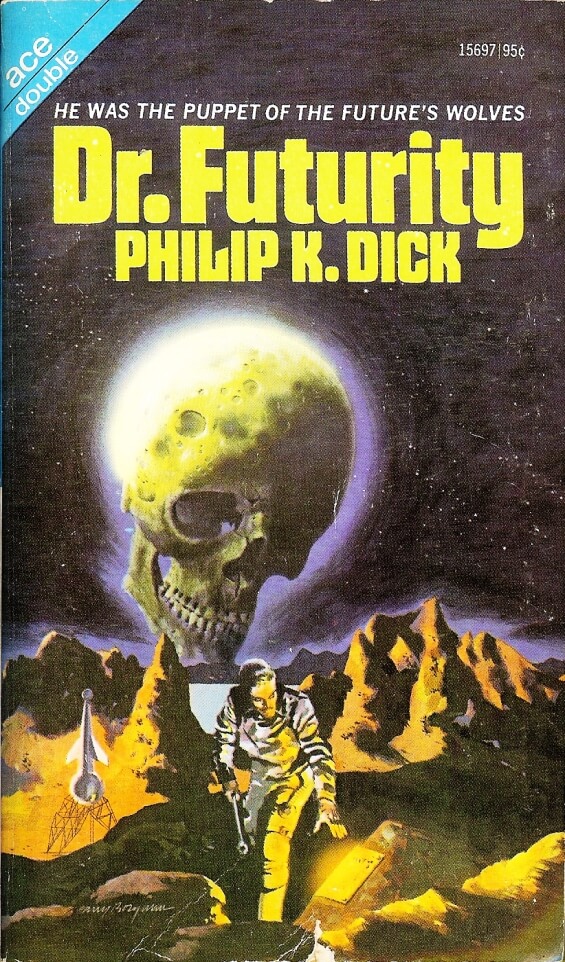
Dr. Futurity by Philip K. Dick - illustrated by Harry Borgman

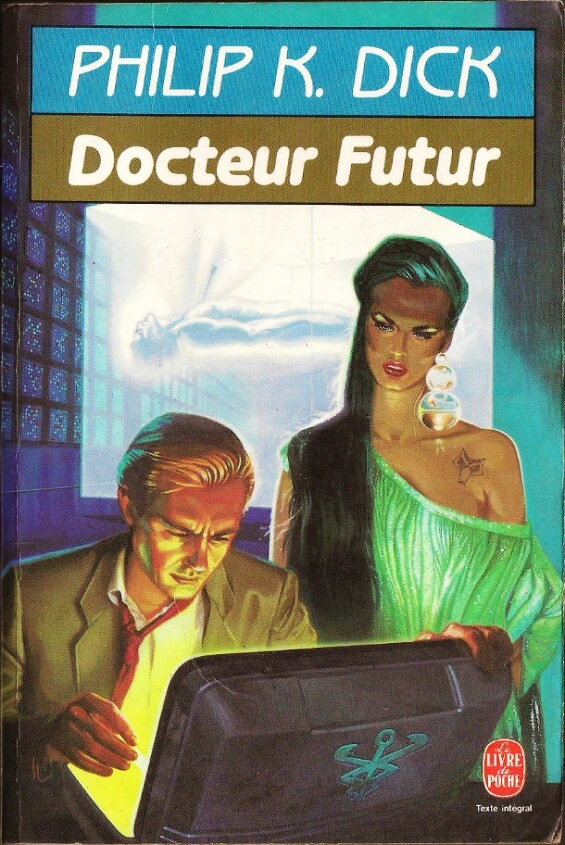
Docteur Futur by Philip K. Dick

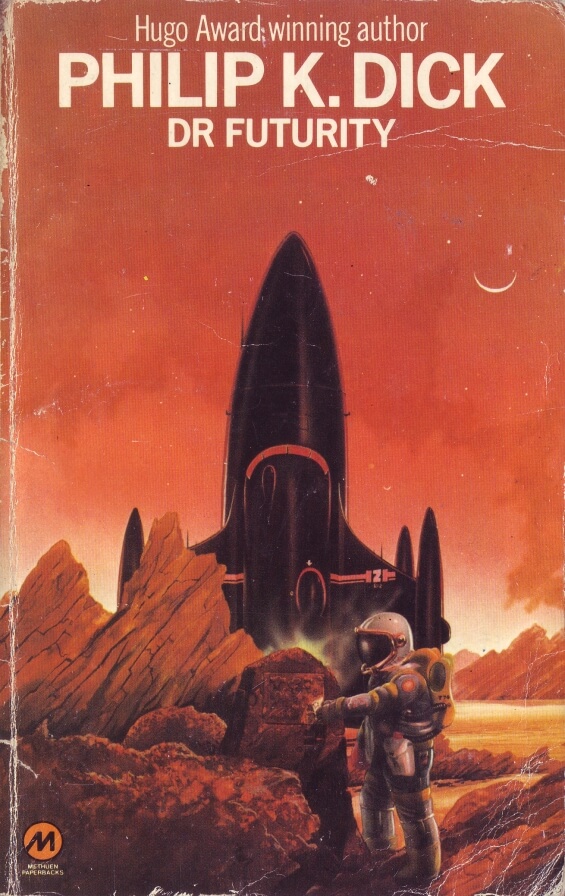
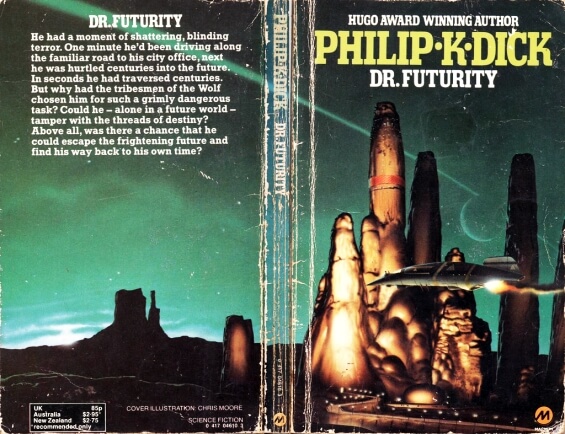
Dr Futurity by Philip K. Dick (Methuen)

Dr Futurity by Philip K. Dick - illustrated by Chris Moore

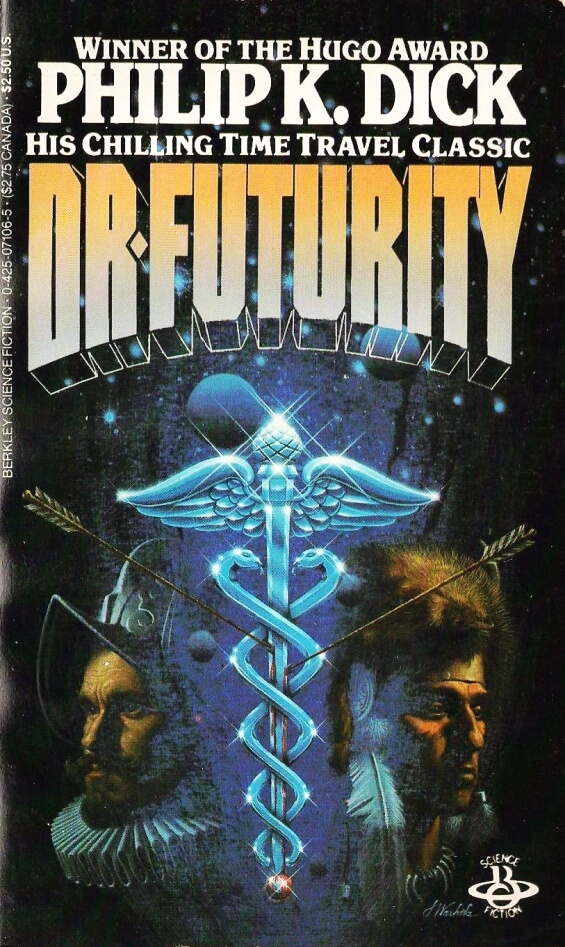
Dr. Futurity by Philip K. Dick (Berkley)

Posted by Jesse Willis

3 Philip K. Dick stories that could have inspired THE TERMINATOR

SFFaudio Commentary

I think The Terminator may be the best Science Fiction film ever made. And I think that no one person, credited or uncredited, can take all the credit for it.

In the video below, edited from an episode of Prisoners Of Gravity, Harlan Ellison explains how he got his screen credit in The Terminator:

Soldier is the first episode of Season 2 of The Outer Limits (the original series). It’s plot features a futuristic time traveling soldier who, after a thunder crack, appears in a then modern urban alley. The soldier is nearly indestructible, and is incredibly strong. Later, he breaks into a gun shop. In the ultimate scene he confronts his (also) futuristic enemy and they are both destroyed. Those are the basic plot commonalities between Soldier and The Terminator. There are many, many differences. Visually though, there are some striking similarities. These are nicely documented here and here.

That all said, Soldier‘s story plays out very differently from The Terminator, you can see a lot more connections, if you squint really hard.

For example, the solider is scarred like Kyle Reese and is sometimes unintelligible like Schwarzenegger’s T-800 – but ultimately the two, the TV episode and the feature film, are radically different in both scale and scope.

Interestingly, Demon With A Glass Hand the fifth episode of the second season of the original The Outer Limits television series, also written by Ellison, has similarities to both The Terminator and another film.

Like Soldier and The Terminator, Demon With A Glass Hand features a protagonist sent from the future into the past. But in this case, unlike in the title character in Soldier, the time travel was done quite deliberately – and done by humans in order to save mankind – more like The Terminator right?

Also similar, our hero in Demon With A Glass Hand, is nearly indestructible, can survive being shot over and over, feels no need to sleep, is being hunted by enemies also sent from the future, and he is programmed! Those are the basic plot commonalities between Soldier and The Terminator. More on that other movie a little later.

In the Starlog article (December 1984) there is no mention of The Outer Limits or Ellison. But, in it James Cameron does say: “I read all the classics, all the old Ace paperback novels.”

Starlog, December 1984

I do not expect that Cameron read all of the following stories. In fact I don’t think it is even necessary to know, and it isn’t crucial to my argument. Indeed, only one of the following stories was actually published in an “old Ace paperback”, (Second Variety was published in The Variable Man and Other Stories, Ace D-261).

My argument is that the story ideas and story points, even more than visuals, from the The Terminator, came very much out of 1950s science fiction.

Now before we get to the meat of my argument I’ll do a little sidestep towards another film, just to make it all the more confusing… its actually laying the groundwork for something, trust me.

Look at these images:

Kyben from Demon With A Glass Hand and Pris from Blade Runner

Demon With A Glass Hand and Blade Runner in the Bradbury

As you can see Demon With A Glass Hand shares something in common with Blade Runner, as much Id say as Soldier does with The Terminator.

The baddies in Demon With A Glass Hand, seen above, have racoon style eye makeup, like Blade Runner‘s Pris. Our hero in Demon With A Glass Hand, as it turns out, is an android that didn’t know he was one, just like in Blade Runner (and Do Androids Dream Of Electric Sheep?). Blade Runner was also shot in the same stylish office building in Los Angeles (the Bradbury Building*). And, the final fight of both stories ends in the same way, out the window and onto the roof of the Bradbury!

The “cybernetic organism” of The Terminator is in essence an android, a robot that looks like a human being, specifically a male human being if you want to get all technical.

Now even more than Ellison, who does have an android in Trent, the hero of Demon In A Glass Hand it is Philip K. Dick who is best known for his androids. Though robots that look like, think they are, or can pass for human aren’t unique or original to Dick, they are something he kind of specialized in. Stories like Imposter and The Electric Ant have androids and of course there is Do Androids Dream Of Electric Sheep?.

Now practically everyone knows that Do Androids Dream Of Electric Sheep? was adapted into a 1982 film called Blade Runner.

But do these folks know that the title of the Blade Runner was licensed from a book by a different author and entirely unrelated to Dick’s?

It was!

Ridley Scott acquired the rights to the title of a script based on an unrelated 1974 Science Fiction novel entitled The Bladerunner.

Why did he do this?

He didn’t have to, nobody has the legal right to claim exclusivity on book and movie titles – but as a matter of smart practice, when millions and millions of dollars are at stake, they often do such crazy things.

Now back to Philip K. Dick. He could, had he been alive in 1984, argued that his stories could have inspired The Terminator or even Demon With A Glass Hand!

Ellisons 1958 script for Demon With A Glass Hand has a “time mirror” – a device related to time travel – and so does a Philip K. Dick story.

For example, Dick uses what he calls a “time scoop” and a “time mirror” in a story called Paycheck (Imagination, June 1953). A time “Dip” turns up in a story named Meddler and in his novel Dr. Futurity (itself an expansion of a novella, Time Pawn) has a time “dredge.”

Here’s a snippet from Paycheck:

“It’s developed a time scoop.”

“What?”

“A time scoop. It’s been theoretically possible for several years. But it’s illegal to experiment with time scoops and mirrors. It’s a felony, and if you’re caught, all your equipment and data becomes the property of the Government.” Jennings smiled crookedly. “No wonder the Government’s interested. If they can catch Rethrick with the goods –”

“A time scoop. It’s hard to believe.”

But Dick didn’t invent the idea either, a story from Amazing Stories, December 1942, has the same tech, its actually in the title!

The Time Mirror by Dwight V. Swain

Another story that could have inspired The Terminator is The Skull. This 1952 story was published in If: Worlds Of Science Fiction. In it the protagonist is sent back in time in order to kill a man who can’t be allowed to live. He doesn’t know the man’s identity, but the clue lies within his own head, kind of like The Terminator.

The Skull by Philip K. Dick

Now to get out of time travel, let me ask you, where is Skynet, the evil A.I. in either of those Ellison stories? They are absent. But, he has evil computers, ones that want to destroy humanity even, for example there’s AM, the evil A.I. from I Have No Mouth, and I Must Scream. But that story is from 1967, and is not Skynet, exactly…

Well, let me tell you about The Great C, first published in Cosmos Science Fiction and Fantasy Magazine, September 1953. This story is set in a Fallout-style post apocalyptic wasteland. Straight away we learn that a band of humans have survived underground after a global nuclear war. The plot consists of following:

One of their number as he sets off with three questions to visit what the reader infers to be a great oracle. The oracle is the titular “Great C” with “C” being short for “Computer”. But unlike the Colossus supercomputer (from Colossus: The Forbin Project) that merely threatens nuclear war, this supercomputer pulled a full-Skynet and actually used the offensive nuclear capability on it’s creators, man.

See?

The Great C by Philip K. Dick

Now Second Variety, first appeared in Space Science Fiction, May 1953. And it was later adapted to film as Screamers. It is set in a post-WWIII world where killer robots, known as “Claws”, are developing newer and newer models of killer robot for human infiltration.

Check out these two illustrations from the story:

Second Variety by Philip K. Dick - illustration by Ebel

Second Variety by Philip K. Dick - illustrated by Ebel

So, why did Cameron’s The Terminator have to give credit to Harlan Ellison if Scott didn’t have to give it to Blade Runner?

I suspect it all happened pretty much as Ellison said it did. That in the unpublished interview notes for that Starlog interview Cameron actually said that he “ripped-off a couple of Outer Limits segments” and perhaps even “a couple of Harlan Ellison stories.”

But it doesn’t matter to me. Credits or dollars, the only thing I really care at all about the story, and I think that The Terminator builds on great SF stories by the likes of Philip K. Dick and Harlan Ellison and Isaac Asimov and H.G. Wells, and some Outer Limits TV episodes, and maybe some other movies too.

Humans do this and it is a good thing. I’m glad so many humans had a hand in making it.

By listening to stories, and by retelling them we continue the process of story refinement. The Terminator wasn’t a “rip-off” it was a tribute, it stands alone, and it stands tall and proud next to the great SF stories that came before it, in 1950s TV, 1950s books and 1950s magazines and probably to the decades before it too.

As for the James Cameron Harlan Ellison dispute, well, Cameron may have had a “huge ego”, as Harlan Ellison put it, or maybe he didn’t – who knows – Ellison had “never met the man” – it may just have been a self-deprecating statement. We can all use a little of that, and a lot more Philip K. Dick.

Posted by Jesse Willis
*The “Bradbury” in the Bradbury Building is no relation to Ray Bradbury … or is it?