
The SFFaudio Podcast #248 – AUDIOBOOK/READALONG: Goliah by Jack London

Podcast

The SFFaudio PodcastThe SFFaudio Podcast #248 – Goliah by Jack London; read by Gregg Margarite. This is a complete and unabridged reading of the short story (57 minutes) followed by a discussion of it. Participants in the discussion include Jesse, Bryan Alexander, Seth, and Maissa Bessada

Talked about on today’s show:
Colossus: The Forbin Project; title’s reference to biblical Goliath; story’s title a reference to the famous Pacific steam ship; colonial capitalism; the story’s Gilded Age context; child labor; Eugene Debs and American socialism; Karl Marx; Thomas Hobbes’s Leviathan; the story’s fictional energon evocative of Transformers energon; Nikola Tesla; Goliah has a palantir; Goliah as Santa Claus; the story’s invented island Palgrave in the South Sea; parallels to London’s other speculative fiction including The Iron Heel; the story’s unreliable narrator; Asgard; origin stories and foundation myths; nineteenth-century racism rears its ugly head again; Übermenschen; contempt for military and militarism; The Unparalleled Invasion; Seth works too hard; the theoretical increase of productivity through automation; 1984Twilight casting a sparkly shadow over modern culture; Edward Bellamy’s Looking Backward as a possible influence; Karl Marx’s German Ideology; the importance of laughter; Herland; the story as a response to nihilism; similarities between Guy de Maupassant and Friedrich Nietzsche; The Scarlet PlagueCanticle for Leibowitz; the medieval investiture controversy; animal metaphors in Goliah; accurate predictions of World War I; structural similarity to the Book of Job; “you don’t get a lot of laughter in the Old Testament”; Arslan by M.J. Engh; The Bookman literary magazine; It’s a Good Life by Jerome Bixby; steampunk by tag cloud; we make a dismal attempt at discussing the Stock Market; the dark underbelly of Goliah’s utopia; the unrealistic perpetuation of a utopia; Autofac and Pay for the Printer by Philip K. Dick; With Folded Hands by Jack Williamson; Star Trek: The Next Generation; Lenin’s dying wish; Jules Verne; Goliah relinquishing power; Hot Fuzz; more on the palantir and the NSA; “grumblers grumble”; attitudes toward the criminally insane; “Goliah has spoken”; nukes not MOOCs; Cuban Missile Crisis; Douglas MacArthur biography American Caesar by William Manchester; Doctor Who episode “The Happiness Patrol”; Japanese Manga Death Note; the “bread and roses” U.S. labor strike contemporary with Jack London; the Pax Romana; The Better Angels of Our Nature by Stephen Pinker, a discourse on lethal violence; the Franco-Prussian War; Earle Labor’s Jack London: An American Life available in audio.

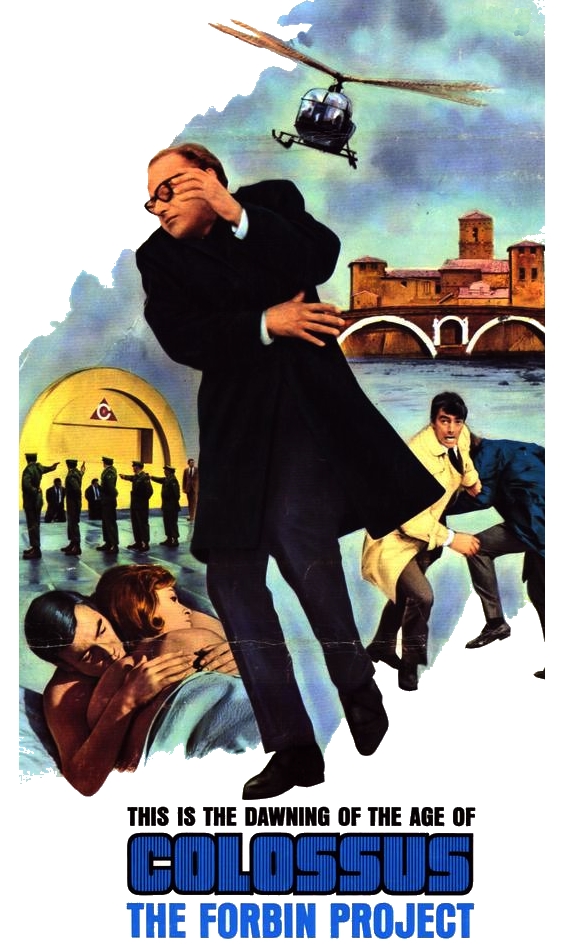
Colossus The Forbin Project

Posted by Jesse Willis
The SFFaudio Podcast #247 – READALONG: On The Beach by Nevil Shute

Podcast

The SFFaudio PodcastThe SFFaudio Podcast #247 – READALONG: On The Beach by Nevil Shute; read by Simon Prebble. Jesse fends off illness to lead us in an intriguing discussion about Nevil Shute’s apocalyptic novel. This podcast features Jesse, Jenny, Seth, and Paul.

Talked about on today’s show:
Reversed seasons in Southern Hemisphere; novel originally serialized in London weekly periodical The Sunday Graphic; “on the beach” as naval phrase meaning “retired from service”; the novel almost universally acclaimed by critics and readers alike; what is the ideal time frame for an end-of-the-world scenario?; On The Beach as bleak existential novel; the author’s avoidance of political or religious polemic; 1959 movie starring Gregory Peck, Ava Gardner, and Anthony Perkins; Australia as a secular nation; Earth Abides by George R. Stewart; Endgame by Samuel Becket; the novel as a metaphor for terminal cancer patients; The Star by Arthur C. Clarke; abstract sterile end-of-world mechanics, a “cosy catastrophe“; 2008 BBC radio adaptation; 2000 TV movie starring Bryan Brown, modernized and featuring a much more optimistic tone; Roland Emmerich’s disaster flick 2012; could the novel’s characters done more to ensure the continued survival of humanity?; fallout shelters, “duck and cover!”; Chernobyl; rampant alcoholism; euthanasia; attitudes toward media–were newspapers responsible for the war?; regression of technology in the novel; The Waveries by Fredric Brown; we wish the Cosy Catastrophe genre would supplant Paranormal Romance; reflection of a pre-WWI era arms race; 1959 movie version tackles Cold War paranoia; U.S. government’s criticism of the novel; Five Years by David Bowie; faced with the end of the world, our panel would evidently read Marcel Proust; needless revisions in film adaptations; much action takes place “off the page” in the novel; lookism; The Scarlet Plague by Jack London; Simon Prebble’s excellent audio narration; George Orwell’s 1984Man’s Search for Meaning by Viktor Frankl and logotherapy; Jay Lake and his bout with cancer; Daphne du Maurier’s Rebecca, adapted by Alfred Hitchcock, and how we’re haunted by the people who are no longer with us; the novel’s three-dimensional characters; Nevil Shute employs typical British understatement; Lord of the Rings‘s Denethor and the idea of hopelessness; Egyptian tomb goods and attitudes towards death; Jesse plans his funeral rites.

On The Beach - illustration by John Rowland

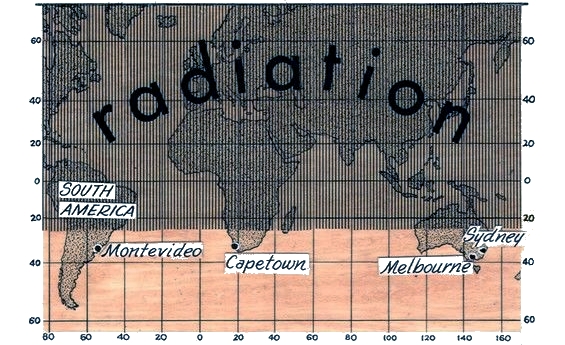
On The Beach - Ralph Lane adaptation - RADIATION

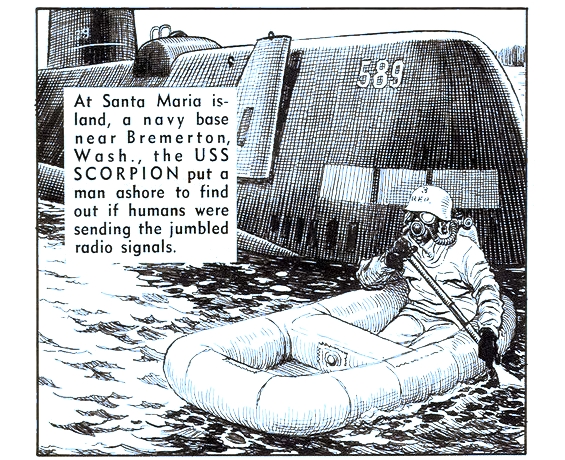
Scorpion at Bremerton - illustration by Ralph Lane

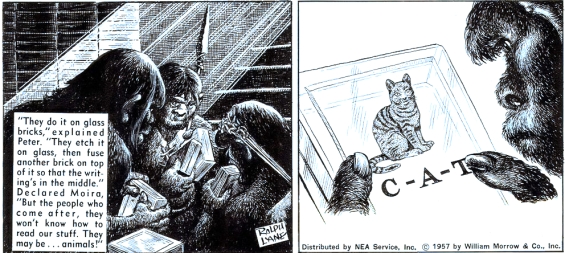
ON THE BEACH - illustration by Ralph Lane - glass bricks

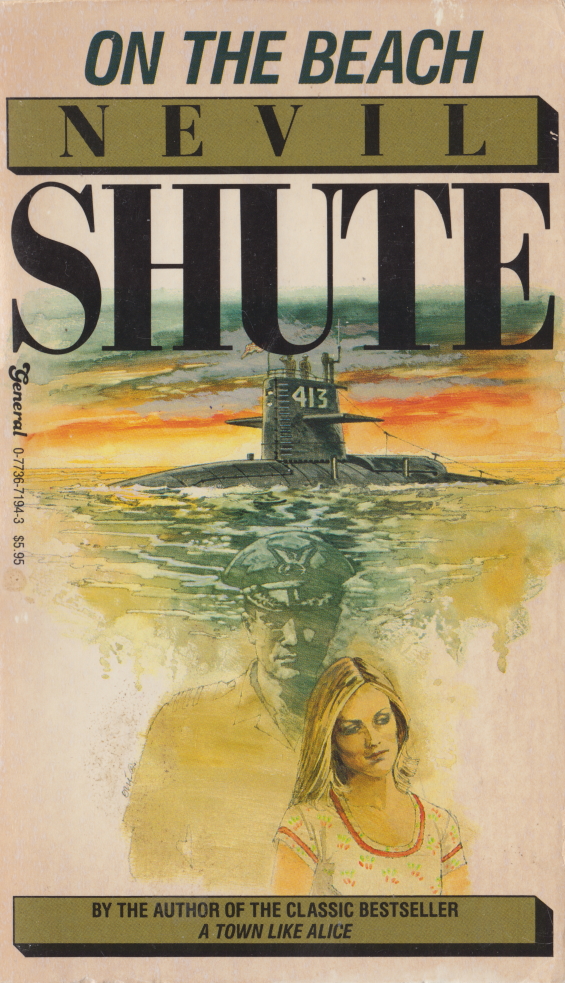
GENERAL - On The Beach by Nevil Shute

Posted by Seth Wilson

The SFFaudio Podcast #228 – READALONG: Last And First Men by Olaf Stapledon

Podcast

The SFFaudio PodcastThe SFFaudio Podcast #228 – Jesse and Jenny talk about the Last And First Men by Olaf Stapledon.

Talked about on today’s show:
the near and far future, not a novel, an imagined planetary history, the scope, Penguin Books, philosophy, the introduction, The Iron Heel by Jack London, a future history, human civilizations, two thousand million years (two billion years), universes => galaxy, man is a small part of the universe, Starmaker by Olaf Stapledon, Doctor Who, 2001: A Space Odyssey, what the plot would look like if there was one, the eighteen periods of man, evolution and construction, it’s set in 1930, is there ever an end to humanity?, Last Men In London by Olaf Stapledon, Last And First Men was popular in its day, Stapledon served in the ambulance service in WWI, plotlessness, period themes, the flying theme, the depletion of fossil fuels, The Mote In God’s Eye by Larry Niven and Jerry Pournelle, Venus, Mars, Neptune, the Martians, the Venusians, the genocide on Venus, Luke Burrage (the Science Fiction Book Review Podcast), racism, a Science Fiction mythology, the poetic musical ending, deep time, to the end of the Earth and beyond, Stapledon as an historian, civilizations always fall, there’s no one thing that ends civilizations, humanity as a symphony, the returns to savagery, establishing the pattern, Arthur C. Clarke, The House On The Borderlands by William Hope Hodgson, The Night Lands, The Time Machine by H.G. Wells, H.P. Lovecraft and cosmicism, the Wikipedia entry for Last And First Men, Fritz Leiber, Forrest Ackerman, scientificion, matchless poignancy, S. Fowler Wright, Lovecraft’s love of the stars (astronomy), one of the species of man is a monkey, another a rabbit, no jokes but perhaps humour, a cosmic joke, monkeys have made human their slaves, Planet Of The Apes, an ability to hear at the subatomic level, intelligence, a fourteen foot brain supported by ferroconcrete, obsession with gold, obsession with diamonds, pulping people, it’s written like a history textbook or essays, the Patagonia explosion, the upstart volcanoes, Earth Abides by George R. Stewart, The Scarlet Plague by Jack London, chiseling knowledge into granite, Olaf loved coming up with different sexual relationships, the 20 year pregnancy, suicide, euthanasia, an unparalleled imagination, groupthink, telepathy, oversimplification, we must press on, the baboon-like submen, the seal-like Submen, the divergence of man into other ecological niches, the number of ants in New York, ecosystems, nuclear weapons, robots are missing, where is the robot man?, the over-emphasis on fossil fuels as the only source of energy, if you could see us now, post-humans, ultimately a love letter to humanity, not aww but awwww!, Starmaker as a masterpiece, Sirius, uplifting a dog, a fantasy of love and discord, dog existentialism, who am I and where is my bone?, Olaf Stapledon in the PUBLIC DOMAIN, influential vs. famous, a very different read.

Last And First Men by Olaf Stapledon

Olaf Stapledon illustration by Neil Austin

Posted by Jesse Willis

The SFFaudio Podcast #226 – READALONG: The Iron Heel by Jack London

Podcast

The SFFaudio PodcastThe SFFaudio Podcast #226 – Jesse, Jenny, and Bryan Alexander discuss The Iron Heel by Jack London.

Talked about on today’s show:
Jenny is not an economist, a Heinlein vibe, God Emperor Of Dune, The first half of this book is talk, a terrible novel but an interesting book, The Moon Is A Harsh Mistress, the distancing narrators, 700 years into the future, the audience is for seven hundred years in the future (or is that six hundred), prizefighting, grub = food, the purpose of the footnotes, The Sleeper Awakes by H.G. Wells, Avis Everhard, alternate history, Michael Bishop, an underground book, an underground society, that Buck Rogers stuff, Armageddon—2419 AD by Philip Francis Nowlan, exchanging socialism for the Yellow Peril, Asgard, Seoul, set in the year 419 B.O.M. (Brotherhood of Men), A Thousand Deaths by Jack London, The Island Of Doctor Moreau, predictions, war with Germany, a surprise attack on December 4th, William Randolph Hearst, war economy as a solution to national surplus, Trotsky’s letter to Jack London, London had good reason to be a socialist, work conditions and natural disasters, a chaotic time, Jackson’s arm, race vs. class, Jack London’s racism, The Heathen by Jack London, the dog stories, class consciousness, grinding out the middle class between the 1% and the people of the abyss, The Shadow And The Flash by Jack London, manly overachievers, oligarchy doesn’t use race to divide people, do you want you fruit to be picked or not?, Japanese segregation in California classrooms, Canadian politics, Cooperative Commonwealth Federation, Franklin D. Roosevelt, John Steinbeck, ‘temporarily embarrassed millionaires’, the quote attributed to Abraham Lincoln:

“I see in the near future a crisis approaching that unnerves me and causes me to tremble for the safety of my country… corporations have been enthroned and an era of corruption in high places will follow, and the money power of the country will endeavor to prolong its reign by working upon the prejudices of the people until all wealth is aggregated in a few hands and the Republic is destroyed.”

Dwight D. Eisenhower, “the military-industrial complex”, Eugene Debs, why was The Iron Heel not more popular?, The Black Hundreds, Das Kapital, Marxian fan-fiction, ‘social evolution is exasperatingly slow’, sooo sad, Marx’s essay on Napoleon III, a Darwinian model, do we live under an oligarchy?, government regulation (anti-trust and child labour laws), why socialism didn’t take hold in the early 20th century USA, Larry Summers, the Chilean cover of The Iron Heel, Salvador Allende, a novel read by revolutionaries, Science Fiction within the novel, the aesthetic end, the role of religion, the God of the Oligarchs, mostly air with a little bit of vertebra, Chicago, religious revivals and the apocalypse, Azusa Street Revival, the 1906 San Fransisco earthquake, William Randolph Hearst, Patty Hearst, John Waters, Cecil B. Demented, personal charisma and bulletproof arguments, Everhard is a porn star name, Benjamin Franklin, London’s didactic reading, Marx’s surplus theory of value, economy is not a science, power wins, the French Revolution, the Commonwealth of England, George Orwell’s review of The Iron Heel, 1984 is in The Iron Heel, coincidental dates, London’s insight into fascism, too much love from the strong and not enough love for the weak, Eric S. Rabkin, unmanning, ‘designed to be crucified’, father figures are destroyed, the chapter titles, The Call Of The Wild, a powerful beast is unmanned, builds up and builds through interaction with others, a sated king, a dominant primordial beast, The Sea Wolf, reading London is like a shot of adrenalin to the heart, surplus value, colonialism, the machine breakers, the trusts did not advertize, consumerism, Paul Krugman, petty bourgeoisie, the genocide of Chicago, the Paris Commune, gothic wooing, We by Yevgeny Zamyatin, Looking Backward: 2000-1887 by Edward Bellamy, the education of the oligarchy,

“They, as a class, believed that they alone maintained civilization. It was their belief that if ever they weakened, the great beast would ingulf them and everything of beauty and wonder and joy and good in its cavernous and slime-dripping maw. Without them, anarchy would reign and humanity would drop backward into the primitive night out of which it had so painfully emerged.”

excusing colonialism, the white man’s burden, ignoring the starving masses, the Roman Empire, steampunk, Lloyd Blankfein “doing God’s work”, Margin Call, oppositional films, “The Social Network deeply hates Zuckerberg and the online world”, Nine Inch Nails, Michael Douglas, Wall Street, the cleaning lady, why isn’t The Iron Heel more generally appealing to SF readers?, British Space Opera vs. American Space Opera, Commune 2000 A.D. by Mack Reynolds, a broken utopia, job cash vs. job love, the social end of SF, the storytelling technique doesn’t attract, the unsuccessful revolution, Winston Smith’s diary, looking back when writing doesn’t have the same power, the Goldstein Book, brainwashing, the bomb in congress, spy and counterspy, Starship Troopers is a series of lectures punctuated by gunfire, Frank Herbert, “a raving genius”, doing Dune (and Dune Messiah), Chilton Books, the boot crushing the human face forever, the leaky suspense, a Norton critical edition, how to record The Iron Heel, the footnotes are problematic, a crazy wild marvelous book, WWI, WWII, Metropolis, armoured cars or tanks, The Last Man by Mary Shelley, a terrifying future found in a cave written on leaves, A Journal Of The Plague Year by Daniel Defoe, The Scarlet Plague by Jack London, Idiocracy, The Marching Morons by C.M. Kornbluth, on Lenin’s deathbed he was read Jack London, The Cold Equations, To Build A Fire, The Empire Strikes Back,

“The cold of space smote the unprotected tip of the planet, and he, being on that unprotected tip, received the full force of the blow.”

cosmic and Lovecraftian, as snug as a Jedi in a hot tauntaun, Robert Sheckley, Metro 2033 by Dmitry Glukhovsky.

The Iron Heel by Jack London (Viva Allende)

The Iron Heel by Jack London - Capital V. Labour

Posted by Jesse Willis
The SFFaudio Podcast #219 – AUDIOBOOK/READALONG: The Derelict by William Hope Hodgson

Podcast

The SFFaudio PodcastThe SFFaudio Podcast #219 – The Derelict by William Hope Hodgson; read by the wonderful Mike Vendetti. This is a complete and unabridged reading of the story (1 hour 13 minutes) followed by a discussion of it. Participants in the discussion include Jesse, Mike Vendetti, and Sam Gafford (from the William Hope Hodgson blog).

Talked about on today’s show:
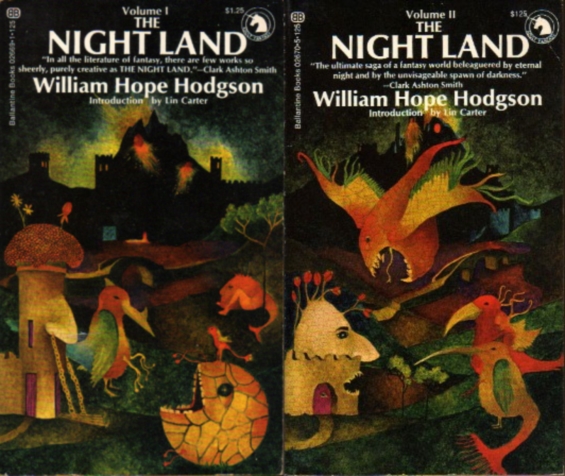
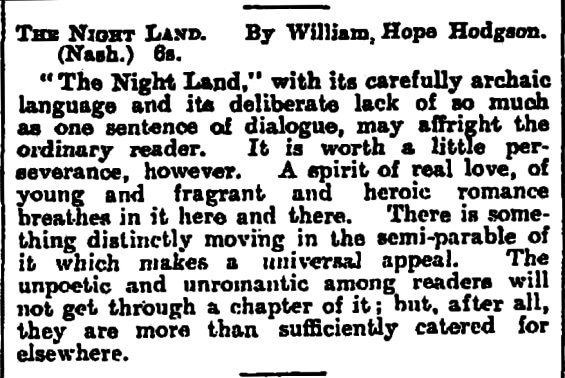
Most popular stories, Audible.com, Out Of The Storm by William Hope Hodgson, The House On The Borderlands, one of the best novels of the twentieth century, a classic of Science Fiction and Horror, The Ghost Pirates, The Boats Of The “Glen Carrig”, The Night Lands, one of the best horror novelists ever, WWI, Belgium, Ypres, Mike did the Vietnam thing, Ambrose Bierce, a love hate relationship with the sea, the merchant marine, why didn’t Hodgson join the Royal Navy?, Sailing Alone Around The World by Joshua Slocum, the sea as an evil monster, a hair pin as a deadly weapon, the sea becomes your god, an indifferent sea, H.P. Lovecraft, a lappet rather than a tentacle, the same basic take on how the universe works, Supernatural Horror In Literature,

Of rather uneven stylistic quality, but vast occasional power in its suggestion of lurking worlds and beings behind the ordinary surface of life, is the work of William Hope Hodgson, known today far less than it deserves to be. Despite a tendency toward conventionally sentimental conceptions of the universe, and of man’s relation to it and to his fellows, Mr. Hodgson is perhaps second only to Algernon Blackwood in his serious treatment of unreality. Few can equal him in adumbrating the nearness of nameless forces and monstrous besieging entities through casual hints and insignificant details, or in conveying feelings of the spectral and the abnormal in connection with regions or buildings.

ghost stories, the frame story, the spontaneous generation of life, The White People by Arthur Machen, Frankenstein, The Eclogues by Virgil, a recipe for wasps, dead matter, The Voice In The Night (Hodgson’s most famous story), don’t come any closer!, the mold taking over, Matango: Attack of the Mushroom People, The Terror Of The Water Tank, Hodgson in the bookstore, Night Shade Books, The Hog, where is the manuscript?, Brown University, Lord Dunsany, Sam Moskowitz, S.T. Joshi, a gathering of papers, the Titanic, the “nautical” theme, travel by sea, Cpt. “Sully” Sullenberger, radio telegraphy, Widow’s walk, Why I Am Not At Sea, the romance of the sea, personal abuse, physical culture, ‘all those reports are untrue’, Slocum may have been on the other side, Hodgson was a hunk, photography, Hodgson’s gym, directing artillery fire, too early, diet and exercise, Super Man and the superheroes, Gladiator by Philip Wylie, 98-pound weakling, Charles Atlas, sailor, soldier, writer, photographer, what didn’t he do?, Hodgson’s family, religion, Blackburn, Downstairs On A Bicycle, Harry Houdini, a flurry of stories and novels, a hungry rejected writer, where did this writing come from?, a notoriety seeker, Arnold Schwarzenegger, good reviews and poor sales, The Night Lands is incomparable, Olaf Stapledon, the ending of 2001: A Space Odyssey, H.G. Wells, The Bookman magazine, Edgar Allan Poe, Hodgson’s women, The Dream Of X, writers rights (copyright), short stories sell better, writing order vs. publication order, The Ghost Pirates is Sam’s favourite, seeping dimensions, Mike is fast, outside sales, Mike Vendetti audiobooks on Audible.com, Robert E. Lee, text was meant to be read aloud, music and reading were social activities, actors are turning to audiobooks.

The Derelict by William Hope Hodgson

Posted by Jesse Willis
The SFFaudio Podcast #218 – READALONG: The Land That Time Forgot by Edgar Rice Burroughs

Podcast

The SFFaudio PodcastThe SFFaudio Podcast #218 – Jesse, Luke Burrage, David Stifel and John Feaster discuss the audiobook of The Land That Time Forgot by Edgar Rice Burroughs (narrated by David Stifel) – you can get the free podcast of the audiobook HERE.

Talked about on today’s show:
This Burroughs Guy, The Caspak Series, Irwin Borges biography of Edgar Rice Burroughs, Blue Book magazine, The Lost U-Boat, the 1975 movie (The Land That Time Forgot), The People That Time Forgot, weird science ideas, evolution, this is how evolution works here (maybe?), tadpoles, the irony, Tarzan Of The Apes, dead baby ape, “And now this creature of my brain and hand had turned Frankenstein, bent upon pursuing me to my death.”, WWI Germans, The Lost World by Sir Arthur Conan Doyle, Journey To The Center Of The Earth by Jules Verne, navigating an underground river with a u-boat, Yellowstone Park, lost continent, high tech, necessary irony, a classic story, Jurassic Park, a UNIX system, “Californians, as a rule are familiar with jiu-jitsu.”, casual racism, Japs vs. J.A.P.s, the Huns (the Bosch), the rape of Belgium, trouble with Germans in the 1920s, Tarzan The Untamed, “full German racism”, Greenland, “imaginative idiots”, the frame story, John Carter of Mars, the tides took a thermos from the Antarctic Indian Ocean to Greenland in the space of a year, very outlandish stories, sardonic humour, Luke on framing stories, werewolves, vampires, zombies, The Player, meta self-referential recursive, we never learn the protagonist’s name until the last chapter, Bowen, the Lafayette Escadrille, Earnest Hemingway, he’s no Tarzan, a techno-geek, a romantic flop, Crown Prince Nobbler aka Nobs (an Airedale), Tintin and Snowy, was Tintin gay?, strange lands, X-Men #10, The Savage Land (of Ka-Zar), fewer dinosaurs, Plesiosaur soup, Pterodactyls, Allosaurus attack, the farther north you go the farther you go in evolution, Ahm, Cro-Magnon man, Out Of Time’s Abyss, embryology, “we’ve all got gills at that point”, flowers, “it’s always below the surface”, “we are more developed from them <- is wrong", whaddya mean kinda racist??, "the black people are below the white people on this chart", H.P. Lovecraft, one could call it evil (but fun adventure), something else, action adventure story, refining your own oil, the hero must always find a dog and a girl and exactly what he needs, the damsel in distress is a bit wet, the movie commander is sympathetic, ape like monsters, Michael Moorcock, volcanic eruptions, Baron Friedrich von Schoenvorts, shelling the fort on the way, evil bastards, shelling the lifeboats is wholly malice, soooo propaganda, Prussian honor, who was the bad guy in WWI?, proposed German peace terms if they had won WWI, domino theory, communism, let's head for Caspak, The Temple by H.P. Lovecraft, an incident blown out of proportion?, terror attacks vs. gun accidents, war crimes?, water-boarding, Otto Skorzeny, bombing dykes and dams (not a war-crime because we did it too), conducting operations while in enemy uniforms, Harry Turtledove’s alternate history, Benito Mussolini, real-life James Bond (was Austrian), Skorzeny’s smite, more Burroughs, The Mucker by Edgar Rice Burroughs, “socially relevant fiction”, yellow peril looking dudes, quite adventurey but with interesting ideas, the pre-Socratics philosophers on spontaneous generation of life, spontaneous or parallel development, again with the weird women birthing practices, Marvel Comics, The Savage Land, Tarzana’s racial segregation, white supremacy, Glenn Beck’s planned community, racists believe in races, socially constructed, genetic racism?, the monkeysphere, H.G. Wells’ work, The War Of The Worlds, Burroughs’ heroic heroes vs. Wells’ horrible people, the sympathy is in us not the book, the artilleryman, a bit of a loon, the Zulu, the Martini rifle, one day one day!, Japan’s aspirations, we need some warships, we’ve got to control our own shit, navel vs. naval, it happened to Germany too, “too cold and full of penguin’s let’s take Poland instead”, The People That Time Forgot, Out Of Time’s Abyss, more Tarzan, how long does it take?, Tarzan And The Jewels Of Opar, the Venus series, Jerry Schneider, Pirates Of Venus, invalid copyright renewals, more Mars please, Mastermind Of Mars, permission requires money, the bigger gorilla, Audible.com, Burroughsguy.com, re-writing for less racism, a blow by blow comparison, lynching, The Lost Continent by Edgar Rice Burroughs (aka Beyond Thirty), perfidy, the lost continent is Europe, a black super-state!, 30 Longitude West, prejudices, vilontely pro-capitalist in the Ayn Rand sense, Burroughs loathed the labour movement, the Industrial Workers of the World are the real bad-guy, “women don’t really want to be equal to men”?, deep down atheists really believe in God?, the mystery will be unveiled.

The Land That Time Forgot by Edgar Rice Burroughs - illustration from Amazing, January 1927

The Land That Time Forgot (ACE Books)

The Land That LEGO Forgot by Edgar Rice Blockkos

The Land That Time Forgot - illustration by K.L. Jones

Nick Cardy illustration of The Land That Time Forgot

Posted by Jesse Willis