BBC R4 + RA.cc: Markheim by Robert Louis Stevenson [RADIO DRAMA]

May 16, 2013 by · Leave a Comment
Filed under: Audio Drama, Online Audio 

SFFaudio Online Audio

Gruselkabinett - Markheim by Robert Louis Stevenson

I’ve posted about Robert Louis Stevenson’s murderous classic, Markheim, before (the audiobook and another radio drama). But, I’ve just discovered a very good new adaptation (from 2006) available at RadioArchive.cc. The sound design is excellent, and its lengthy enough to bring out most of the nuance in the text.

BBC Radio 4RadioArchives.ccMarkheim
Adapted from the story by Robert Louis Stevenson; Adapted by John Taylor; Performed by a full cast
MP3 via TORRENT – Approx. 45 Minutes [RADIO DRAMA]
Broadcaster: BBC Radio 4
Broadcast: February 1, 2006
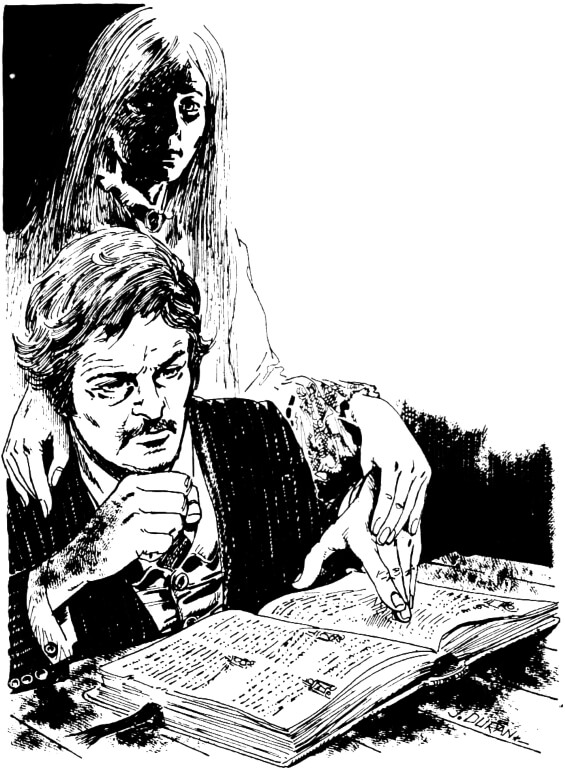
On Christmas Day 1886 with London shrouded in fog, a man shadows a girl across Blackfriars Bridge towards the back streets of Holborn. His name is Markheim and his intentions are unremittingly dark.

Directed by John Taylor

Cast:
Tommy – Mark Straker
Markheim – Jack Klaff
Girl – Abigail Hollick
Visitor – Anton Rodgers
Crispin – Anthony Jackson

And for German listeners there’s THIS sexy sounding version produced as a part of a cool series called Gruselkabinett (which translates to “Chamber of Horrors”).

As a bonus I offer this newly created |PDF| and a vintage anlaysisby C. Alphonso Smith from Short Stories Old And New (1916):

Setting:
There is no finer model for the study of setting than this story affords. It is three o’clock in the afternoon of a foggy Christmas Day in London. If Markheim’s manner and the dimly lighted interior of the antique shop suggest murder, the garrulous clocks, the nodding shadows, and the reflecting mirrors seem almost to compel confession and surrender. “And still as he continued to fill his pockets, his mind accused him, with a sickening iteration, of the thousand faults of his design. He should have chosen a more quiet hour.” So he should for the murder; but for the self-confession; which is Stevenson’s ultimate design, no time or place could have been better.

Plot:
There is little action in the plot. A man commits a dastardly murder and then, being alone and undetected, begins to think, think, think. It is the turning point in his life and he knows it. Instead of seizing the treasure and escaping, he submits his past career to a rigid scrutiny and review. This brooding over his past life and present outlook becomes so absorbing that what bade fair to be a soliloquy becomes a dialogue, a dialogue between the old self that committed the murder and the new self that begins to revolt at it. The old self bids him follow the line of least resistance and go on as he has begun; the newly awakened self bids him stop at once, check the momentum of other days, take this last chance, and be a man. His better nature wins. Markheim finds that though his deeds have been uniformly evil, he can still “conceive great deeds, renunciations, martyrdoms.” Though the active love of good seems too weak to be reckoned as an asset, he still has a “hatred of evil”; and on this twin foundation, ability to think great thoughts and to hate evil deeds, he builds at last his culminating resolve.

The story is powerfully and yet subtly told. It sweeps the whole gamut of the moral law. Many stories develop the same theme but none just like this. Stevenson himself is drawn again to the same problem a little later in “Dr. Jekyll and Mr. Hyde.” Hawthorne tried it in “Howe’s Masquerade,” in which the cloaked figure is the phantom or reduplication of Howe himself. In Poe’s “William Wilson,” to which Stevenson is plainly indebted, the evil nature triumphs over the good. But “Markheim,” by touching more chords and by sounding lower depths, makes the triumph at the end seem like a permanent victory for universal human nature.

Characters
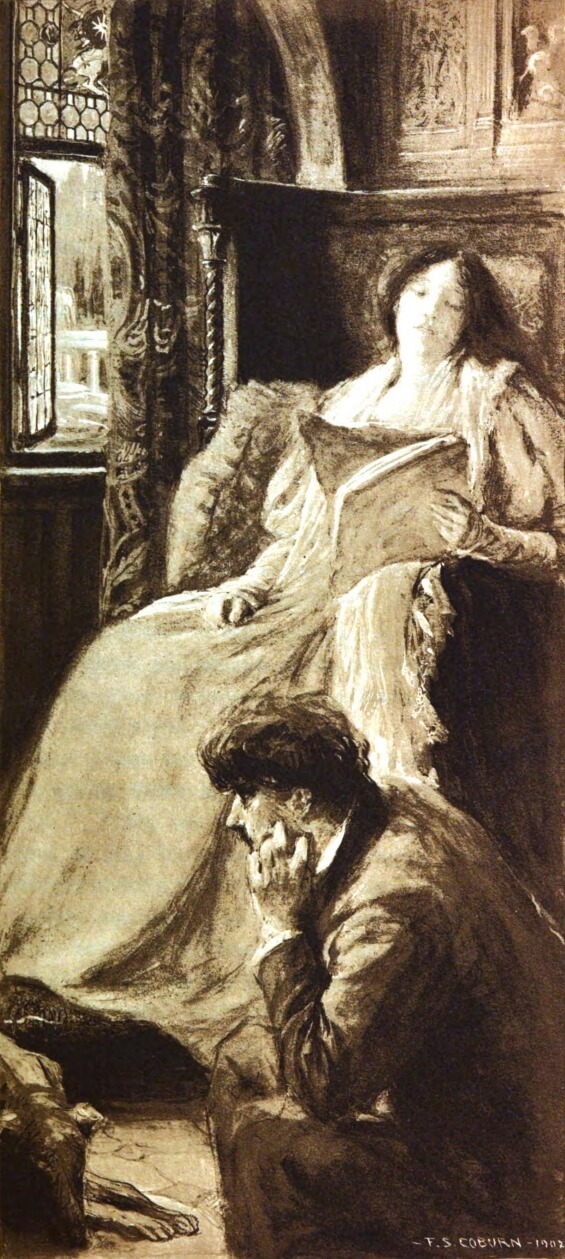
If the story is the study of a given situation, Markheim, who is another type of the developing character, is the central factor in the situation. We see and interpret the situation only through the personality of Markheim himself. Another murderer might have acted differently, even with those clamorous clocks and accusing mirrors around him, but not this murderer. There is nothing abnormal about him, however, as a criminal. He is thirty-six years old and through sheer weakness has gone steadily downward, but he has never before done a deed approaching this in horror or in the power of sudden self revelation. He sees himself now as he never saw himself before and begins to take stock of his moral assets. They are pitifully meager, though his opportunities for character building have been good. He has even had emotional revivals, which did not, however, issue in good deeds. But with it all, Markheim illustrates the nobility of human nature rather than its essential depravity. I do not doubt his complete and permanent conversion. When the terrible last question is put to him – or when he puts it to himself – whether he is better now in anyone particular than he was, and when he is forced to say, “No, in none! I have gone down in all,” the moral resources of human nature itself seem to be exhausted. But they are not. “I see clearly what remains for me,” said Markheim, “by way of duty.” This word, not used before, sounds a new challenge and marks the crisis of the story. Duty can fight without calling in reserves from the past and without the vision of victory in the future. I don’t wonder that the features of the visitant “softened with a tender triumph.” The visitant was neither “the devil” as Markheim first thought him nor “the Saviour of men” as a recent editor pronounces him. He is only Markheim’s old self, the self that entered the antique shop, that with fear and trembling committed the deed, and that now, half-conscious all the time of inherent falseness, urges the old arguments and tries to energize the old purposes. It is this visitant that every man meets and overthrows when he comes to himself, when he breaks sharply with the old life and enters resolutely upon the new.

Posted by Jesse Willis

The Willows by Algernon Blackwood FREE AUDIOBOOK (for a limited time)

May 6, 2013 by · 2 Comments
Filed under: Online Audio 

SFFaudio Online Audio

My favourite audiobook narrator, Wayne June, has recorded and released as a FREE MP3 AUDIOBOOK one of the greatest horror tales ever written.

The Willows by Algernon Blackwood - read by Wayne June

The Willows was H.P. Lovecraft’s favourite story. He wrote this about it:

“In delineating the extremes of stark fear, yet infinitely more closely wedded to the idea of an unreal world constantly pressing upon ours is the inspired and prolific Algernon Blackwood, amidst whose voluminous and uneven work may be found some of the finest spectral literature of this or any age. Of the quality of Mr. Blackwood’s genius there can be no dispute; for no one has even approached the skill, seriousness, and minute fidelity with which he records the overtones of strangeness in ordinary things and experiences, or the preternatural insight with which he builds up detail by detail the complete sensations and perceptions leading from reality into supernormal life or vision. Without notable command of the poetic witchery of mere words, he is the one absolute and unquestioned master of weird atmosphere; and can evoke what amounts almost to a story from a simple fragment of humourless psychological description. Above all others he understands how fully some sensitive minds dwell forever on the borderland of dream, and how relatively slight is the distinction betwixt those images formed from actual objects and those excited by the play of the imagination.

Foremost of all [his works] must be reckoned The Willows, in which the nameless presences on a desolate Danube island are horribly felt and recognised by a pair of idle voyagers. Here art and restraint in narrative reach their very highest development, and an impression of lasting poignancy is produced without a, single strained passage or a single false note.”

Get the complete audiobook of The Willows, it’s two hours in six chapters, HERE.

But hurry, the FREE version will soon become the pay version.

And if you like what you hear in The Willows be sure to check out one of the greatest novels you’ve never read, The House On The Borderland by William Hope Hodgson – Wayne June’s reading of it is unbelievably great.

Posted by Jesse Willis

P.S. An illustrated |PDF| of The Willows is available too!

The Wonderful Window by Lord Dunsany

May 2, 2013 by · Leave a Comment
Filed under: Online Audio 

SFFaudio Online Audio

The Wonderful Window by Lord Dunsany

Very comparable in theme to H.G. Wells’ The Door In The Wall is The Wonderful Window by Lord Dunsany. It’s a Fantasy about the silliest young man in Business, and his foolish acquisition of a small leaded glass window from an oriental vagrant. It was first published in Saturday Review (UK), February 4, 1911.

And here’s the cleaned up LibriVox version, read by Greg Elmensdorp. |MP3| Approx. 13 Minutes [UNABRIDGED]

The Wonderful Window by Lord Dunsany |PDF| 11 Pages

The Wonderful Window by Lord Dunsany |PDF| 4 Pages

Posted by Jesse Willis

The City In The Sea by Edgar Allan Poe

May 2, 2013 by · Leave a Comment
Filed under: Online Audio 

SFFaudio Online Audio

The City In The Sea

The City in the Sea by Edgar Allan Poe

Lo! Death has reared himself a throne
In a strange city lying alone
Far down within the dim West,
Where the good and the bad and the worst and the best
Have gone to their eternal rest.
There shrines and palaces and towers
(Time-eaten towers that tremble not!)
Resemble nothing that is ours.
Around, by lifting winds forgot,
Resignedly beneath the sky
The melancholy waters lie.

No rays from the holy heaven come down
On the long night-time of that town;
But light from out the lurid sea
Streams up the turrets silently-
Gleams up the pinnacles far and free-
Up domes- up spires- up kingly halls-
Up fanes- up Babylon-like walls-
Up shadowy long-forgotten bowers
Of sculptured ivy and stone flowers-
Up many and many a marvellous shrine
Whose wreathed friezes intertwine
The viol, the violet, and the vine.
Resignedly beneath the sky
The melancholy waters lie.
So blend the turrets and shadows there
That all seem pendulous in air,
While from a proud tower in the town
Death looks gigantically down.

There open fanes and gaping graves
Yawn level with the luminous waves;
But not the riches there that lie
In each idol’s diamond eye-
Not the gaily-jewelled dead
Tempt the waters from their bed;
For no ripples curl, alas!
Along that wilderness of glass-
No swellings tell that winds may be
Upon some far-off happier sea-
No heavings hint that winds have been
On seas less hideously serene.

But lo, a stir is in the air!
The wave- there is a movement there!
As if the towers had thrust aside,
In slightly sinking, the dull tide-
As if their tops had feebly given
A void within the filmy Heaven.
The waves have now a redder glow-
The hours are breathing faint and low-
And when, amid no earthly moans,
Down, down that town shall settle hence,
Hell, rising from a thousand thrones,
Shall do it reverence.

Here’s the audio, as narrated by Mister Jim Moon:

The City In The Sea was published in this form in the Broadway Journal, August 30, 1845:

The City In The Sea: A Prophecy by Edgar Allan Poe

The City In The Sea

Posted by Jesse Willis

Dark Waters by M. Ludington Cain

May 1, 2013 by · Leave a Comment
Filed under: Online Audio 

SFFaudio Online Audio

First published in Famous Fantastic Mysteries, October 1947, this poem has never been reprinted.

Dark Waters
by M. Ludington Cain

The spring moon swells the river,
The Waters clutch like hands
Where willow branches quiver
Above the pebbly sands.

But no moon knows the secret
The swirling waters keep,
And whether the moon is new or full
The waters are dark and deep.

The summer moonlight lingers
On shimmering grasses there,
The zephyr’s gentle fingers
Comb out their shining hair….

But no moon saw the gypsies come,
And no moon saw them go,
And only the midnight shadows
Guess what the waters know-

Some say there was a lover,
Some say there was a child,
But whatever the shadows cover,
The waters are dark and wild.

Dark Waters by M. Ludington Cain - from Famous Fantastic Mysteries, October 1947

Listen to Mister Jim Moon‘s reading of it: |MP3|

Posted by Jesse Willis

Death by Clarence E. Flynn

May 1, 2013 by · Leave a Comment
Filed under: Online Audio 

SFFaudio Online Audio

First published in Famous Fantastic Mysteries, October 1947, this short poem has never been reprinted.

DEATH
by Clarence E. Flynn

Why do you fear me?
I am your friend.
I but guide trav’lers
Rounding the bend-
Lead them to freedom
From time and age,
Help them start writing
On a new page….

Seek for me never,
Keep your course true-
When I am needed
I’ll come to you,
Then I will show you
Roads without end-
Why do you fear me?
I am your friend.

Death by Clarence E. Flynn - from Famous Fantastic Mysteries, October 1947

Listen to Mister Jim Moon‘s reading of it: |MP3|

Posted by Jesse Willis

Next Page »