
The SFFaudio Podcast #276 – READALONG: Angelmaker by Nick Harkaway

Podcast

The SFFaudio PodcastDowncastThe SFFaudio Podcast #276 – Jesse, Tamahome, and Fred discuss Angelmaker by Nick Harkaway.

Today’s podcast is sponsored by Downcast, a terrific podcast app for iPhone and iPad.

Talked about on today’s show:
Fredösphere’s (Fred Heimbaugh’s) choice, the Ann Arbour Science Fiction And Fantasy Literary Discussion Group (founded by Eric S. Rabkin), the audiobook, the confusing and scatter first half of the book, the audio version, Daniel Wayman is one of the best narrator’s Fred’s ever heard, A Scanner Darkly by Philip K. Dick (read by Paul Giamati), some books are better as audiobooks and some are better as textual books, Anathem by Neal Stephenson, Tony C. Smith, StarShipSofa, the glossary takes 30 minutes, Angelmaker is 18 hours, you have to pay close attention, do you listen to podcasts?, our SPONSOR: Downcast, the new iOS, Apple’s Podcasts App sucks, Downcast allows you to ultra-customize your podcast feeds, Levelator, volume booster for podcasts are too quiet, Protecting Project Pulp, Dan Carlin’s Hardcore History and Common Sense, noisy environments, the Downcast app is $3, updating feeds on the go, a podcast queue, if it isn’t in the iTunes store …, your custom HuffDuffer feed works great with Downcast, the SFSignal Three Hoarsemen Podcast, Tamahome uses Downcast, back to our regular programing, Jesse has no opinion about Angelmaker, this is Neil Gaiman’s Neverwhere by somebody else, the Neverwhere BBC TV adaptation, Nick Harkaway’s writing voice and actual voice are similar to Neil Gaiman’s, a completely undisciplined novel, a meandering through-line, the prose was “too plummy”, an editor with a strong whip-hand, Harkaway is enamored with great ideas, Goodreads has angry and bitter four and five star reviews for Angelmaker, unfinished novels don’t often get reviewed, books take a lot of time, why is it present third person every day tense?, breezy and informal sixteen-hour shaggy dog story, really really good writing, Ted Chiang, just because it’s old doesn’t mean it’s good, Tam is surprised, history and science, Neil Gaiman’s wild son?, talking about interesting things in interesting ways with interested characters, sexually aggressive women, a pulp fiction novel, Fred lays out the plot, Joe Spork, Matthew “Tommy-Gun” Spork, the grandfather, clockwork bees, a doomsday device, a female James Bond, the evil Asian mastermind, absurdly competent, Remo Williams, the Opium Khan aka Shem Shem Tsien, a brilliant French scientist (a Hakote), the “Apprehension Engine”, fundamentally transform human consciousness, waves, “step one: steal underpants”, instantly intuit the truth of reality, Nick Harkaway is interested in interesting things, the throwaway ideas, Project Habakkuk, a WWII project in a WWII setting, an aircraft carrier built out of ice, the u-boat service, cool and interesting, the frozen submarine and the frozen air-craft carrier, if Jesse wrote fiction…, a submarine and an elephant in the same sentence, this book has dream-logic, Harkaway wanted the submarine encased in ice and didn’t care if it was implausible (a rumour), torture, sex, a Saint-Crispin’s speech, an adventure book, humour?, funny?, a romp?, silly?, allusions, The Gone-Away World, Tigerman, steam-punk, clock-punk, the etymology of the word “punk”, coming from the street, about the visual, about the body, Neuromancer, looking and acting like a punk, steampunk is about dressing up, form and colour over function, Hayao Miyazaki, an obsession with body parts, an obsession with torture, “fingers getting cut-off”, one of the Goodreads reviews, the toe obsession, Polly’s sexy and knowledgeable toe, this book is a thousand Chekhov’s guns, the toothless dog, the Snowy of this novel, Tin Tin, Tam should read Tin Tin, Angelmaker would be a really good HBO show, the names, Spork, Friend, Cradle, realism is not being strived for, a word cloud for Angelmaker, what words are being used, over description, the main character looks at himself in a mirror, not a mirror but polished brass, very clever Nick Harkaway, René Descartes, a steam-punk pulp adventure spy thriller, Robert E. Howard’s muscular description of colour, Howard wrote short, a serious issue, very interesting and difficult reading, the tense, Nick Harkaway is Neal Stephenson by way of P.G. Wodehouse, people drowning in a world of epic fantasy, Grimm’s Fairy Tales characters are puppets, over-description, Joshua Joseph Spork embraces his gansterhood, Luke Burrage’s complaint about American Gods, the character arc, false or indulgent, decapitating the evil mastermind, the Thompson sub-machine gun, aggressively turning off a large portion of one’s brain, Ada Lovelace, trains are cool, cheap complaints, an unplugged wild adventure book, Blood Music by Greg Bear (short story and novels), what is he trying to say here?, science fiction writers, Eon, The Wind From A Burning Woman is an amazing author collection, despite the caveats, the “grey goo problem” and the nature of consciousness, is it the case we are not seeing the world directly?, medium sized objects, trucks and trees, Jesse found it very frustrating, the movie people, a comic booky plot, animation?, John le Carré, paging Dr. Freud, no editors, do editors even exist any more, Marissa Vu works for the author, enjoy a ride and live in a world and drown in an environment, the reader makes an investment in the world building, Darkon (2006), LARPing (live action role playing), Cory Doctorow, Jim Butcher, regular people, Elidor and Aquilonia, more fun to play than to watch, Dungeons & Dragons, more word-play and less shield-taping, escaping from a horrible day job, Thomas Jefferson’s idea for state-names, Fred’s novel, “you’re not like most people you read books”, to each there own, make it shorter and better, a unit of Jesse (7 hours), Ivanhoe, Sir Walter Scott, the modern medieval romance, Game Of Thrones, why Fred fully forgives Angelmaker‘s failings, scenes that don’t just advance the plot, when Jesse wrote fiction it was terrible, being blind to your own faults, self-blindness, the four boxes, incompetent but self-aware, the inevitable decline, Elmore Leonard, Rum Punch, Stephen King, William Gibson, Altered Carbon by Richard K. Morgan, early success, an overflowing fountains of ideas, Tam and Jesse were obsessed, enormous fun, Jesse doesn’t read books for fun but rather for edification, Mike Resnick, instinctual writers, Dean Koontz, Lawrence Block, Donald E. Westlake, writing the same novel over and over again, Neil Gaiman is a discovery writer, sprinkling plot points, Jesse shouldn’t try writing, Jesse’s curation #PUBLICDOMAIN fiction, The Wonderful Window by Lord Dunsany is basically a guy watching Game Of Thrones, like everybody else on Goodreads “this is the worst five star book I’ve ever read”, needs taming, layering done well, The Graveyard Book is a retelling of The Jungle Book, this novel should have spent a few days in the dungeon, rallying the underworld, Angelmaker would make a great Broadway musical.

Word Cloud for Angelmaker by Nick Harkaway

Posted by Jesse Willis

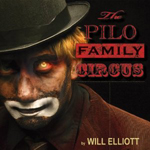
Review of Pilo Family Circus by Will Elliott

SFFaudio Review

Pilo Family CircusPilo Family Circus
By Will Elliot; Read by Mark Stephens
Publisher: Audible Studios for Underland Press
Publication Date: 27 May 2014
[UNABRIDGED] 11 hours 5 minutes

Themes: / horror / circus / psychotic clowns /

Publisher summary:

“You have two days to pass your audition. You better pass it, feller. You’re joining the circus. Ain’t that the best news you ever got?” Delivered by a trio of psychotic clowns, this ultimatum plunges Jamie into the horrific alternate universe that is the centuries-old Pilo Family Circus, a borderline world between Hell and Earth from which humankind’s greatest tragedies have been perpetrated. Yet in this place – peopled by the gruesome, grotesque, and monstrous – where violence and savagery are the norm, Jamie finds that his worst enemy is himself. When he applies the white face paint, he is transformed into JJ, the most vicious clown of all. And JJ wants Jamie dead! Echoes of Lovecraft, Bret Easton Ellis, Chuck Palahniuk, and early Stephen King resound through the pages of this magical, gleefully macabre work nominated as Best Novel by the International Horror Guild.

I almost hate to recommend this book because … what does that say about me?

The Pilo Family Circus is both completely creepy and absolutely fascinating. If you like clowns, you might change your mind after this. If you already don’t like them, you’ll probably think I knew it!

Jamie almost runs down an odd-looking clown and quickly finds his life changing forever. He has 48 hours to pass his “audition” and failing is not an option.

With some creativity, he finds himself in a circus that’s strange even for circus standards … and deadly. Monsters lurk in dark corners and out in the open too and you don’t even want to mess with the proprietor of the whole thing.

Then there are the factions, some of whom absolutely despise each other, such as the Clowns and the Acrobats and what happens in the circus, even a death or two, is overlooked for the most part.

Couple the imaginative world-building with a knack for storytelling and a dark sense of humor (you know, where you laugh and cringe at the same time) and you’ve got a book I couldn’t put down.

I know I go into sales-pitch mode when I talk about a book I really enjoyed, but this one’s highly recommended. The audio on this was astounding too. Mark Stephens does a wonderfully creepy job with his Australian accent. Fishboy alone killed me. This character has a high voice, such as when someone inhales helium, and Stephens stuck it perfectly.

This is an unusual book for me to love, but it’s a true love. It’s different and gruesome and somehow I couldn’t put it down. I stayed longer in the car on my drives, I brought headphones to bed when I usual save bedtime reading for my eyes. This is one of those unique books that really stunned me.

4.5 out of 5 Stars (very highly recommended)

Posted by Bryce L.

Review of Caves of Steel by Isaac Asimov

SFFaudio Review

cavesCaves of Steel (Robots #1)
By Isaac Asimov, read by William Dufris
Publisher: Random House Audio
Publication date: 15 July 2014
[UNABRIDGED] – 7 hours, 43 minutes

Listen to an excerpt: | MP3 |

Themes: / science fiction / robots / detectives / over-population / colonization /

Publisher summary:

A millennium into the future two advancements have altered the course of human history: the colonization of the galaxy and the creation of the positronic brain. Isaac Asimov’s Robot novels chronicle the unlikely partnership between a New York City detective and a humanoid robot who must learn to work together. Like most people left behind on an over-populated Earth, New York City police detective Elijah Baley had little love for either the arrogant Spacers or their robotic companions.

“Like most people on the over-populated Earth, New York City police detective Elijah Baley has little love for either the arrogant Spacers or their robotic companions. But when a prominent Spacer is murdered under mysterious circumstances, Baley is ordered to help track down the killer. Then he learned that they had assigned him a partner: R. Daneel Olivaw. Worst of all was that the ” R” stood for robot.”

I originally read this book when I was a teenager and loved it from the beginning. Isaac Asimov’s descriptions of an overpopulated future Earth were de rigueur for science fiction of the time. What gave this story a fresh spin was that it was a bona fide mystery.

Many years later, listening to William Dufris’ splendid narration, it still holds up. I still remembered the main points of the mystery and detective Lige Bailey’s personality. This left me free to fully appreciate the details of Asimov’s imagined future society, complete with spacemen and robots to provide tension and interest.

I’m not sure if I completely forgot or just never registered the points Asimov was making in this book about technology, adaptation, and the human soul. I was quite surprised to see that Lige Bailey knew his Bible so well that he could quote it in either the King James version or the modern version. And that he used religion as a main point of differentiation (along with art, beauty, and other intangibles) between humans and robots. Atheist Isaac Asimov didn’t deny that faith can lift people higher and that is something one rarely, if ever, sees these days in science fiction.

I also was really interested in watching the way the germ of an idea took hold and was spread from person to person. It was fascinating to see how many things that idea applied to once it had wormed its way into the person’s consciousness.

All in all, this short but satisfying mystery is much richer than I recalled. It was greatly enhanced by the audio where William Dufris became a one man theater company in the way he voiced different characters. There was never any fear of my mistaking who was talking in straight exchanges of dialogue. He was simply masterful whether it was world-weary detective Bailey, slightly robotic Daneel Olivaw, jumpy Jessie, or the nervous Commissioner.

Highly recommended.

INTERESTING SIDE NOTE
Wikipedia notes:

It is a detective story and illustrates an idea Asimov advocated, that science fiction is a flavor that can be applied to any literary genre, rather than a limited genre itself. Specifically, in the book Asimov’s Mysteries, he states that he wrote the novel in response to the assertion by editor John W. Campbell that mystery and science fiction were incompatible genres. Campbell had said that the science fiction writer could invent “facts” in his imaginary future that the reader would not know. Asimov countered that there were rules implicit in the art of writing mysteries, and that the clues could be in the plot, even if they were not obvious, or were deliberately obfuscated.

All hail opinionated John Campbell and Isaac Asimov’s determination to prove him wrong. Today there are a lot of different mash-ups included in the science fiction genre and Asimov led the way with this book.

Posted by Julie D.

Review of Shattered by Kevin Hearne

SFFaudio Review

Shattered by Kevin HearneShattered (The Iron Druid Chronicles, #7)
By Kevin Hearne; Read by Luke Daniels
Publisher: Random House Audio
Publication Date: 17 June 2014
[UNABRIDGED] – 11 hours, 35 minutes

Listen to an excerpt: | MP3 |

Themes: / druids / urban fantasy / plague /

Publisher summary:

For nearly 2,000 years, only one Druid has walked the Earth – Atticus O’Sullivan, the Iron Druid, whose sharp wit and sharp sword have kept him alive as he’s been pursued by a pantheon of hostile deities. Now he’s got company. Atticus’ apprentice, Granuaile, is at last a full Druid herself. What’s more, Atticus has defrosted an archdruid long ago frozen in time, a father figure (of sorts) who now goes by the modern equivalent of his old Irish name: Owen Kennedy. And Owen has some catching up to do.

I’ll start by saying that this is my first foray into the Iron Druid series so this review is from the perspective of someone who hasn’t done the previous books. I would not suggest this book as a great place to start this series. I heard this was a great entry point into the series for fans of urban fantasy but so much of what’s going on in the plot is lost that I missed the overarching significance of what happened in the story. Now that that’s out of the way…

Shattered is an urban fantasy story about one of the last druids in the world trying to live his life while trying to survive the crazy plots of mythical creatures and gods. Hearne’s writing style flows easily and his characters are enjoyable, but I thought the story lacked focus and almost felt like two disjoint stories that didn’t really relate to one another until both ended into a third thread. I liked the use of the urban setting and the creative use of different abilities/powers that characters. There are many quotes and references to geek culture in there but so much that it kept pulling me out of the story.

The first 2/3 of the story has two different threads that are both interesting in their own right but have nothing to do with each other. One thread is about a female druid trying to stop a plague happening in India while the other follows the eponymous iron druid as he introduces someone trapped in time centuries ago to modern culture. Neither story required prior knowledge of the series but the last 1/3 of the story seemed to be a culmination of events from previous stories that was mostly lost on me. I actually thought I was almost done with the audiobook 2/3 of the way through and it felt like a bit of a false ending.

The world and characters in this story are the best part. I liked most characters, thought they were well written, and stayed true to character. I really liked the old druid getting to know modern culture and hearing his take on how he sees things. The comedy relief and quotes/references to geek culture was a bit much at times and took me out of the story too much.

As for the audio side of things, Luke Daniels does a fantastic job reading this book. On one side of things I can hardly believe he does all the voices I heard in the book, on the other side the two main characters sound an awful lot like each other and I would get confused at the beginning of a chapter sometimes until I identified who was speaking. Both voices were great and it didn’t take away from the story, I just thought it was interesting considering how different many of the other voices are. I will definitely be looking for other audiobooks narrated by Luke Daniels.

Posted by Tom Schreck

Review of Dead Man’s Hand edited by John Joseph Adams

SFFaudio Review

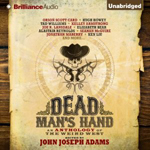
Dead Man's HandDead Man’s Hand: An Anthology of the Weird WestEdited by John Joseph Adams, by various (see table of contents below)
Read by Phil Gigante and Natalie Ross
Publisher: Brilliance Audio
Publication Date: 13 May 2014
[UNABRIDGED] – 15 hours, 59 minutes

Themes: / weird / western / short stories / dirigibles / dinosaurs / demons / clockworks /

Publisher summary:

The weird, wild west – an American frontier populated by gunslingers, rattlesnakes, outlaws, zombies, aliens, time travelers, and steampunk! Twenty-three of science fiction and fantasy’s hottest and most popular authors create all-new tales, written exclusively for this anthology. Aliens and monsters, magic and science are introduced to the old west, with explosive results.

Table of contents:

Introduction by John Joseph Adams
The Red-Headed Dead by Joe R Lansdale
The Old Slow Man and His Gold Gun From Space by Ben H Winters
Hellfire on the High Frontier by David Farland
The Hell-Bound Stagecoach by Mike Resnick
Stingers and Strangers by Seanan McGuire
Bookkeeper, Narrator, Gunslinger by CharlesYu
Holy Jingle by Alan Dean Foster
The Man With No Heart by Beth Revis
Wrecking Party by Alastair Reynolds
Hell from the East by Hugh Howey
Second Hand by Rajan Khanna
Alvin and the Apple Tree by Orson Scott Card
Madam Damnable’s Sewing Circle by Elizabeth Bear
Strong Medicine by Tad Williams
Red Dreams by Jonathan Maberry
Bamboozled by Kelley Armstrong
Sundown by Tobias S Buckell
La Madre Del Oro by Jeffrey Ford
What I Assume You Shall Assume by Ken Liu
The Devil’s Jack by Laura Anne Gilman
The Golden Age by Walter Jon Williams
Neversleeps by Fred Van Lente
Dead Man’s Hand by Christie Yant

I enjoyed this collection of odd tales from the weird west. It may not have knocked my boots off, but I felt them tugged from time to time. And really, what more can we ask from an anthology.

Stuffed with clockworks, vampires, dinosaurs, and aliens, John Joseph Adams (editor) has wrangled some fun stories. Each author strikes a unique set of harmonics on the scale of voice and tone, and yet the individuality of fellow contributors isn’t lost, but rather merged into a larger, primarily singular melody suiting this particular subgenre

My top five IOP (In Order of Printing):
* “The Hell-Bound Stagecoach” by Mike Resnick
* “Bookkeeper, Narrator, Gunslinger” by Charles Yu
* “Second Hand” by Rajan Khanna
* “Red Dreams” by Jonathan Maberry
* “Dead Man’s Hand” by Christie Yant
* And honorable mention goes to the introduction. John Joseph Adams sets the table for the reader, establishing a foothold on the subgenre through brief and accessible historical context.

The audiobook consists of dueling narrators. Phil Gigante and Natalie Ross take turns, with Gigante reading the majority. And while Ross has a rich and pleasing voice, she lathers on too much thick Southern-sweet for the ear to wholly appreciate.

All in all, a fun anthology.
I’d recommend this to anyone who enjoys tales set in the Ole West with a twist of odd fringed with funny.

Posted by Casey Hampton.

The SFFaudio Podcast #275 – READALONG: Ivanhoe by Sir Walter Scott

Podcast

Sir Walter Scott's Ivanhoe

The SFFaudio PodcastThe SFFaudio Podcast #275 – Jesse and Mr Jim Moon discuss Ivanhoe: A Romance by Sir Walter Scott

Talked about on today’s show:
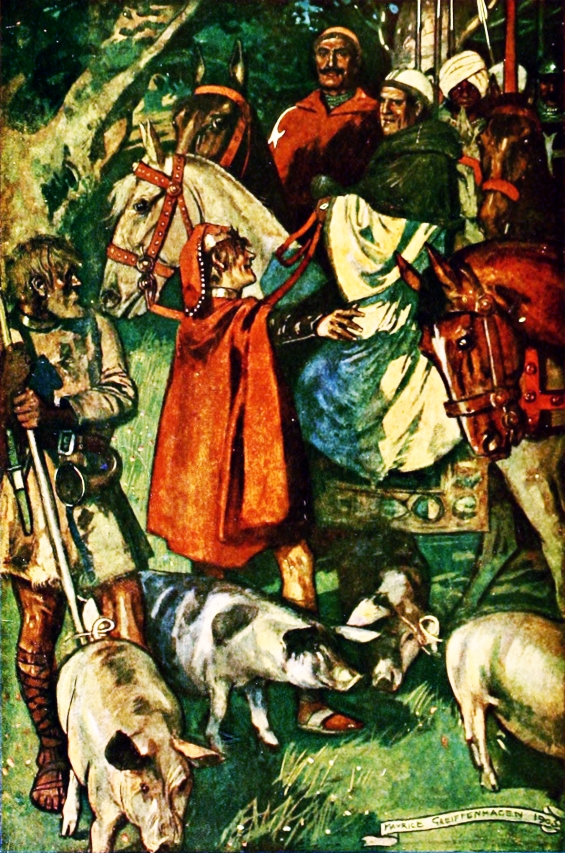
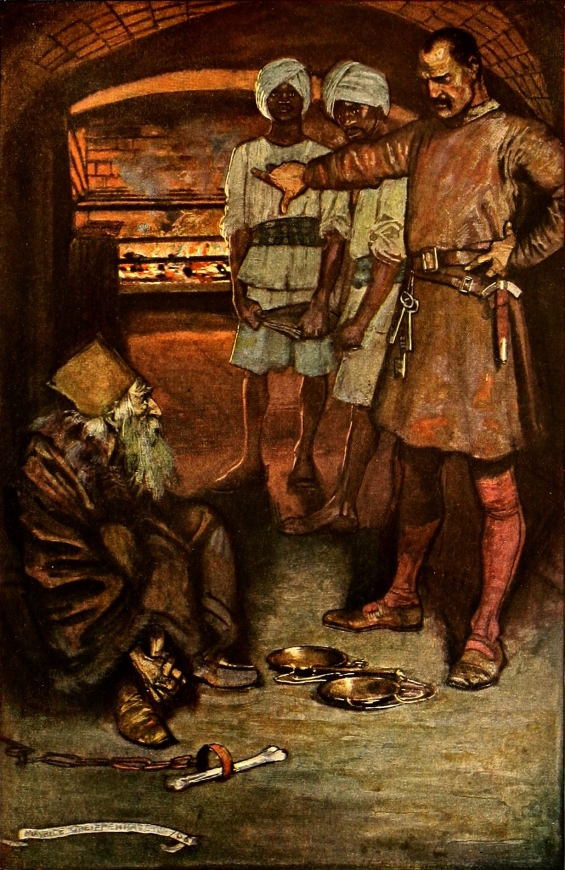
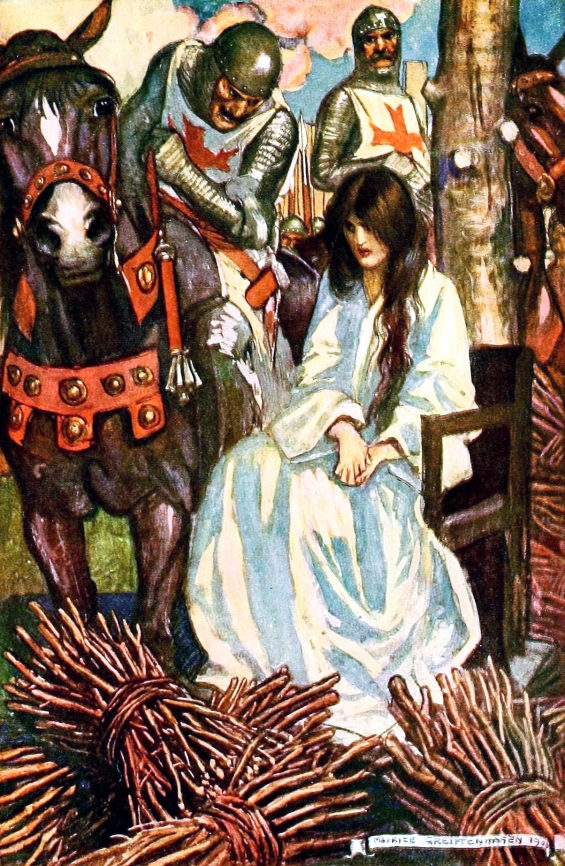
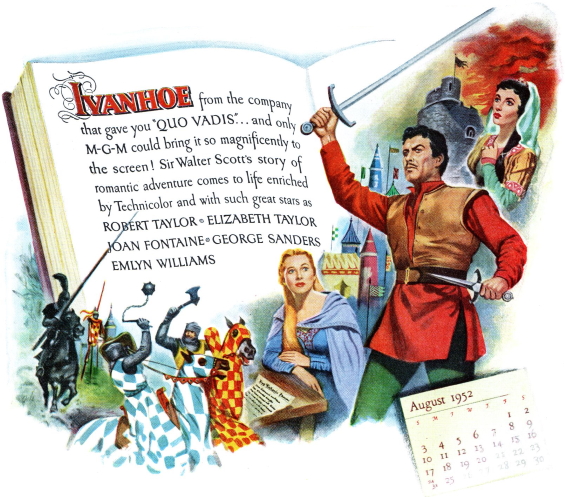
1820, the Tantor Media audiobook as read by Simon Prebble, 3 comic book adaptations!, the July 2014 BBC Radio 4 adaptation (1hr), General Mills Radio Adventure Theater, immensely important, Wamba and Gurth, looking at adaptations, refinement, Robin Hood (1973), the splitting of the arrow, a willow wand, daring-do fiction, archery, folktale, Will Scarlet splits the arrow in the Queen Katherine Ballad, the historical inaccuracies, Rob Roy, a plump text, King Richard and Friar Tuck, The Merchant Of Venice by William Shakespeare, a very Shakespearean novel, pithy and punchy, dialogue and banter, The Lord Of The Rings by J.R.R. Tolkien, fully motivated characters, Athelstane, colour cloaks, where does Isaac stat at Ashby?, Chapter 2 Gurth is “this second Eumaeus”, Ivanhoe is a retelling of Odysseus’ return to Ithaca, the usurpation, the governance of Scotland, the Saxons as the Scots under the English yoke, Loxley, Prince John, King John, Magna Carta, robber barons, Brian de Bois-Guilbert (wants Rebecca), Reginald Front-de-Boeuf, “Front of Beef” (wants Isaac’s money), Maurice de Bracy (wants Rowena), war and God, the 1997 BBC TV adaptation of Ivanhoe, an Arthurian style obsession, the reconciliation, Athelstane is almost a Hobbit, Athelstane death is a comedic version of a Guy de Maupassant or Edgar Allan Poe premature burial story, The Fall Of The House Of Usher done as farce, Monty Python And the Holy Grail, surprisingly few deaths, “boys own adventure”, The A-Team, Ulrica’s death, the the Waverley Novels, almost a Fantasy, magic, The Prisoner Of Zenda, venison, the Douglas Fairbanks Robin Hood, the Black Knight – who could it be?, how easy would the disguises be seen through in 1820, bigger than Stephen King or J.K. Rowling, stage adaptations, Waverley places around the world, Abbotsford, British Columbia is named (in part) after Sir Walter Scott’s home, Ivanhoe’s popularity in the southern United States, invasion, slavery and chivalry, underselling the power of fiction (as compared with non-fiction), On The Origin Of Species by Charles Darwin, The Communist Manifesto, Tolkien, understanding fiction, the revelation of truth through fiction, novels were once quite novel, the need for novels, models of action, 1984 changes, helps and improves you, “what is honorable action?”, the power of oaths, rapacious acquisition vs. honorable service, the destruction of the Templars, banishment was a harsh punishment, an obsession with love, Rebecca is the female Ivanhoe, the role of the Jews in the book vs. the adaptations, banking, this is not an anti-Semitic book (shockingly), the coin counting scene, the roasting scene, Friar Tuck is super-anti-Semitic, Churchill’s background, why is it that English were not as anti-Semitic as most of Europe?, a zeitgeisty historical novel, looking at the present through a historical lens, puffy, the level of intellect is very high – the etymology of pig, Lincoln Green, the final battle, a powerfully intellectual book for a piece of fiction, mid-19th century fiction isn’t as punchy, wit and intelligence in peasant characters, J.K. Rowling must have read Ivanhoe, Sir Walter Scott’s was “the Wizard Of The North”, Cedric <-the name comes from this book, "freelance" <-lances for hire, Robin Hood: Prince Of Thieves, Robin Hood (Ridley Scott), Robin Hood’s nom de guerre, ITV’s Robin Of Sherwood <- both Robin Hood mythologies are in it!, the "Dread Pirate Roberts", a good knight but a bad king, pagan gods, Herne the Hunter, Ivanhoe popularized the Middle Ages, Arthurian scholarship, folk customs, the ancient Egypt craze, A Connecticut Yankee In King Arthur’s Court by Mark Twain, a big powerful book, A Song Of Ice And Fire is kind of the anti-Ivanhoe, the Dunk And Egg stories, surprisingly modern, the symmetry of Ivanhoe, a tonic for gallstones, HBO should commission Ivanhoe, the 1952 version, the 1982 version, Ciarán Hinds, Mark Hamill, Kevin Costner vs. Alan Rickman, a noir ending averted.

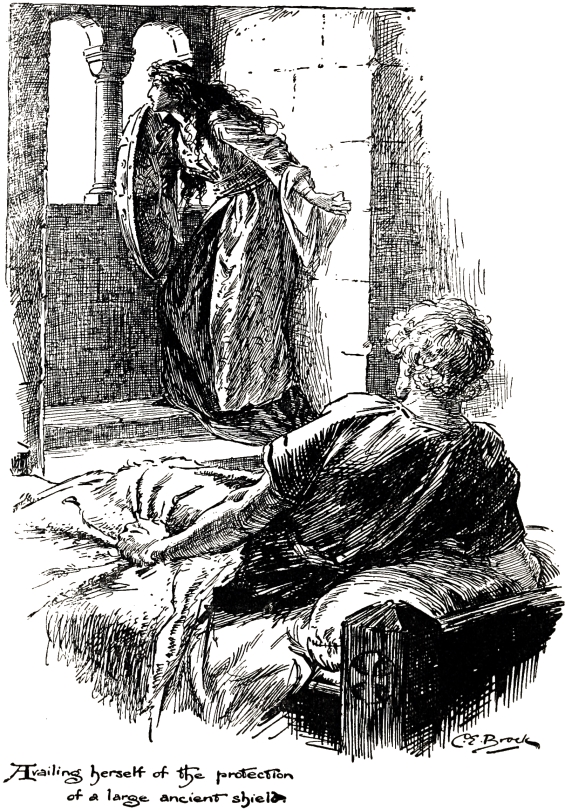
Rebecca and Ivanhoe - illustration by C.E. Brock (1905)

Ivanhoe illustrated by Clarence Leonard Cole (1914)

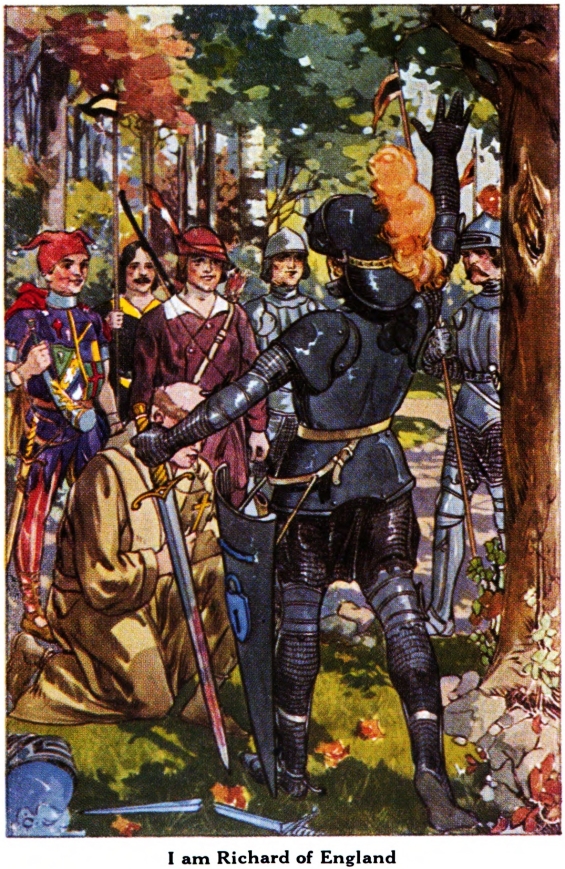
Ivanhoe illustrated by Maurice Greiffenhagen

Ivanhoe illustrated by Maurice Greiffenhagen

Ivanhoe illustrated by Maurice Greiffenhagen

ad for Ivanhoe from Good Housekeeping, August 1952

Posted by Jesse Willis