
Review of Ender’s Game Als Ungekürztes Hörspiel (the GERMAN language audio drama)

SFFaudio Review

Ender's Game by Orson Scott Card - GERMAN audio dramaEnder’s Game Als Ungekürztes Hörspiel
By Orson Scott Card; Performed by a full cast
Audible Download – Approx. 8 hours [AUDIO DRAMA]
Publisher: Audible.de
Published: October 24, 2013

Much has been said about Orson Scott Card’s novel Ender’s Game from 1985 and there is still much to discuss. Of course there is much more than the ‘Oh, the titular game was real!’ ending. This ending may appear to be a very cheap solution to the reader today. But despite this, the novel’s implications are still delivering up-to-date topics for us to discuss. When the game was manipulated by the military and the kids had been hoodwinked into committing genocide against the Buggers – we can ask ‘what does that say about grown-ups manipulating kids in general?’ Orson Scott Card’s novel remains a classic SF because it constructs ideas within us.

To me this novel is a very particular story and after a long hiatus in the SF field I wanted to go back to the roots of my usual reading habits which used to be SF, Fantasy and Horror. I listened to the episodes of The SFFaudio Podcast and the name Orson Scott Card was sprinkled in here and there. In Cologne I went into an English bookstore named “Fine Tea and Books,” run by a very friendly guy named Christopher Potter – he also happens to be a Conan fan expert in recommending SF. He told me to read Orson Scott Card’s novel “Ender’s game” and so I did and I was immediately immersed into it.

Then I heard about a German audio drama, exclusively published by Audible. And then too I heard of an English language version. Orson Scott Card himself wrote the script for the show and it was translated into German by Andrea Wilhelm. A very experienced director of the audio drama, Balthasar von Weymarn (also well regarded as producer of the audiodrama company “Interplanar”). In addition von Weymarn is head of the Mytho­lo­gi­cal Round­Ta­ble® Char­ter Ber­lin der Joseph Camp­bell® Foun­da­tion, and a screenwriter who no doubt knows his stuff.

Together with audio technican Jochen Simmendinger, von Weymarn had to coordinate 101 voice actors, including 40 child and teen voice actors at a recording studio in Berlin. The deadline was very tight because the German audio drama had to be released simultaneously with the start of the movie adaptatoion. The pressure was high but Baltashar von Weymarn loves challenges as he said “A challenge makes it fun.”

Von Weynarm is into the story and knows the novel well. A good director does not only consult the script, but researches much about the author and the cicrumstances around which the novel was written. Von Weynarm knows it all, he wonders why kids are trained that way, what kind of government rules Earth, and he goes deep into the story itself. And this hard thinking shows up in the production. The director’s interpretation of the audiodrama script, as well as of the novel, drives his imagination, evokes mind pictures that von Weynarm is able to explain to his actors. Perhaps every director has to work that way. However, Balthasar von Weynarm had to do it with 40 young and 61 adult actors, each one had to fulfil her or his part and the director had to explain how it all had to be done. This is an amazing achievement.

Due to the fact that the script was written by Orson Scott Card himself the director’s interpretation has it’s limits. But von Weynarm’s production maximizes the script’s power. There is no narrator. All “off-screen” information is given to us via comments by spectators of certain scenes. These spectators observe actions that are happening somewhere else and then anallyze these action right away. This is the issue director and his ensemble can show action. All that can be explained through the voice is well done. Music is also used, but shows up more between the scenes. And so as to fuel the listener’s imagination there are also addedsound effects, created by sound designer Tommi Schneefuss. Schneefuss does a terrific job because the sound effects are not intrusive nor too disturbing. They fit into the setting.

A special issue must have been the casting of the kid actors especially because there were strict specifications by the author. The central character Ender was played by 12-year-old Arne Kapfer. And because his mother was cast for this audio drama he was asked to join the cast. This is a tricky part in all audio drama productions, von Weynarm reports, because boys at that age can suddenly have their voice change. Arne Kapfer though is a pro himself, and brings in five years worth of experience as TV commercial actor. And at home his parents have their own recording studio. It was great to hear the development of Ender was transported through Arne Kapfer’s voice. His slight intonations toward sarcasm, in particular scenes in the Battle School, were very well performed. Kapfer brought in a lot of talent – though voice acting is only a hobby as he has career aspirations toward geology.

The producer of the audio drama is the Lauscherlounge company that works together with most of the best voice artists in Germany – many of whom t apper in “Ender’s Game.” Take for example one of my all-time-favourite voice actors Udo Schenk, who played Colonel Graff. Schenk is the voiceover artist for Garry Oldman, Ralph Fiennes, David Morrissey, Ray Liotta and many more. Timmo Niesner for Chamrajnagar (who dubs Elijah Wood), and Erich Rauker as Mazer Rackham (artist for Will Patton). Their talents form a neat audio drama that is both enjoyable and the very essence of the novel. Does this audiodrama replace the book? No, but it enlarges the listener’s understanding of the novel and it’s a whole lot of fun to hear. The seven hours pass almost too quickly.

Until recently the book itself was long out of print in Germany but because of the movie it was re-published in the general SF section of the Heyne Verlag and not marked out as a YA book.

Posted by Mirko
Review of Romulus Buckle & the Engines of War

SFFaudio Review

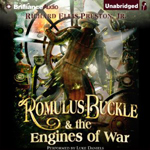
buckle2Romulus Buckle & the Engines of War (The Chronicles of the Pneumatic #2)
By Richard Ellis Preston; Narrated by Luke Daniels
Publisher: Brilliance Audio
Publication Date: 19 November 2013
[UNABRIDGED] – 13 hours, 31 minutes

Themes: / snow / steampunk / zeppelin / airship / aliens /

Publisher summary:

The frozen wasteland of Snow World – known as Southern California before an alien invasion decimated civilization – is home to warring steampunk clans. Crankshafts, Imperials, Tinskins, Brineboilers, and many more all battle one another for precious supplies, against ravenous mutant beasts for basic survival, and with the mysterious Founders for their very freedom. Through this ruined world soars the Pneumatic Zeppelin, captained by the daring Romulus Buckle. In the wake of a nearly suicidal assault on the Founders’ prison city to rescue key military leaders, both the steam-powered airship and its crew are bruised and battered. Yet there’s little time for rest or repairs: Founders raids threaten to shatter the fragile alliance Buckle has risked everything to forge among the clans. Even as he musters what seems a futile defense in the face of inevitable war, Buckle learns that the most mysterious clan of all is holding his long-lost sister in a secret base – and that she holds the ultimate key to victory over the Founders. But rescuing her means abandoning his allies and praying they survive long enough for there to be an alliance to return to.

So if you are reading this, it means you’ve suffered through the first book, Romulus Buckle & the City of the Founders, and thought, “Well, here’s a series with no where to go but up.” Turns out you were right. After an unexpected opening on a snowy mountain with an obligatory action scene, Preston gets back to the business of the war brewing against the Founders Clan. And while it’s still not a great book, it is much more confident than the last and delves deeper into Buckle’s world.

Like the first book, the story relies a lot on excess for its appeal. Sure, the Crankshaft Clan is arranging an alliance with the other clans to go to war against the Founders who are trying to take everyone over. But now there is also a love triangle, a long-lost sister, and an alien having visions while in a coma. We are also shown some the ordinary goings on of clan life which is reminiscent of frontier life the West. It is unclear how society managed to revert back a couple centuries when they have little to no knowledge of twenty-first century life, but it is nice to feel like the events of the first novel have some sort of background. Once again, the characters were stereotypical and underdeveloped. The women all seem to be in love with Buckle for no real reason while he is completely oblivious. Preston still tells us about about the characters but this book also shows us a little to backup his claims. Still, he would have been better served by shortening the middle to keep the plot moving. The last chapter was again the most interesting part but it shows that Preston will continue to include whatever fantastical elements he can think of to keep his audience interested regardless of how muddled it makes his story.

Although better than the first novel, this book still doesn’t come up to scratch. Luke Daniels continues his admirable narration but it is not enough to make it worthwhile.

Posted by Rose D.


The SFFaudio Podcast #274 – AUDIOBOOK/READALONG: Facts Concerning The Late Arthur Jermyn And His Family by H.P. Lovecraft

Podcast

Facts Concerning The Late Arthur Jermyn And His Family
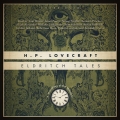
The SFFaudio PodcastEldritch Tales by H.P. LovecraftThe SFFaudio Podcast #274 – Facts Concerning The Late Arthur Jermyn And His Family by H.P. Lovecraft, read by Gildart Jackson (this audiobook comes to us courtesy of Blackstone Audio’s Eldritch Tales). This is a complete and unabridged reading of the story (28 minutes) followed by a discussion of it. Participants in the discussion include Jesse, Mr Jim Moon, and Samantha Wikan

Talked about on today’s show:
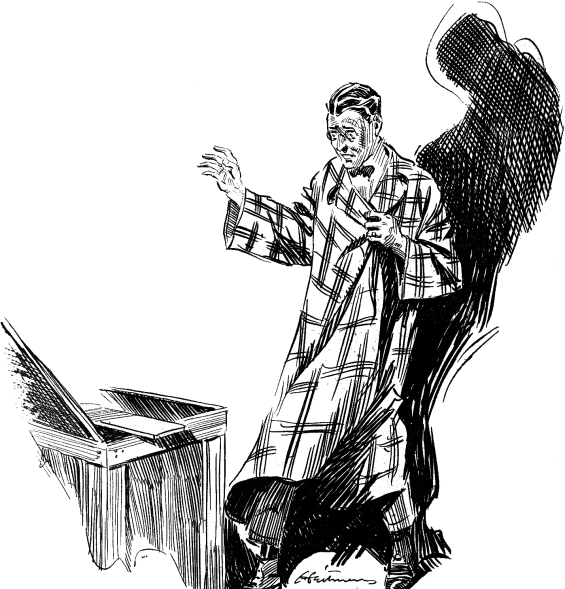
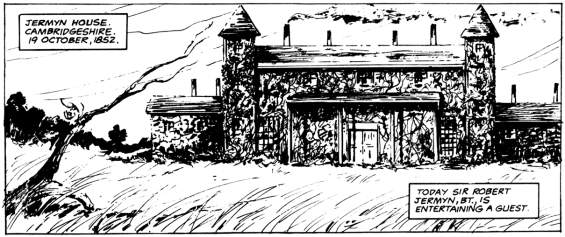
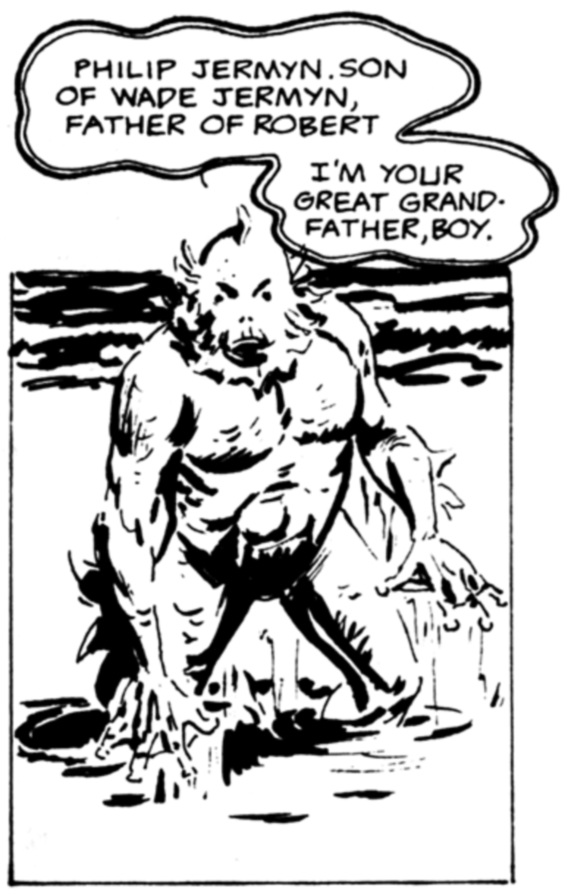
The story was also published as Arthur Jermyn and The White Ape, Weird Tales, 1921, The Wolverine, the 1980s, “that’s not a big deal”, “our more enlightened times”, Lovecraft’s letter to Weird Tales, Rhodesia, “the Dark Continent”, “our brothers and sister in the jungle”, racism, Allan Quatermain, telegraphing the twist, is Lovecraft making a joke?, a more horrific reading, no Elder Gods, no Dreamlands, atavism and degeneration, great grandmother was a gorilla, miscegenation, bestiality, Dagon, Shadow Over Innsmouth, atavism, losing sanity points, Sir Wade Jermyn (African explorer with a “Portuguese wife” -> Philip Jermyn (a very agile sailor) -> Robert Jermyn (an anthropologist) -> Nevil Jermyn (runs off with a dancer) – > Alfred Jermyn (joins the circus) -> Arthur Jermyn (the poet scholar), Lovecraft became despondent when his family had to leave their home, Lovecraft’s mom said he was “exceedingly ugly”, Lovecraft’s father (died in an asylum), a tainted heritage, fear of degeneration, the ape goddess, diluting the noble bloodline, Arthur was the most unattractive one that was allowed out of the bedroom, Nevil’s siblings, a music hall singer of “unknown origin”, a lack of respect for the lower classes, below or above one’s station, a common sailor, the gamekeeper’s daughter, Winesburg, Ohio, Ray Bradbury’s inspiration for The Martian Chronicles, who is telling this story?, “demoniacal hints”, oppressive science, a future echo to Pickman’s Model, squamous eldritch adjectives, a gentleman in a club, “the gorilla boxing match death”, a smoking jacket holding court, clubman tales, Lord Dunsany, Arthur C. Clarke’s Tales Of The White Hart, Isaac Asimov’s The Black Widowers Club, Supernatural (1977 BBC TV series), “the club of the damned”, blood freezingly funny, “really ugly or unconventionally beautiful”, Arthur’s life story is quite sad, we really empathize with Arthur Jermyn, Victorian society, aren’t we all Arthur?, a lot of people probably don’t like the idea we are related to apes, maybe we should reject it even though its true, Douglas Adams “Earthmen are not proud of their ancestors and never invite them around to dinner”, digital watches, the ape city, hybrids, what of the other side?, S.T. Joshi’s reading, “that last clause is critical”, the white apes as the missing link, “the entire white race”, the only explanation, miscegenation assumes certain things, eugenics, “he married that ape”, “he made an honest ape of her”, the illustration from Weird Tales, how pretty was she?, the community’s contempt, judgements from a group of racist assholes, “that being said I’d rather be a poet than a sailor”, the butler, the servants, the black nanny, “the aged Soames”, the 1993 comic book adaptation by Stephen Phillip Jones, the visitor named “Seaton”, the only one who survives is Alfred, the adaptation goes off on this weird tangent -> The Terror Of Blue John Gap (first published in 1910), Samuel Seaton is in both stories (The Facts Concerning The Late Arthur Jermyn And His Family and The Terror Of Blue John Gap, She by H. Rider Haggard, a more realistic version of that story, Tarzan series by Edgar Rice Burroughs, the lost city of Opar (a lost colony of Atlantis), the John Carter books, this story is underrated, the humour and the pathos, not going into purple overdrive, the Jorkens tales, dry British wit, take off the Cthulhu blinkers, Jesse would like Mr Jim Moon to read aloud The Terror Of The Blue John Gap, Blue John (the mineral), Sir Arthur Conan Doyle, “obviously its insane”, Heart Of Darkness , Henry Morton Stanley, Dr. Livingston, Penny Dreadful is a mash-up of late 19th century horror fiction, Timothy Dalton plays a kind of Allan Quatermain kind of character, Mina Harker, demon possession, “raping their way across Africa”, the Grand Tour, “sending sons to the colonies for hunting, drinking, and whoring”, Sir Wade is the White God, the Congolese natives’ stories are all true, what’s in the box?, two statues?, a subterranean ocean, a fish man?, “I’m your great grandfather boy”, the Spawn of Cthulhu, “Deep Ones can mate with any species”, when we read Lovecraft we do a disservice to force connections to the Cthulhu Mythos, presenting it as a theory, “the locket!”, “what’s in the locket?”, the locket was empty, they threw the locket in a well, interpretations, stopping the spread vs. just being horrified, putting them over the percentage, “they had to make it not be”, having an ancestor delivered to your door, “Sir Wade collected things one wouldn’t ordinarily collect”, what did he bring back?, tending away from the Cthulhu Mythos, Cthulhu plushie, Lovecraft would never have said: “Sanity points?! Great idea!”, The Hound by H.P. Lovecraft (and it’s black museum), Lovecraft used the Necronomicon as “a backdrop and a reference and a flavour”, appreciating the stories as stories, it’s touching!

The White Ape - illustration by William F. Heitman

The Worlds Of H.P. Lovecraft - art by Wayne Reid

The Worlds Of H.P. Lovecraft (1993 Caliber Comics) art by Wayne Reid

Posted by Jesse Willis

The SFFaudio Podcast #273 – TOPIC: J.R.R. Tolkien’s Tom Bombadil

Podcast

J.R.R. Tolkien's Tom Bombadil

The SFFaudio PodcastThe SFFaudio Podcast #273 – Jesse, Seth, Mr Jim Moon, and Cory Olsen (The Tolkien Professor) talk about J.R.R. Tolkien’s character Tom Bombadil – as he appears in The Lord Of The Rings and The Adventures Of Tom Bombadil.

Talked about on today’s show:
Tom Bombadil as a character spans Tolkien’s literary career; “The Adventures of Tom Bombadil” written early but revised later, while “Bombadil Goes a-Boating” post-dates The Lord of the Rings; comparing the different stages of Tom Bombadil; not the same Tom from “The Stone Troll” poem; Pauline Baynes as illustrator of Tolkien’s and C.S. Lewis’s works; Tolkien changing up song order in The Lord of the Rings; Tolkien’s recording of the troll song (see video below); “Princess Mee”; Tom’s imperviousness to rain is his only outwardly magical quality; “Tom Bombadil doesn’t fit”; Tom’s exclusion from the films was a good thing; Tom’s prose resembles his poetry; no one knows what to make of Tom Bombadil; is Goldberry dying?; The Little Mermaid; the Hades and Persephone myth; more on Tom’s contradictions; Goldberry tied to the land; Tom and Goldberry are childless; Babylon 5; Tom Bombadil’s place (or lack thereof) in Tolkien’s cosmology; the cats of Queen Berúthiel; “a story is better with some mysteries”; Tolkien’s poetry is wildly experimental in terms of meter; Tom’s trochaic meter; Väinamöinen in Finnish Kalevala myth cycle as influence for Tom Bombadil; on Tom Bombadil’s career; similarities between Tom Bombadil and Bjorn as opportunities for rest in the respective plots; derivative fantasy neglects these important rest stops; “yellow cream and honeycomb, white bread and butter” was served at Tom and Doldberry’s wedding feast; the importance of landscape and description in Tolkien’s work; dreams; Valinor is not Westerns, thankfully; no barrows in the films, sorry Jesse; Mr. Jim Moon’s podcast on wights; Old/Middle English’s many words for “man”; Sir Gawain and the Green Knight; oral transmission of stories; Lord of the Rings would not have been publishable in today’s climate; Frodo’s relationship to the ring; Tom Bombadil and gravitas do not go together; Tom Bombadil’s D&D alignment is “flowers”, followed by “true neutral” as a close second; on the necessity of choosing sides; why don’t the hobbits call on Tom later?; Corey suggests The Tolkien Reader for further reading.

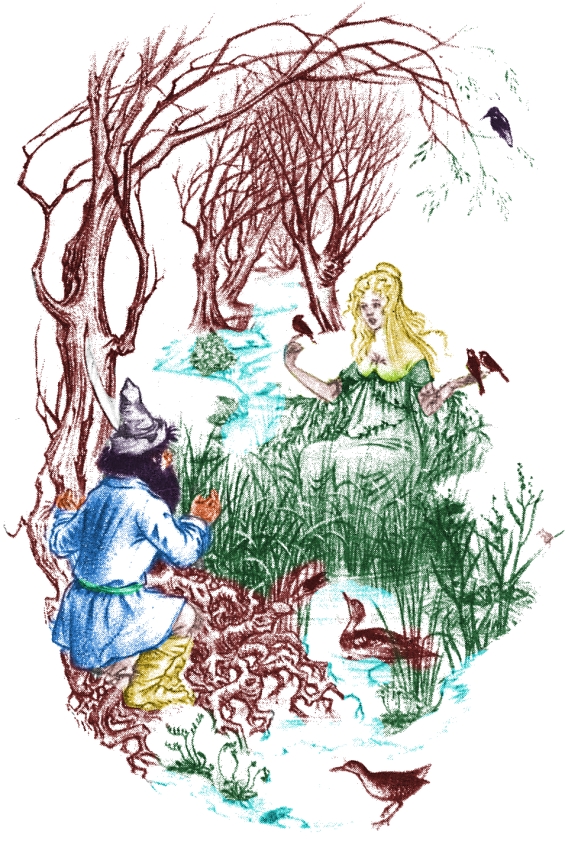
Tom And Goldberry - illustration by Pauline Baynes

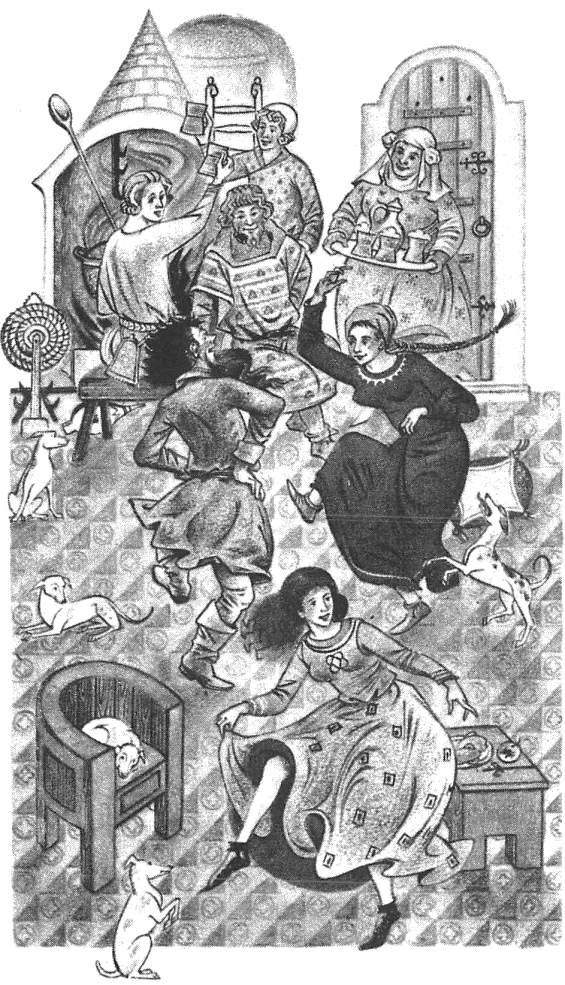
Bombadil Goes Boating - illustration by Pauline Baynes

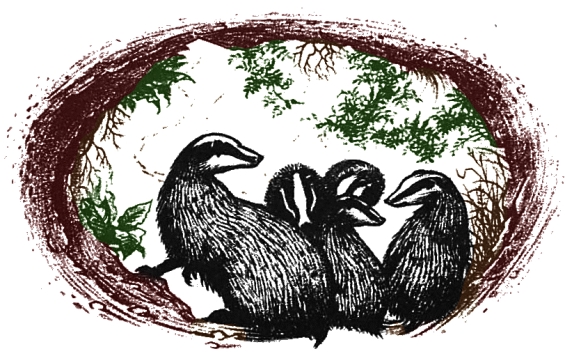
Badger Folk - illustration by Pauline Baynes

Posted by Jesse Willis

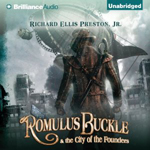
Review of Romulus Buckle & the City of the Founders

SFFaudio Review

Romulus Buckle and the City of the FoundersRomulus Buckle & the City of the Founders (Chronicles of the Pneumatic #1)
By Richard Ellis Preston; Narrated by Luke Daniels
Publisher: Brilliance Audio
Publication Date: 2 July 2013
[UNABRIDGED] – 11 hours, 38 minutes

Themes: / post-apocalypse / snow / zeppelin / steampunk / airship /

Publisher summary:

In a postapocalyptic world of endless snow, eighteen-year-old Captain Romulus Buckle and the stalwart crew of the Pneumatic Zeppelin must embark on a perilous mission to rescue their kidnapped leader, Balthazar Crankshaft, from the impenetrable City of the Founders. Steaming over a territory once known as Southern California—before it was devastated in the alien war—Buckle navigates his massive airship through skies infested with enemy war zeppelins and ravenous alien beasties in this swashbuckling and high-octane steampunk adventure. Life is desperate in the Snow World, and death is quick. Buckle and his ship’s company must brave poisoned wastelands of Noxious Mustard and do battle with forgewalkers, steampipers, and armored locomotives as they plunge from the skies into the underground prison warrens of the fortress city.Captain Romulus Buckle must lead the Pneumatic Zeppelin and its crew of ne’er-do-wells on a desperate mission where he must risk everything to save Balthazar and attempt to prevent a catastrophic war that could wipe out all that is left of civilization and the entire human race.

Romulus Buckle & the City of the Founders is a wonderful example of why books should never be judged by their covers. Because while the cover looks polished and interesting with a mysterious but kick ass hero, the story is actually pretty boring. It reminded me of the movie The Expendables. It throws in everything that typically makes an exciting steam punk adventure, but doesn’t use any of the elements to their advantages which just leaves a lot of forgettable explosions.

From the start I felt lost, like maybe I had actually started listening on the second disk because the story starts in the middle of things. Not in the middle of a fight or a heist or a battle. In the middle of the plot. Captain Buckle and crew are flying to the City of the Founders (formally Los Angeles) to break his father out of prison where he is being kept by the nefarious and secretive Founders clan. After all, why have boring Act I world establishment and character building, when you can just start at the beginning of Act II action and fill your readers in on things only as needed? As a result, I never really understood the day to day of this post-war future. In fact, the only things we are told is that civilization has devolved into family clans, all of whom specialize in a trade but none of whom really get along. At some point aliens invaded earth and mingled with humans long enough to leave half-alien children behind, but they are gone now. And humans may or may not be limited to Southern California. The elusive Founders Clan, who has been kidnapping people from other clans, seems important and everyone seems wary of them but I was never really clear on their role in society. It is defiantly not a world in which you can lose yourself.

But I can forgive mediocre world building for some great swashbuckling characters. After all, our hero is named Romulus Buckle and captains a zeppelin. But don’t have your heart set on Errol Flynn, because Buckle, like the rest of the cast are all straight from a mold. Buckle is dashing, brave and heroic because we are told he is, not because we are shown it. His half-alien stepsister is aloof because she’s an alien. There are goofy, well-meaning sidekicks, wise, old mentors, and mustache twirling villains, but none of this paper doll cast has the panache to hold my attention much less carry a story that is ninety percent action scenes. I’m not sure Preston would have bothered with the dialogue necessary to string the action together if it wasn’t the only way to publish a book. It was not until the last chapter that sets things in motion for the sequel that things became more interesting.

Overall, this is a pretty mediocre book that will a appeal more to teenage boys and diehard steam punk fans. Luke Daniels, the narrator, has a nice, manly voice that does the tone of the book justice but I found it difficult to keep track of what was happening when listening to lengthy action scenes. This is Preston’s debut novel and it feels like it, so be prepared for some clumsy storytelling.

Posted by Rose D.


Review of Dragon Blood by Patricia Briggs

SFFaudio Review

dragonbloodDragon Blood (Hurog Duology #2)
By Patricia Briggs; Performed by Joe Manganiello
Publisher: Brilliance Audio
[UNABRIDGED] – 10 hours
Themes: / fantasy / dragons / Hurog /

Wardwick of Hurog wishes to live in peace. Destiny has other plans. He is about to be arrested and imprisoned in the Asylum for Nobel Embarrassments and Inconveniences. Worse still, Ward has learned that the same man bent on his imprisonment, Jakoven Tallven, High King of the Five Kingdoms, is seeking Hurog blood to activate the supernatural equivalent of a weapon of mass destruction.Once again Ward must play the fool to survive. Yet, that will not suffice. Ward’s closest companions all must risk their lives and fortunes to keep Jakoven and his malevolent mage Jade Eyes from destroying their world.

After finishing Dragon Bones I was left with some lingering questions and looking forward to this book. For some reason this story wasn’t as much fun. It’s hard to put my finger on exactly why.  My best guess is the pacing. For such a short book, it felt like the plot meandered too much on unimportant details. The beginning was strong. It pulled me right back in again, and I thought everything was good to go. But then it got slow in middle, and felt sort of rushed at the end. I was sort of underwhelmed by the final confrontation especially.

I guess since I wasn’t having as much fun with the story this go around and it made the quality of the writing more noticeable. I’m not one to spend much time commenting on the writing too much. I tend to leave that for English teachers/literary types. I care a lot more about story and character development than I do about how elegant the prose is. If you’re entertaining me, I’m not going to notice bad sentence structure/dialogue.

If I had to sum this book up with one sentence it would be “Hurog means Dragon.” Why you ask? Well because it’s said at least once per chapter. Often more than once. Or at least that’s how it felt. Eventually I groaned every time another character said it.  I wonder if the writing was just as bad in the first book and I didn’t notice. “Hurog means dragon” was said a few times in that book as well, but it didn’t seem nearly so frequent. I didn’t really find the dialogue or prose that bad.

Glancing over other reviews it seems like I may be in the minority. It’s quite possible that if you liked the first book, you may enjoy this as well, but I mostly found it to a disappointing sequel.

As far as the audio goes, Joe Manganiello once again does a fine job without really adding or subtracting from the story.

Review by Rob Zak.