BBC R4 + RA.cc: Markheim by Robert Louis Stevenson [RADIO DRAMA]

SFFaudio Online Audio

Gruselkabinett - Markheim by Robert Louis Stevenson

I’ve posted about Robert Louis Stevenson’s murderous classic, Markheim, before (the audiobook and another radio drama). But, I’ve just discovered a very good new adaptation (from 2006) available at RadioArchive.cc. The sound design is excellent, and its lengthy enough to bring out most of the nuance in the text.

BBC Radio 4RadioArchives.ccMarkheim
Adapted from the story by Robert Louis Stevenson; Adapted by John Taylor; Performed by a full cast
MP3 via TORRENT – Approx. 45 Minutes [RADIO DRAMA]
Broadcaster: BBC Radio 4
Broadcast: February 1, 2006
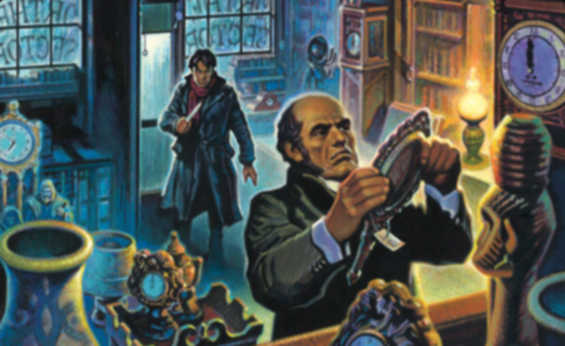
On Christmas Day 1886 with London shrouded in fog, a man shadows a girl across Blackfriars Bridge towards the back streets of Holborn. His name is Markheim and his intentions are unremittingly dark.

Directed by John Taylor

Cast:
Tommy – Mark Straker
Markheim – Jack Klaff
Girl – Abigail Hollick
Visitor – Anton Rodgers
Crispin – Anthony Jackson

And for German listeners there’s THIS sexy sounding version produced as a part of a cool series called Gruselkabinett (which translates to “Chamber of Horrors”).

As a bonus I offer this newly created |PDF| and a vintage anlaysisby C. Alphonso Smith from Short Stories Old And New (1916):

Setting:
There is no finer model for the study of setting than this story affords. It is three o’clock in the afternoon of a foggy Christmas Day in London. If Markheim’s manner and the dimly lighted interior of the antique shop suggest murder, the garrulous clocks, the nodding shadows, and the reflecting mirrors seem almost to compel confession and surrender. “And still as he continued to fill his pockets, his mind accused him, with a sickening iteration, of the thousand faults of his design. He should have chosen a more quiet hour.” So he should for the murder; but for the self-confession; which is Stevenson’s ultimate design, no time or place could have been better.

Plot:
There is little action in the plot. A man commits a dastardly murder and then, being alone and undetected, begins to think, think, think. It is the turning point in his life and he knows it. Instead of seizing the treasure and escaping, he submits his past career to a rigid scrutiny and review. This brooding over his past life and present outlook becomes so absorbing that what bade fair to be a soliloquy becomes a dialogue, a dialogue between the old self that committed the murder and the new self that begins to revolt at it. The old self bids him follow the line of least resistance and go on as he has begun; the newly awakened self bids him stop at once, check the momentum of other days, take this last chance, and be a man. His better nature wins. Markheim finds that though his deeds have been uniformly evil, he can still “conceive great deeds, renunciations, martyrdoms.” Though the active love of good seems too weak to be reckoned as an asset, he still has a “hatred of evil”; and on this twin foundation, ability to think great thoughts and to hate evil deeds, he builds at last his culminating resolve.

The story is powerfully and yet subtly told. It sweeps the whole gamut of the moral law. Many stories develop the same theme but none just like this. Stevenson himself is drawn again to the same problem a little later in “Dr. Jekyll and Mr. Hyde.” Hawthorne tried it in “Howe’s Masquerade,” in which the cloaked figure is the phantom or reduplication of Howe himself. In Poe’s “William Wilson,” to which Stevenson is plainly indebted, the evil nature triumphs over the good. But “Markheim,” by touching more chords and by sounding lower depths, makes the triumph at the end seem like a permanent victory for universal human nature.

Characters
If the story is the study of a given situation, Markheim, who is another type of the developing character, is the central factor in the situation. We see and interpret the situation only through the personality of Markheim himself. Another murderer might have acted differently, even with those clamorous clocks and accusing mirrors around him, but not this murderer. There is nothing abnormal about him, however, as a criminal. He is thirty-six years old and through sheer weakness has gone steadily downward, but he has never before done a deed approaching this in horror or in the power of sudden self revelation. He sees himself now as he never saw himself before and begins to take stock of his moral assets. They are pitifully meager, though his opportunities for character building have been good. He has even had emotional revivals, which did not, however, issue in good deeds. But with it all, Markheim illustrates the nobility of human nature rather than its essential depravity. I do not doubt his complete and permanent conversion. When the terrible last question is put to him – or when he puts it to himself – whether he is better now in anyone particular than he was, and when he is forced to say, “No, in none! I have gone down in all,” the moral resources of human nature itself seem to be exhausted. But they are not. “I see clearly what remains for me,” said Markheim, “by way of duty.” This word, not used before, sounds a new challenge and marks the crisis of the story. Duty can fight without calling in reserves from the past and without the vision of victory in the future. I don’t wonder that the features of the visitant “softened with a tender triumph.” The visitant was neither “the devil” as Markheim first thought him nor “the Saviour of men” as a recent editor pronounces him. He is only Markheim’s old self, the self that entered the antique shop, that with fear and trembling committed the deed, and that now, half-conscious all the time of inherent falseness, urges the old arguments and tries to energize the old purposes. It is this visitant that every man meets and overthrows when he comes to himself, when he breaks sharply with the old life and enters resolutely upon the new.

Posted by Jesse Willis

Review of The Sphinx by Bob Mayer

SFFaudio Review

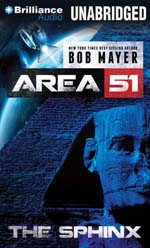
SphinxThe Sphinx  (Area 51 #4)
By Bob Mayer; Performed by Eric G. Dove
Publisher: Brilliance Audio
11 hours [UNABRIDGED]

Themes: / military sci-fi / aliens / hybrids / nuclear /

Publisher summary:

Dr. Lisa Duncan and Special Forces officer Mike Turcotte know better than anyone that no secret is safe for long — especially one that offers untold power. Case in point: no sooner does Turcotte’s elite Area 51 team uncover a dormant alien ship in earth orbit than a group of alien-human hybrids seizes it and uses its technology to commandeer a satellite array bristling with nuclear missiles. Now they’re demanding that humankind hand over the key to an ancient stash of alien technology…or watch an entire continent be reduced to atomic rubble. Doom seems certain, as the required key is believed lost to the ages — until an unwitting anthropologist discovers the first of many clues to its hiding place. As Duncan and Turcotte race to reach the key — and the powerful treasure it can unlock — ahead of their alien foes, the quest leads them deep into a deadly maze within the Great Sphinx of Giza. The prize? Nothing less than the legendary Ark of the Covenant.

For fans of this series, Bob Mayer delivers a story that lightly scratches the military SF itch but never arrives at satisfaction.  If you don’t mind foreshadowing and rather flat characters that encounter somewhat predictable puzzles, then I think you’ll like this installment of the Area 51 series.  I’d say that Mayer has written the equivalent of a bacon cheeseburger.  You know what you’re going to get before you order it, and if you are in the mood for a run of the mill bacon cheeseburger, then I say “Dig in and don’t be shy about using napkins.”

Eric G. Dove acts as narrator and I am on the fence with his delivery.  So here’s the down and dirty with Dove.  When he reads dialogue, Dove is on top of his game and carries this audio performance.  When Dove is left to recite, I mean read exposition; he becomes the human equivalent of narrator elevator music.  Seriously, Dove reads exposition like most people might read a road map but with less enthusiasm.  But when Dove engages a character, everything changes and this somewhat average audiobook becomes almost enjoyable.

Final thoughts.  If you’re even thinking about reading this book then it’s a fair assumption to think you’ve read the previous books in this series.  If you have and are considering reading on, I encourage you to do so as I think you will be happy.  If you have read the books in the series are aren’t sure if you want to continue, then I say “Turn back when you still can.”

Posted by Casey Hampton.

The SFFaudio Podcast #212 – READALONG: The Willows by Algernon Blackwood

Podcast

The SFFaudio PodcastThe SFFaudio Podcast #212 – Jesse, Mirko and Mr. Jim Moon discuss The Willows by Algernon Blackwood.

Talked about on today’s show:
Algernon Blackwood’s television show, “the ghost man”, the expansion of consciousness, the extension of human personality, ghosts, Saturday Night Story, H.P. Lovecraft’s essay Supernatural Horror In Literature, almost nothing happens, “ghoulish work”, cosmic horror, Mr. Jim Moon outlines of the story, the nameless Swede, travelogue, the Danube, a lonesome expanse, an elemental presence, the rising spirits, the shunned place, the man’s body (or the black otter), “never human in the first place”, overlapping dimensions, The House On The Borderland by William Hope Hodgson, The Black Stone by Robert E. Howard, why is it set in Europe?, The Wendigo, Blackwood actually canoed on the Danube, Marcus Aurelius, the Black Forest, Blackwood attended school in the area, hard guys, Famous Fantastic Mysteries, “the soul chilling fury of Nature’s terrible dethroned gods”, the joke becomes unfunny, Romania, Transylvania, “looks fantastic but no-one lives there!”, evidence of human habitation, we have to keep going farther and farther to find the borderlands, their thoughts are manifested, telepathy, With Morning Comes Mistfall by George R.R. Martin, a review of Bright Messenger by Algernon Blackwood from Fantasy & science Fiction, the “Diva”, nature spirits, sprites, fairies, planetary entities, nature’s policemen, WWI, haunted tree?, occult and paranormal writing, occultist jargon, the chain of being, neo-Platonism, intermediary spirits, what did these two dudes do wrong?, sacred groves, druids, devilish places, The Children Of The Stones, the stolid Swede, red Indians, the noble savage, Guy de Maupassant’s The Horla, the drowned peasant, the conical holes, Chupacabra?, alien sampling?, footprints?, fingerprints?, Jaws, the hidden monster, “having rid himself of the morsel”, empty planet, “the sounds a planet must make driving along through space”, J.R.R. Tolkien, Old Man Willow, the Withywindle, the evil trees, Tolkien was familiar with Blackwood, Tom Bombadil is a nature spirit, Goldberry is a river spirit, “he’s got a bloody song for everything”, the Wikipedia entry for willow, the bronze skinned figures, fairy mischief, fairies fuck with you, what’s with the paddles?, a sacrifice, man where was your editor?, you didn’t really do anything wrong but show up, canoeing ghost stories, Voyageurs, a deal with the devil on Christmas Eve, La Chasse-Galerie (aka “The Bewitched Canoe” aka “The Flying Canoe“), Deliverance, leisure travel vs. work travel, the drones, the last gasp of the Grand Tour, Alien vs. Evil Dead, the punishment of the idle, reckless youth, Cabin In The Woods, The Complete Weird Fiction Of Algernon Blackwood, short stories are best enjoyed in short doses.

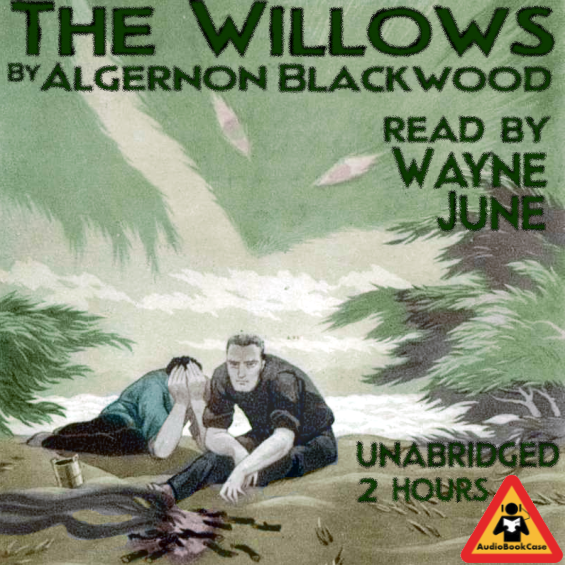
The Willows by Algernon Blackwood - read by Wayne June

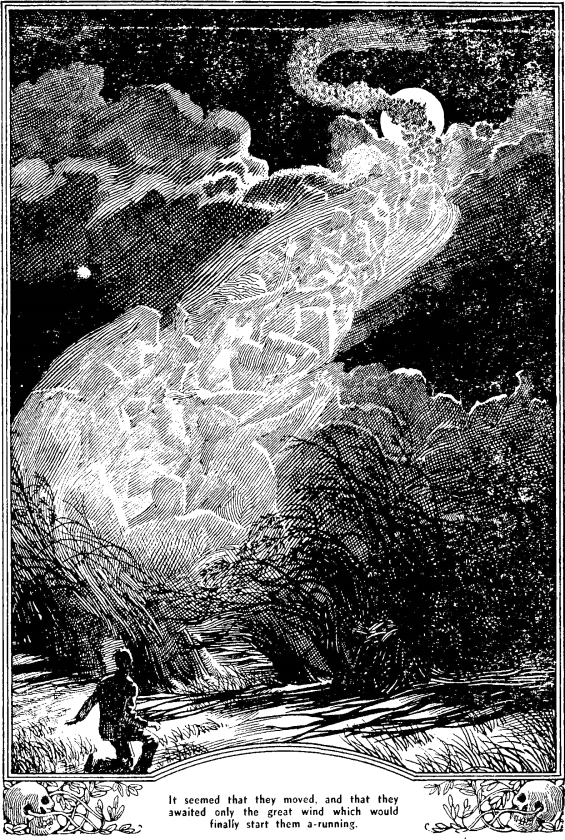
The Willows by Algernon Blackwood

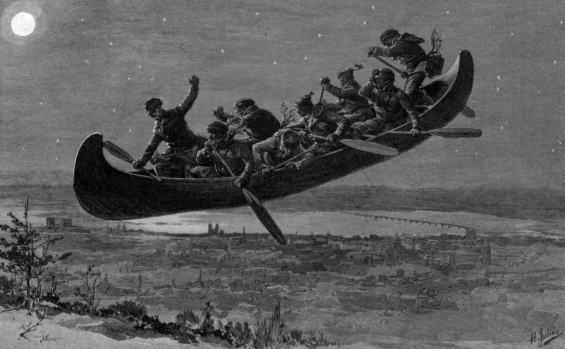
La Chasse-Galerie - illustrated by Henri Julien

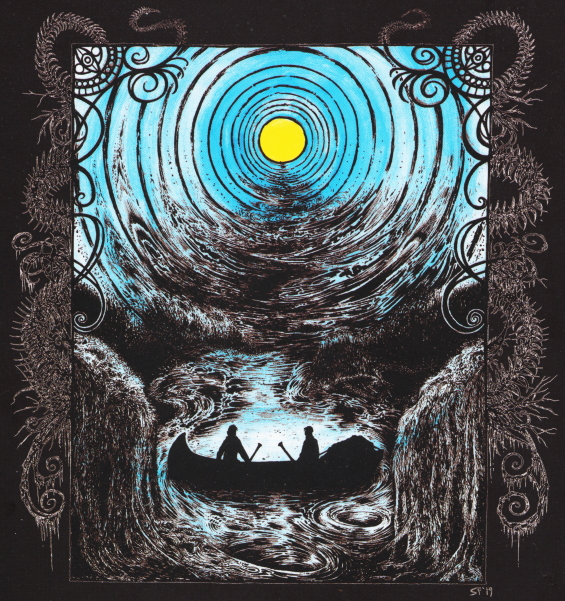
Algernon Blackwood's The Willows - illustration by Sam Ford

Posted by Jesse Willis

Review of Vulcan’s Hammer by Philip K. Dick

SFFaudio Review

Vulcan's HammerVulcan’s Hammer
By Philip K. Dick; Performed by Mel Foster
Publisher: Brilliance Audio
6 hours [UNABRIDGED]

Themes: / Humanity / Future / Artificial Intelligence

Publisher summary:

After the twentieth century’s devastating series of wars, the world’s governments banded together into one globe-spanning entity, committed to peace at all costs. Ensuring that peace is the Vulcan supercomputer, responsible for all major decisions. But some people don’t like being taken out of the equation. And others resent the idea that the Vulcan is taking the place of God. As the world grows ever closer to all-out war, one functionary frantically tries to prevent it. But the Vulcan computer has its own plans, plans that might not include humanity at all.

Vulcan’s Hammer by Philip K. Dick was first published in 1960. The book’s origin however is an expansion of a novella that has been published previously and therefore places this story among some of the author’s very earliest science fiction works.  The book’s central theme of what makes us human versus that of a machine is one that continued into many of Philip K. Dick’s later and more popular novels.

The plot revolves around that of a supercomputer named Vulcan 3 which acts as the world’s leader. Most of the characters (including the main protagonist William Barris,) are Directors of an organization called Unity which represent various regions of the world on behalf of Vulcan. Another more mysterious group that call themselves the Healers appear to be trying to thwart the will of Vulcan 3. Another key character, Father Fields, is from this counter-group.

Narration is handled by Audie award winner Mel Foster whose many other audiobook titles also include Philip K. Dick’s The Zap Gun. I enjoyed his performance of the material here and plan to give his take on The Zap Gun a listen also. I recommend Vulcan’s Hammer as I found interesting the development of a theme which continued into many of the author’s later novels.

Posted by Dan VK